Phantom Lights

Archive for the ‘Guest Post’ Category

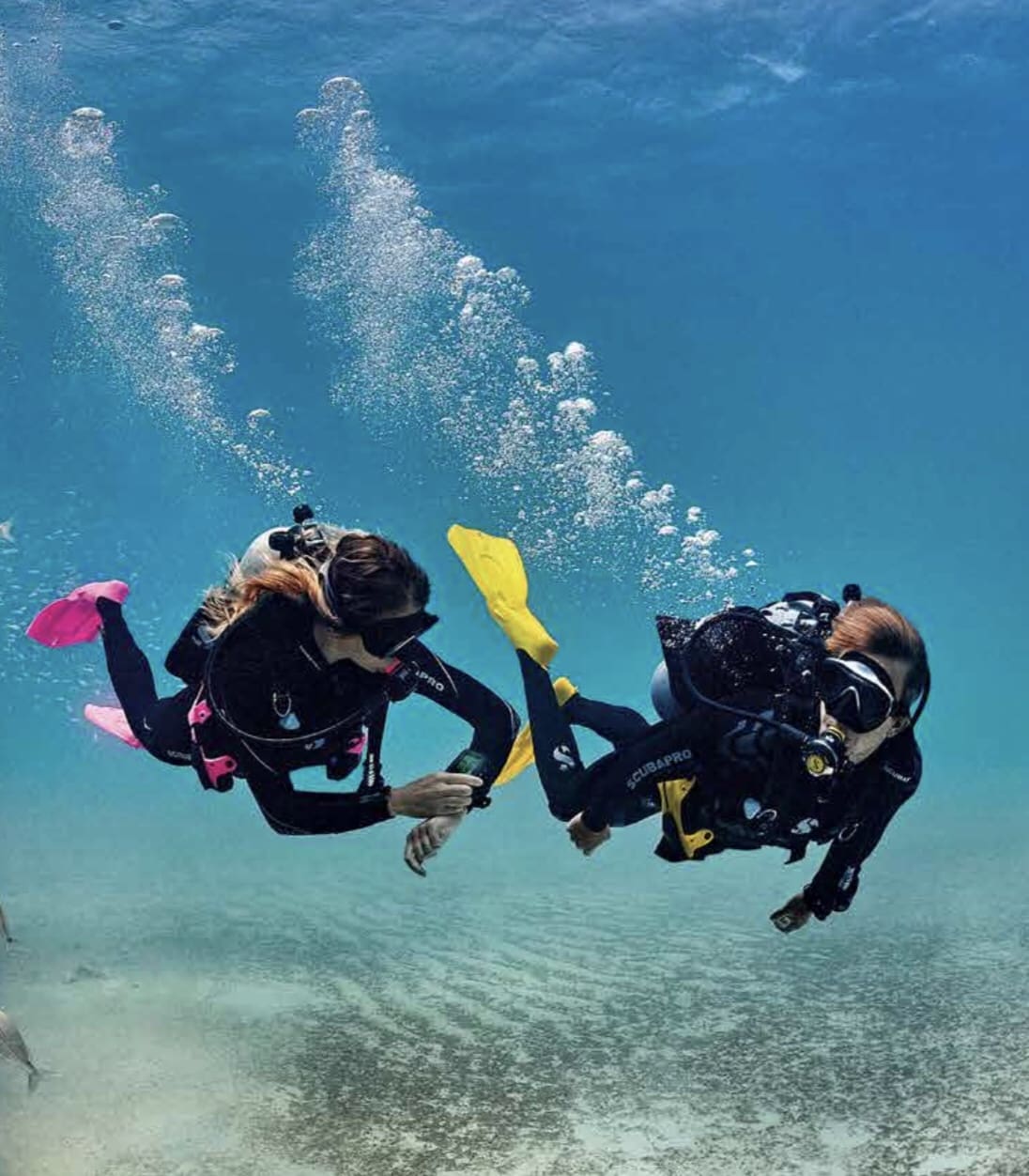
SCUBAPRO Sunday – Combat Swimmer Gear

Sunday, October 28th, 2018

When conducting combat swimmer operations you will need to have a certain amount of gear on you. This gear will depend on a of couple things. First what you will be doing during the dive, second what you will be doing at the end of the dive. If you are just doing a straight up dive and never leaving the water you can get away with just a gun belt with maybe a couple extra pouches for an extra mask, mask strap or fin straps. If you plan on conducting a ship attack or a raid, you will need more then just a pistol belt. This will be up to the diver and the mission requirements.

Gear Common to all

Items to have on you at all times.

– Gun Belt

– Pistol Holster

– Pistol Mag Pouch

– Water pouch and bottle.

– Radio pouch

– E and E kit

– First aid kit

– Extra mask/ mask strap/ fin strap

– Knife

– Signaling device, strobe/ flares

Gun Belt
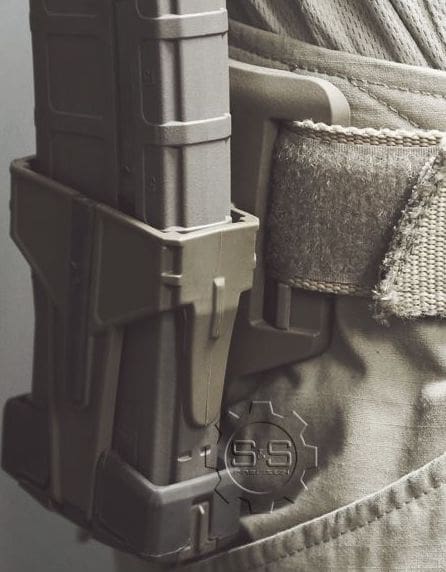
There is a lot of them out there right now. There are many things you need to think of when setting it up. You need it to be able to easily expand the belt for the type of thermal protection you will be wearing, IE wetsuit /drysuit thickness.  You need to always have your pistol holster and mag pouches in the same place for muscle memory. Other things to think of are, will you be climbing? If so can the belt be used as a harness by adding leg loops or can it be put over a climbing harness? Can you swim with it on without it rubbing the hell out of your legs? Items like the S+S Precision gear retention track are a great way to move items around with little effort. Lastly a good set of suspender’s will help keep your belt in place and stop it from spinning as you swim.

Pistol Holster– One of the things you need to look at for this is, where you want it to sit, if you want it on your thigh, on your hip or a spot in the middle. If you have it on your thigh you need to make sure it does not move around as you are swimming. It also needs to be able to be easily moved if you have to adjust your belt for the think ness of your wetsuit. It also needs to be able to lock your pistol in so it will not fall out; a bungee is a good item for it to have to lock the pistol in but that can also get stuff on something. Should it have a flap cover to protect the gun a little from small things in the water? With all this stuff it should be able to drain water fast.

Mag pouch –They need to be able to keep your magazines in place when you are diving and be able to get to them out fast when needed. Keeping them free of items in the water and be able to drain water fast. This goes for everything you carry anything it. A good mag pouch is great for carrying an extra mask.

Water Pouch- Be able to carry the water bottle you use. A Nalgene bottle is a great bottle to use, as it’s easy to fill in the field. It also doesn’t take up as much room on a belt.  Typical tactical Nalgene bottle pouches have a mess bottle that drains water fast. Depending on if you have to carry something on your back or not you can also use a Camelbak on long dives when it is hot, it’s nice to drink something other then seawater when your legs start to cramp up.

Radio pouch– as radios advance it means that the people at the TOC want to know more and more what you are doing and when you are doing it. So that means that you might have to take a small radio with you to maintain comms, you might have to take along a survival radio. They can be one of the same but you might have to carry two. As one is none and two is well two is twice as much to carry.

E and E kit -Your E and E/R kit can just be a candy bar and some money to pay some people off or it might be more extensive, like having way to purify water, start a fire and kill a bear. No matter what you have, it needs to be waterproof and negatively buoyant as will everything on this list. You can laminate dollar bills in between two 3×5 cards, so it looks like they are just 3×5 cards for write info on. Then if you need the money just rip them open. This way they are hidden and waterproof. Most good kits are small and can be used for about every situation just by adding one or two items depending on what you are doing. If you have to dump all your gear for whatever reason, make sure you have your kit on you separate from everything else.

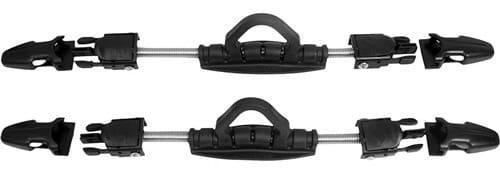
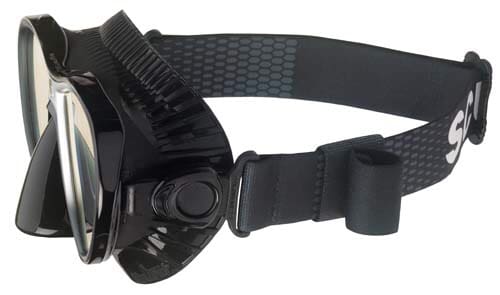
Extra straps / Masks- It is best to keep an extra mask/ mask strap and an extra fin strap on you. The extra mask should be the same mask that you are diving. You can put an extra pouch on your dive rig straps and put the mask in there. You can also switch your mask strap out to one of the newer comfort straps. They are made of the same martial that ski goggle straps are made of. As for an extra fin strap you can keep that in there also. You need to have a plan on how to change your fin strap out. This will depend on how it breaks. If it breaks in the middle on the strap, it’s not as bad as if it rips away from the fin and takes some of the fin with it. Most fins have the ability to replace the rubber strap with a  steel spring version. Cave divers started using screen door springs because they wanted something that was extremely reliable. They almost never break. They have them for Jet Fins, Twin Jet max and also the Seawing Nova’s.
Knife– Knives are very personal, and everyone has the one that they like. The main thing to remember about your knife is have it in a place that you can reach it on a dive. Some people like it on their legs others like it on their waist. Some people have one on the leg and on their chest (again one is none). Keep it sharp and clean.

Signal devices – You can and probably do carry both a strobe and a flare when diving. The Flare is for emergencies and a strobe for overt and covert signaling. Both need to be waterproof and easily accessible if needed. The bad think about a flare is they are a onetime use. So make it count if you are going to use it. Almost all that are geared towards the military can handle a combat swimmer dive. Lastly you can carry a signal mirror. It is 100% waterproof and never needs batteries.

No matter what gear you take on a dive you make sure it is probably maintained. Make sure you prepare for the conditions and environment you will be in and adapt you gear and E+E kit for it.

Kitbadger – “I Only Train With Ninjas”

Saturday, October 27th, 2018

Kitbadger takes a look at the phenomenon of students choosing an experience over gaining experience.

For the full post, visit kitbadger.com/i-only-train-with-ninjas

24th SOW Dedicates Building to MOH Recipient Master Sgt. Chapman at Hurlburt Field

Friday, October 26th, 2018

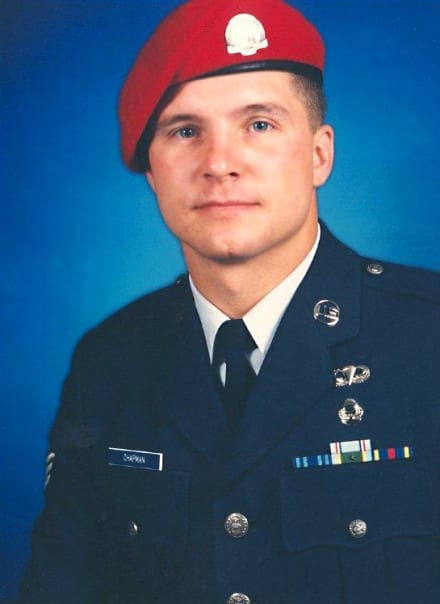
HURLBURT FIELD, Fla. – The story of Medal of Honor recipient U.S. Air Force Master Sgt. John Chapman has circulated across the nation for nearly two decades and captivated the special operations world.

The heroics John is credited with during a ferocious battle on Takur Ghar, Afghanistan, in 2002 posthumously earned him the nation’s highest military honor.

4036C4D7-5F04-4C8F-8DCA-00FEAECC7CDB

Today, John’s legacy is cemented in Special Tactics and Hurlburt Field history forever after the 24th Special Operations Wing headquarters was dedicated in his namesake.

Amongst an audience of ST legacy warriors, Air Commandos and friends, U.S. Air Force Col. Claude Tudor Jr., commander of the 24th SOW, alongside John’s family, unveiled the new name on the John A. Chapman Building.

34B83744-6DA9-41C4-9048-1F015D9ADC66

“Today, we will forever bind John’s relentless spirit of honor and courage, his selfless, heroic life and legacy with our headquarters,” Tudor said.

“This building is the home of our Special Tactics headquarters and by adding John’s name to the building, it is not only a symbolic gesture, but it binds his legacy with the legacy of Hurlburt Field and AFSOC [Air Force Special Operations Command].”

In February 2002, the Special Tactics combat controller deployed to Afghanistan as part of a joint special operations team. On the team, his role was to conduct precision strikes by integrating airpower onto the battlefield.

On March 4, 2002, John was killed during Operation ANACONDA, when he knowingly sacrificed his life to fend off a rocket-propelled grenade attack on an incoming MH-47 Chinook helicopter carrying a quick reaction force of U.S. Army Rangers and Air Force ST Airmen.

“This final act was the ultimate expression of his love. His love for his brothers. His love for his country. His love for me, and his love for all of you,” said Kevin Chapman, John’s brother, during the building dedication.

“The act of laying down your life for your friends can only come from one who embodies humility. One who considers others before he considers himself.”

E1A7CB88-D706-4A3F-8795-CAEE78C17BB1

John was initially awarded the Air Force Cross for his actions, but after a thorough review, it was upgraded to the Medal of Honor by President Donald Trump, who presented it to his widow, Valerie Nessel, during a White House ceremony on Aug. 22.

“[John] would want to recognize the other men who lost their lives,” Valerie said in a previous interview. “Even though he did something he was awarded the Medal of Honor for, he would not want the other guys to be forgotten – they were part of the team together. I think he would say his Medal of Honor was not just for him, but for all of the guys who were lost.”

John is the first Special Tactics Airman to receive the Medal of Honor and upon receiving the decoration, John was posthumously promoted to the rank of master sergeant.

The upgraded award and rank serve as a lifelong remembrance and renaming the headquarters to the John A. Chapman building is another way of reinforcing an ST legacy of sacrifice.

“Every time we walk into the John A. Chapman headquarters building, we will continue to push our own organizational velocity and drive innovation to meet multi-domain mission requirements across the full spectrum of conflict and crisis,” Tudor said. “[John] Chapman has long inspired the Special Tactics community, but now, his story will inspire and fuel those passing by every day, and remind them who John Chapman was as a person: a phenomenal human, who fought relentlessly and sacrificed all for his teammates.”

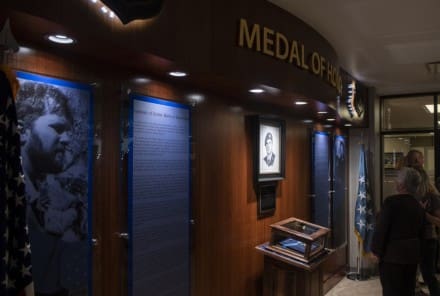
Following the building dedication ceremony, three new displays were revealed within the newly renamed John A. Chapman Building including a Medal of Honor tribute. In that display holds a photo of “Chappy”, a detailed summary of The Battle of Takur Ghar, the history of the Medal of Honor, Chapman’s award citation and a Medal of Honor decoration.

“With a humble heart, and as John’s representative for the family and friends, I accept the honor you have bestowed upon us, upon Master Sg. John A. Chapman, by naming this building after him as a lasting legacy in his memory,” Kevin said.

Along with the name “John A. Chapman” now prominently displayed on the street-side of the building, next to the front doors of the entry way is a replica bronze plaque from John’s upgraded Air Force Cross. The plaque displays a brief summary of John’s actions, and at the bottom reads, “Whom shall I send? And who will go for us? Here am I. Send me!”

By: Senior Airman Joseph Pick, 24th Special Operations Wing Public Affairs

Widget Wednesday:  Operating Unmanned Air and Ground Vehicles in Austere Environments

Wednesday, October 24th, 2018

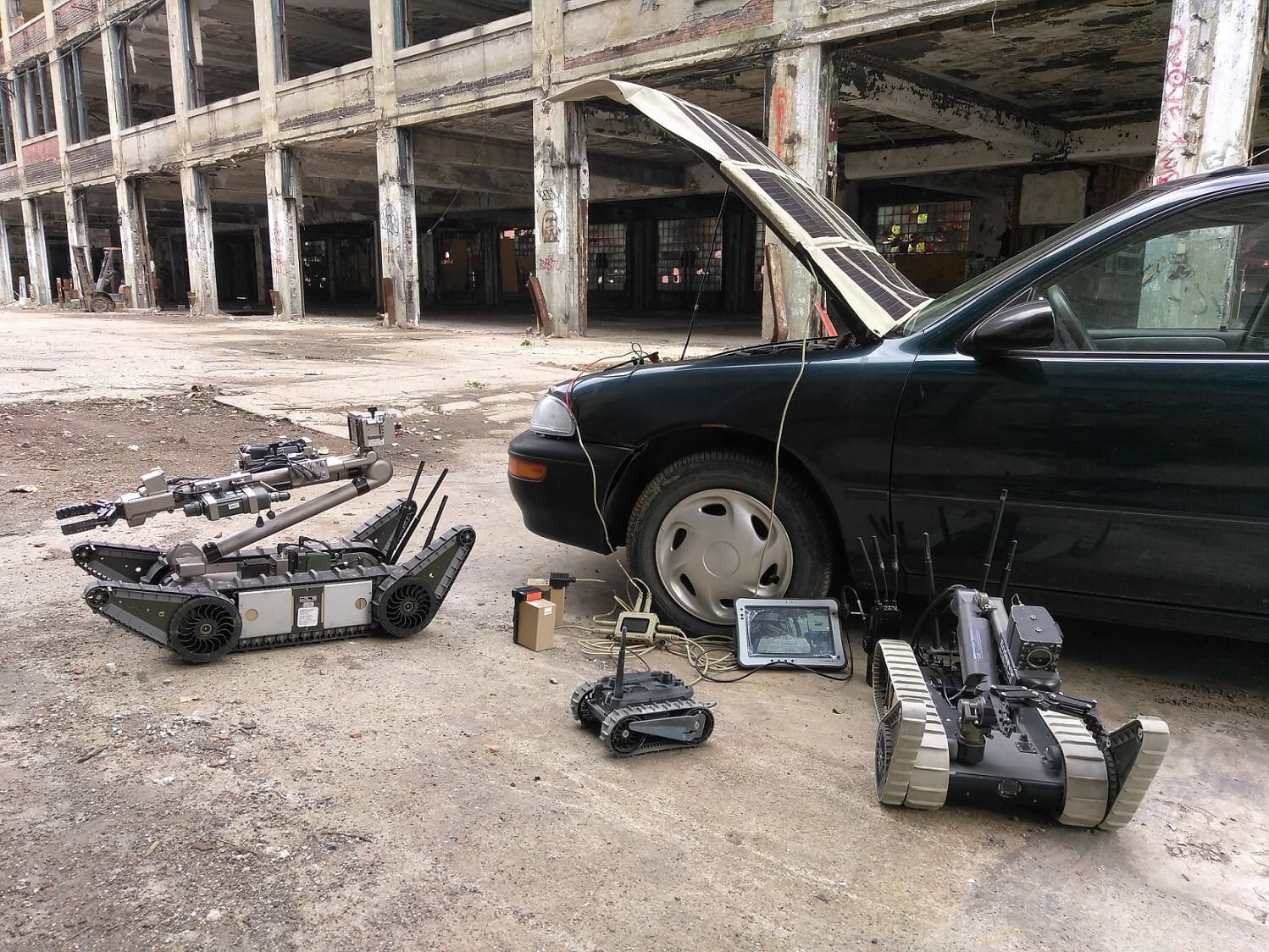
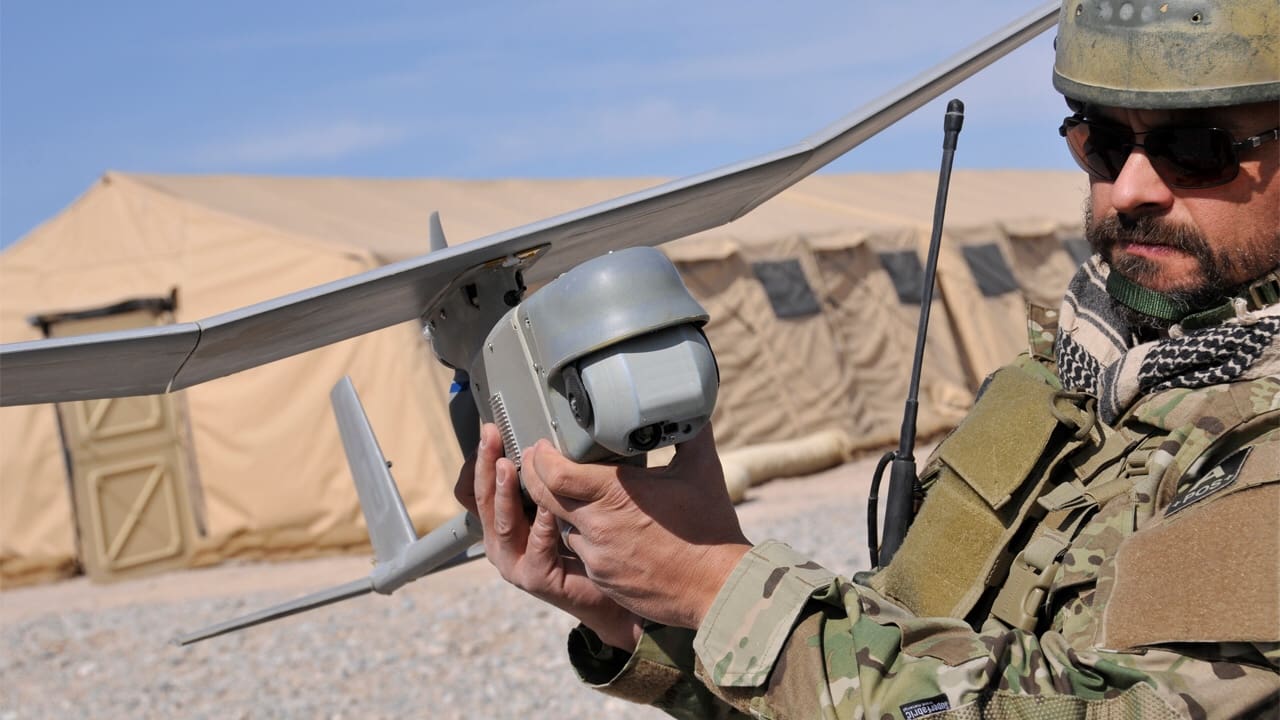
Air and ground based drones continue to become more and more prevalent in military and law enforcement operations, often as ISR and EOD assets, and occasionally in a more offensive posture (as when the Dallas PD took out a cop-killer in 2016 with surprise package).

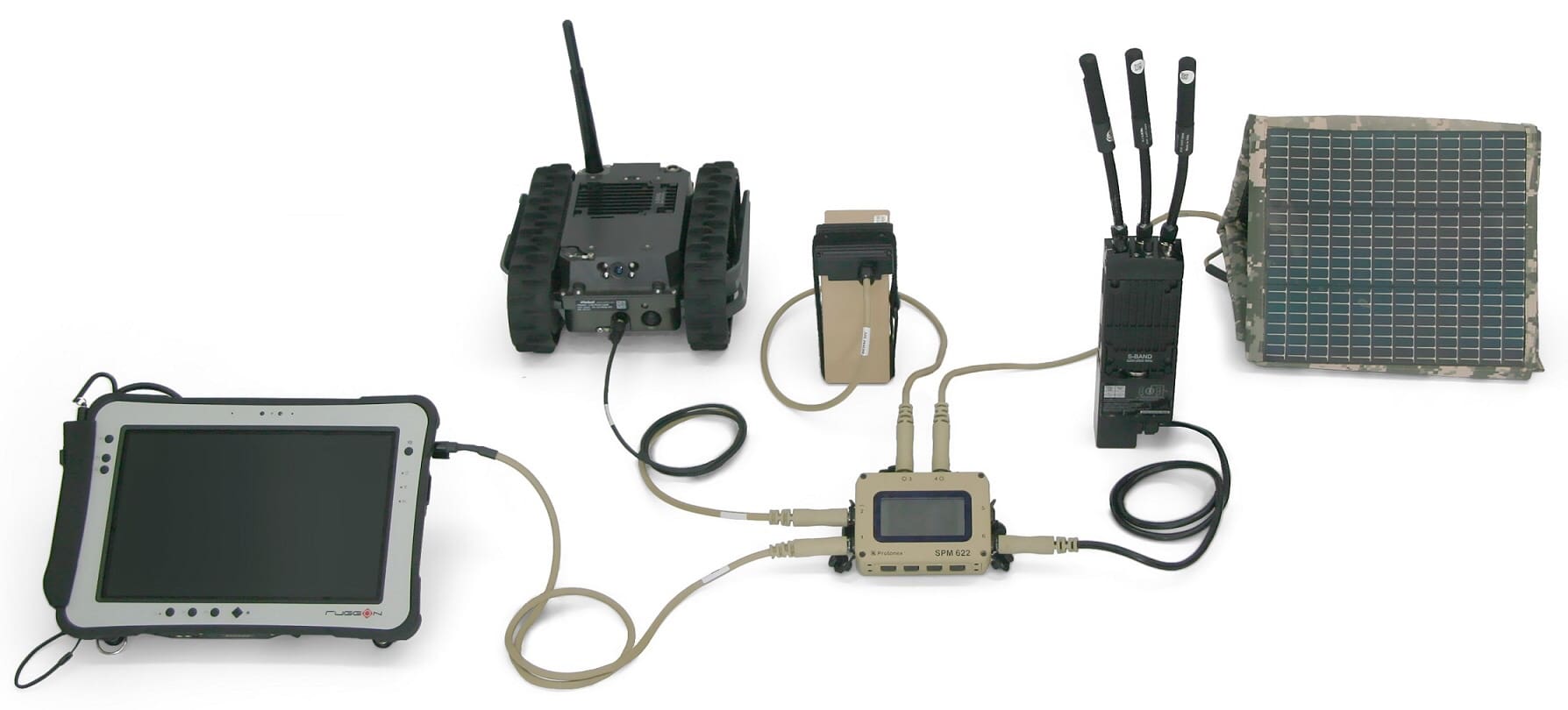
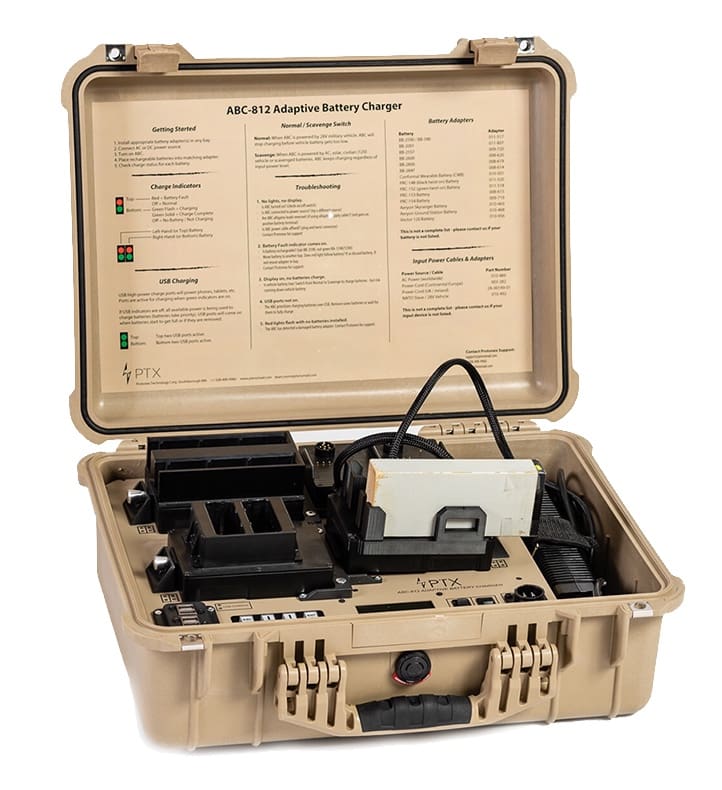
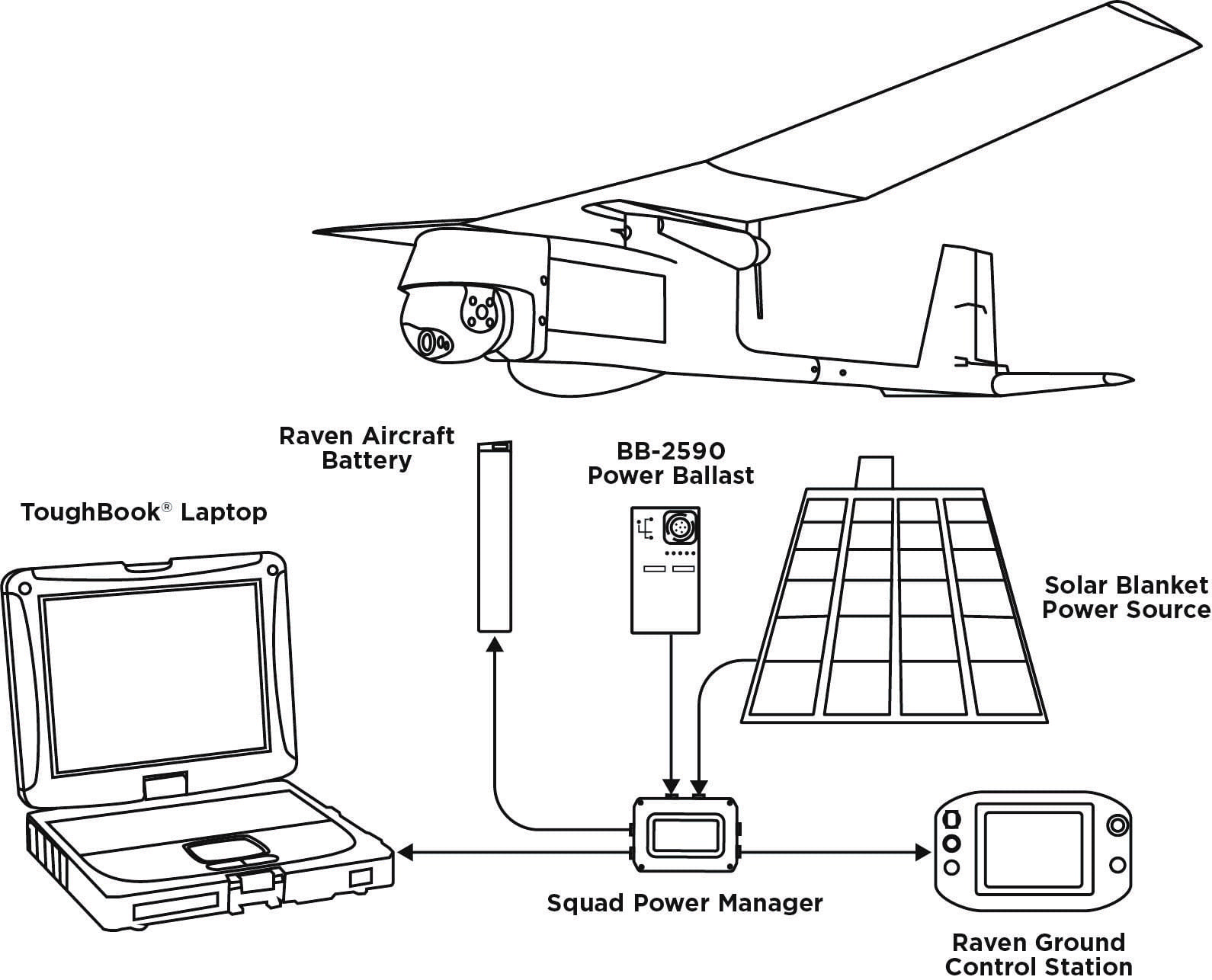
However, remote or undeveloped areas present significant challenges to keeping UAV and UGV assets fully operational because of a lack of wall sockets and dependable electric power grids for charging their batteries. Our portable power management solutions enable operators to draw power from any available source; such as a vehicle battery or DC outlet, a solar blanket, a field generator, or other batteries. UAV & UGV operators can use our systems to charge the batteries of platforms, control stations, and supporting comm’s equipment.

Thanks to our bi-directional, plug-and-play technology, UAV & UGV batteries can also be used as a power source for other electronic equipment – helping to simplify a team or unit’s energy logistics and battery burden.

Our power management solutions currently support the following UAV and UGV systems:
• Aeryon Labs R60 SkyRanger®  (R70 SkyRaider® in development)
• AeroVironment RQ-11B Raven (RQ-20 Puma in development)
• Endeavor Robotics FirstLook®, PackBot®, and SUGV
• Any system that runs on a standard battery or battery pack

For further information about UAV and UGV field charging solutions, visit www.PTXnomad.com or contact us through Team.Room@Protonex.com.

Brigantes Presents – High Angled Solutions – Armadillo Merino

Wednesday, October 24th, 2018

Armadillo Merino, have been working on enhancing the natural FR properties of merino wool and will be launching an range of FR base layers to work alongside the extreme cold weather equipment. So, when you are in a situation when you need to cook in your tent, you are protected, no matter what happens, or who kicks over the stove.

For more information contact warrior@brigantes.com

Or, for international enquiries: internation@brigantes.com

Electronic warfare: A Battlefield on a Different Wavelength

Monday, October 22nd, 2018

ZAGAN, Poland — Soldiers on the ground are now capable of rapidly reacting to electronic and cyber data rather than waiting on their higher echelons.

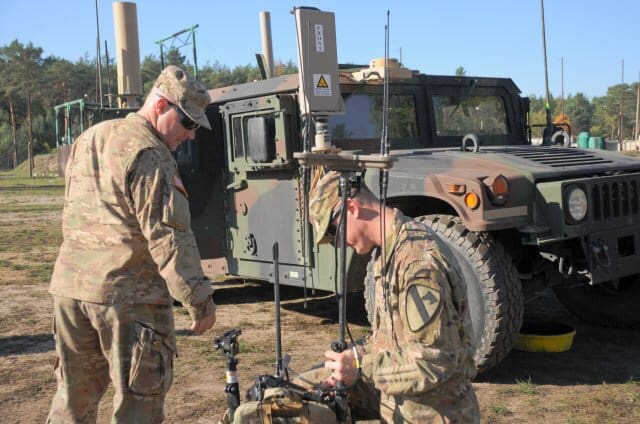
Soldiers assigned to Headquarters and Headquarters Company, 1st Armored Brigade Combat Team, 1st Cavalry Division, currently deployed in Poland, are among the first brigades supporting Atlantic Resolve to train on a new system that enables a team to forward deploy and respond to enemy frequencies using new electronic warfare, or EW, technology.

Electronic warfare, known as the battle in the electromagnetic spectrum, relies on data and signals to survey, fight and defend. Collecting enemy radio signals, sensing radar of an incoming threat, and utilizing radio waves to confuse or disable an enemy’s electronic communication methods are all means in which electronic warfare specialist teams strive to train to perfection.

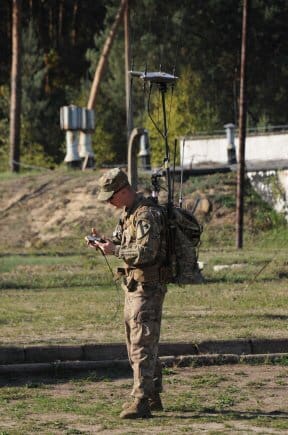
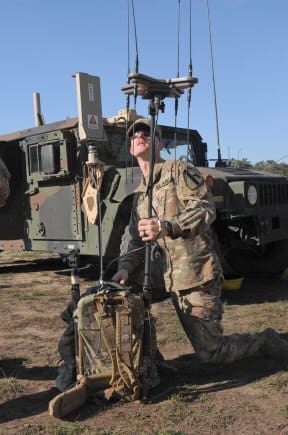
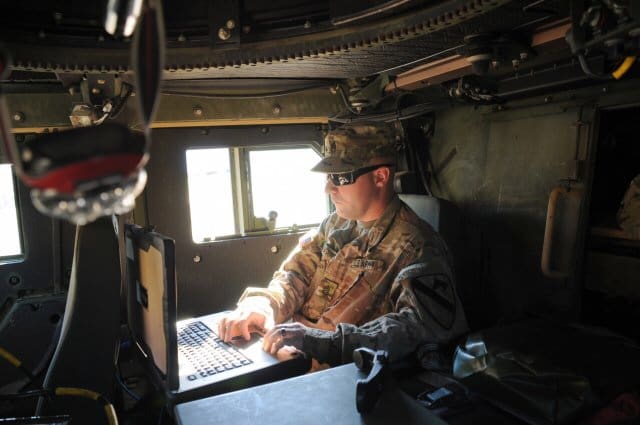
Team members are learning to better operate and integrate EW capabilities, including the VROD, VMAX and Raven Claw. The VROD and VMAX are part of the backpack system that surveys the field from an electromagnetic perspective and delivers limited electronic assault capabilities such as signal interception and jamming. Raven Claw, a mobile computer system, offers on-the-ground planning and management without any network connection.

“These teams are tied to surveying the battlefield, going out with the scouts and being the lead elements,” said Sgt. 1st Class Jerry Wheeler, the noncommissioned officer in charge of the electronic warfare section, Headquarters and Headquarters Company, 1st Armored Brigade Combat Team, 1st Cavalry Division. “We’re using it for real-time information.”

Utilizing both dismounted and mounted systems allows forward deployed Soldiers to act on electromagnetic information as they receive it.

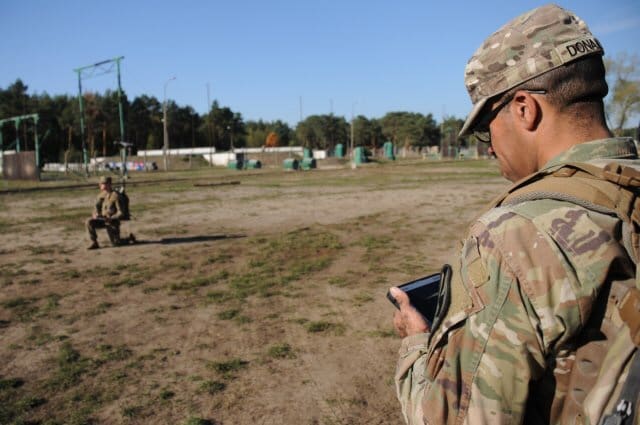
“Having it [EW technology] at this level helps a local commander make more EW type decisions,” said U.S. Army Staff Sgt. Benjamin Donahue, an electronic warfare noncommissioned officer assigned to 1st Armored Brigade Combat Team, 1st Cavalry Division. “If you have it at only the high echelons, you’re waiting on a report to come down later, versus something you can do right now.”

Though Ironhorse Soldiers did not have the opportunity to train on the equipment before their rotational deployment across Europe, they quickly brought themselves up-to-date.

“We never saw it before we came out here,” said Wheeler. “We had a month of training at Grafenwoehr, Germany. In the future, you would train before coming out. We’ve got a good handle on it.”

Later this year, Soldiers in the electronic warfare field, in addition to the entire 1st Armored Brigade Combat Team, 1st Cavalry Division, will put their training to the test at Combined Resolve XI, a multinational training exercise at the Joint Multinational Readiness Center, Hohenfels Training Area, Germany.

Story By SGT Lisa Vines

Photos by SFC Craig Norton

SCUBAPRO Sunday – Buoyancy

Sunday, October 21st, 2018

Buoyancy is key to a lot of things. It helps make the dive easier in a lot of ways. When using a closed circuit rig (CCR) it keeps you from rocketing to the surface, it prevents you from dropping to the bottom when you stop to fix your gear or “Dräger” talk/ yelling at your dive buddy.

There are two keys to buoyancy: balance and breathing

The two significant factors in achieving neutral buoyancy.

• 1st Wear the right amount of weight for the dive. This will differ depending on the thickness of your wetsuit/ dry suit and gear you are wearing.

• 2nd Breathing slowly and evenly and not having too much air in your breathing bag. If diving a CCR

What is the best way to maintain proper buoyancy?

Pre-dive preparation. Buoyancy control begins, with the pre-dive preparation. As you pick what to wear for a dive. Double-check to make sure nothing has changed that could affect buoyancy. A new wetsuit is more buoyant than an older one and will need more weight. A new suit has more inherent buoyancy at first because diving, especially deep diving simply bursts its bubbles. New gear; compare the old version to the new. Gear is always being updated with new buckles or martial so when you switch from old to new make sure you know what the buoyancy is of the new stuff. So when you go to the new magazine pouch make sure you know how it is in the water. Check the weights on a scale; often there is variation between claimed and actual weight. If diving open circuit, are you using a new cylinder? Some cylinders are negatively buoyant when full and simply less negative when empty; others sink first and float later.

Do a buoyancy check. Here is the best way to do a proper buoyancy check. With your lungs half-full, you should float at eye level with no air in your BC. If you are diving open circuit, remember the average cylinder loses about 5 pounds as it empties. So you might have to add about 5 pounds to your weight if you have done your buoyancy check with a full one.

Keep a log

Keeping a log of what gear you have wore, what the temperature was and the type of water (salt/fresh /brackish). What equipment you used, how much lead you carried, how much your body weighs and whether you seemed too heavy or light.  Knowing the weight of the gear that you used on the dive will help. Make sure you understand that if you are going to remove something during the dive you need to account for that on the return trip home. If you plan ahead by recording in training what you used it will help when you have to do it the next time.

Saltwater VS Freshwater.

If most of your diving is done in the ocean, then ballast calculations should be done in the ocean. Jumping in the pool to check your balance will get you close, but it won’t be 100% correct. If you switch back and forth, you’ll need to adjust your ballast. Be prepared to add anywhere from 4 to 7 pounds going from fresh to saltwater.

Buoyancy, Trim, Position, and Breathing

The secret is buoyancy control, begins with fine-tuning your weighting. How much lead you put into your pouches or have on your weight belt. If you are carrying just the right amount of weight, you will only have to put a little air in your BC. That means less drag and more efficient finning. Less BC inflation also means less buoyancy shift with depth, so you’ll have to make fewer adjustments. There are many tricks, but buoyancy control is the fundamental skill. Precise control of your buoyancy is what enables you to hover motionless and fin through the water, at any depth, without using your hands at all or stirring up mud or silt from the bottom. In addition to using the right amount of weight, make sure you are correctly balanced to optimize your position under water. Keeping a more horizontal position makes you more hydrodynamic. Distribute the weight as uniformly as possible from side to side; you should never notice that you put on more weight on one side while diving. You must also consider the weight of your dive gear and any other additional gear you might be wearing. I.E gun belt or special gear. Make sure it is balanced on your body and it doesn’t shift when you are diving. The lowering you wear your dive rig can cause a tendency to push the diver forward (upside down) in the water, so the placement of weight towards the back can help reverse this position, especially on the surface. While carrying weight in the pockets on the back of the vest or taped to you rebreather can help with the adjustment. Lastly, any dive weight you put on should be easy to remove in an emergency.

The factors that affect your buoyancy besides ballast weight are BC inflation, your trim, exposure suit, depth and breathing control. Your ballast weight and your trim are the only two factors that, once you’ve selected them, stay put. Ballast is the amount of weight it takes to keep you neutral in the water. Trim is about the position of your body weight relative to the position of your weight. Sometime when diving a rebreather you can tape lead washers on it to help with your trip.

There is one more thing to understand that will help with your buoyancy. It is controlling your breathing. Make sure you maintain proper breathing. Take long, relaxed breaths this will allow you to maintain control over your buoyancy.

To determine the amount of weight you need, you take your body weight, the diving suit you are going to use, the weight of your equipment and the environment you are diving in salt or fresh water. You can use about 10 percent of your body weight,  is a good starting point for a full  5 mm or more and for a 3 mm suit, use 5 percent of your body weight.

Dry suits and thick neoprene suits require more ballast to counteract the increased buoyancy of those suits in comparison with the thinnest. Body composition (the muscular density, for example) will also influence the necessary weight.

Remember to calculate for everything you are going to do and wear on your dive. If you are doing a long dive and plan to leave or remove something half way thru your dive. Say doing a ship attack, and you are taking limpets off. Plan for the whole dive. To check your buoyancy get into water deep enough to stay in an upright position, without treading and releasing all air from the vest. Inhale, in a normally, the surface of the water must be at the level of your eyes. When you exhale, you should sink until water covers your head and inhale again, you should emerge once again until the level of the eyes. Adjust your weight in small increments about 1 pound at a time.

Once you get your ballast weight and trim dialed in, you will be ahead of about 75% of all divers toward perfect buoyancy control. Now you can fine-tune your BC inflation to compensate for the very predictable changes due to breathing down your tank and changing depth and use only breath control to drop gently down to that cleaner shrimp, hover inches above it as long as you want and lift away from it harmlessly.

Lastly, there are advanced classes that you can take that focus on advanced skills like this. This may seem like a lot of work, but it will help make diving a lot better and make you more efficient at it.

www.scubapro.com

Natick’s Exoskeleton Work is a Powerful Step Toward the Future of Soldier Lethality

Friday, October 19th, 2018

NATICK, Mass. — With exoskeleton technology, the Natick Soldier Research, Development and Engineering Center, or NSRDEC, is helping Soldiers to step into future.

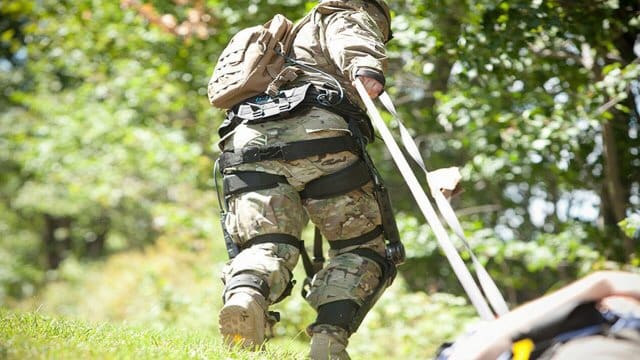
The Natick Soldier Research, Development and Engineering Center is working with Lockheed Martin Space and Missile on a human augmentation system prototype. Trademarked under the name “ONYX,” the system is a powered, knee-based, mobility enhancing device that shows great potential for allowing Soldiers to stay in contact while maintaining peak performance longer, with equal or increased warfighting power. (Photo Credit: Courtesy photo by Lockheed Martin Space and Missile)

Soldiers are the most important, effective platform in the U.S. Army. In finite quantity, these warfighters are being asked to move farther, faster, and carry larger loads — all while performing under harsh and challenging conditions. Responding to the Army Chief of Staff and the Soldier Lethality Cross-Functional Team, NSRDEC awarded an “Other Transaction Agreement” for a human augmentation system prototype to Lockheed Martin Space and Missile, or LMCO.

Trademarked under the name “ONYX,” the system is a powered, knee-based, mobility enhancing device that shows great potential for allowing Soldiers to stay in contact while maintaining peak performance longer, with equal or increased warfighting power.

The NSRDEC’s exoskeleton effort will initially focus on the challenges faced by Army Close Combat Forces, validating their needs with data from ongoing combat operations, reports, user focus groups and validation Table Top Exercises.

Understanding that 90 percent of casualties since WWII are from the Close Combat Force, the Army Chief of Staff has directed that one of his strategic focus areas emphasizes improving the lethality, maneuverability, mobility and survivability of the Army’s most valuable asset — the individual combatant. The Army seeks to cover more ground with fewer forces through strategic systems that integrate innovative technological concepts such as exoskeletons, other worn advanced capabilities, and tactics.


Working with NSRDEC leads, the LMCO ONYX team will integrate user-based feedback into the new design and improved system performance and deliver demonstration-ready prototypes in FY19.

By NSRDEC Public Affairs