Danner Reckoning GTX

Archive for the ‘Guest Post’ Category

Brigantes Presents – High Angled Solutions – Acapulka 1.35 Expedition Tour Pulk

Wednesday, March 13th, 2019

The ET 135 is the result of several years of R & D involving designers, builders, and experienced users. The R & D process has paid off with new Delta Wings that increase transverse stability and load capacity without significant sacrifices in friction or steering properties.  This makes the ET 135 excellent in the difficult terrain of the arctic circle during winter deployments.

With the load capacity matching sledges from 150-160 cm, it’s still easy to get the ET 135 to an expeditions launch point due to the fact that it’s a shorter pulk. It has Acapulka’s unique low friction runner system called STSR.  (Side Track Stabilizing Rail) which provides extraordinary glide with excellent side track and balance. As with all successful sledges, the ET 135 has a high rounded front section that helps it stay on top of deep snow.

The tough cover of the ET 135 is of top quality CORDURA. This makes the Acapulka ET 135 strong, water resistant and repellent, which is perfect for the harsh, unpredictable weather conditions of the Arctic, Antarctic and Greenland. What’s more the straps and D-rings holding your supplies are fastened directly to the hull of the sledge with solid rivets, not just sewn on the cover ensure kit is kept safe.

The extensive research and innovations made with all Acapulka pulks, is what makes them the complete solution to carry supplies during expeditions and winter deployments. For more information contact,

For international sales: international@brigantes.com

For UK sales: warrior@brigantes.com


Max Talk Monday: The RAID: Texas Class 2019

Monday, March 11th, 2019

This is the thirteenth installment of ‘Max Talk Monday’ which shares select episodes from a series of instructional videos. Max Velocity Tactical (MVT) has established a reputation on the leading edge of tactical live fire and force on force training. MVT is dedicated to developing and training tactical excellence at the individual and team level.

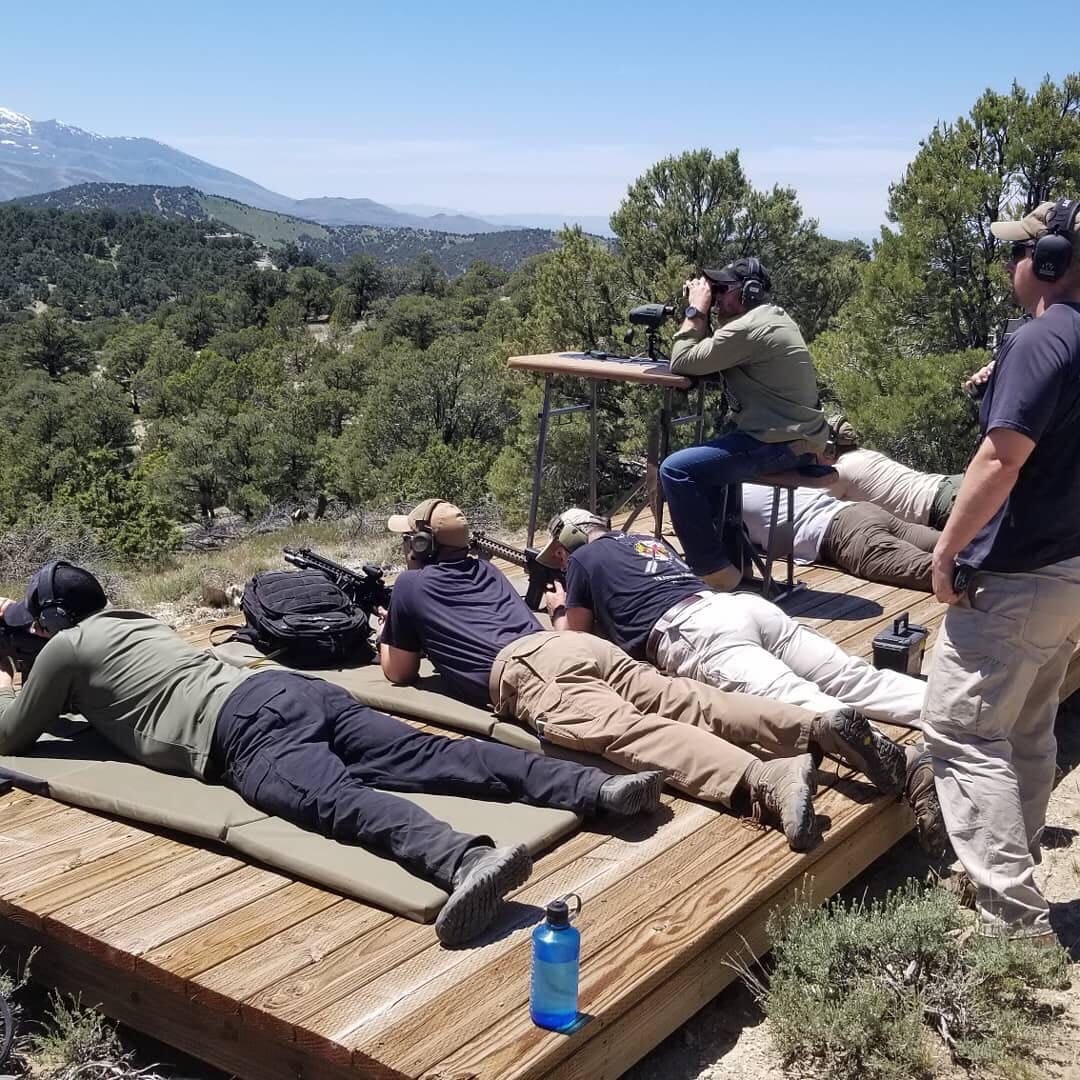
Max Talk: The RAID  is video footage of the RAID drill at the Texas Class 2019. This was a squad level (2 x fire team) live fire training exercise against a simulated enemy encampment / patrol base. It formed part of the ‘Attack Day’ which included hasty attack and raid simulated live fire scenarios.

MVT Tactical Manual

Max is a tactical trainer and author, a lifelong professional soldier with extensive military experience. He served with British Special Operations Forces, both enlisted and as a commissioned officer; a graduate of the Royal Military Academy Sandhurst. Max served on numerous operational deployments, and also served as a recruit instructor. Max spent five years serving as a paramilitary contractor in both Iraq and Afghanistan; the latter two years working for the British Government in Helmand Province, Afghanistan. 

Website: Max Velocity Tactical

YouTube: Max Velocity Tactical

SCUBAPRO Sunday – The Frogman

Sunday, March 10th, 2019

Movies have played a significant roll in and for the military world. From taking your mind off of things like Dumb and Dumber (and giving you great things to say” WE LANDED ON THE MOON?!”) or getting people to join the military. Some do better than others. The Green Berets by John Wayne was made to get people to believe in the Vietnam war.  It fell way short of that, but still a great movie, and it had a number one hit song “The Ballad of the Green Berets” by SSgt Barry Sadle, and it had a UDT/ Frogman playing one of the best parts in the movie. Sgt Muldoon was a Frogman in WW2 and yes a west coast guy. Apocalypse Now made as a protest movie against war, did a lot more to get people to join than any other film of that time.

The Frogman got more people to join the Navy than any other movie of its time. All and All it is an excellent movie for its time. You have to love going to war with a dive knife and a mask.

Maybe someday they will make moves like this again. Movies that talk about the thing that happened many years ago.

FirstSpear Friday Focus – Boot Super Sock

Friday, March 8th, 2019

All new from the FirstSpear technical apparel line, meet the merino wool Boot Super Sock. Made in America with American Wool the BSS is a mid calf sock offering incredible comfort and warmth with impressive moisture wicking properties.

FirstSpear has also included a non-stocking non-standard run of the upcoming Every Day Sock which is a much lighter weight performance wool sock. Available in the non-stocking color in limited sizes and quantities while supplies last.

BSS

EDS

Marine Corps seeks ideas, information for Optical Communication Transmission System

Wednesday, March 6th, 2019

MARINE CORPS BASE QUANTICO, Va. —

Marine Corps Systems Command released a Request for Information March 5, to identify a non-developmental solution to provide a complete Line of Sight Optical Communication Transmission System.

A U.S. Marine with Special Purpose Marine Air-Ground Task Force-Crisis Response-Africa performs a radio check during a training event with German soldiers in Seedorf, Germany, Dec. 6, 2018. Marine Corps Systems Command released a Request for Information March 5, to identify a non-developmental solution to provide a complete Line of Sight Optical Communication Transmission System. (U.S. Marine Corps photo by Sgt Katelyn Hunter)

According to the RFI, released on the Federal Business Opportunities website, the OCTS system must be capable of providing a high-bandwidth transmission path used for voice, video and data communications.

For program officials, this capability will consolidate capabilities into a complete LOS transmission capability.

“The adage, ‘Move, shoot, communicate’ hasn’t changed, but how we communicate is rapidly changing,” said Maj. Eric Holmes, MCSC project officer. “Given the rapid pace of innovation in technology, the Marine Corps is currently evaluating maturing capabilities.”

Optical communications support greater bandwidth, and provide additional relief for frequency allocations in an already constrained spectrum.

“The Marine Corps is turning to industry to help rapidly develop and field this technology to protect vital command and control emissions from advanced adversaries,” Holmes said.   

Responses to the RFI must be received by 1 p.m. on March 19.

By Maj Kenneth Kunze, MCSC Office of Public Affairs and Communication | Marine Corps Systems Command

Brigantes Presents – High Angled Solutions – Helix Tactical Poles

Wednesday, March 6th, 2019

Take a look at these Helix Tactical Poles. These seven section poles are a lightweight solution to urban and maritime access issues.

C163ADED-5D38-423E-99DA-FC57E562E52B

370913FF-6BBB-4FEC-849B-590F9817E887

They are made from 3K carbon fibre and available in 4.5m and 8.5m lengths. The pole clamps are user adjustable and can be replaced if damaged. The poles have a 3K carbon finish which reduced the amount of vibration transmitted up the shaft to ensure a quiet and smooth use.

216BC051-EF7A-40FA-94FE-43F981D09AC0

7EFE8CF6-3409-4B70-9AA8-CFCC07192B60

The Helix Tactical poles are compatible with REBS hooks fitted with the PIGG system, which allows the pin to be pulled and the PIGG release will let go of the pole, leaving behind a clean anchor. They are also compatible with various other hook designs which used 4-5mm rods and as each one has a conical internal bore makes “fishing” to recover the hooks much easier.

For international sales contact international@brigantes.com

For sales to the UK contact warrior@brigantes.com

US Navy to Test Two-Piece, Flame-Resistant Organizational Clothing

Tuesday, March 5th, 2019

NORFOLK (NNS) — U.S. Fleet Forces (USFF) Command will begin a second round of testing later this year on a two-piece organizational clothing variant that offers flame resistance and moves the Navy one step closer to delivering Sailors a safe, comfortable, no-cost alternative to the Improved Flame Resistant Variant (IFRV) coveralls, with the same travel flexibility as the Type III working uniform.

USFF conducted the initial wear test on two-piece variants from May through September of last year and collected feedback from nearly 200 wear-test participants across surface, aviation and submarine communities about everything from colors and design, to comfort and options like buttons and hook-and-loop fasteners. The command also received feedback from more than 1,700 Sailors in an online survey about colors and design.

Fleet survey responses indicated that Sailors liked the functionality of the Type III but would like to see the design in traditional Navy uniform colors. More than 70 percent of E-6 and junior Sailors surveyed liked the navy blue blouse and trouser while a khaki version was the preference for chiefs and officers.

“Leaders are listening to the fleet when it comes to this design,” said USFF Fleet Master Chief Rick O’Rawe, a wear-test participant. “We have an obligation to keep our Sailors safe in inherently dangerous environments, but we also want to be mindful of their time. This is going to be something that’s safe, easy to maintain, and doesn’t require half-masting of coveralls when it’s hot or having to change clothes every time you leave the ship. Never again should we have to pass the words ‘all hands shift into the uniform for entering port or getting underway.’”

The updated design, which won’t require Sailors to sew on components, will be tested by 100 officers and enlisted Sailors to see how well it performs from wash-to-wear without ironing, and how it holds up to laundering. The two-piece variant will allow for de-blousing in extreme climates and challenging work environments. An undershirt will continue to be tested with a flame-resistant, moisture-wicking fabric in black.

“I have received so much feedback just from wearing the two-piece around the command every day,” said Yeoman 1st Class Kelly Pyron, a wear-test participant assigned to USFF. “The best part is that we’ll be able to transit from the ship and run errands in the two-piece; having one standard underway and in-port across the board will be much more convenient. I am excited to see the wear test moving into the next phase of evaluation.”

Once approved, the new prototype will serve as an alternative to the IFRV coverall for operational commands. The coverall may continue to be the prescribed clothing item for some Sailors in applicable work environments.

Pyron expressed, “If a clothing item, that I will not have to buy, can make my life easier while keeping me safe, I’m all for it.” 

By Mass Communication Specialist 2nd Class Stacy M. Atkins Ricks, U.S. Fleet Forces Command Public Affairs and Outreach

SCUBAPRO SUNDAY – Marine Animals

Sunday, March 3rd, 2019

Many marine animals use toxins for self-defense or to prey on other animals. When direct contact is made is when the venom/toxin is injected by bite, puncture or sting.  


Injuries mostly occur as divers are entering or exiting the water. If you are climbing out of the water onto some rocks and the surf is pushing, you around or you are climbing up on a pier. They can also happen when a diver accidentally or deliberately attempts to handle an animal. Like when someone says “hey I bet you can’t lick that sea urchin.”


You should know where you are diving what animal are in the water. So, make sure you study what is native to the area that you are diving in. It doesn’t mean that something that is supposed to be in the water won’t be there. Someone was stung by a box jellyfish in Hawaii, and they are only native to Australia.

Jellyfish or Jellies

Flushing the sting with salt water, remove tentacle pieces with tweezers or a gloved finger. Once all the tentacles have been removed, apply an ice pack to reduce inflammation and pain. Never urinate on a jellyfish sting. Well Unless you are into that stuff. But it won’t help the pain. Vinegar was recommended for used to rinse the affected area. But it has been found out that vinegar, may activate stinging cells that haven’t fired yet. So, it is up to you if you want to try that. Most jellyfish stings are minor and require only basic first aid. But some stings can be severe or even fatal. The Box jellies are one of if not the deadliest animal in the world.  If you experience chest pain, difficulty breathing, or if a large area of your body was stung, seek medical help immediately. If you were diving in an area that had a lot of jellies, make sure you raise off your wetsuit before you take it off if you can. Jellies are like poison ivy, they can still infect you after it is removed and just hanging out on your gear. It will be dry, you will throw it on your shoulder and get stung


Sea urchins 

Remove any spines that are visible in the wound with tweezers or a knife. If the needles have penetrated deep into your skin, a doctor may need to remove them. Soaking the affected body part in hot water helps to relieve pain. You can also take nonsteroidal anti-inflammatory drugs. If you notice signs of an allergic reaction, such as difficulty breathing or chest pain, seek emergency medical help.

Stingrays 

If you are stung by a stingray, call an ambulance immediately. If a spine is embedded in your skin, it’s best to leave it in. You can rinse the area with salt water to remove any sand or debris. Usually, the sting is very painful. Standard first-aid treatment includes immersing the affected area in water that is as hot.  

Don’t take any of these situations lightly as you never really know how your body will react.

Coral cuts and abrasions

These are one of the most common diver injuries. Coral scrapes can occur whenever a diver makes contact with the reef. Coral is often sharp, and those who get cut will find that they take a long time to heal, and often become infected. To treat coral cuts and abrasions, first, stop the bleeding, make sure to remove any remaining coral fragments by flushing with clean, fresh water. Use antibacterial soap or hydrogen peroxide mixed with water to disinfect the wound. Finally, rinse again with fresh water. 

How to avoid this

Since most of this happens when you are getting into or out of the water. (getting in and out at a beach/ shallow water). You should shuffle your feet to help avoid stepping directly on something. The animal should feel you coming and get out of the way. Don’t touch marine animals, even if they are dead. This includes pieces of them. A tentacle can still be dangerous even when they are no longer attached to the animal. As an old E8, I say this with love, please don’t bet your buddy that he can hold or eat it. It’s all fun and games until someone gets hurt, then it’s just fun. 

Skin protection

Clothing can help protect you against stings from creatures and scratches from coral. Wearing shoes in the water is always a good idea especial if you are walking into the water. In the old day’s guys would wear blue jeans when working around coral to help protect them from it. That is the same reason some people in Vietnam wore jeans. Because the jungle is basically like being in the water. Everything wants to kill you. Everything wants to kill you and does want to be messed with. Keep in mind that some creatures have spines that can pierce your shoes or wetsuit. I did not talk about everything in the water that you might come in contact with. I just when over the most common animals that divers encounter.  

Lastly, there are a lot of parts of the world where you will dive (this is military diving, not recreational diving) there might also be other things in the water, like glass, barb wire, spikes and anything you can think of. So, make sure you do a proper study of the area and of the tactics that are being used by the people you are going against and what they are most likely to try to stop combat swimmers.