XC3 Weaponlight

Archive for the ‘Guest Post’ Category

SCUBAPRO Sunday – Drysuits

Sunday, September 16th, 2018

A drysuit is a significant investment and requires periodic servicing, but a well maintained, quality suit can last for years. Here are some tips to keep your drysuit at its best.

Cleaning Your Drysuit

Wash your drysuit after every use to remove skin oils and chemicals (like sunblock and insect repellent) from the gaskets. Clean inside with clean, fresh water, or SCUBAPRO disinfectant solution (P/N 41 050 034) to prevent bacterial development.

It is especially important to wash the suit after using it in salt water, as salt residues will degrade the latex.

To maximize the life of the gaskets, drysuits must be protected from sunlight and ozone. Never wash a drysuit in a washing machine or dry it in a clothes dryer. Any of these can severely damage the zippers and/or gaskets. If the suit is exposed to oil or grease, clean with a mild grease-cutting detergent and a soft brush. Rinse with clean, fresh water.

The inside and outside of a drysuit must be washed in separate steps. Wash the outside first, then turn it inside-out and wash the inside. Open all zippers and use a soft brush to remove any grit from the teeth.

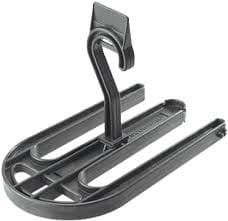
Hang the Dry suit inside-out on a SCUBAPRO dry suit hanger (P/N 51 076 000) to dry indoors. Do not use a wire hanger, and don’t hang it outside where it will be exposed to sunlight. When the inside is completely dry, turn it right-side-out and allow the outside to air dry. Treat the latex gaskets with unscented talcum powder. Dust wrist and neck seals with talcum powder before pulling them over your hands and head. Talcum powder eliminates virtually all resistance between skin and seals, allowing them to slip on without stressing the rubber.

Apply zipper wax before zipping up the waterproof zipper. Use only the manufacturer’s wax that’s specifically formulated for your drysuit zipper. Apply the wax only on the outside of the teeth so as not to interfere with the zipper’s inner sealing surfaces.

If it’s a fabric suit, wipe down the outside with a microfiber towel and install the protective cap on the inlet valve to avoid corrosion building up inside the valve, which can cause a stuck inflator button. If it’s a neoprene suit, pat it down lightly, cap the valve, unzip and climb out.

Rinse off the inside. This is easier for drysuits with soft socks that can be turned inside out. Suits with attached boots can be difficult, but get them turned inside out as much as you can. Keep in mind that the insides of the boots are going to take longer to dry. You can add newspaper in there to help dry it. Make sure they are completely dry before putting the suit into storage.

Storing Your Drysuit

Store drysuits in a cool, dark place. Most clothes closets are fine but avoid attics and garages, any place that gets really hot.

Treat the gaskets with unscented talcum powder.

Hang the drysuit on a wide suit hanger. Because of their length, make sure the legs are off the floor, you can drape them over the shoulders of the suit if needed.

Zipper Care

Keep the zippers clean. Dirt and grit will make them difficult to operate and can even degrade their water tightness. When cleaning the suit, use a brush to remove dirt and grit from the zippers.

If metal zippers are stiff, rub them with beeswax or a block of paraffin wax. Do not wax plastic zippers.

Folding or over-bending can create a kink that will ruin the zipper. See the above video for tips on storing and packing your drysuit for travel, to learn how to avoid this type of damage.

Professional, commercial, rescue and military divers who may be forced to dive in contaminated conditions must identify the contaminant and take appropriate steps to remove the contaminant from the suit before it can be used again.

Storage & Transport

Dry suits are best stored on the SCUBAPRO dry suit hanger (P/N 51 076 000) that hangs the suit upside down by the feet with the zipper open. Keep in a cool dry place out of the sun. Keep copper away from the latex seals.

For longer-term storage, (make sure it is dry first) you can store it in a large Zip-Loc clothing storage bags and hang in your locker or closet

For travel, fold the suit loosely, avoiding over-bending or kinking the zippers, you can use round foam pool noodles to help with this. Then you can store it in a plastic box.
Bag

Each SCUBAPRO dry suit is supplied in a carrying bag. The flat design with perimeter zipper allows the bag to fold open for use as a dressing mat to keep your feet clean while getting in and out of the suit. Inside the bag is permanently attached pouches where the repair kit, zipper lubricant, and seal talc are conveniently stored.

Troubleshooting

Divers exposed to chemicals or contaminated water must take extra care cleansing & rinsing the suit after each exposure. Some chemicals can degrade or delaminate the suit materials to the point of failure

Leaks

Zipper

• Slider not closed all the way. Have your buddy check for full closure.

• Zip has failed – inspect for split in closed teeth.

• Zipper material failed – can either be punctured or damaged by abrasion.

• Foreign material caught in teeth – dirt, sand, debris, or the dry suit undergarment is frequently the trouble.

• The zipper is old, worn out, or damaged in some other way – have it replaced.

Valves

• Installation has loosened. Check back plate screw for tightness. Neoprene suits can see this, as the neoprene may continue to compress over time. Tighten if needed.

• The exhaust valve may be improperly adjusted, or there may be debris (sand, hair, etc.) under the seal.

• Valve parts may need servicing or replacement due to use and wear.

Seals

Seals leak for two reasons, damage or interference..

• Check the seals for holes or tears caused by sharp objects, wear & tear, or chemical damage.

• Check that there are no foreign objects such as hair, sections of undergarment.

• Check for over trimming. Make sure when you trim your seals you do it by putting a can or something round in the wrists or neck and trim around it. If you pinch the seals and cut them it will leave little “v” where you started and ended your cut and that will tear at some point.

• Check they adjusted properly and do not have folds that can create leaking channels, especially around the tendons in wrists.

Leak Testing Your Suit

Your dry suit can be tested for leaks by plugging the wrist and neck seals with objects of suitable size, closing the zipper and using the low-pressure inflation hose attached to the inflate valve to inflate the suit. Wrap an elastic band around the seal to help the plug stay in place under pressure. Start with the adjustable exhaust valve set at the lowest release pressure, and gradually increase until the suit is firm, but not hard. This way you will not stress the seals, fabric or seams of the suit. Once the suit is inflated, submerge it a section at a time in the bathtub, and inspect for leaks. Small bubbles will appear if a leak is present. Alternately, lay the inflated suit down outside, and slowly pour warm soapy water over the suspected areas. The soap solution will blow small bubbles, or create fine foam over the leak.

Once the leaks are located, mark the area, rinse and dry the suit thoroughly, and follow the repair kit instructions.

A dry suit is a complex piece of equipment designed to keep a diver comfortable in extreme conditions. Treat your drysuit as a piece of life support equipment, maintain it properly, and inspect it for wear and damage before and after each dive.
International Security Expo

Saturday, September 15th, 2018

Keeping up with the changing face of security

By Philip Ingram MBE

We have been lucky in 2018 after the terror that tore across Europe and the UK in 2016 – 2017 with vehicle, knife and bomb attacks happening in Nice, London Bridge, Westminster, Manchester and Barcelona. These are just a few of the places left reeling from a wave of extremism targeting people going about their normal lives and enjoying themselves.  The often crudeness of the weaponry used belies the sophistication of many of the attacks.

2018 has been successful for the security services with a number of attacks being stopped, but the UK Counter Terror Police continue to remind everyone that they have approximately 600 active investigations going on with over 3000 people of immediate concern and another 20,000 on their radar!

2017 was marked by some of the most virulent global cyber-attacks with Wannacry infecting more than 230,000 computers in over 150 countries disabling parts of the UK’s health care in the NHS, the Spanish Telecoms giant, Telefonica and FedEx.  North Korea was blamed for this incident.

In another state blamed attack, Russia was blamed for unleashing the NotPetya attack on the globe which hit many government systems in the Ukraine and elsewhere but had a massive impact on global logistics with the shipping giant Maersk falling victim and having to shut down its terminals in 4 different countries for a number of weeks costing the company an estimated $200 million in losses.

2018 has seen a development of the threat environment with the introduction of the European General Data Protection Regulation (GDPR) meaning that data breaches could well have huge implications for companies that suffer them with a €20 Million or 4% or global annual turnover fine brining additional focus to the cyber security environment.

In addition, whilst not a terror attack, we saw the first use of the colourless, odourless, virtually undetectable nerve agent Novichok, used on the streets of the small, sleepy English city of Salisbury. The attack, against a former Russian intelligence officer who defected to the West, Sergei Skripal, resulted in 7 people being contaminated and one dying.  The British government quickly blamed the Russians and the international community followed suit.

At the same time, ISIS and Al Qaeda terror videos and propaganda are advocating the use of drones against crowded places, during the FIFA World Cup in Russia an ISIS propaganda video was released in which the terrorist group claim that they would attack with drone bombs. The recipe and design for chemical weapons and chemical dispersion devices is freely available in the extremist circles according to Aimen Dean, a former MI6 spy inside Al Qaeda in his book ‘Nine Lives.’

Andrew Parker the Director General of MI5 said in May this year that, “Europe faces an intense, unrelenting and multidimensional international terrorist threat. Daesh continues to pose the most acute threat, but Al-Qaeda and other Islamist terrorist groups haven’ gone away.”

Keeping abreast of the threats, the countermeasures, the developing technologies, having a platform to discuss and share best practice is always a challenge for the security community.  This is where Peter Jones, the CEO of Nineteen Events comes in.  He recently said in a blog, “all I want to do, with my team, is something to help make it a little less chaotic and bring the chance of a little more safety and security. If I can do that, then it is all worth it and will leave the world a little better for my loved ones!”  This is his mantra behind the International Security Expo.

What many don’t realise is a big part of his team consists of 40 Advisory Council members who come from all aspects of the security community including Government, Industry & Academia, all at senior levels and they assist in the development of International Security Expo and help shape the content to attract the highest calibre visitors.

That content is delivered in 12 free to attend conferences held over the 2 days and these conferences include: Retail, Hotel, Education, Maritime and Transport, CNI, Crisis Response and Business Continuity, Protecting Crowded Places, Night-time economy, Designing Out Terrorism, Cyber, Data and Information Security, Aviation and Border security and finally Facilities Management security.  Some of the speakers come from the Advisory Council but many are industry leaders in these spheres and are not generally on many conference circuits.

The International Security Expo provides a unique platform for the entire security industry to come together to source products, share experience and gain the knowledge needed to address current and emerging security challenges. It and all of the conferences are free-to-attend and unite the entire security community allowing shared learning and collaboration from Government, CNI, Law Enforcement, Military, Major Events, Transport & Borders, Cyber Security, Facilities and Public and Private sectors.

A key theme running through the two days of the expo is that of innovation and many new technologies will be on display, ranging from a cost effective British built drone with thermal and optical zoom cameras that has a flight time of an hour, to the Protecting Urban Spaces feature.  This new immersive demonstration area will showcase physical products, technologies and have live scenarios to illustrate how urban spaces can be protected from mass casualty terrorist attacks.

Given its ambition, the UK Government has come on board in strength and forms the core of the Government Agency and Department zone. The USA, Canada, China and the EU all have their own zones but it is expected that representatives from over 50 countries across the globe will attend the event. In fact, over 12,500 are confidently expected to attend over the 2 days, the networking alone will be amazing.

With the rapidly changing threat landscape the one place to come for 2 days to be brought up to speed with everything that is needed, is the International Security Expo. This is one not to miss. Visit internationalsecurityexpo.com for further details and register to attend the free conference series.

Air Force Shooters Get Schooled

Thursday, September 13th, 2018

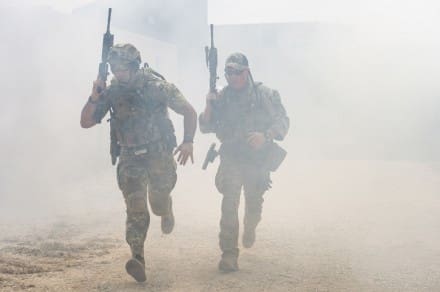
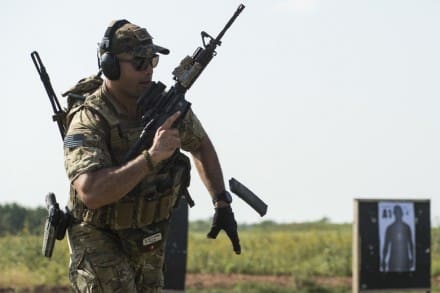
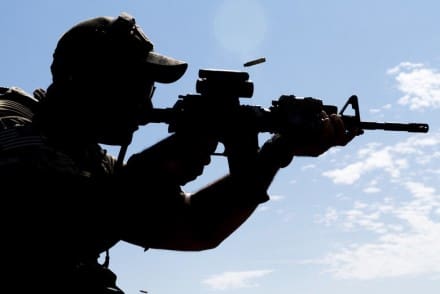
SMOKY HILL AIR NATIONAL GUARD RANGE, Kan. — Teams of Airmen move in and out of cover while under fire. Less than 15 feet from the enemy, one of the Airman’s primary weapons jams. Without hesitation, in one fluid motion, he slings his rifle, draws his pistol and quickly eliminates the threat.

img_5754.jpg

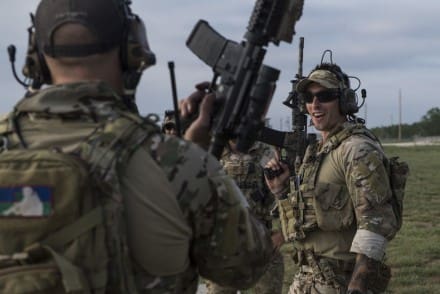
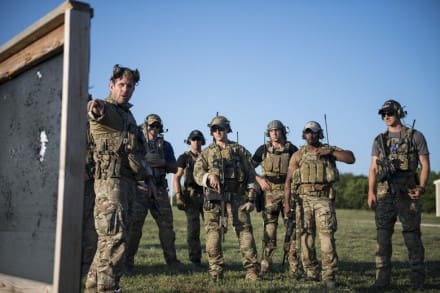
Airmen from various career fields within the 93d Air Ground Operations (AGOW) traveled to Smoky Hill Air National Guard Range, Kan., to participate in a course that made techniques like this second nature.

The gun course was held Aug. 26-31, which incorporated their specific duties as tactical air control party (TACP) members and security forces personnel and built on their gunfighting skills.

13747FD9-9256-4679-A2E5-C1B360DEE7A7

“The full spectrum operator course bridges the gap between the traditional combat arms instructor training (CATM) and what they’re going to face downrange facing off with enemy combatants,” said Master Sgt. Joe Aton, 93d AGOW joint terminal attack controller (JTAC) program superintendent. “Traditional CATM shooting is shooting at paper (from various positions) while this course will prepare guys for what they’re going to see in real combat.”

Fast transitions to their side arm, organizing their gear so it didn’t hinder their ability to aim or reload their weapons and practicing proper form when firing were all lessons hit hard during the first few days of the course.

226D5341-FC8E-4F3A-AE0F-2C29845B7FE8

A mix of veterans, guard and reserve members whom have varying levels of combat experience run the course, hoping to impart their knowledge to today’s warfighters.

“The mission is to save lives,” said Brian Hartman, chief instructor. “It’s all about the troops that are downrange … there’s rarely a week that goes by that we don’t receive communication from folks who are using material that we’ve given them and it’s helped them gain or maintain the edge in an encounter.

7DB755C0-A9F3-4D1E-A98A-A9B1A241543A

“That’s the greatest feeling in the world; there’s no better job satisfaction than that, but we want to share the wealth,” Hartman added. “It’s about getting that information pushed out there and getting everybody back home safe to see their kids grow up.”

Various air support operations squadrons chose one experienced and new JTAC to participate, while the 820th Base Defense Group chose a new defender and a fire team leader.

96655777-4010-4B05-A5F7-59E4227CE28F

While the course primarily focused on gunfight techniques, it also incorporated exercises that challenged specific job skills. Airmen were challenged on their mindset of the feel and look of a “real-world” gunfight.

“One of the most challenging things we impart to people will be mindset,” said Hartman. “In a real environment a small mistake can magnify massively into a huge mistake which can have severe consequences to you, your teammate and can have a ripple effect on down the line.

9A6C250B-E014-42F0-8762-4B64D074C47D

“That shift in mindset to make everybody treat every single bullet as though it’s a gift,” Hartman added. “Every single minute; every second they step out onto the range should be treated as though they’re in the real environment and could have to use these skills tomorrow. If we knew we’d have to do it tomorrow it might change the way we approach training today.”

Throughout the course, Airmen moved tactically through dangerous crossings where they had to return fire and call in close air support, all while being held accountable for every mistake.

D9033818-8345-4CAC-99AD-28CE7E1055E0

“I think the biggest challenge is breaking bad habits,” said 1st Lt. Andrew Janosick, 20th Air Support Operations Squadron joint terminal attack controller (JTAC). “We haven’t had a lot of dynamic weapons training so breaking out of our comfort zone, learning these dynamic movements and being comfortable behind the weapon (is great).

In addition to revamping the way they shoot during the course, Airmen were encouraged to take the techniques and knowledge back to their squadron and incorporate it.

3EFE905B-C6F9-4542-BB6A-3F746FC6EAD6

“I’m hoping to take back as much information from this course (as I can),” said Tech. Sgt. James Estep, 822d Base Defense Squadron fire team leader. “(Especially) ways to think outside of the box when it comes to shooting and honing your skills. It’s really nice having a wide variety of career fields out here. You’re either learning new things from them or they’re learning from you so it shines a new light on things.”

Like any skill, if you don’t use it, you lose it; which is why Aton also hopes to incorporate this course into the current training AGOW Airmen receive.

“I think this is something that should become one of the foundations for our guys as far as gunfighting which is a basic skill everybody should have,” said Aton. “It’s also a perishable skill so it should be something we do annually.”

Story and photos by Senior Airman Janiqua P. Robinson, 23d Wing Public Affairs

PTX Widget Wednesday – Alligator Clip Cable

Wednesday, September 12th, 2018

One of the most salient features of the Global War On Terror has been the proliferation of electronic devices at the individual and small unit level. These developments give our troops unprecedented levels of situational awareness (regardless of the time of day), the ability to communicate over vast distances (in any terrain), and the power to dominate the battlespace in even the most austere environments.

However, it also usually means having to hump a lot of extra batteries. For example, on a long patrol in Afghanistan, an Airborne Infantryman could carry as many as seven different types of batteries for 12 electronic devices – totaling up to 16 pounds in battery weight. That’s more than the weight of a dozen fully loaded 30-round 5.56 mags! (The need to continuously stop and replace batteries also causes disruption to operational capability and impairs mission effectiveness.)

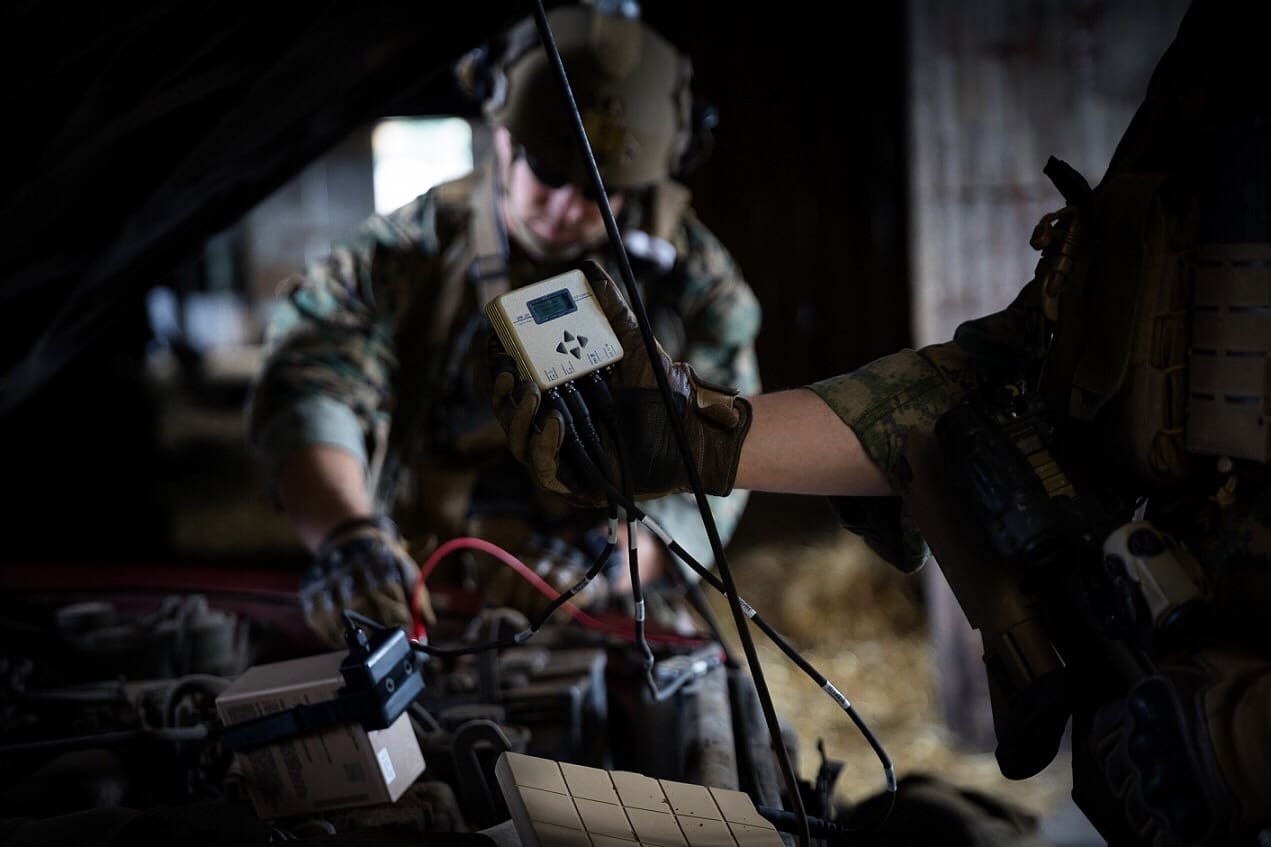
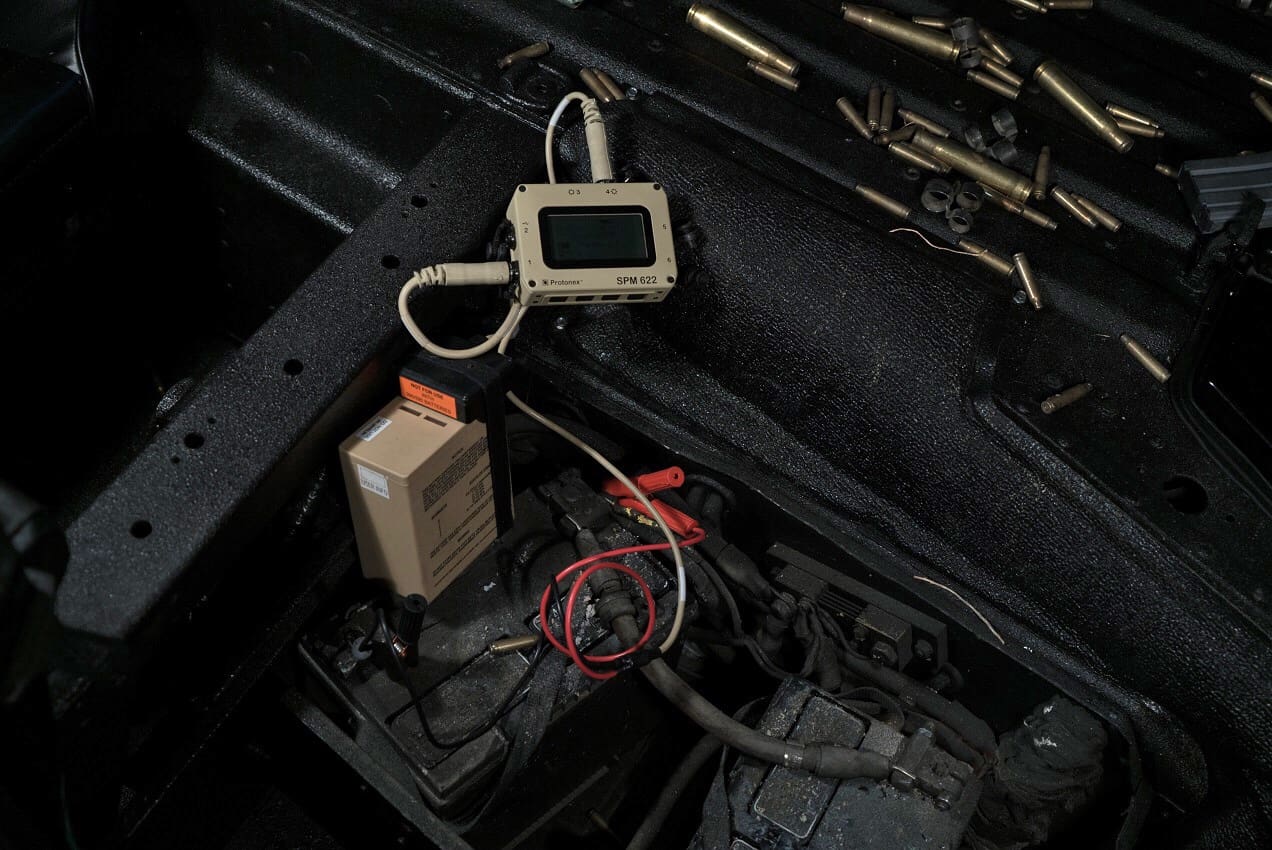
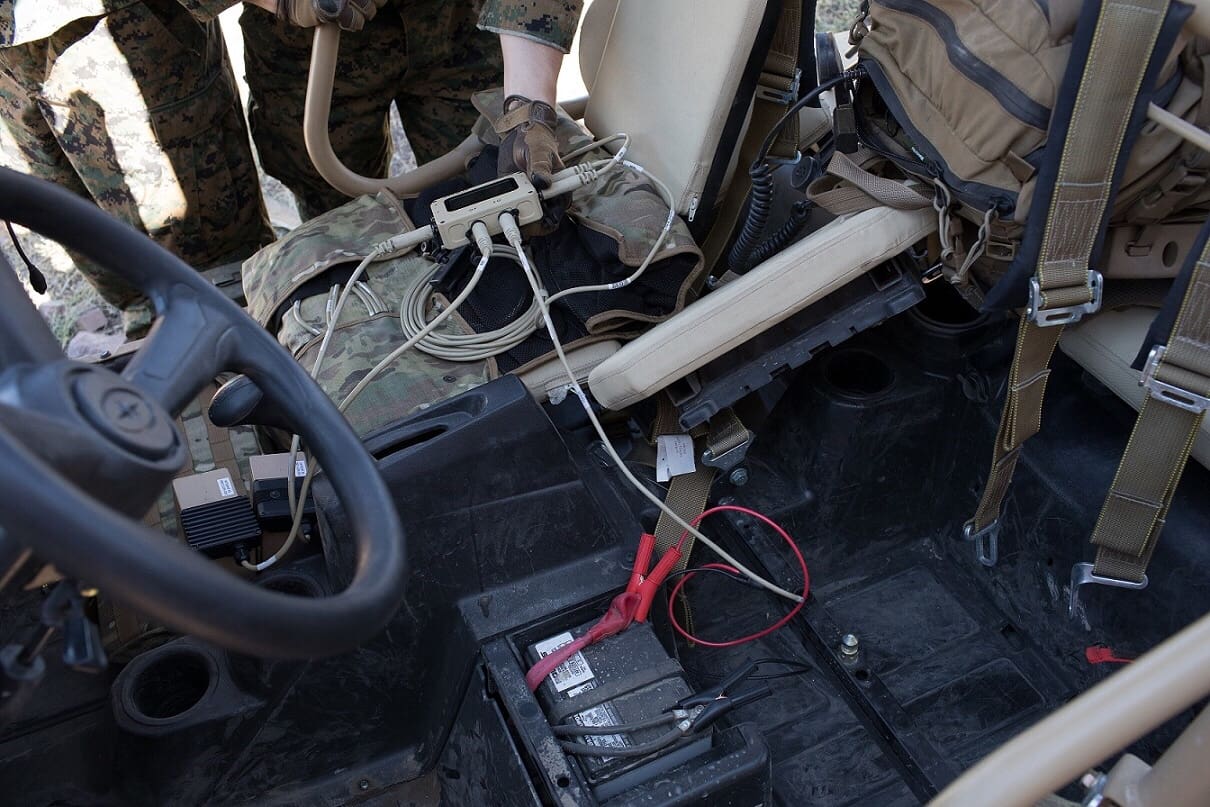
With the SPM-622 troops are able to reduce their battery burden, recharge their batteries in the field, and repurpose those batteries to power other devices (the SPM automatically adjusts, balances, and/or converts power from any source to match a device’s power requirements). Initially, SPM kits included adapter cables for solar panels, solar blankets, vehicle ‘cigarette lighter” plugs, and generator power outlets. Feedback from special operations unit end-users working in a very austere environment led us to develop another rather simple-looking solution – jumper cable type alligator clips.

Their feedback was that it would be very useful to have the ability to scavenge power from the civilian truck, car, and motorcycle batteries prevalent in operational areas. And so the Alligator Clip cable was born. Although it might look kind of “low-tech”, our Alligator Clip cable is smart – the firmware embedded in the cable informs the SPM of the voltage of the battery it’s connected to, it also monitors the battery’s state-of-charge and tells the SPM to stop drawing power from it before it gets too low to start a vehicle.

This particular type of cable proved very useful for at least one team that used a locally-sourced motorcycle battery as a power source, and enabled them to complete a high-value mission despite a shortage of specific batteries.

For more information about PTX power management systems from Protonex, visit www.PTXnomad.com or contact us at Team.Room@Protonex.com

SCUBAPRO Sunday- The G2 Dive Computer

Sunday, September 9th, 2018

SCUBAPRO’s G2 Dive Computer considers heart rate, skin temperature, breathing rate (workload) and water temperature when calculating diving profiles. Its Advanced Uwatec algorithm programs up to 8 nitrox/trimix mixes to handle any recreational or technical diving scenario.

The F2 uses color (user selectable) to help rapidly convey information. The G2 also offers up to 50 hours of dive time per charge abd includes a Includes half-compass rose and bearing memory.

www.scubapro.com

Kit Badger – 8.6 Creedmoor vs 338 Federal

Saturday, September 8th, 2018

Lots of folks are starting to talk 8.6 Creedmoor (although I think it should be called 8.6 Blackout) and that it is really just 338 Federal, renamed. Kit Badger is all over this and has produced this video to discuss the issue.

Read his full article at kitbadger.com/8-6-creedmoor-vs-338-federal.

Unity Tactical FUSION Friday

Friday, September 7th, 2018

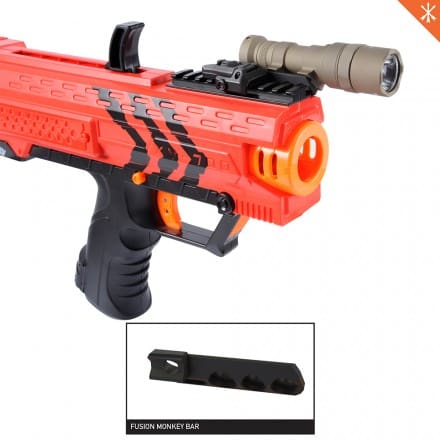
FUSION, by Unity Tactical, is a system of modular, multi-purpose components that provide end users unparalleled flexibility in mounting accessories to weapon platforms.  It offers complete control in attachment of lights, lasers, sights, and other equipment to achieve complete integration, optimal placement, lightest weight, and most economy of space.

FUSION Config 11A BreakOut

This FUSION configuration features the Monkey Bar – a replacement clamp for the popular Magpul MBUS PRO Folding Front Sight.  The purpose of FUSION is to integrate accessories with weapon platforms, minimizing rail estate and increasing functionality.  Monkey Bar interfaces directly with the MBUS PRO, creating a solid FUSION mounting interface that will accept all FUSION accessories or Surefire Scout / Streamlight Pro-Tac Rail-Mount lights.  FUSION Monkey Bar creates a perfect light-mounting platform for SBR’s, PDW’s, and pistols where rail estate is at a premium.  By integrating with a proven front sight, users essentially can get two-for-one functionality.

FUSION Config 11B BreakOut

FUSION components are machined from 6061-T6 aluminum and MILSPEC Type 3 anodized.  Designed and made in the US from US materials and good ole’ fashioned American innovation.  FUSION is the original and best modular accessory mounting system.  Make your gear work for you, not the other way around.

FUSION components are available from Unity Tactical and authorized dealers to build your perfect setup.

www.unitytactical.com

NY Army National Guard Runs Infantry Reclassification Training Course

Thursday, September 6th, 2018

CAMP SMITH, N.Y. — Ten Army National Guard Soldiers from the Northeast, who originally were not infantrymen, are now qualified to wear the sky blue cord and crossed rifles of the Infantry after completing a three-week reclassification course.

Conducted by the New York Army National Guard’s 106th Regiment Regional Training Institute, the three-week class is designed to turn Soldiers with a variety of other military occupational specialties into Infantry Soldiers.

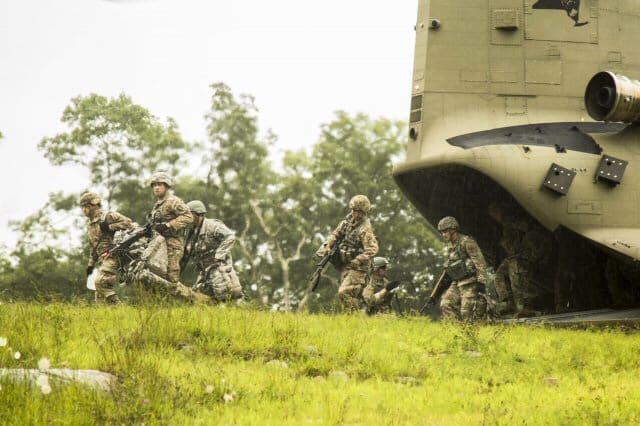
US Army Spc. Joshua Yajcaji a native of Brick, N.J., assigned to Company B, 1-114th Infantry Regiment, in a security position after dismounting a CH-47 Chinook helicopter from to Detachment 2, Company C, 3rd Battalion, 126th Aviation, at the start Infantry reclassification course 18-002 final field training exercise.

Course 18-002 began on Aug. 3, 2018, with 15 candidates and graduated 10 infantrymen on Aug. 17, 2018. Three of the graduates were New York Army National Guard members.

Starting October 2018, the 106th RTI will be one of only six locations where Soldiers can attend the reclassification and other Infantry courses.

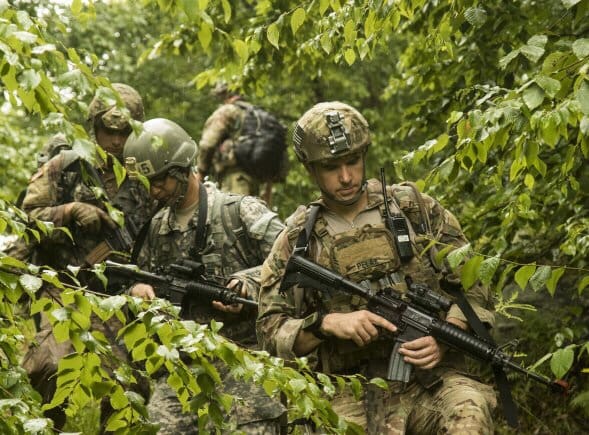
Army National Guard Soldiers from the Northeast Region at Infantry reclassification course 18-002 ruck march in the mountains.

“It takes a special person to want a chance to become an Infantry Soldier, to fight for your country and loved ones at home and asking nothing in return,” said Staff Sgt. John Dustman, the senior course instructor at the RTI and 25-year combat veteran.

“I don’t expect those who graduate this course to become experts on the Infantry, but I expect after what they go through they should have it inside to always try and push through at all times,” said Dustman.

Army National Guard Soldiers from the Northeast Region at Infantry reclassification course 18-002 storm out of the belly of the CH-47 Chinook helicopter from Detachment 2, Company C, 3rd Battalion, 126th Aviation into positions during their final field training exercise.

The Infantry is an extremely physically demanding occupation and only accepts Soldiers into its reclassification course who request the change and are excelling in their military duties like the Army physical test, marksmanship, and driver’s qualifications.

Some Soldiers are drawn to the physically demanding portion of the job, like Spc. Michael Labonte, a motor vehicle operator assigned to Company C, 1st Battalion (Airborne), 143rd Infantry Regiment, Rhode Island Army National Guard.

Spc. Michael Labonte a resident of Smithfield, R.I., assigned to Company C, 1st Battalion, 143rd Infantry Regiment, takes cover before a mock assault.

“I needed something that would let me be out in the field with my fellow Soldiers,” said Labonte, who is a resident of Smithfield, Rhode Island.

He decided to make the job switch because in his current role as a motor vehicle operator, he mostly did paperwork and inspections.

“The course is the most challenging thing I have done in my four years in the military,” said Labonte.

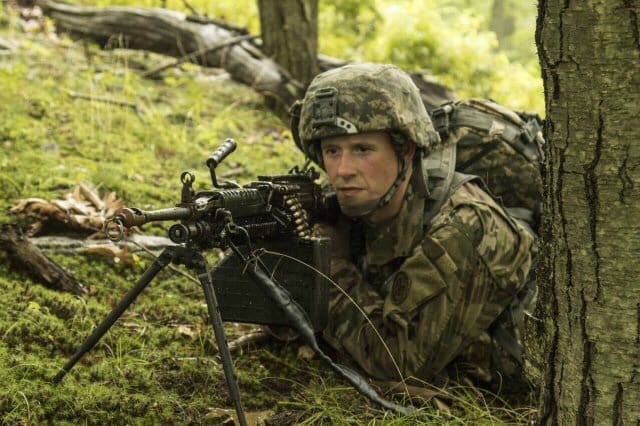
Spc. Brandon Weston, a resident of Buffalo, N.Y., assigned to B Company, 1st Battalion, 182nd Infantry Regiment, prepares to take aim with a Machine Gun, 7.62 mm, M240.

Soldiers also spend a large amount of time in a classroom setting to become knowledgeable on the duties they need to perform as modern-day Infantry Soldiers.

“There is a lot of good knowledge going around and a lot of good guys here,” said Spc. Michael A. Shriver, a prior-service Marine assigned to 2nd Battalion, 108th Infantry Regiment, New York Army National Guard.

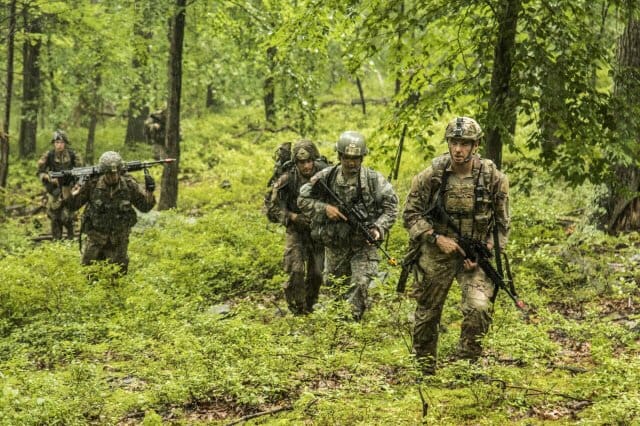
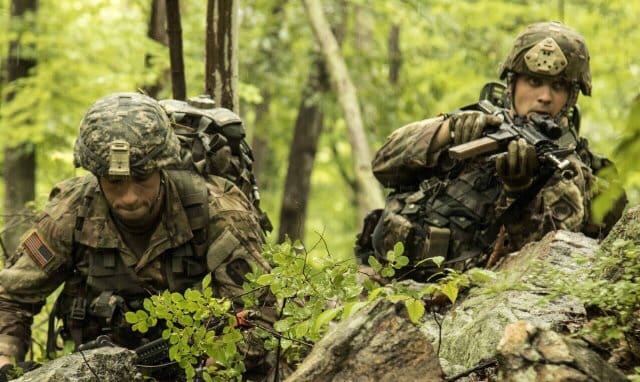
Army National Guard Soldiers from the Northeast Region at Infantry reclassification course 18-002 ruck march down a mountain.

Students learn to master some of the Infantry’s weapons systems like the Browning .50 Caliber Machine Gun and the M240 machine gun, while familiarizing themselves with other systems like the M320 grenade launcher and the M16 rifle with the M203 grenade launcher attachment.

They are also taught current scientific strategies on how to maintain a peak level of physical fitness that included safety considerations while working out, injury control, environmental considerations, and other techniques.

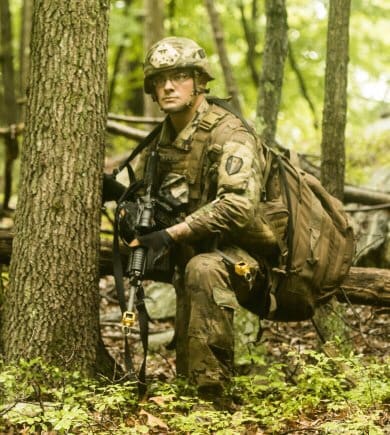
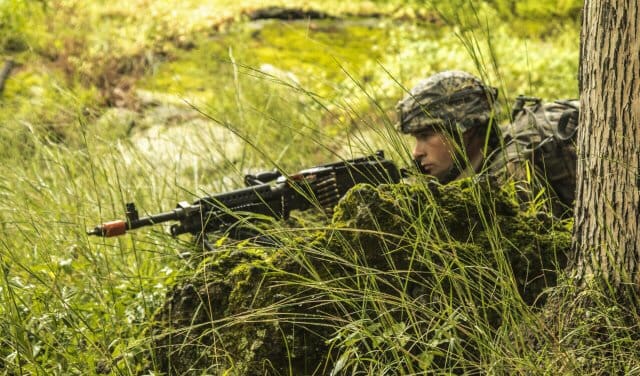
Spc. Zachary Pisani a native of Boston, Mass., assigned to Company C, 1st Battalion, 181st Infantry Regiment, takes aim while concealed behind a tree.

Fitness is a big concern for Infantry Soldiers since they train and operate with a high-level of physical activity.

“The ruck marches, loaded with at least 45 pounds of gear, and the Infantry 5-mile run were the most difficult part,” said Spc. Movado A. McKoy from Queens, a logistics specialist with 1st Battalion, 69th Infantry Regiment, New York Army National Guard.

What surprised McKoy was just how effective the instructions, tactics and procedures were at this level.

“The lessons we were taught trained us on how to tactically move in densely wooded areas,” said McKoy. “I want this occupation to prove to myself that I can do it.”

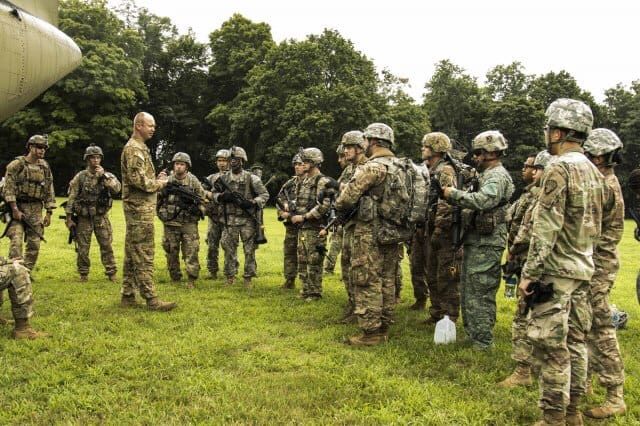
Army National Guard Soldiers from the Northeast Region at Infantry reclassification course 18-002, along with course support staff, receive a safety brief for the CH-47 Chinook helicopter before flying out for their final field training exercise.

Ten of the 15 Soldiers who started the course made it to the final task, a 48-hour-straight field training exercise, or FTX, in the mountains and woods at Camp Smith. That task was all that stood in their way to earn the sky blue U.S. Army Infantry colors and badge.

Camp Smith is a military installation of the New York Army National Guard in Cortlandt Manor, about 30 miles north of New York City. It consists of 1,900 acres with training assets and simulators.

Spc. Brandon Weston assigned to B Company, 1st Battalion, 182nd Infantry Regiment U.S., and Army Spc. Brandon Weston to B Company, 1st Battalion, 182nd Infantry Regiment, scramble for positions during a mock assault.

During the FTX, students go out as a platoon and are led by two of the course instructors. They move tactically throughout the woods while going up against role-playing enemy combatants made up of their course instructors and handpicked Soldiers.

“The two-day FTX was designed to test all they had been training on, and what they will required to enter the Infantry,” said Staff Sgt. Morgen P. Sealy, the course manager and an Afghanistan combat veteran.

Sealy explained their biggest challenge is that a lot of the units do not prep their students for a condensed and intense course like this.”The best part of the course is seeing the progression in the students from day one till when we get to the field,” said Sealy.

“We want heart, willingness to learn, self-motivation, the desire and the determination to succeed,” Dustman said. “My personal expectation is that after this course they keep learning the craft even more.”

Story and photos: CPL Nnaemeka Onyeagwa, New York National Guard. Photos of Infantry reclassification course 18-002 final field training exercise were taken at Camp Smith Training Site, Cortlandt Manor, N.Y., Aug. 13, 2018.