Danner Reckoning GTX

Archive for the ‘Guest Post’ Category

The Baldwin Files – The Fighting Load Continuum

Saturday, January 12th, 2019

In the mid-1980s, there was a great deal of re-emphasis on dismounted load planning and load discipline in the U.S. Army. Much of this effort fell under the rubric of the “Light Division” concept. It was a worthy endeavor to lighten a soldier’s load and improve tactical dismounted mobility; but ultimately the resulting initiatives had little enduring impact. Since then we have incrementally added a great deal to a soldier’s burden – essentially without removing a single ounce of legacy weight. Tactically useful items like body armor, individual radios and night vision devices have become standard issue for almost everyone in our combat formations. GPSs have supplanted analog maps and compasses. Likewise, all individual and crew served weapons now have some form of day and night optical systems; and, of course, all the new electronic tools need batteries. Lots and lots of batteries.




The net result is a considerable increase rather than any aspirational reduction of a soldier’s mission load in combat. On the plus side, all of this high-speed “light weight gear” gives the American military tactical and operational capabilities that are the envy of the world. Nevertheless, it was indeed fortuitous that operations in Afghanistan and Iraq quickly became almost exclusively vehicle-centric. Dismounted operations of any duration away from immediate vehicle support became a rare exception. In that sense, the increased soldier load was at least partially masked by the fact that vehicles have been readily available to carry the extra weight in theater. As a result, small unit leaders became pretty good at putting together sound vehicle load plans but did not have to spend much time addressing rucksack load planning. Not surprisingly, the art of dismounted load management atrophied rapidly after the first year or so of GWOT.

There is no leadership alchemy that can make 100 pounds of gear weigh any less than 100 pounds. Ultimately, the unit mission load weighs what it weighs. Leaders have to deal with that reality; it is an enduring problem that cannot be wished away or avoided. However, here are some bullet points that can help organize leaders’ thoughts and efforts to successfully manage soldiers’ individual combat loads.

Dismounted Load Management Principles

  1. Pre-mission planning should determine what a unit MUST carry to accomplish the assigned tactical task.
  2. Load discipline requires individual soldiers and leaders to work collectively to ensure the unit effectively carries what is required – no more and no less.
  3. The eternal conundrum: A leader must accept risk to keep individual loads as light as possible. Conversely, a leader cannot gamble with the mission – or with lives – just to lighten the load. Remember the Gilligan’s Island Rule; it is never safe to assume that any mission will only be a “Three Hour Tour.”
  4. Sound load planning and enforcement must always be based on mission dictates, NOT on achieving equal burden sharing or relative individual comfort.
  5. In other words, ensuring maximum probability of mission success and his soldiers’ survival must be a leader’s overarching priority; military necessity – not “fairness” – must be the focus.
  6. Nothing a soldier carries into combat belongs to him. In terms of load carriage, he is a self-actualized mobility platform transporting resources vital to completing his team’s mission.
  7. Every piece of equipment is expendable – if necessary – to accomplish the mission. I say again, ALL equipment is expendable!
  8. While lighter equipment alternatives are generally more desirable, a unit may often need to carry whatever item is most effective to support the mission – regardless of weight penalty.
  9. Likewise, if a piece of equipment or ordinance – no matter how heavy or bulky – is deemed mission essential the question is not IF it will be carried but rather HOW it will be carried.
  10. A good load plan is comprehensive, utilitarian, and flexible; it must also anticipate and designate deliberate load transition points to support the upcoming mission.
  11. Use pre-mission inspections and rehearsals to confirm if the load plan is correct, complete, and works as intended. Make adjustments as necessary.
  • Another factor that negatively influences the training of leaders in effective load management practices has been that the official terminology tends to be imprecise and even misleading. When ALICE was fielded in the mid-70s, the Army referred to only two load configurations: Fighting Load and Existence Load. The fighting load consisted of two full ammo pouches on the harness, first aid pouch, one canteen, the bayonet, and the etool. Nothing else. In temperate or hot climates, the ALICE medium rucksack – without frame – was supposed to be more than adequate to carry all of the other items needed to “exist in the field.” Which is a bizarre and inexplicable conclusion given how habitually overloaded solders had been in Vietnam. The fielding of MOLLE introduced three load configurations: The Light Fighting Load (FLC Vest only), The Assault Pack Load, and The Full Pack Load. Beyond identifying the standard load carriage items issued to soldiers, neither framework provides a very informative or useful construct for mission load planning.
  • I re-read parts of the 1990, FM 21-18, Foot Marches, for this article and I recommend it (or whatever newer version may be out there) as a good resource. Chapter 5, in particular, goes into a good deal of detail on soldier load planning considerations. It also explains additional concepts like “Approach March Load,” “Sustainment Load,” and “Contingency Load.” Unfortunately, the manual continues to perpetuate the notion that there is a distinct line between vest or harness only “fighting loads” and everything else. I vehemently disagree. Therefore, in the attached picture, I am outlining a more simplified, precise and functional way to think about planning, arranging, and distributing a soldier’s and a unit’s combat load. I call it “The Fighting Load Continuum.” The concept is simple. If moving on foot into combat then anything the unit deems essential enough to carry on soldiers’ backs is – by definition – a component of the individuals’ “fighting load.” Whether we are comfortable with that fact or not. Note: Items displayed in the picture are pieces of gear I had on hand and are presented only as visual aids to illustrate the concept.

    the-fighting-load-continuum2.jpg

    Starting from the left is the Minimum Fighting Load. In World War II, frogmen went into harm’s way with little more than a pair of UDT shorts and a Kabar knife. Tunnel Rats in Vietnam faced danger with only a 45 and a flashlight. It is also true that even today a good number of people on the battlefield have a sidearm as their only issued weapon. Obviously, that gives soldiers so marginally equipped a defensive capability but not an offensive capability. That is why the Minimum Fighting Load is highlighted in cautionary amber as clearly sub-optimum. Soldiers who have the primary mission of “closing with and destroying the enemy by fire and maneuver” need considerably more than the minimum. Starting with the “Standard” Fighting Load displayed second from the left. I have put “standard” in quotations because what constitutes a standard fighting load has changed countless times over the years for the American Military – not to mention other Armies. Generally, the baseline “fighting load” has been built around the “basic load” of ammunition for a rifleman in a given timeframe. Therefore, since the current standard is 210 rounds, we will start there – with the caveat that mission specific load planning may raise or lower that number considerably.

    Of course, a solder going into battle likely needs a few more tools in addition to his rifle and ammunition. Today, a couple of fragmentation grenades, a first aid kit, helmet, body armor, and water are usually considered part of a standard fighting load. Leaders, grenadiers, automatic riflemen, and those manning crew served weapons will have duty position specific items as well. A radio for a leader for example. Still, the “standard” fighting load is almost never sufficient without at least some augmentation. Enter the “Enhanced Fighting Load” that adds a small backpack to the Standard Fighting Load configuration. This pack may be a Modular Assault Pack (MAP) as shown or something slightly larger. MAPs have been issued in SOF units for at least the last 12 years or so. A MAP is not common issue with MOLLE or FILBE; however, since units often buy “off the shelf” some non-SOF units probably issue these as well.

    The earliest MAPs I encountered were smaller than the sample I have on display. They had no shoulder straps and were designed to be mounted directly onto body armor via PALs. Other than the “modularity” of the design, they were not much different from the small hydration packs Camelbak produced as far back as the 80s. The newer, larger versions still have the PALs direct mounting option. However, it is more common to see them used as “day packs” or “go bags” with the detachable shoulder straps attached. That arrangement works better riding or getting into and out of vehicles and makes the pack’s contents more quickly accessible. This MAP is ~1200 cubic inches. By comparison, the Army issue Assault Pack is ~2000 cubic inches and the Marine Assault Pack is slightly larger at ~2300 cubic inches (neither shown). Those packs are not designed to be directly attached to individual armor, but rather can be buckled onto the top of the full sized rucksacks.

    Next over would be the Supplementary Fighting Load. That means a larger pack to carry more stuff. These packs represent an intermediate load-carriage solution. They are often called “3 Day Packs” and also date back to commercial versions popular with soldiers in the 80s. These packs tend to range in size from ~2000 cubic inches to ~3500 cubic inches. Indeed, the issue Army and Marine Assault Packs actually straddle the low end of this category of medium rucksacks. Likewise, there are numerous mission specific versions of packs in this size range currently being issued to medics, JTACs, EOD, as well as machinegun, mortar, and Anti-Tank crews. The aforementioned smaller assault packs are simple not of adequate size to carry the volume and weight that these specialists habitually need for their tactical mission. The example shown is the Army’s Medium Rucksack that has ~3000 cubic inches of space. I have a couple of extra pouches mounted as well as a beavertail so this one is probably in the ~3500 cubic inch range.

    Anything bigger than that falls into the Full Sized Rucksack class, a.k.a. the Maximum Fighting Load in the Fighting Load Continuum. For reference, the large ALICE is approximately ~3800 cubic inches. Both the MOLLE and the FILBE rucksacks are ~4000 alone and up too ~5000 cubic inches with only a pair of Sustainment Pouches added. In terms of volume, both of those two standard rucksacks, with sustainment pouches and issue assault packs attached are ~7000 cubic inches or more. In other words, almost equivalent to two Large ALICE packs. That explains why carrying a Maximum Fighting Load automatically moves a soldier’s burden from the lower-risk green range into the tactically riskier cautionary amber zone. To be clear, soldiers have to be able to fight with the full rucksack on their backs. It is not always tactically sound to drop rucks when the shooting starts. For example, when the situation is untenable and the unit has to break contact under pressure.

    Then there is the perpetual issue of the Overburden Load. Soldier overloading actually extends beyond the Fighting Load Continuum but remains inexorably linked and must always be considered in realistic load planning. The Overburden Load can be just about anything deemed mission essential but excessive to the Maximum Fighting Load. Red indicates that it represents undesirable high-risk but is nevertheless often unavoidable. As I mentioned in a previous article on Packboards, for extended operations in particular it may be expedient to deliberately put as much on the backs of some soldiers as they can carry. However, doing that makes those soldiers combat ineffective until they can dump that excessive load. Other, less burdened, troops will have to provide security for them because they – sometimes quite literally – have their hands full. Intentional overloading is actually quite common in one specific situation. That is when evacuating the wounded. As a rule, soldiers carrying a casualty are effectively out of the fight until they can at least drop off their injured teammate in some relatively safer location.

    In the end, leaders have to face the fact that for the majority of dismounted combat operations – even relatively short ones – it is all but impossible to avoid at least some overloading entirely. However, as indicated by the color-coded arrows, the goal of effective load management should be to keep as many of a unit’s soldiers as possible in the more combat effective green range – for as much of the time as possible – rather than the cautionary amber or high-risk red zones.

    To be continued in Part II.

    LTC Terry Baldwin, US Army (Ret) served on active duty from 1975-2011 in various Infantry and Special Forces assignments. SSD is blessed to have him as both reader and contributor.

    Natick Evaluates New Boot Technologies

    Thursday, January 10th, 2019

    NATICK, Mass. — The U.S. Army Research, Development and Engineering Command Soldier Center at Natick is testing new Army Combat Boot (ACB) prototypes at three different basic training and active duty installations over the next four months. The effort will gather Soldier feedback toward development of improved footwear.

    The U.S. Army Research, Development and Engineering Command Soldier Center at Natick is testing new Army Combat Boot (ACB) prototypes at three different basic training and active duty installations over the next four months. The effort will gather Soldier feedback toward development of improved footwear. Pictured, a U.S. Army Soldier from the 1-114th Infantry Regiment stands in the mud holding 7.62mm ammunition during M240 machine gun weapons training on Joint Base McGuire-Dix-Lakehurst, N.J., Nov. 6, 2018. (Photo Credit: Master Sgt. Matt Hecht)

    The Army’s current inventory of boots includes seven different styles designed for different environments and climates. The boots issued initially to recruits are the Hot Weather and Temperate Weather Army Combat Boots. Requirements for these are managed by the Army Uniform Board as part of the recruit “Clothing Bag.” The Program Executive Office Soldier’s Project Manager Soldier Protection and Individual Equipment maintains and updates the specifications for both boots.

    The Army’s current inventory of boots includes seven different styles designed for different environments and climates. The boots issued initially to recruits are the Hot Weather and Temperate Weather Army Combat Boots. (Photo Credit: Mr. David Kamm (RDECOM))

    The current generation of Army Combat Boots has not undergone substantial technical or material changes since 2010. New material and technologies now exist that may improve physical performance and increase Soldier comfort.

    “Great strides have been made recently in the Army’s environment specific footwear, for jungle, mountain, or cold weather locations, but there is substantial room for improvement in the general purpose boots which are issued to new recruits,” explains Anita Perkins, RDECOM Soldier Center footwear research engineer and technical lead for the Army Combat Boot Improvement effort. “Most components of these combat boots have not been updated in almost 30 years.”

    Surveys conducted by the Soldier Center report Soldier satisfaction with ACBs is lower than that with commercial-off-the-shelf, or COTS, boots, leading many Soldiers to purchase and wear COTS boots.

    “The survey of over 14,000 Soldiers world-wide discovered that almost 50% choose to wear COTS combat boots instead of Army-issued boots,” Perkins said. “Many Soldiers reported choosing combat boots from the commercial market because the COTS boots are lighter, more flexible, require less break-in time, and feel more like athletic shoes than traditional combat boots or work boots.

    Unfortunately, these characteristics often come at the cost of durability and protection.”

    The Soldier Center’s Footwear Performance team believes new technologies can bridge the gap between the lightweight, comfortable, COTS boots and the durable, protective, Army boots. Recent advancements in synthetic materials and rapid prototyping can produce a boot with potentially the same protection, support, and durability of current Army boots, but lighter and more comfortable out of the box. To reach this goal, the Soldier Center is evaluating new types of leather and even some man-made materials which are much more flexible than the heavy-duty, cattle hide leather used in the current boots.

    “Also included in the prototypes we are testing are new types of rubber and outsole designs, which are more than 30% lighter than the outsoles on the current boots,” said Al Adams, team leader for the Soldier Clothing and Configuration Management Team at the Soldier Center.

    When working with industry to develop the prototype boots for this effort, Adams and Perkins put an emphasis on cutting weight. The boots being tested are up to 1.5 pounds lighter per pair than the ACBs currently being issued.

    “In terms of energy expenditure or calories burned, 1-pound of weight at the feet is equivalent to 4-pounds in your rucksack,” Adams said.

    The test boots will be fitted and fielded to 800 basic trainees at Fort Leonard Wood, Missouri and Fort Jackson, South Carolina, followed by 800 pairs going to infantry Soldiers at Fort Bliss, Texas. The Soldier Center team will be hand-fitting each pair of prototype boots throughout the month of January and then return in March and April to collect surveys and conduct focus groups to gather specific feedback.

    “Soldiers live in their boots and many will tell you that there is no piece of equipment more important to their lethality and readiness,” said Adams. “A bad pair of boots will ruin a Soldier’s day and possibly result in injuries, so we really believe that each of these prototype boots have the potential to improve the lives of Soldiers”.

    Simultaneous to the field testing, lab testing will be conducted on the boots at the Soldier Center to quantify characteristics like flexibility, cushioning, cut/abrasion resistance, and breathability. The combination of lab testing and Soldier recommendations will identify Soldier-desired improvements to the boot prototypes and rank the state-of-the-art materials and designs for Soldier acceptance, durability, and safety. The Soldier Center will then provide recommendations to PM SPIE and the Army Uniform Board to drive the next generation of Army Combat Boots.

    “The development of new boots take advantage of the latest materials technology, and are functional and comfortable, is critical to ensuring that our Soldiers are ready to fight and win in any environment,” said Doug Tamilio, director of the RDECOM Soldier Center. “Soldiers are the Army’s greatest asset, and we owe it to them to make them more lethal to win our nation’s wars, and then come home safely.”

    By RDECOM Soldier Center Public Affairs

    Brigantes Presents – High Angle Solutions – NSN announced for Lundhags Expedition 75

    Wednesday, January 9th, 2019

    The Expedition 75 has now been allocated a NATO stock number NSN:  8430-20-008-5818 (For a size 9) contact us for further number details.

    To guarantee delivery in time for winter 2019 deployments, orders must be made by the 31st January 2019.

    The Expedition Guide 75 is designed for the operator out in the frozen North. (or South) It is the latest in a long line of unique boots manufactured by Swedish company Lundhags, a longstanding family brand, specialising in making footwear, clothing and equipment. They focus on the needs of the hardest users.

    A number of specialist military units have them as the in-service ski boot. (including Sirius Patrol) The new lighter and more streamlined boot with its monocoque style of construction is being used by the British forces to provide a versatile, light and reliable boot for operations on the Northern Flank.

    As the Expedition 75 has the key features that give it the ability to operate in sub-zero temperatures, this boot provides an excellent balance between skiing and the normal movement required to conduct military operations.

    Order deadlines for the boot to ensure delivery for winter 2019 is the 31st January.

    Contact: international@brigantes.com

    Or for UK customers: warrior@brigantes.com


    SCUBAPRO Sunday – Go Sport Fin

    Sunday, January 6th, 2019


    The Go Sport Fin has a new boot fit fin design. As the name implies, SCUBAPRO new Go Sport Fin is designed for when you need a lightweight fin with a lot of power. Lightweight, comfortable, durable, and a fast and nimble performer, the Go is the ideal fin for diving, snorkeling and surface swimming. 

    Lightweight: When it comes to a premium light fin, nothing compares to the Go. With integrating high quality with lightweight. This translates into convenience and weight savings on the road, and comfort and ease of use in the water. 

    Super Comfortable: The Go Sport design combines the fitment benefits of an open heel fin. The replaceable self-adjusting bungee heel strap allows for a versatile fit — one diver can wear multiple sizes. The strap also makes it easy to don and doff the fin, and it fits comfortably against a booted heel. 

    Ultra Durable: While extremely comfortable, the Go Sport is also virtually indestructible. Its sturdy 100% Monprene construction avoids the problems of de-lamination, broken blades and torn foot pockets that tend to plague average thermoplastic fins. This enables the Go Sport to stand up to long-term, heavy-duty use. 

    High Performance: The Go fin excels in strength, comfort, and convenience, but where it really shines is in kicking performance. The Go is built with a 25° pre-angled blade with a central power panel that provides longitudinal rigidity and creates a channeling effect. Power bars on the underside of the rails prevent over-flex; this helps maintain the optimum angle of attack under high load conditions. The result: you get a lightweight fin that delivers speed, power, stability and maneuverability with a minimum of effort.


    Travel-Friendly: Being lightweight is always a plus when traveling, but so is compactness. Go fins are designed to fit easily in IATA carry-on compliant luggage. Even better, they pack extremely well due to an innovative piggyback stack system. An interlocking tooth on one fin blade hooks into the second fin, and then the bungee strap from the second fin hooks the heel of the first fin into place. It’s a snug pairing that makes packing and traveling that much easier. The perfect addition to the SCUBAPRO fin range, the Go Sport dedicated travel fin is lightweight, comfortable and virtually indestructible.

    This truly is one of the best fins I have ever used. It is very compact and light. It is great for morning PTs or when you have to carry fins out in the field. It can be used for over the beach or river and stream crossings.

    www.scubapro.com

    FirstSpear Friday Focus – Gadget Bag

    Friday, January 4th, 2019

    Gadget bags are now available in the non-stocking non-standard section of the FirstSpear web store.

    100% American made with simple carry handle, loop patch for your cell tags on one side and clear window on the other. Approximately 10 x 5 x 4 these are perfect for small electronics or a simple hygiene kit.

    First quality goods ready to ship. Available while supplies last.

    www.first-spear.com/packs-bags/bags/gadget-bag

    US Air Force Updates Insignia Guidance for OCP Uniforms

    Monday, December 31st, 2018

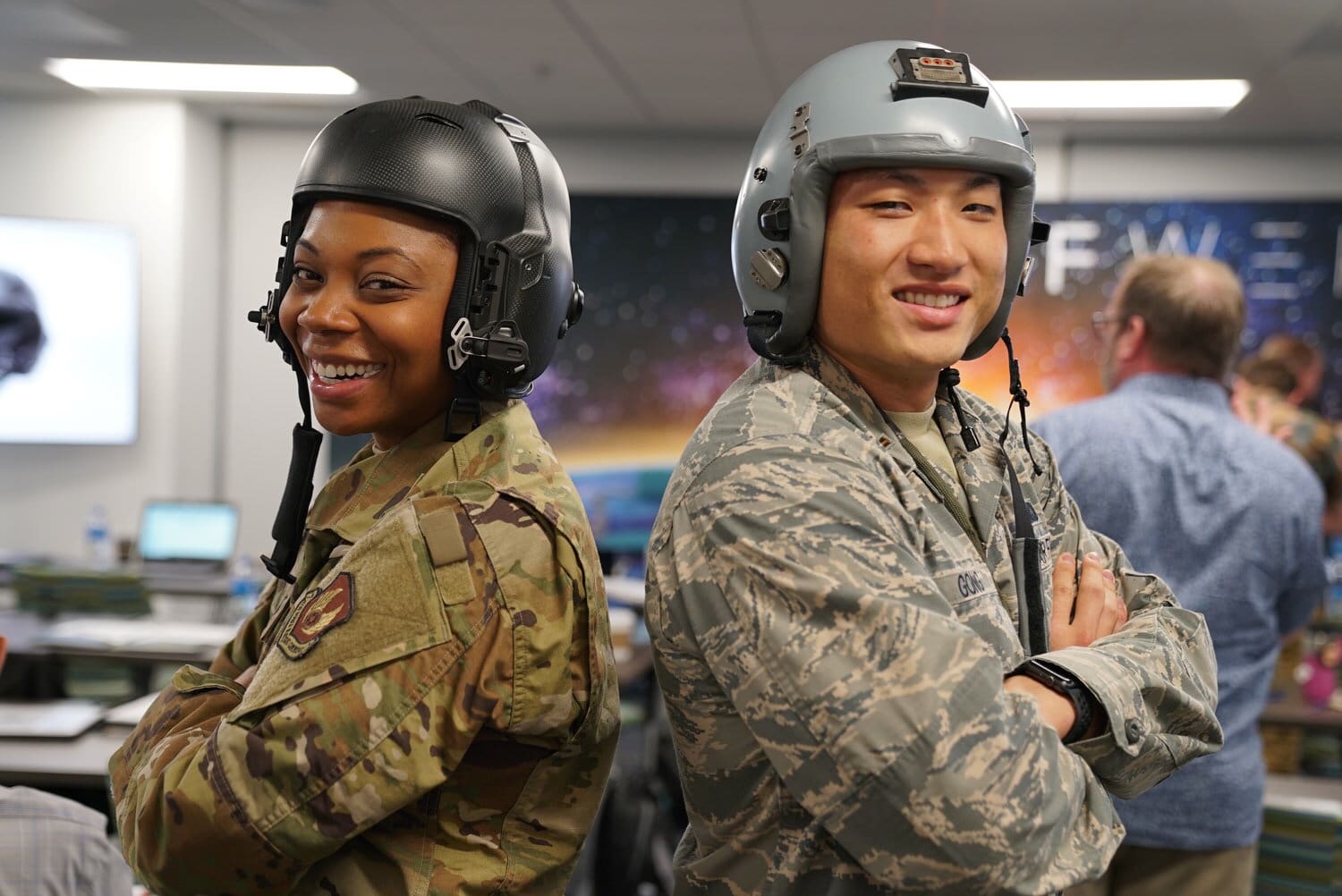
    WESTOVER AIR RESERVE BASE, Mass. (AFNS) — Airmen wearing OCP uniforms are authorized to add their former Airmen Battle Uniform subdued patches until the mandatory brown subdued ones go into effect.

    E9308B3F-1758-4E66-AC2C-A3A76CC69716

    Also, according to Air Force Instruction 36-2903, the U.S. flag patch is mandatory and will be subdued using the spice brown color criteria, centered at the top of velcro and worn while in–garrison and deployed.

    Current subdued black and green U.S. flags may be worn until June 1, 2020, then spice brown will be the only accepted version. Infra-red U.S. flags are not authorized.

    The higher headquarters patch is mandatory and will be subdued using the spice brown color criteria and centered under the U.S. flag patch. The current subdued version of the higher headquarters patch may be worn until the patch color conversion has been completed or until April 1, 2021, whichever is sooner.

    A maximum of two patches may be worn.

    SMSgt Andrew Biscoe, Air Force News Service

    SCUBAPRO Sunday Air Consumption

    Sunday, December 30th, 2018

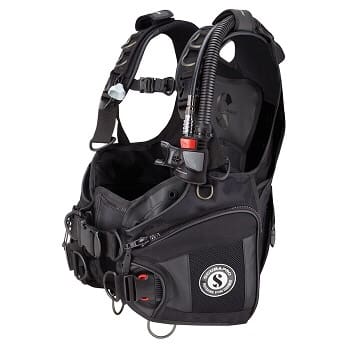
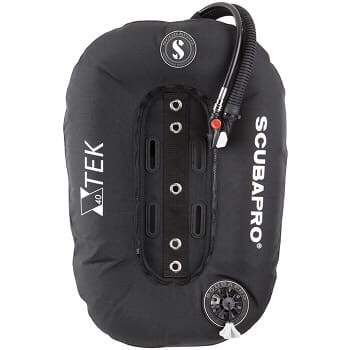
    It’s not uncommon for two divers to use different amounts of air, even if they are diving the same dive profile. Different factors will affect how much air you will consume until you learn good diving practices and buoyancy control. If you have been diving for a long time and you still go thru your air faster then the people around you, there are some things you can do to help improve your air consumption. Trying to conserve energy, controlling your breathing, and reducing your drag while diving. Planning your dive is the first step. Plan your dive to be underwater for the shortest amount of time as possible and not coming up and going off and then back on bag. If you are going to cover a lot of distance, turtleback for as long as possible to save as much air as you can.

    Reducing Drag

    Water provides enough resistance on your body, and it doesn’t help when you have on a bulky BC, that is sticking out like a parachute. Try and tuck away anything that hangs and floats behind you. You want your resting position in the water to be as close to horizontal as possible. This more streamlined profile results in less exertion during the dive Try and use retractors and quick magnetic clips on all gauges and hoses. They allow you to look at your gauges and when you let them go, they go right back into place. Lastly, try and keep a good body position keep your hands in front of or as close to your body as possible, and wear a BCD that fits appropriately. Some BCD has a bungee on them to keep them tighter and then when they need to be inflated; the bungee allows for that. This will significantly reduce your drag in the water and help you improve your air consumption.

    Slow Down

    This is why you have been taught to swim at a certain pace. Normally for combat swimmers 3 min/ 100yards. If you stay with your pace, this will help maintain your breathing rate. Your movement in the water should be minimal, try not to flail around with your arms or kick furiously. Keep each fin stroke as short as possible, as a broad stroke expends a lot more energy. Your legs use the most O2. The right pair of fins will help with this. The reason they make so many different types of fins is that everyone’s kick is different. Just because they are right for your swim buddy doesn’t mean they will be right for you.    

    Relax

    Be conscious of your breathing underwater. Try not to hold your breath or skip breaths. Sometimes when working and doing different things underwater, it will interrupt your normal rhythm and change your breathing without you noticing. Take slow and complete breaths, exhaling completely before inhaling. Stay warm. Know the water conditions you are going into and choose the right wetsuit thickness. Being cold drains more energy from your body that means you’ll use more air. Lastly, a quality regulator can also help make breathing more comfortable and easy to control. An old trick is to put your tongue on the roof of your mouth. This will help slow you down and lets less air in (that is the theory). If diving closed circuit make sure your mouthpiece fits property if you are moving it around a lot or if it feels like it is being pulled out or fighting to keep it in it will affect your breathing. 

    Lastly, try and dive more. As the military gets back into the water, and there are more opportunities to get into the water you will get better at it. Don’t wait until you are diving as part of your work up, try and get into the water as much as you can. Then when you are in the water try and do as much as you can to wear everything you usually would, so you can get used to it and set all your gear up correctly.  

    www.scubapro.com

    Futures Command‘s 2018 Modernization Stories

    Saturday, December 29th, 2018

    FORT MEADE, Md. — The Army has initiated many changes to help modernize the service, bolster readiness, and increase lethality.

    Below is a list of some of the biggest modernization stories that impacted the force in 2018. (Links to the original stories follow this article.)

    FUTURES COMMAND FINDS HOME

    In July, senior leaders announced that Austin, Texas would be the new home for Army Futures Command.

    Selected from about 150 competing locations, Austin offered a growing community of professionals within the science and tech industries. Further, the city hosted academic institutions with thousands of graduates in science, technology, engineering, and mathematics fields.

    Back in October 2017, the Army announced its intent to create a new command to drive the service’s modernization efforts. Army Futures Command was heralded as one of the most significant Army reorganization efforts since 1973.

    In August, Army senior leaders converged in Austin to unveil AFC’s new headquarters in the University of Texas System building.

    During the assumption of command ceremony, Chief of Staff of the Army Gen. Mark A. Milley unfurled and presented the Army Futures Command flag to Gen. Mike Murray, the newly-appointed AFC commander.

    Closing out the year, AFC unveiled its new “golden anvil” shoulder sleeve insignia and distinctive unit insignia, harkening back to former Gen. Dwight D. Eisenhower’s personal coat of arms.

    MULTI-DOMAIN BATTLE

    Army leaders recently released “The U.S. Army in Multi-Domain Operations 2028,” which outlines possible solutions to counter and defeat layers of stand-off created by adversaries.

    Referred to as MDO Concept 1.5, the new pamphlet published by U.S. Training and Doctrine Command refines the force’s Multi-Domain Battle concept released last year.

    The concept asserts that over the years adversaries have studied how the U.S. military operates. Emerging technologies — such as artificial intelligence, hypersonics, machine learning, nanotechnology, and robotics — have also changed the character of war.

    The release of TRADOC Pamphlet 525-3-1 serves as a first step in the force’s doctrinal evolution, officials said.

    MARKSMAN RIFLE & NIGHT BINOCULAR

    This fall, the Army began fielding the new Squad Designated Marksman Rifle to the first selected units. A limited-user test of the SDM-R is also underway now at Fort Bliss, Texas.

    The rifle is based on the Heckler and Koch G28E-110 Compact Semi-Automatic Sniper System, or CSASS, and provides infantry, scout, and engineer squads the capability to engage with accurate rifle fire at longer ranges.

    Additionally, this year the Army tested a new binocular with a wireless connection to rifle sites. The Enhanced Night Vision Goggle-Binocular, or ENVG-B, is scheduled for release to selected units sometime in fiscal year 2019.

    The new device has both night vision and thermal-sensing capabilities and stereoscopic binocular depth perception, providing Soldiers with an illusion of depth on a flat image.

    During testing, Soldiers had a 100 percent improvement in weapons qualifications, along with a 300 percent increase in detection of targets in day and night environments, and a 30 to 50 percent decrease in the time taken to shoot a target.

    Soldiers that tested the new ENVG-B considered it to be “a game changer.”

    IMPROVED GHILLIE SUIT

    The Army is working to replace its current Flame Resistant Ghillie System, which Soldiers consider to be bulky and somewhat uncomfortable at higher temperatures.

    The new Improved Ghillie System will be modular and may be worn over a Soldier’s field uniform. Soldiers should be able to take apart the IGS and use pieces as needed.

    The goal is for the IGS to cost less than the current $1,300 FRGS, and still have flame-resistant properties.

    HYPERSONICS

    The Army is working to develop unique hypersonic weapons, similar to precision technology currently in development by the Air Force and Navy.

    Hypersonic weapons move five times faster than the speed of sound and are designed to potentially deliver a precision-guided airstrike anywhere in the world within an hour.

    While the Army establishes its hypersonic program office, representatives from the Army and other services will continue to work together to develop the military’s hypersonic weapons capability.

    Currently, the joint team is working to create a standard “hypersonic glide body” to provide a means to deploy a hypersonic weapon.

    IP MANAGEMENT POLICY

    Secretary of the Army Mark T. Esper recently approved the new Intellectual Property Management Policy to support the force’s readiness and modernization efforts.

    Before the new policy, the Army lacked a coordinated strategy to secure IP rights and fulfill its long-term sustainment goals. Previous examples of the acquisition process have shown that the Army often requests either too little, or too much IP.

    The new policy attempts to kick off a cultural change within the Army and create a proactive approach to IP management and acquisition.

    IMPROVEMENTS TO COMMAND POST TECHNOLOGY, MISSION COMMAND

    The U.S. Army Communications-Electronics Research, Development, and Engineering Center revealed 15 Soldier-vetted technologies this year designed to improve command post capabilities.

    For the past three years, CERDEC’s expeditionary Mission Command Science and Technology Objective has worked to improve command post infrastructure.

    Overall, the new technologies will make it quicker and easier for Soldiers to both setup and tear down a command post and will help improve command post connectivity, agility, and scalability.

    ARTIFICIAL INTELLIGENCE

    In the future, the Army could employ artificial intelligence to help process and simplify information, augment current or future systems, or enhance an operator or commander’s decision-making process.

    Although the employment of artificial intelligence is still in its infancy, AI could aid Soldiers on the battlefield by providing leap-ahead technologies to help the force survive and win, according to Vice Chief of Staff of the Army Gen. James C. McConville.

    For example, AI capabilities could control robotic loader and firing mechanisms or provide targeting recognition capabilities to support Soldiers in ground combat. Further, AI could help determine the best time to perform maintenance or replace parts.

    Overall, AI is one of the Department of Defense’s top priorities. The development and implementation of AI will be a critical component of other DOD priorities such as hypersonic weapons, and autonomous ground and air unmanned systems.

    NEUROSTIMULATION

    The U.S. Army Natick Soldier Research, Development and Engineering Center has been experimenting with neurostimulation at the Center for Applied Brain and Cognitive Sciences in Medford, Massachusetts.

    Volunteers in the program have shown an increase in ability or attention span, improved navigation performance, or enhanced motor skills when participating in a series of controlled tasks within a testing environment.

    Further, Soldier participating in the program shortly after initial-entry training have shown signs of accelerated learning. This increase in learning has the potential of closing the gap between low and high performers on specific tasks.

    NETWORK

    Strengthening the Army’s network against increasing cyber threats, all while making it accessible across each level of the Army, has become a crucial point of emphasis for Army leaders.

    With network modernization as a top priority, the Army has set initiatives to develop an integrated network to win battles in peer-contested environments and work toward joint coalition interoperability.

    Moving forward, the Army plans to scale the integrated network to brigade-sized formations. The service will start fielding formations in 2020.

    By Devon L. Suits, Army News Service