TYR Tactical

Archive for the ‘Guest Post’ Category

Marine Corps Systems Command to Showcase Tech, Innovation at Sea Air Space

Sunday, April 8th, 2018

MARINE CORPS BASE QUANTICO, VA. —

As the Marine Corps presses towards modernization to meet the demands of the strategic environment, Marine Corps Systems Command will showcase some of its latest gear at the 53rd annual Sea Air Space Exposition April 9-11 at the Gaylord Convention Center in National Harbor, Maryland.

“This year’s exhibit demonstrates a slice of what our Command is doing to equip our Marines,” said command spokesperson Barb Hamby. “The future maritime environment and threat landscape requires the latest advances in technology to outperform our competitors in lethality, speed, maneuverability, and fires.”

The following systems and equipment will be showcased in the MARCORSYSCOM booth #2705:

Target Handoff System Version 2

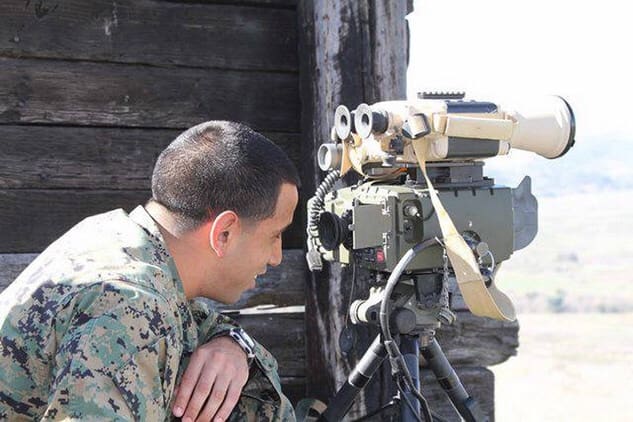
The Target Handoff System Version 2, or THS V.2, is a portable system designed for use by dismounted Marines to locate targets, pinpoint global positioning coordinates and call for close air, artillery and naval fire support using secure digital communications. Marine Corps Systems Command will feature the THS V.2 along with other equipment at the Sea Air Space Exposition April 9-11. (U.S. Air Force Photo by Staff Sgt. Joe Laws)

The Target Handoff System Version 2 is a portable system that uses commercial off-the-shelf smart phones designed for use by dismounted Marines to locate targets, pinpoint global positioning coordinates and call for close air, artillery and naval fire support using secure digital communications. The upgraded system includes a laser range finder, video down link receiver and a combat net radio.

An upgrade to the current system, THS V.2 reduces the system’s total weight by half and includes more intuitive software.

Additive Manufacturing

In the last few years, the Marine Corps has continued its exploration of additive manufacturing, or 3D printing, to quickly repair and replace parts for weapons, vehicles and equipment.

The Corps uses additive manufacturing to reduce maintenance costs, increase equipment readiness and improve combat effectiveness. Additionally, it offers Marines opportunities to solve day-to-day and low-risk challenges, such as those encountered on aircraft, weapons, vehicles and communications equipment, by offering the capability to repair and replace individual parts onsite.

Indoor Simulated Marksmanship Trainer III

The Indoor Simulated Marksmanship Trainer III has three added weapons, 3-D imagery, and enhanced training modes, giving Marines a better, more realistic training experience as they prepare for the complexities of modern warfare.

ISMT III ups the ante by providing wireless connectivity to the M9 service pistol, M4 carbine and adding three new wireless weapons—the M27 Infantry Automatic Rifle, M32A1 Multi-Shot Grenade Launcher and M72 Light Anti-Tank Weapons. ISMT helps to build fundamentals of muscle memory for Marines so that when they hit the range, they are ready to respond to real-life scenarios.

Away from the exhibit floor, Brig. Gen. Joseph Shrader, commander, MCSC will participate in the “Accelerated Acquisition” panel April 11, to discuss Marine Corps initiatives to speed delivery of systems and equipment to the fleet.

As the systems command of the Marine Corps, MCSC equips Marine forces with ground weapon and information technology systems to accomplish their warfighting mission.

By Kaitlin Kelly, MCSC Office of Public Affairs and Communication | Marine Corps Systems Command

Frag Out! Presents – Sport MSBS / GROT

Thursday, April 5th, 2018

Our friends at Frag Out! Magazine have been gracious enough to allow us to share their exclusive look at the Sport variant of the Polish MSBS/GROT rifle.

Civilian MSBS/GROT S16 FB-M1 coming soon
Today we had an opportunity to pick up one of the first .223 Rem GROT S16 FB-M1, the long-awaited civilian-legal version of MSBS/GROT.

9294E87A-9F86-43ED-91AC-F8E68EF71BF8

223 Rem GROT S16 FB-M1  is semi-automatic version 5.56×45 NATO Fabryka Broni ?ucznik-Radom MSBS/GROT C16 FB-M1 assault rifles, initially adopted by Polish Armed Forces in 2017. The Fabryka Broni ?ucznik-Radom announced that rifles will be available for sale next week.

74218F87-5261-44E9-9735-BBCBAA7FBA17

The pictured GROT S16 FB-M1 comes from the first production run of 500 pieces. First 100 pieces will be limited, to commemorate Polish Independence (regained in 1918), edition which will have some special laser-engraved markings and certificate. Every rifle will come with engraved Polish White Eagle on the right side of the upper receiver.

2B1D97C3-0A4F-4930-9F4F-D8E48C9C00A1

Semi-automatic GROT S16 FB-M1 comes assembled with side-folded collapsible stock, Magpul M-LOK attachment system handguard (officially licensed by M-LOK) with three short MIL-STD-1913 rails, folded ironsights, Magpul MOE handguard, green translucent polymer 30 round magazine, cleaning kit, manual, warranty card, etc. The rifle comes factory wrapped in anti-corrosion foil (in the past, rifles were packed in paper…, future is here!) and packed in the hard case.

F92E2224-D8F9-4DA9-B701-3095DC36512A

What are the differences between the  GROT S16 FB-M1 and GROT C16 FB-M1, except being a semi-only rifle? Of course, the standard fire control group was replaced with two-position (Safe & Single) selector lever (90 degree rotation). Icons are stamped, but not painted. FCG is ambidextrous. Next thing is the above mentioned M-LOK handguard with four mounting slots at the 3, 5, 6, 7 and 9 o’clock and three at 2 and 11 o’clock. The 16” MIL-SPEC quick-changeable fluted barrel with 1:9 twist has 1/2-28-UNEF-2A thread, so the users can easily change the muzzle device. The GROT version adopted by Polish Army has muzzle device which can be only removed by armorer. Rifle is compatible with .223 Rem and 5.56×45 rounds.

2D71F571-D89E-4103-A2D7-EBD73AE6278F

The civilian version of the rifle does not feature the bayonet lug. Since the bayonet in military rifle is attached to the lug and to the muzzle device itself, it is impossible to fix it to the S16 FB-M1. The QD sling attachment point location was changed accordingly to the feedback from military users.

D4D60257-5D05-43D6-B17B-E0DE2842447D

There were also some changes in the internals of the rifle – except the lack of full-auto capability. The bolt carrier was modified and the six wolfram plunges were removed. The S16 FB-M1 trigger works different too, it’s not MIL-SPEC one either the Match. The trigger reset is quite long, so no quick double taps. Unfortunately, it is not modular and cannot be replaced without some serious modification of the rifle.

78238E50-9749-4797-97C4-8BF269952B71

Driving home from the FB Radom, we decided to have a short trip to shooting range to check this piece out. Well, basically it shoots close to the military rifle. It is stable during shooting, fully ambidextrous and comes with the 90 degree rotation fire control group. The selector switch has quite strong resistance, but we hope it will soon go on. There was some wobbling in the collapsible stock. We were using cheap GGG rounds and there was no stoppages. According to the manual, the S16 FB-M1 is compatible with almost all STANAG magazines, except the Magpul PMAG M3… In upcoming days and months we will see how the rifle will perform when we will get it some serious use.

493829A5-1986-4BEC-9E28-090F81DC2B03

Some tech specs:

Caliber: 5.56×45 mm NATO/.223 Remington

Overall length: 681 mm (26.81”) with folded stock or 903 mm (35.55”) with stock fully extended

Barrel length: 406 mm (16”)

Barrel twist: 1:9

Weight: 3.7 kg (8.16 lbs)

Unmanned Technology: Breaching the Battlefield

Wednesday, April 4th, 2018

GRAFENWOEHR, Germany — U.S. Soldiers, Marines, Department of Defense civilians, and troops from the United Kingdom observed and tested a series of unmanned, remote-controlled ground vehicles during a combined training event at Grafenwoehr Training Area, Germany, April 2, 2018.

CD9CEEA3-68EA-4444-9EFF-259B46EE4724
A M58 Wolf is remotely controlled to release a cloud of smoke during a multinational joint equipment U.S. military training exercise at Grafenwoehr Training Area, Germany, April 2, 2018 in preparation for a Robotic Complex Breach Concept demonstration.

The training event was conducted in preparation for a larger demonstration of unmanned capabilities, called the Robotic Complex Breach Concept, scheduled for later this week.

E7A45898-0C0B-4D9A-8DA4-1A2A31BF98CC
Ray Moldovan (left), a senior product management specialist with General Dynamics, explains to a group of U.S. Army Soldiers how to remotely control a M58 Wolf during a multinational joint equipment training exercise.

“Being able to take Soldiers out of harm’s way and accomplish the mission is very an attractive option to any commander,” said Curry. “It’s a capability that the enemy will not know how to counteract when we implement it. This type of technology enables us to stretch further while conserving resources,” said U.S. Army Lt. Col. Jesse Curry, commander of the 82nd Brigade Engineer Battalion, 2nd Armored Brigade Combat Team, 1st Infantry Division.

AB02890D-84DA-4748-A276-AC007E9B71EE
An automated direct and indirect mortar system is operated from a distance by U.S. Soldiers during a multinational joint equipment training exercise with the U.S. military.

The military-vehicle mounted Automated Direct and Indirect Mortar, the M58 Wolf Smoke Generator, and the ‘Terrier’ armored digger were some of the existing technologies used throughout the exercise. All were outfitted with new technology that allows them to be remotely controlled.

F80ADF90-08D9-4B0C-B09B-232820122053
An automated direct and indirect mortar system is operated from a distance by U.S. Soldiers during a multinational joint equipment training exercise.

“This has been a great opportunity to show each other how to work on new systems, as well as each other’s systems,” said U.K. army Staff Sgt. Joe Ferries, a combat engineer with the U.K. 22nd Engineer Regiment, 8th Engineer Brigade. “All the lessons learned here are going to have massive benefits for our armies and the next mission.”

B410FE07-5451-4427-BBE8-9354495BB832
Mike Mackiewicz (right), demonstrates to U.S. Army Lt. Col. Jesse Curry (left), the commander of the 82nd Brigade Engineer Battalion, 2nd Armored Brigade Combat Team, 1st Infantry Division, the capabilities of an automated direct and indirect mortar system.

Ferries, the U.K. soldier who supervised a portion of the training, said he believes this kind of training is a natural part of improving any military.

32372FF2-F4C9-4055-8457-E26FA2189E3D
A “Terrier” armored digger from the United Kingdom’s 22nd Engineer Regiment, 8th Engineer Brigade is remotely controlled to secure an area.

“This training its quite relevant,” said Ferries. “We will always have to compare and improve our procedures and technologies.”

00B7D4C6-4140-47A9-B861-54AB97708E6B
U.K. army Staff Sgt. Joe Ferries, a combat engineer with the 22nd Engineer Regiment, 8th Engineer Brigade, instructs a group of U.S. Soldiers, Marines, and Department of Defense civilians on how to remotely control a Terrier armored digger.

The U.S. Army’s 1st Battalion, 63rd Armor Regiment, the 82nd BEB, and the Maneuver Support Center of Excellence, and the U.S. Marine Corp’s Engineer School were among some of the units observing the training. Each unit’s service members got a chance to test the equipment and provide feedback to developers.

27F0B557-256A-4C7B-BD8E-7C48E0B11D45
U.K. Lance Cpl. Tom Alexander (center), a combat engineer with the U.K. 22nd Engineer Regiment, 8th Engineer Brigade, shows U.S. Army Lt. Col. Jesse Curry (left) and Capt. Nick Hyde, both with the 82nd Brigade Engineer Battalion, 2nd Armored Brigade Combat Team, 1st Infantry Division, how to remotely operate a Terrier armored digger.

The Robotic Complex Breach Concept exercise will further test the capabilities of the new equipment, which is designed to enhance existing intelligence, suppression, obscuration, and reduction capabilities for breach operations.

4468C59C-46ED-42BC-91FD-CF009C3659F5
A “Terrier” armored digger from the United Kingdom’s 22nd Engineer Regiment, 8th Engineer Brigade, is remotely controlled during a multinational joint equipment training exercise with the U.S. military.

“This was testing of genuine and unique technology, partnered with cutting-edge development to address a complicated problem,” said Curry, who has served in the military for over 20 years. “Our potential enemy’s goal is to counteract what we have in our inventory, so we need to incorporate additional technology to enable our Soldiers to be successful in their jobs.”

Story and photos by SPC Hubert Delany
22nd Mobile Public Affairs Detachment

Kit Badger – “The Gun Debate and How I Won the Internet”

Tuesday, April 3rd, 2018

Kit Badger puts in his two cents regarding the gun debate with his latest, “The Gun Debate and How I Won the Internet”.

With a title like that, this had better be good! Take it away Ivan.

Top Guns: Army Green Berets take first place in international Special Operations sniper competition

Sunday, April 1st, 2018

FORT BRAGG, N.C. — There are shooting and marksmanship competitions around the world, and then there is the annual United States Army Special Operations Command International Sniper Competition.

A 1st Special Forces Group (Airborne) sniper team earned overall first place honors in the ninth annual event after besting more than 40 special operations forces teams from around the U.S. military’s most elite units and international special forces teams.

64484A3A-CC61-42E9-84A2-BD7271AA4821
One half of the 1st Special Forces Group (Airborne) Green Beret sniper team, Sgt. 1st Class Cuong, uses communication and teamwork with his teammate Master Sgt. David at the United States Army Special Operations Command International Sniper Competition held at Fort Bragg, N.C. March 18-22. The team earned overall first place honors in the ninth annual event after besting more than 40 special operations force teams from around the U.S. Military’s most elite units and international special forces teams. Editor’s note: Due to the mission of Special Forces Soldiers, full names of members of the 1st Special Forces Group (Airborne) are not releasable. (Photo Credit: U.S. Army photo by Sgt. 1st Class Jacob Braman )

According to United States Army Special Operations Command, the International Sniper Competition consisted of 22 events over five days and four nights of physically and mentally challenging precision fires. Sniper teams converged on Fort Bragg, N.C., March 18-22, to compete in a challenging and combat oriented competition.

6BB362FC-F1DF-4997-9CE4-D5AE9B2DF4B1
A Green Beret from the 1st Special Forces Group (Airborne) sniper team, Sgt. 1st Class Cuong fires his rifle in an event at the ninth annual United States Army Special Operations Command International Sniper Competition held at Fort Bragg, N.C. March 18-22. The 1st SFG (A) sniper team outperformed special operations teams from the Naval Special Warfare Command, Marine Corps Scout Sniper School, U.S. Army Sniper School, 75th Ranger Regiment, and international special operations teams from Germany, Ireland, Netherlands, France, Italy, and Singapore. Editor’s note: Due to the mission of Special Forces Soldiers, full names of members of the 1st Special Forces Group (Airborne) are not releasable. (Photo Credit: U.S. Army photo by Sgt. 1st Class Jacob Braman)

“We started off poorly on the first day due to some sleep deprivation,” said Master Sgt. David, a Green Beret with the 1st SFG (A) and member of the winning sniper team. “We really started clicking and things began to fall into place after we regrouped and got some rest between events.”

Master Sgt. David competed with his teammate Sgt. 1st Class Cuong, also a Green Beret with the 1st SFG (A).

3C70724E-D140-4209-9320-667DADA8F9D7
A Green Beret from the 1st Special Forces Group (Airborne) sniper team, prepares to fire his rifle at the ninth annual United States Army Special Operations Command International Sniper Competition held at Fort Bragg, N.C. March 18-22. The International Sniper Competition consisted of 22 events over five days and four nights of physically and mentally challenging precision fire. Editor’s note: Due to the mission of Special Forces Soldiers, full names of members of the 1st Special Forces Group (Airborne) are not releasable. (Photo Credit: U.S. Army photo by Sgt. 1st Class Jacob Braman )

The event is distinguished by the high level of world-class teams competing. The United States Army John F. Kennedy Special Warfare Center and School and the 1st Special Warfare Training Group (Airborne) hosted the competition.

“It is the level of competitors, the cadre, and the competition that make this event so unique,” David said. “At this level, all of these guys are the best of the best.”

8EBC204E-B573-4276-AF9E-C2EA2F917922
One half of the 1st Special Forces Group (Airborne) Green Beret sniper team, Master Sgt. David uses binoculars to scan targets during an event at the ninth annual United States Army Special Operations Command International Sniper Competition held at Fort Bragg, N.C. March 18-22. Master Sgt. David and his teammate Sgt. 1st Class Cuong placed first in a field of more than 40 teams from Special Operations Forces around the world. Editor’s note: Due to the mission of Special Forces Soldiers, full names of members of the 1st Special Forces Group (Airborne) are not releasable. (Photo Credit: U.S. Army photo by Sgt. 1st Class Jacob Braman )

The 1st SFG (A) sniper team outperformed special operations teams from the Naval Special Warfare Command, Marine Corps Scout Sniper School, U.S. Army Sniper School, 75th Ranger Regiment, and international SOF teams from Germany, Ireland, Netherlands, France, Italy, and Singapore.

Master Sgt. David and Sgt. 1st Class Cuong are humbled to have come out atop the competition.

“These guys were so good we knew whoever was going win was going to need to have a little bit of luck on their side,” said David.

“We are proud of Dave and Cuong,” said Command Sgt. Maj. Tony Labrec the 1st SFG (A) senior enlisted leader. “Their experience and professionalism will serve 1st Group for years to come as they pass on that knowledge to the Green Berets coming up behind them.”

Editor’s note: Due to the mission of Special Forces Soldiers, full names of members of the 1st Special Forces Group (Airborne) are not releasable.

By Staff Sgt. Christopher Harper

US Marine Corps to Assess Boots at Parris Island

Saturday, March 31st, 2018

MARINE CORPS BASE QUANTICO, Va. —

In an effort to continually improve the clothing and equipment Marines are issued, Marine Corps Systems Command will conduct an assessment to see if lighter boots can improve recruit performance. Plans are to compare two lighter boots to the Marine Corps Combat Boot during a recruit training cycle at Parris Island.

One boot, the Danner Reckoning Hot Weather Boot was authorized for optional wear by Marine Corps Systems Command in 2017.

“The feedback we’ve received from Marines on the Reckoning boots, is positive,” said Todd Towles, project officer for the Clothing and Equipment Team at Marine Corps Systems Command. “The boots are lightweight, durable, and there’s virtually no break-in period.”

Now, program officials plan to compare the Reckoning and another relative newcomer—the Rocky Tropical boot. The Rocky Tropical performed well in jungle environments during a 2017 user evaluation with 3rd Battalion 3rd Marines in Hawaii.

U.S. Marine Corps recruits of Bravo Company, 1st Recruit Training Battalion, march during a six-mile conditioning hike on Parris Island, South Carolina. In an effort to continually improve the clothing and equipment Marines are issued, Marine Corps Systems Command will conduct an assessment to see if lighter boots can improve recruit performance. Plans are to compare two lighter boots to the Marine Corps Combat Boot during a recruit training cycle at Parris Island. (U.S. Marine Corps photo by Lance Cpl. Joseph Jacob)

The program office will issue 700 Reckoning boots and 700 Rocky Tropical boots to male and female recruits. Half of the Danner and half of the Rocky will go to a male company and remaining boots will be issued to a female company.

The purpose of the assessment is to do a comparison between the Rocky and Reckoning and the Marine Corps Combat Boot to see if there is a decrease in lower extremity injuries.

The MCCB has been in the Corps’ inventory since 2001 and is a seabag issue item.

The three-month assessment is planned to take place this summer, Towles said.

By Kaitlin Kelly, MCSC Office of Public Affairs and Communication | Marine Corps Systems Command

SSD Note:

This is the Danner Reckoning.

This is the Rocky Jungle Boot.

A6A9DAD8-2CF7-40D1-853D-7AB77510F387

High Angle Solutions – Petzl ACTIK CORE

Wednesday, March 21st, 2018

The rechargeable ACTIK CORE headlamp offers 350 lumens of power which makes it ideal for outdoor activities like mountaineering, running, hiking and backpacking. A HYBRID headlamp that comes with CORE, a battery that is rechargeable via standard USB port. It is compatible with standard batteries without the need for an adapter. Red lighting preserves night vision and prevents blinding other members of the group. Its reflective headband helps you to be seen when a light is shone on it, and is equipped with an emergency whistle for rescue situations.

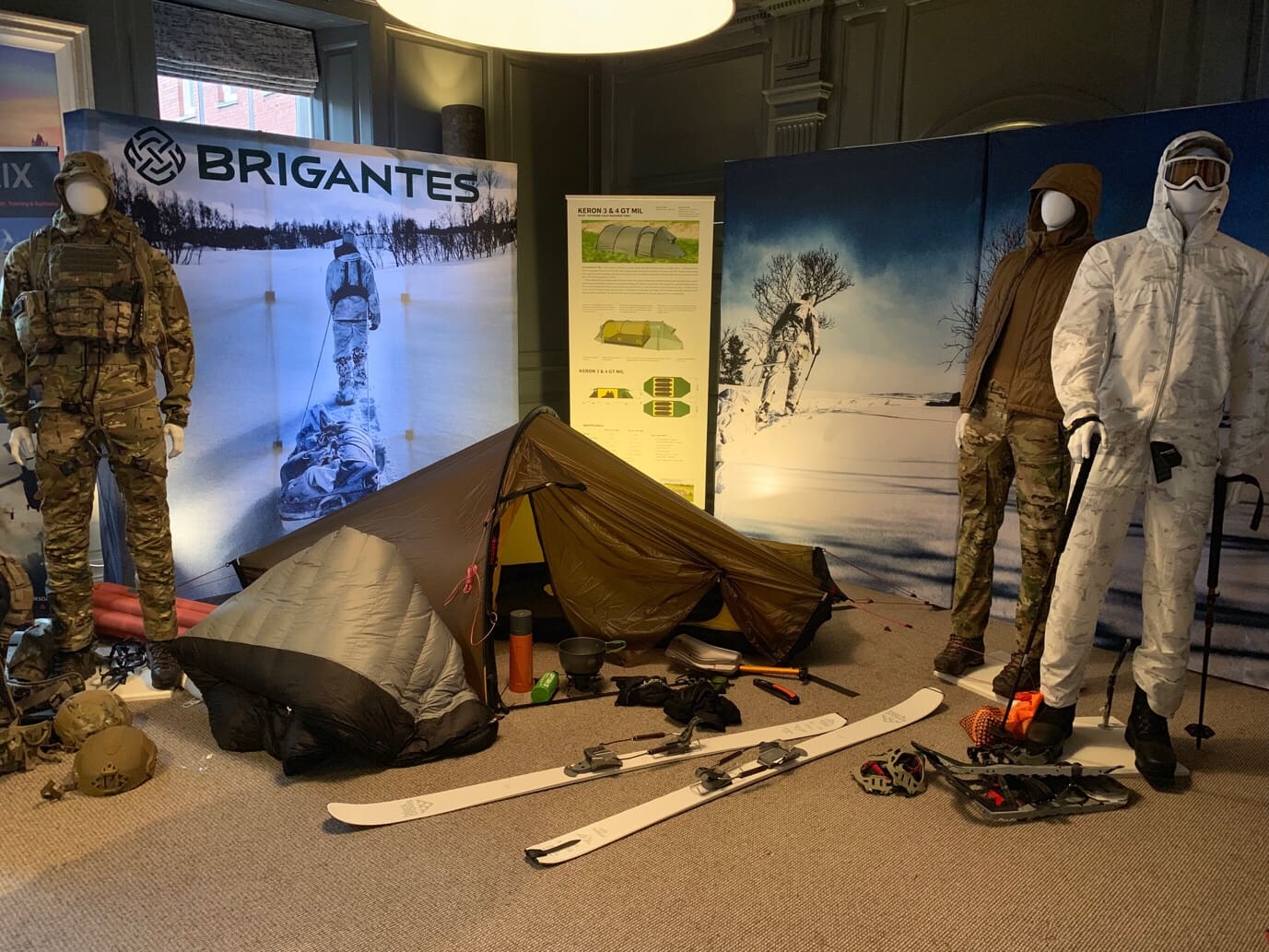
High Angle Solutions is a weekly series of articles focusing on military mountaineering solutions. It’s brought to you by UK-based Brigantes Consulting, in conjunction with several other brands, both here in the US and abroad. For example, this post on the Petzl ACTIK CORE was offered by Lyon Outdoor.

TacHacker – Kitbadger Hacks The Micro Fight Chest Rig

Sunday, March 18th, 2018

Kitbadger hacks the Micro Fight Chest Rig by Spiritus Systems to work as a Binocular Harness.

Full details at kitbadger.com/bino-harness-hack-for-the-spiritus-systems-micro-fight-chest-rig.