XC3 Weaponlight

Archive for the ‘Guest Post’ Category

High Angle Solutions – Elliot Brown Watches

Wednesday, March 7th, 2018

Elliot Brown watches aren’t like other so-called sports watches.

Ian Elliot and Alex Brown share 20+ years of unique watch building knowledge from the world of extreme sports which is how they were able to create the worlds most rugged “tool” watches.

55B4D9C1-23F6-4192-A7A8-EDB39CB92570

Working on the coast and enjoying just about every land and water based coastal sport was the catalyst to develop a range of watches that not only function in extremes but also look great with a suit or uniform.

045A135F-06C0-4511-A2E9-89712562A1FB

This Canford 202-004, like all other Elliot Brown watches has survived at test at 200m in water before being declared fit for use. It features a neat inner timing bezel operated via the upper crown and even when in the our or adjust position, the lower time and date adjust crown is still fully water proof.

The Swiss movement is housed inside a unique steel housing, suspended on a series of elastomer dampers to give immense shock protection. The highly legible dial and hands feature a Superluminova coating that  will glow for up to 8 hours.

The solid and beautifully detailed case back is bolted down for a perfect seal with multiple surfaces to minimize the contact patch with the wrist in warmer conditions.

2.8mm thick hardened and tempered crystal protects the dial with an anti-reflective coating applied to the inner surface and the strao retaing bars are solid screw in items that will stand any test.

This is one mean watch and it’s no surprise Elliot Brown are finding favour amongst many military groups.

For more information contact: caroline@brigantes.com

High Angle Solutions is a weekly series of articles focusing on military mountaineering solutions. It’s brought to you by UK-based Brigantes Consulting, in conjunction with several other brands, both here in the US and abroad.

Army Researchers Advance ‘Third Arm’ Project to Next Testing Phase

Tuesday, March 6th, 2018

ABERDEEN PROVING GROUND, Md. — Soldiers may be asked to carry heavier, more lethal weapons in the near future, but they soon might have a “third arm” to improve their accuracy and reduce fatigue.

Using a mechanical apparatus that resembles something out of a sci-fi movie, the lightweight device will help redistribute some of the burden Soldiers carry in their arms and shoulders to their abdomen. Engineers at the Army Research Lab here have been developing a mechanical “third arm” that attaches to a user’s back hip.

Army Research Lab engineer Dan Baechle demonstrates how to strap on the “Third Arm,” a mechanical device designed to improve Soldiers’ accuracy and reduce fatigue. (Photo Credit: U.S. Army photo by Joe Lacdan)

The project, unveiled last year at a conference, is scheduled to be tested again sometime this spring with a minimum of 15 Soldiers.

“Right now we have a prototype that’s essentially a research platform that we’re using to investigate different types of materials — how materials and structures can stabilize a weapon or a shield, reduce fatigue on the Soldiers’ arms, but also improve accuracy,” said mechanical engineer Dan Baechle.

The project is currently on its second prototype model with improvements based on Soldier feedback. Some of the improvements include an extendable hinge plate so that a single plate can fit Soldiers of different sizes and body types. Baechle said further research must be completed before the device can be fielded. The current prototype at 3.5 pounds can now support weapons such as the M249 light machine gun that weighs about 27 pounds.

The project not only helps stabilize weapons, but can aid Soldiers for defensive purposes while carrying 20-pound shields. The project team developed a custom mount that connects from the arm to the shield so Soldiers can use the Third Arm to help alleviate muscle fatigue.

The “Third Arm” project is being developed not only for weapons but for defensive purposes. Army researchers at Aberdeen Proving Ground created a special mount to attach the apparatus to a shield and also provide stability and balance. (Photo Credit: U.S. Army photo by Joe Lacdan)

Concept development began in late 2015 when ARL engineers brainstormed ideas on how to make a dismounted Soldier more lethal. Engineers began building the first prototypes in 2016. The focus of the project centered on providing stability for dismounted Soldier. ARL engineers are examining different types of spring materials to further balance the weapon against gravity. Baechle said they used a carbon fiber material in the current prototype because of its light weight and density.

“We started out with just trying to think of a way to help improve the lethality for the dismounted Soldier,” Baechle said. “Generally that means stabilizing the weapon or giving the Soldier a more powerful weapon. Can we stabilize that weapon to improve accuracy? But also if we’re stabilizing the weapon and taking the load off of the Soldiers’ arms, does that improve the Soldier’s readiness? Does it also improve the Soldier’s accuracy with the weapon?”

Last summer, six Soldiers volunteered to take part in a pilot study, where researchers placed electromyography sensors to measure muscle activity. In particular, when holding a weapon or shield for extended periods of time, the arm begins to shake, impacting shooter accuracy. The six-person research team tested Soldiers firing weapons with and without the apparatus.

“We found that it reduced the fatigue and reduced the muscle activation for some Soldiers,” Baechle said, explaining that data is being used to motivate a larger trial this year with more Soldiers. This year he also plans to get more feedback on what Soldiers think about the device and what should be changed.

Last year researchers collected data on how much muscles were firing with the use of the third arm compared to without it.

“There are studies showing that, if you hold a weight out at arm’s length, eventually your arm starts shaking,” Baechle said. “And that shaking is going to reduce your accuracy with the weapon … and if you’re holding a shield, it’s going to reduce the amount of time that you can hold that shield. So we’re taking that weight of the weapon or the shield off of the arms and transferring it back to the torso.”

While the test yielded positive results, Baechle said some of the Soldiers had problems with the device. Improvements made this year include changing the mounting location from the front of the Soldier’s vest to the back.

Researchers hope to further improve the device to make it more comfortable and reduce fatigue even more. They are continually attempting to make adjustments to the device to boost a shooter’s accuracy.

Baechle demonstrated how ARL researchers use a motion capture system, using monitors and infra-red targeting to track a Soldier’s weapon and target.

“We use this system to evaluate both how subjects or Soldiers move the weapon and with and without the third arm,” Baechle said. “But also how the arm improves the accuracy or changes the aim point while they’re using the weapon.”

Finally researchers hope the project can reduce some of the recoil force after firing a weapon.

“You have a lighter weight weapon but potentially a higher caliber weapon which normally would increase the recoil on your shoulder,” Baechle said. “Could you use Third Arm and some clever materials on the arm to redirect that recoil back toward the body and thus allow the Soldier to wield a higher energy weapon without necessarily burdening the Soldier more?”

By Joe Lacdan, Army News Service

132d Wing Members Enhance Deployment Readiness at Sentry Aloha

Monday, March 5th, 2018

I’m sharing this story by the Iowa Air National Guard’s 132nd Wing PAO for two reasons:

1. My father was a full time Guard guy (technician) at the 132nd Fighter Wing while I was growing up, so I have a personal interest.

2. The Wing has given up its F-16s and now conducts ISR, as a ground control station for UAS. When they had fighters, it made sense for the Wing to deploy to other locales, in order to familiarize themselves with the operating environment and practice wartime tasks. Now that they don’t have airplanes, it’s interesting to see the Wing’s personnel still conduct exercises at other bases.

Des Moines, Iowa —

Hawaii. A beautiful island paradise full of scenic ocean and mountain views, pleasant tropical breezes and piña coladas. What the members of the 132d Wing were preparing for though is anything but pleasant. Throughout the beautiful island, gas masks were being donned, weapons readied, sleeves rolled up, boots muddied and sweat falling as Iowa Air Guardsmen prepared themselves and others for hazardous and deadly situations.


Master Sgt. Patrick Kazeze, 132d Communications Flight, takes inventory of computer equipment February 13, 2018, at Joint Base Pearl Harbor-Hickam in Honolulu, Hawaii. The 132d CF Airmen inventoryed equipment, disposed of outdated computer hardrives and performed maintenance on underground network cables. (U.S. Air National Guard photo by Staff Sgt. Michael J. Kelly)

Approximately 69 Airmen of the 132d Wing deployed to Joint Base Pearl Harbor-Hickam in Honolulu, Hawaii, February 10-23, 2018 for Exercise Sentry Aloha to develop their deployment readiness skills alongside their active duty and Hawaii Air National Guard counterparts.

Airmen from civil engineering, emergency management, fire emergency services, communications, security forces, force support squadron and medical all trained in a variety of environments and scenarios with local active duty and guard members.


Master Sgt. Matt Henning, 132d Wing Command Support Staff, acts as a casualty during an active shooter drill at Joint Base Pearl Harbor-Hickam in Honolulu, Hawaii. The drill was conducted to measure the response time and readiness of emergency personnel. (U.S. Air National Guard photo by Staff Sgt. Michael J. Kelly)

The Emergency Management (EM) team trained approximately 466 active duty, Guard, and Reservist Airmen in Chemical, Biological, Radiological, Nuclear (CBRN) attack survival skills. The training included proper use of CBRN equipment, simulation of different disaster scenarios, decontamination training and self-aid and buddy care (SABC).

“Getting to see the different perspective each instructor brings really helps pinpoint better ways to help people survive, especially those deploying,” said Tech. Sgt. Rachel Albee, 132d Wing Emergency Management.

Tech. Sgt. Rachel Albee, 132d Wing Emergency Managment, instructs Hawaii Airmen in proper decontamination tactics February 13, 2018, at Joint Base Pearl Harbor-Hickam in Honolulu, Hawaii. The 132d EM trained approximately 466 active duty, Guard and Reserve Airmen. (U.S. Air National Guard photo by Staff Sgt. Michael J. Kelly)

EM had access to equipment and facilities unavailable their home station which allowed them to effectively train Airmen for disaster scenarios. The efforts of EM were instrumental in deployment readiness of the Hawaii Airmen and were greatly appreciated.

“They integrated well with our flight members and provided much needed support in the readiness surge getting Airmen deployment ready,” said MSgt. Kareem Fuertes, emergency manager, 154th Wing, Hawaii Air National Guard.


Master Sgt. Randy Warden, a combat arms training and maintenance (CATM) instructor, 132d Security Forces Squadron, gives instructions to shooters February 14, 2018, at Joint Base Pearl Harbor-Hickam in Honolulu, Hawaii. The CATM team oversaw the weapons training and qualification for deploying Hawaii Airmen. (U.S. Air National Guard photo by Staff Sgt. Michael J. Kelly)

Instructors from the 132d Security Forces Squadron’s combat arms training and maintenance (CATM) team oversaw the weapons training and qualification for deploying Hawaii Airmen. The training was conducted in new, state of the art indoor range which allowed for a greater diversity of shooting scenarios and allowed for faster qualification time.


Hawaii Air National Guard Airmen fire M-4 carbines during weapons qualification February 14, 2018, at Joint Base Pearl Harbor- Hickam in Honolulu, Hawaii.The 132d Security Forces CATM team oversaw the weapons training and qualification for deploying Hawaii Airmen. (U.S. Air National Guard photo by Staff Sgt. Michael J. Kelly)

“It was great being able to see how it works and talk to the CATM group here to find out the pros, cons and all the maintenance that is needed if we were able to obtain one,” said Tech. Sgt. Savannah Page, CATM instructor, 132d SFS.

The 132d Medical Group trained on administrative systems and also worked real world medical operations at Tripler Army Hospital in Honolulu, Hawaii. The training included a rare hands-on Aerovac training mission, the on and off loading of patients in critical condition from aircraft. The training, which most ANG members seldom receive except in deployed locations, presented many challenges which the 132d MDG used to prepare themselves for future missions.

“The biggest obstacle for the training is the unpredictability of the actual flights,” said Staff Sgt. Kelsey Searls. “Aircraft availability, stability of the patients, weather, paperwork; all of it can change the flight times at any moment, making training on actual aircraft and running live missions, sometimes impossible to get during an annual training tour.”

132d Communications Flight Airman from the 132d Wing, Iowa Air National Guard open up a manhole cover while working on underground cables February 22, 2018, at Joint Base Pearl Harbor-Hickam in Honolulu, Hawaii. The 132d CF Airmen inventoryed equipment, disposed of outdated computer hardrives and performed maintenance on underground network cables. (U.S. Air National Guard photo by Staff Sgt. Michael J. Kelly)

132d Communications Flight worked on a variety of projects on base including inventorying equipment, disposing outdated computer hard drives and tapes as well as prepare underground network cables for use in base operations. They also upgraded the base’s computer systems and software.

“It was great getting to work with new people in a total force integrated environment,” said Senior Airman Ben Trotter, spectrum operations technician, 132d Communications Flight. “We provided manpower which organized their assets as well as training for us which will make us a more efficient communications flight.”

Communications Flight Airmen disposed of over 200 computer hard drives, inventoried and processed in approximately 250 computers, updated the software on 40 computers and fixed approximately five thousand feet of network cable.


Staff Sgt. Megan Newton, services, 132d Force Support Squadron, makes a pie in the Hale Aina Dining Facility, February 14, 2018, at Joint Base Pearl Harbor-Hickam in Honolulu, Hawaii. The 132d FSS Airmen provided five thousand meals for base members. (U.S. Air National Guard photo by Staff Sgt. Michael J. Kelly)

The 132d Force Support Squadron’s services Airmen provided meals at the Hale Aina Dining Facility on Joint Base Pearl Harbor-Hickam. The Airmen were able take inventory of the produce and supplies of the dining facility which helped them gain more knowledge of accountability systems.

“Working hand in hand with the active duty was rewarding as was the mutual exchange of ideas and knowledge of the services field which will make our shop better,” Chris Newton, services shift leader, 132d FSS.

The services Airmen also helped prepare a special meal for the base in honor of Black History Month. In total, the 132d FSS served approximately five thousand meals to active duty, Guard and Reserve Airmen. They also conducted the physical training tests of approximately 500 Airmen.


U.S. Navy and Air Force security forces rush towards the scene of a shooting during an active shooter drill February 15, 2018, at Joint Base Pearl Harbor-Hickam in Honolulu, Hawaii. The drill was conducted to measure the response time and readiness of emergency personnel. (U.S. Air National Guard photo by Senior Master Sgt. Robert Shepherd)

Sentry Aloha exercises are held to provide the Air National Guard, U.S. Air Force and other Department of Defense agencies an opportunity to execute current, realistic, integrated training specifically designed to develop combat operations and skill sets.

By Staff Sgt. Michael J. Kelly, 132d Wing Public Affairs

Kit Badger – Catharsis, Divorce and the Range

Wednesday, February 28th, 2018

Kit Badger thought this might be of interest to some of SSD’s readers. I know I’ve been divorced a time or two.

Read the full post here.

83rd ERQS Pararescuemen Conduct Weapons Training in Afghanistan

Tuesday, February 27th, 2018
U.S. Air Force Pararescuemen assigned to the 83rd Expeditionary Rescue Squadron, 455th Expeditionary Wing, Bagram Air Field, Afghanistan, conduct weapons training Feb. 21, 2018. Pararescuemen conduct training on all aspects of combat, medical procedures and search and rescue tactics to hone their skills, providing the highest level of tactical capabilities to combatant commanders. (U.S. Air Force Video by SrA Nathaniel Stout)

82nd Airborne Division tests new wheeled cargo delivery system to support Global Response Force

Sunday, February 25th, 2018

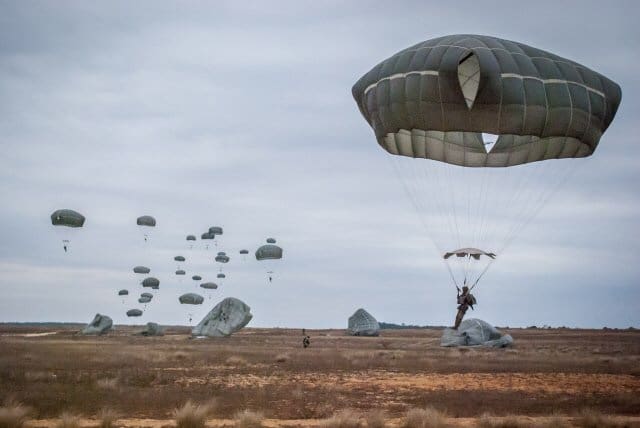
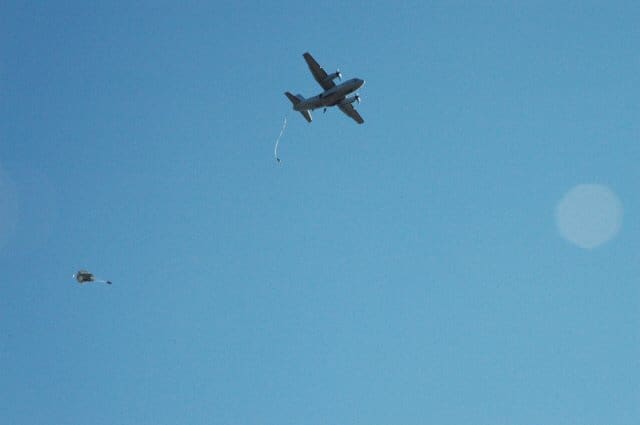
FORT BRAGG, North Carolina — 82nd Airborne Division troopers here are wrapping up testing of the Caster Assisted A-Series Delivery System (CAADS), which involves delivering mission essential supplies and munitions to ground troops.

Soldiers from Company A, 2nd Battalion, 325th Airborne Infantry Regiment, 2nd Brigade Combat Team teamed up with subject matter experts from the United States Army Advanced Airborne School (USAAS).

FA60888B-D562-4DB5-9F8B-CFBBC574B64C
Paratroopers from the U.S. Army Advanced Airborne School develop Techniques Tactic and Procedures prior to testing with the U.S. Army Operational Test Command’s Airborne and Special Operations Test Directorate. (Photo Credit: Mr. Michael A. Zigmond, Airborne and Special Operations Test Directorate, U.S. Army Operational Test Command Public Affairs.)

With the Fort Bragg-based U.S. Army Operational Test Command’s (USAOTC) Airborne and Special Operations Test Directorate (ABNSOTD), they successfully rigged, dropped, and recovered the CAADS door bundles during operational testing on Sicily Drop Zone.

The 82nd Airborne Division is part of the XVIII Airborne Corps, and is the Army’s most strategically mobile division.

5EDDC699-D80E-4DB3-AF4A-43A7B8BC202F
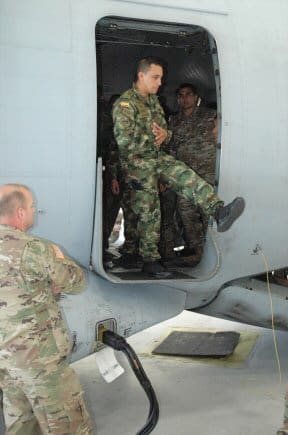
Capt. Matthew P. Carstensen, (right) Commander, Headquarters & Headquarters Co. 2nd Battalion, 505th Parachute Infantry Regiment, 3rd Brigade Combat Team, conducts a door check prior to exiting the first Caster Assisted A-Series Delivery System from a U.S. Air Force C-17 aircraft. (Photo Credit: Mr. Michael A. Zigmond, Airborne and Special Operations Test Directorate, U.S. Army Operational Test Command Public Affairs.)

82nd Airborne Division Commander, Maj. Gen. Erik Kurilla, said, “The 82nd Airborne Division is the elite Airborne infantry division of the United States Army, specializing in parachute assault operations into denied areas.”

Kurilla wants to be able to deploy three CAADS door bundles per paratroop door. Bundles can weigh up to 500 pounds of cargo and be airdropped from a variety of Department of Defense (DoD) transport aircraft to support the Global Response Force.

CD054ADB-0438-43DD-811E-74C778C54052
Sgt. 1st Class Miguel A. Amadis of Company A, 2nd Battalion, 325th Airborne Infantry Regiment, 2nd Brigade Combat Team, positions the Caster Assisted A-Series Delivery System in the door of a U.S. Air Force C-17 aircraft before deployment onto Sicily Drop Zone. (Photo Credit: Mr. Michael A. Zigmond, Airborne and Special Operations Test Directorate, U.S. Army Operational Test Command Public Affairs.)


The current door bundle limit without CAADS is two bundles per door per pass.

Currently, there is no standardized aerial delivery system in the Department of Defense (DoD) inventory that employs the dolly-assisted method, but other countries like France employ a similar system.

CAADS is a platform built of plywood, a brake, and six caster wheels which allow the door bundle to roll across the aircraft floor, speeding airdrop deployment.

Testing demonstrated safe deployment of door bundles using CAADS to improve the ability of Soldiers deploying the bundles while reducing exit time. The increased speed allows for additional bundles per pass.


The efficiency of the CAADS concept provides the capability of exiting more door bundles per pass, per aircraft — all increasing the amount of supplies on the ground to the paratroopers during their critical 12 hour initial entry phase.

Sgt. 1st Class Miguel A. Amadis of Company A, 2nd Battalion, 325th Airborne Infantry Regiment, 2nd Brigade Combat Team said, “I like the CAADS a lot. It was easy to push, easy to set up at the door, and it will be very useful for the upcoming missions.”

One Airborne unit commander said he liked CAADS’ simplistic design and concept, which can seriously lessen the physical wear and tear on the average paratrooper.

“The castor’s one free axle made the rotation into the door easy, but still kept two axles locked, which maintained control as the container exited the door and entered the slip stream,” said Capt. Matthew P. Carstensen, Commander, Headquarters and Headquarters Company, 2nd Battalion, 505th Parachute Infantry Regiment, 3rd Brigade Combat Team.

“I felt that the concern of jarring the container in the doorway was safely mitigated by those locked axles,” he added. “Looking at future application, a container of this size and capacity can significantly increase the combat power and lethality delivered onto a hostile drop zone on the first pass.”

According to Sgt. 1st Class Martin L. Ross, ABNSOTD Test NCO, operational testing is OTC’s opportunity to contribute to Army readiness.

“Anything less compromises the Army’s ability to provide the forces that fight and win the Nation’s wars,” he said.

“Operational testing is about Soldiers,” said Col. Bradley F. Mock, Director of the ABNSOTD. “It is about making sure that the systems developed are effective in a Soldier’s hands and suitable for the environments in which Soldiers train and fight. Operational testing is OTCs opportunity to contribute to readiness; anything less compromises the Army’s ability to provide the forces that fight and win the Nation’s wars.”

The ABNSOTD Test Division chief explained how test units incorporate systems under test into their actual missions and training requirements.

“Leaders of units involved in testing have the first look at new systems, which may also drive changes to operations and doctrine,” said Lt. Col. Gregory Oquendo. “Tests are unit-led, which translates into coordinated control under realistic operational environment scenarios.”

Other tests underway at ABNSOTD include the Advanced Medium Mobile Power Sources (AMMPS) 30K generator which will replace the relatively short-lived TQG (Tactical Quiet Generator) program and airdrop certification of the Light Armored Vehicle (LAV-25A2) Mobile Protective Firepower (MPF). Highly-instrumented test drops by Airborne and Special Operations Test Directorate (ABNSOTD) will help test overall airdrop survivability of the vehicles.

By Mr. James (J.C.) Cochran, Military Test Plans Analyst, Airborne and Special Operations Test Directorate, U.S. Army Operational Test Command Public Affairs.

Gunfighter Moment – John “Chappy” Chapman

Saturday, February 24th, 2018

You do you

We’ve all seen the endless talk on social media this week about the issues spinning off the cowardly scumbag’s rampage in Florida. We seem to be spending a lot of time yelling at people who agree with us, on everything from gun control, mental heath and anti-depressants, Trump’s waffling on the 2nd Amendment, to former Deputy Scot Peterson’s refusal to close with and destroy the enemy. While the vomiting of emotion is certainly understandable, especially given that our culture now seems to encourage our belief that others should care what we think, it doesn’t accomplish a damn thing.

The only thing you can control is you. The way we solve this problem, other than letting it burn itself out or waiting for the next big problem to divert our controversy-addicted brains, is for each of us to get our own house in order. I’d suggest, as a starting point, taking two simple steps: get your mind right, and improve your skills.

These are two steps you can take right now, today, that you have complete control over. Not only that, but these are the two areas that directly effect your ability to protect yourself and / or fulfill your oath, and no one else can do them for you.

If you’re not already doing so, take some of that social media time and invest it in dry fire, flow drills, range or shoothouse time, or talking to your wife about what to do if you’re killed. Maybe a little time understanding your own weaknesses, whether physical, mental or emotional, and dealing with them head on, would be in order.

Let the politicians argue, the internet trolls participate in meme on meme violence, and the weak complain that others should be “doing something”. Now is not the time for weakness or navel-gazing. Now is the time to get ready for your turn at bat.

You’re the only one in control of you, so focus on that. We may all be counting on you some day.

Stout Hearts

Chappy

John Chapman is a founding partner of Forge Tactical, a full service training firm that focuses on procedural training for law enforcement and responsibly armed citizens. An instructor at EAG Tactical under the mentorship of BCM Gunfighter Pat Rogers for many years, John has been teaching firearms and tactics since 1994.

In the past, John has worked as a private security contractor, servicing training and physical security contracts in the public and private sector, both domestically and internationally. Mr Chapman is also a former police Lieutenant, and a currently serves as a team leader on a SWAT team in the Midwest.

Gunfighter Moment is a feature brought to you by Bravo Company USA. Bravo Company is home of the Gunfighters, and they bring us a different trainer to offer some words of wisdom.

Greyhive Snapshot – Drew Estell

Saturday, February 24th, 2018

How Do You Scan and Identify Targets?

How do we properly scan? We’ve all the seen people on the range that keep their eyes in their sights and move their weapon from left to right as a habit. While it looks good and they are checking the block on performing this critical task, sometimes those people aren’t actually identifying anything and are setting themselves up for failure.

If you keep your eyes in your sight while scanning, you are limiting yourself to what is within that toilet paper tube sized housing. With some sights, this is even smaller. As much as we train to go into broad target focus with the sight in line with our eyes, having it there will inevitably pull you back into what’s only visible from that housing. On top of this, red dot is already on your target.

We put our sights on target thousands of times and pull the trigger. Do you think anything will be different when you have to discriminate between a threat and a non-threat? Your brain has been wired to see a red dot or sights on target and pull the trigger. How about when other good guys have a weapon like a police officer responding to a call? Give yourself the time and space necessary to properly identify those around you in an actual situation. By lowering the weapon slightly so that the sights are not immediately visible and on your target, you are creating the amount of time and space necessary for your brain to identify the target, and potentially tell your firing hand not to pull the trigger if needed. I would want that split second extra to determine if what was in the suspect’s hand was a cell phone, an unidentified person holding a badge, or the shape in the middle of the night was actually my wife who accidently tripped over my gym bag while she was checking on the kiddo. There’s a lot of situations that this could be important, I’m sure you can think of several and add it to the comments below.

A good rule of thumb with a rifle is to be able to turn your chin over your buttstock. With a pistol, lower the gun down to your upper chest or break it back enough to be able to see the torso area of those around you. Hands aren’t always above the shoulder line to determine if they have a gun, and badges aren’t always high on the chest to easily see. When you have your weapon pressed out in your line of sight, you are effectively cutting off the majority or the torso that gives us the ability to identify what we need, get a snapshot of the person, and proceed into our “snapshot… hands, aim, shoot” process of target identification.

Scan with your eyes and actually identify the targets to your left and right of your area. ID target, engage until target begins to go down, gun down, eyes lead gun, and snap onto next target if required. Use your eyes to gather information and determine whether or not you will give commands or engage depending on your situation. You can only shoot as fast as you can see, and you can only make decision as fast as you can process information. Don’t limit yourself on either, or set yourself up for failure.

thumbnail Drew Estell is the owner of BAER Solutions, and served for a decade in Special Operations. He has been fortunate enough to serve with soldiers and instructors who were invested in his success, and as such have benefited from the years of experience that each of them had. During the course of his multiple combat deployments and experiences, he has learned that no shooter is the same.

In addition to weapons training classes, BAER Solutions offers leadership and team building consultations. BAER Solutions also works with police departments to take lessons learned from SOF deployments and apply them to the specific needs of the local governance and populace. By combining SOF tenets of Village Stability Operations and the concept of Community Policing, they deliver a consulting and training package called Unconventional Policing.

For more information this topic, create your free account at Greyhive and subscribe to our YouTube channel to watch the pistol ready position videos demonstrating this.

Snapshot is a bi-weekly series from Greyhive featuring content written by our Experts. It is our goal to deliver information that prompts you to examine your preparedness from all angles, not just how quickly and accurately you shoot.