Phantom Lights

Archive for the ‘Guest Post’ Category

Marine Training Systems Mitigate BOP Concerns, Enhance Fleet Lethality

Monday, August 26th, 2024

Marine Corps Base Quantico, Va. —

When Lt. Gen. Lewis “Chesty” Puller famously quipped, “Hit hard, hit fast, hit often,” there’s a good chance he had Marine Corps mortarmen in mind.

From the Spanish-American War through the 21st-century War on Terror, the Marine Corps has consistently employed artillery and other fire support systems to achieve decisive results. Today, as the Corps continues to modernize with Force Design as its strategic blueprint, its focus remains squarely on agility, precision, and rapid response—with capabilities like mortars and the Multi-Role Anti-Armor Anti-Personnel Weapon System– serving as proven force multipliers ahead of the future fight.

At Marine Corps Systems Command, the Program Manager for Training Systems (PM TRASYS) is fielding cutting-edge capabilities that allow Marines to train seamlessly on these fire support systems, prioritizing safety while ensuring the highest levels of readiness through training that closely mirrors real-world conditions.

In recent years, there has been growing concern that Marines and other servicemembers regularly exposed to heavy blasts—or blast overpressure (BOP) —have suffered a higher rate of adverse effects on brain health and cognitive performance.

In an August 8 memorandum, the Pentagon announced plans to strengthen the monitoring of cognitive health among service members through regular assessments and issued policy guidance to establish procedures and standards for training and operations.

As stated by Deputy Defense Secretary Kathleen Hicks, “This policy is not meant to preclude or unreasonably restrict commanders from conducting mission-essential weapons training. Rather, this policy establishes requirements for practical risk management actions to mitigate and track BOP exposures across the DoD.”

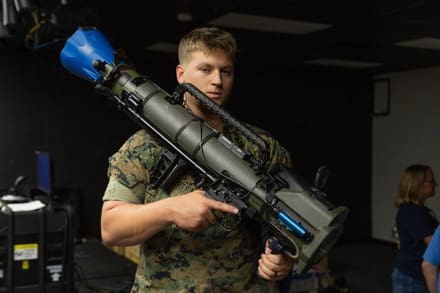
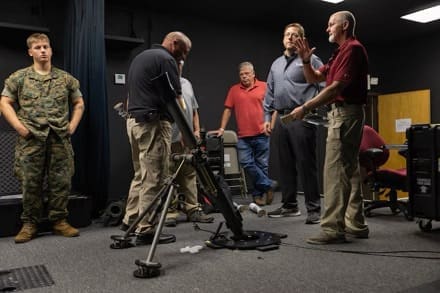
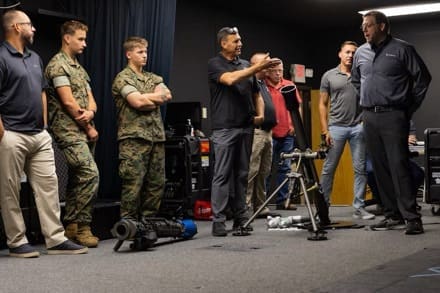
Understanding the risks associated with repeated blast exposure, PM TRASYS has fielded the Indoor Simulated Marksmanship Trainer, which allows Marines across the installation to maintain their proficiency with various weapons systems without the need for live ammunition. This cutting-edge system is an advanced interactive audio/visual simulator that offers both basic and advanced marksmanship training, weapons employment drills, and tactical decision-making exercises for a range of weapons, including the M252 81 mm mortar and the iconic M3A1 MAAWS. The ISMT also offers shooting with Night Vision Goggles (NVGs), and the Annual Rifle Qualification (ARQ) courses fire was recently added to the database

“We developed the mortar and MAAWS ISMT in close collaboration with all stakeholders, including PM Infantry Weapons and the Navy’s Occupational and Environmental Medicine team, to ensure the form and fit are precise,” said Todd Butler, project officer for ISMT. “The goal is to provide Marines with ample repetitions to maintain and sharpen their skills. The simulated weapons are designed to closely replicate real ones, allowing for multiple repetitions and the firing of rounds without the cost of live ammunition. This approach ensures that Marines can sustain their lethality in the ISMT at any time, seven days a week.”

Central to the Marine Corps’ Project Tripoli—a groundbreaking initiative aimed at delivering a persistent, globally accessible Live, Virtual, and Constructive Training Environment (LVC-TE) across all domains and echelons—the mortar and MAAWS ISMT capabilities help sustain unit readiness in locations where range or training facilities are not available while also mitigating BOP concerns.

“From a safety perspective, we are committed to preventing negligent discharges,” said Tripp Elliott, MCSC System Safety Director. “We’re also focused on mitigating the impacts on hearing and preventing traumatic brain injuries. This has a huge impact. It’s crucial that while training, personnel do so correctly. For instance, when they drop a round into the mortar system, they must remember to move their hand, as in real life, a mortar will soon shoot out of that tube, and we want to avoid injuries like losing fingers.”

Ultimately, the ISMT exemplifies how constant communication between the fleet and the acquisition community allows for proactive adaptation to evolving Pentagon guidelines. By providing Marines with realistic training experiences that closely mimic live fire exercises—while mitigating the most significant risks, such as BOP exposure and potential injuries—the ISMT enhances safety and operational readiness. Additionally, each use of the ISMT conserves valuable resources, reducing costs without compromising the Marine Corps’ lethal capabilities. In an era where every shot counts, ISMT ensures the warfighter remains sharp, ready, and as lethal as ever.

By Johannes Schmidt, MCSC Office of Public Affairs and Communication, Marine Corps Systems Command

Cannon AFB Hosts 15th Annual Medic Rodeo

Sunday, August 25th, 2024

CANNON AIR FORCE BASE, N.M. (AFNS) —

The 27th Special Operations Wing hosted the 15th annual Medic Rodeo at Cannon Air Force Base, Aug. 12-15. Eighteen teams from across the Air Force traveled to Curry County for several days of challenging training scenarios intended to give them tactical combat casualty care training.

The event took place at the Cannon Permanent Exercise Facility and Melrose Air Force Range. Objectives at hand were directly relevant to the Air Force-wide Medic-X strategic initiative that drives proficiency in 52 skills for every Air Force medic – including those not directly involved in patient care. These skills are especially critical to ensure the Air Force’s readiness for the next fight.

Teams were tested in a variety of scenarios and missions, from car accidents to choking incidents. They practiced their medical skills on simulated burn patients, traumatic brain injuries, and amputations.

Deployed scenarios were split into three segments that mirrored TCCC’s phases: Care Under Fire, Tactical Field Care, and Prolonged Field Care.

“You can tell what we are doing with our TCCC is paying dividends,” said Col. Melissa Dooley, Air Force Special Operations Command surgeon general. “That inspires confidence when I think about the future fight and great power competition.”

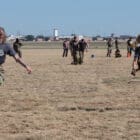
After two days of challenges and scenarios, all the teams were brought together to compete in the Air Commando Challenge, a physically intense relay in the sweltering heat.

“We train to fail,” said Tech. Sgt. Christopher Gilbert, independent duty medical technician with the 86th Medical Group at Ramstein Air Base, Germany. “So, when we do it for real, we don’t fail.”

Once the competition was over, one final challenge was thrown at the medics – a chaotic mass casualty exercise intended to see the various teams work together to save lives. The exercise took place in a dark hangar with nearly 50 casualties to assess, treat, and save.

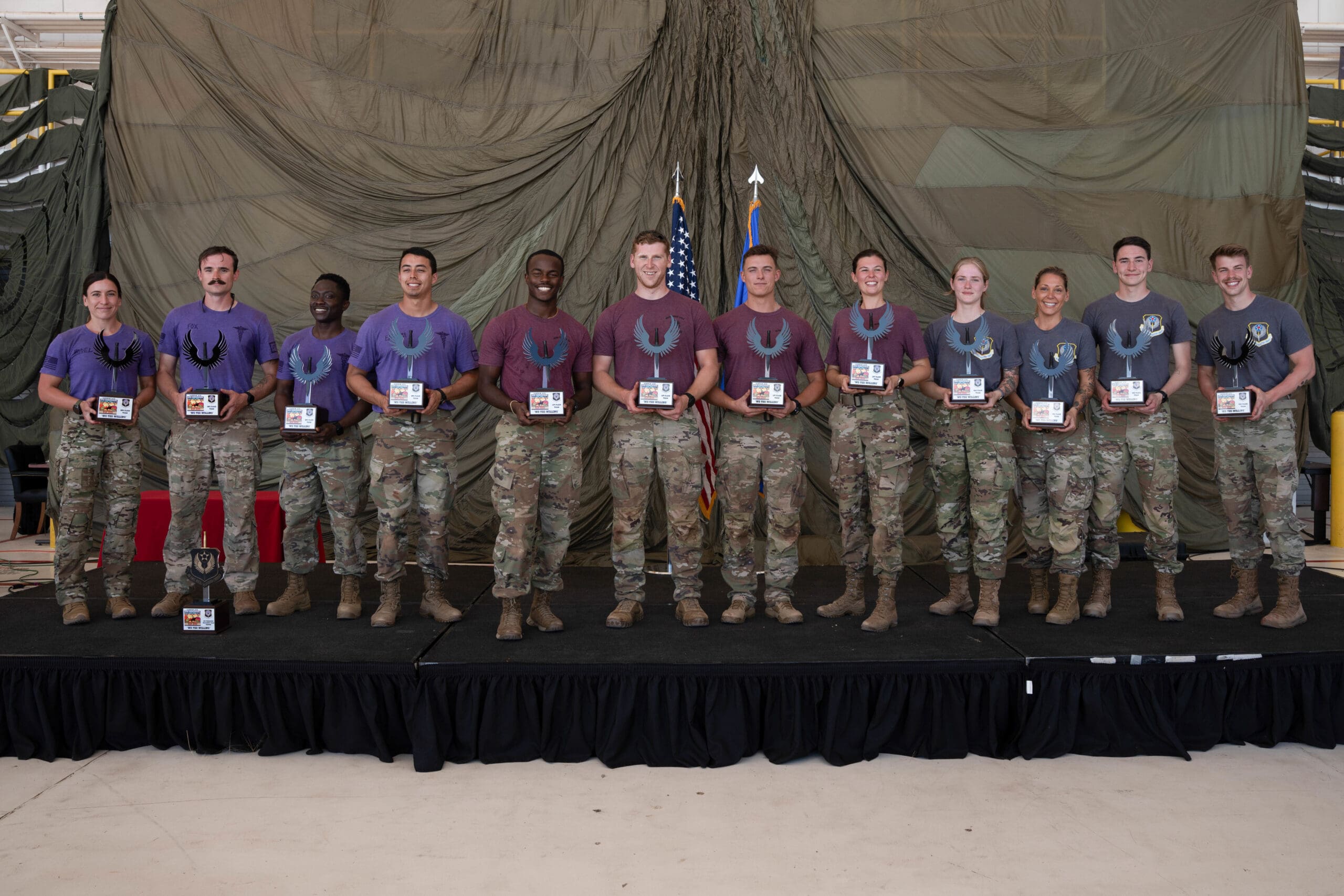
After days of mental and physical challenges, competitors from Eglin AFB’s 96th Medical Group emerged victorious, followed closely by Ellsworth AFB’s 28th Medical Group in second place. The team from Cannon AFB’s 27th Special Operations Medical Group came in third.

Last year’s competition brought the U.S. Army to assist the 27th SOMDG’s IDMTs as evaluators. This year, a team of U.S. Navy and U.S. Marine Corps medics were invited to help provide feedback and joint perspective, including the incorporation of the Marine Corps Valkyrie Threshold blood transfusion, which provides whole blood as a resuscitation fluid and boosts the chances of survival for casualties that are hemorrhaging.

“I’m excited to see how Medic Rodeo continues to evolve and incorporate Medic-X and our TCCC training,” Dooley said. “Competition always motivates us and accelerates us to the level we need to be.”

When the Medic Rodeo was first conceived as the Emergency Medical Technician Rodeo in 2007, the competition consisted of only six teams. It has evolved in the past 17 years from a way to train Air Force medics to work and excel in austere deployed environments, to an annual opportunity for teams from around the world to showcase their capabilities. Constantly shifting and evolving with the times, Medic Rodeo is a prime example of how the Air Force is ensuring readiness for the next fight.

By Senior Airman Drew Cyburt, 27th Special Operations Wing Public Affairs

Soldier Center Aerial Delivery Experts Retire After Decades of Invaluable Army Service

Saturday, August 24th, 2024

NATICK, Mass. – The U.S. Army Combat Capabilities Development Command Soldier Center, or DEVCOM SC, recently celebrated the remarkable careers and well-deserved retirements of two aerial delivery experts with a staggering 116 years of combined service to the Army and nation.
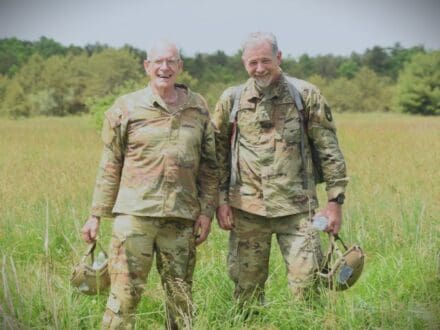
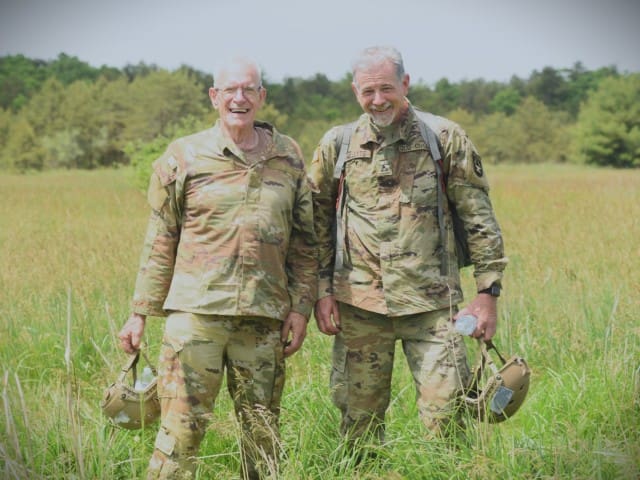
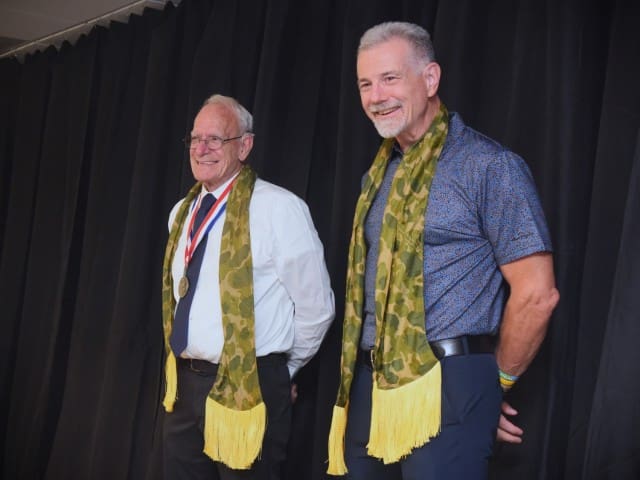
Long-time colleagues, jump teammates, Army veterans, and close friends John Mahon and William (Bill) Millette formally retired from their Army civilian careers during a joint ceremony held June 23 at the Natick Soldier Systems Center (NSSC), in Natick, Massachusetts.

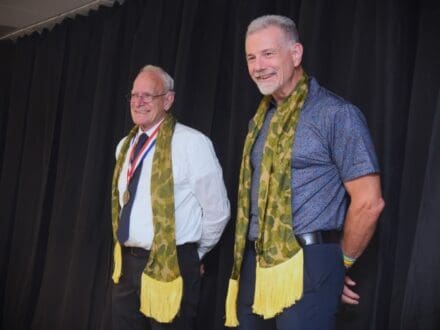
They were presented retirement certificates, flags, and several aerial delivery-related gifts. They also received certificates of appreciation from the Rhode Island Army National Guard, a local military partner and host of the annual Leapfest International Military Static Line Parachute competition. Mahon and Millette have routinely competed in Leapfest, representing DEVCOM and the U.S. Army Natick Parachute Team.

Mahon’s 55-year career includes 31 years on active-duty and 24 as a Department of the Army (DA) civilian.  Millette served 28 years in uniform on active-duty and in the Reserves, and more than 38 years as a DA civilian. Both men served their entire civilian careers at NSSC working for Soldier Center.

Since 2000, Mahon and Millette worked together on the Aerial Delivery Engineering Support Team (ADEST) under the center’s Aerial Delivery Division, performing the duties of a senior airdrop equipment specialist and senior mechanical engineer, respectively, where their military experiences, technical knowledge, and dedication to duty made them indispensable members of the organization and broader aerial delivery community.
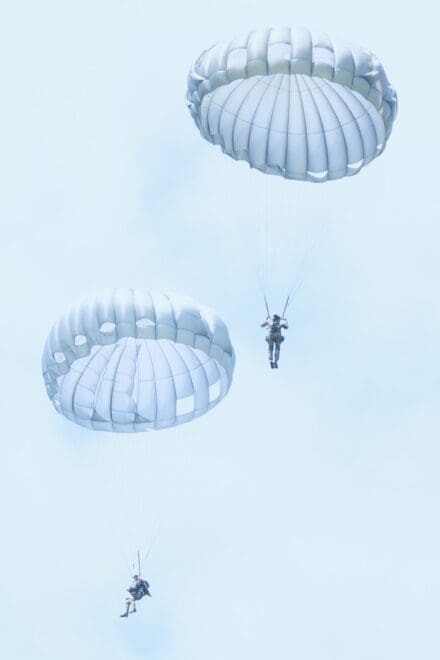
During their time at Soldier Center, Mahon and Millette were instrumental in helping research, develop, and evaluate numerous cargo and personnel parachute systems to advance new aerial delivery technologies. A highlight of their combined efforts and technical accomplishments includes: the Low-Cost Low-Altitude (LCLA) cargo resupply system, the T-10 Parachute, Modified Improved Reserve Parachute System (MIRPS), the All-Purpose Weapons and Equipment Container (AIRPAC), serving as the designated lead for the C-17 developmental test efforts, and the C-130J program, among many other programs and technologies implemented.

They also provided a specialized function for the airdrop community by conducting formal investigations into parachute-related accidents across the Department of Defense, or DoD.

“The years of service and the incredibly long list of contributions these two aerial delivery SMEs [Subject Matter Experts] have provided the DoD, both in uniform and in their civilian careers, is enormous,” said Richard Benney, associate director of the Soldier Sustainment Directorate and former supervisor to both men as the previous Aerial Delivery Division director. “Countless Aerial Delivery Division SMEs have engaged John and Bill for input on various technical issues over the years and routinely for their historical knowledge.”

“The experience and expertise that John and Bill brought to the aerial delivery community was invaluable and they will be sorely missed,” said Jennifer Hunt, deputy to the associate director of the Soldier Sustainment Directorate and former ADEST coworker and fellow Natick Jump Team member. “They were both instrumental in making both cargo and personnel aerial delivery safer and more effective for all the U.S. service branches.”
One specific area of technical expertise that Mahon and Millette were both well-known for, according to Benney, was being the Army’s “go-to” SMEs for investigating parachute malfunctions. Occasionally, these malfunctions resulted in a paratrooper or jumper fatality. Within a few hours’ notice, they could be traveling to an accident location and be gone for weeks while completing their investigations.

“Airborne accident investigations were one of the most serious and challenging responsibilities of their jobs at Soldier Center,” said Benney.

At the request of the Combat Readiness Center, they would be assigned as the technical leads of an investigation team charged with determining exactly what happened and why. This required extensive technical expertise, detail-oriented focus and stamina, as they often spent countless, grueling hours ensuring that all the evidence was gathered, accurately recorded, and that interviews were conducted professionally and thoroughly.

The results of these investigations helped ensure that lessons learned were applied to materiel changes or revised tactics, techniques, and procedures (TTP’s) to make sure it would never happen again.

“The entire aerial delivery community greatly appreciates their attention to detail and thoroughness during these investigations,” said Benney. “Their dedication has directly resulted in making the airborne community even safer.”

Millette’s career at Soldier Center began in January 1986, when he started as a student under the DA’s Scientist and Engineer Co-Op Program and ended with his 2024 retirement.

Millette’s early work involved resolving construction difficulties with the G-12 deployment bag, modifying packing procedures for the 35-foot ribbon parachute used in the Low Altitude Parachute Extraction System, investigating the effect of 50% and 100% pocket bands on the opening time of the T-10 parachute, and supporting the development of the 60K airdrop system for the C-5 aircraft, including developing procedures for the extraction system and for the clustering of the 12 G-11 parachutes used in the system. He also managed the All-Purpose Weapons and Equipment Container (AIRPAC) and Parachutist Individual Equipment Rapid Release (PIE-R2) programs.

Millette was heavily involved with an Operational Support Cost Reduction (OSCR) proposal for the 15-foot static line, and the development of the Universal Static Line (USL). He combined his involvement with the OSCR program, the USL, and his experience with mountaineering equipment to modify a French snap hook so that it no longer needed to be sewed to the static line.

Instead, it could be easily joined with or removed from a static line, resulting in the current USL snap hook design that enables easy conversion between 15 and 20-ft lengths to accommodate jumping from various aircraft.

According to his biography, Millette also made significant contributions to the fielding of the Modified Improved Reserve Parachute System (MIRPS), including “a complete revision of the technical data package, testing of replacement pilot chute materials, resolving cone and grommet separation problems, identifying a solution to inadvertent deployments, and supporting technical manual revisions, contracting and quality assurance activities.”

Additionally, Millette was the lead author for the 2001 American Institute of Aeronautics and Astronautics paper, titled, “Investigation of Methods to Improve Static Line Effective Strength,” and was a contributing author on two other AIAA papers, a 2002 Army Research Laboratory technical report, and a 2003 article in the journal Composite Structures, titled “Nonlinear Dynamic Behavior of Parachute Static Lines.”

These accomplishments demonstrate Millette’s engineering prowess and attention to detail – skills he utilized to make Army airborne operations safer.

During this time, Millette continued to serve in uniform as an Army officer as both a combat engineer and civil affairs officer, deploying multiple times to hot spots around the world in support of military operations, including Operation Desert Storm, Operation Iraqi Freedom, and Joint Task Force Horn of Africa, or JTFHOA, in Djibouti.

“Bill was a great team member, both in and out of uniform,” said Soldier Center’s Aerial Delivery Division Chief Mike Henry. “He had several tours of duty in uniform and always returned to Natick ready to jump back in to support the Soldier in his civilian role.”

After his deployment to Africa, Millette returned to ADEST and was selected to participate in the Naval Postgraduate School Master of Science in Systems Engineering distance learning program, which he completed in 2015, the same year he completed his military service and entered the Retired Reserve.

“Bill dedicated his career to being and supporting the professional Soldier,” said Henry. “Over the course of his career, he designed and analyzed numerous pieces of aerial delivery equipment, always to ensure the Soldier had the safest, most capable tools to conduct their missions.”

“His knowledge and experience will be sincerely missed,” Henry added.

Mahon’s military service reads like a checklist of qualifications for his future civilian job. As a Soldier, he became intimately familiar with the existing T-10 Parachute, and from then on, he would learn all things parachute.

Enlisting in 1969 during the height of the Vietnam War, Mahon served in a variety of airdrop-related jobs, including as a parachute packer, parachute repairman, parachute training instructor, sling load instructor, parachute maintenance technician, and parachute rigger – jobs that laid a solid foundation of technical expertise.

His last assignment in uniform brought him to the U.S. Army Natick Soldier Research Development and Engineering Center (now called DEVCOM Soldier Center), where he served as a military liaison and senior parachute rigger. In November of 1999, Mahon retired from active duty as a highly decorated Chief Warrant Officer 4 with extensive experience.

After a few months working as a DOD contractor, Mahon was hired in March 2000 as an Army civilian in the role of Senior Airdrop Equipment Specialist for ADEST, where he also returned to jump status, using his military experience to provide guidance to personnel developing airdrop and aerial delivery equipment for Soldiers until his retirement in 2024.

At ADEST, Mahon led numerous field-failure investigations and was an active participant in the Materiel Review Board, The Joint Technical Airdrop Group, and numerous other DoD-level aerial delivery working groups, committees, and projects.

“John was a corner stone in the aerial delivery community for decades, from his active-duty career to his civilian service,” said Henry. “He had the knowledge and experience to quickly respond to any request the field had of him, often resulting in TDY at a moment’s notice. He possessed competencies that only exist after one has spent decades in the career field.”

Sharing and passing on his knowledge was a common theme expressed by former coworkers and teammates.

“He also worked diligently in his time leading up to departure to distribute his hard-learned lessons to others and will leave a lasting impact on both the civilian and military aerial delivery community,” said Henry.

“John had a unique ability to help his fellow engineers and scientists understand how airdrop worked,” said William Ricci, a senior research engineer at Soldier Center and Mahon’s former ADEST teammate.

While serving in his civilian capacity at Soldier Center, Mahon led the effort to rapidly field the Low- Cost Low-Altitude (LCLA) cargo resupply system for Soldiers serving in Afghanistan, where he deployed to help train operators to use the system. The LCLA went on to successfully execute uncountable small-unit resupply missions for Soldiers on the ground.

“Throughout my years in service, I was continuously involved with safety investigations, developing rigging procedures, or providing malfunction analysis to all branches of the services,” said Mahon. “I believe some of my analysis contributed to identifying training equipment shortfalls, training enhancements needed and overall reducing risks to the individual paratrooper.”

During his career, Mahon received numerous commendation awards and top honors for his work, most notably, his inductions into the U.S. Army Warrant Officer Hall of Fame, the U.S Army Parachute Riggers Hall of Fame, and the U.S. Army Quartermaster Hall of Fame. Feats only a relatively few other Soldiers have accomplished in the history of the Army.

Mahon retired with an incredibly distinguished professional career. He is highly revered for his technical expertise, his dedication to protecting Soldiers, and his fascinating, funny stories.

“John and Bill played major roles in establishing Soldier Center’s reputation as experts in the development and evaluation of aerial delivery technology,” said Doug Tamilio, director of DEVCOM Soldier Center. “Their careers, both in uniform and as civilians — including investigating accidents caused by personnel parachute malfunctions — improved the safety of DoD airborne operations and advanced the aerial sustainment of warfighters for generations to come.”

“We honor their contributions to the Army aerial delivery community, and we will greatly miss their presence at Soldier Center,” said Tamilio.

LAST JUMP

One of the reasons Mahon and Millette were so proficient at their jobs was that they remained on active jump status throughout their civilian careers, giving them continued personal experience using the same equipment that they helped develop and improve for Soldiers, often with and alongside them.

Their extensive experience using the personnel airdrop equipment over the course of their military and civilian careers provided invaluable direct insight and served as an essential tool in shaping design and performance feedback, and honed their expertise, which they passionately applied to protecting Soldiers.

It was also simply a fun part of their jobs. Not just for the thrill and challenge of parachute jumping itself, which they clearly enjoyed, but for remaining a part of the Army airborne community and the comradery of jumping with coworkers on the Natick Parachute Team, which is comprised of both military and civilian jump-qualified employees working on the NSSC installation.

“I’ve been very fortunate. I’ve had no major jump incidents,” said Mahon. “But that experience, and having lived those scenarios, is invaluable to the work that we do and for understanding [parachute] deployments. It reinforces the idea that we need to make sure the equipment we make is safe, reliable and capable.”

So how did they end their decades of being on active jump status? With one more jump, naturally.

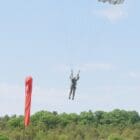
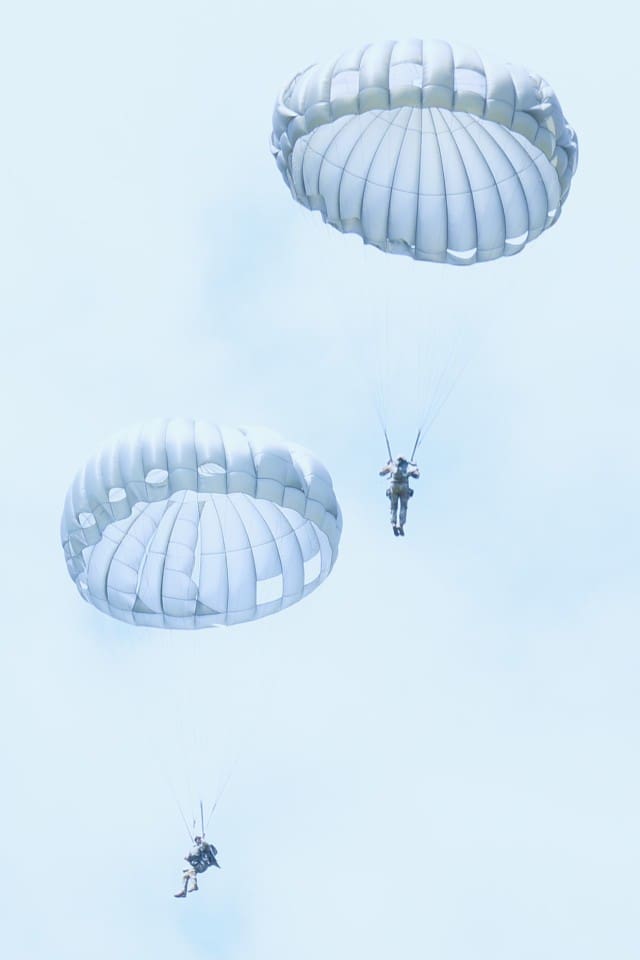
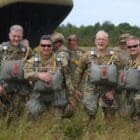
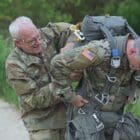
Two weeks before their retirement ceremony, Mahon and Millette both completed their last official military static line parachute jump for the Army during combined airborne operations training between the Natick Parachute Team, and the Rhode Island Army National Guard on June 7 at Flintstone Drop Zone in West Greenwich, Rhode Island.

There, Mahon capped his combined military and civilian 55-year airborne career with his 1159th and final Army jump during the training event, while Millette’s final was his 110th.

They were the first jumpers out of the aircraft, the first to land, and then celebrated by their fellow jumpers as they came off the drop zone.

There was no fanfare, no special awards. Just fellow jumpers, Soldiers, and coworkers waiting to congratulate them on the last official jump of their amazing careers, and the combined 116 years they carried with them.

By Jeff Sisto, DEVCOM Soldier Center Public Affairs

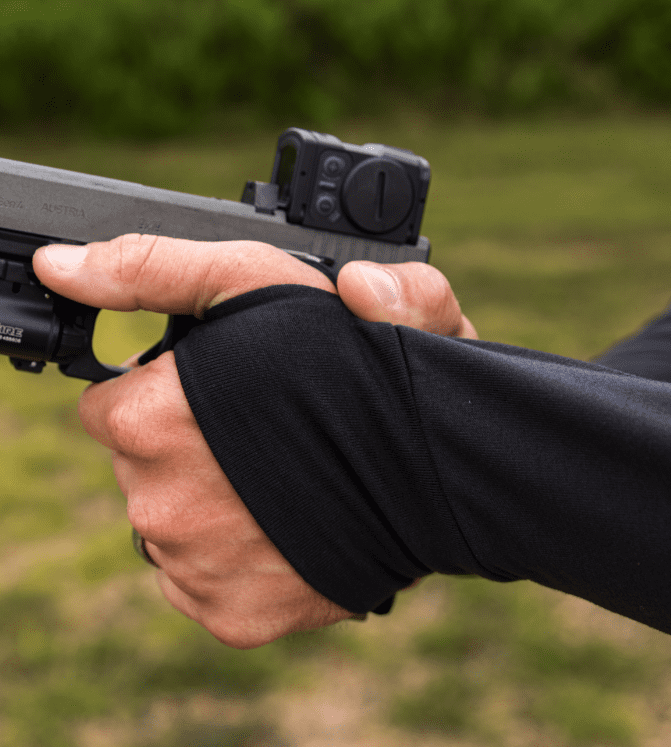
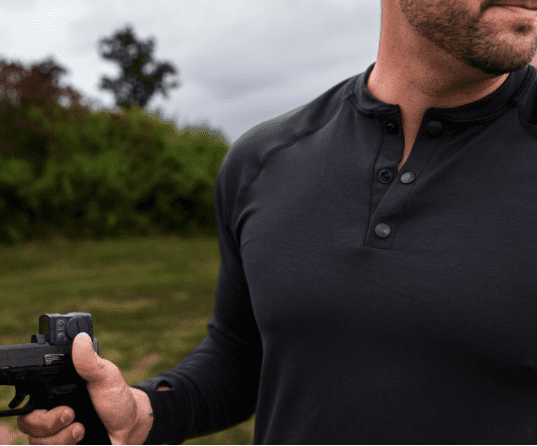
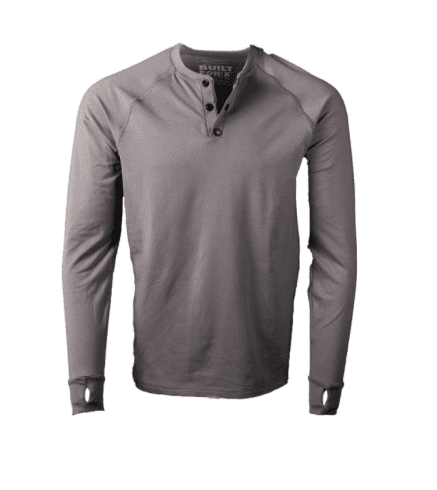
FirstSpear Friday Focus: NEW Base Henley Long Sleeve

Friday, August 23rd, 2024

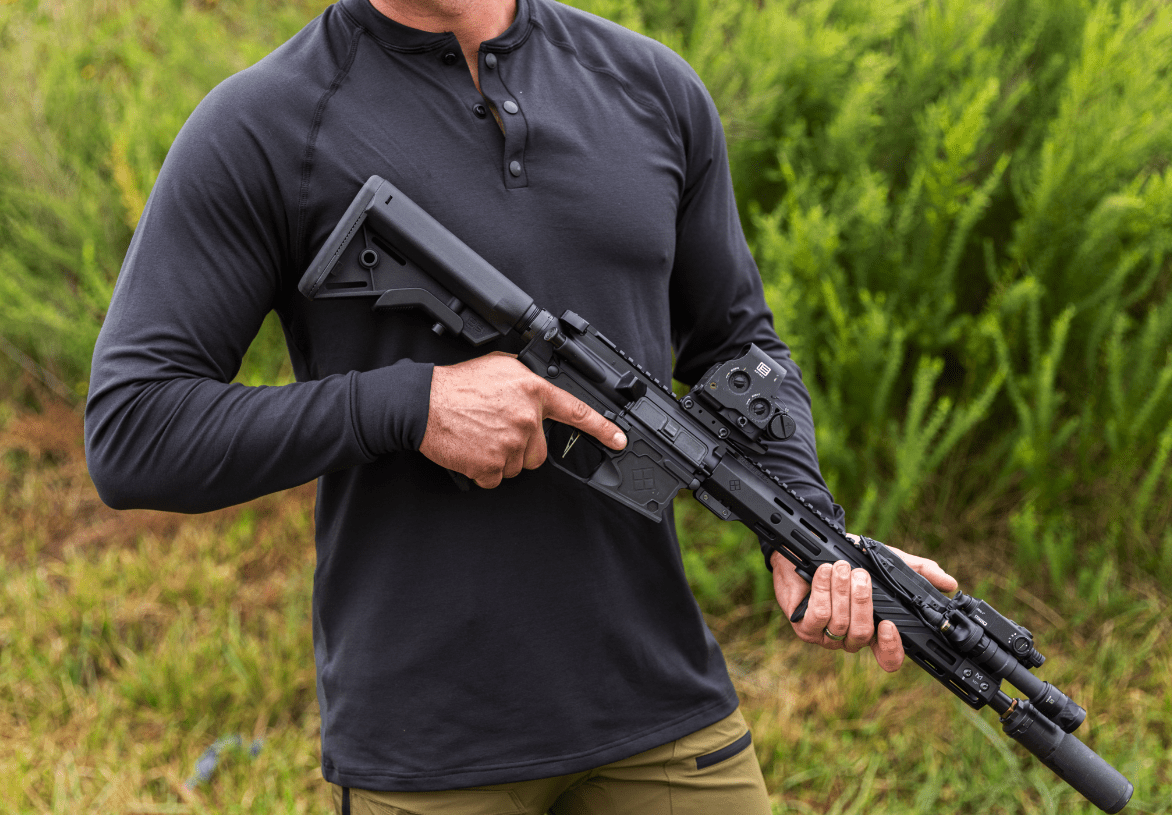
– Lightweight and breathable
– Classic Henley neckline with a three-button placket
– Reinforced stitching for enhanced durability
– Tailored fit for a sleek, athletic appearance; thumb holes
– Proudly made in the USA

Elevate your performance and style with the FirstSpear Base Henley. Designed for both rugged durability and supreme comfort, this versatile shirt is a staple for those who demand excellence in their gear.

Featuring a classic Henley neckline with a three-button placket, this shirt combines functional design with a timeless look with a raglan style shoulder seam. The reinforced stitching and robust construction promise long-lasting wear, while the tailored fit provides a sleek, athletic silhouette that moves with you. Now available in grey and black in Small through 2XL.

For more information, check out www.First-Spear.com.

Command Post Exercise Ensures 10th Mountain Division Prepared for Operations

Friday, August 23rd, 2024

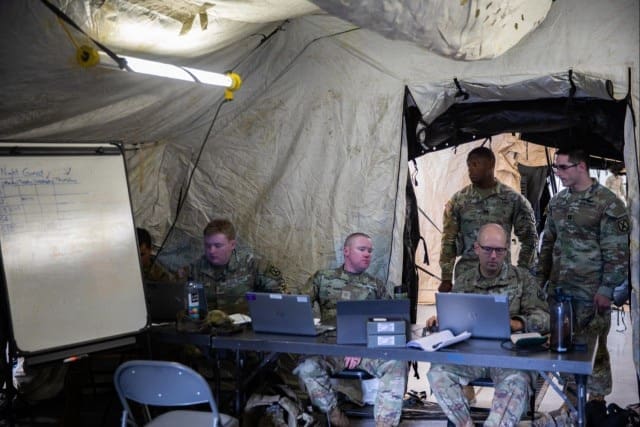
FORT DRUM, N.Y. — Clear and consistent communication is how the 10th Mountain Division (LI) maintains an advantage in combat, but it’s not a skill that comes without constant refinement and rehearsal of coordination strategies.

Command Post Exercise 1D, held Aug. 12-16, 2024, on Fort Drum, is designed to address this domain and get Soldiers assigned to Headquarters and Headquarters Battalion, 10th Mountain Division, the hands-on experience needed to succeed in operational settings.

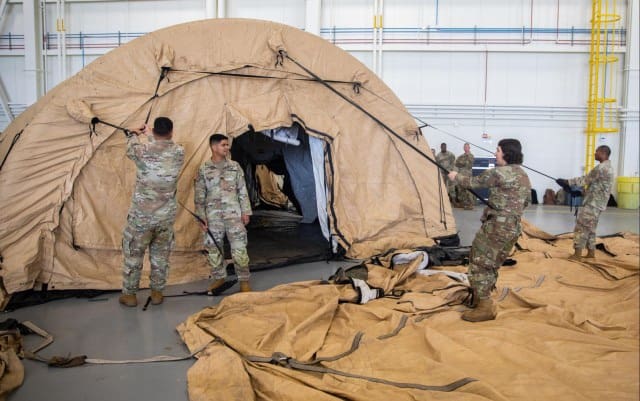
Soldiers participating in CPX-1D are tasked with establishing, maintaining, operating and relocating command posts. Command posts are collections of critical communication infrastructure established in operational environments that quickly and effectively disperse information to Soldiers on the ground, crucial to the success of their mission.

“They’re really the heart of the division,” said Maj. Richard Steinouer, the executive officer of Headquarters and Headquarters Battalion, 10th Mountain Division. “The order that comes from the highest general, down to the lowest Soldier, comes from these command nodes that we’re establishing.”

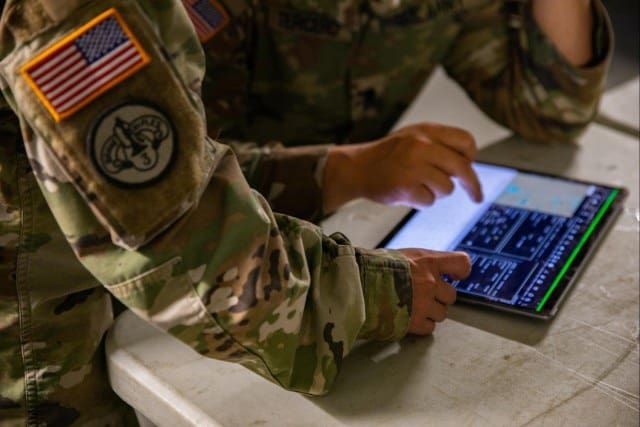
CPX-1D allows Soldiers to refamiliarize themselves with practices they’ll need to be ready to execute but also allows them to learn and use new technologies and outlets to accomplish their duties. The Advanced Field Artillery Tactical Data System Artillery Execution Suite is one of the new technologies that 10th Mountain Division Soldiers participating in CPX-1D had the opportunity to use for the first time.

The AFATDS AXS augments the ability to conduct fire missions by streamlining the information presented to the Soldier, accelerating the process by which information is transmitted to the operator, and introducing new channels to work from, such as detaching and operating as a tablet.

“The Army’s all about speed, and we have to make sure that the software that we develop also matches the speed of need,” said Maj. Henry Castillo, an assistant program manager assigned to the U.S. Army Project Executive Office. “We have to make sure that it can react properly to every single new threat from a near-peer adversary.”

Gaining experience with systems like the AFATDS AXS builds familiarity with the necessary tactics, techniques, and practices that will become critical to the 10th Mountain Division when operating in practical environments. Without the ability to rapidly construct and function in command posts in high-stress situations, the 10th Mountain Division loses one of its greatest strengths: its clear, consistent, and concise communication.

“Without those command nodes and the network they need with the right people at the right node, you’re not going to be able to do any kind of mission command,” Steinouer said. “The only way to do it well is to do it over and over again.”

By SPC Kade Bowers

Fluent in Unity: How LEAP Airmen Powered Joint Success at Arcane Thunder 24

Thursday, August 22nd, 2024

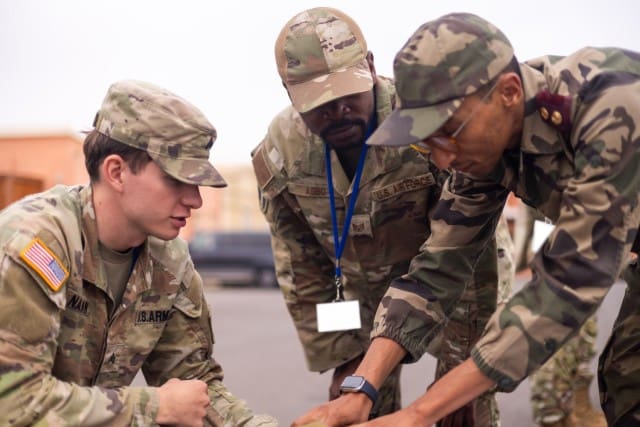
Air Force Lt. Col. Rodrigo Ocampo, Capt. Cassaundra Preston and Staff Sgt. Arnaud Agbo arrived on July 24, 2024, in Morocco ready to support Arcane Thunder 24 with a unique skill set and capabilities that extended beyond traditional military strategy. Their team focused on a specific domain that has not yet been mastered by a piece of technology – human interactions. The team of three volunteered through the Language Enabled Airman Program, also known as LEAP, to serve as linguistic and cultural experts. Their presence supported the mission at hand and deepened the connections between the U.S. and Morocco, showcasing the critical role of language and cultural integration in joint military operations.

Arcane Thunder 24 was a complex, multi-domain exercise that tested the interoperability between the U.S. Army and Moroccan Royal Armed Forces. Ocampo and Preston assisted with integration by serving as linguists during the training. Agbo moved with teams on the ground to support multiple elements. Although their uniform might have been different than that of the U.S. Army and Moroccan military members they served alongside, they were a vital bridge between the two.

“Our LEAP partners were instrumental in the successful completion of Arcane Thunder 24,” said Lt. Col. Aaron Ritzema, the 2nd Multi-Domain Effects Battalion commander. “They brought a high level of cultural and linguistic expertise that benefited our daily operations. Additionally, they rounded out our Joint Force and provided creative solutions to exercise specific challenges.”

As Arcane Thunder 24 unfolded, the airmen forged relationships that assisted both nations. Each of the LEAP scholars proved to be a valuable addition to the exercise in unique ways.

For Ocampo, Preston, and Agbo, this was their first experience in a joint exercise as LEAP scholars. Preston hails from California and has developed a passion for travel. Volunteering for LEAP opportunities has allowed her to gain experience in different countries and work alongside other cultures as an advisor during operations.

“I saw LEAP as an opportunity to travel and experience different cultures,” she said. “We bonded with the Moroccan soldiers over meals and over our love of communicating in different languages.”

While speaking about the value of utilizing uniformed service members in the role of cultural experts, Preston added, “Leaders often undervalue the importance of culture, and as LEAP scholars, we are able to demonstrate that value at the organizational level.”

Ocampo led the team of interpreters during Arcane Thunder 24, but more importantly, he built a cohesive team of trusted experts within the staff. His duties ranged from teaching and translating cyber domain classes to assisting and coordinating events for distinguished visitors. Ocampo demonstrated the power of joint operations and integration by extending his knowledge of technical skills and culture beyond the walls of the tactical operations center. It was a regular occurrence to find him assisting U.S. and Moroccan soldiers anywhere in the exercise.

“LEAP provides organizations with scholars that have a high aptitude in both language and culture,” said Ocampo. “We are able to use our skills to advise on ways to connect with our counterparts from different regions and cultures.” Ocampo has served in joint units before but said that he gained a new perspective working as a cultural advisor for the 2nd MDEB.

As airmen, all three LEAP scholars described the need to learn the Army language initially. Agbo focused on gaining credibility with both counterparts by volunteering to join them on every mission, including recovering downed equipment at night. “The team consisted of the U.S. Air Force, U.S. Army, and the Moroccan Royal Armed Forces, and we were all able to get together as one team,” said Agbo. “We were all equally exhausted, but we knew what we had to do, and we were able to come together and stay motivated to accomplish the mission.”

Agbo was pivotal as a linguist and cultural expert, ensuring that multiple teams received linguistic support at two separate training areas during Arcane Thunder 24. His dedication to the team was highlighted at the final dinner by numerous leaders within the 2nd MDEB. “Having a positive mindset and energy shows people that we are here to be a part of the team,” said Agbo. “When both the Moroccans and U.S. Army are comfortable with us, we can build the relationship and develop a bond that creates a strong team.”

Agbo was born and raised in West Africa and emigrated to the United States when he was 19. He said he decided to join the U.S. Air Force to serve his new country. “One thing I believe is that if you find something good, you should always try to make it better,” said Agbo. “Serving in the military was my opportunity to serve my country, leave my imprint, and try to make my country better.”

LEAP solves a commonly experienced friction point across military exercises – language and cultural integration. The force multiplier program puts uniformed service members in the position to aid and enhance joint partnerships. The Department of Defense reported approximately 3,500 multi-capable, language-enabled airmen with proficiencies in over 97 languages.

Part of the program maintains deployment readiness for the LEAP scholars to deploy to support joint operations worldwide. The unique aspect of the program is that it brings together the U.S. Army, the U.S. Air Force, and international allies and partners.

“This was my first time being embedded in an Army staff,” said Ocampo when asked about his experience at Arcane Thunder 24. “I got to experience the Army culture while working in the field with the Moroccan Royal Armed Forces, and I am really glad that I got to have such a diverse experience.”

Arcane Thunder 24 was held in Morocco this year for the first time. The exercise proved to be a step towards strengthening the U.S. relationship with Morocco. Integration of the staff elements was made more accessible by placing airmen as linguists and cultural experts to be the connective tissue between the U.S. Army and the Moroccan military.

Story by CPT Michael Mastrangelo

Photos by SSG Rene Rosas

1st Armored Division Soldiers validate combat capabilities at Rodriguez Live Fire Complex

Wednesday, August 21st, 2024

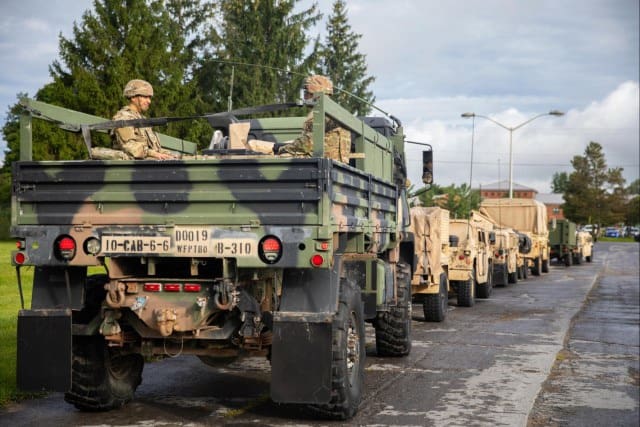
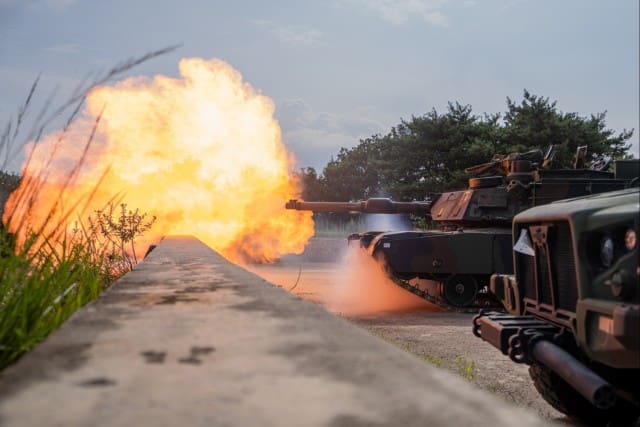
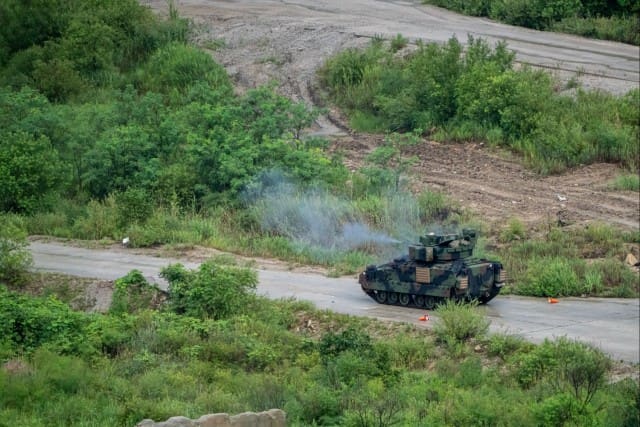
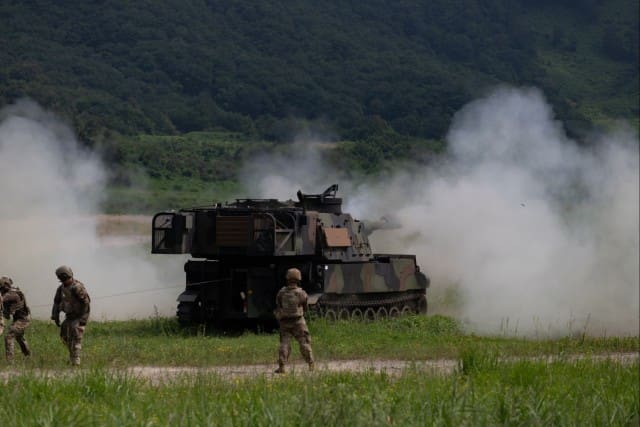
CAMP HUMPHREYS, South Korea — Soldiers from 4th Battalion, 70th Armored Regiment, 1st Armored Brigade Combat Team, 1st Armored Division, fired their tanks, howitzers and Bradleys during the live-fire portion of their rapid deployment readiness exercise at Rodriguez Live-Fire Complex, South Korea, Aug. 5-9, 2024.

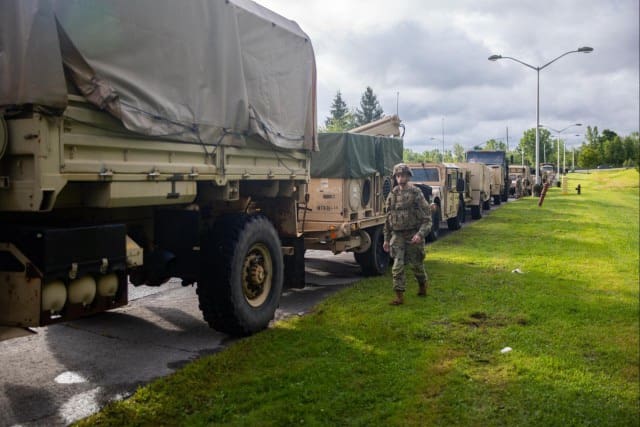
The battalion, based out of Fort Bliss, Texas, arrived during the final week of July and drew their combat equipment from Army prepositioned stock maintained on the Korean Peninsula by the 19th Expeditionary Sustainment Command and 403rd Army Field Support Brigade. The 25th Transportation Battalion transported 1ABCT’s newly donned equipment from Daegu city to RLFC for the live-fire validation.

After zeroing their weapons, 1ABCT Soldiers fired their M1A2 Abrams tanks, M109-A6 Paladins and M2A3 Bradley Fighting Vehicles throughout the week.

“Task Force Thunderbolts received a no notice deployment exercise where we were able to demonstrate our ability to project combat power into the Indo-Pacific under a condensed timeline,” said Lt. Col. Christopher Lorete, 4th Battalion commander. “We rapidly drew our combat fleet from the Army Preposition Stock-4 to assist the Army in validating its combat readiness in a critical area of responsibility.”

On July 17, 4th Battalion, 70th Armored Regiment Soldiers were notified they would leave Fort Bliss for a no-notice deployment readiness exercise. Six days later, they began drawing their combat equipment at Camp Carroll, South Korea. This deployment readiness exercise is part of Pacific Fortitude, which is part of a longstanding agreement to support the Republic of Korea – U.S. alliance.

The rapid deployment exercise is a standard, routine readiness validation where a U.S. Army unit is tested on its ability to rapidly deploy personnel successfully to a given environment, conduct training and redeploy back to their home station. This exercise also tests the swift deployment and decisive utilization of vehicles and equipment already present on the Korean peninsula. Army Prepositioned Stock-4, or APS-4, are strategically placed caches of warfighting equipment in Korea and Japan that serve as a critical component of the U.S. Army’s ability to rapidly project combat power throughout the Indo-Pacific.

“We are extremely proud of our team who worked tirelessly to prepare our equipment to conduct squad and platoon collective training, culminating in tank platoon live-fires and a combined ROK-U.S. mechanized infantry platoon live-fire,” Lorete said. “This opportunity to train as part of Pacific Fortitude enhances our operational readiness enabling our team to grow and learn every day and reinforces our commitment to the ROK in maintaining security and stability on the Korean peninsula. It is an honor to train side by side with our Republic of Korea Army partners increasing readiness and winning every day.”

Pacific Fortitude enhances the U.S. Army’s combat readiness and the ROK-U.S. combined defense posture, and further strengthens security and stability on the Korean peninsula. All professional militaries train on routine and continuously executed events to maintain readiness, proficiency, credibility, and trust.

By Eighth Army Public Affairs Office
SIG SAUER Presents “Now it’s Real,” a New Backcountry Archery Elk Hunting Film in Partnership with GOHUNT

Tuesday, August 20th, 2024

An archery elk hunt is the pinnacle for many hunters—like GOHUNT’s own Omar Lopez. When their founder, Lorenzo Sartini, invited him to join his next elk hunt, Omar couldn’t contain his excitement. However, while planning their hunt, Lorenzo’s appendix ruptured, throwing a massive wrench into their plans. Trying to fill two tags in two different units is hard enough when not recovering from major surgery, but now? The pressure was really on.

The pair now venture into the backcountry with hopeful hearts, eager to pursue Omar’s first bull. All their meticulous preparation and hard work had led to this moment, and they aren’t about to let a little thing like an appendix get in the way of turning Omar’s dream into a reality.

See the video at www.gohunt.com/browse/videos/gohunt-originals/a-backcountry-archery-elk-hunt-now-its-real