Celebrate 20 years of the TLR-1

Archive for the ‘Guest Post’ Category

MATBOCK Monday: Skeet Patches

Monday, August 5th, 2024

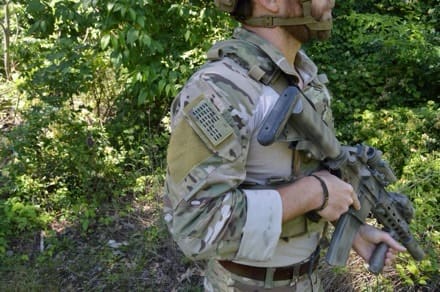
Summer is in full swing, and with it comes the great outdoors, sunny days, and, unfortunately, pesky bugs. Whether you’re hiking, camping, or just enjoying a backyard BBQ, the last thing you want is to be constantly swatting away insects. That’s where our innovative bug spray patches come in.

How It Works

Each patch features a super absorbent, anti-microbial lining designed to hold DEET or any other anti-bug spray for hours. This means you can stay protected from insects without having to frequently reapply spray directly to your skin. Our patches not only keep you bug-free but also minimize your exposure to potentially harmful chemicals.

Versatile and Convenient

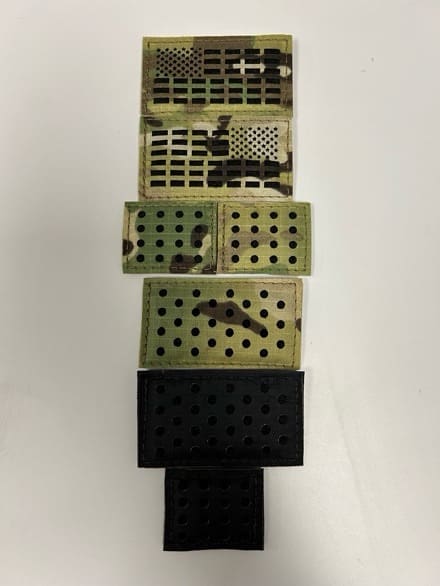
Our kits include two large and two smaller patches, offering versatility for all your needs:

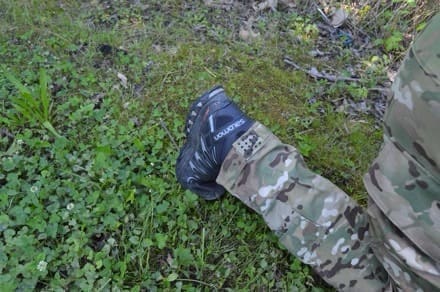
– Small patches: Ideal for placement around the ankles or just below the knee, providing targeted protection in these vulnerable areas.

– Large patches: Perfect for wearing on your shoulders, ensuring comprehensive coverage.

Design Options

We understand that style matters. That’s why we offer our patches in two attractive designs: the American Flag and a playful Dots pattern. Show your patriotic spirit or go for a fun look—the choice is yours!

Custom Orders

For those looking to make a statement or promote a brand, we offer custom flag sets. These must be purchased in sets of 100 kits. For more information and to place an order, please contact us at orders@matbock.com.

Enjoy the Outdoors Worry-Free

Say goodbye to bug bites and chemical-covered skin. Our bug spray patches provide a safe, effective, and stylish way to stay protected. Grab your kit today and enjoy the great outdoors without the hassle of pesky insects.

“Thunder Dome 2024” Promotes Innovation in Air Commandos

Monday, August 5th, 2024

HURLBURT FIELD, Fla. —  

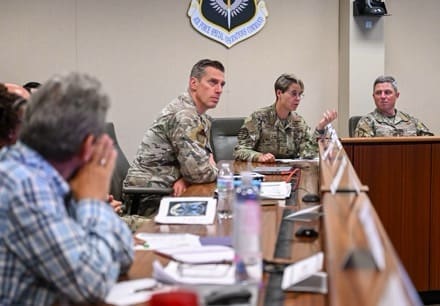
Participants from across the command took part in the first Air Force Special Operations Command Innovation Competition dubbed “Thunder Dome” here from July 15-19.

For the competition, Air Commandos presented projects and ideas to AFSOC senior leaders that required resourcing and development beyond their originating organization capabilities. Approved proposals stood a chance at receiving $2 million in Operation & Maintenance (O&M) funding. 

Out of the 17 projects submitted to the AFSOC staff, only six were chosen to make the in-person presentation. The six projects were selected through weighted voting based on multiple factors including impact on readiness/advantage, alignment with AFSOC strategy, and feasibility of execution.

Prior to the presentations, AFSOC/Continuous Improvement and Innovation programs (CI2) provided teams extensive coaching for seamless presentations. Additionally, teams participated in an AFSOC/CI2 black belt certification project to improve future iterations of the Thunder Dome competition.

Due to the presenter’s outstanding ideas and preparation, the panel of judges decided to award all six projects funding.

“This is what AFSOC is all about; enabling Air Commandos to further develop innovative solutions that transform AFSOC and solve problems that impact our readiness and test our advantage,” said Lt. Gen. Mike Conley, commander of AFSOC.

Through conversations with AFSOC CI2, there is now a path forward to execute each projects funding.

The next Innovation Competition “Thunder Dome 2025” is in the works and will take place in January of next year. Ideas are currently being accepted by the Wing Process Managers.

Air Force Special Operations Command Public Affairs

MI History: Army Security Agency Establishes DARRS Detachments

Sunday, August 4th, 2024

I love military history and in particular SOF and SI history, having served in both communities. I especially appreciate the MI stuff since so little has been published. The US Army’s Military Intelligence Soldier Heritage Learning Center recently shared this post:


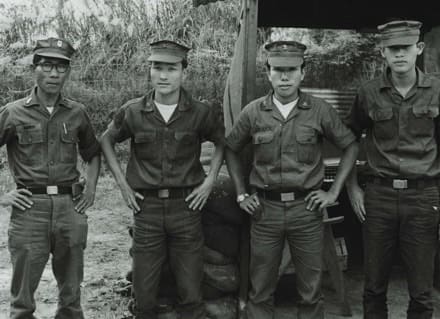
Photo: Personnel of the 1st ASTD, one of the ARVN units supported by the DARRS detachments

On 31 July 1970, the Army Security Agency (ASA) established Division Advisors Radio Research Support (DARRS) Detachments in South Vietnam. The DARRS detachments were an effort to further the overall “Vietnamization” of the war as well as provide direct support to the American advisors with Army of Republic of Vietnam (ARVN) divisions.

In early 1969, President Richard Nixon’s administration began a program to end American involvement in Vietnam, which involved expanding, equipping, and training South Vietnamese military forces so they could take an increased combat role while reducing the number of American forces. As part of this broader program, the ARVN began to organize their SIGINT effort. To support their divisions, they organized ARVN Special Technical Detachments (ASTDs) consisting of four officers and fifty-six enlisted personnel. Modeled on the ASA’s highly successful direct support units attached to American divisions and separate brigades, the ASTDs provided SIGINT support to combat divisions and passed information up the South Vietnamese cryptologic chain of command. On 1 July 1969, two ARVN divisions received the first ASTDs.

Under the terms of the Vietnamese Improvement and Modernization Program, ASA’s 509th Radio Research (RR) Group, under Col. William W. Higgins, would assist the ASTDs by providing mission equipment and logistical support and by instructing the South Vietnamese on how to perform their own maintenance. All the while, ASA leaders continued to take every opportunity to press the ARVN to focus upon voice intercept and even offered on-the-job training by temporarily assigning Vietnamese to the 509th RR Group’s own low-level voice intercept teams.

Over the next year, Higgins and his group informally supported the ARVN’s nascent SIGINT efforts. Under Project SCREWDRIVER, 509th RR soldiers regularly visited South Vietnamese elements to pass on maintenance tips and to ensure they were receiving necessary supplies. These visits also proved an excellent means to monitor overall operational progress.

At the same time, intelligence support for American advisors became more critical. Consequently, the 509th RR Group field-tested the concept of a team dedicated to specifically support the senior American advisor for the 1st ARVN Division. This test proved so successful that the U.S. Military Assistance Command, Vietnam (MACV) approved the concept for all of the ASTDs. On 31 July 1970, MACV and ASA established the DARRS detachments.

The DARRS detachments’ primary function was to pass SIGINT information to senior American personnel advising the South Vietnamese divisions and to provide a sanitized version for the ARVN commanders. In addition, DARRS personnel provided the ASTDs with constant support and advice. Their impact was immediately evident and began to assure that the ARVN detachments were operationally functional.

As one advisor noted, “For a long time we had a shortage of hard intelligence…The 9th DARRS has given us the ability to make estimates and allow the commander to make decisions.”

?Michael E. Bigelow

TACP Memorial Run: 24 Hours of Remembering the Fallen

Saturday, August 3rd, 2024

TOWER BARRACKS, Germany – From supporting Gold Star families to hosting Memorial Day ceremonies, the U.S. military has a tradition of honoring men and women who gave their lives in service. For Tactical Air Control Party Airmen with the U.S. Air Force’s 2nd Air Support Operations Squadron (2nd ASOS), paying tribute to fallen service members took on a noteworthy significance last week.
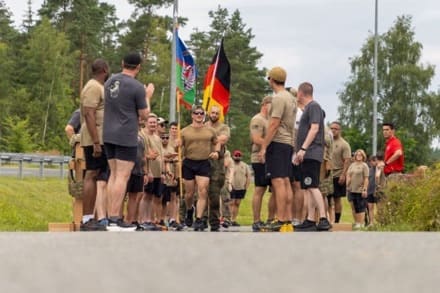
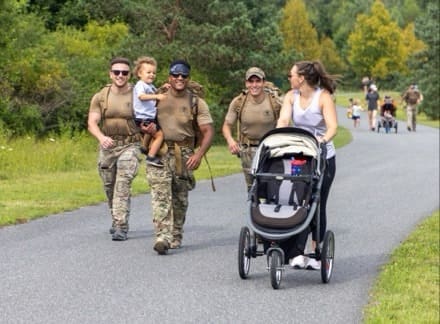
On July 25 and 26, TACPs assigned to the 2nd ASOS gathered to conduct the annual TACP Association 24-Hour Challenge at Tower Barracks, Germany. Over a two-day period, the unit occupied a mile-long trail near the Tower Barracks Physical Fitness Center, circling the track, recording their miles and raising funds and awareness for their fallen brethren as they went. A parking lot along the route served as the main hub for the event, where volunteers collected donations and tracked miles, all while providing music and refreshments to the event goers. Though the challenge’s participants consisted mostly of TACPs, Bundeswehr (German Armed Forces) service members, civilians, spouses and children also recorded mileage, with some families even camping overnight at the softball fields in support of their service members.
The event was coordinated through the TACP Association, a nonprofit organization that supports the TACP community through various services and programs. The 24-Hour Challenge, which serves as the organization’s biggest and most relevant event, is typically held around the same time every year by different TACP units stationed all over the world. All proceeds the organization receives are donated to those within the TACP community, including disabled veterans and Gold Star families.
“This is a chance to remember those that have paid the ultimate sacrifice,” said Alberto Reyes, a combat arms instructor with the 2nd ASOS. “Even if you don’t donate to the TACP Association, taking a minute out of your day to remember somebody who has fallen or look into someone who has fallen, TACP or not, is a service on its own.”
An integral part of U.S. Air Force Special Warfare, Airmen serving as Tactical Air Control Party members are few and far between, making up only a minuscule percentage of the total Air Force. A small and specialized group, TACP Airmen integrate both surface and air fires, operating in demanding and hostile environments all over the world. TACP Airmen with the 2nd Air Support Operations Squadron fall under the 4th Air Support Operations Group out of Ramstein Air Base, Germany, which provides direct support to U.S. Army Europe and Africa (USAREUR-AF) and V Corps.
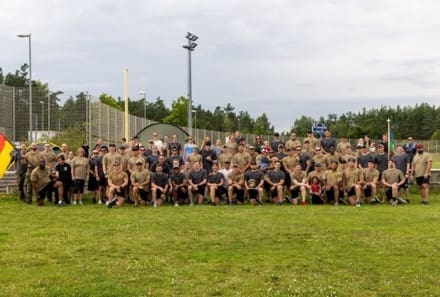
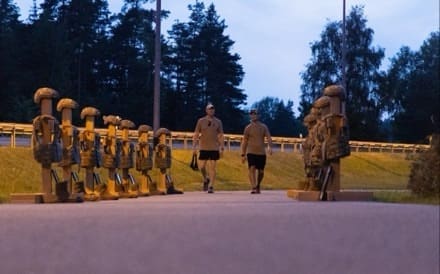
Fighting through blisters, sore muscles and at times, hours of darkness, the group moved continuously for the full 24 hours, completing mile after mile as they looped around the Tower Barracks softball fields. In the final stretch of each lap, participants traveled a path surrounded by fourteen individual memorials, each honoring a named fallen Airman and serving as a grave reminder of the ultimate sacrifices made by the TACP community. Because this specific military community is so small, many of the Airmen taking part in the run knew the fallen Airmen personally, giving the event an elevated level of significance and emotion.

“There is a whole spectrum of emotions during the 24-Hour Challenge,” said U.S. Air Force Col. Jeffrey M. Mack, commander of the 4th Air Support Operations Group. “I’ve known a lot of the people that we’re honoring personally, so there is always a feeling of loss, but there is also teamwork and joy because we’re such a close knit group of people and we take care of families.”

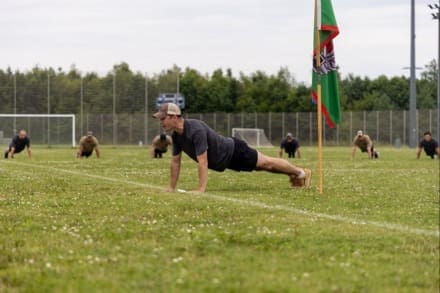
As the clock ticked towards the 24-hour mark, all runners completed the final mile as a cohesive group, with Mack leading the formation all the way through the finish line. In a culminating act of remembrance, the group completed a series of push-ups at the conclusion of the last mile, each repetition honoring a fallen member of the TACP community. In total, participants completed over 1,800 miles, surpassing the expectations of the event’s organizers. While fundraising was one of the primary purposes of the event, the most important reason – remembering fallen TACP Airmen – was not lost on anyone for the entirety of the 24 hours.

“What goes through my mind as I’m running is all the service members we’ve lost – if they had a choice, they’d be out there with us and they don’t have that option,” said Senior Master Sgt. Gary Demmons, who is currently assigned to the 2nd ASOS. “There is pain and a little bit of being uncomfortable, but it’s nothing compared to what our fallen service members gave.”

By Capt Sara Berner

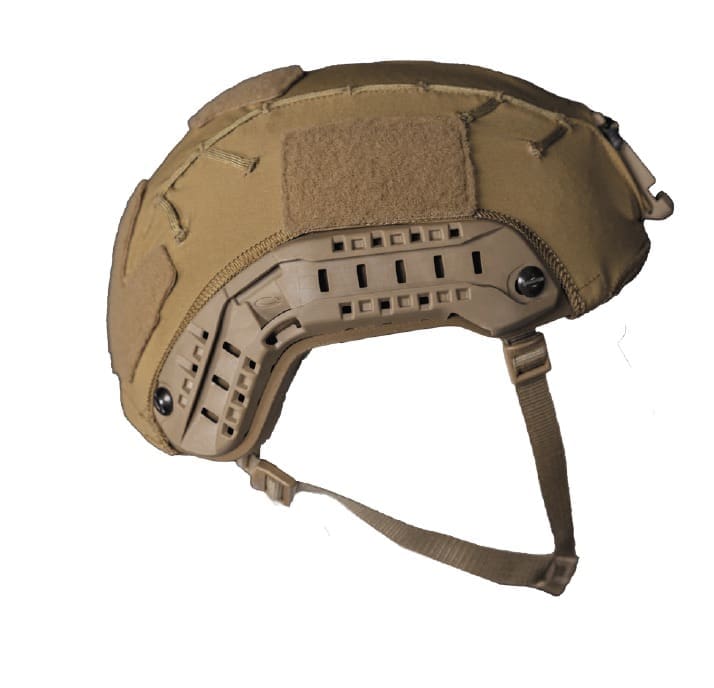
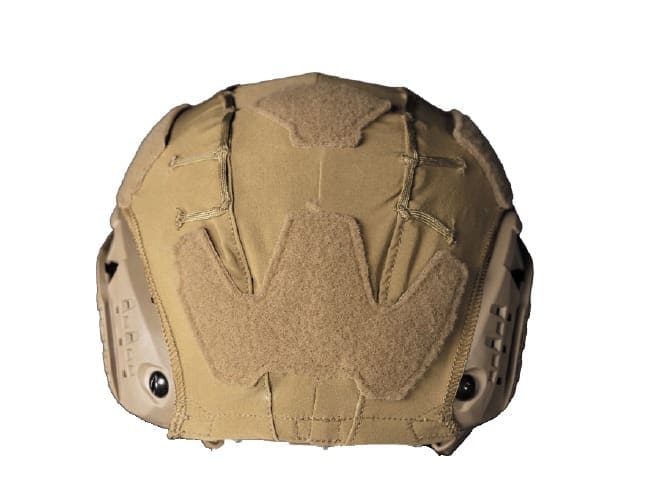
FirstSpear Friday Focus: ECH High Cut Helmet Cover

Friday, August 2nd, 2024

• Made in USA
• 100% Berry Compliant
• 550 Cord Loop for cable management or foliage attachment

• Solid Stretch
• Fits ECH High-Cut Ops Core Helmets
• IFF Loop sides and Battery Pack/ Counterweight loop on rear

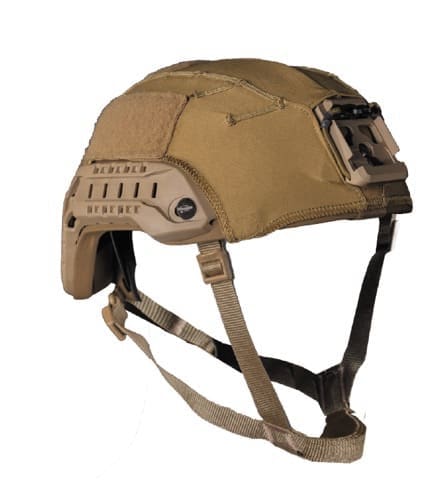
We’re proud to announce the launch of its latest helmet cover, the Enhanced Combat Helmet (ECH) Cover. Designed to meet the demanding needs of end users in the field.

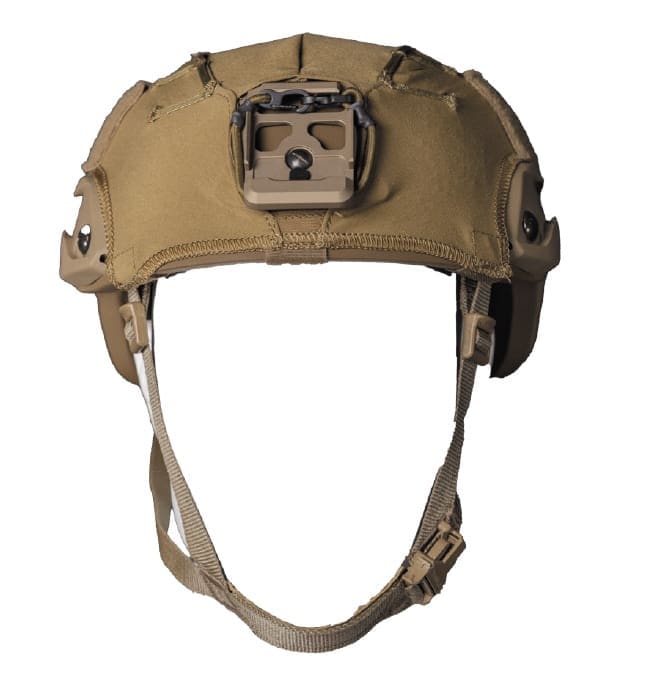
The FirstSpear ECH Helmet Cover is crafted with state-of-the-art materials, providing superior durability and performance. Individually sized and 100? fit tested the FirstSpear Helmet Cover is designed to fit the Ops Core ECH High-Cut Helmet.


A stretch fit ensures that it remains in place during Free Fall or Rotary Wing Operations and key areas of the cover have been manufactured to allow access to night vision mounts and rail accessories. The 550 cord tie down loops are positioned in other locations for attachment of foliage or jute or cable management.

Perfect for changing your helmet’s pattern, preserving its finish and dampening noise during impact, this cover is available as an all solid stretch. It is available in coyote in small, medium, large and extra large.

The FirstSpear ECH Helmet Cover is now available for purchase through authorized FirstSpear dealers. For more information about this product and other innovative tactical solutions, visit www.first-spear.com or contact sales@first-spear.com.

Army Shares Organic Industrial Base Modernization Plan on Capitol Hill

Friday, August 2nd, 2024

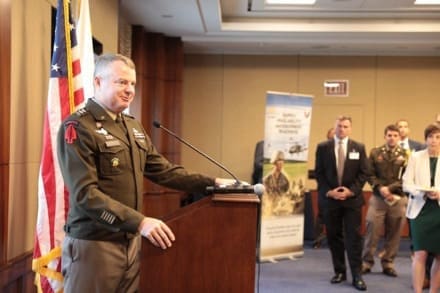
WASHINGTON — The Army had an opportunity to share its story of Organic Industrial Base modernization with members of Congress at its annual Army House Depot Caucus Reception on Capitol Hill, July 23, 2024.

“Thank you for your early investment and continued support of the Army’s OIB,” Lt. Gen. Chris Mohan, Army Materiel Command deputy commanding general and acting commander, told members and staff in attendance. “With Congress’ support, we have embarked on a 15 year multi-billion-dollar investment to strengthen the nation’s industrial base, generating readiness and operational capabilities.”

At the start of fiscal year 2024, the OIB officially entered the 15-year Modernization Implementation Plan, focused on five lines of effort- facilities and infrastructure; tolling and processes; workforce; network and cyber; and energy and environmental.

“Right now, at our depots, arsenals and ammo plants, you will see a lot of emphasis on infrastructure, roads, electrics and water projects,” said Mohan. “Once we bring those up to standard, we will begin moving inward, including not only implementing cutting-edge technology like advanced manufacturing but also upgrading our communications infrastructure and cyber resiliency.”

Some modernization projects started early due to additional funding the Army received connected to ammunition production, including efforts to accelerate 155mm production.

Mohan stressed to the attendees that the OIB is more than the 23 sites around the county; it has expeditionary capabilities, with at any time between 600-1,000 artisans in more than 30 countries around the world.

“They are at the tip of the spear, in places like Poland providing the essential support needed on the front lines,” said Mohan. “Your OIB workforce is making a difference, not only in your districts but around the world.”

Recognizing the powerful role that OIB artisans play in generating readiness, a key piece to the modernization plan is an OIB Human Capital Modernization Implementation Plan, which will ensure the Army is hiring, training and developing the workforce to support the 21st century OIB.

By Megan Gully

Joint Counter-Small UAS Office Conducts Successful Counter Drone-Swarm Demonstration

Wednesday, July 31st, 2024

WASHINGTON — The Army held its most challenging counter-small unmanned aircraft systems test to date, paving the way for Soldiers to field capabilities against small-UAS attacks in the future.

During the Joint Counter-Small Unmanned Systems Office’s (JCO) fifth C-sUAS demonstration, held at Yuma Proving Ground June 3-28, 2024, testers launched more than 40 UAS targets that converged on a defended area in each session. The tests helped the JCO evaluate the command-and-control capabilities of nine C-sUAS systems, observing how each sensed and identified different types of UAS threats.

“It was a very successful demonstration in informing U.S. [forces] and our allies what capabilities exist out there for this very challenging profile,” said Col. Michael Parent, JCO Acquisition Division chief.

“You don’t want to obviously engage the target multiple times,” Parent added. “You’ve got so many [UAS] coming at you, you have to be able to differentiate and have the most promising threat first.”

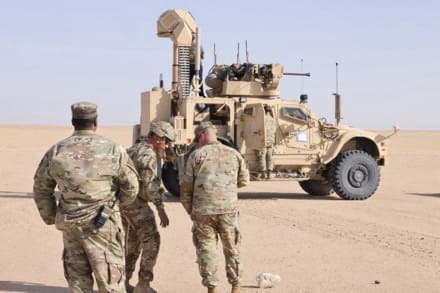
The demonstration presented a wide array of threats that swarmed the C-sUAS systems in mass and in waves, showcasing both kinetic and non-kinetic defeat solutions. Experiments tested capabilities that included guided rockets, kinetic interceptor drones, electro-optical/infrared cameras, radio frequency scanners and radio frequency jammers.

Demonstration threat profiles used rotary wing, fixed wing and slow-moving, and propeller-powered UAS threats. The JCO chose the nine systems from eight vendors pulled out of a pool of 58 vendor proposals.

Small unmanned aircraft systems pose a significant threat to Army and U.S. military operations and are also a particularly dangerous threat in Ukraine and parts of Israel. Drones provide low-cost capability to transport ammunition for targeted attacks and can collect reconnaissance for enemy forces and coordinate attacks.

To combat that threat, former Defense Secretary Mark Esper designated the Army as the executive agent for C-sUAS defense in 2019.

Parent said that the JCO will look to begin prototyping specific C-sUAS proposals in 2025 based on specific capabilities and the needs of combatant commanders. The JCO scheduled its next C-sUAS demonstration between the second and third quarters of fiscal year 2025.

According to Parent, compared to the previous four demonstrations held from 2021 to 2023, the vendors’ systems showed greater speed and recognition of threats.

The test marked the first demonstration the service has held in nearly 12 months.

“The challenge of the profile really meant that no one characteristic, no one capability, whether kinetic or non-kinetic, in itself could really defeat this kind of a profile,” stated Parent. “So what we saw was that you really do need a full system-of-systems approach, a layered approach, because we’re talking about a very large profile, 50 or more [threats] … coming out from different angles, different speeds and different sizes.”

As the JCO is currently evaluating the test results, Parent refrained from commenting on the effectiveness of each vendor’s systems or specific performance data. Of the eight vendors, the JCO chose two proposals from Maryland-based ELTA North America; a vehicle-mounted solution and a platoon transport solution.

The results of the testing will be collected and sent to U.S. combatant commands and the vendors at the end of July, Parent said.

Additionally, the JCO will coordinate with joint partners to identify the priority focus areas of UAS systems.

By Joe Lacdan

Tactical Tuesday: Coming Soon!

Tuesday, July 30th, 2024

Vertx is about to drop a major visual upgrade that’ll make your favorite go-to packs even more badass. Stay tuned, this is the upgrade you’ve been waiting for, and it’s coming in hot.