FirstSpear TV

Archive for the ‘Handwear’ Category

FirstSpear Friday Focus: Fast Rope Mitt

Friday, November 7th, 2025

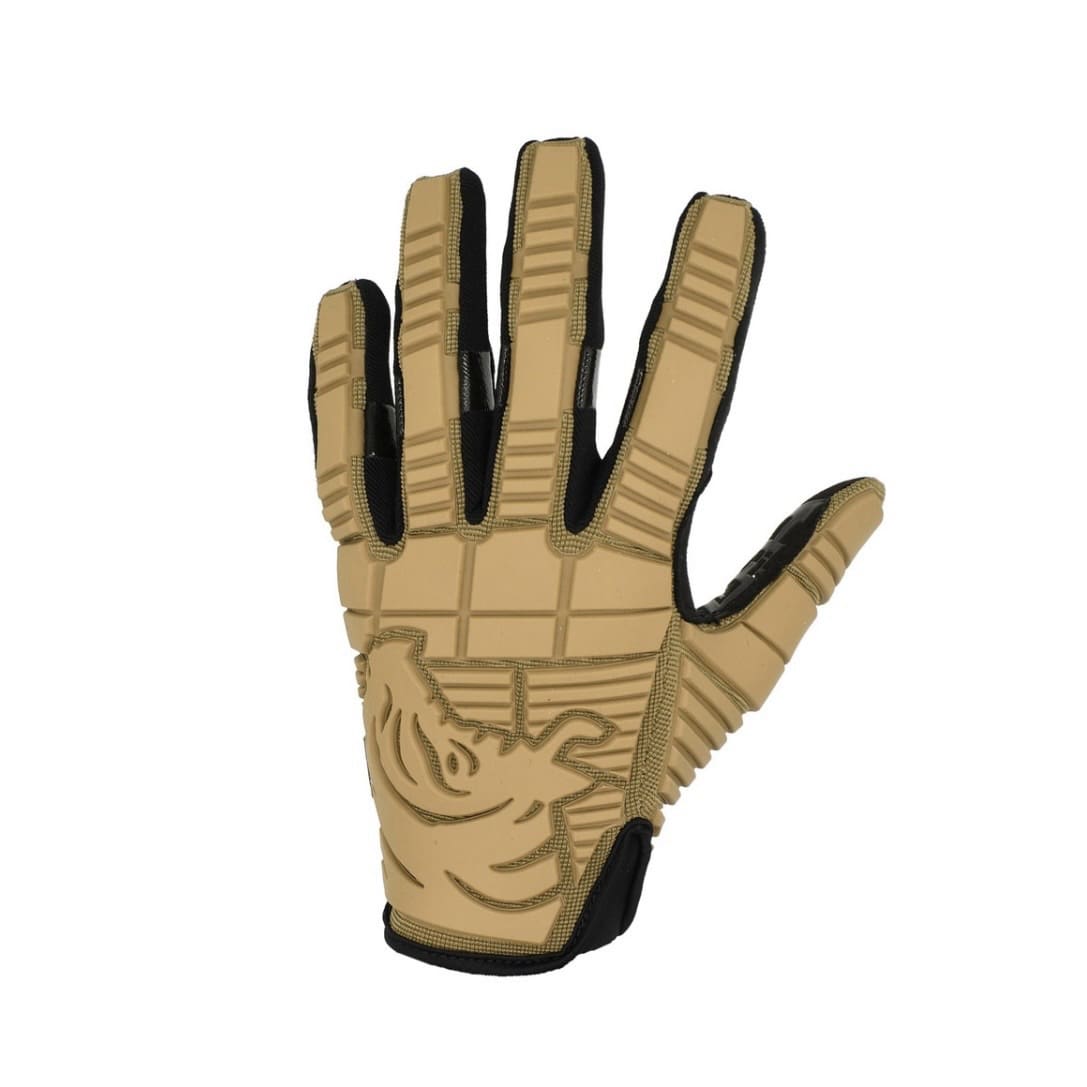
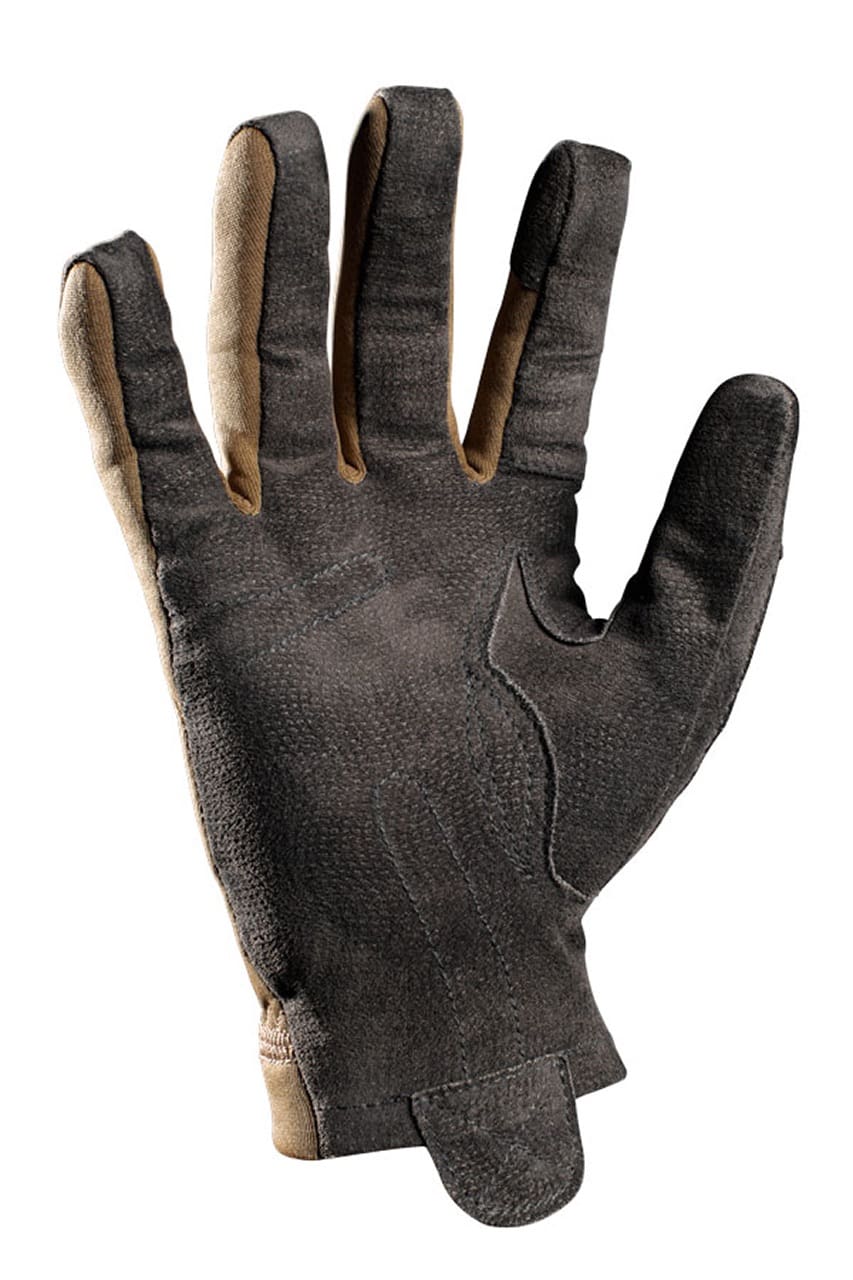
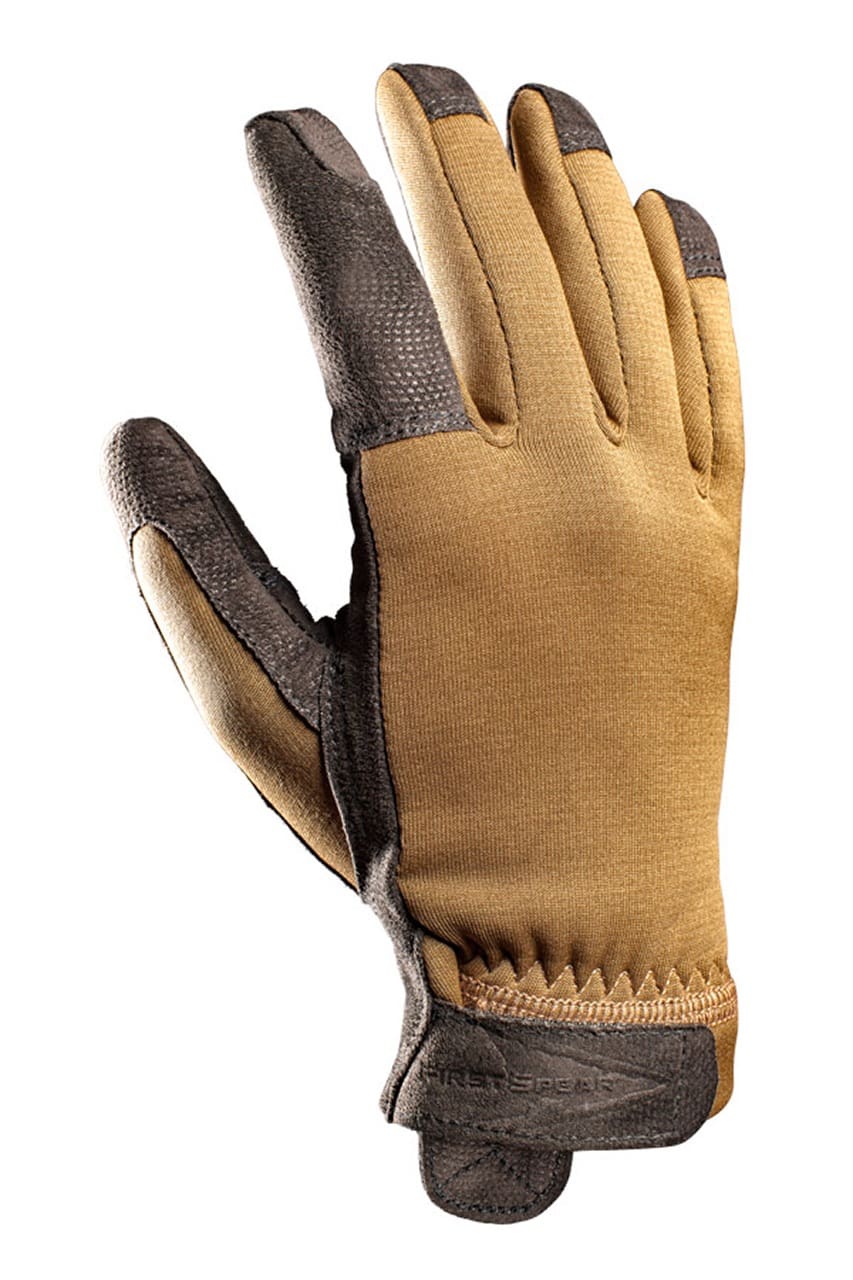
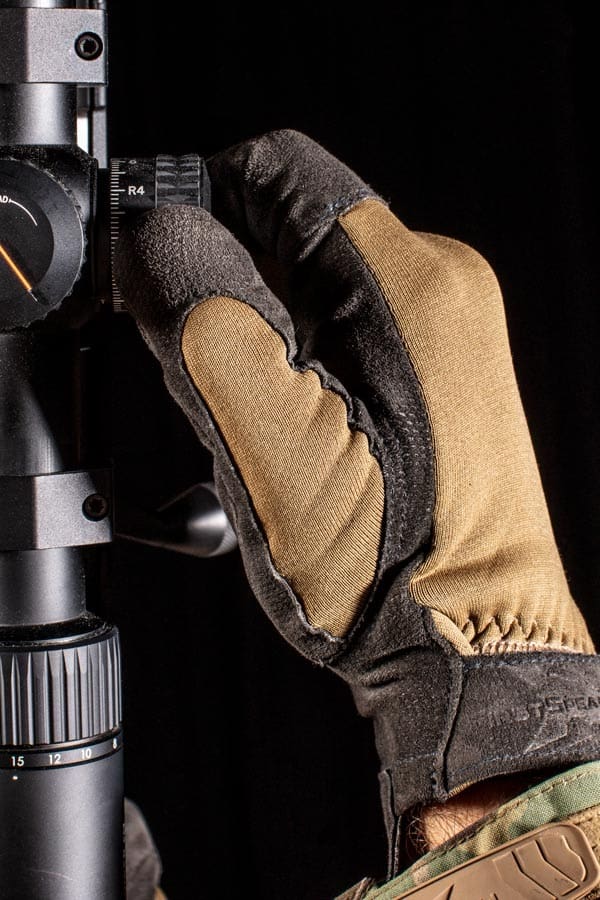
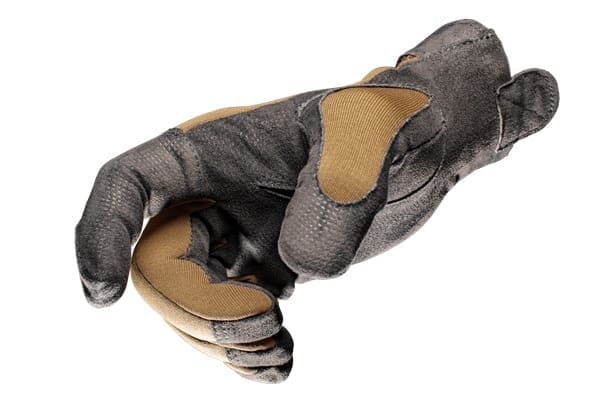
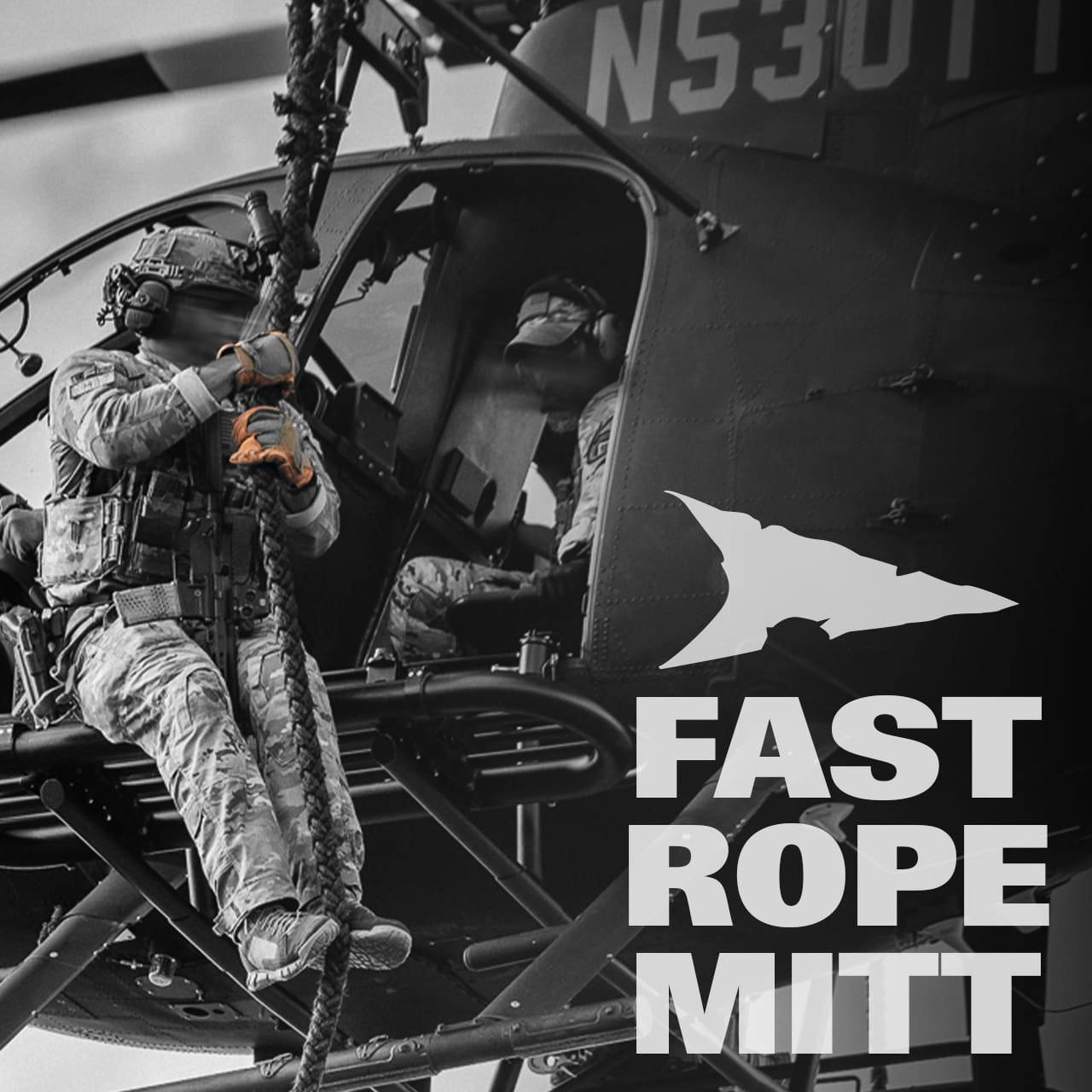
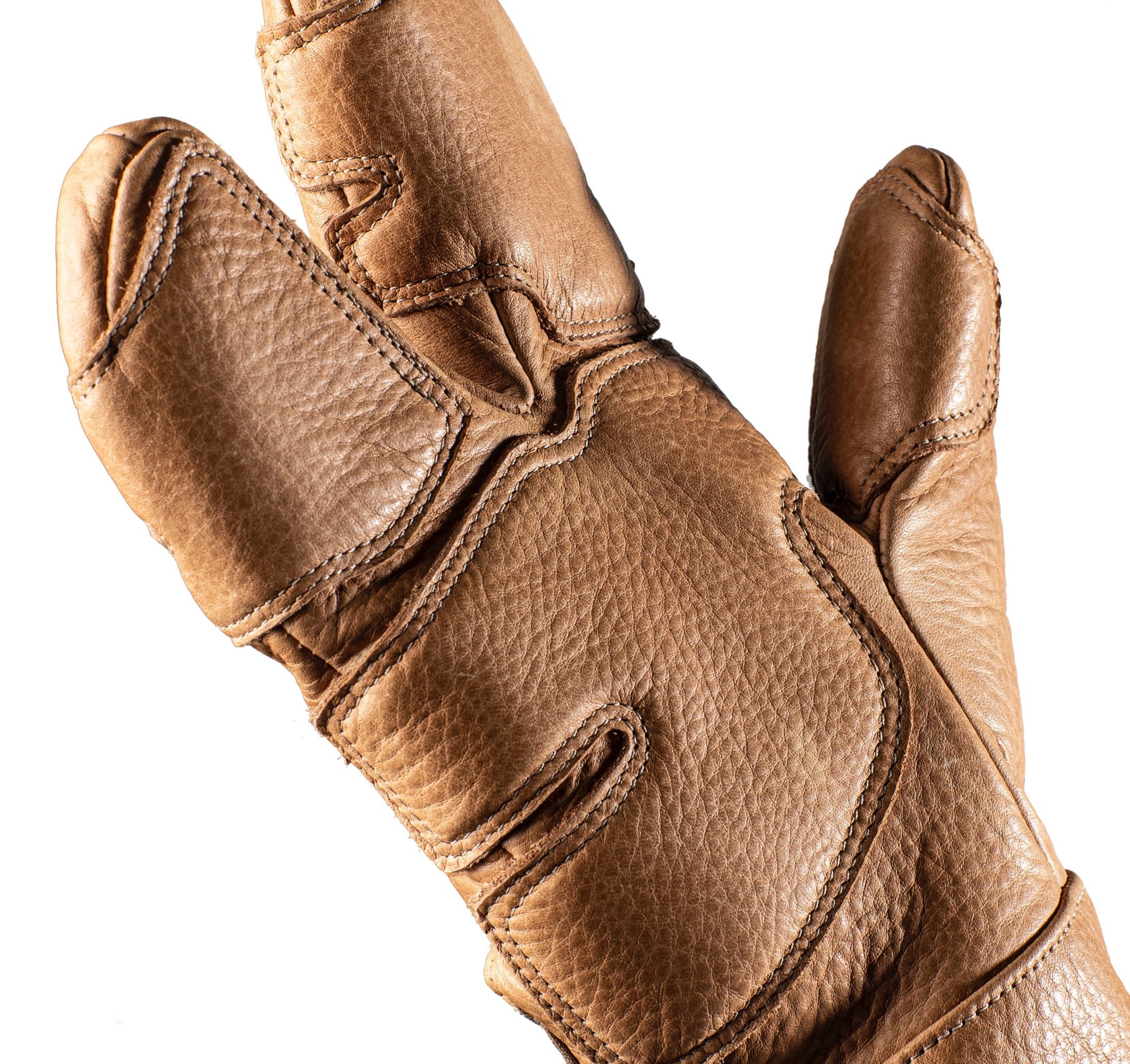
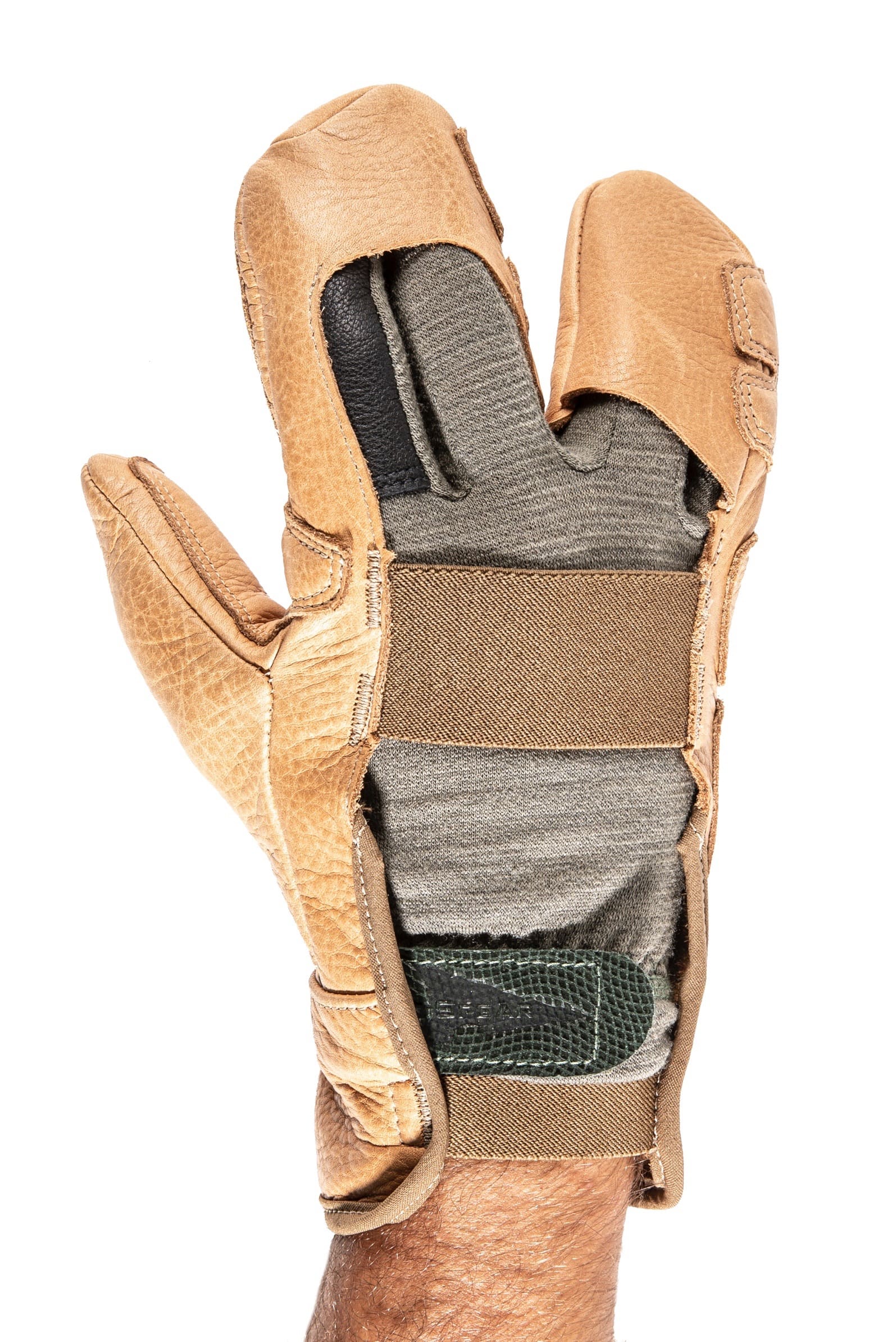
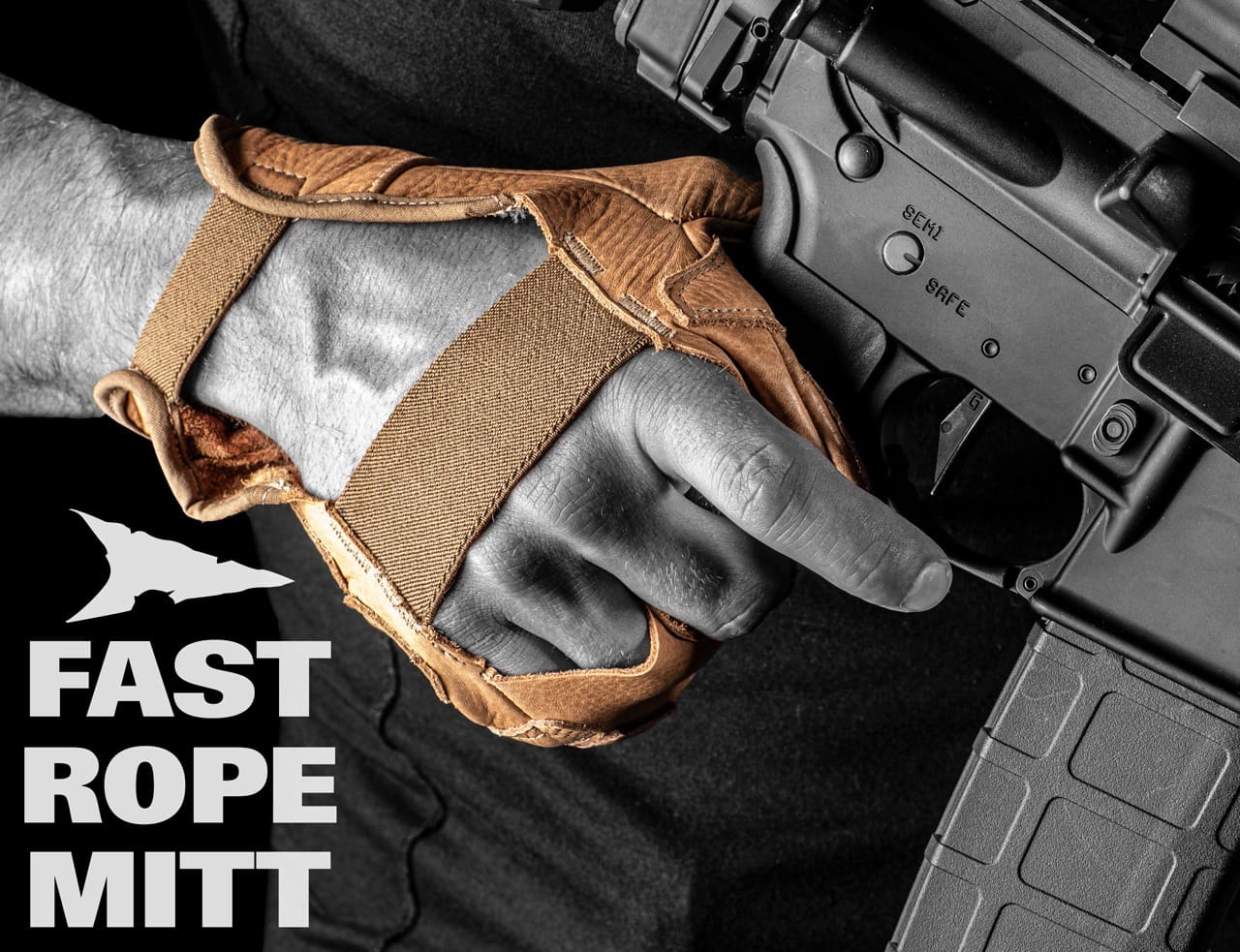
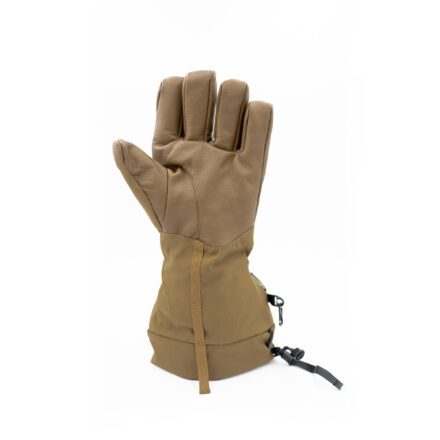
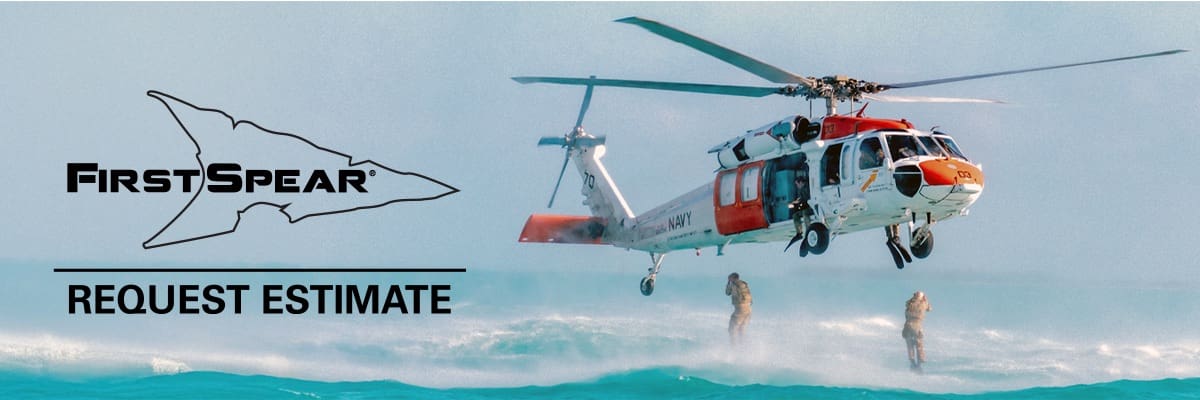
Built for professional users who demand reliability in high-risk insertions, the FirstSpear FAST ROPE MITT (FRM) delivers purpose-driven protection in a compact, minimalist package. Designed specifically for Fast Rope operations, the FRM is constructed from 100% Berry Compliant “roper” cow leather and advanced Kovenex materials for superior abrasion resistance, thermal protection, and durability under extreme friction.


The glove’s double-layered design combines a firmer external grain for grip and control with a softer internal texture for comfort and dexterity. Engineered to fold flat for pocket carry, the FRM is low bulk, lightweight, and optimized for quick deployment in the field.

Compatible with or without the FirstSpear Operator Glove (OG), it supports short, medium, and extended rope insertions up to 90 feet (27.4 meters).

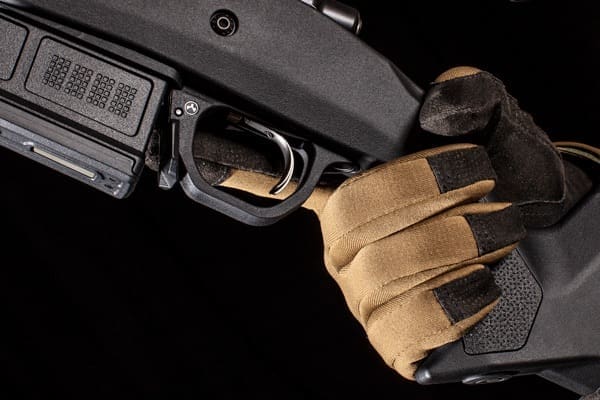
The innovative two-finger pattern allows operators to rapidly expose the trigger finger for immediate weapon engagement without fully removing the glove—a critical advantage during dynamic entry or contact situations. When not in use, the mitt can be partially removed and retained around the wrist via an elastic strap, ensuring it stays secure until re-engagement. Reinforced button holes provide quick attachment points for carabiners or snap hooks, keeping the FRM accessible at all times. With its combination of precision craftsmanship, premium materials, and mission-first design, the Fast Rope Mitt sets a new standard in operational readiness for military and tactical professionals who need dependable gear that performs when it matters most.

To request an estimate click image above or visit First-Spear.com/Request-For-Estimate. FirstSpear is the premier source for cutting-edge tactical gear for military, law enforcement and those who train.

For more information visit First-Spear.com.

Mainers – Coyote Rangeley Cold Weather Glove

Monday, October 27th, 2025

Even if they weren’t trying their hand at handwear for military operations extreme cold weather environments, the Mainers story would be a great one.

They’ve always made their handwear in the USA and got their start as the inventor and world leader in Cryogenic hand protection. In fact, their Cryogenic glove is used in labs all over the world, including Jackson Labs, NASA, WHO, NATO, and for transport of the COVID vaccine. Additionally, they were the third company worldwide to receive Gore-Tex certification.

The same highly skilled work force manufactures for NASA as well as for you. In fact, every glove and mitten they make is crafted right in Trenton, Maine.

The tried and tested Rangeley Glove is now available in Coyote. It is Berry compliant and has the coloring features:

  • GORE-TEX insert for 100% waterproofing
  • Durastretch® Tweave® provides flexibility, durability and an initial layer of water resistance
  • Unique finger design for natural grip-like curve
  • Natural, full-grain Goat Leather Palm Thumb and Finger Tips for durability and grip
  • Polartec® Power Grid™ combined with 100% recycled featherless 3M Thinsulate™ wicks moisture keeping you warm and dry
  • Antimicrobrial microfleece palm with Silvadur™ keeps your mitts from getting funky
  • Gauntlet easily fits over jacket sleeves to keep snow out
  • Included removable elastic wrist strap leashes

They have enough in stock to support small unit orders and thanks to their in-house manufacturing and material on hand, their lead times are in the weeks and not months.

www.mymainers.com/products/rangeley-glove

FirstSpear Friday Focus: Operator Glove

Friday, October 3rd, 2025

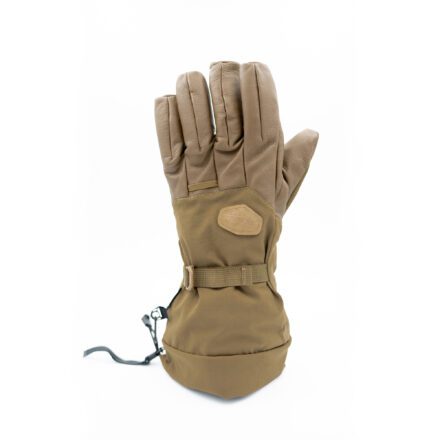
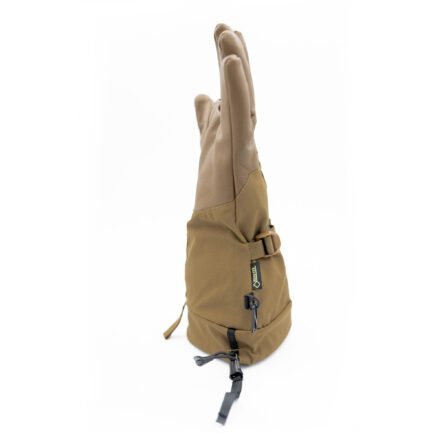
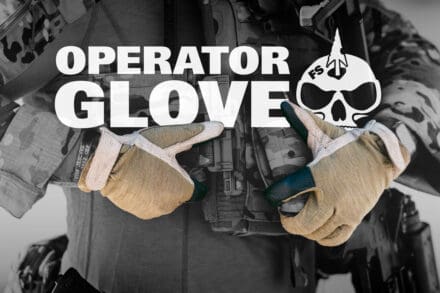
The FirstSpear Operator Glove (OG) is built for moments where maximum dexterity and precision are non-negotiable. Designed with cutting-edge materials and modern construction methods, the Operator Glove delivers peak performance without compromise.

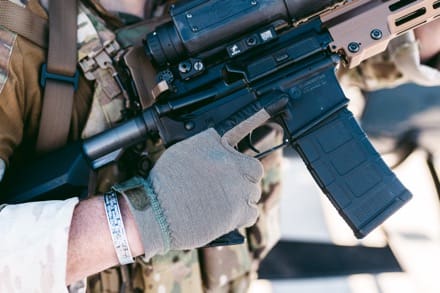
Its patent-pending trigger finger design sets a new standard in tactile sensitivity, giving operators precise control for critical weapon functions, magazine changes, and other high-stakes tasks.

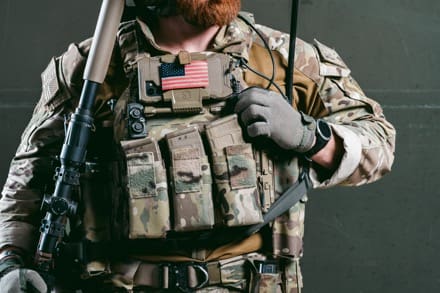
The Operator Glove excels as a lightweight, standalone solution for missions that demand speed, accuracy, and superior touch. For added durability and protection, it is engineered to seamlessly integrate with the Operator Outer Glove (OOG), creating a complete combat system for the hands. This versatility makes the Operator Glove adaptable across a wide range of operational requirements.

Constructed from ultra-thin, high-performance fabrics, the OG is optimized for unmatched dexterity and lightweight feel. The palm features FirstSpear High Dexterity Leather (FS-HDL) with a digital-textured Pittards Goatskin overlay for enhanced grip and precise weapon handling. Core-spun Merino Wool with a nylon core provides breathability, durability, and moisture resistance while remaining inherently flame resistant with No Melt, No Drip protection.

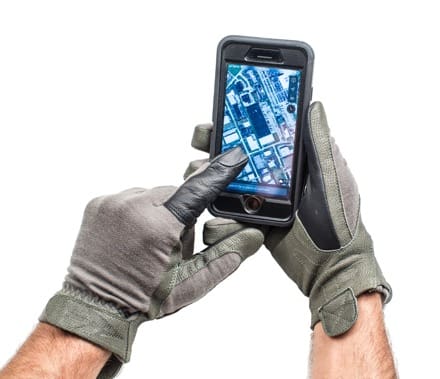
Touchscreen-compatible index and thumb tips allow seamless use of PDAs and tablets without breaking stride. The natural odor resistance and antibacterial properties of the materials add to long-wear comfort in demanding environments. While the OG is not designed for prolonged heavy abuse, it is engineered to excel throughout a full training cycle and deployment, making it an ideal tool for operators who need performance at the highest level.

To request an estimate click image above or visit First-Spear.com/Request-For-Estimate. FirstSpear is the premier source for cutting edge-tactical gear for military, law enforcement and those who train. For more information visit First-Spear.

DLA Troop Support Uses 3D Printing to Provide Safer Testing

Tuesday, August 26th, 2025

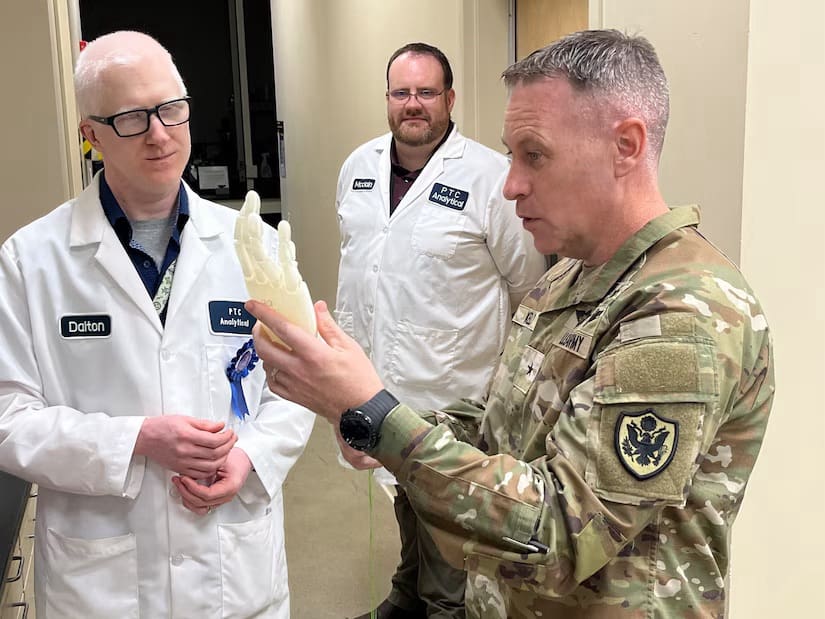
The Defense Logistics Agency Troop Support’s Product Test Center Analytical has developed an artificial hand to improve safety during glove testing.

The 3D-printed hand allows researchers to test the integrity of gloves without risking exposure to hazardous materials. 

“A while back, we were asked to test some gloves that are specifically designed to protect the hands of people who work with jet fuel,” said Edward Dalton, a test center general engineer, who had the idea to create the 3D model. “One of the tests dictated that a tester put on a glove, put their hand in a bucket full of jet fuel, then flex their fingers repeatedly. If the glove leaks, it fails the test.” 

The results of a failed test could be detrimental to the tester. 

“A leaking glove also means the tester just got jet fuel all over their hand, which is a significant safety concern,” Dalton said. “This got me thinking that maybe we could create an artificial hand with the ability to flex its fingers. This would give us the capability of still performing the test without putting a tester at risk.” 

The project, which took several months to complete, now decreases unnecessary risk situations while saving time. 

According to the report, “Health Effects of Jet Fuels Used by Armed Forces,” skin exposure to jet fuels can result in symptoms such as dry skin, itching, redness, rashes, scaling, cracking, and blisters. 

Mike McClain, test center supervisory chemist, has experience testing gloves using previous safety precautions that included putting plastic gloves over his hands and arms. 

“I experienced firsthand failing fuel handler’s gloves,” McClain said. “Even with the efforts to protect my hand and arm, there was still some that got on me and the smell permeated through the protective plastic.” 

Creating these artificial hands has given the team insights into their 3D printing flexibilities that have not been realized until now. 

“The fuel handler’s gloves are specific sizes, and you must find an individual who has a hand that fits that size”, McClain said. “[Dalton] can scale the surrogate hands to match what we need for testing and adjust finger lengths to fit the design of the gloves versus the natural variation in human finger length we would normally deal with.” 

Experimenting with the 3D printing options not only provides safety for the staff but also creates excitement for the possibilities this new testing method can achieve. 

“I was motivated to use the tools we have access to in order to enhance the safety of our testing,” Dalton said. “Honestly, once it was all put together and I got it to work, it was really cool. I had poured a lot of effort into this, and it was very satisfying to see them finally living up to their intended purpose.” 

The team conducted one experiment using the artificial hand and anticipates conducting further tests soon. 

By Maurice Matthews, Defense Logistics Agency

MARADMIN 237/25 – Marine Corps Policy on the Wear and Purchase of Body Armor and Personal Protective Equipment (PPE)

Monday, July 14th, 2025

Published in late May, the US Marine Corps guidance for the wear of PPE, restricting it to only issued items which have undergone testing and are on approved use lists. This ends the use of private purchase and commercial off the shelf items unless on the approved lists detailed in the message.

Below is the message followed by a video explaining the policy. We have redacted the email addresses and phone numbers of the POCs but they are easily found via Google search for this message.

R 201307Z MAY 25
MARADMIN 237/25
MSGID/GENADMIN/CMC PPO POF WASHINGTON DC/FOO2//
SUBJ/MARINE CORPS POLICY ON THE WEAR AND PURCHASE OF BODY ARMOR AND PERSONAL PROTECTIVE EQUIPMENT (PPE)//
REF/A/MSGID: MSG/CMC WASHINGTON DC PPO/YMD: 20070417//
REF/B/MSGID: GENADMIN/CMC WASHINGTON DC PPO: 20090416//
REF/C/MSGID: GENADMIN/CMC WASHINGTON DC PPO: 20090710//
REF/D/MSGID: GENADMIN/CMC WASHINGTON DC PPO: 20170327//
REF/E/MSGID: GENADMIN/CMC WASHINGTON DC PPO: 20181127//
REF/F/MSGID: GENADMIN/COMMMARCORSYSCOM: 20240509//
REF/G/MSGID: GENADMIN/COMMMARCORSYSCOM: 20240807//
REF/H/MCO 6260.3A SD: 20160926//
NARR/REF A IS MARADMIN 262/07, Marine Corps Policy on the Wear  and Purchase of Body Armor and Personal Protective Equipment 
(PPE). Ref b is MARADMIN 254/09, Marine Corps Policy on the  Wear of Personal Protective Equipment (PPE).  Ref c is MARADMIN 415/09, Establishment of Body Armor Protection Levels. 
Ref d is MARADMIN 151/17, change 1 to Marine Corps Policy on the Wear and Purchase of Body Armor and Personal Protective Equipment (PPE). Ref e is MARADMIN 667/18 Marine Corps Policy on the Wear and Purchase of Body Armor and Personal Protective Equipment (PPE). Ref f is the Safety of Use Message for the Enhanced Combat Helmet and High Cut Enhanced Combat Helmet Suspension Systems. Ref g is the Safety of Use Message for the Enhanced Combat Helmet with Hearing Enhancement Device. Ref h is the Marine Corps Hearing and Conservation Program.//
POC/E.T. Clark/COL/PPO POF/Branch Head/
POC/E.A. Benson/CIV/PPO POF/Dep Branch Head/
GENTEXT/REMARKS/1. The Commandant of the Marine Corps directs the following policy for Marines and Sailors assigned to USMC and joint commands, on the wear and purchase of body armor and PPE. This MARADMIN supersedes references (a, b, c, d, and e). PPE refers to Marine Corps approved body armor, helmets, goggles, gloves, clothing, and other gear designed to protect the wearer’s body from battlefield injuries. The equipment and
training information for service-approved PPE systems can be found at https://app.mcboss.usmc.mil searching via program office: PMM-154.3 and via Marine Net course # mcsppe0306 – Proper use of Personal Protective Equipment
2.  Individual Marines/Sailors may not use commercial PPE in lieu of government tested, approved, and issued PPE as outlined in the product information sheets referenced in paragraph 1.
Commanders are not authorized to utilize unit funds to purchase commercial PPE items that have not been approved for use by Marine Corps Systems Command.
3.  Ballistic spectacles and goggles authorized for use are listed on the authorized protective eyewear list (APEL) and are compatible with the universal prescription lens carrier. While the Marine Corps will continue to issue a single spectacle and a single goggle, units may purchase other authorized ballistic eyewear on the APEL through the defense logistics agency or the post-exchange. The latest APEL can be found at:
https://www.peosoldier.army.mil/equipment/
approved-eyewear-qpl/

4.  All forms of hearing protection devices are considered PPE, and the Marine Corps issues Hearing Enhancement Devices (HED) (TAMCN C01142F) and High Noise Hearing Enhancement Devices (HN-HED) (TAMCN C00142F). Commanders must ensure Marines comply with ref (f) or ref (g) for helmet configuration and ref (h) guidelines to select appropriate hearing protection devices.
HEDS shall be evaluated at least twice per year for appropriate use and to replace any worn/deteriorated seals per ref (h).
Commanders will consult navy medicine occupational audiologists or industrial hygienists to determine from sound pressure measurements appropriate hearing protective devices for their operational needs, ensuring Marines have the correct single or dual hearing protection when necessary. Per ref (h), the safety objective is to protect Marines’ exposure to any steady-state noise having an 8-hour time-weighted average noise level greater than or equal to 85 decibels: or a single exposure to impulse and/or impact noise of 140 decibels peak or greater, regardless of duration.
5.  Marine Corps Body Armor Protection Levels (APLS).
5.a.  A service-level policy defining specific armor protection levels has been established with the intent of standardizing APLS, enabling commanders to tailor armor protection based on their estimate of the situation or based on guidance from service/joint/theater combatant commanders. Higher APLS provide increased ballistic protection through the addition of modular armor components, increasing the areas of coverage and/or ballistic protection. Higher APLS correspond to greater weight, increased thermal loading, and reduced mobility, thus degrading individual and unit performance over extended periods of time.
5.b.  The following APLS are established and apply to all Marine Corps-issued armor systems. Read in two columns:
APL             Description 
Level 0         No body armor worn 
Level 1         Marine Corps-issued plate carrier with soft armor only (defeats handgun and fragmentation threats)
Level 2         Marine Corps-issued plate carrier with soft armor, and front and back hard armor plates (defeats rifle and fragmentation threats)
Level 3         Marine Corps-issued plate carrier with soft armor, front and back hard armor plates, and side hard armor plates (defeats rifle and fragmentation threats).
Removal of the soft armor from the plate carrier compromises the ballistic protection of the issued armor systems. Soft armor must be worn in conjunction with ballistic plates in the issued plate carrier – failure to do so may result in severe bodily injury or death. There are currently two variants of ballistic plates fielded to the Fleet Marine Force: the Enhanced Small Arms Plate Insert (ESAPI) (TAMCN C30202E) and the Lightweight Plate (LWP) (TAMCN C01342F). Commanders may choose to utilize either variant based on the threat.
5.c.  The Marine Corps-issued helmets authorized for operations include the Enhanced Combat Vehicle Crewman Helmet (ECVCH) (TAMCN C49942F), Enhanced Combat Helmet (ECH) (TAMCN C01202E), High Cut Enhanced Combat Helmet (HC ECH) (TAMCN C02222F), and the Integrated Helmet System (IHS) (TAMCN C02222F) which were designed to provide both ballistic and blunt impact protection across the full spectrum of operational environments. The helmets consist of a shell, a suspension system (pads), a retention system (chinstrap), and include other accessories such as a night vision device mounting bracket and rail systems.
The ballistic protection of these systems is provided by the construction and materials of the shell. The blunt impact protection is provided by the construction, materials, and configuration of the suspension system. The suspension system must have pads in an approved configuration. In accordance with ref (f) or ref (g) the issued suspension system cannot be replaced with commercial pads. The screws in the helmet support the ballistic integrity and shall not be replaced with commercial screws. Unit leaders will ensure initial training is conducted for Marines upon issue of the helmet. Commanders shall ensure approved helmets are worn in an approved configuration.
5.d. Diving life preserver and buoyancy compensator listed in the authorized for navy use (ANU) are not authorized for ballistic protection until the configuration has been certified and approved by Marine Corps Systems Command. Commanders interested in requesting diving life preserver and buoyancy compensator for certification must follow the universal needs
process. Information can be found at: https://www.cdi.marines.mil/units/cdd/universal-needs-process/
5.e. Protective attachments may be worn with
Marine Corps-issued body armor. It is impractical to establish APLS that incorporate every possible configuration in which these attachments may be worn. Commanders will designate the wear of Marine Corps approved helmets; ballistic eyewear; and groin, neck, and throat protection as required by their units’ mission, the threat, and local environmental considerations.
5.f. The lightweight helmet (TAMCN C32152E) and the small arms protective body armor (stocklist-3 item of TAMCN C35012E) are only authorized for use by training command.
5.g. Ballistic protection vendor samples are not authorized for use without Marine Corps Systems Command oversight and approved safety releases for limited user evaluations.
6. Authority
6.a. Operating force commanders at the Lieutenant Colonel (O-5) level or higher are authorized to determine the required level of PPE (or APL when established) for wear by assigned personnel within the Marine Corps Systems Command approved systems. This determination will be made based on mission(including during training), unit type, threat, and environmental factors.
6.b.  Combatant, Joint Task Force (JTF), and service component commanders retain the authority to prescribe the level of protection worn by all assigned personnel. In cases where combatant, JTF, and/ or service component commanders have established a required level of PPE that is more restrictive than that set by Marine Unit Commanders, Marines will adhere to the highest level. In cases where the APL is not designated, the Marine Corps service policy places the authority to designate the APL on commanders, Lieutenant Colonel (O-5) and higher.
6.c.  Based on their unique mission requirements, Marine Special Operations Command (MARSOC) personnel may, within published MARSOC policies and subject to their commanders’ approval, wear special operations command-approved special purpose body armor.
6.d.  Installation commanders are authorized to use government funds to purchase commercial off-the-shelf (COTS) body armor and PPE only for use by Military Police performing law enforcement duties aboard Marine Corps installations. COTS body armor must, at a minimum, meet National Institute of Justice (NIJ)-certified level RF2 as listed on the NIJ website.
https://www.nij.gov/topics/technology/body-armor/pages/compliant-ballistic-armor.aspx. COTS body armor purchased for installation law enforcement duty will not be worn by Marines as a substitute for Marine Corps approved body armor and PPE in a combat zone or theater of operation.
7.  Marine Corps organizations that do not receive class II PPE materiel support from the Logistics Command should direct all materiel requirements to DC, IL, IP.
8.  Release authorized by MajGen J. L. Morris, Assistant Deputy Commandant for Plans, Policies, and Operations.//

Rampart Range Day 25 – Warq Gloves

Wednesday, May 28th, 2025

Warq has introduced impact protection gloves to complement their popular force-on-force protection helmet.

Features:

Enhanced Protection: Designed with reinforced padding across critical areas like the back of the hand, knuckles, and fingers, offering superior protection from impacts during intense force-on-force training. These gloves keep your hands shielded while maintaining essential flexibility where you need it most.

Flexibility and Dexterity: Engineered for smooth, unhindered movement, with flexible materials that allow for maximum finger mobility, ensuring precision and control during shooting exercises.

Optimized Trigger Finger: Featuring lightweight padding on the trigger finger, allowing for precise control and accuracy while maintaining protection during a dynamic force-on-force training scenarios.

Reliable Grip: High-friction palm materials provide a secure grip in various conditions, ensuring control over firearms and equipment.

Quick and Secure Fit: The adjustable Velcro wrist closure offers a snug, secure fit, ensuring the gloves stay in place during active and dynamic movements.

Departments, agencies, and military organizations in Canada can access warqhelmets.com/force-on-force-gloves gear via Rampart.

Enforce Tac 25 – Kinetixx Cut Resistant Gloves

Wednesday, February 26th, 2025

Cut resistant hardware has been a big issue in Europe for quite awhile and now LE and first responders in the US and Canada are looking as well. A great option is Kinetixx.

The X-CutPro features an ergonomic design for comfort even when it is worn all day and better dexterity. The backhand is made of synthetic leather with anatomically designed TPE over the knuckles and fingers for additional protection The palm is reinforced with digital leather for grip and durability, while the integrated cut protection lining in the palm offers reliable protection against cuts.

The crook of the thumb is also lined with digital leather and cut protection lining for maximum stability in key areas. All five fingers incorporate touchscreen capability Additionally, there is an eyelet for attaching to a carabiner and a hook and loop fastener to keep the glove snug around the wrist.

The X-MissionPro on the other hand is a lighter glove with the same ergonomic fit as the X-CutPro. It features synthetic leather on the palm and backhand for excellent grip and protection. Thanks to the integrated cut protection lining in the palm, the X-MissionPro offers reliable protection against cuts.

Additionally, reinforced digital leather in the crook of the thumb, lined with cut protection material, ensures maximum stability in high-wear areas. The touchscreen capability on all five fingers enables digital devices to be operated without having to remove the glove. An eyelet for the carabiner and the adjustable hook and loop fastener for an optimal fit round off the practical details.

Both gloves are offered in Black and Coyote in sizes XS – XXXL.

The Kinetixx catalog is available here.

Mechanix Wear – Cold Weather Glove System

Tuesday, February 4th, 2025

The Mechanix Wear Cold Weather Glove System consists of several Berry and non-Berry compliant gloves and mittens to be used alone or in conjunction with one another for varying climate conditions.

Consisting of Knit Liner, Intermediate Layer, Heavy Insulation Mitten and Outer Mitten Shell, the handwear was designed for a US Army cold weather glove system program.

For more information contact Mechanix Wear at govsales@mechanix.com.