SIG SAUER - Never Settle

Archive for the ‘International’ Category

Gilat Demonstrates Breakthrough AI-Based Interference Detection and Cancellation Technology for Satellite Links

Friday, August 7th, 2026

Patent-pending AI technology delivers up to 10x improvement in interference detection and cancellation performance ensuring resilient satellite communications in highly contested spectrum environments

Petah Tikva, Israel, August 6, 2026 – Gilat Satellite Networks Ltd. (NASDAQ: GILT, TASE: GILT), a worldwide leader in satellite networking technology, solutions, and services, today announced the successful demonstration of a breakthrough AI-based interference detection and cancellation technology for satellite communication links.

The patent-pending solution leverages advanced AI-based signal processing designed to run on standard AI for edge NPU and has demonstrated exceptional performance across a wide range of non-cooperative and non-static interference scenarios.

The preliminary demonstration results showed up to a 10x improvement in interference detection and cancellation performance compared to conventional interference mitigation techniques, enabling the detection and cancellation of challenging interference conditions while maintaining compatibility with modern satellite communication systems. The results further demonstrated that the signal of interest remained virtually unaffected after interference cancellation, with only negligible degradation in signal quality.

As satellite communications face increasingly complex interference and jamming threats, the technology offers a powerful new approach to maintaining reliable connectivity and service continuity in highly contested spectrum environments.

“This achievement demonstrates Gilat’s technological leadership in enabling service continuity under severe interference and jamming scenarios, helping ensure robust and resilient satellite communications in highly contested spectrum environments,” said Aharon Mullokandov, Chief R&D Officer at Gilat. “In an environment where spectrum is becoming a crucial resource for both defense and commercial applications, this technology opens new opportunities that were not possible before. Building on this success, Gilat plans to demonstrate the technology on dedicated AI accelerator hardware, paving the way for a low-power edge solution suitable for deployment in operational satellite communication terminals.”

The successful demonstration represents another milestone in Gilat’s ongoing innovation in advanced satellite communications technologies and reinforces the Company’s commitment to developing solutions that address the evolving challenges faced by satellite network operators, government agencies, and defense organizations worldwide.

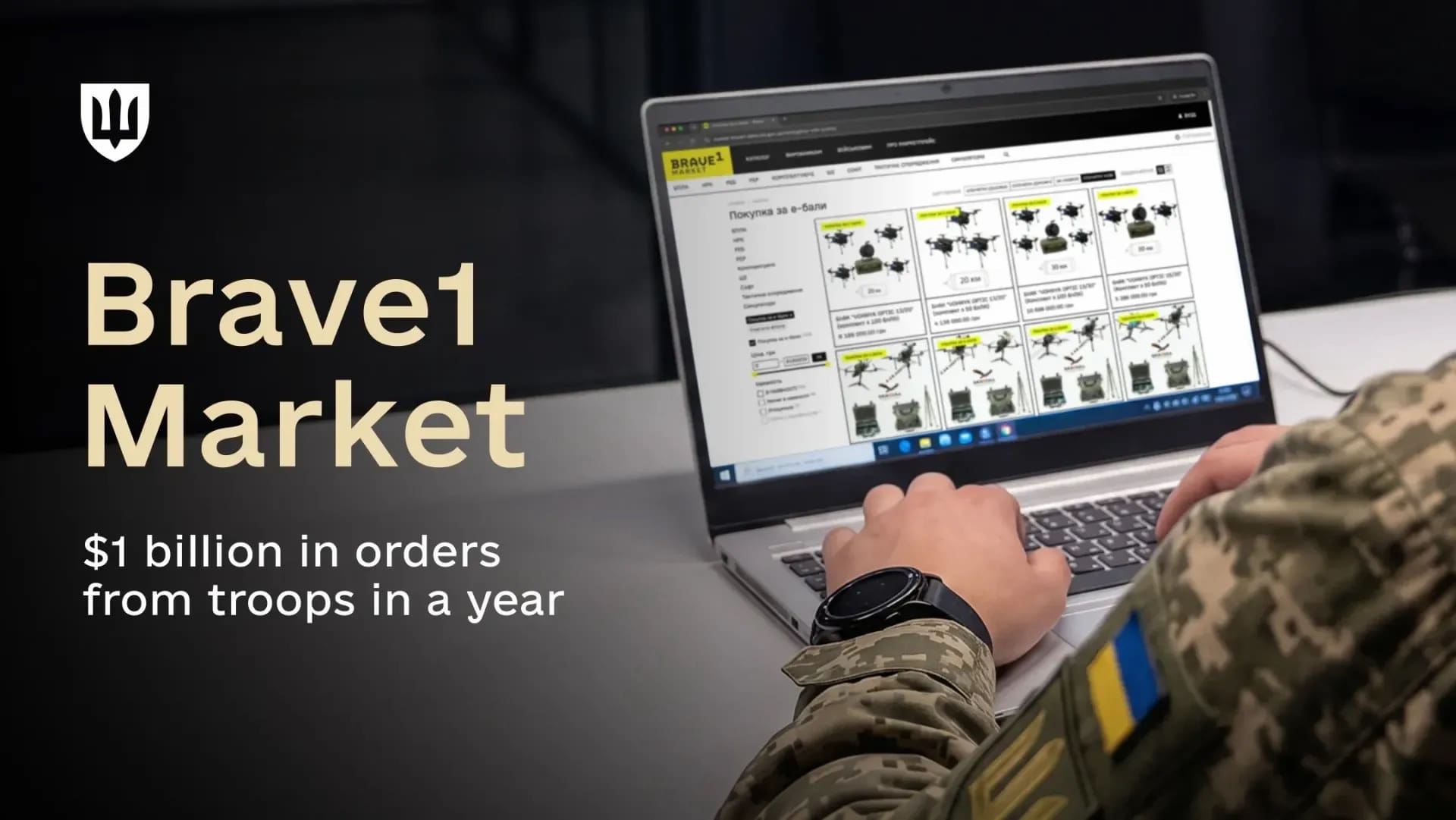
Ukraine Troops Have Placed $1 Billion in Orders in the First Year of Brave1 Market

Thursday, August 6th, 2026

Troops can order more than 1,100 items on Brave1 Market

Units of Ukraine’s Defence Forces have ordered $1 billion worth of military equipment and hardware with ePoints during the first year of Brave1 Market, the state marketplace for defence technology.

In that time, more than 400 units have received around 500,000 unmanned aerial vehicles, unmanned ground vehicles, and electronic warfare and electronic reconnaissance systems.

The role of Brave1 Market in supplying troops

The updated ePoints programme, integrated with Brave1 Market, launched on 1 August 2025. It brought market mechanisms into what had until then been a closed state supply system for the Defence Forces.

For the first time, combat commanders can select the equipment their units need themselves.

How units earn ePoints and what they can spend them on

Troops earn ePoints for verified combat missions, including reconnaissance, logistics, casualty evacuation and eliminating enemy forces. They then exchange those points for the technology they need, such as drones, UGVs and electronic warfare and reconnaissance systems.

Ukrainian defenders can now order more than 1,100 items on Brave1 Market with ePoints.

Delivery times for items held in stock have also been cut to an average of seven days.

In June, Ukrainian troops ordered UAVs, UGVs and electronic warfare and reconnaissance systems worth more than UAH 5 billion on Brave1 Market. That was the largest monthly total since the ePoints programme began.

Via mod.gov.ua/en.

Tiltan to Deliver Advanced Hardware-in-the-Loop Simulation System for a Unique Electro-Optical IR Development Program

Wednesday, August 5th, 2026

Advanced high-fidelity, high frame-rate physics-based simulation system dramatically reduces field testing while accelerating the development and validation of next-generation electro-optical systems.

Israel, 04 August 2026– Tiltan Software Engineering Ltd., a leading provider of simulation, 3D engine, and geo-spatial solutions, today announced that it has been awarded a contract by a leading global defense company to deliver an advanced high-fidelity, high-frame-rate Hardware-in-the-Loop (HWIL) simulation system supporting the development of a next-generation infrared (IR) electro-optical system. The solution brings the operational environment into the laboratory, enabling customers to develop, integrate, test, and validate software, AI and hardware under highly realistic conditions, dramatically reducing the need for costly field trials while accelerating development and lowering program risk.

The project leverages Tiltan’s proprietary simulation technologies, combining high-fidelity synthetic environments, digital twin capabilities, and advanced engineering expertise into a unified solution. This unique combination enables customers to recreate complex operational scenarios that are difficult, or even impossible, to reproduce consistently in the field, enabling faster, repeatable, and highly accurate testing throughout the development lifecycle, without ever leaving the laboratory.

This award further strengthens Tiltan’s position as a trusted partner for leading defense organizations developing next-generation electro-optical capabilities and reflects the growing demand for advanced simulation technologies that accelerate development, improve engineering efficiency, and enhance system readiness.

“As defense systems become increasingly sophisticated, organizations need technologies that enable faster development without compromising accuracy,” said Ehud Shafir, CEO of Tiltan Software Engineering Ltd. “By recreating complex operational environments inside the laboratory, our customers can develop, integrate, and validate systems faster, more efficiently, and with far greater confidence, while significantly reducing the time, cost, and risk associated with traditional field testing.”

Tiberius Aerospace Entered into Cooperative Research and Development Agreement with US Army Combat Capabilities Development Command Armaments Center to Advance Sceptre Precision-Guided Artillery Program

Wednesday, August 5th, 2026

Tiberius Aerospace, the modern defense technology company building next-generation weapon systems and AI-powered defense solutions for the United States, the United Kingdom and allied nations, today announced that it has entered into a Cooperative Research and Development Agreement (CRADA) with the U.S. Army Combat Capabilities Development Command Armaments Center (DEVCOM AC) to support the continued development and maturation of Sceptre, the company’s next-generation precision-guided, ramjet-powered 155mm artillery munition.

The CRADA establishes a collaborative research framework between Tiberius Aerospace and DEVCOM AC, enabling the parties to collaborate on mutually agreed research and technical activities relating to the Sceptre program. CRADAs are a long-established mechanism through which the U.S. Army works with industry to accelerate the development and maturation of technologies of mutual interest.

Unlike conventional rocket-assisted projectiles, Sceptre uses a liquid-fueled ramjet that provides sustained propulsion throughout flight, delivering a step change in the performance of tube artillery. Fired from a NATO-standard 155mm howitzer, Sceptre is designed to accelerate beyond Mach 3, reach altitudes exceeding 65,000 feet and deliver precision effects at ranges of up to 150 kilometers, with target accuracy within five meters, even in GPS-denied environments.

Crucially, Sceptre requires no new launcher or bespoke firing platform, enabling armed forces to dramatically extend the capability of their existing artillery inventories without introducing a new weapon system. Its propulsion system uses a multi-fuel liquid propellant compatible with readily available military fuels, including diesel, JP-4 and JP-8, reducing logistics, storage and sustainment requirements while leveraging existing battlefield fuel supply chains.

Designed from the outset as a software-defined weapon, Sceptre combines advanced propulsion with a modular open architecture that enables continuous capability upgrades throughout its service life. Through integration with GRAIL, Tiberius Aerospace’s AI-powered platform for the continuous iteration of weapon systems, new targeting capabilities, guidance algorithms, mission software and autonomy can be rapidly integrated throughout the munition’s lifecycle. By connecting operational requirements with engineering, testing and federated manufacturing, GRAIL enables Sceptre to evolve continuously in response to emerging threats, accelerating the delivery of improved capability to the battlefield.

In April 2026, Tiberius Aerospace achieved a world-first demonstration by successfully launching a liquid-fueled ramjet from a NATO-standard 155mm howitzer. Together with previous demonstrations of round integrity under launch conditions of approximately 16,000 g, successful fin deployment and stable aerodynamic flight the company’s disciplined flight-test program continues to systematically validate each of the core technologies underpinning Sceptre.

The CRADA further expands Tiberius Aerospace’s collaboration with the U.S. Department of Defense and marks another important milestone in the maturation of the Sceptre program.

By combining advanced propulsion, precision guidance, software-defined architecture and AI-enabled continuous iteration.

Aquaterro Secures Over $160m in Survivability and Lethality Contracts with ADF

Tuesday, August 4th, 2026

The Australian Government today announced two major Department of Defence contracts signed with Aquaterro for arms and armour. It is one of the largest Defence contract-value announcements to any Australian company of 2026.
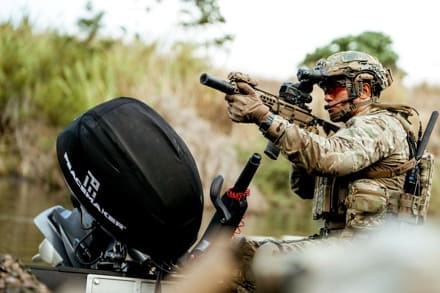
Founded 32 years ago, Aquaterro is 100% Australian owned and employs around 70 Australians, working in close cooperation with world-class US OEM partners.

Aquaterro supplies, integrates, supports, maintains, and manufactures products and systems for: defence, law enforcement, first response, and rescue, for Sea, Land, and Air domains.

“The confidence and trust the Commonwealth has shown in Aquaterro, is incredibly rewarding for our team.” said Aquaterro Founder and CEO, Graeme Bulte.

“These vital elements of the Integrated Soldier System, combining both Arms and Armour, with total integration, engineering, support and sustainment being provided by Australians, in Australia, is a great example of what can be accomplished with an Australian owned company delivering on major contract requirements for Australians in uniform.”

Bulte went on to say; “The long-standing partnerships we have with SIG SAUER and Team Wendy Ceradyne are critical to the success of the work we do and these programs in particular; supporting the Australian Warfighter with the very best equipment in the world.”

The two Soldier Systems contracts the Australian Department of Defence has signed with Aquaterro are;

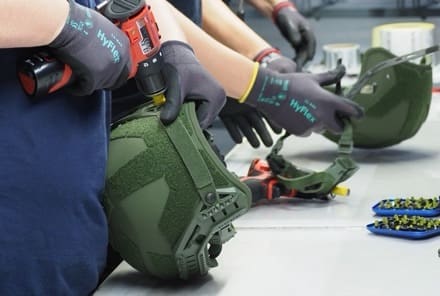
The Combat Helmet Contract an investment by the Australian Department of Defence of up to AUD$160 million (US$115m), for supply and support of the Combat Helmet and Combat Vehicle Crewman-Enhanced Helmet, as well as enabling advancements in technology to be adopted throughout the contract term. Aquaterro has invested in the only Combat Ballistic Helmet Refurbishment Facility outside the United States, a multi-million dollar sovereign capability which provides through-life complete refurbishment of the fleet to ensure protection and life-of- type value is maximised.
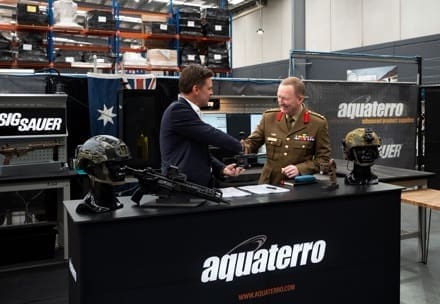
Aquaterro has supported the ADF with headborne protection systems for 10 years, supplying over 75,000 Team Wendy ballistic helmets, as well as Armor Source/Peacemaker CVC-E helmets, and conducting refurbishment maintenance services on over 30,000 helmets from the ADF fleet.

Graeme Bulte said; “The close working relationship we have had for over a decade with Team Wendy Ceradyne, is the key to the success of the program to date, and behind our selection by the Commonwealth to continue this capability provision.”

The new contract also includes the provision of 100% Designed and Made in Australia Peacemaker® camouflage helmet covers for Combat and CVC-E Helmets. Aquaterro and its’ Peacemaker® design and manufacturing enterprise, is one of the very few entities licensed to manufacture with AMCU (Australian Multicam Camouflage Uniform). The first purchase order under the new contract for Peacemaker® Helmet Covers has been published, valued at AUD$2.45m (US$1.72m).

Peacemaker® has become Australia’s premier domestic brand of tactical textile products, with widespread major contract supply to Australian state and federal law enforcement, as well as Defence.

The Aquaterro Services Contract, a versatile “Support” contract (similar in many ways to a US IDIQ contract) in support of the Australian Army’s Integrated Soldier Systems LAND300 Program, will provide recurring-services direct support for SIG SAUER small-arms systems, as well as enable future provisions and next generations of technology and support. The work will be centred at Aquaterro’s 4.5 acre, high-security defence precinct, including, its armoury, range, secure warehouse, advanced manufacturing workshops, and integration facility. The contract includes the joint capabilities of Aquaterro and SIG SAUER working together collaboratively to directly support the Australian Defence Force.

Graeme Bulte said; “The collaborative partnership Aquaterro and SIG have developed over many years, is best described in SIG’s stated mission: to be a reliable, long-term partner to our customers, recognized for the quality and value of our products and the reliability of our commitments. This newly executed contract will provide the Australian Defence Force with the direct benefit of that commitment, and the vertical capability SIG and Aquaterro can deliver.”

Aquaterro has invested over $25m in specialised high-security defence infrastructure to support Integrated Soldier Systems, including small arms, ammunition, and ancillaries. All SIG small arms systems supplied to Defence to date, have completed their manufacturing and final checks at Aquaterro’s facility, where specialised laser marking to meet ADF requirements is conducted.

Australian Federal Minister for Defence Industry, the Hon. Pat Conroy MP said;

“This investment is about keeping Australian soldiers, sailors and aviators safe and supporting local defence industry and jobs. Aquaterro’s work will play an important role in strengthening Australia’s sovereign domestic supply chains and supporting the sustainment of critical ADF capability.”

The two contracts represent a substantial investment by the Australian Government to support the individual men and women of the Australian Defence Force – the most important of all defence platforms – with world leading integrated soldier systems.


Quantum Systems Announces Major Upgrades to Its Long-Range Unmanned Aerial System RELIANT

Monday, August 3rd, 2026

Quantum Systems has upgraded its long-range Unmanned Aerial System (UAS) RELIANT. The latest generation offers increased payload capacity, broader mission flexibility, and software integration into the company’s MOSAIC UXS ecosystem. Designed around a fully European supply chain and minimal logistical footprint, Reliant will now compete for major global contracts.

Gilching, Germany, 27 July 2026 – Quantum Systems is announcing major upgrades to its long-range intelligence, surveillance and reconnaissance (ISR) system, Reliant. Following Quantum Systems’ policy of continuous development and R&D, the new features significantly expand Reliant’s mission flexibility while maintaining the ease of deployment and low logistical footprint that define Quantum Systems’ platforms.

The latest generation of Reliant features a hybrid-electric power unit and increases the system’s payload capacity to up to 9 kg, enabling a much broader range of missions. Depending on operational requirements, Reliant can now carry electro-optical sensors, laser-target designators, synthetic aperture radar (SAR), SIGINT and electronic warfare payloads, as well as SATCOM, relay and other mission-specific capabilities.

Despite its expanded capabilities, Reliant maintains its minimal logistical footprint with easy-packaging options and operations enablement for assembly by a two-person team and operations by a single operator. The hybrid-electric VTOL platform requires only a 10 × 10 metre launch and recovery area, making it independent of start- and recovery infrastructure and suitable for ship-based operations.

Beyond the platform itself, Reliant is fully integrated into the MOSAIC UXS software platform, making it interoperable with other unmanned systems in multi-domain operations. Together with operator workstations, training, sustainment and lifecycle support, Quantum Systems delivers a complete long-range unmanned capability rather than a standalone aircraft.

Reliant also completes Quantum Systems’ Family of Aerial Systems, complementing the short-range Twister and the mid-range Vector AI platforms. Quantum Systems UAS solutions are already in service with a range of NATO and allied armed forces, notably with the German Armed Forces and the Armed Forces of Ukraine.

Reliant is built around a secure European supply chain and supported by Quantum Systems’ growing industrial base, providing customers with a system without any Chinese components or ITAR restrictions.

“Reliant’s upgrades are the result of continuous feedback from military users and partners, and our answer to enhance long-range capabilities for NATO, Europe and our allies,” said Martin Karkour, Chief Revenue Officer at Quantum Systems. “We can now offer a truly unique capability, with a minimal logistical footprint, payload superpower and impressive range and endurance – completely built on a resilient supply chain. We are very proud of that.”

Soldier Pushes Limits for Hard-Earned Skippy Badge

Sunday, August 2nd, 2026

It was just before midnight as Private Ryan Doyle quietly prepared his gear for the final test to become a fully fledged rifleman.

Clouds smothered what little light the stars could provide, so he watched his breath fog in the air through night optics as he waited.

“I was more excited than anything, to be honest. We didn’t quite know what was in store, they didn’t really give us a brief, so I was in anticipation of what was coming,” Private Doyle said.

The signal finally came from the platoon commander and the section stepped off, carrying stores and heavy packs.

It wasn’t long before enemy engaged from the darkness.

Under direction of their section commander, they fought back with bursts of gunfire lighting up the night, and a soldier was wounded in the ambush.

After applying tactical care to the combat casualty, the section carried their teammate on a stretcher, the hardest part for Private Doyle.

“We had just come off 10 days of digging defensive positions, so my grip was quite gone. I wasn’t expecting that,” he said.

As they marched, Private Doyle reflected on the past 17 weeks of intense training at the Australian Army’s School of Infantry.

He learned to use multiple weapon systems, from pistols to 84mm Carl Gustaf recoilless rifles.

He dug defensive positions, fought in hand-to-hand combat, set barbed wire and trip flares, and negated those threats when he encountered them.

‘I wanted a challenge and to do things that you don’t get to do as an ordinary person. The equipment you use, the lifestyle, it stood out to me.’

With his section, he breached and cleared buildings or conducted patrols through the scrub to seek out, close with and destroy the enemy, regardless of weather or terrain – as the role of the infantry goes.

Now, he had to prove it on Exercise HardCorps, the final test before posting to a battalion of the Royal Australian Regiment.

The stretcher carry ended at the tunnels leading from Singleton Range to Lone Pine Barracks and the sun had started to rise.

The section cleared an urban facility before making their way through the obstacle and bayonet assault course one last time.

Their final stand was at the 25-metre range, with a live-fire shoot to finish the test.

After clearing off the range, they headed back to their lines – with broad smiles and laughter in contrast to the determined stoicism a few hours earlier.

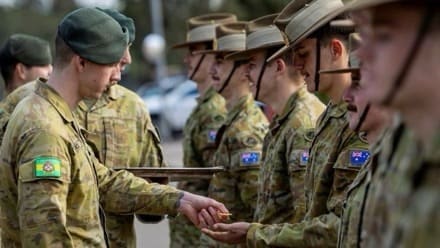
A quick shower, cleaned rifles and fresh uniforms got them ready for the most anticipated event of the day: the Skippy Badge presentation.

With the mark of a qualified rifleman cradled in his hand, Private Doyle was excited for the next stage of his career in the Royal Australian Infantry.

“I wanted a challenge and to do things that you don’t get to do as an ordinary person. The equipment you use, the lifestyle, it stood out to me,” he said.

“I’m looking forward to learning what it’s like to be a soldier. We’ve completed this training and now we move on to learn and develop more. That will be really interesting.”

– Via Australia Department of Defence

12 Months In: Galvion’s Poland Operation Emerges as a European and NATO Centre of Excellence

Thursday, July 30th, 2026

Galvion, a world leader in the design and manufacture of innovative head systems, power and data management solutions, and integrated soldier systems, has announced that at the 12-month point from formal opening, their European and NATO production hub in Gdansk, Poland, has emerged as a significant centre of excellence.

Galvion’s facility was first announced in September 2023, was completed in June 2024, and was fully operational in April 2025. The facility was formally opened by Her Excellency, Catherin Godin, the Ambassador of Canada to the Republic of Poland, at a ceremony held on 23rd June 2025. The facility represents a major investment that has significantly strengthened Galvion’s regional support and service strategy. With both production and support capabilities, Galvion has been serving their widespread European and NATO customers from a geographically aligned centre of excellence.

Since the formal opening last June, Galvion’s Gda?sk manufacturing facility has rapidly established itself as the cornerstone of the company’s European and NATO operations. In just 12 months, the site has grown to employ more than 100 people and has shipped over 90,000 ballistic helmets to NATO allies, supporting customers in 10 countries across NATO and allied nations worldwide, including Europe, Canada and the Middle East. With an annual production capacity of 100,000 helmets on a single shift, the facility manufactures multiple helmet platforms and has established a robust European manufacturing footprint, strengthening supply chain resilience and enabling closer proximity to customers. Continued investment in advanced technologies, automation and expanded production capabilities underscores Galvion’s long-term commitment to innovation, operational excellence and supporting the evolving needs of defence and security partners across Europe and beyond.

Following consecutive program awards from key European nations, including a NATO Support and Procurement Agency (NSPA) framework contract, Galvion is expecting to have close to 2 million helmets in service across NATO and other European countries by the end of 2026. The Polish factory houses helmet finishing and assembly capabilities, in addition to critical support, maintenance, refurbishment, upgrade and training operations. Galvion’s existing core facilities in Canada and the USA continue to design, develop, manufacture and service domestic, regional, and key global programs, customers, production and support requirements.

Building on its long-established leadership in ballistic head protection, Galvion is now extending the role of the helmet as the foundation of an integrated soldier system. The company’s latest Cortex™ EVO and EVO HALO technologies enable power, data and digital capabilities to be incorporated directly into existing or new helmet platforms, creating a pathway for militaries to modernize equipment already in service. As these capabilities are introduced across European programs, Galvion’s Gda?sk facility is positioned to support both new production and the upgrade, refurbishment and integration of in-service helmet fleets, further expanding its role as a regional centre of excellence.

Jonathan Blanshay, Founder and Executive Chairman at Galvion, said: “When we invested in Poland, our objective was never simply to build another manufacturing facility. We wanted to establish a long-term operational centre that could serve our European and NATO customers with local production, sustainment, modernization and technical support. One year later, the team has exceeded our expectations and demonstrated exactly what that model can achieve.” He continued:

“Looking ahead, the opportunity is even greater. As soldiers become increasingly connected, the helmet is evolving into the platform that brings together protection, power, data and digital capability. Our vision is to help customers not only procure next-generation integrated systems but also upgrade equipment already in service. Gda?sk will play a central role in delivering that capability across Europe for many years to come.”