FirstSpear TV

Archive for the ‘International’ Category

Omnia Training: Rheinmetall Joins Forces with Raytheon UK, Capita, Cervus, and Improbable Defence for the British Army’s CTTP

Thursday, November 24th, 2022

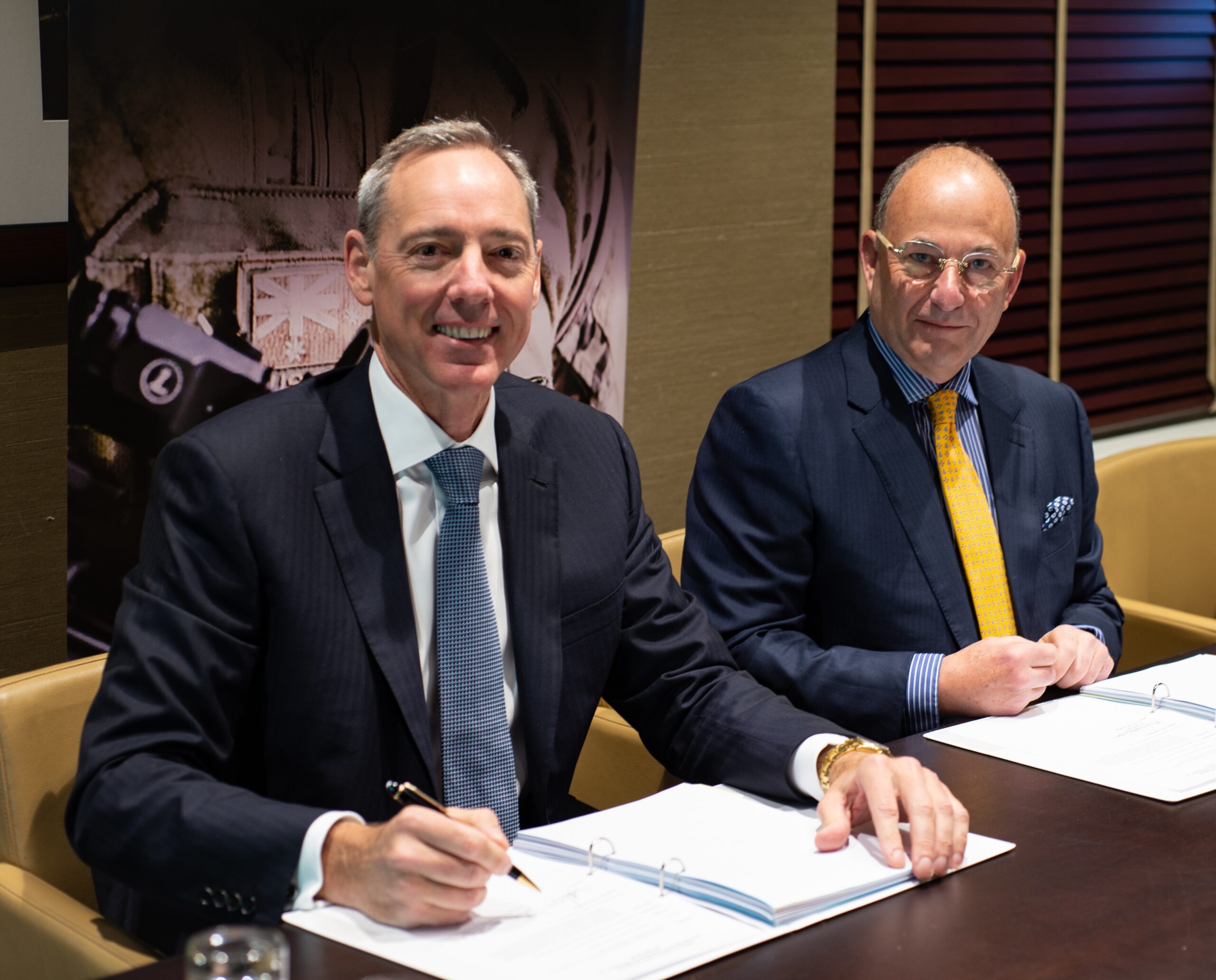
Rheinmetall together with Capita, Cervus, Improbable Defence has joined the Raytheon UK led team Omnia Training. Omnia Training is an industrial team that will be bidding to become the Strategic Training Partner for the British Army’s Collective Training Transformation Programme (CTTP).

The CTTP will deliver the Future Collective Training System (FCTS) – a technology-enabled training system that will serve as a surrogate for warfare. It will provide the British Army with the capability to better replicate the complexity of the modern battlefield in training, giving the army the ability to train globally whenever and wherever it needs to. Utilising technologies from synthetic training environments to state-of-the-art data and connectivity solutions, the CTTP will enable the British Army to better prepare soldiers and commanders for operations to ensure the security of the United Kingdom. The CTTP is expected to start in 2025 and valued at £1.2bn (€1.4 bn) over 15 years.

Omnia Training’s expertise spans complex programme management, enterprise transformation, collective synthetic training, digital platforms and data exploitation. It will work in collaboration with the British Army to transform collective training and prepare soldiers for future challenging operational scenarios by creating realistic multi-domain environments.

The Raytheon UK led team includes world class training transformation companies that will provide unrivalled expertise to deliver the Strategic Training Partner role for CTTP.

Jeff Lewis, chief executive of Raytheon UK said:

“We are bringing together a team that has collaboration and innovation at its heart. Omnia Training embraces modern training technologies and methodologies that enhances the common training experience and is focused on delivering better training outcomes for the soldier and commander.

“At the heart of our collaborative approach will be the exploitation of data and connectivity across multiple training technologies. This combination will enable us to deliver a truly flexible and cutting-edge training environment and will help prepare the Army for a range of scenarios that have traditionally been difficult to create on a training ground.”

The CTTP’s Strategic Training Partner will assume responsibility for the existing Army collective training system and infrastructure to deliver collective training, then work collaboratively with the Army to transform this into a fully integrated, flexible training solution and be responsible for continuously improving new army training capabilities.

Richard Holroyd, managing director of Capita Defence, Fire and Security, said:

“We are incredibly proud of our track record in delivering technology-enabled, transformational training services for our Defence customers, which is already helping the UK’s Armed Forces to get better trained people to the frontline, faster.


“Omnia Training brings together an unparalleled team of expert partners with well-established relationships. We’re excited to be part of this collaboration and stand ready to deliver transformed collective training for the British Army.”

Alan Roan, managing director of Cervus, said:

“It is refreshing that a small, medium enterprise like Cervus has been asked to be part of this exceptional team and we think that this is exactly what the CTTP customer has been asking for. We have watched the potential STP partners for several years, through the market engagement process, and have been gently testing their behaviours.

“Raytheon UK stood out as an organisation that always listened and treated us with a level of professional respect so, when they asked us to join the team, we leapt at this opportunity. A truly collaborative environment has been created within Omnia Training, where each team member can excel on what they do best and, for Cervus, this means providing soldiers with the game-changing exploitation of their training data”.

Joe Robinson, CEO at Improbable Defence, said:

“Improbable Defence is delighted to be Omnia Training’s strategic synthetic integrator and proud to be among team members with deep experience in transforming defence capability and superb reputations for collaboration. With a mindset for innovation, we are renowned for our agile responses to user needs and delivering world-leading synthetics. Our track record is one of embracing new technologies and accelerating their provision into the hands of front line users.

As a member of Omnia Training we will bring our expertise in rapid, flexible, low-risk development of a new class of synthetics, that embraces the best of industry, in order to deliver to the British Army the adaptive and ground-breaking collective training system they need to win on the battlefields of the future.”

Richard Streeter, Managing Director, Rheinmetall Electronics UK Ltd. said:

“The Omnia Training team brings together a group of companies with significant depth of expertise and credibility as the Strategic Training Partner for the UK Army to deliver the CTTP programme successfully. This programme represents a huge shift and modernisation to the approach of training the UK Armed Forces. With Rheinmetall’s global footprint and decades of managing complex synthetics design, integration and training capability delivery, we are delighted to be contributing to this fantastic Transformational Programme and addressing the challenges in the CTTP for the future UK Army”

USSOCOM to Host Innovation Foundry Event in Oslo, Norway

Wednesday, November 23rd, 2022

SOFWERX, in collaboration with USSOCOM’s Directorate of Science and Technology (S&T) Futures, Norwegian Special Operations Command (NORSOCOM), and the Norwegian Defence Research Establishment (FFI), will host the twelfth Innovation Foundry (IF12) Event in Oslo, Norway, 30 January – 02 February 2023.

This is the first international IF, which seeks to bring together U.S. and International Special Operations Forces (SOF), Industry, Academia, Government, and futurists in an exploration, design thinking, facilitated event to assist USSOCOM in decomposing future scenarios and missions.

The Arctic environment presents significant challenges for military operations – harsh temperatures, a predominantly sea and ice environment, poor terrestrial data and communications infrastructure due to a lack of large population centers, and complex ongoing climate, environmental, political, economic, and cultural developments. The theme of IF12 is “Joint and Partner Communications in a Contested and Austere Environment”. The goal of the event is to explore the challenges of communications in a future challenged operating environment in the Arctic. Participants will develop concepts and approaches for the framework, technologies, infrastructure, and capabilities required to enable effective communications between SOF, joint forces, and partners, and to conduct operations in the future environment. Challenges include limited beyond-line-of-sight coverage, ionospheric and atmospheric disturbances to radio communications, Anti-Access/Area Denial (A2/AD) environments, sensor communication challenges, extreme temperatures, high latitudes, the impact of climate change, economic and environmental considerations, diverse stakeholders and interests, and potentially challenged territories.

How do we effectively communicate and operate in a future Arctic environment where civilian, military, and economic activity will be greatly increased, where environmental, communications, navigational, and cultural challenges are significant, and where policy and international relations issues will continue to be sensitive? How do we access, communicate, and operate in a challenged or A2/AD environment facing near-peer adversaries? In such an environment, what technologies, approaches, and solutions will allow SOF to effectively fulfill their mission? How might these technologies be deployed in a future challenged / constrained environment in the Arctic?

As General Terrence O’Shaughnessy, former Commander, USNORTHCOM, said in January 2019, “Our adversaries are rapidly acquiring the capability and capacity to hold our citizens, our way of life and our national interests at risk. Along with our partners and allies, we must adapt to the evolving strategic landscape and associated challenges to ensure we are ready to operate in and through the Arctic in all scenarios, across all domains, and against any adversary. Our homelands are not a sanctuary, and the Arctic is the front line in our defense.”

Participants at the Oslo, Norway, IF12 event will develop concepts for future SOF missions, addressing communications, networking, and navigation, as well as related questions including equipment operations, logistics, ad hoc approaches, and multinational operations in a rapidly changing Arctic environment.

The command is interested in Radio Frequency (RF) technologies, satellite communications technologies, wide area and mesh networking, autonomous systems, robotics, artificial intelligence, machine learning, material science, structures design, hydrophobic and signature reducing coatings, remote sensors, chemical, biological, radiological, and nuclear defense, medical treatment and evacuation, device interoperability, technology standards, geophysical positioning and navigation, partnered operations, and SOF Operations.

Submit NLT 07 December 2022 11:59 PM ET to participate.

events.sofwerx.org/if12

MarshallAI Starts Cooperation with the U.S. Army

Friday, November 18th, 2022

For immediate release

The Finnish AI pioneer MarshallAI has signed a cooperation agreement with the U.S. Army. The cooperation aims to further develop the MarshallAI platform to suit the U.S. Army even better. The current platform can, for example, analyze the environment on behalf of a soldier, which releases resources for the execution of other acute tasks.

MarshallAI and the U.S. Army have signed a one-year cooperation agreement. The cooperation is a continuation of the international xTech Global AI Challenge organized by the U.S. Department of Defense, where MarshallAI was declared the winner in the fall of 2021. The competition aimed to find innovations based on artificial intelligence that can improve the performance of the different organizations within the Department of Defense.

The MarshallAI platform can among other things multiply the number of eyes on a battlefield. A warfighter can automatically get information about the environment, including sounds and activity in the radio frequencies, which can free up human resources and enable more informed real-time decisions. Warfighters need to cope with less worry and stress when artificial intelligence analyzes and produces information for them automatically.

MarshallAI is a Finnish pioneer of automatic machine vision. The development work started in 2014, and the company offers a solution to replicate human sensing without any knowledge of software development. The technology of MarshallAI improves the safety of companies, enhances the effectiveness of the security authorities, and enables smart cities and transport.

marshallai.com

BAE Systems’ New CV90 Variants Add Capabilities and Combat Efficiency for Swedish Army

Thursday, November 17th, 2022

BAE Systems is launching two new variants of the CV90—the Forward Maintenance vehicle and the Combat Engineer vehicle—to support Swedish Army requirements


ÖRNSKÖLDSVIK, Sweden — Nov. 16, 2022 — BAE Systems has signed a follow-on contract worth $90 million with the Swedish Defence Materiel Administration (FMV) for two new CV90 variants, which are being added to the Swedish CV90 RENO upgrade program.

The two new variants will be delivered by BAE Systems’ Swedish joint venture HB Utveckling AB, which brings together BAE Systems Hägglunds and Bofors manufacturing capabilities. The new variants are the Forward Maintenance vehicle, which will provide critical frontline support, repair, and recovery for other vehicles, ensuring improved overall combat vehicle availability; and the Combat Engineer variant, which will significantly grow the ability to ensure route clearance and deny enemy forces mission critical mobility. These two new variants will join the Swedish Army’s mechanized formations with deliveries scheduled between 2023 and 2027.

“We are proud to be producing these two new CV90 variants for the Swedish Army,” said Tommy Gustafsson-Rask, managing director of BAE Systems Hägglunds. “The collaborative approach involved in the Swedish CV90 RENO program has been recognized as a key success factor in achieving a timely, balanced, and cost-effective solution to meet the customer’s capability requirements. We look forward to supporting our Swedish customer in increasing their combat efficiency.”

The two new CV90 variants will be produced at BAE Systems Hägglunds’ facility in Örnsköldsvik, Sweden and by Ritek in Levanger, Norway. Ritek is one of BAE Systems Hägglunds’ key industrial partners in the Norwegian CV90 program. Ritek’s role in this Swedish program is a significant milestone, moving Ritek into the international CV90 supply chain.

“Ritek has demonstrated that it has the industrial capability and skills required for such a program,” said Peter Sedin, BAE Systems Hägglunds’ director of operations. “As our production partner for a similar Norwegian Army program, it made sense to turn to Ritek when we were looking for the optimal industrial setup for this important FMV contract.”

There are approximately 1,300 CV90s in service with Denmark, Estonia, Finland, Norway, Sweden, Switzerland, and the Netherlands. The vehicle has a combat-proven track record and is designed to accommodate future growth to meet evolving missions. More recently, both Slovakia and the Czech Republic have selected CV90 to replace their legacy infantry fighting

vehicle fleets.

The CV90 will now be available in 17 variants and is designed to provide optimum mobility, with the highest level of protection in any terrain or tactical environment. The CV90 MkIV combines improved battlefield speeds and handling with an upgraded electronic architecture to support future growth capabilities as the complex battlefield evolves.

Lindnerhof-Taktik Sets 16 November for Launch of New Adapter Sets and Harnesses

Wednesday, November 16th, 2022

LENGGRIES, GERMANY (15 NOV 2022)—Lindnerhof-Taktik GmbH will tomorrow round out a remarkable year of product introductions with the launch of several innovative adapters and harnesses designed to make the brand’s earlier gear additions more versatile and combinable.

The new products are:

• Waist Belt MX129
• Waist Belt Adapter 3-Rows MX345
• Waist Belt Adapter Quick Release 3-Rows MX346
• Hook Buckle Adapter MX498
• Plate Rig Harness Set MX731
• Chest Rig Harness MX732
• Chest Rig Adapter Kit LT266

“We believe that users of our 2022 product lineup will love these additional accessories because of the way they permit fast and easy transformation of bedrock Lindnerhof setups into entirely new load-outs offering increased utility and functionality,” said Chief Executive Officer Jakob Kolbeck.

Kolbeck offered as an example the brand’s beloved classic Plate Carrier LT025/5. “With these new adapters and harnesses, we’ve opened the door to turning the LT205/5 into a plate carrier suitable for more types of missions, for more of the increasingly challenging kinds of missions operators are today being sent out on,” he said. “Now, with ease, the good old LT205/5 gains a super-lightweight skeletonised waist belt that’s closable using our patented, cutting-edge hook- buckle system. All you need for this is our new Waist Belt Adapter 3-Rows MX345, Waist Belt MX129, and Hook Buckle Adapter MX498.”

Kolbeck described how those items are utilised. “Loop the MX345 in a crisscross manner on each end of the waist belt, then affix the waist belt to the back part of the LT025/5 carrier, just as you are accustomed to doing,” he said. “To close your new waist belt, fix the MX498 Adapters via the supplied Velcro® fasteners on the front part and close the hook buckle. That’s all there is to it.”

Each adapter is sold separately; however, there is also a special adapter available—Waist Belt Adapter Quick Release 3-Rows MX346—for use with the “Schutzweste Infantrie” protective vest from Mehler Vario System GmbH. Like the MX345, the MX346 skeletonises the waist belt.

“What we’ve attempted to do here is offer our users as much modularity as possible,” said Kolbeck. “Because we here at Lindnerhof are former end-users of tactical gear, our thinking about the development of products is guided by what we understand to be the needs of current end-users. However, that understanding does not come solely from our own past experiences but much more from feedback we solicit and receive from current end-users. We do not forget where we came from, but neither do we lose sight of where the current users are going—and that is on increasingly demanding missions.”

Beyond the new options for updating waist-belt systems into modern quick-release versions, Lindnerhof also is including in its product range several new harnesses.

Said Kolbeck: “If you already are using our Split Front Chest Rig MX266, you’ll know already the new Chest Rig Harness MX732, which is a classically designed, softly padded chest rig harness with extra MOLLE/PALS slots and loops to let you carry additional equipment, such as cable guides, hydration tube guides, and more.

“In combination with our newly released Chest Rig Adapter Kit LT266, you’ll be able to create and set up an individualised Lindnerhof Micro Rig. Also, this past April, we announced the availability of our new MX Panels—they have special loops that serve as attachment points for the Adapter Kit LT266 which, in turn, attaches to the new MX732 harness.”

Of the MX732-related Plate Rig Harness MX731, Kolbeck said: “It completes our new product launch and is an essential accessory if you’re a sniper or just need to carry a heavyweight backpack, sit in a vehicle while attired in body armour, or plan to tote our Backpack HL334. The MX731 is intended for use specifically with our Ultralight Plate Carrier MX244, when you don’t need a ballistic plate in the back, the MX731 can take the place of the back part and transform the carrier into a sort of plate rig that gives you an ultra-low profile with no loss of comfort and release options.”

Kolbeck indicated that the MX731 also includes a skeletonised waist belt that precisely fits into the patented hook-buckle system at the front of Ultralight Plate Carrier MX244.

“We are very confident that these final additions to our 2022 product range are not an end- point but are in fact just the beginning of a strong, uninterrupted stream of creative ideas and options to give users of Lindnerhof gear still greater freedom to set up and load out exactly the way they need in order to meet the unique demands of each mission, so please stay tuned.”

For more information about the new adapters and harnesses as well as other Lindnerhof-Taktik products, please visit the company’s web shop at www.hqg.de

Rheinmetall Takes Over Spain’s Expal Systems S.A. – Move Brings the Group New Ammunition Production Capacity

Tuesday, November 15th, 2022

Rheinmetall AG today concluded a purchase contract with MaxamCorp. Holding S.L. of Madrid to acquire the entire share capital of Expal Systems S.A of Madrid, a globally renowned ammunition maker. Completion of the transaction, for which a closing date in summer 2023 is sought, is subject to approval by the competition authorities and other regulatory checks. The purchase price agreed between Rheinmetall and MaxamCorp., which is due after closing, is based on an enterprise value of €1.2 billion.

In making this acquisition, the Düsseldorf-based technology enterprise is seeking to bolster its core weapon, ammunition and propellant business in a sustained way, with increased spare production capacity and an expanded product portfolio the prime focal points.

In a dynamic market situation propelled by massive demand for military equipment in multiple countries, the acquisition provides Rheinmetall with swift access to significantly greater capacity. Given the expected large increase in demand from numerous nations, Rheinmetall wants to position itself as strongly as possible to address the anticipated inflow of new requests for tender for ammunition purchases. Of special strategic importance to Rheinmetall in this context is the resulting access to extra production capacity for propulsions and charges, which are subject to bottlenecks in Europe in the meantime.

Because the product spectrums of the two companies complement each other so well, the acquisition substantially augments Rheinmetall’s existing range of products, especially in the fast-growing market for artillery and mortar ammunition as well as mortar systems. The buyout also adds to Rheinmetall’s portfolio in the field of fuses and rocket propulsion systems, for example, as well as in medium-calibre ammunition and aircraft armament, while simultaneously reducing the Group’s dependence on suppliers for some industrial intermediates and ammunition components.

In important areas like purchasing and sales, synergies will have a positive impact on costs, which will also benefit customers.

Thanks to this acquisition, Rheinmetall is gaining a valuable strategic foothold in Spain, and thus direct access to this important market. Rheinmetall sees maintaining the company’s existing technology and staff as essential; all operational locations (Trubia, Burgos, Navalmoral, El Gordo, Albacete and Murcia in Spain as well as Texarkana, Texas in the USA) are therefore to remain open.

Expal Systems S.A. expects sales in FY 2022/23 to be around €400 million.

The company’s total capacity offers scope for potential annual sales of €700 to €800 million.

SORD Australia BDUs

Tuesday, November 15th, 2022

The all new Battle Dress Uniform is here! Made from 100% Invista Cordura Nyco Extreme in genuine MultiCam, the BDU ensemble has been expertly patterned to provide freedom of movement while eliminating excess baggy fabric.

Lighter, stronger, more breathable and faster drying than any uniform SORD has released before, the BDU is built for tactical professionals.

Coyote and Navy available soon.

www.sordaustralia.com

US, UK Explore Interoperable, Battlefield-Ready 3D Printing Capabilities

Saturday, November 12th, 2022

CAMP PENDLETON, Calif. — Warfighters from all branches of service and allied nations will need to work together closely on future battlefields to outwit and outperform adversaries. As the U.S. military and its partners take strategic steps to expand interoperability in theater, they are also evaluating how to maximize operational dexterity — including through the clever use of advanced manufacturing.

Encompassing everything from 3D printing to robotics, advanced manufacturing harnesses innovative technologies to improve traditional processes. The military’s application of advanced manufacturing in operational environments offers warfighters the ability to fix issues and make repairs on location and on demand, without needing to wait hours or days for key parts to arrive.

At Project Convergence 22, a U.S.-hosted all-service and multinational experiment designed to improve future force interoperability and readiness, U.S. and U.K. forces are assessing how they can strengthen interforce support through collaborative advanced manufacturing activities.

“It’s enjoyable, the integration,” said British Army officer Maj. Alex Shand of the experience.

As part of PC22 experimentation, Shand and his colleagues were able to successfully print — for the first time ever — U.S. Army materiel replacement parts using a British Army 3D printer.

This functionality is important because it shows how a multinational partner could potentially assist the U.S. military in making rapid equipment repairs on the battlefield, Shand explained. The increased flexibility could prove beneficial if a nearby unit lacked a 3D printer, for example, or if supply chain disruptions were preventing the timely delivery of missing parts.

Aiding the ability of warfighters to execute on-the-ground repairs is the British Army’s development of extended reality goggles. The high-tech goggles can be worn by an individual tasked with making repairs and synchronized virtually with relevant subject matter experts. These experts can then view what the individual on the ground sees and offer detailed instructions on how to tackle complex repairs, including by sending files, drawing overlay pictures, or rendering 3D models.

While the technology is still in initial phases of development and has yet to be ruggedized for field use, its pairing with 3D printing capabilities and evaluation at PC22 shows promise for the future, offering what Shand described as “an understanding of the right mix of technologies and skills to conduct repair by repair on the battlefield as a joint force.”

By Maureena Thompson, Army Futures Command