Aquaterro

Archive for the ‘International’ Category

Mehler Protection Introduces Next-Generation Combat Helmet — Made in Germany

Friday, February 6th, 2026

FULDA, GERMANY (06.02.2026)

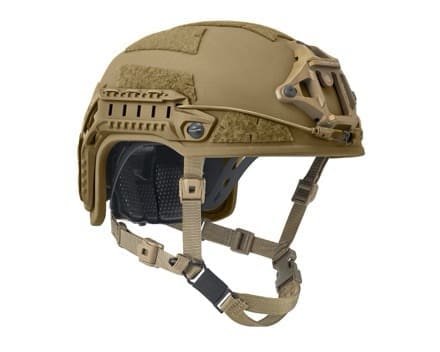
Mehler Protection is expanding its ballistic helmet portfolio with the Omega Core, an ultra-light combat helmet made from a high-performance UHMWPE composite, designed for modern tactical and military mission profiles.

The Omega Core combines an optimised UHMWPE composite core with a shell-integrated energy-dissipation system and an ergonomically designed interior. The result is an optimal weight-to-performance ratio that enhances mobility while reducing operational fatigue and neck strain. The helmet system will be showcased at Enforce Tac 2026 as part of Mehler Protection’s current helmet portfolio. Industry professionals, particularly those representing European armed forces, are warmly invited to visit the Mehler Systems Group stand to experience the combat helmet first-hand.

The Omega Core pairs a sophisticated ballistic construction with an open rail architecture and modular interfaces, e.g. for NVG mounts, visors, communications devices and hearing protection and more. The interior features multi-chamber pads and adaptive anchoring points to minimise micro-movements under dynamic loads, thereby improving stability, comfort, and fit. The individually adjustable suspension net provides continuous ventilation to reduce perspiration and heat build-up. The shell concept is engineered for low backface deformation and optimised fragment deflection. Thanks to its modular platform architecture, the helmet can be adapted to different mission profiles, ranging from highly mobile operations to scenarios involving variable threat environments.

“With the Omega Core we are setting the benchmark for ultra-light, fully integrable combat helmets. The system is ‘Made in Germany’, underpinned by a resilient European supply chain. Operators will benefit from a weight saving of around 20 per cent compared to the current Bundeswehr combat helmet, without compromising on protection, ergonomics or system integration,” says Dr. Mario Amschlinger, CEO of Mehler Systems.

The Omega Core is engineered as an ultra-light helmet system. It ranks at the very top of its class and delivers clear advantages in mobility and reduced fatigue during extended missions. The system is tested, among others, to the “Ballistic Helmet” system standard (Chapter 3.2, May 2010), STANAG 2920 (V50 procedure for fragment protection) and NIJ STD 0106.01. Ballistic tests with operationally relevant handgun ammunition (example calibres: 9 mm FMJ RN, .357 SIG FMJ FN, .44 Mag SJHP) are conducted to evaluate performance. These standards and additional procedures ensure that ballistic performance, impact attenuation and material durability meet the requirements expected by military users.

Production and delivery capability

Series production takes place at Mehler Protection’s dedicated facility in Fulda. The automated production line provides capacity for more than 50,000 state-of-the-art helmets per year. Mehler Protection has the organisational and technical capabilities to scale output to three times this volume at short notice upon receipt of orders. This ensures armed forces’ requirements can be met quickly and reliably. The production strategy is based on rapid scalability, a dual-sourcing approach for critical components and qualified supplier networks across Europe. Mehler Protection has demonstrated on-time delivery, high quality standards and supply chain resilience in major body armour programmes.

Innovation leadership

The Mehler Systems Group was awarded the TOP 100 seal in 2026, placing it among Germany’s most innovative mid-sized companies. This recognition highlights the Group’s consistent research and development efforts and the innovation behind products such as Omega Core, as well as numerous other solutions in the fields of personal and platform protection, load-bearing systems, and tactical clothing.

About Mehler Protection

Mehler Protection is a leading provider of high-quality ballistic protection systems for law enforcement agencies, military, and special forces. The company is committed to safety, providing innovative and robust solutions that are tailored to mission-specific requirements. Its portfolio includes ballistic body armour, stab and cut protection, helmets, shields, and platform armour for naval, air, and land vehicles, as well as critical infrastructure. As part of the Mehler Systems Group, Mehler Protection draws on over four decades of experience in developing and manufacturing customised protection solutions.

Milrem Robotics and EOS Defence Systems Sign Teaming Agreement to Advance Unmanned Ground Systems Capabilities

Thursday, February 5th, 2026

Milrem Robotics, the world’s leading developer of robotics and autonomous systems, and EOS Defence Systems, a global leader in advanced remote weapon systems and integrated defence solutions for Counter-UAS, have signed a teaming agreement to jointly pursue new business opportunities and advance network-centric collaborative combat robotics.

The agreement establishes a framework for cooperation across marketing, product development, and research and development, enabling both companies to combine their complementary expertise in unmanned platforms, weapon systems, and integrated defence solutions.

“By combining Milrem Robotics’ unmanned ground vehicle expertise with EOS Defence Systems’ advanced weapon and integration capabilities, we are strengthening our ability to deliver scalable and mission-ready solutions for modern armed forces,” said Kuldar Väärsi, CEO of Milrem Robotics. “This teaming agreement reflects our shared commitment to innovation, interoperability, and responding to evolving operational requirements.”

“The drone threat environment is increasingly mobile and contested, and effective defence can no longer be confined to fixed sites or crewed platforms,” said Andreas Schwer, CEO of Electro Optic Systems (EOS). “This teaming agreement extends EOS’ world-leading counter-drone systems onto unmanned ground platforms, supporting more flexible and layered defence approaches.”

Under the agreement, the companies will collaborate to identify business opportunities in new markets and customer segments of mutual interest, as well as to develop and execute joint marketing initiatives. The cooperation also enables the potential co-development of products, technologies, and integrated solutions aligned with the companies’ respective areas of expertise.

A key focus of the partnership is joint research and development, including the integration of advanced weapon systems, sensors, and effectors onto Milrem Robotics’ unmanned ground vehicles. Planned activities may include non-ITAR counter-UAS solutions, missile and grenade launcher integrations, large-calibre weapon systems for heavy UGVs, and the integration of laser-based capabilities on medium and large uncrewed platforms, in cooperation with selected international partners.

The agreement further supports the sharing of relevant intellectual property, technical know-how, and research outcomes to accelerate the commercialisation and deployment of jointly developed or marketed solutions.

The collaboration will initially focus on selected markets in the Middle East and North Africa (MENA), the Asia-Pacific (APAC) region, and Europe, with opportunities in the United States assessed on a case-by-case basis. Target markets include the United Arab Emirates and the Kingdom of Saudi Arabia, Australia, Singapore, Indonesia, and selected European programmes where joint offerings can deliver a clear competitive advantage.

Yokota Supports First JGSDF-Hosted Multinational Airborne Exercise

Wednesday, February 4th, 2026

YOKOTA AIR BASE, Japan (AFNS) —  

U.S. Air Force C-130J Super Hercules aircraft assigned to the 36th Airlift Squadron supported a multinational airborne operation Jan. 17, at Ojojihara Training Area, Miyagi Prefecture, marking the first Japan Ground Self-Defense Force-hosted multinational airborne exercise conducted on Japanese soil.

The operation built on the momentum of New Year Jump Indo-Pacific 2026, which included participation from 14 nations, and served as the tactical phase of a broader training series designed to enhance airborne operational capability and interoperability among allied forces. While NYJIP26 at the JGSDF’s Narashino Training Area in Chiba Prefecture earlier this month was conducted as a ceremonial public demonstration, training at Ojojihara emphasized combat readiness and operational execution.

Operating from Yokota Air Base, four U.S. Air Force C-130J Super Hercules aircraft assigned to the 36th Airlift Squadron delivered approximately 130 paratroopers from the U.S. Army’s 11th Airborne Division to the drop zone in Miyagi Prefecture. The airborne insertion was conducted in coordination with the Japan Air Self-Defense Force, which employed one Kawasaki C-2 and two C-130H Hercules, both assigned to JASDF Air Support Command to transport paratroopers from the JGSDF 1st Airborne Brigade. 

The combined force conducted an airborne insertion and transitioned immediately to ground maneuver, executing reconnaissance and consolidation actions to validate command-and-control procedures and combined maneuver capabilities.

The operation required detailed coordination among multiple airlift platforms operating in the same airspace. U.S. Air Force aircrews synchronized rendezvous points, altitudes and airspeeds with JASDF C-2 and C-130H aircraft to operate as a single formation prior to the drop. Aircraft spacing and timing were established based on ground force requirements, with all aircraft slowing to a common drop airspeed before paratrooper exit. 

“Flying with multiple airlift platforms requires precise coordination from start to finish,” said U.S. Air Force Lt. Col. Stephen Larson, 374th Airlift Wing, C-130J pilot. “Once we establish visual contact, we bring the formation together at the same altitude and airspeed and set spacing based on what the ground force needs for a safe and effective drop.”

Despite low cloud ceilings and reduced visibility, aircrews maintained visual conditions and executed a precise airdrop. The C-130J’s automated systems assisted crews in generating accurate airdrop run-in profiles, allowing pilots to focus on formation coordination, drop zone communication and air traffic control. The coordinated airlift enabled ground forces to execute the operation as planned.

“The transition from the New Year Jump at Narashino to a full-scale tactical drop at Ojojihara is where training translates into operational capability,” said U.S. Army Sgt. 1st Class Kael Jordan, 11th Airborne Division, platoon sergeant. “The rehearsals and coordination we conducted beforehand allowed us to execute safely and effectively alongside our Japanese partners.”

Prior to the Ojojihara operation, participating forces conducted preparatory training at Narashino Training Area, focusing on procedural alignment, joint briefings and coordination drills.

The exercise brought together airborne forces from the United States and Japan to strengthen interoperability and reinforce combined airborne capabilities. The training was conducted as part of a series of linked exercises designed to enhance regional readiness and cooperation in support of a free and open Indo-Pacific.

By Yasuo Osakabe

374th Airlift Wing Public Affairs

Denmark Commissions Rheinmetall to Supply Ammunition – Initial Orders Under Framework Agreement Worth Hundreds of Millions of Euros

Tuesday, February 3rd, 2026

Rheinmetall has been commissioned by Denmark, a member of the EU and NATO, to supply ammunition. The signing of a  large-volume framework agreement was marked by a ceremony on 30 January 2026. The agreement has a term of seven years. It covers the supply of several types of ammunition. These include medium-calibre ammunition for infantry fighting vehicles and self-propelled anti-aircraft guns, 120 mm ammunition for main battle tanks and 155 mm ammunition for artillery.The first orders in the medium-calibre ammunition sector include various types of cartridges in 30 mm x 173 and 35 mm x 228 calibres. The total number is in the high five-digit range, with the order value in the low three-digit million euro range.In the area of 120 mm tank ammunition, Rheinmetall will supply over 1,000 rounds of kinetic-energy ammunition. The order value is in the high single-digit million euro range.”We are grateful for the trust Denmark has placed in us for its ammunition supply,” said Armin Papperger, CEO of Rheinmetall AG. “Rheinmetall sees this as confirmation of its role as one of the world’s leading ammunition manufacturers.”

Rheinmetall Drone LUNA NG Demonstrates its Capabilities in the Bundeswehr’s New Reconnaissance and Operational Network

Friday, January 30th, 2026

Rheinmetall successfully participated in a visionary test conducted by the Bundeswehr at the Army Combat Training Centre in Saxony-Anhalt, using its LUNA NG unmanned aerial vehicle (UAV) system. The test focused on the reconnaissance and operational network. From target detection to counter-measures, only unmanned systems were used, including drones and loitering munitions. Drone swarms are worldwide considered a novelty, and as yet an untested technology in terms of future combat methods of modern armed forces worldwide.



Within the Bundeswehr, the LUNA NG reconnaissance drone is known as the HUSAR (Highly Efficient Unmanned System for Medium-Range Reconnaissance) project. During the test period at the Combat Training Centre, Rheinmetall successfully integrated the system with the Bundeswehr’s Command & Control Unmanned Management System (C2-UMS Bw). This allows LUNA NG to operate within reconnaissance and operational networks alongside other drones or loitering munitions. Notable features of the system include a flight time of over 12 hours and a maximum altitude of 5,000 metres.

Overall, the test at the Combat Training Centre was characterised by a high level of digitalisation and networking. It showed that the interaction of reconnaissance and operational networks reduces the required time to detect, mark and counter-attack a target significantly.

During testing, LUNA NG reliably processed short-term assignments, showcasing its exceptional reconnaissance capabilities. The system also boasts great endurance and operates quietly at high altitudes.

The other participants connected to the C2-UMS Bw receive a status information of a large operational area, as well as high-resolution target information, via LUNA NG. Additionally, sensor information is available in real time, giving ground units a complete picture of the situation.

Italian Army’s A2CS Programme Kicks Off – First Four New Infantry Fighting Vehicles Delivered by LRMV Joint Venture

Thursday, January 29th, 2026

Rome, 27/01/2026 – Today, at the Italian Army Multifuncional Experimentation Center (Ce.Poli.Spe) in Montelibretti, the Leonardo Rheinmetall Military Vehicles (LRMV) Joint Venture delivered to the Armed Forces the first four Lynx KF-41 infantry fighting vehicles. This first delivery marks the official launch of the “A2CS” (Army Armoured Combat Systems) programme, for which an initial contract for the acquisition of 21 new “A2CS Combat” vehicles was signed at the end of last    year.
The ceremony was held in the presence of the Minister of Defence, Guido Crosetto, the Chief of Staff of the Italian Army, General Carmine Masiello, the Chief Executive Officer of Leonardo, Roberto Cingolani, and Dr. Björn Bernhard, Head of Rheinmetall’s Vehicle System Division Europe. Also present were the CEO, Laurent Sissmann and the Executive Chairman of the Joint Venture, David Hoeder.

The Minister of Defence, Guido Crosetto, stated: “The international scenario requires a constantly evolving Defence, capable of ensuring the security of the country and safeguarding national interests. This calls for a modern, flexible and credible model, based on high levels of operational readiness, qualified personnel and advanced technological capabilities. Within this framework comes the delivery of the Lynx armored vehicle, the result of Italian-German industrial cooperation, to the Italian Army, aimed at strengthening land systems through the introduction of state-of-the-art platforms. In this process, the Army’s Multifunctional Testing Center (CEPOLISPE) plays a central role, ensuring the testing and technical evaluation of vehicles, equipment and weapon systems to determine their suitability for operational use.”

 “The Army has a clear direction and well-defined requirements for the new vehicles to accelerate the ‘mechanization’ path of the Armed Force, which concretely begins today. After 30 years in which the Italian soldier has demonstrated courage, commitment, determination and professionalism in peace support operations — to the point of coining the ‘Italian Way’ of peacekeeping — we have no doubts about their capabilities. They will be able to operate at their best if equipped with technology that meets the challenges ahead: this vehicle will radically change the way the Army fights”, stated the Chief of Staff of the Italian Army, Gen. C.A. Carmine Masiello, at the presentation of the A2CS “Lynx”.

Roberto Cingolani, Chief Executive Officer and General Manager of Leonardo, stated:
“The start of deliveries of the new armoured vehicles represents an important milestone in the programme we are carrying out with the Italian Army. The international alliance between Leonardo and Rheinmetall continues to stand as a key reference point for strengthening national defence and for the development of a solid, integrated and competitive European industrial base. This is a commitment we consider essential to ensuring national and European security and strategic autonomy.”

Armin Papperger, Rheinmetall Chief Executive Officer said: “With the handover of the first armoured vehicles to the Italian armed forces, we are opening a new chapter in the success story of the Lynx vehicle family. As a next-generation combat vehicle, Lynx not only sets standards in terms of versatility, protection, effectiveness, scalability and future-proofing, but also in terms of enhanced European armaments cooperation.”

The Lynx platform is capable of fulfilling multiple roles, including infantry fighting vehicle, troop transport, mobile command post and ambulance. The 4 vehicles delivered today complement Rheinmetall’s Lance 30mm turret, which will later be replaced by Leonardo’s Hitfist 30mm turret. The latter will equip all the other 16 armoured vehicles of this contract.

The A2CS programme – Army Armoured Combat System, originally named AICS – Armoured Infantry Combat System together with the new Main Battle Tank programme will renew the Italian Army’s heavy vehicle fleet , providing cutting edge technology, characterised by high levels of digitalisation and connectivity, and capable of operating within the most complex multidomain contexts. This will also provide an opportunity for the renewal of the armoured fleets of international partners.

Metis Launches Skyperion Lightweight – Mobile C-UAS Detect, Track and Identify

Thursday, January 29th, 2026

Metis, specialists in providing Radio Frequency (RF) and drone detection innovative technologies across diverse sectors, launches their latest detection product, Skyperion Lightweight. Skyperion Lightweight has virtually all the same passive counter-uncrewed air systems (C-UAS) detect, track and identify (DTI) sensor capability as its operationally proven and highly respected big brother Skyperion Rugged, but has been re-engineered into a smaller weight and power (SWaP) format optimised for users requiring mobility, rapid deployment and on-the-move operation.

For the last 10 years, Metis has been at the forefront of passive C-UAS RF detection capability development, with Skyperion Rugged being the RF DTI capability integrated into the RAF’s ORCUS system and Leonardo’s Falcon Shield deployed with NATO allies, helping to safeguard their airspace, key installations and critical infrastructure against the threats posed by rogue drones. The Skyperion product range captures RF emissions of varying strengths across the spectrum, filtering out background noise and known entities, before rapidly analysing them to identify and locate potential threats.

Skyperion products, already at Technical Readiness Level (TRL) 9 and operationally proven with multiple NATO partners, are distinguished by a non-library-based Open ESM waveform analysis. This approach identifies both cooperative and non-cooperative emitters across a wide spectrum of frequencies, providing an agile, comprehensive RF detection capability without reliance on static signal libraries. Skyperion is also the ideal choice to be integrated into a wider range of counter- drone capabilities (radar, optics, jamming and defeat) because it has been designed and manufactured to be system agnostic, modular and with an open architecture. This allows sovereign nations, large primes or system integrators to easily incorporate Metis products with other best-in-class technologies, to deliver world-leading detection, tracking, identification and defeat of rogue drones.

Tony Burnell, CEO of Metis said: “With the increasing proliferation of rogue drones being used for nefarious means, it is essential that we continue to innovate and develop new products to counter these threats. Skyperion Lightweight offers users ultimate flexibility on how it is deployed – not only protecting fixed locations but also providing virtually the same level of protection as Skyperion Rugged in a mobile format which we know many potential customers are seeking.”

SHOT Show 26 – Arktis Multispectral Camouflage Cloak

Tuesday, January 27th, 2026

Arktis has introduced a multispectral camouflage cloak using the Wescom Defence ATMIS material.

Developed by BCB International, which is now part of Wescom Group following its acquisition in January 2025, the ATMIS Multispectral Camouflage (MSC) portfolio includes:

ATMIS Flex: Lightweight, pliable multispectral fabric providing proven protection across the UV, visible, infrared, thermal and radar spectrums.

ATMIS Crinkle: 3D creased texture for terrain mimicry.

ATMIS MK8 2D: Durable, heavy-duty multispectral material.

ATMIS MK8 3D Leafed: MK8 with precision cut 3D leafing for advanced disruption.