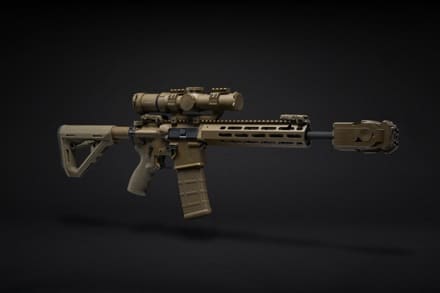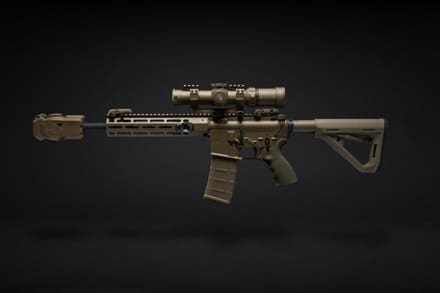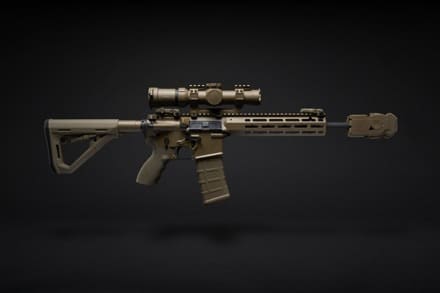
Colt

Archive for the ‘International’ Category

Rheinmetall and Hensoldt Demonstrate Successful Integration of Passive Sensor Technology into a Modern Air Defence System

Thursday, August 20th, 2026

During the German Air Force exercise Timber Express 2026 in Manching, Rheinmetall Air Defence and Hensoldt achieved a milestone for future networked air defence. During a German Air Force exercise, the air picture generated by Hensoldt’s Twinvis passive radar was successfully integrated into Rheinmetall’s Skymaster command and weapon engagement system, which was directing the Skynex Air Defence battery deployed in the scenario.


The integration took place under realistic NATO networking conditions and demonstrated the high flexibility and open architecture of the Skymaster system. A common air picture could be generated by fusing and correlating sensor data within NATO’s Link 16 network. The Hensoldt passive radar demonstrated excellent performance in detecting and tracking air targets. This confirms the high operational value of modern passive sensor technology for air defence. Twinvis is a passive radar based on the latest digital technology that can be used for wide-area military airspace surveillance or civil air traffic control.

Particularly noteworthy is Skymaster’s ability to combine active and passive radar sensors with electro-optical sensors into a comprehensive air picture within the air defence network. This creates new opportunities for resilient, low-emission air surveillance in line with a modern emissions control strategy (EMCON), while at the same time improving situational awareness for the protection of high-value infrastructure, critical facilities and mobile military units.

The demonstration highlights the future viability of distributed and interconnected sensor networks and illustrates how passive sensor technologies can usefully extend and complement existing air defence systems. Furthermore, passive systems increase network survivability due to the absence of a distinctive identification. The findings provide an excellent foundation for the integration into stationary Skynex systems, mobile Skyranger solutions and modern counter-UAS systems such as the Skyspotter. 

The success of this trial was possible through the close and constructive cooperation between the participating German Air Force organisations, the exercise management team and the expert teams from Rheinmetall Air Defence and Hensoldt. Together, they achieved a NATO-compatible integration of the highest quality in a challenging technical environment, making an important contribution to the continued development of modern integrated air defence capabilities.

KATUSA: 76 Years of “We Go Together”

Thursday, August 20th, 2026

August 15 is recognized as the birthday of the Korean Augmentation to the United States Army Soldier program, or KATUSA. The program was created only weeks after the Korean War ignited, and to this day KATUSAs continue to serve side-by-side with Eighth Army Soldiers providing priceless support and friendship.

The Korean War began June 25, 1950. Roughly three weeks later the KATUSA program was initiated July 15 by an informal agreement between the Honorable Syngman Rhee, president of the Republic of Korea, and General of the Army Douglas MacArthur, commander in chief, United Nations Command.

During the first two months of the war, the Republic of Korea Army had been destroyed as a fighting force and the U.S. Army was significantly understrength and had been “compressed” into the Pusan perimeter by North Korean forces, as described in an official Army report. Replacements and fighting men were in desperate need.

The concept of the KATUSA program was to augment the U.S. forces. In the beginning most KATUSAs were recruited directly off the streets of Pusan, now spelled Busan. After a basic training period, KATUSA Soldiers were sent to combat units serving as infantrymen. The first KATUSAs reached U.S. Army units by mid-August 1950.

They were issued U.S. supplies, but were paid by and remained administered under the Republic of Korea Army. Throughout the Korean War, up to a maximum of 23,000 KATUSAs served at any one time, according to the Army.

After the 1953 armistice, KATUSA Soldiers remained with U.S. Army units to receive training not readily available in the ROKA and to enhance U.S. Army in Korea’s mission capability.

Since 1950, the KATUSA Soldier Program has been ongoing with only periodic strength adjustments dictated by requirements. Originally, KATUSA Soldiers were returned to the ROKA after serving with the U.S. Army. Since 1968, however, KATUSA Soldiers remain with Eighth Army until their service commitments are completed. The ROKA Support Group was established May 11, 1965 at the request of the Eighth Army commander to administer the KATUSA Soldier program.

Today, young South Korean men planning to conduct their mandatory military service obligation can apply to become a KATUSA if they have a command of the English language and if positions are available.

Eighth Army has stated the KATUSA program increases the ROK-U.S. combined defense capability on the Korean peninsula. The program is also significant not only because of the military manpower and monetary savings that it provides to the U.S. Army, but also because it puts a face on the ROK-U.S. alliance and the combined commitment to deter war.

The KATUSA program is the very essence of one of Eighth Army’s favorite phrases, “katchi kapshida,” — “we go together.”

Information for this article provided by Eighth Army and these sources:

“Integration of ROK Soldiers into US Army Units (KATUSA)” (U.S. Army)

“The KATUSA Experiment” by David Curtis Skaggs (excerpt)

By Kenji Thuloweit

Mehler Protection Brings New Maritime Protection Solutions to SMM 2026

Wednesday, August 19th, 2026

KÖNIGSLUTTER, GERMANY (18 August 2026)

From 1–4 September 2026, Mehler Protection will exhibit at SMM in Hamburg, presenting its latest platform protection solutions developed for the maritime sector.

Visitors can find Mehler Protection | Platform Armour in Hall B5, Booth 335, where the company will showcase a range of ballistic protection solutions for naval platforms, alongside a new development addressing emerging threats in the maritime environment.

A key focus of the exhibit will be M-RACC KE, Mehler Protection’s modular add-on armour solution designed to increase the ballistic protection of existing structures and platforms.

Its modular concept allows the protection level to be adapted to different threat scenarios and platform requirements, providing a flexible approach to upgrading protection without redesigning the complete structure.

At SMM 2026, visitors will be able to compare M-RACC KE configurations across STANAG Levels 1, 2, 3 and 4, demonstrating how the system can be scaled according to the required level of ballistic protection.

The exhibit will also feature a ship wall equipped with ballistic protection, providing a practical demonstration of how Mehler Protection’s armour solutions can be integrated into naval structures.

Alongside its passive armour solutions, Mehler Protection will provide a first look at a new active protection development for the maritime domain.

The solution has been developed in response to the rapidly changing threat environment faced by naval platforms, particularly at close and very close ranges. It expands Mehler Protection’s approach to maritime survivability beyond passive ballistic protection and will be officially unveiled during SMM 2026.

Further details about the new system will be announced separately at the start of the exhibition.

As the world’s leading maritime industry event, SMM brings together the international maritime sector in Hamburg to present new technologies, exchange expertise and address the challenges shaping the future of the industry.

Learn more about Mehler Protection: mehler-protection.com

Bundeswehr Orders Further Mobile Rescue Stations from Rheinmetall – Order Worth Over € 500 Million

Tuesday, August 18th, 2026

Rheinmetall will supply further mobile rescue stations to the Bundeswehr. As an extension of a previous order, the armed forces are set to receive a total of 149 additional protected and unprotected systems, with a gross value of over €500 million. This call-off under a framework contract awarded at the end of 2024 is the largest order to date that the contractor, Rheinmetall Project Solutions GmbH, has ever received. Production of the rescue stations is due to begin in the first quarter of 2027.
With the order booked in July 2026, the total number of rescue stations rises to 165 systems, with a gross value of over € 600 million. In December 2024, the Federal Office of Bundeswehr Equipment, Information Technology and In-Service Support (BAAINBw) had commissioned Rheinmetall to supply up to 137 rescue stations to the Bundeswehr. At that time, ten ballistically protected and six unprotected systems were ordered. 

Call-offs for further armoured and unarmoured systems are included as an option in the contract. Training for the relevant personnel will also be provided.

The rescue stations are part of the Modular Medical Facilities system. Within the Bundeswehr’s medical service, these highly mobile rescue stations ensure that the troops receive initial emergency medical care. If required, four soldiers can set up and dismantle the systems within a very short time. This incorporates a lesson learnt from the war in the Ukraine, namely that highly mobile systems are necessary for medical support.

Each rescue station comprises two containers that can be operated together or separately. Each container is fitted with a generator and air conditioning, and can operate independently for several days. Should one generator fail, the entire system can continue to operate using the generator from a single container.

The system features a fully equipped emergency treatment station, as well as four additional treatment stations. All the medical equipment is mounted on Airliner rails and can be configured according to the user’s requirements.

The system can be transported using different carrier vehicles used by the Bundeswehr. It can be set up at a longitudinal and transverse inclination. A custom lifting system was developed for this purpose, as no off-the-shelf system could meet the specified requirements.

The Bundeswehr is procuring both protected and unprotected versions of the system. This involves the refurbishment of an existing system. However, the new rescue station replaces a complex tent structure with a highly modular 3:1 container manufactured by Rheinmetall Mobile Systeme GmbH. The new system can be transported and set up in more challenging terrain.

Mehler Protection Returns to MSPO with Advanced Personal Protection Solutions

Tuesday, August 18th, 2026

FULDA, GERMANY, 10 August 2026

Mehler Protection, a leading provider of ballistic protection solutions and part of Mehler Systems, will return to the International Defence Industry Exhibition (MSPO) in Kielce, Poland, from 8–11 September 2026. Following its last appearance at MSPO in 2024, Mehler Protection will once again present a broad portfolio of personal protection solutions for military, law enforcement and security professionals.

At Hall 4, Booth 4-D09, visitors will be able to explore solutions covering different operational requirements, including modular body armour, plate carriers, ballistic helmets, riot protection, ballistic shields and load-distribution systems.

Among the key systems on display will be M.U.S.T., Mehler Protection’s modular, scalable protection system. Its modular design allows the protection configuration to be adapted according to different operational requirements, providing users with the flexibility to adjust their equipment to the mission at hand.

Another highlight will be ExoM II, the latest generation of Mehler Protection’s passive exoskeleton technology. Designed to redistribute the load of heavy protective equipment away from the shoulders, ExoM II helps reduce the physical burden associated with carrying ballistic protection and additional equipment for extended periods. The system will be displayed together with the Omega Jaw ballistic protection solution.

For public-order and riot-control applications, Mehler Protection will showcase the Riot II protective system.

Together, the three complete configurations will demonstrate different approaches to protecting personnel across a range of operational environments and requirements.

The presentation will be complemented by a selection of plate carriers and body armour systems alongside hard- and soft-ballistic protection solutions. Visitors will also be able to explore several ballistic helmet configurations, as well as flexible and rigid ballistic shield solutions designed to provide additional protection in high-risk situations.

The 34th International Defence Industry Exhibition brings together armed forces, government representatives, procurement organisations and defence industry professionals in Kielce, providing an important meeting point for the defence sector in Central and Eastern Europe.

Learn more about Mehler Protection: mehler-protection.com

Why Arktis Invests in Developing Its Own Camouflage Systems

Monday, August 17th, 2026

At Arktis, camouflage development is part of the wider capability we offer military organisations, government agencies and defence brands.

The COMB family demonstrates this approach.

Rather than creating a single “do everything” pattern, COMB was developed as an environmental system. COMB Arid addresses grassland, semi-arid, and rocky terrain, while COMB Blizzard focuses on alpine and winter operations. Additional variants like COMB Urban, or the separate French Desert Noir, and Tundra  developments further showcase Arktis pattern development capabilities.

  • Camouflage and colourway development
  • Pattern scaling and repeat optimisation
  • Garment integration across complete clothing systems
  • Manufacturing across combat apparel, insulation, waterproofs and load carriage
  • Low-volume specialist development through to large-scale manufacture

For organisations looking to develop proprietary camouflage or launch exclusive product lines, these capabilities form part of Arktis’ wider OEM and manufacturing services.

With more than 40 years of experience designing and manufacturing tactical clothing for military and law enforcement customers worldwide, Arktis supports partners from initial concept through to production-ready solutions.

If you’re developing a new capability, launching a specialist product range or looking for an experienced manufacturing partner, we’d welcome the conversation.

Learn more about Arktis’ manufacturing capabilities: Arktis Endurance Textiles.

View the COMB collection: COMB Family Collection

Rheinmetall Successfully Demonstrates Launch of the FV-014 Loitering Munition System from Containerized Missile Launcher

Friday, August 14th, 2026

Rheinmetall has successfully launched its FV-014 loitering munition system from the Containerized Missile Launcher, a modular multi launcher for guided missiles and loitering munitions. Both the Containerized Missile Launcher and the FV-014 loitering munition system are in-house developments. The product demonstration took place in July 2026 at the National Test Centre for Unmanned Aerial Systems at the German Aerospace Centre in Cochstedt, Saxony-Anhalt.
As part of a customer demonstration, the 
FV-014 was launched from a Rheinmetall HX truck, both from a stationary position and whilst moving. During the demonstration, the system carried out various simulated operational profiles and attack flights. This successful test underlines Rheinmetall’s expertise in the field of modern loitering munition systems and marks another important milestone in the expansion of its portfolio of unmanned weapons for various ranges.

The FV-014 was developed for highly mobile operations on the modern battlefield. It combines reconnaissance, target identification and precision strike capabilities within a single system and is designed for operational ranges of up to 100 kilometres. State-of-the-art sensor technology, network capability and strong resilience to GNSS interference through a high degree of autonomy enable deployment even in demanding operational scenarios. The system is suitable for engaging both armoured and unarmoured targets.
Launching takes place from a transport and launch container using a booster. These launch containers can be integrated into the Containerized Missile Launcher on a modular basis. Depending on the selected container model, this launcher can accommodate up to 18 FV-014. After ejection, the aircraft unfolds its folding wings and transitions to aerodynamic flight. With a flight duration of up to 70 minutes, the operator has sufficient time for reconnaissance, target selection and decision making for the attack.

The system is controlled via a user-friendly ground station with permanent human-in-the-loop control. This enables the operator to identify and track targets, launch precise attacks and abort the mission, if necessary in order to respond to changing operational conditions.

The FV-014 is a modern loitering munition system with a launch weight of around 22 kilograms, including a payload of approximately six kilograms. The integrated HEDP (High-Explosive Dual Purpose) warhead has a penetration capacity of more than 600 millimetres of solid armour steel and is equally effective against armoured and unarmoured targets, as well as infrastructure.
An electrically powered propeller guarantees a quiet approach. Furthermore, the FV-014 is designed for a reduced radar and infrared signature. In addition to precise single strikes, the system supports swarm operations to simultaneously engage multiple targets or to ‘saturate’ by deliberately overstraining enemy defence systems. Future deployment from mobile land vehicle platforms and seagoing units is planned.

The Containerized Missile Launcher is a highly flexible, modular designed launch platform, amongst other things, for the FV-014loitering munition system. It is based on a standardised ISO container of any size. It can be deployed both in a stationary configuration and on mobile platforms, such as a Rheinmetall HX truck, as well as on naval vessels. In the 20-foot configuration, a Containerized Missile Launcher can accommodate up to 18 FV-014 and is fully compatible with existing transport, logistics and operational platforms. Connection to command, control, communications, computers and intelligence (C4I) systems enables flexible launch by a local operator, via radio link or satellite communication. An integrated power supply ensures reliable long-term operation, even in remote operational areas. The consistent use of commercial off-the-shelf (COTS) components reduces life-cycle costs. Furthermore, the system features an integrated ‘sleeper’ capability for remote activation.

Cana Provisions Expands to Europe and the United Kingdom with Two New International Distributors

Friday, August 14th, 2026

Huntsville, AL — August 14, 2026 – Cana Provisions today announced its expansion into the European and UK markets through partnerships with two established tactical distributors: Gear Town in the Netherlands and Tactical Kit in the United Kingdom. The move brings much of the Cana Provisions product line directly to civilians, law enforcements, and military users across the region, with Tactical Kit servicing the United Kingdom and Gear Town servicing continental Europe and beyond.

As demand for reliable, portable water treatment continues to grow among operators, agencies, and preparedness-minded civilians across Europe, the partnerships give customers regional access to Cana’s water treatment and solutions — without the cost and delay of international ordering.

“Clean water isn’t a domestic concern; it’s a universal one. Partnering with Gear Town and Tactical Kit lets us put proven water solutions directly into the hands of the people who need them, wherever the mission takes them.” said Zach H, Owner of Cana Provisions.

Cana Provisions products are built for broad-spectrum operations, disaster response, training environments, and austere expeditions where contaminated water sources are the norm. The company’s mission is to ensure users can treat, verify, and consume safe water without external reference.

Available Products:

• H2gO Mobile Disinfectant Generators and accessories

• Qore Performance Water Data ICEFLASK® and ICEFLASK® Water Data Decals

• Select Cana Provisions Water Data Cards and Decals

• Cana Provisions Water Data Nalgene Bottles

• MSR and Platypus GravityWorks filter systems and accessories

To request additional product availability or to place unit orders, please contact the distributors directly:

Europe — Gear Town

Website

Email: support@geartown.eu

Dutch Inquiries: 085 744 4947

International Inquiries: +31 85 744 4947

* photo by Austin Miller, @Eastcorner Industries.

United Kingdom — Tactical Kit

Website

Email: sales@tactical-kit.co.uk

Phone: 01778 561672

* photo by Adam Wakefield, @81 Photography