FirstSpear

Archive for the ‘International’ Category

DroneShield Expands Radar Interoperability with Robin Radar Systems

Thursday, March 19th, 2026

Sydney, Australia – 18 March 2026DroneShield (ASX:DRO), a global leader in counter-drone technology, today announced a partnership with Robin Radar Systems, strengthening advanced radar technologies to DroneShield’s growing sensor ecosystem. The interoperability expands radar options available to customers, strengthening layered airspace awareness across defense, critical infrastructure, and public safety environments.

Robin Radar Systems is recognized for its 360°, 3D radar technology designed to detect and track small airborne objects, including drones. Its radars are engineered to deliver reliable detection and classification performance across complex environments.

Image: Sample configuration of DroneShield’s DroneSentry layered defense with Robin Radar Systems

Expanding the Sensor Marketplace for Operators
DroneShield’s approach to counter-UAS is intentionally ecosystem-led. Rather than offering a closed or static solution, the company has invested in building a scalable marketplace of interoperable third-party sensors. This model gives operators the flexibility to select the right sensing technologies for their specific environment, threat profile, and operational constraints, both today and as requirements evolve.

By adding Robin Radar Systems to its ecosystem, DroneShield continues to expand the options available to customers seeking radar-based detection as part of a layered CUAS deployment. Radar can play a critical role in detecting and tracking airborne objects across wide areas and in challenging conditions, supporting persistent awareness and resilience.

At the center of this ecosystem is DroneShield’s DroneSentry-C2 powered by SensorFusionAI, which combines inputs from multiple sensor types to create a consolidated operational picture that reduces ambiguity and enhances decision confidence.

“Operators need systems that adapt to their mission, not the other way around,” said Angus Bean, DroneShield’s Chief Product Officer. “By partnering with Robin Radar Systems and expanding our sensor marketplace, we give customers more freedom to design their airspace security architecture, while SensorFusionAI ensures that all sensor inputs are fused into insights that support decisive action.”

Image: DroneShield’s DroneSentry-C2 brings together multiple sensors for a clear, single operating picture

Designed for Real-World Operations
“At Robin, we see ourselves as a new generation radar company – fast, adaptive, and built for integration. Our technology is designed to deliver seamless performance within broader security architectures. We’re pleased to be partnering with DroneShield to combine our market-leading IRIS 3D radar with their CUAS platform, enabling smarter, layered airspace protection worldwide,” said Marcel Verdonk, Robin Radar’s Chief Commercial Officer.

Robin Radar Systems brings decades of radar science and innovation to this partnership, delivering systems that are engineered for accuracy and optimized for modern CUAS challenges. This partnership ensures that operators no longer need to trade coverage for clarity. By combining complementary sensing technologies into a single, AI-enhanced platform, organizations can achieve both scale and understanding without increasing complexity.

Defence Investment Agency Awards Contract to Replace Current Canadian Armed Forces Assault Rifles

Thursday, March 19th, 2026

March 19, 2026 – Kitchener, Ontario       

The Government of Canada is committed to rebuilding, rearming and reinvesting in the Canadian Armed Forces (CAF) to ensure they receive the equipment they need to achieve mission success and protect Canadians.

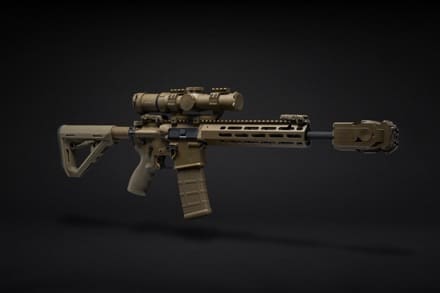
Today, the Honourable Stephen Fuhr, Secretary of State (Defence Procurement), and the Minister of National Defence, the Honourable David J. McGuinty, announced that the Defence Investment Agency has awarded a contract to Colt Canada of Kitchener, Ontario, to acquire up to 65,402 assault rifle systems under the Canadian Modular Assault Rifle (CMAR) initiative. By awarding this contract to Colt Canada, the Government of Canada is reinforcing the recently announced Defence Industrial Strategy and its commitment to invest in Canadian innovation.

The CMAR project will be delivered through 2 phases:

Phase 1 includes procuring 30,000 General Service (GS) rifles over a three-year period. The estimated value of this initial phase is approximately $307 million, including applicable taxes.

Phase 2, which is expected to begin in year four under an optional provision, will include procuring the remaining 19,207 GS rifles, 16,195 Full Spectrum (FS) rifles, as well as associated ancillaries.

This contract will provide a modern replacement for the current C7/C8 assault rifle fleet, which has been in service for more than 35 years. The new rifles will enhance the awareness, protection, and reliability of deployed CAF members. The project also includes system integration and engineering support.

The investment will bolster Canada’s defence industrial base for years to come, creating good?paying jobs and contributing roughly $10 million annually to Canada’s GDP over the next five years. Colt Canada’s commitment to include at least 80% Canadian content will also generate opportunities for suppliers across the country. Further economic benefits are expected under the Industrial and Technological Benefits (ITB) Policy, which ensures that defence procurements generate long?term, high?value investments in Canada.

This contract is part of the first wave of high-priority defence procurements to be implemented by the Defence Investment Agency. The Agency play a central role in implementing Canada’s Defence Industrial Strategy by engaging industry earlier in the procurement process, supporting innovation and aligning procurement strategies with long-term military and industrial priorities.

Together, the Defence Investment Agency and the Defence Industrial Strategy are making generational investments in Canada’s defence ecosystem—transforming how Canada equips its military, strengthening domestic supply chains, and ensuring the Canadian Armed Forces have the equipment they need to keep Canada safe and sovereign.

To replace the current service rifle, the DIA made a deliberate decision to advance CMAR through a direct acquisition for asset replacement, and advanced the procurement using a Risk?Based Approach (RBA). These actions reflect Canada’s commitment to streamlining processes and accelerating the delivery of equipment to the CAF. This investment supports Canada’s efforts to meet its NATO defence spending targets, while ensuring the CAF has the modern equipment needed to respond to evolving operational demands. 

“Providing modern, reliable capabilities to the Canadian Armed Forces is central to the Defence Investment Agency’s mission, and our streamlined approach will deliver this capability to our troops faster. This contract with Colt Canada advances Canada’s new Defence Industrial Strategy by strengthening domestic production, creating good?paying jobs, and growing our economy. By investing in advanced systems and Canadian expertise, we are ensuring our Forces remain ready for the challenges ahead while building a stronger, more resilient defence industry at home.”

The Honourable Stephen Fuhr
Secretary of State (Defence Procurement)

“Today’s announcement reflects our government’s ongoing commitment to ensuring the Canadian Armed Forces have the capabilities they need to protect Canadians and contribute to global security. The Canadian Modular Assault Rifle project is an important step in modernizing the equipment our service members rely on every day. By investing in modern, reliable tools and working with a trusted Canadian partner, we are supporting the operational readiness of our Armed Forces while strengthening Canada’s defence industry and the skilled workforce behind it.“

The Honourable David J. McGuinty
Minister of National Defence

“Today’s announcement is a win for Canada and the Canadian Armed Forces. Rifles remain foundational to soldier effectiveness in the field, and this development brings over 40 years of technology evolution to Canada’s fighting forces. This represents tangible progress, and a clear example of how we can move with greater agility to bring modern, reliable equipment to soldiers. It is about delivering the Army Canada needs, today, and into the future.”

Lieutenant-General M.C. Wright
Commander Canadian Army

On February 17, 2026, the Prime Minister launched Canada’s first Defence Industrial Strategy to transform our defence industries by prioritising Canadian suppliers and materials, investing in Canadian innovation and commercialisation, and streamlining procurement to give businesses consistent and predictable demand. 

On October 2, 2025, the Prime Minister announced the creation of the Defence Investment Agency. This new special operating agency was established to strengthen Canada’s defence procurement system. It marks a major advancement in modernizing the process, aimed at rebuilding, rearming, and reinvesting in the Canadian Armed Forces to address evolving global threats and meet operational requirements.

The newly established Defence Investment Agency is modernizing defence procurement for the Government of Canada. The Agency is accelerating mission-critical equipment delivery to the CAF by centralizing expertise and streamlining decisions. 

Under this contract, up to 65,402 modern assault rifles will be delivered: 16,195 will be the FS variant, while the remaining 49,207 will be the GS variant. 

The FS variant is designed for front-line combat roles. It is optimized for offensive operations in urban and open terrain, and it has advanced features for soldiers in Regular Infantry units. The GS variant is intended for broader use across the CAF. It provides reliable personal protection and deterrence for personnel who are not in primary combat roles. 

The ammunition to be produced as part of the CMAR initiative will also be made in Canada.

The CMAR contract was advanced under a Risk?Based Approach (RBA), through which a procurement is managed according to its level of complexity and risk . This approach ensures that procurements receive Treasury Board (TB) approvals and oversight appropriate to their complexity, enabling timely delivery for the CAF by streamlining processes.

The Munitions Supply Program, established in 1974, ensures that the CAF have reliable sources of supply in Canada for ammunition, small arms and related equipment. Equipment is purchased from designated domestic facilities that serve as strategic sources of supply and centres of excellence. The MSP supports the development of a competitive Canadian defence industry, creating long-term economic benefits and thousands of jobs across the country.


Rheinmetall Nordic Mortar Day: Rheinmetall Presents the Capabilities of the Next Generation of European Mortars

Wednesday, March 18th, 2026

Rheinmetall has once again demonstrated its expertise in the future of indirect fire weapon systems. In winter 2026, its subsidiary Rheinmetall Nordic hosted the Rheinmetall Nordic Mortar Day. In front of high-ranking representatives of armed forces, authorities and industry partners from Norway, Sweden, Finland, the Netherlands and Germany, the company presented the latest generation of high-performance European mortar systems in a live demonstration. The focus was on the 120 mm Ragnarok mortar system and the newly developed Mortar Mission Module. This is a European, scalable solution designed to have a decisive impact on the battlefield through its speed, precision, reliability and affordability.

The Ragnarok Mortar Mission Module will provide users with true shoot/scoot capability allowing users to leave the firing position immediately after the last round is fire. The system is designed for high flexibility through its platform and barrel independence.

The live fire demonstration took place in Rena, Norway. Weather conditions were adverse, with double-digit sub-zero temperatures and high humidity. During the demonstration, the Mortar Mission Module integrated in a HX truck demonstrated its high accuracy and rapid response capability. Designed for speed and simplicity, the system can be seamlessly integrated into existing and future platforms, enabling European armed forces to enhance their capabilities easily and without significant logistical effort.

The demonstration underscored the growing importance of European cooperation in strengthening collective defence. In light of increasing geopolitical pressure and growing demand for robust capabilities on the battlefield, Rheinmetall Nordic emphasised the urgency of delivering effective, user-oriented systems that enable nations to act quickly and decisively.

‘Today’s security environment requires us to act in a targeted manner,’ said Morten Kjorum, CEO of Rheinmetall Nordic. ‘Europe’s strategic autonomy depends on providing solutions that maximise operational impact while being practical, cost-effective and rapidly deployable. The Mortar Mission Module is the result of close collaboration between Rheinmetall and European industry partners and users, based on transparency, shared goals and technological excellence.’

‘Together we are stronger,’ added Kjorum. ‘Our goal is clear: we want to deliver systems that meet the operational requirements of European soldiers at the speed that the current situation demands.’

With its scalable production presence worldwide, Rheinmetall is ready to meet the growing demand for advanced infirect fire capabilities while ensuring a resilient, sovereign supply chain. 

Tiberius Aerospace Welcomes Rob Murray to Advisory Board

Saturday, March 14th, 2026

Tiberius Aerospace, a modern defence technology company built to empower the UK, US and their global allies with next-generation weapon systems and AI-powered solutions, today announced the appointment of Rob Murray, Chief Executive Officer of the Defence, Security and Resilience Bank (DSRB) Development Group and a leading architect of NATO’s defence innovation ecosystem, to its Advisory Board.

Murray brings more than two decades of experience at the intersection of defence, finance and emerging technologies. He is widely recognized for shaping how allied nations mobilise capital and innovation to strengthen national security and industrial resilience. As NATO’s inaugural Head of Innovation, Murray led the creation of the Defence Innovation Accelerator for the North Atlantic (DIANA) and the NATO Innovation Fund, a $1 billion multi-sovereign venture capital fund designed to accelerate investment in dual-use technologies across the Alliance. These initiatives were created to connect governments, industry, investors and technology innovators to accelerate the development and adoption of emerging capabilities for defence and security.

Murray is currently CEO of the Defence, Security and Resilience Bank Development Group, which is working to establish a new international financial institution designed to mobilise large-scale capital for defence and security investment among allied nations. He previously served as Chief Innovation Officer at Saab and spent nearly a decade at NATO Headquarters in Brussels working on defence investment, intelligence, and emerging technologies. At Tiberius Aerospace, Murray will advise the company on strategic partnerships, defence innovation ecosystem and the financing structures required to scale next-generation defence technologies and strengthen allied industrial capacity.

Chad Steelberg, Co-Founder and CEO of Tiberius Aerospace said: “Rob has been at the centre of the effort to rethink how the West funds and accelerates defence innovation. His work connecting governments, capital and technology builders has fundamentally reshaped the ecosystem around emerging defence capabilities. As we expand our Grail platform and bring new technologies to market, Rob’s experience in building allied innovation networks and mobilising investment will be invaluable.”

Rob Murray said “We’re entering a period where the speed at which allies can innovate, finance and field new capabilities will shape the strategic balance. What excites me about Tiberius is its willingness to rethink how defence technology is built, funded and delivered. I’m humbled and honoured to be asked to join the Advisory Board.”

Murray also serves as a nonresident senior fellow at the Atlantic Council’s Scowcroft Center for Strategy and Security and teaches innovation and strategy at Johns Hopkins University. A former British Army officer, he has spent his career advancing collaboration between governments, industry and capital markets to accelerate the development of emerging defence and security technologies. His appointment further strengthens Tiberius Aerospace’s Advisory Board as the company expands its work to deliver new technologies and platforms that enable faster procurement, stronger domestic supply chains and better value for allied defence spending.

For more information, please visit www.tiberius.com.

DroneShield Establishes European Manufacturing Footprint to Advance Sovereign Counter-UAS Capability

Thursday, March 12th, 2026

Sydney, Australia – 11 March 2026 – DroneShield (ASX:DRO), a global leader in counter-drone technology, today announced the establishment of counter-UAS manufacturing in the EU, marking a major expansion of the Company’s European industrial footprint and manufacturing capacity. The announcement follows increased momentum across the continent, with national military investments growing under the ReArm Europe Plan / Readiness 2030 initiative, accelerating the need for mature, scalable, and sovereign counter-UAS capability.

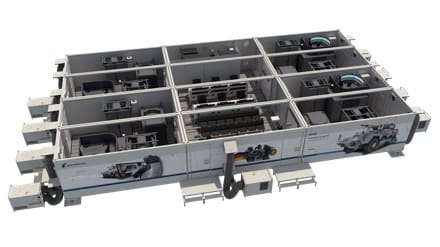
Under a new collaboration with an experienced and established manufacturer, production of European-made counter-UAS systems is now underway, with delivery scheduled for mid-2026. The contract manufacturer will carry out full turnkey assembly and component manufacturing, including PCB assembly, precision machining, cable and wire harness assembly, and associated assembly and testing labor. As part of this collaboration, DroneShield has established and will continue to grow a primarily EU-based supply chain, making this the Company’s only production line currently outside of Australia.

DroneShield’s European manufacturing footprint positions the Company more competitively for EU procurement opportunities, which increasingly prioritizes sovereign capability, regional production, and resilient supply chains, ensuring DroneShield can meet these expectations while delivering at scale and with reduced lead times.

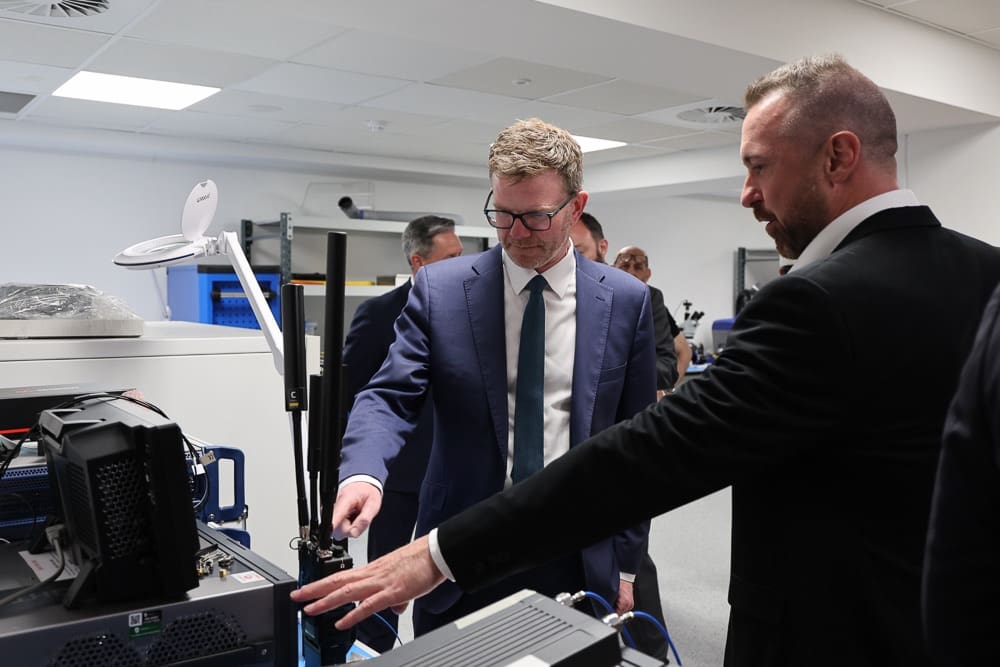
Image: DroneShield have established a European production line

Oleg Vornik, Chief Executive of DroneShield said, “Europe is undergoing a profound shift in counter-UAS preparedness. By establishing dedicated manufacturing in the EU, DroneShield is contributing to Europe’s sovereign capability while continuing to deliver rapidly and reliably for our European customers. The ReArm Europe Plan / Readiness 2030 initiative has highlighted the importance of localized, scalable production, and this new production line positions us to meet that demand.”

The establishment of counter-UAS production in Europe forms part of DroneShield’s global manufacturing expansion, which is planned to grow the Company’s combined total annual production capacity from approximately $500 million in 2025 to an expected $2.4 billion by the end of 2026. This uplift supports rising operational demand across Europe, and reinforces DroneShield’s commitment to strengthening industrial bases and diversifying global supply chains, as militaries, law enforcement and critical infrastructure operators expand and modernize counter-UAS capabilities.

UK Ministry of Defence Selects Persistent Systems’ Wave Relay MANET for Project CAIN Modernization

Thursday, March 12th, 2026

Multi-million dollar contract signals the growing proliferation of MPU5 devices deployed across world

NEW YORK, New York — March 10, 2026 — Persistent Systems, LLC (“Persistent”), a global leader in secure mobile ad hoc networking (MANET) technology, announced that the UK Ministry of Defence has selected the Wave Relay® MANET, including the MPU5 tactical communication system, in support of Project CAIN, a key modernization effort for the British Army.

Awarded through Persistent’s UK partner and authorized distributor Steatite Ltd., the program will deliver MPU5 radios, Rugged Display & Controllers (RDCs), and associated Dismount Kit equipment to the 16 Air Assault Brigade Combat Team, the UK’s rapidly deployable, first-to-fight airborne formation.

As part of this effort, 16 Air Assault will also employ Cloud Relay™, Persistent’s global networking technology, enabling soldiers to maintain uninterrupted communications, even when transitioning between SATCOM, LTE, 5G, or other transport layers. This ensures resilient connectivity in complex, contested, and highly mobile environments.

“By deploying the MPU5 and Cloud Relay™, the 16 Air Assault Brigade Combat Team will gain a significant advantage in decision-making and coordination across dispersed, multi-domain operations,” said Eve Shapiro, Senior Director of Sales and Business Development at Persistent Systems. “We’ve seen exceptional results with the UK Royal Marines, and we expect similar success as more organizations recognize the operational impact of a resilient, edge-to-cloud network.”

This selection builds on the UK’s ongoing modernization progress. In 2024, the UK Royal Marines fielded more than 2,000 MPU5s as part of their transformation into a more agile, technology-enabled Commando Force. The 16 Air Assault effort marks another step in strengthening the UK’s ability to operate with speed, precision, and interoperability alongside allies.

Persistent Systems continues to support modernization initiatives worldwide, including programs within the U.S. Army’s Next Generation Command and Control (NGC2) efforts, maritime security initiatives across the Baltic region, and Indo-Pacific partner networks. The increased adoption of the MPU5 across Europe, including deployments in the Baltics, Spain, France, and the UK, reflects the growing demand for scalable, resilient MANET capabilities.

The UK MoD’s decision underscores a broader trend of successful modernizations of forces, which require secure, adaptable, and globally connected networks to maintain situational awareness and operational advantage in dynamic, contested environments.

Isembard Raises $50m Series A to Open 25 AI-Powered Factories Serving Aerospace and Defense

Tuesday, March 10th, 2026
  • Company manufactures components for aerospace, defense and robotics in factories powered by MasonOS, its proprietary agentic AI platform
  • Round led by Union Square Ventures
  • Supports 2026 growth from 6 to 25 factories in the United States, United Kingdom, Germany, France and Ukraine

Dallas and London | March 9th, 2026 — Isembard today announces that it has raised $50 million in Series A funding, less than 12 months after its Seed round. The capital will accelerate the company’s plan to open 25 factories by the end of 2026, expand its engineering teams while launching into Germany, France and Ukraine.

The round was led by Union Square Ventures, an early backer of Twitter, Coinbase, Etsy, Abridge and Twilio. New investors Tamarack Global and IQ Capital joined the round alongside existing investors Notion Capital and CIV. Angel investors include Alex Bouaziz (Founder and CEO of Deel), Andrei Danescu (Founder and CEO of Dexory Robotics) and Matt Briers (former CFO of Wise).

Component manufacturing is a market worth $1.8 trillion a year. Yet small businesses account for 95% of production and they are rapidly disappearing. The average owner is over 65 years old and 40% plan to retire within five years. This erosion of industrial capacity is colliding with surging demand from aerospace, defense, energy and robotics companies given re-shoring and spending increases on critical industries. Without decisive action, the widening gap between supply of factories and demand from customers risks hollowing out the industrial base of Europe and North America.

Isembard manufactures high-precision components for many of the world’s most demanding customers. The company operates its own and franchisee factories, differentiated by its proprietary software and AI system, MasonOS, which runs them. MasonOS integrates quoting, scheduling, supply chain, manufacturing, quality control and delivery into a single intelligent agentic operating layer, automating and continuously optimizing factory performance.

The company identifies exceptional operators – from manufacturing, the military, franchising and the wider economy – and equips them with its technology, brand, engineering standards and access to customer demand. Franchisees can launch new Isembard factories from the ground up or convert existing businesses into an Isembard factory. This approach enables rapid expansion of high-quality manufacturing capacity while preserving local ownership and strengthening sovereign industrial capability across the United Kingdom, United States and Europe.

Alexander Fitzgerald, Founder and CEO of Isembard, said

“Manufacturing is the origin of our security, prosperity and sense of purpose as nations. This Series A enables us to open more factories, invest in MasonOS, support exceptional franchisees and recruit the best engineers across Europe and the United States. Our mission is to forge industrial acceleration.”

Rebecca Kaden, Managing Partner at Union Square Ventures, said:
“Isembard is redefining the process of owning and running a factory. By embedding deep operational expertise into an agentic OS, MasonOS lowers the barrier to operating high-performance manufacturing businesses and enables a networked, capital-efficient path to scale. At a moment when demand for advanced manufacturing is accelerating and interest in SMB ownership is rising, Isembard brings both forces together. We’re excited to partner with Alexander and his team as they expand access to factory ownership and rebuild industrial capacity across the West.”

Chemring plc Appoints Baroness Kate Rock as an Independent Non-Executive Director

Saturday, March 7th, 2026

Chemring today announces the appointment of Baroness Kate Rock as an independent non-executive director. Upon joining the Board, Kate will become the Senior Independent Director and a member of the Audit, Nomination and Remuneration Committees. She will join the Board with effect from 1 April 2026.

Kate is an experienced non?executive director with a board portfolio covering technology, engineering, construction and infrastructure. Underpinned by a strong background in corporate communications and strategy, she combines deep engineering sector knowledge with a strategic understanding of how innovation and technology enhance productivity, together with wide-ranging experience working across government.

On 1 December 2022 Kate was appointed Non-Executive Chair of the UK infrastructure solutions company Costain Group PLC. Since that time Costain has seen a near five-fold increase in its share price and has re-entered the FTSE 250 index. In September 2018 she joined the Board of FTSE 250 Keller Group plc (the world’s largest geotechnical specialist contractor) and is now the Senior Independent Director, serving on the Audit & Risk, Nomination & Governance, Remuneration and Sustainability Committees.

Having been appointed a Life Peer in 2015, she sat on the House of Lords Science and Technology Select Committee until January 2023. She was also a member of the House of Lords Select Committee on Artificial Intelligence from 2017 to 2018 and was Chair of the House of Lords Select Committee on Autism between January and November 2025.

Until January 2023, Kate was a Board member of the world’s first Centre for Data Ethics and Innovation and was, until November 2017, a non-executive director of Imagination Technologies plc, the former global FTSE 250 high technology company.

Tony Wood, Chairman of Chemring, commented:

“Following an extensive selection process, I am delighted to welcome Baroness Rock to Chemring. Kate brings considerable experience within the fields of technology, infrastructure and innovation, as well as government and strategic communications. Her strong understanding of the construction and infrastructure sector will also be of value to the Group as we further progress our organic growth strategy and investment in increased capacity. I am certain that she will make a strong contribution to the continued development and performance of the Group.”

There are no further disclosures required to be made in accordance with UKLR 6.4.8 of the FCA’s UK Listing Rules sourcebook.