Phantom Lights

Archive for the ‘International’ Category

4GD to Triple Training Capacity with Two New Urban Warfare Training Facilities

Thursday, July 10th, 2025

London, 9th July 2025 – Military training technology specialists 4GD has significantly expanded its operations to two new urban warfare training facilities. The new Garrison Urban Skills Facilities (GUSFs) are based at Catterick Training Area in North Yorkshire and Rollestone near Salisbury. With an existing 4GD SmartFacility in operation with 16 Air Assault Brigade in Colchester, 4GD’s military training sites now represent a broad geographical footprint and can be utilised by British Army units across the UK.


In close collaboration with the Defence Infrastructure Organisation (DIO), Landmarc Support Services (Landmarc) and the Land Warfare Centre, 4GD provide the technological backbone to the facilities.

4GD’s input into these facilities represents the next generation in urban warfare training. 4GD has installed its trademark SimWall and 4GAV systems across all Urban Fighting Skills Facilities. SimWall comprises a series of reconfigurable and adaptable panels designed to provide a greater variety of training scenarios. 4GAV has then enhanced the facility through the use of light, smoke and sound effects as well as detailed ‘after-action’ reviews. 4GD’s use of advanced technology serves to enhance the learning experience for the soldier. Facilities are ready for upgrading to integrate 4GD’s flagship robotic SimStriker, as already in use in the Urban Training Facility at Colchester.

Both GUSF facilities have recently become operational. These urban training environments, being used by the British Army, have been designed with unprecedented levels of realism, complexity and density that replicate the range of urban environments likely to be encountered by military personnel deploying on operations. The three sites (Catterick, Rollestone and Colchester) alongside 4GD’s significant upgrading of Copehill Down Village facilities can all connect together to form a larger training area. This provides unrivalled training opportunities across four sites. 

Through these facilities, 4GD and its partners have significantly enhanced the British Army’s capacity to conduct realistic and relevant urban warfare training. These facilities underscore a shared commitment to equipping military personnel with the skills and experience they need to operate effectively.

Rob Taylor, 4GD Founder and Director, said:

“4GD’s expanded footprint enables British Army units across the UK to access high-fidelity, urban warfare training environments designed to reflect the diverse, high-stakes scenarios soldiers are likely to encounter in real-world deployments.

Increasing the training capacity of facilities with 4GD technology allows us to collect much more real-world data on how soldiers train in urban facilities. This enables us to understand the needs of the warfighter and stay ahead of the curve when developing future products.”

Lt Col Gord Robinson (RANGERS), SO1 Optimisation, Land Warfare Centre commented:

“These state-of-the-art facilities have been extremely well received by the soldiers who appreciate how easily the internal space can be reconfigured to provide a non-repetitive and altering urban training scenario. It really is a long overdue enhancement to the Defence Training Estate which fully enables the achievement of platoon level urban training objectives in a controlled realistic urban environment.”

Robotican Announces Delivery of Dozens of ROOSTER Hybrid Drone Systems to European Special Forces

Wednesday, July 9th, 2025

Combat-proven ROOSTER system recently secured official NATO registration, reinforcing its operational credibility and alignment with allied defense standards.

Omer, Israel – 8 July 2025 – Robotican, a leading Israeli pioneer in the development of autonomous robotic and drone technologies, proudly announces the successful delivery of dozens of ROOSTER hybrid drone systems to European special operations forces, intervention units, and infantry teams.

These deliveries represent a significant operational milestone for Robotican’s flagship system. Building on this momentum, the ROOSTER has recently secured official NATO registration, reinforcing its status as a trusted solution that meets the requirements and standards of NATO military forces.

The ROOSTER is a compact, hybrid tactical drone that merges aerial agility with robotic ground mobility, making it uniquely suited for indoor, subterranean, and GPS-denied environments. Its ability to rapidly shift between flying and rolling allows for energy-efficient operation in complex and confined spaces. The integrated protective cage enables a unique robotic rolling capability, allowing the ROOSTER to maneuver across challenging terrains and access confined areas that are inaccessible to conventional drones. The system is capable of extended missions, with a typical 90 minutes of overall active operation and up to 5 hours in standby mode. It features robust MESH communication that enables up to three ROOSTER units to work together as a team—even in environments with no external communication. The Rooster is equipped with a built-in day/night IR sensitivity camera and visible/IR illuminators.

Designed for flexibility, the ROOSTER supports a range of swappable sensor payloads, including thermal imager, oxygen and radiation detectors. These capabilities make it ideal for a wide range of missions, including tactical reconnaissance, urban search & rescue, hazardous materials response and industrial safety inspections. Lightweight, rugged, and operable by a single user, the system can be deployed quickly from a tactical backpack, offering forces immediate situational awareness with minimal exposure.

“The ROOSTER was developed as a strategic response to the growing need for precise intelligence in challenging environments where access is limited and situational awareness is critical” said Hagai Balshai, CEO of Robotican. “By enabling forces to gather critical data before operational breach, it significantly reduces risk and enhances mission planning. Its adoption by the Israeli Ministry of Defense and Home Front Command, alongside elite European & US

Special Operation Forcess, reflects its field-proven value. NATO registration further positions the ROOSTER as a trusted asset for allied operations in the modern battlespace.”

Rheinmetall Wins Major Order for Artillery Ammunition – Order Value in the Hundreds of Millions of Euros

Tuesday, July 8th, 2025

A European NATO country has signed a multi-year contract with Rheinmetall’s subsidiary Rheinmetall Denel Munition (RF) Pty Ltd (RDM) in South Africa for the delivery of 155 mm projectiles from the Assegai family and bimodular propelling charges. The order was booked in the second quarter of 2025 and is worth several hundred million euros. Deliveries will begin in 2025 and conclude with final delivery in 2027. The order is the largest in the history of Rheinmetall Denel Munition.

The Rheinmetall Assegai 155mm projectiles and bi-modular propelling charges will be integrated into the customer’s artillery weapon systems, delivering range capability of more than 40,000m with optimal performance in the target area.

“The Rheinmetall Assegai user group is growing rapidly across the globe, and we are delighted that another customer has now also selected Rheinmetall Assegai to be delivered fast and in volume.” says Dr. Frank Dirksen, CEO of Rheinmetall Denel Munition.

Capacity

Rheinmetall continue to invest heavily into capacity enhancement of existing facilities and establishing new manufacturing facilities which provide the ability to serve the growing demand for modern 155mm projectiles and charges. Rheinmetall is one of the world’s leading manufacturers of large-calibre ammunition. The Düsseldorf-based Technology Corporation Rheinmetall has been increasing its production capacity since 2022, and aims at producing around 1.5 million 155 mm artillery shells per year by 2027.

Technology

The Assegai suite of projectiles and Charges are qualified and in-service with multiple user nations, providing interoperability and a fast-track integration into service.

The Assegai projectile suite consist of ballistically matched High Explosive, Illumination, Infrared Illumination, Smoke, Pre-formed Fragmented (PFF) and Rocket-Assisted (V-LAP) projectiles.

South African Economic Benefit

“Rheinmetall Denel Munition is a proud member of the South African defence industry, employing more than 2,500 workers across South Africa. Major multi-year contracts like this provide us the ability to continue on our growth path which contribute directly to the South African economy.” says Dr. Dirksen.

About Rheinmetall Denel Munition (RDM)

Rheinmetall Denel Munition (Pty) Ltd is jointly owned by Rheinmetall Waffe Munition GmbH (51 %) of Germany and Denel (Pty) Ltd. South Africa.

Rheinmetall Denel Munition (Pty) Ltd specialises in the development, design and manufacture of large- and medium-calibre ammunition families and is a world leader in the field of artillery, mortar and infantry systems as well as plant engineering.

Rheinmetall Denel Munition (Pty) Ltd invest and support more than 1,500 domestic suppliers including SMME’s which benefit more than 250,000 South Africans.

What is a Reconnaissance Operations Commander?

Saturday, July 5th, 2025

This video by 2 Lt Mathieu Sly discusses the Reconnaissance Operations Commander course, one of the most challenging and rewarding training programs in the Canadian Army.

US, Sweden Partner for CSAR Training

Saturday, July 5th, 2025

LULEA, Sweden (AFNS) —  

In the challenging terrain of northern Sweden, the 57th Rescue Squadron based out of Aviano, Italy and Swedish air force rangers based out of Ronneby, Sweden, collaborated to accomplish high-stakes personnel recovery training from March 30 through June 14. What began as planned participation in the Arctic Challenge Exercise transformed into a focused bilateral mission in one of Europe’s most strategically vital regions.

“This exercise focuses on traditional personnel recovery—retrieving simulated downed pilots or isolated personnel from contested areas and safely reintegrating them into friendly forces,” explained U.S. Air Force Staff Sgt. Drew Guerra, 57th RQS Tactical Air Control Party joint terminal attack controller.

The 57th RQS sent a small, specialized team composed of TACP, intelligence, communications and survival, evasion, resistance and escape specialists to integrate with the Swedish air force rangers. Together, they executed live, full-mission profiles to develop and test tactics, techniques and procedures for the ever-evolving battlefield in Unmanned Aircraft Systems, counter-UAS and infiltration methods for traditional and non-traditional personnel recovery.

“We like to have [the 57th RQS] join us on as many occasions as possible, and vice versa,” said Master Sgt. Rasmus Antonsson, Swedish air force ranger troop chief. “We aim to train and compete with the best, and to us, that is the U.S. Air Force.”

The unforgiving northern terrain of swamps, hills and dense woods presents unique operational challenges. Helicopter teams must adapt to limited landing zones while ground crews navigate harsh conditions to move patients swiftly and safely.

For the 57th RQS, this environment is unfamiliar and the experience is invaluable. Training in Sweden offers critical exposure to the operational demands of northern Europe and deepens integration with Swedish partners.

“We have a great history of integration with Sweden and are always grateful for the opportunity to work with our northern allies,” said U.S. Air Force Tech. Sgt. Matthew Doyle, 57th RQS SERE specialist. “Their constant professionalism and willingness to exchange lessons learned is a testament to our seamless partnership.”

Located near the Arctic Circle, northern Sweden offers a critical staging ground for allied operations. In the event of conflict, pre-positioned aircraft and recovery forces in the region could launch missions across the Baltic Sea faster and with greater cohesion. Thanks to this training, U.S. and Swedish teams are laying the groundwork for an integrated, ready and resilient task force in the High North.

By SSgt Brooke Rogers, 31st Fighter Wing Public Affairs

Saab Receives Order for Ground-Based Air Defence from Sweden

Thursday, July 3rd, 2025

Saab has received an order from the Swedish Defence Materiel Administration (FMV) for the mobile short-range air defence solution RBS 70 NG with missiles. The order value is approximately SEK 1.5 billion and deliveries are scheduled 2027-2028. This order was booked in Q2 2025.

The order also includes equipment which will enable the Swedish Armed Forces to integrate the system on a Mobile Short-Range Air Defence (MSHORAD) solution in the future. 

“We are continuously contributing to strengthening the capabilities of the Swedish Armed Forces and Saab’s air defence systems play a vital role in keeping Sweden’s skies secure,” says Görgen Johansson, head of Saab’s business area Dynamics.

Saab’s MSHORAD system with RBS 70 NG features an automatic target tracker and a built-in night sight and provides the user with capability to defeat threats including aircraft, drones and missiles from distances of up to nine kilometers.

MARTE – Main ARmoured Tank of Europe

Thursday, July 3rd, 2025

Key Facts:

MARTE ARGE leading a consortium of 51 entities from 11 EU Member States plus Norway

MARTE project awarded by European Commission with a grant of approximately €20 Mio. from the European Defence Fund (EDF)

Comprehensive Consortium to design the next generation, future Main Battle Tank system

Grant Agreement signed and Kick-Off-Meeting conducted: Project successfully launched

The European defense sector takes a significant step forward with the launch of the Project MARTE (acronym for Main ARmoured Tank of Europe), a cutting-edge and highly promising initiative designed to strengthen Europe’s technological autonomy by addressing the crucial asset of a Main Battle Tank (MBT) System.

Coordinated and led by MARTE ARGE GbR, a joint venture company between KNDS Deutschland GmbH & Co.KG and Rheinmetall Landsysteme GmbH, the MARTE project brings together complementary industrial partners including leading, large entities as well as MidCaps, research institutions and innovative Small and Medium Enitities (SMEs). The ambitious proposal prepared and submitted to the European Commission has been awarded with a Grant from the European Defence Fund of approximately €20 Mio. In addition to the funding granted by the European Commission, the MARTE consortium receives strong support from in total 11 Ministries of Defense (MoDs) as potential future customers. Led by the German MoD, the MoDs from the following Member States are contributing: Belgium, Spain, Estonia, Finland, Greece, Italy, Netherlands, Norway, Romania and Sweden. At a time of growing geopolitical uncertainty, this initiative expresses the desire for greater strategic autonomy in defense and security matters and thus MARTE represents a strategic investment in Europe’s defense capabilities.

MARTE aims to conduct study and design activities to create a future MBT-System, that adequately meets current and future threats, and the harmonized needs of the European Member States involved. By integrating innovative and disruptive technologies a resilient defense system is to be designed, tailored to the evolving challenges of modern warfare and considering lessons learned from current conflicts.

To achieve this ambitious goal, a consortium composed of 51 legal entities from 12 European Countries (11 Member States plus Norway) has agreed to contribute their respective expertise and gained experiences in the best possible way. MARTE is fostering technological innovation and leveraging cross-border collaboration.

In its role as coordinator, MARTE ARGE takes over the project coordination and manages the project with support of the consulting company Erdyn and a core team of five top-tier defense companies: KNDS Deutschland GmbH & Co.KG and Rheinmetall Landsysteme GmbH (both Germany), Leonardo SPA (Italy), Indra Sistemas SA (Spain) and SAAB AB (Sweden).

Building on their pertinent and significant know-how and know-why in the field of Main Battle Tanks, each of them manages one of the five technical Work Packages in which the project’s scope has been clustered – with all further companies (see depiction below) contributing with their relevant technical knowledge.

With MARTE ARGE and the European Commission signing the Grant Agreement, the MARTE project started on 01st of December 2024 officially. By conducting the Kick-Off Meeting on 5th and 6th of December 2024 in Stockholm, MARTE ARGE as project coordinator brought together both key stakeholders as well as all consortium partners and launched the project with great success.

DroneShield Receives $9.7m Latin American Contract

Wednesday, July 2nd, 2025

·        A $9.7 million package of three standalone contracts for a defence end customer in a Latin American (LATAM) country

·        Delivery and payment due Q3-Q4 2025

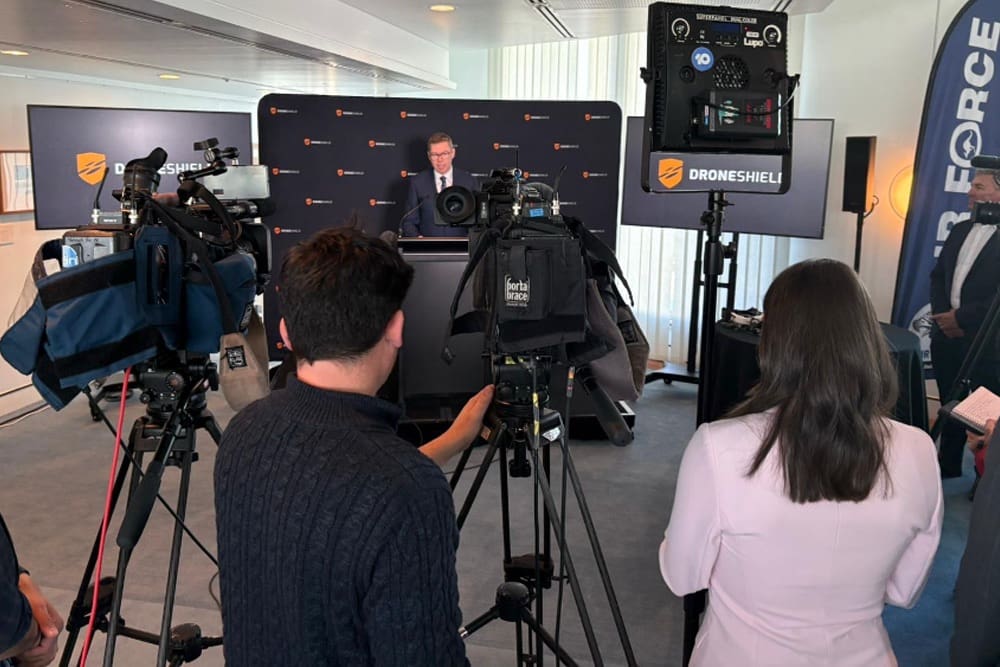
DroneShield Limited (ASX:DRO) (DroneShield or the Company) is pleased to announce it has received a package of three standalone contracts for its handheld and on-the-move counter-drone systems. The contract sum is $9.7 million, with DroneShield’s privately owned in-country reseller that is contractually required to distribute the products to a defence end customer in a LATAM country. DroneShield expects to deliver all equipment throughout Q3 and Q4 2025, with cash payment expected in Q3 and Q4 2025. No additional material conditions need to be satisfied.

DroneShield has previously received two standalone contracts from this reseller for this defence customer in December 2024 and January 2025 totalling approximately $10.8 million, with all imports, deliveries, and payments handled on-time and in a highly professional manner. There is no obligation for any additional contracts from this reseller or the customer.

Pictured: DroneShield DroneSentry-X Mk2 counter-drone system

Oleg Vornik, DroneShield CEO, commented: “In 2025, DroneShield has successfully delivered products, capability, and training into the Latin American market. With a substantial pipeline, diversified over multiple countries and customers, DroneShield is anticipating further developments in 2025 in this region.”