TYR Tactical

Archive for the ‘ISR’ Category

Anquan Launches CAST – Cyber Attack Survival Training – an Immersive Training Programme for Executive Teams

Monday, November 6th, 2017

LONDON – Nov. 3, 2017 – After three years of development Anquan has launched the CAST (Cyber Attack Survival Training) platform. CAST provides a new concept and approach to address the critical lack of cyber awareness at an executive level within organisations. It exploits immersive educational, exercise and planning techniques and each simulation is delivered by a team of subject matter experts drawn from across government and the commercial sector.

The cyber threat to companies is real, increasing and regularly overlooked – CAST exercises strip away the dry technical briefings and delivers fast-paced real-time crises, pushing teams to the very limits of their abilities and delivers critical awareness and understanding. At its core, CAST is an experience, which elicits strong reactions from participants.

“For over three years Anquan has been developing these immersive cyber crisis scenarios – scenarios that allow people to experience, learn and assess how they might react in the face of a serious cyber event” says Will Burton, Senior Game Designer at Anquan. “For most people cyber is dull, not on their radar. CAST is exciting, fun and a little scary – thats how you get people to listen and learn”.

Every company, school, department and organisation runs fire drills, but almost none run cyber drills. How would you respond to a massive data breach, a leak of sensitive information or cyber ransom attack? What procedures, do you have in place? Which members of the team do you involve? And what is your internal and external communications strategy? These are the critical questions that a CAST simulation makes clients confront.

With the CAST platform, Anquan has found a new way to pass along the critical cyber awareness messages that are needed across all business sectors.

Reminder – First Annual ADS Inc UAS + Counter UAS Industry Day Is Next Week

Friday, November 3rd, 2017

ADS Inc is presenting their First Annual UAS + Counter UAS Industry Day on November 7th & 8th at the Military Aviation Museum in Va Beach.

9BC94C45-343C-4893-9B68-9EA43A2FABBB

This is a very interesting topic for me. New capabilities roll out regularly for Unmanned Aerial Systems. But maybe even more important, drones have become the number one asymmetric threat due to their wide proliferation. Their payloads increase while their cost goes down making them a solution of choice for adversaries seeking low-cost ISR and precision weapons. Developing an adaptable strategy to counter them is critical.

During the two-day event, vendors will present eight, one-hour sessions to educate attendees on their technologies.

This event is not open to the public.

Hope to see you there. To sign up and to review the daily schedule, visit adsinc.com/event/drone-day-2017.

AeroVironment Enhances Its Family of Small Unmanned Aircraft Systems with M1/M2/M5 Compatible Digital Data Link (DDL) Products

Tuesday, September 19th, 2017

QUANTICO, VA at Modern Day Marine, Sept. 19, 2017 – AeroVironment, Inc. (NASDAQ: AVAV), a global leader in unmanned aircraft systems (UAS) for both military and commercial applications, today announced that it has delivered M1/M2/M5-compatible Raven® and Puma™ AE unmanned aircraft systems (UAS) to two DoD customers, with more orders and deliveries scheduled. In addition, the company will begin taking orders in December 2017 for M1/M2/M5-configured Wasp® AE micro air vehicles (MAV) for delivery in spring 2018.

“Integrating the new M1/M2/M5 radio frequencies into our family of small UAS gives our customers the ability to seamlessly and securely conform to the Department of Defense‘s new frequency spectrum allocation and proceed with certainty,” said David Sharpin, vice president of AeroVironment’s Tactical UAS Business Unit. “By combining all three frequency bands in the same transceiver module, we’ve made it easy for users to select the frequency band associated with the part of the world in which they are operating without having to swap any hardware.”

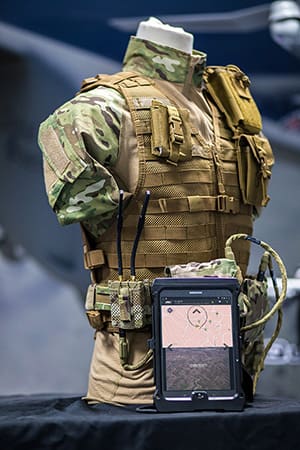
AeroVironment today also unveiled its new Pocket DDL™ AE, a rugged, all- environment, next generation, secure digital video and data receiver that also integrates the new M1/M2/M5 radio frequency spectrum. The all-environment design of AeroVironment’s new Pocket DDL AE makes it significantly more rugged than its predecessor by offering a fully waterproof package (immersible to three feet) that supports tactical operations in a wide range of environmental conditions and difficult urban terrain.

IMG_4240

Designed for simplicity and ease of use, the Pocket DDL AE facilitates rapid and secure access to a small UAS Digital Data Link (DDL) network. Each sleek unit has no exterior buttons or displays and is completely controlled through an App. Pocket DDL AE has a standard Glenair® Mighty-Mouse connector, making it compatible with the Army‘s Net Warrior system, so dedicated cables for Pocket DDL are not necessary. It can operate from any power supply, providing between 5 and 32 volts DC.

Pocket DDL AE implements an open-systems architecture, using a USB interface and XML messaging for control of the radio functions. This enables apps designed for special purposes, such as tactical operations, search and rescue, asset tracking, long- range communications, mission command, and targeting to use Pocket DDL AE to employ small UAS to help perform their tasks more effectively.

IMG_4241

“Combined with the M1/M2/M5 upgrade to our Pocket DDL AE, this provides greatly enhanced capability across our entire family of small UAS product line for improved tactical operations,” Sharpin said. “This example demonstrates our ongoing commitment to upgrade our Family of Systems products and provide new capabilities to our existing and new customers around the world.”

AeroVironment will announce additional upgrades to its market-leading Family of Unmanned Aircraft Systems during the Association of the Army’s Annual Meeting next month.

www.avinc.com

IPS & REI Exhibiting Full Range of Electronic Detection Equipment at DSEI 17

Thursday, August 31st, 2017

IPS (International Procurement Services) & REI (Research Electronics Internaitonal) will be exhibiting their full range of electronic detection equipment at DSEI ExCel London, 12-15 September 2017

Among the range on show, will be the newly launched ORION 900 HX and ORION HX Deluxe Non-Linear Junction Detectors and the new TALAN 3 Telephone and Line Analyzer.

The new ORION 900 HX NLJD uses lower frequency to detect electronic semi-conductor components through dense materials such as bricks, concrete and soil. The longer 900 MHz wavelength enables it to detect older, less refined circuitry, to detect and locate hidden cameras, microphones, and other electronic devices regardless of whether the surveillance device is radiating, hard wired, or turned off.

Whereas the ORION 2.4 HX NLJD has a shorter wavelength of 2.4GHz, is better at detecting modern, surface-mounted circuitry and electronic semi-conductor components within normal office environments.

The ORION HX Deluxe NLJD has interchangeable 2.4GHz / 900 MHz antenna heads which are easily exchanged. The touch screen controller, automatically recognises which antenna is being used and displays the corresponding data. The Deluxe sweeps both small, modern circuitry in office environments, and older, less refined circuitry through dense materials.

The new TALAN 3.0 Telephone and Line Analyzer has enhanced VoIP traffic analysis on phones and networks, patent pending FFT (Fast Fourier Transform) algorithm for visual display of VoIP traffic, earth/ground testing for modified connections to extraneous wiring and an advanced input panel to accept and test shielded ethernet cables.

The TALAN 3.0 analyses digital, analogue and VoIP phone systems and wiring for faults, anomalies and security risks using a suite of telephone tests including an automatic switching matrix. By capturing and analysing the network stream for fast identification of unauthorised VoIP traffic it can quickly detect if a VoIP phone system is passing data packets even when the phone is not in use.

The easy-to-use interface allows users to visually observe patterns of consistent, repetitive traffic. Common VoIP services will often display a unique set of characteristics that can later be used to visually identify similar sets of traffic. Extensive, advanced filtering makes it easier to locate and identify suspicious packet information.

Stand N5–334

www.intpro.co.uk

Army bans use of a COTS UAS system

Saturday, August 5th, 2017

Urgent operational usage of commercial electronic equipment is nothing new.  Early in the GWOT, FRS “walkie talkie” equipment was frequently purchased by individual troops or with unit funds to address a shortage of comms at the squad level.  Later, theater orders were issued prohibiting their usage due to grievous OPSEC/COMSEC issues and this shortfall was addressed with TPE (theater provided equipment) issue of ICOM and other commercial radio systems.

In a similar vein,  Army organizations have procuring  commercial hobbyist UAV systems to provide situational awareness and ISR capabilities “on the cheap.”   However, such systems introduce a multitude of operational and cyber vulnerabilities.   For the most common systems made by DJI, telemetry, audio, video, and locational data  is sent back by default to the Chinese manufacturer.

On 2 August, the US Army prohibited the use of DJI drones:

DJI-no-fly-army


DEPARTMENT OF THE ARMY

OFFICE OF THE DEPUTY CHIEF OF STAFF, G-3/5/7

400 ARMY PENTAGON

WASHINGTON, DC 20310-0400

DAMO-AV

MEMORANDUM FOR RECORD

2 August 2017

SUBJECT: Discontinue Use of Dajiang Innovation (DJI) Corporation Unmmaned Aircraft Systems

1. References:

a. Army Research Laboratory (ARL) report, “DJI UAS Technology Threat and User Vulnerabilities,” dated 25 May 2017 (Classified).

b. Navy memorandum, “Operational Risks with Regards to DJI Family of Products,” dated 24 May 2017.

2. Background: DJI Unmanned Aircraft Systems (UAS) products are the most widely used non-program of record commercial off-the-shelf UAS employed by the Army. The Army Aviation Engineering Directorate has issued over 300 separate Airworthiness Releases for DJI products in support of multiple organizations with a variety of mission sets. Due to increased awareness of cyber vulnerabilities associated with DJI products, it is directed that the U.S. Army halt use of all DJI products. This guidance applies to all DJI UAS and any system that employs DJI electrical components or software including, but not limited to, flight computers, cameras, radios, batteries, speed controllers, GPS units, handheld control stations, or devices with DJI software applications installed.

3. Direction: Cease all use, uninstall all DJI applications, remove all batteries/storage media from devices, and secure equipment for follow on direction.

4. Point of Contact: Headquarters, Department of the Army G-3/5/7 Aviation Directorate, 703-693-3552

JOSEPH ANDERSON
Lieutenant General, GS
Deputy Chief of Staff, G-3/5/7

Exploitation of data collected by these drones can provide an adversary with a inductive picture of friendly force operations, locations, and tempo.  Much like watching surges in pizza deliveries to headquarters buildings at night, an adversary can infer forward operations by spikes in data traffic.

While the technical specifics are beyond the scope and span of SSD, this decision is still quite relevant to our readership.

For further information, check out this article from our peers at SUASnews.

USSOCOM Announces Joint Threat Warning System Industry Day

Wednesday, June 28th, 2017

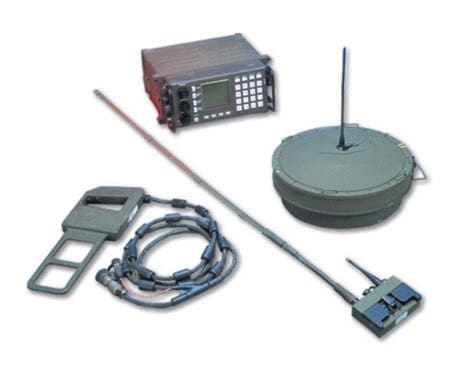
Joint Threat Warning System is the SIGINT Collection architecture for USSOCOM.  The current manpack version is the AN/PRD-13(V)2.  


While I used an early version of this system in Haiti over 20 years ago, it has come a long way from the AN/TRQ-30 DF loops first fielded to 3rd Group in 1990. They were the height of 1950s technology and the receiver used like 30 D cell batteries. 

As communication technology evolves, so must the equipment used to collect signals. Consequently, PM-JWTS is hosting an Industry Day, 13-14 July, 2017.

The Program Manager is specifically interested in signals intelligence technologies, ideas and solutions which advance One or more of the following Key Interest Areas:

1) Unique Signals of Interest

2) Modular and scalable open architecture systems (please see additional guidance below)

3) Remote C2 and Data Viewing

Further Clarification:

Modular and Scalable Open Architecture Systems: Need to allow the operator to choose relevant SIGINT applications and tailor the system to best support individual mission requirements. JTWS is seeking potential solutions with the below criteria as initial guidance but not formal direction:

• Hardware: Provide VPX (VITA 46)/Open VPX (VITA 65) based solutions that are modular and scalable from a body-worn or small UAS form factor to a vehicle/maritime platform to an airborne chassis. Focus should be on a 3U card size in order to maximize reuse between form factors. If use of VPX standards for small form factor solutions is not possible, alternative standards-based options that do not violate the remaining guidelines should be brought forward.

• Data: VITA 49 should be implemented for the data transport layer and output data using the Tactical SIGINT Data Model (TSDM). Systems should be JICD 4.x (currently 4.2) compliant at the sensor level for reporting, tuning, and collaborative geolocation.

• GUI: Partners should deliver capabilities with the ability to conduct full command and control and visualize mission data in RaptorX.

• Software: The adoption of the OpenVPX standard reduces the need for a pure open architecture solution across the program, but systems should still seek to implement open architecture solutions on individual cards in order to combine capabilities and maximize the capacity of each card within the system. Examples include GNU Radio and REDHAWK, but could be extended to any number of current industry and government developed environment.

Remote Capabilities: This capability needs to be Beyond-Line-of-Sight (BLOS), however the program office would prefer Over-the-Horizon (OTH) with minimal latency delays.

Vendors interested in attending the Industry Day should visit www.fbo.gov.

75th Ranger Regt To Stand Up 5th Battalion

Wednesday, May 17th, 2017

On Monday, 22 May, 2017, at Fort Benning, Georgia, the 75th Ranger Regiment will stand up a fifth battalion. There haven’t been five active Ranger Battalions since World War II.

However, this battalion is a little different. It’s the Military Intelligence Bn (Provisional). The battalion’s two companies will offer expanded capability beyond the current MI Co in the Regiment’s Special Troops Bn. It’s mission is to provide multi-discipline, full-spectrum, worldwide, expeditionary, and reach back intelligence capabilities for the 75th Ranger Regiment enterprise. Furthermore, it institutionalizes and professionalizes the find, fix, finish, exploit and analyze (F3EA) targeting methodology required to counter enemy combatant forces’ tactics, techniques, and methods.

The RMIB(P) will consist of a Ranger Military Intelligence Company providing all-source analysis, GEOINT, IMINT, HUMINT, and UAS functions along with a Combat Electromagnetic Activities Capabilities (CEMA) Company which will offer EW, SIGINT, Technical Surveillance and Cyber support. Additionally, there is a Headquarters and Headquarters Detachment.

Congratulations Rangers!

AeroVironment, Developer of the Nano Hummingbird, Unveils Snipe, A New, Stealthy Nano Quadrotor UAS

Tuesday, May 9th, 2017

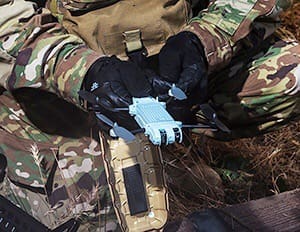
-Launched from the palm of a hand, Snipe™ is worn on operators’ clothing so it can spring into action immediately – first 20 systems delivered in April
-Difficult to detect, Snipe provides close-range intelligence, surveillance and reconnaissance (ISR)
-Simple to use and requires no assembly; operates in challenging and rugged environmental conditions
-Builds on breakthrough robotic Nano Hummingbird developed by AeroVironment for DARPA


DALLAS, at AUVSI XPONENTIAL, May 9, 2017 – AeroVironment, Inc. (NASDAQ: AVAV), a global leader in unmanned aircraft systems (UAS) for both military and commercial applications, today officially unveiled the new Snipe Nano Quad, a miniature (“Class 0”) and field-rugged unmanned aircraft system designed to support close-range intelligence, surveillance and reconnaissance missions. The first U.S. government customer delivery of 20 Snipe systems took place in April.

“Snipe’s tiny size belies its impressive capabilities,” said Kirk Flittie, AeroVironment vice president and general manager of its Unmanned Aircraft Systems business segment. “It is quick, quiet, fast, durable and packed with advanced features critical to helping our customers succeed in close-range missions.”

“Snipe enables operators to spring into action quickly,” Flittie said. “No assembly is required for the five-ounce (140-gram) nano-UAS, which is designed to be worn by its operator so it can be deployed in less than a minute.”

Equipped with electro-optical/infrared (EO/IR), low-light-capable and long-wave infrared (LWIR) sensors in an integrated tilt mechanism, Snipe can relay high-resolution images and record real-time video both day and night. In addition, Snipe’s integrated UHF radio provides for excellent non-line-of-sight operation. The software-defined radio (SDR) allows Snipe to be sold commercially.

With its quiet electric motors, flight speeds exceeding 20 mph and more than one-kilometer range, Snipe is difficult to detect in operating environments with even minimal ambient noise. Its rechargeable batteries power approximately 15 minutes of flight time. Despite its small size, the durable nano-UAS is capable of operating under challenging environmental conditions – including winds of 15+ mph with gusts up to 20 mph

“While Snipe’s stealthiness makes it ideally suited for military applications, it’s an invaluable asset for anyone needing a ‘Class 0’ UAS to support their missions,” Flittie said.

Snipe is controlled using an intuitive app on a standard, ruggedized (MIL-STD 810) touch screen controller with intuitive user interface and automated operation for ease of use. Other critical functions include Snipe’s ability to return to its operator automatically if it loses its radio link.

Snipe benefits from advances in nano unmanned technology achieved by the company in its development of the internationally recognized Nano Hummingbird. “The Nano Hummingbird, the world’s first unmanned aircraft capable of propulsion and control using two flapping wings, is an example of how our breakthrough innovation has spawned a valuable new capability in Snipe that now will help our customers proceed with certainty,” added Flittie.

AeroVironment’s Snipe Nano Quadrotor will be available to order Fall 2017. Operator training requires four hours only.

www.avinc.com