Troop Performance

Archive for the ‘Maritime’ Category

MDM 19 – Arbor Arms x Aqualung Buoyancy Compensator Shooter Kit Combination

Tuesday, September 17th, 2019

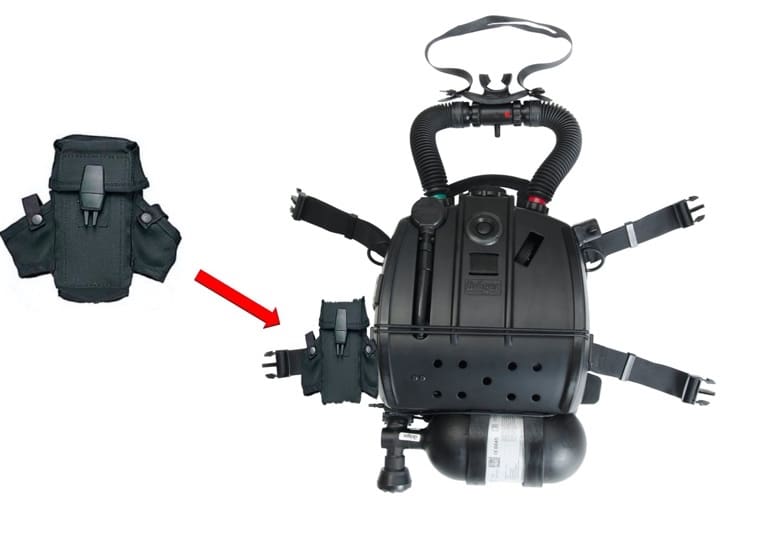
Arbor Arms is working with Aqualung to offer a low cost retrofit kit for armor carriers so that they can be used in conjunction with Aqualung Buoyancy Compensators. In this case, we see the Calypso.

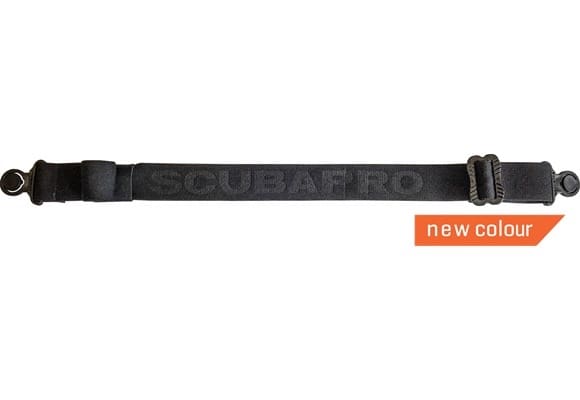
The cummerbund is elastic so it will allow a buoyancy compensator or horse collar to still inflate yet keep your gear nice and snug.

Additionally, the Aqualung weight belt is worn with ditchable weights fore and aft to keep them out of the way of holsters and magazine carriers.

arborarmsusa.com

SCUBAPRO Sunday – The SeaBees

Sunday, September 15th, 2019

On September 1, 1942, the first Seabee unit to serve in a combat area, the Sixth Naval Construction Battalion (SeaBees), arrives on Guadalcanal.

I am not going to tell the story as there is a movie (with John Wayne one of the seven he dies in) and I posting a link at the bottom of an excellent article about them. What I am going to say is SeaBees are some of the hardest working people you will ever find. I would rather have 1 SeaBee that 5 other people. They have made almost all the camps I have been in since the first gulf war in 91 thru Iraq in the 2000s and they never stop working on them to making them better. They build they fight; (they can’t read or write) (that was a joke) you tell them you need something, and they will find it or make it. Indeed some of the unsung heroes of the military.

www.seabeesmuseum.com/seabee-history

archive.org/details/FightingSeabees44


SERE: Learning to Survive at Sea

Sunday, September 15th, 2019

MOUNTAIN HOME AIR FORCE BASE, Idaho (AFNS) —

From initial training to undergoing missions, aircrew have a dangerous and rigorous job. They must know what to do while flying and how to respond in some of the scenarios they might encounter.

One of these scenarios is the risk of having to bail out over the ocean.

“From the moment they eject up until they’ve been hoisted into a recovery vehicle, their lives are at risk in the ocean,” said Staff Sgt. David Chorpenning, 366th Fighter Wing survival, evasion, resistance and escape specialist.

To develop these skills necessary to stay alive, aircrew from the 389th and 391st Fighter Squadrons attended water survival training taught by SERE specialists Chorpenning and Tech. Sgt. Timothy Emkey.

During this course, aircrew attend an hour-long classroom session where they are instructed on what to do, what gear to use and how to survive in case they may have to eject over the ocean. The course covers what to do from the initial landing in the water until they’re extracted by either another ship or an aircraft.

“F-15E Strike Eagle crew members don’t have much equipment once they eject,” Chorpenning said. “They have no food and very little water. The ability to utilize the gear they do have to get rescued quickly is a crucial skill.”

After the classroom session, the aircrew are then taken out to C.J. Strike Reservoir where they disconnect their safety harness from the parachute while being dragged by a boat. This simulates the wind drag they might experience when bailing out over water.

During the last part of the course, aircrew must inflate their life raft correctly and demonstrate how to prepare for extraction.

“The worst dangers they face are the lack of resources, both from the environment and in their kit. The only thing the ocean provides is the potential to catch food,” Chorpenning said. “There’s no shelter, water or the ability to build a fire. Without the proper equipment, a human will quickly die on the open seas.”

From classroom sessions to field training, this course ensures aircrew have the ability and skills to survive life at sea.

“Knowledge of their equipment and water survival training significantly increases a crew member’s chance of survival,” Chorpenning said. “By familiarizing them with their gear and how to make the most of their environment, SERE improves their survivability and empowers them to return with honor.”

By Airman Antwain Hanks, 366th Fighter Wing Public Affairs

DSEI 19 – Osprey Drop Dry Bag from Typhoon

Thursday, September 12th, 2019

Typhoon manufacturers drysuits, dry bags and accessories.

One of their latest products is the Osprey Dry Bag which has been built specifically for para ops. It incorporates a single pull release and this can be covered when not in use. The bag itself is made of durable trilaminate texturized polyester with stitched and double taped seams and waterproof zippers.

It also features integrated shoulder straps which can be stored behind a zippered flap.

The Osprey has a 120 liter capacity and is available in Black or Drab Green.

www.typhhon-int.co.uk

SCUBAPRO Sunday – Head and Chest Protection

Sunday, September 8th, 2019

As we are starting to get into fall and the water begins to get colder. You will have to start looking at, adding more to what you wear when you dive. One of the best ways to add warmth without adding a lot more rubber is to add a hood and a vest. The vest helps keep your chest warm, from the tie you enter the water. I like a vest because it helps with that first blast of cold water that always hits your chest. Since you lose about 75 percent of your body heat through your head even if the water is warm, you will lose heat thru it. Hoods and vest are usually made from neoprene and are designed for wearing in either warm or cold water.  Again, as with wetsuits, the thicker the hood/vest, the better it is for colder water. One of the most significant drawbacks to diving, in general, is the thinker anything is, gloves, suit, or hood the more mobility you lose. There are two types of hoods, warm and cold water.  Warm water hoods are less cumbersome and typically cover your head and neck. They can be used for warmth and to help protect your head.

Warm vs. Coldwater Hoods

When diving in cold water, a thick neoprene hood that covers your head and neck will be the most practical. The thicker the neoprene, the warmer you head will be. Coldwater dive hoods typically have a sizable bib, which can be tucked into your wetsuit at the neck opening. The bib reduces the transfer of water and keeps the diver that much warmer. The bib comes down to cover the neck and some of the chest, like a bib for kids. There is also hooded vest, and those cover the head and the chest. Cold-water hoods cover some or all of the diver’s forehead and jaw/chin areas, and it also includes a good part of the diver’s cheeks. It tries to leave as little of the diver’s face exposed to the cold water as possible — ordinary just room for the mask and the regulator.    

Warm-water dive hoods are much thinner and typically do not have large bib like cold-water hoods. Warm water hoods and vests are suitable for long-duration diving in warm water. It isn’t so thick that you overheat from the start, but with a long dive, you will start to get cold. If you are warm, you can also vent the hood/ vest, and as the dive goes on, you will be warmer. You can even sometimes start the dive without the hood, and then if you are cold, you can put it on. Hooded vests are good for that as you can just pull the hood up as you are diving.

The right fitting dive hood should not be too loose; if you’re going for a cold-water hood, it should feel snug around your cheeks and jaw and should cover most of your forehead.  Still, it should not feel too tight – if it is uncomfortable around the throat or facial area, then you’ll need to go up a size. Basically, if the hood creates discomfort along the face or neck/throat, it is too small. If water freely flows in and out of the hood, it is too big. Too loose a hood will not protect you from the elements at all, as water will be able to flow in and out freely. Layering is the key to warmth when diving.

SCUBAPRO’s line of Hoods, Vest and Hooded Vest can provide that extra layer to help keep you warmer longer when diving. The SCUBAPRO 2.5/0.5mm Unisex Hooded Vest is just what you need for a little extra warmth on colder water dives. When you are in warm water locations, add a hooded vest over a spring suit or under a Shorty or Fullsuit, you add warmth and will be able to stay in longer. The vest is easy to don and doff and is fast drying for days that have multiple dives. The vest is 2.5mm thick in the hood chest and back and 0.5mm thick on the ultra-stretch side panels.

SCUBAPRO has also updated its popular Hybrid line, which includes a thermal long sleeve top, cargo shorts, and a sleeveless hooded vest. The line also consists of a full suit that is great for long-duration warm water dives or under cammies to help keep you warm. The Hybrid Hooded Vest’s ultra-comfortable neoprene/nylon blend does a great job of protecting your torso and head, two critical areas for minimizing heat loss, providing comfort, warmth, and protection where you need it most. On the underside of the nylon panels, a micro-plush interior makes the vest warm and cozy.

This fleece fabric absorbs less water, which keeps heat against the body, increasing overall warmth. It also dries quickly. This hooded vest can be worn by itself or layered over a long-sleeve thermal rash guard to increase warmth and protection and built with a mix of quality 1.5mm X-Foam neoprene for warmth and durable nylon for stretch and comfort. Highly versatile ideal for divers, snorkelers, paddle boarders, swimmers, and anyone that needs more protection from the elements to include long boat rides. I have used pieces in this line for an Alcatraz swim(1.5mile), and it worked great.  Unique styling keeps you warm, protected, and looking good — form-fitting for that sleek, hydrodynamic look and feel.

SCUBAPRO Sunday – Landing on Mainland Japan

Sunday, September 1st, 2019

Amphibious Landings Tokyo Bay, 28 August – 2 September 1945


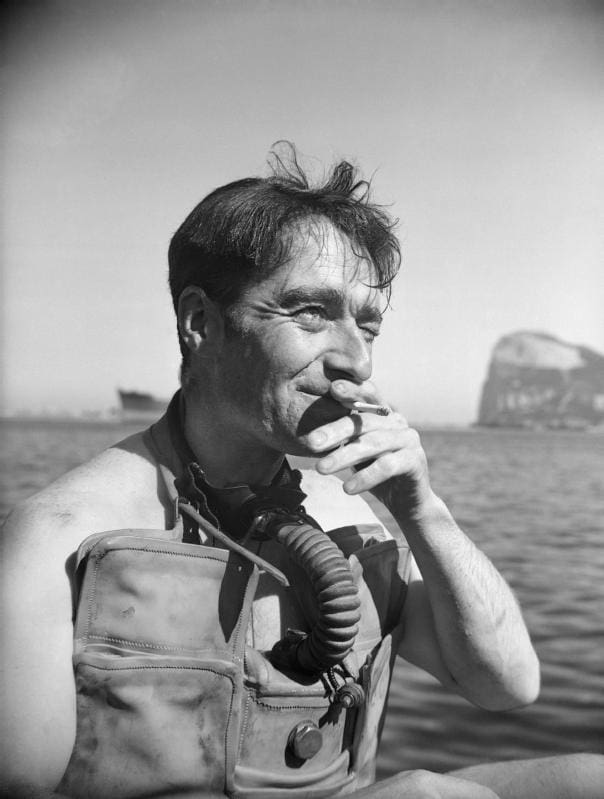
 On 20 August 1945 UDT 21 ( now SEAL Team Four) embarked onto the USS Begor from Guam. They were going to be part of the occupation force heading for Japan. On 28 Aug 1945 UDT 21 became the first U.S military unit to set foot on Japanese home soil. They were going to recon the landing beaches and ensure that that all fortifications were neutralized. When they landed, LCDR Edward P. Clayton, (back to camera) Commanding Officer UDT 21, was presented with the first sword surrendered to an American force on mainland Japanese. It was given to him by an Army Coastal Artillery Major (opposite Clayton), at Futtsu-Misaki Point, across from Yokosuka Naval Base. When word got back to macarthur that LCDR Clayton, had received what could be considered the official surrender of all troop on mainland Japan, he ordered that the sword is giving back, so the general could expect it. ( yes I am not a fan of the general)


The next day UDT 21 landed at Yokosuka Naval Base. They cleared the docks for the first U.S. warship to dock in Japan. The team remained in Tokyo Bay until 8 Sept.  Then it was tasked with locating the remaining Kamikaze, two-person submarines. With the end of the war, the navy draw-down from about 31 UDT teams to just two, one on each coast: UDT Baker and UDT Easy.

SCUBAPRO Sunday – History of Wetsuits

Sunday, August 25th, 2019

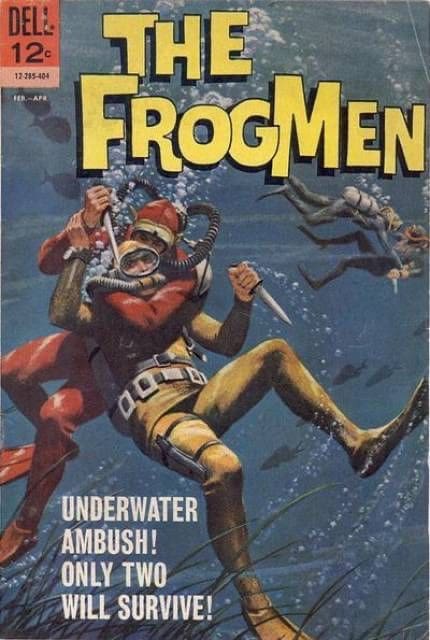
 Wetsuits go back to the commercial fishing and salvage industries of the 1910s. Before wetsuits divers used grease to help keep them warm (tuff bastards) The development of the wetsuit started as military research in the early 20th century. The first underwater suit was the Mark V suit (I know there were other types thru the ages) It allowed divers to go deeper into the ocean than ever before. It was developed for the U.S. Navy, primarily for use in deep-sea and salvage operations. Early versions of the wetsuit proved to be useful insulation garments, but with the discovery of neoprene, resulting from research throughout the Second World War, there was a big leap forward and the real turning point for the wetsuit as we know them. After World War Two, sport diving became more popular in the United States.  The popularity of movies like the “Frogmen,” (I have heard a lot of Vietnam Frogman joined after seeing the Frogman) the Cousteau book and film adaptation of “The Silent World” and the magazine “Skin Diver.”

The modern wetsuit dates back to 1951 – 1952. Hugh Bradner is mostly credited in invented it, (credited as the inventor of the contemporary wetsuit depending on who you ask) a physicist associated with the University of California, Berkeley looking to improve on the equipment used by the U.S. Navy. Early wetsuits sandwiched the relatively thin neoprene between layers of spandex or nylon. The earliest versions of the wetsuit worked by trapping a small amount of water between the body and the suit. The water is heated by the body’s temperature and acted as insulation. These modern wetsuits also had improved stitching and seams that kept the outfit watertight and prevented the outside water from entering the suit and cooling the diver. When Bradner first showed the Navy, they were not that happy with it. The Navy was concerned that the gas inherent in neoprene would make divers more visible on sonar.

This program was taken over Jack O’Neill in 1959; he started producing early neoprene wetsuits in his Santa Cruz garage. His company, called O’Neill began selling these suits in 1959 with the motto, “It’s always summer on the inside.” Around the same time, Bob Meistrell started producing a similarly-designed wetsuit under the company name Body Glove.

Bob & Bill Meistrell and Jack O’Neill (better known as the founders of Body Glove & O’Neill) have also staked their claims as inventors of the modern wetsuit.


The first neoprene suits were not easy to put on and could be easily torn by pulling and stretching. This led to the practice of divers sprinkling talc on their bodies before donning their wetsuit. After a few years, wetsuits began being lined with nylon so they could be put on easier. Many different techniques were employed over the evolution of the wetsuit design some of these were seam taping, seam gluing, and eventually blind stitching. Seam taping provided relief for some problems; this technique involved melting tape into the nylon which sealed the seam and prevented water from entering the suit. Seam gluing was another technique where they fixed the slabs of neoprene together, which resulted in a smooth, flat surface; however, the neoprene and the glue was often not a strong enough mix and easily tore. The eventual outcome was blind stitching, and this is the technique used predominantly in all wetsuit types and designs. The blind stitching technique is where a curved needle that is used for blind stitch sewing is designed not to go all the way through the neoprene but just under the surface of the material and comes back up on the same side. Using this technique, the neoprene is sewn together without having to puncture a hole through the entire piece of neoprene. As a result of this, no holes in the neoprene means no water flushing out the suit. Due to the nature of blind stitching, it creates a flat seam which increases the comfort of the wetsuit.

Body Glove designed the very first non-zip wetsuit, (there are two different years that I have found 1970 and 1989) But there are a lot more options today. There are several closure options to choose from (front, back & cross zip).  Spandex, for flexibility and titanium and other thermoplastic materials, for insulation, have been introduced to the fabric for improved performance. Eventually, they became lined with nylon, which decreased the sticky texture of the neoprene; however, nylon decreased the flexibility of the wetsuit. It was not until the 1970’s that double-backed neoprene was being sewed together; it was simple but not very effective. The result of punching holes through the double layers of neoprene opened the inside of the wetsuit to the environment. This resulted in lots of flushing through the seams, so the result of this was new techniques in seam binding.

Even today’s wetsuits are mostly made from foamed neoprene and are worn by just about every person that is in the water for extended periods from surfers, spearfishes, divers, windsurfers, and a wide range of other sports. Wetsuits are also used to help prevent abrasion and provide thermal insulation as well as assisting in buoyancy.

US Navy Seeks Suppressors for M2A1 .50 Machine Guns

Thursday, August 22nd, 2019

NAVSUP Weapon Systems Support, Mechanicsburg, PA has issued a Request for Information to industry for Suppressors compatible with the M2A1 .50 Machine Gun.

In addition to being resistant to a maritime environment and having no impact in barrel life, the Navy desires these capabilities as well: