Celebrate 20 years of the TLR-1

Archive for the ‘Materials’ Category

VELCRO USA Introduces New Silent Pouch Closure Solutions

Monday, April 23rd, 2012

At a recent range we were introduced to two new VELCRO USA options for closing pockets/pouches. They are almost completely silent and both options require tension to keep the VELCRO closure from opening but in slightly different ways. In our example on the video, this is done with elastic flaps of two different styles. However, the genius of the system is in the unidirectional hook component (HTH 719), so be careful when you are installing it. The hooks will need to face away the direction of opening. As you can see, a simple pull downward and either style of elastic flap can be opened.

Basically it comes down to whether or not you want the added operation of sewing the VELCRO to the elastic. VELCRO Brand VELSTRETCH (shown on the left) is designed for applications where the closure must expand and contract and is designed to provide about 55% stretch. This version won’t last quite as long as Loop 1100 since it abrades over time through cycling but then again, you don’t have to sew the loop on to standard elastic. What’s rally cool about this solution is that you just drop the flap straight down into place. Thanks to the unidirectional hook, you don’t have to load the VELCRO Brand VELSTRETCH. It holds everything in place and the stretch comes into play when you want to open the flap. A simple downward tug and release does the trick. However, the harder you pull against (as in upward) the unidirectional hook, the more the VELCRO Brand VELSTRETCH digs in.

On the other hand, continuing to sew mil-spec VELCRO loop (loop 1100) on to mil-spec elasticized webbing can offer a longer life and a stronger bond. It also can be opened in the same manner as traditional VELCRO closures by pulling straight out or up whereas the VELCRO Brand VELSTRETCH is very resistant to that type of operation. However, this is just as noisy as standard mil-spec VELCRO USA applications.

You could also adapt this style to more traditional fabric flaps by using elastic inserts or by anchoring the flaps to elastic. It may also be used in other applications as well such as pocket openings on some uniform items.

Nothing here is proprietary (other than the VELCRO USA materials) and anyone can adopt either solution. Be creative and show your clients that you can provide a silent VELCRO solution.

For more information visit www.velcro.com or email Will Tagye.

WT Tactical Introducing Gore Fabrics

Friday, April 20th, 2012

WT Tactical announced that they have entered into a Trademark License Agreement with W.L. Gore & Associates, Inc. and will begin offering product featuring Gore protective fabric technologies to the US Military community later in 2012.

“I am very pleased to be working with the military team at Gore” said Ed Schmults, CEO of Wild Things and WT Tactical. “We are already designing with some outstanding new textiles that will enhance our product offering in a number of categories.”

“We have some immediate customer demand from the SOCOM community for our designs utilizing Gore protective fabrics”, says Brian Foley, Product Development Manager for WT Tactical. “We are cranking out prototypes for testing and refinement and expect to be getting product into the field very shortly.”

www.wildthingsgear.com

W L Gore & Associates Launches New Site for Technical Protective Fabrics Division

Thursday, April 19th, 2012

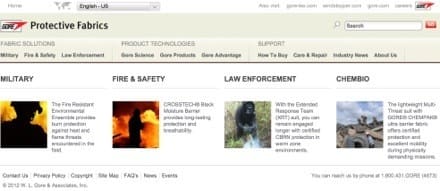
W L Gore has just launched a new website aimed specifically at our industry. The new site features multimedia demonstrations (videos as well as animations) to illustrate the science behind Gore’s fabric technology. There is also an improved customer support section, detailing how to buy, care for, and repair Gore fabrics. Additionally, the Fabric Solutions section includes a full description of all available products and fabrics technologies geared toward the protection of military, law enforcement, fire, and safety personnel.

20120419-084522.jpg

www.goreprotectivefabrics.com

IOTV III is Coming

Thursday, April 19th, 2012

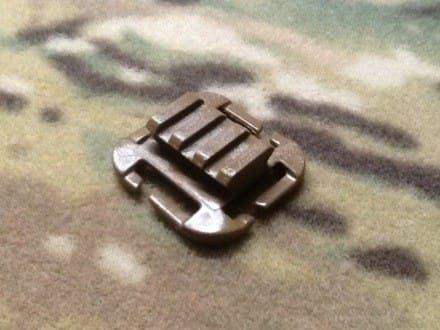
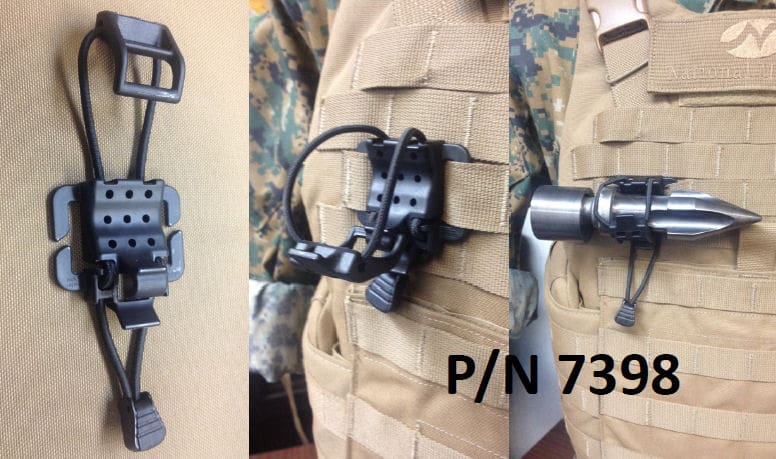
The Army has inserted a couple of improvements into the Improved Outer Tactical Vest version III. Overall, you won’t notice many cosmetic changes. A contract was recently awarded for production of 57,000 of the new carriers which incorporate the National Molding Molly Stix to secure the side plate carrier to the cummerbund but also their Quad Release Trigger Assembly. The Quad Release Trigger Assembly allows the wearer to rapidly don and doff the carrier. The most interesting aspect of the system is the simplicity of re-assembling the components. It’s a simple snap of four side-release buckles. This cutaway system is certainly going to be easier for Soldiers to put back together.

IOTV Gen III – National Molding Parts

MultiCam Materials – 500D Cordura

Wednesday, April 18th, 2012

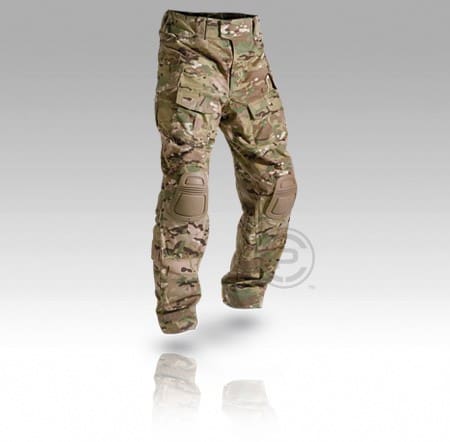
Every two weeks SSD showcases a different MultiCam print fabric from Duro Textiles LLC. This week, we are covering Beaver. MultiCam is a single camouflage pattern designed to help the wearer hide in varied environments, seasons, elevations, and light conditions. After a great deal of commercial success and adoption by elements of US Special Operations Forces, in 2010 MultiCam was selected for use by the US Army as its Operation Enduring Freedom Camouflage Pattern (OCP).

Duro prints on genuine Cordura fabric from Invista. A mid-weight fabric, 500D Cordura is rapidly becoming the industry standard for load carrying items that need to be light and durable. This material is coated on the back side for water resistance and features a face side finished with a durable water repellent.

Specs:
Finished Width – 60 inches cuttable
Finished Weight – 7.1 oz/yd² approximately
Fiber Content – 100% Nylon
Construction – 46/35 (warp/fill)
Breaking Strength – 453/348 (warp/fill) (lbs, minimum)

DOWNLOAD Test Report here.

Manufactured from 500D Cordura for its great balance of weight and durability, the new High Ground Plate Carrier incorporates several interesting features.

First off is the Mix-&-Match cummerbund with internal as well as external cummerbund PALS webbing. Additionally, the bungee system allows you to change out whole cummerbunds rather than reconfigure MOLLE pouches. The HGPC also incorporates a cable routing system to eliminate cable clutter. You can also ditch your plates one at a time without dropping the whole carrier kind of like in the first gen of BALCS carriers. Finally, it incorporates an internal pocket for flat items (or your hands) that is accessible from either armpit as well as internal breathable spacer cloth to assist with air flow.

Overall, the HGPC weighs only 2.5 lbs due in no small part to fabric selection. Please note, it is only available in MultiCam and Coyote.

Duro offers progressive pricing based on the number of yards ordered. For more information on this or any of the full line of MultiCam fabrics visit www.multicamfabric.com or email Galpen_Ben@DuroLink.com.

Geckskin

Monday, April 16th, 2012

We’ve mentioned these amazing developmental materials in the past that mimic the microscopic hairs on a Gecko’s feet called setae. They work like hook and pile tape without the pile. Now, researchers at the University of Massachusetts have made a breakthrough. In a press release, head researcher Alfred Crosby claims, “Our Geckskin device is about 16 inches square, about the size of an index card, and can hold a maximum force of about 700 pounds while adhering to a smooth surface such as glass.”

Researcher Al Crosby went on to say, “In order for something this large to use adhesion, its tendons are stitched right into its skin. And so you have the tendon, which is very stiff tissue, connected to the skin and the setae. That direct connection is critical. Without that, the gecko could not use adhesion. This direct integration is what we ended up mimicking in Geckskin.

There are two major issues with this type of technology. First, it has to able to be used over and over and second, it has to hold for long periods of time. In testing, Crosby claims they have done both. They just haven’t held items that are heavy (ie 100 + lbs) for months at a time. Their holy grail? Supporting a wall mounted flat screen for years.

Of course, these guys are looking at straight up adhesives. Whatever. How about a new way to carry magazines? As in, “just slap them against your chest and they won’t fall off.” Perhaps something as big as a SAW drum? Or maybe an infinitely reconfigurable armor carrier vest? Imagine being able to alter your set up on a whim, or better yet, how it rides on your body. No sewing necessary.

That’s what we hope this stuff can do; make gear better.

Softshell Tech – Tweave

Friday, April 13th, 2012

This is the first of four articles sponsored by Arc’teryx LEAF to educate readers on softshell fabrics used in their garments. In this article we will cover Tweave, a product of Gehring Textiles.

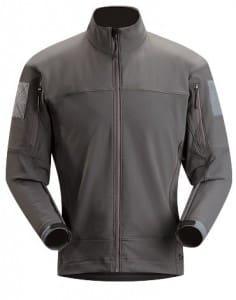
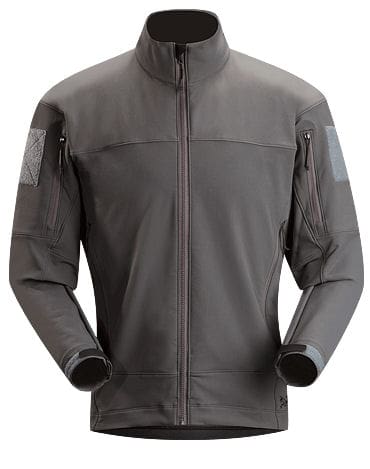
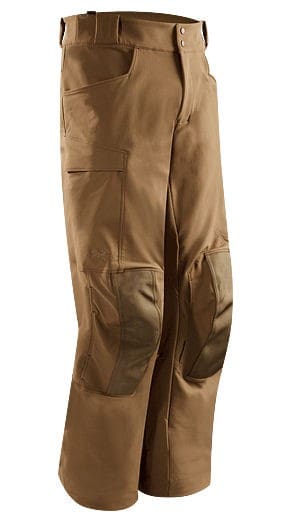
Specifically, Arc’teryx LEAF currently uses two types of Tweave in their clothing and equipment; Tweave Durastretch (520E) and its lighter weight counterpart Durastretch LT (536N). The Sphinx Halfshell you see here actually incorporates both fabrics. Both weights of Tweave boast Durable Water Repellant coating as well as a material content of 91% nylon and 9% Spandex. Arc’teryx offers products manufactured from Tweave in Crocodile, Black, Coyote, and Multicam as well as the new Wolf color.

Arc’teryx actually worked with Tweave to develop the Durastretch fabric in the early 2000s for outdoor alpine climbing, trekking and backcountry ski apparel. But, after a few seasons it became too pricey for those markets. With the advent of LEAF, Arc’teryx revived use of the fabric for their new customer base whose main emphasis is on performance. Tweave is recognized worldwide as the most durable stretch woven available.

Tweave combines several properties to protect you from the elements. It is a plain weave four-way stretch that has superior durability and abrasion resistance. The fabric is very tightly woven and you will notice this on windy days. Additionally, its smooth face sheds snow and DWR finish repels moisture. The construction of the Durastretch fabrics, using covered yarn technology, keeps the more vulnerable spandex yarns protected from the elements by wrapping them inside the nylon, unlike many other fabric which feature exposed spandex without a sheath. Tweave chose nylon over polyester because of its superior abrasion properties and the yarns are extremely compacted and tight, yielding a very abrasion-resistant surface. All of this is topped off with special finishing techniques that still allow ample stretch for comfort and freedom of movement.

Look for Tweave Durastretch and Durastretch LT in these LEAF products –
Chimera Shirt LS
Sphinx Halfshell
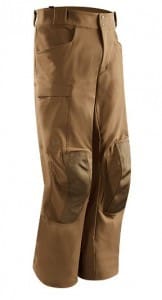
Sphinx Pant
Combat Jacket
Gryphon Halfshell
Gryphon Pant
H150 Rigger’s Belt
X350a harness

Keep your eyes peeled for information on an upcoming application of Durastretch 520P which features superior tear resistance and slightly more bulk and stretch.

leaf.arcteryx.com

BAE Releases Liquid Body Armor Video

Tuesday, April 10th, 2012

BAE Systems (and others) has been working on liquid body armor for some time. It’s a very promising, low weight ballistic solution. They are using a shear thickening fluid which hardens as force is violently applied against it. You can make some up with cornstarch and water. Pour it out on a flat surface and then hit it with a hammer.

Unfortunately, you aren’t going to get much out of this video other than seeing body armor do what it is designed to do; act like a catchers mitt.

Part 1 shows 10 layers liquid armor in a durable casing
Part 2 shows 31 layers of untreated Kevlar

When I was in industry and we were working on the Explosive Formed Penetrator threat, one of my team’s engineers suggested using a non-newtonian fluid. While the technology shows promise, we decided that for our application, the material itself might compromise its ability to work when needed. Based on the magnitude of teh threat we’d need to go with a true shear thickening fluid. Form our standpoint, the issue was ensuring that the material would be in place when needed. A combat vehicle such as an MRAP is exposed to a wide variety of threats and environmental hazards any one of which might compromise the armor’s integrity and result in the fluid leaking from its section in the armor array. Instead we came up with another way to dissipate the energy of an EFP.

Body armor will present its own set of challenges in maintaining the proper amount of ballistic material in the proper place on the panel. Gravity tends to work against you with liquids in non-rigid containers, even in the case of thickened fluids or in this case coatings. Additionally, the fluid coating might dry out over time. What BAE has done to mitigate this effect is to use their “fluid” to treat woven Kevlar. Not only does this give the coating “body” but gives the material even more surface area to spread the energy of a ballistic threat across.

BAE testing has indicated that they can maintain ballistic protection at a 45% reduction in the thickness of the armor which results in increased mobility.