TYR Tactical

Archive for the ‘Materials’ Category

Murdock Webbing Introduces MultiCam Jacquard Weave Webbing

Wednesday, June 29th, 2011

Murdock Webbing has been officially licensed by Crye Precision to offer jacquard woven Multicam webbing. Using specialized jacquard looms the camouflage pattern is integrated directly into the web creating a durable, quality product. It meets or surpasses all of the performance requirements for AA55301 and is offered in standard widths of .75″, 1″, 1.5″, and 2″. Additionally, custom widths and weights are available upon request.
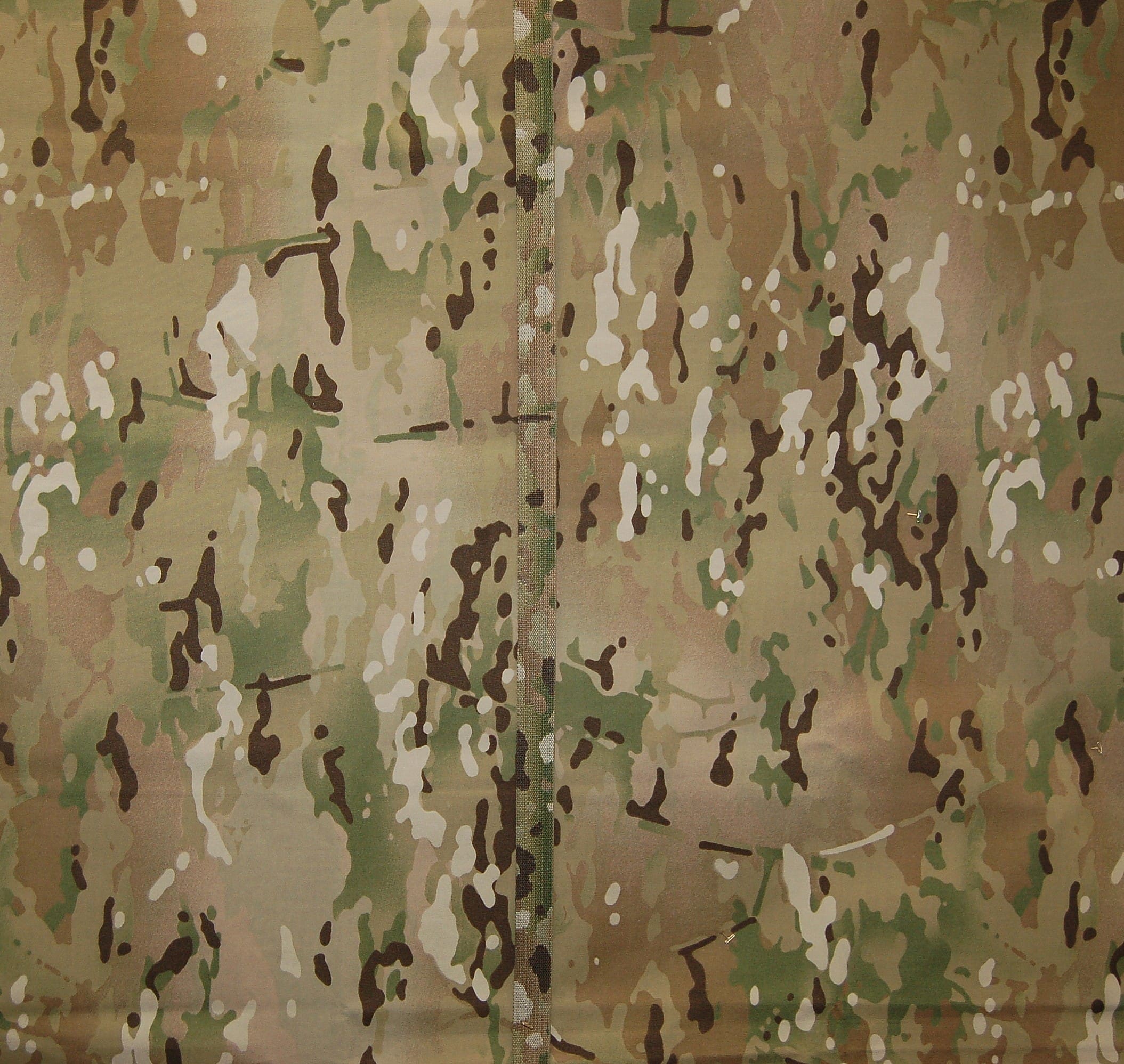
You can barely see the webbing overlayed on a sheet of MultiCam fabric. This is a good thing. The pattern is so well executed that it blends right in unlike the Government pattern webbing introduced earlier this year.

The double-sided jacqaurd woven MultiCam webbing meets all NIR requirements established by Natick, and has been approved by a government certified lab.

In addition to looking great, there is an added benefit to the jacquard woven construction. It has proven to be very abrasion resistant in repeated laboratory tests, maintaining the integrity of the MultiCam design even after 1000s of cycles on an abrasion machine. This means the pattern is going to last you the lifetime of the product.

Additionally, the weave can really hold a buckle or clip in place. Murdock Webbing feels that this could be the single most important function of webbing as it relates to a military pack or carrying system. We agree. There is nothing worse than webbing that needs constant adjustment due to slippage.

What’s more, Murdock Webbing is the exclusive narrow fabric company to offer Schoeller’s NanoSphere technology. NanoSphere repels water and dirt to create a self-cleaning finish and enhance durability. They also also offer a silicone application that they apply in-house. Either of these treatments will protect the webbing and prevent water absorption to keep weight down when conditions get rough.

Murdock Webbing has been an approved supplier to the military since the early 1960s and has been a force in industry since 1936. Their mill is ANSI/ASQC ISO9001 certified and manufactures products that meet the highest standards of quality and reliability.

So, to sum this article up. Looks good? Check. Abrasion Resistant? Check. Grippy for Buckles? Check. Added Bonus – Inexpensive.

Murdock’s MultiCam webbing is woven right here in the United States and is Berry Amendment Compliant. Please contact Ray Clarke, VP of Sales, at 1 (800) 375 2052 x3014 or ray.clarke@murdockweb.com for free prototyping quantities as well as a price quote.

murdockwebbing.com

Icebreaker’s Supply Chain

Friday, June 24th, 2011

This video hosted by Icebreaker Founder Jeremy Moon gives you a great insight into their supply chain. It’s important for those outside industry to get an idea of how much goes into those garments you wear. While New Zealand-based Icebreaker specializes in merino wool, a similar tale can be told for most any product you use. The more complex the product, the larger the supply chain.

Icebreaker tactical products are available from Mission Ready Equipment.

3D Printed Clothing Comes of Age

Wednesday, June 8th, 2011

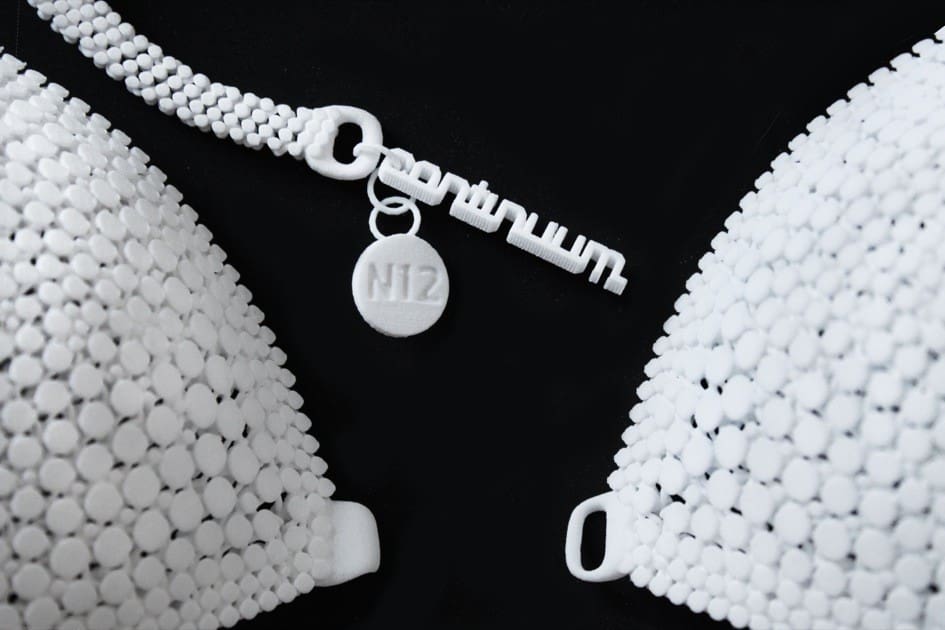
The N12 bikini is the world’s first ready-to-wear, completely 3D-printed article of clothing.

That’s a pretty interesting statement. Especially when you consider that the first article of clothing is a bikini. Check it out and consider the possibilities (tactical possibilities).

Manufactured from Nylon 12, the garment is made using the SLS 3D printing process. Shapeways calls this material “white, strong, and flexible”, because its strength allows it to bend without breaking even when printed very thin. With a minimum wall thickness of .7 mm, it is possible to make working springs and almost thread-like connections. Once printed, the garment snaps together like one of those old folded paper models; insert tab A into slot B.

The material is waterproof and is made up of thousands of circular plates connected by thin strings. This makes the garment very flexible.

To learn more visit www.continuumfashion.com.

JIEDDO Helmet Pad Report

Friday, June 3rd, 2011

Earlier this year Lawrence Livermore National Lab issued a report on the issue helmet pad’s performance in mitigating impact injuries to the head commissioned by the Joint IED Defeat Organization (JIEDDO) and funded partially by the US Army. The main stream media made much of the researcher’s investigation of NFL helmet pads.

According to LLNL, “Five types of pad systems were studied-those currently and previously used by the Army, two used in NFL helmets, and one used in other protective sports equipment. The two Army systems consist of bilayer (hard-soft) foam pads within a water-resistant airtight wrapper or coating. One NFL system consists of a thin foam pad and a hollow air-filled cylinder that buckles under load, and the other is a bilayer foam pad surrounded by a covering with air-relief channels that connect to adjacent pads in the helmet. The fifth pad consists of uniform dense foam.

Researchers Mike King’s and Willy Moss’s conclusion? None of the other pads out perform the current issue pad. In fact, NFL pads are not as soft as military pads, allowing larger forces to be transferred to the head.

Ultimately, the two scientists found that by increasing the thickness of current pads by just 1/8″ would significantly decrease the risk of Traumatic Brain Injury. While this answer sounds simple enough, it raises a serious issue. That extra 1/8″ of padding would require most everyone to go up one helmet size.

Unfortunately, the research was accomplished in support of ACH standards rather than against the energy levels associated with the new Enhanced Combat Helmet (.30) threat. Until this issue can be dealt with the ECH is ultimately just an expensive ACH. As lead service for the ECH program, the USMC has yet to unveil any plans at all on how to deal with the increased kinetic energy associated with the higher caliber threat.

Read the full report here:

LLNL Helmet Pad Report

Product Sneak Peek from Mission First Tactical

Wednesday, May 25th, 2011

Mission First Tactical’s assaulter/operator driven designs are products made exclusively in the USA through a partnership with DuPont’s Military Plastics division. These new materials allow them to offer components that are a third the weight of traditional polymer without degraded quality. We’re offering you a sneak peak at just a few of the first releases from Mission First Tactical’s highly anticipated product line.

This is the React™ Short Grip, a forward grip featuring minimal profile footprint and covered with MFT’s own Tac Skin™ texturing. It also boasts a secure water tight plugged storage with a foam block with a quick access tab to diminish rattle, as well as a flat non slip bottom surface that aids in supported firing positions. At 2 oz you can barely tell it is there.

For more info visit missionfirsttactical.com or follow them on Facebook at www.facebook.com/missionfirsttactical.

New Patterns from Tiger Stripe Products

Thursday, April 21st, 2011

Ever since my days as a kid, I’ve always liked the Tiger pattern. Maybe the old versions were more art than science, but they were definitely distinctive. Over the ensuing years, Tiger Stripe Products started to produce recreations of the Viet Nam advisor pattern and then began to develop new, unique patterns culminating with the initial modern USAF blue tigerstripe pattern. While the Air Force chose to go a slightly different direction, TSP hasn’t stopped their work. In addition to a couple of patterns developed for specific clients they have just released images of their newly reworked All Terrain Tiger patterns. In addition to the version above, they have also produced “digital” variants. You will notice that the colorway is very familiar as it is proving the be the most effective for use with transitional patterns based on the 2009 camo testing.

Check the entire line out at www.tigerstripeproducts.com.

Neptunic Technologies Protective Materials

Monday, April 11th, 2011

Developed by Jeremiah Sullivan for use in shark proof suits, this new Neptech material is a replacement for the chain mail suits in use for the past 30 years. In fact, if you’ve ever watched Discovery Channel’s Shark Week, you’ve seen the chain mail suits in use. And, you may have seen a teaser where Jeremiah showed a next generation material that was integrated directly into the wet suit. The goal was to protect from the bite of a great white shark. A few Navy frogmen found out about Neptech and immediately realized that it would be great for land warfare clothing as well as for diving suits.

We’ve seen cut resistant materials before but this one is different. It is truly puncture resistant as well. Sure, if you lay up enough of anything including paper it becomes puncture resistant, but with some materials it becomes too heavy and too bulky to wear as part of your clothing. This is what makes Neptech different.

As you can see in the video, it is a porous, permeable material and yet it fully sheds slashes. When several layers are combined it is capable of preventing stabbing penetrations and can even break a blade. Additionally, based on additional footage I have seen, Neptech materials are flame resistant. All in all, that makes for a great addition to a field uniform if even only for certain special applications.

www.neptunictech.com

Down Range Gear’s Great Idea Turns ITW’s QASM on Its Side

Sunday, April 10th, 2011

We received an email at an odd hour last night from Down Range Gear’s founder telling us he had awoke from a dream with a great idea and just had to turn it into reality. Ten minutes later he had produced the first Down Range Gear QASM Vertical Connector. Once he told us about what he was up to this morning we agreed; it IS a great idea.


The ITW Nexus QASM (Quick Attach Surface Mount) is designed to fit on a piece of 1″ nylon webbing such as in a PALS application to allow you to attach an item to it that is equipped with the male portion of a 1″ side release buckle. Since PALS webbing is oriented in the horizontal plane, you can’t use it to attach vertical buckles without adding vertical webbing to your platform. That is, until now. Down Range Gear has come up with a simple yet effective modification to the buckle using 1″ webbing to allow it to be woven through PALS and attached back on itself. This means no modification to your existing kit.

Read more about it here: downrangegear.wordpress.com.