GORE-TEX WINDSTOPPER

Archive for the ‘Medical’ Category

ORSM 22 – Wool+Aid Ltd

Tuesday, June 14th, 2022

Naturally enough Wool+Aid Ltd hails from New Zealand. Their idea was to replace synthetic materials for adhesive bandages with the natural material, wool.

Made of Merino wool, they are plastic free and breathe. What’s more they are biodegradable.

They also won a Media Preview Award from OR.

Air Force Medical Service Launches ‘Nutrition Kitchen’ Series

Tuesday, June 14th, 2022

FALLS CHURCH, Va. (AFNS) —  

The Air Force Medical Service is launching “Nutrition Kitchen,” a series of online nutritional cooking classes geared toward service members and their families.

The Nutrition Kitchen’s goal is to inspire healthy meal choices by providing options for service members to make realistic changes to foods they are already eating, while also providing the opportunity to learn the science behind those choices and “level up” their nutrition knowledge.

Each episode introduces different options to “level up” a classic meal, starting with simple ingredient substitutions and ending with a chef-curated recipe option taught by Tech. Sgt. Opal Poullard, chef and culinary instructor at the Joint Culinary Center of Excellence at Fort Lee. Following each cooking episode, Sahra Pak, registered dietician at Travis Air Force Base, California, shares the science behind the nutritional choices made.

“Nutrition has a profound impact on the health, performance and readiness of our active-duty personnel,” said Maj. Gen. Sharon Bannister, Medical Operations director, Office of the Air Force Surgeon General. “Combatting unhealthy weight gain and obesity and the detriment of poor nutrition is obligatory to improving warfighter readiness.”

Beyond maintaining a healthy weight, improvements to physical and mental performance and underlying chronic health conditions are among some of the benefits.

Giving nutrition the spotlight it deserves is a key tenet of the rapidly growing lifestyle medicine field.

“Nutrition Kitchen is lifestyle medicine at its best,” said Col. Mary Anne Kiel, Air Force Medical Home chief, Air Force Medical Readiness Agency, and chair the Lifestyle and Performance Medicine working group. “Food has an enormous potential to harm or to heal, but it’s surprising how infrequently we consider the types of foods we are eating every day. It is time for that to change. It’s time to empower the members of all our military services to upgrade their nutrition by making choices to keep them ready for the mission and to improve their health.”

The Nutrition Kitchen series aims to make the sometimes difficult process of both selecting and cooking nutritious meals more engaging, approachable and fun.

The recipes for this series were developed to be tasty, easy to prepare, and low-cost, all while providing the fuel necessary to “level up” service members’ health.

Service members can look forward to several delicious recipes heading their way over the next few weeks. The chef-curated dishes range from banana pancakes with date syrup to a cauliflower black bean ranchero taco bowl, a favorite among recipe taste-testers.

More conveniently, this series will be available at service member’s fingertips, where they can watch and cook completely on their own time. New episodes are set to release weekly and can be found on the Nutrition Kitchen page or via YouTube.

Air Force Surgeon General Public Affairs

Photo by Cynthia Griggs

SCUBAPRO Sunday – Navy Corpsman Birthday

Sunday, June 12th, 2022

In my 26 years in the US Navy, I came across some of the best Corpsman you could possibly imagine. Almost all have gone on to become doctors, not that that is a measure of anything. But the Rips the Doc Conza, Doc Henao, and Smiths of the SEAL teams would break their backs to make sure you were good to go. To all of them, Happy Birthday to all the Docs that patch us mortals up. The Rules for the Regulation of the Navy of the United Colonies of North America of 1775 contained only one article that directed the formation of Navy medicine. “A fitting area shall be set apart for sick or hurt men, to be removed with their hammocks and bedding when the surgeon shall advise that it is necessary: and members of the crew shall be designated to attend to and serve them, as well as to maintain the space clean,” according to Article 16.

Between 1775 and 1814, the period covered America’s first maritime conflicts, and little changed medical techniques and structure. Feeding and personal care of the non-combat wounded and injured were among the less dramatic obligations of caring for them. Untrained personnel was sure to bring down the minimal daily feed of porridge or “loblolly” to those in the medical section. On March 2, 1799, Congress passed an act that exacted the language of the Continental Congress’s medical department article 16 of 1775. As a result, enlisted medical personnel still lacked a title or job description. The term “loblolly lad” had been around for so long that it was adopted as an official title in the Navy Regulations of 1814. A new senior enlisted medical rate, surgeon’s steward, was established in the decades that followed. The phrase appeared in Navy pay charts for the first time in 1841; however, the new billet was only available on larger ships. The Navy Department issued an order on April 1, 1843, that allowed surgeon’s stewards to be attached aboard brigs and schooners. The relative relevance of medical Sailors was raised as a result of this. Surgeon’s stewards would be second only to the master-at-arms in seniority among the ship’s petty officers. With the tremendous rise in the Navy and the onset of the civil war in 1861, improvements and developments in the medical sector were bound to occur. On June 19, 1861, a Navy Department circular order gave the loblolly boy a new moniker.

The United States Navy Hospital Corps was not formally created as a unit inside the Navy’s Medical Department until June 17, 1898. The Spanish-American War was looming on the horizon at the time, and the U.S. Navy and Marines needed a well-trained medical section. Since that time, Hospital Corpsmen have served with their fellow Sailors and Marines on every continent, on every warship, submarine, and ocean.

Modern hospital corpsmen can pursue additional training to become highly skilled medical specialists, specializing in areas such as laboratory technologists, dive medicine, or aerospace medicine.

On August 29, 1916, Congress enacted the following significant change in the structure of the Hospital Corps. Hospital apprentices, second class and first class (both of whom wore a red cross on their sleeve), pharmacist’s mates, third, second, and first, and chief pharmacist’s mate would be the rates under this model. The two warrant officer grades of pharmacist and chief pharmacist would be included in the Hospital Corps’ officer contingent. The restructure would allow the Hospital Corps to grow by five times its current size. The Hospital Corps’ greatest manpower, diversity of duties, and example of sacrifice occurred during World War II. Between 1941 and 1945, the ranks of this modest organization increased from about 4,000 at pre-war levels to over 132,000. This raise was necessary to meet new tasks that required new technology at new duty sites. The Hospital Corps’ reputation for efficacy and bravery would be cemented in the face of severe difficulty.

The Hospital Corps has a long history of courage and sacrifice. Hospital corpsmen have also responded to natural disasters, military mishaps, and peacetime emergencies. They’ve also kept their Sailors and Marines healthy by immunizing, practicing preventative care, and holding sick calls. 23,000 regular and 6,000 reserve Navy Hospital Corps troops serve globally. They operate in naval hospitals, clinics, ships, and submarines. Search-and-rescue missions and Seabee deployments. Not to mention their deployments with the Marine Corps and SEAL teams.

Corpsmen have always been responsible for shipmates’ health. Their endless acts of heroism, exposing themselves to risk to save lives, were essential. Because they cared about their shipmates, their bravery is notable.

During the United States Navy Hospital Corps’ 124-year history, it has risen to become the most decorated rating in the U.S. military. 22 Medals of Honor, 179 Navy Crosses, 31 Navy Distinguished Service Medals, 959 Silver Stars, and almost 1,600 Bronze Stars with Vs. for heroism have been awarded to Corpsmen. In addition, 14 Naval Vessels have been named after Hospital Corpsmen, and other hospitals and clinics have been named after brave individuals who gave their lives in the service of our country and freedom.

RTS Tactical Releases New Rapid Deploy IFAK Field Medical Kit for Military, Law Enforcement, and First Responders

Tuesday, June 7th, 2022

The most comprehensive one motion pull system IFAK kit on the market launches to help save lives in the field.

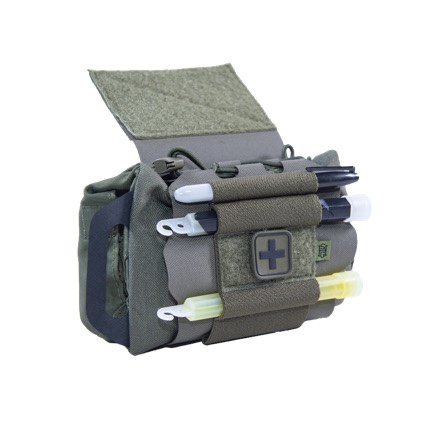
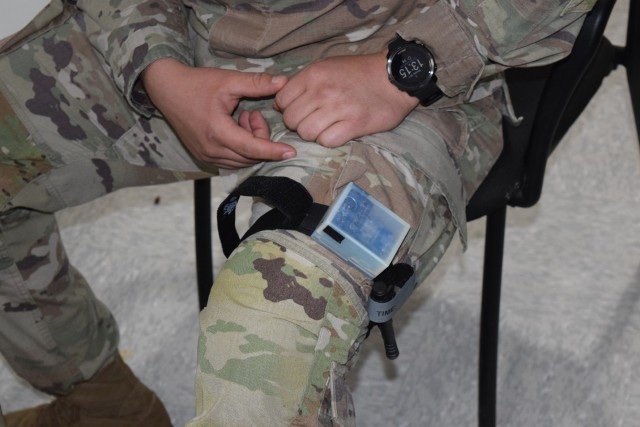
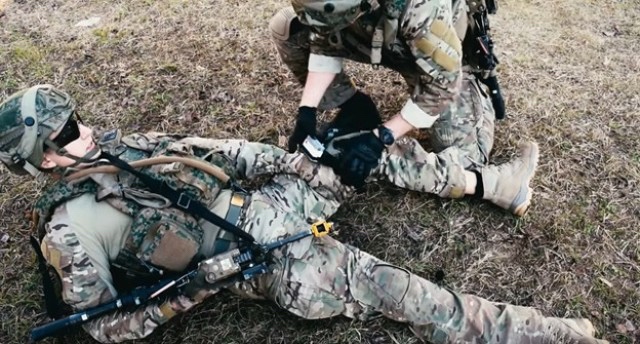
Jun 7, 2022- MIAMI – Today, RTS Tactical launches their new rapid deploy IFAK, a comprehensive medical kit outfitted with cutting-edge components designed for injuries in the field. Rapid one-hand deployment allows access to all components instantly while maintaining situational awareness.

Other IFAKs currently available were developed in the early days of Operation Iraqi Freedom to fulfill a critical need and have been left behind by advances seen in tactical gear today. RTS Tactical reached out to Combat Medics and other personnel who understood the importance of a quick deploy IFAK to make the RTS Tactical Rapid Deploy IFAK the ultimate field-tested solution. The RTS Tactical Team researched the latest materials that would achieve a lightweight yet strong and rugged shell. The company incorporated all the necessary medical components for an advanced compact and Ready Kit while the engineering department created and field-tested the comprehensive one motion pull system that can be used by the operator itself or a fellow operator.

Mendel Berns, Marketing Director at RTS Tactical, shares, “When treating an injury in the field, time is critical. Every second counts. You need to be ready when called upon to save the life of a team member, even perhaps your own. Your new RTS Tactical IFAK Kit has been field-tested to be the most comprehensive one motion pull system that can be used by the operator itself or a fellow operator in a time of critical need.”

The light-weight Rapid Deploy IFAK is made with bonded cordura, high performing zippers, MIL-SPEC bungee cords and all the premium materials available in advanced tactical nylon today. The design lets customers control their IFAK contents as well as laser-cut MOLLE and bungee attachment points. The RTS Tactical Rapid Deploy IFAK Kit is available in Black, Ranger Green, Coyte, and Multicam. The RTS Tactical Rapid Deploy IFAK is currently in stock and shipping coast to coast on the RTS Tactical Website: rtstactical.com/products/rts-tactical-rapid-deploy-ifak-kit

Some of the components included in the RTS Tactical Rapid Deploy IFAK:

Tourniquet Selection/Options:

– SWAT-T Tourniquet

– SOF Tactical Tourniquet

– COMBAT APPLICATION TOURNIQUET (C-A-T) Gen 7

– ISRAELI Trauma Bandage

– Vacuum-Sealed 12’Z-PAK Gauze, 3” x 24” QuikClot Hemostatic Gauze “Stops The Bleed 5 Times Faster”

– Nasal Airway + Lubricant

– 2 Vented Hyfin Mini Chest Seal

– RTS Tactical Trauma Shears

– 3M Medical Tape

See the full list of what is included on the website.

Using VR Through VALOR to Improve Combat Casualty Care

Tuesday, June 7th, 2022

HURLBURT FIELD, Fla. —  

The 24th Special Operations Wing Surgeon General’s office has implemented the use of virtual reality training devices, in partnership with SimX, throughout special tactics to maintain the critical pararescueman’s skill in an ever-changing operational environment.
“The operational mission is going to continue to grow in complexity in the future fight,” said U.S. Air Force Col. John Dorsch, 24th SOW Surgeon General. “The PJs must be prepared to treat both injury and illness in austere environments for longer periods of time with limited reach-back.”


When looking at what the future operational environment may look like, the 24th SOW SG team must consider the implications to operational medicine. Scenarios PJs face could be in low-visibility areas where they have to keep patients alive for longer periods under possible chemical, biological, radiation or nuclear conditions.


“Preparing PJs medically for the future fight will require an advanced interoperable standard, optimized initial and sustainment training, deliberate tech development and integration, and enhanced performance tracking and feedback,” said Dorsch.
The virtual reality program objectives are to improve realism, increase flexibility and reduce cost. Through more than $10 million in Department of Defense Research and Development Funding and the Air Force Small Business Research Innovation Research program, SimX and the 24th SOW have been able to create more than 80 training scenarios including canine treatment and care, blast injuries, severe gas exposure, and more.
These training devices provide intricate and realistic training scenarios that other methods, such as medical dummies, cannot, and improves the effectiveness of the training.
“By using a flexible piece of equipment, we are able to deliberately and efficiently target specific desired learning objectives based on evolving mission requirements,” said Dorsch. “We now have the time and bandwidth to provide trainees with enhanced real-time feedback from the through the program, which grades the trainee on a point system through data analysis and a performance tracking system.”


Currently, there are 14 sites online using the PJ Tactical Combat Casualty Care curriculum, including Air Force Special Operations Command and Air Combat Command. In the future, they plan to expand access to the existing medical training portfolio across all SOF TCCC responder tiers, broaden capabilities and integrate partner force training.
“The VALOR program has increased the availability of efficient and effective medical training and has allowed us to develop complex decision-making, which will improve survival rates in U.S., coalition and partner force combat casualties in the future fight,” said Dorsch. “VR training is critical for ensuring that the highest level of combat trauma and austere medical care are provided by our special operations ground forces. We have only scratched the surface of its incredible potential.”

Story by Capt Savannah Stephens, 24 SOW Public Affairs

Photos by TSgt Carly Kavish

OpEx 22 – Brief Relief

Friday, June 3rd, 2022

Chances are, if you’ve deployed, you’ve used Brief Relief’s products. Yes, it’s a privy. But their disposable bagging system minimizes the mess.

One point I found quite interesting is that their hygiene products are certified for use in the Arctic.

Additionally, their urinal bag contains a nontoxic powder which becomes a gel once used (see pack on the left) which can easily be disposed of. Additionally, it is designed to be used by both men and women and includes a one-way valve to prevent spillage.

Rampart Range Day 22 – ESCA Tech, Inc

Tuesday, May 31st, 2022

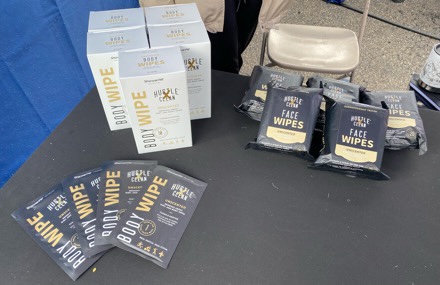
ESCA Tech, Inc may be the most welcome booth at the event, at least for me. The health of many shooters, be they recreational or professional has been effected by exposure to lead and other toxins. ESCA Tech is an EPA approved company that offers wipes to clean both skin and surfaces of lead contaminants.

These no rinse wipes are offered in canisters or individually wrapped packs. They also offer a hand and body soap, which requires water.

ESCA Tech, Inc products can be procured by agencies, departments, and units in Canada from Rampart International.

Future of Nursing: Telehealth, More Innovation, Maybe Some Robots

Friday, May 20th, 2022

FALLS CHURCH, Va. (AFNS) —  

The ongoing COVID-19 pandemic has fast-tracked many changes to the Military Health System and forced all providers – especially nurses – to innovate at near-quantum speed with agility and flexibility.

Nurses are the backbone of daily healthcare operations. In the future, nurses will continue to play a vital role in the evolution of modern healthcare.

“Nursing will take on more leadership and strategic roles to transform the healthcare system, better advocate for nursing personnel, and integrate across care to enhance the multi-disciplinary team,” said Brig. Gen. Anita Fligge, Defense Health Agency chief nursing officer.

As the DHA observes 2022 Nurses Week, Fligge and other top DHA nursing officers talked about changes on the horizon for military nursing and the details of how the career field will evolve in the coming years.

They said the pandemic has underscored the connection between health and readiness. Virtual healthcare options will continue to expand, and robotics may play a prominent role in standardized care in the future while continued education for nurses will be essential to maintaining a ready medical force.

Working in a joint environment within the integrated DHA workforce will improve efficiencies for nurses, allowing them to spend more time on patient care by having standardized policies, procedures and tools across the services, Fligge said.

She pointed to the collaboration already underway in the local healthcare markets. For example, she said, Navy nurses in the Puget Sound market help backfill at the Madigan Army Medical Center and vice-versa. The same collaboration is ongoing in the Colorado market, she said. Air Force nurses are assisting at the Army’s Fort Carson Evans Army Community Hospital.

The pandemic “has opened the doors for nursing to see what could change as to how we care for patients in the future, using technology in a new way, and using data to assist in bed expansion or use of resources more effectively,” said Army Col. Jenifer Meno, DHA deputy chief nurse officer.

The pandemic has “required more precision and flexibility, including virtual healthcare, remote patient monitoring, and touchless medication refills to optimize care delivery,” Fligge said.

Virtual health

The future will mean more virtual healthcare and telehealth services for certain specialties such as dermatology, behavioral health, primary care, urgent care, and obstetrics while maintaining the focus on high-quality patient care and increased access to care, Fligge explained.

The expansion of virtual care will help save lives on the battlefield and improve care during humanitarian crises and future pandemics.

Additionally, at home, virtual health will continue to provide MHS beneficiaries with more access and flexibility to get assistance and appointments.

The COVID-19 pandemic has taxed nursing staffs beyond anything in recent memory as they cared for both COVID-19 patients and maintained routine healthcare operations.

The pandemic has “prompted the need for us to re-look at staffing models and ratios to optimize utilization of the workforce, while ensuring safe, high-quality care delivery and positive outcomes.” Fligge said.

The past two-plus years also have seen a “greater awareness and need to address burnout and retention,” Fligge continued.

Better health, better outcomes

Keeping nurses themselves healthy is a key priority for the entire health system, Meno said.

“The more healthy you are makes you more resilient in multiple ways, from being physically healthy, having mental well-being, and spiritual well-being,” she said.

These three are all part of Total Force Fitness, the Department of Defense’s framework for improving holistic health and performance aligned to one’s mission, culture and identity.

She pointed to the increasing use of mobile applications as one way to monitor health across the military community. These apps are available to help decrease stress, monitor exercise habits and support healthy diets.

“Nurses can use that data to assist in educating and teaching patients how to care for themselves as well as recognize triggers that may be a risk to their care,” Meno said.

“If we maintain a healthier mindset, it prepares the body to fight off disease and illness. If we use it to help our patients to be healthier and do preventive activities, that would change potential outcomes for the future.”

More robotics and AI

Nurses have been integrally involved in newer surgical techniques such as robotic surgery since the 2000s.

“Some things never change,” Meno explained. “Nurses in the operating room will continue to be the eyes and ears for the patient. They will continue to ensure that the patient is receiving the best care with high quality and safety.”

Nurses on robotic surgical teams must demonstrate “a very high level of professional knowledge and be experts in robotic technology. This is demonstrated by playing a key role in data collection, analyzing trends and outcomes, and identifying safety issues,” Fligge said.

The nursing team will need to continue to maintain sterile techniques and ensure the integrity of the surgical field, Meno said. The team will need to communicate more in the operating room as technologies evolve. And nurses will use evidence-based teamwork tools from Team Strategies and Tools to Enhance Performance and Patient Safety [TeamSTEPPS] to support a highly reliable organization, Meno added.

TeamSTEPPS is an evidence-based teamwork system designed to enhance patient outcomes by improving communication and other teamwork skills among healthcare professionals.

Artificial intelligence is already a technology nurses use in everyday care via mobile health and alerts in joint tele-critical care network units. These are an important force multiplier, leveraging virtual health resources to extend critical care expertise and treatment at a distance.

And without a doubt, there are more changes to come. AI and machine learning will assist nurses by using data to help improve the efficiencies of systems and processes, but those technologies are still in their infancy.

More nursing expertise

The pandemic has also meant an “increased capability and use of our nursing workforce by ensuring that personnel are equipped with the education and training to perform at the highest level and scope of practice and license,” Fligge explained.

Meno said she sees more nurses getting certifications to be the subject matter experts in their field.

The increased number of nurses obtaining their Doctorate of Nurse Practice will also grow now that the American Association of Colleges of Nursing has endorsed the movement of advanced nursing practice from a master’s degree to the doctorate level, Meno predicted.

“This doctorate develops nurses to look at process improvement and holistically at improving systems and processes that include other disciplines in patient care.”

Meno explained that hybrid nursing roles discussions have already taken place.

“We see nurses now that are doing hybrid nursing roles due to their versatility and agility. Nurses are not only at the bed side, but they are also clinical nurse specialists, research scientists, advance practice providers, educators and health system leaders.”


By Janet A. Aker, Military Health System Communications