Atrius Development Group

Archive for the ‘Mobility’ Category

OR – AT Overland

Saturday, August 6th, 2011

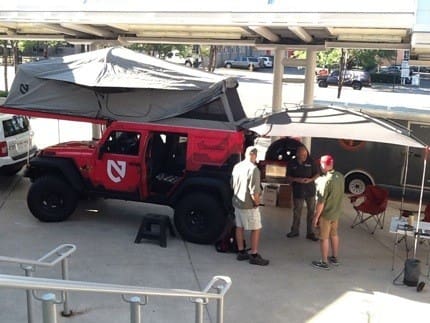
AT Overland exhibited their latest creation featuring their Habitat Top with a NEMO Tent.

20110806-090739.jpg

www.at-overland.com

SRTV from BC Customs

Monday, August 1st, 2011

Coming soon to a DA hit near you, Ground Mobility Vehicle System (ver 1.1) is SOCOM’s concept for a new truck to replace their HMMWV-based systems currently in service. Since the solicitation is expected to kick off in September, several companies have been showing their wares. However, one company has been flying under the radar yet delivering capability for years.
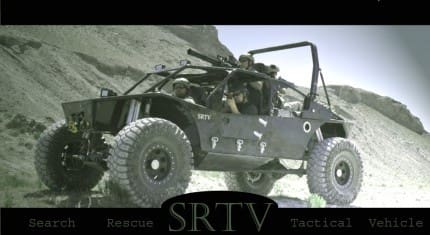
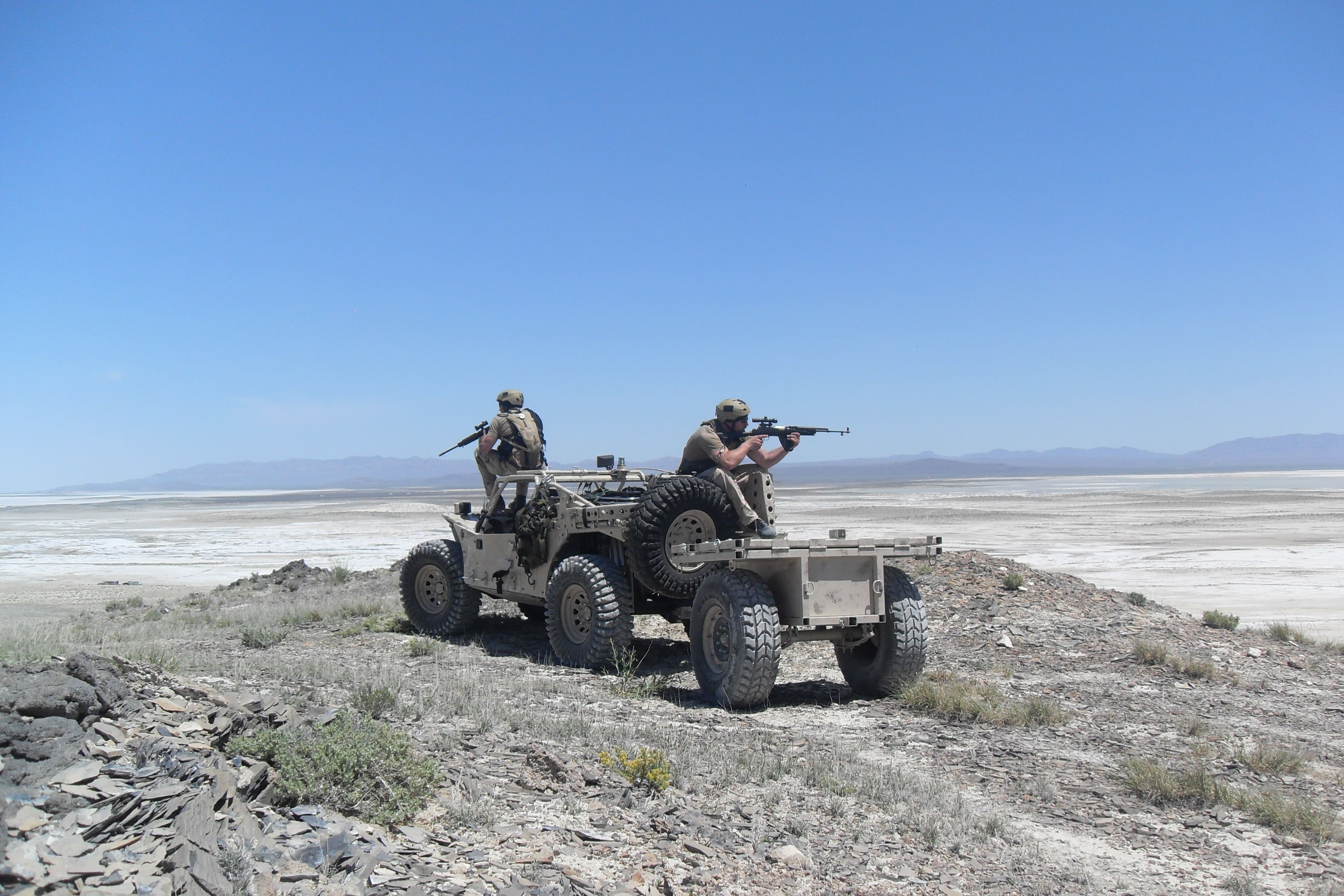
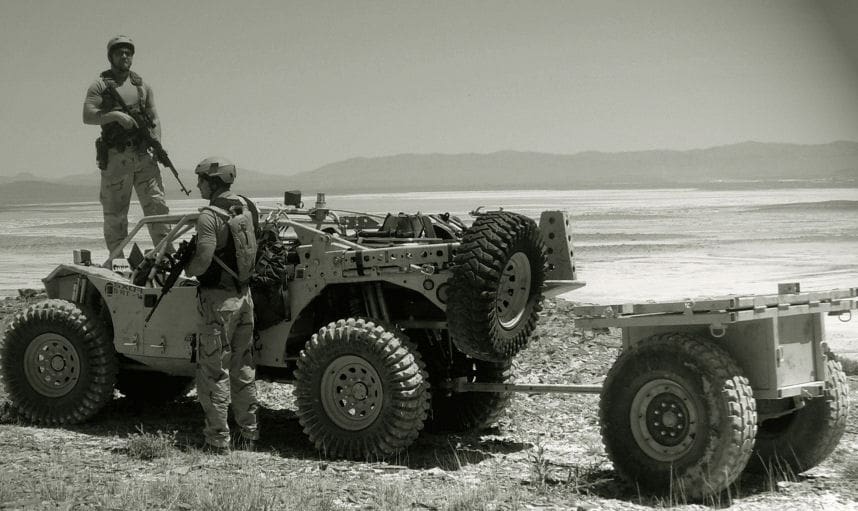
The Search & Rescue Tactical Vehicle (SRTV) produced by BC Customs (BCC) is in the tactical family of SXOR Mobility Vehicles. The SRTV is a platform based family of vehicle utilizing identical components with multiple body configurations. The result is a range of dimensions, crew compliments, and capabilities with no additional training or sustainment requirements.
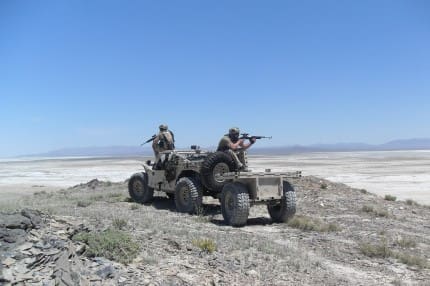
The SRTV is constructed of MIL-STD aircraft tubing, minimizing weight, maximizing strength, and providing a skeletal base for multiple types of Commercial off the Shelf (COTS) ballistic and blast armoring. BCC has utilized readily available components from the Rock/Desert racing industry with special attention paid to redundant systems required for military operations.
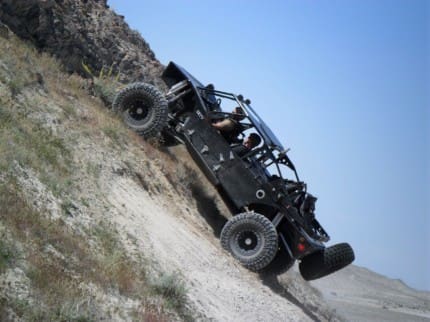
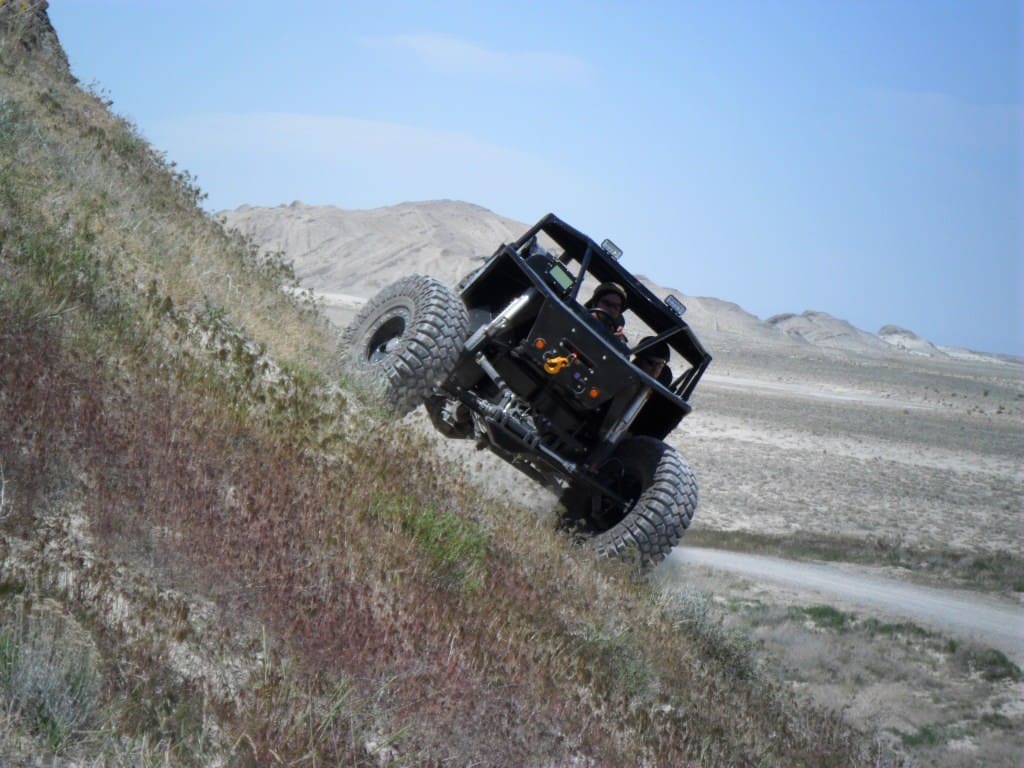
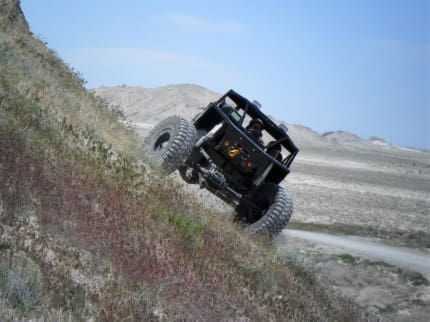
The SRTV has produced documented speeds of over 100 mph; vertical grades over 70 degrees, side-hill angles of over 60 degrees including a vertical step of 3 plus feet. Additionally, the SRTV can exceed double its curb weight in payload. BCC has been at this for some time and has integrated all standard military vehicle requirements such as run flats, open electronics (including Tactronics’ C4I system) as well as redundancy in all major operating systems.
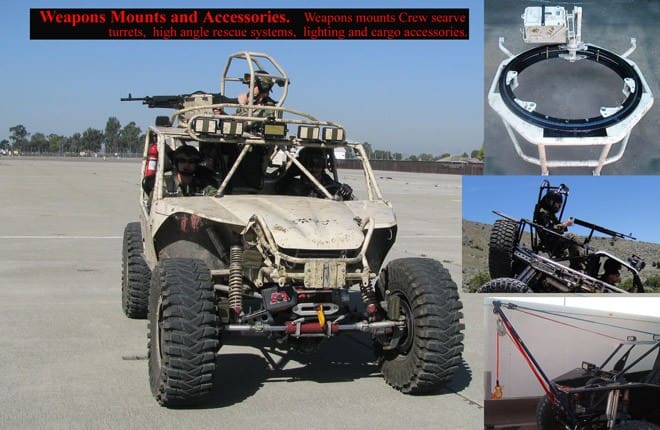
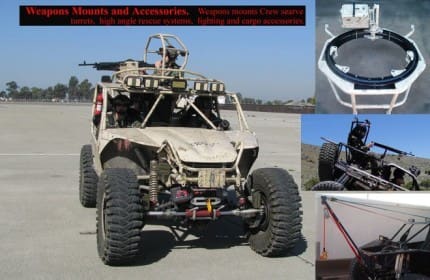
There are weapons mount options: Fore and aft crew serve weapon mounts, 360 degree turret with roll protection, and standard swing arm mounts. BCC has also been working with Garwood Ind to integrate their M134 Minigun, FN to integrate their light Weapon Stations, and MSG for multiple weapon stations.
Nicknamed the “Warthog” by users, the SRTV-5 has an internal crew of three with options for up to two additional crew and two internal (roll protected) patients. The SRTV-5 is internally loadable in the CH-53E and CH-47 with rapid ground mobility within one minute.
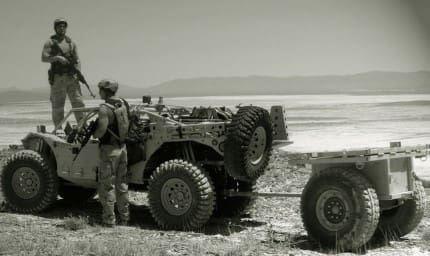
The SRTV-22 (Osprey) variant has an internal crew of three with options for two additional crew or two (roll protected) patients, but loses either one crew member or patient as required. The variant is designed to quickly load and unload from the V-22 with no major adjustments other than collapsing the roll protection. With practice, this can take the crew only a few seconds. The body is built to meet all V-22 tolerances, including ramp over angle and footprint. Additionally, it is less than 900 lbs per wheel, making it ideal for use as an Internally Transportable Vehicle (ITV) and can be ordered with the V-22 trailer. The ramp angle and weight per wheel issues are two of the biggest issues facing vehicle designs intended for the V-22.

In addition to SOCOM interest in a new vehicle, the USAF’s Guardian Angel community recently released their third RFI in as many years looking for a specialized light rescue vehicle capable of internal and sling load transport as well as airdropability. Additionally, the RFI mentions a vehicle that can transport two PJs as well as two litter patients. BCC seems well positioned for this Guardian Angel Airdroppable Rescue Vehicle (GAARV) requirement. All SRTV variants can carry two external patients (Stokes, Israeli, Talon, or pole litters) without roll protection. Additionally, BCC is working with the Air Guard for airdrop certification.
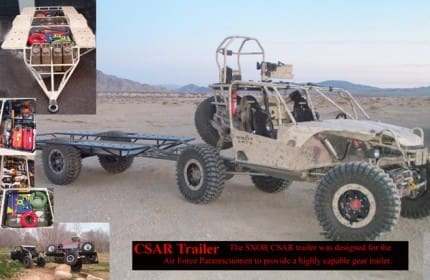
For example, the SRTV-3 was originally designed for USAF Guardian Angel Forces in 2004 and fielded in 2007. Additionally, the SRTV was included in the Air National Guard’s (ANG) FY09 Weapons Systems Modernization Requirements documents specifically for Guardian Angel use.

BCC is currently working with the ANG on Airdrop and multiple MDS (aircraft type) ITV certifications to field a number of SRTV-5 and SRTV-22 variants for ANG rescue forces while awaiting the Air Combat Command (ACC) GAARV Solicitation process. BCC has recently fielded an SRTV-5 variant to the US Border Patrol special operations group BORSTAR. In addition to having an established product, they constantly work to improve existing vehicles as well as to develop new capabilities.

www.bccdod.com

Magpul Sponsors US “Breslau Adventure Rallye” Team

Tuesday, June 21st, 2011

Magpul has sponsored the first and only US team to ever enter the grueling Breslau Rallye. The Breslau Rallye takes place the 25th of June through the 2nd of July and goes from Breslau, Poland to Dresden, Germany in what is known as the biggest off-road race in Europe.

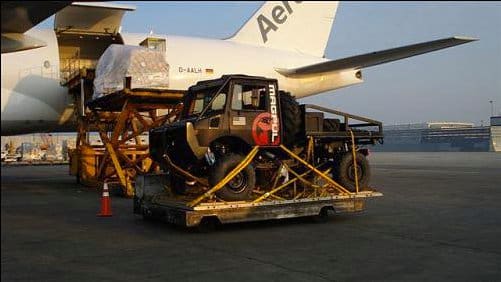
After four months of building in secret, “Bam Bam”, the Rallye Mog has landed safely via air freight in Europe.

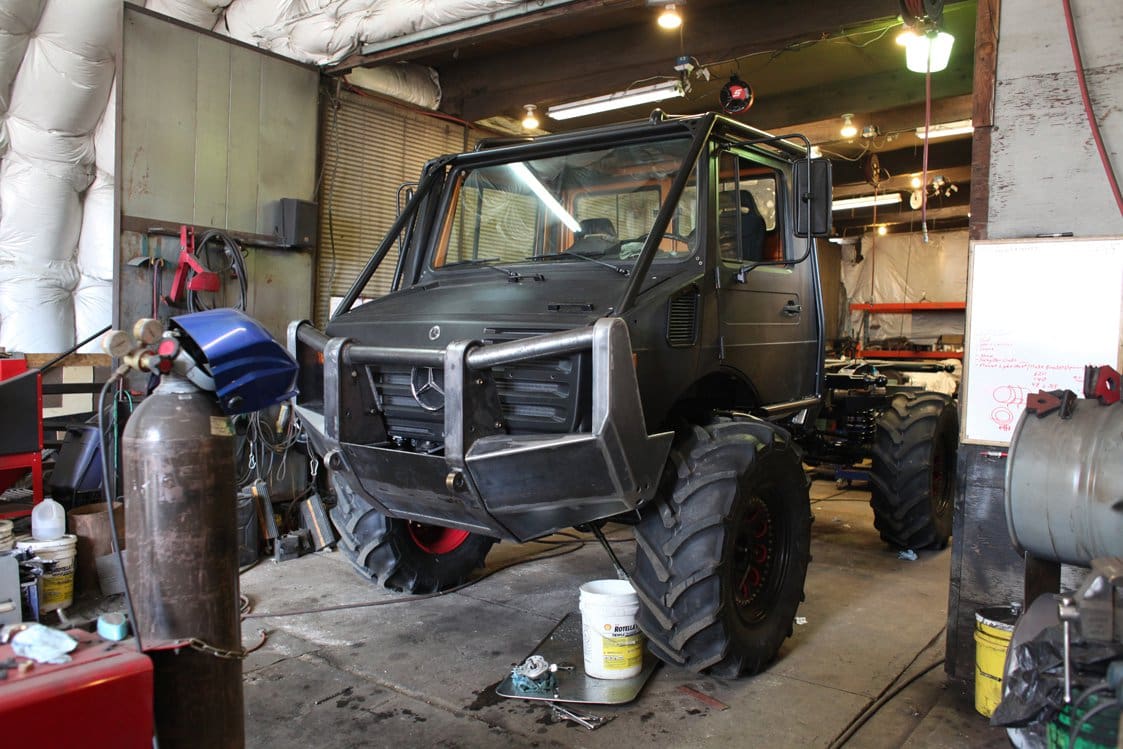
Bam Bam was built by Jay Couch of Couch Off Road Engineering, (the guy responsible for the Magpul MBUS Mog build) and started life as a standard Mercedes Benz 1985 U1700 Unimog. They added a USA Cummings 24 valve turbo diesel as the powerplant. According the Magpul, “The power is turned up so much that the custom intercooler is the size of a small bed!”

Magpul went on the describe the build in even greater detail. “Stock axles were swapped out, exo-cage was added, quadruple bypass reservoir shocks installed, secondary radiator and a full drivetrain pressurization system was added to put light air pressure to the axels, transmission and transfer case. Even the engine starter was pneumatically plumbed to prevent water from entering.”

Good Luck Guys!

www.magpul.com/culture

Mission Ready Equipment’s New Ride

Friday, June 3rd, 2011

missionreadyequipment.com

The JAMMA from Force Protection

Friday, June 3rd, 2011

Looks-wise, it kind of reminds me of an old DUKW that mated with a Mazda pickup but it’s something altogether different. The new Joint All-Terrain Modular Mobility Asset (JAMMA) from Force Protection (think Cougar MRAP) is a lightweight mobility asset. While they are keeping many of the specs close to the vest, as you can see it features a unique roll over protection system and can be fitted with an optional state-of-the-art hybrid, multi-fuel engine that generates 22kW of continuous exportable power. Currently, Utility, Gun Truck, and Rescue variants have been configured but the architecture of the design allows for multiple other uses. Additionally, it is fitted with an electric winch, on-board air compressor, open electrical architecture for the fitting of specialized equipment, as well as a built in armor attachment system for the fitting of scalable armor panels to correspond to various threats.

SOCOM is on the lookout for a new Ground Mobility Vehicle System (ver 1.1) to replace their HMMWV-based trucks currently in service. Keep your eyes peeled for it to kick off in September. Consequently, SOFIC was packed with mobility systems.

While the SOCOM requirement is for an MH47 compatible vehicle, the JAMMA even fits (just barely) in a V22 Osprey. This is becuase it is offered in both wide (MH47) and narrow (CV22) track versions.

The search for a V22-compatible Internally Transportable Vehicle (ITV) with sufficient range and load capacity for SOF use has been an ongoing issue since the 90s. The search for this mythical beast still lives on as a joint requirement for both SOCOM and USMC. The problem is the cabin size of the V22. When the tilt-rotor was first envisioned it was expected to replace one-for-one, every CH46 in the Marine Corps inventory. The USMC as lead service wrote a requirement based on the CH46, giving it the same cabin size and cargo capacity as the Sea Knight. When the CH46 was designed they still used JEEPs. However, in the 30 odd years the Osprey spent in development hell, the US military mothballed the M151 JEEP due to its limited cargo capacity and propensity to roll over thanks to a narrow wheel base. The V22 was perfect for a JEEP but nothing with a wide enough stance to remain stable while maneuvering under fire would fit. The search remains with all forms of expandable wheel bases and crouching suspensions attempting to fill the requirement. As of yet, nothing that fits in the CV22 (SOCOM will eventually own 50) seems to fill the rest of SOCOM’s unique needs.

The Marine Corps is pretty much in the same boat although they have purchased a more modern variant of the venerable JEEP called the Growler that features an active suspension for use as their ITV. The Growler began life as a prime mover for the Expeditionary Fire Support System and has been procured in limited numbers by the Marines. Unfortunately, it takes several minutes of prep time in order to configure it for the tight squeeze into the rear of an Osprey.

Force Protection has been applying lessons learned from their production of larger vehicles into the development of the JAMMA. The transportation infrastructure in Afghanistan is very limited, and what is there cannot be used by heavily armored vehicles. It is imperative that smaller and lighter vehicles are developed for this type of terrain.

www.forceprotection.net

PEO SOF Warrior Briefing on Ground Mobility Systems

Thursday, June 2nd, 2011

This is another presentation from SOFIC 2011. You need to review it now in order to have a good frame of reference for a couple of future articles. In particular, pay attention to the GMV 1.1 requirement.

SOF Warrior – SOFFOV Brief SOFIC 2011

Hyena from ArmorWorks

Wednesday, May 18th, 2011

ArmorWorks unveiled the new Hyena combat vehicle yesterday at the Special Operations Forces Industry Conference in Tampa, Florida. Designed using internal R&D (IRAD) funds, the Hyena isn’t built for any particular program but rather to a more generic set of requirements gleaned from interaction with the SOF community. We spoke with lead designer Kent Saucedo about the Hyena.

The vehicle finds its origins in the Fast Attack Vehicle class that was popular in the 80s and 90s which had its roots in the off-road racing community. At some point, conventional wisdom shifted to more traditional vehicle designs and with that came a lot of wasted space. Armor Works wanted to offer a vehicle with a 1:1 footprint offering every bit of the Hyena’s dimension as usable space. Additionally, the suspension is low in the vehicle in order to maintain a low Center of Gravity. Currently, the Hyena is powered by a turbo diesel but Armor Works is investigating alternative power packs for version 2.

As you can see from the photo the Hyena offers a combination of mobility, lethality, survivability and information dominance. What’s more, all of these systems work and aren’t some pie-in-the-sky concepts that will be developed only if funded.

The Hyena accommodates five personnel which include a driver, three crew in the middle compartment, seated three abreast as well as a rear facing crew position. There is also fittings to carry two litters. The entire crew is protected by a interconnected series of roll bars. All four passengers have access to weapons as well as access to the Hyena’s C4ISR system which includes a thermal camera. The Hyena is technology agnostic and a variety of collection and self-protection systems can be integrated into the frame. The center driver station is a drive-over-wheel design that offers the most visibility. Additionally, the dash rotates forward to accommodate ingress and egress.

It is a slow rock crawler designed to maneuver through rough washes and other debris strewn areas but can also accomplish sprints in excess of 80 mph in order to get you out of harm’s way in a hurry. Not shown is a trailer which will offer the Hyena a 1500 mile range due to its onboard stores of 50 gal of fuel, 50 gal of water, batteries and other storage.

The ver 2 offers a couple of upgrades that we are looking forward to seeing. For example, the middle crew seat will be pneumatic so that in the weapon station, the crewman remains strapped into his seat. Roll overs and other hazards have been considered in the design and the seat will collapse back into the vehicle. Additionally, a new composite monolithic hull tub is almost ready for production that is molded in a single piece in one of Armor Works’ giant autoclaves.

Of special note is the TactiCam random pattern3d camouflage applique. You may have seen photos of this on a Stryker at last year’s AUSA. It consists of randomly generated 3D geometric shapes and is designed to disrupt the vehicle’s planar surfaces with its combination of highlight and shadow areas. It has proven effective against daylight visual detection as well as ground radar, laser designators, thermal IR as well as EMI and RFI.

A V22 compatible version is in the works but will sacrifice one of the middle crew seats due to the narrow cabin space of the Osprey.

Stuff We Didn’t Write About

Sunday, December 19th, 2010

USTC Holdings Buys Xe Services For Estimated $200 Million

EcoRoamer: High-tech, zombie-proof survival RV

Analysing data is the future for journalists

Russia’s chic uniform ‘sends soldiers to hospital’

Tactical Pants Blog Interviews Creator of 5.11 Pants Liz Robbins


The Gear Junkie Scoop: Hydrapak E-LITE VEST

Body Armor with Batteries (I love it when someone outside this industry thinks they discovered something new to write about.)