XC3 Weaponlight

Archive for the ‘Navy’ Category

Navy Sunday – The Navy First Jack

Sunday, November 29th, 2020

I wanted to write about the U.S. Navy’s first Jack and the history of “Don’t tread on me” in the U.S. Navy, to give people the history of it and to show where it came from and that it had nothing to do with anything other than to tell the King of England we don’t work for you no more. The Navy Jack is not to be confused with the Gadsden flag (yellow flag with a collided up snake, see below). Which possibly started as the flag of South Caroline and later the first Commodores of the U.S. Navy fleet.  
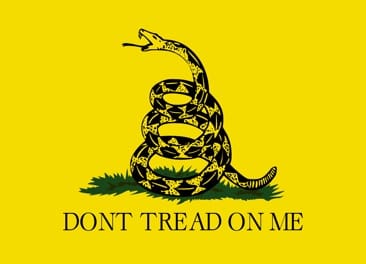
The rattlesnake (specifically, the Timber Rattlesnake) is especially significant and symbolic to the American Revolution. The rattle has thirteen layers, signifying the original Thirteen Colonies. Additionally, the snake does not strike until provoked, a quality echoed by the phrase “Don’t tread on me.”
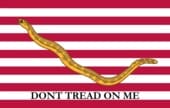
 The United States Navy originally started as the Continental Navy, established during the American Revolution by the Continental Congress by a resolution of 13 October 1775. There is a widespread belief that the Continental Navy ships flew a jack consisting of alternating red and white stripes, having the image of a rattlesnake stretched out across it, with the motto “Don’t Tread on Me.” That is actually hard to prove as “fact.” But there was a letter in 1778 that John Adams and Benjamin Franklin wrote to the Ambassador of the Kingdom of Sicily, thanking him for allowing entry of U.S. ships into Sicilian ports. The letter describes the U.S. flag according to the 1777 Flag Resolution but also tells a banner of “South Carolina, a rattlesnake, in the middle of the thirteen stripes.

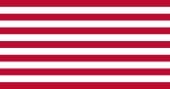
It is well documented that the rattlesnake and the motto “Don’t Tread on Me” were used together on several flags during the War of Independence or The American war’ / ‘the war with America ‘as the British call it. The only question in doubt is whether the Continental Navy used a red and white striped flag with a rattlesnake and the motto “Don’t Tread on Me” as its Jack. The evidence is inconclusive, but there are a lot of reasons to think it was. There is reason to believe that the Continental Navy Jack was simply a red and white striped flag with no other adornment.
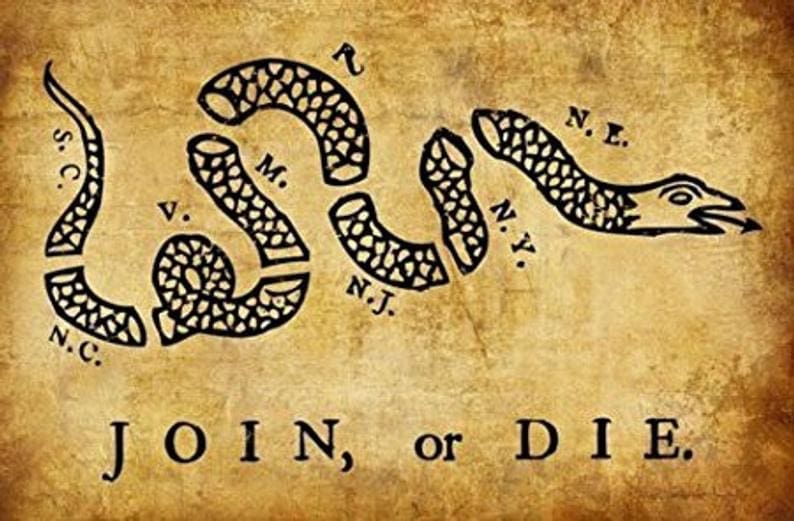
The rattlesnake emerged as a symbol of the colonies of North America about the time of the Seven Years War or the French and Indiana war( the Seven-year war was a global conflict that involved every great European power from 1756-1763 ) when the motto “Join or Die.” first appeared in Benjamin Franklin’s Pennsylvania Gazette in 1754, like a political cartoon reflecting on the Albany Congress. It was intended to get the Americans to join against the French during this time.
By the time of the War of Independence, the rattlesnake, frequently used in conjunction with the motto “Don’t Tread on Me,” was a common symbol for the United States, its independent spirit, and its resistance to tyranny. Two American military units of the Revolution are known to have used the rattlesnake and the “Don’t Tread on Me” motto: Proctor’s Independent Battalion of Westmoreland County, Pennsylvania, and Sullivan’s Life Guard during the Rhode Island campaign of 1777. The rattlesnake and the motto also appeared on military accouterments, such as drums, and state paper currency, during the Revolution.
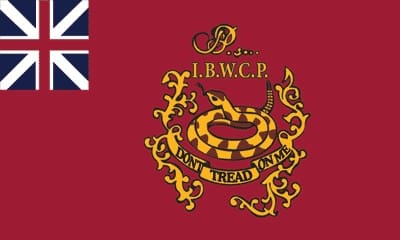
The rattlesnake’s image and the motto “Don’t Tread on Me” certainly had associations with the Continental Navy.
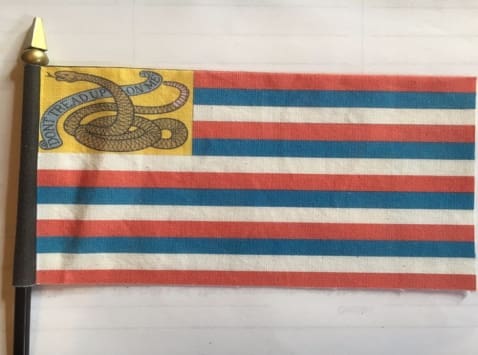
On 27 February 1777, a group of Continental Navy officers proposed that the full-dress uniform of Continental Navy captains include a gold epaulet on the right shoulder with “the figure of a Rattle Snake Embroidered on the Strap . . . with the Motto don’t tread on me.” 

In early 1776 Commodore Esek Hopkins, the first and only commander in chief of the Continental Navy fleet used a personal standard (flag) designed by Christopher Gadsden of South Carolina. This flag consisted of a yellow field with a coiled snake and the motto “Don’t Tread on Me.” There is no doubt about the authenticity of Hopkins’s standard, usually referred to as “the Gadsden flag.”  

The only written description of the Continental Navy jack contemporary with the American Revolution appears in Commodore Hopkins’s “Signals for the American Fleet,” January 1776, described as “the striped jack.” No document says that the Jack had a rattlesnake or motto on it. Elsewhere, Hopkins mentions using a “striped flag” as a signal. Since American merchant ships often displayed a simple red and white striped flag, there is a good chance that the striped Jack to which Hopkins refers was the same striped flag used by American merchant ships.

An 18th-century portrait of Esek Hopkins shows him where several warships are displayed. One flies a white flag, with a tree, and the mottos “Liberty Tree,” and “An appeal to God.”(posable Massachusetts first flag, and as the U.S. Navy was started in Mass) Another warship flies a striped flag with a rattlesnake and the motto “Don’t Tread Upon Me.”

The flags in these prints are not at the bow, where a jack would go, but at the stern, the proper place for the national ensign. Again, the pine tree flag was the flag that Mass wanted as the Nation ensign and used by all ships from Mass, and again the Navy was born in Mass, so it goes to say that might have that flag on there. Also, let’s be clear that New England and South Caroline basally started the war. So it also goes to say they would be on our ships. The historical evidence makes it impossible to say whether the Continental Navy used the striped rattlesnake flag as its Jack.

Simultaneously, the evidence suggests strong connections between the symbol of the rattlesnake with the motto “Don’t Tread on Me” and the United States’ earliest naval traditions. Fast forward to 9/11/ 2002. The Navy authorized all active merchant and coast guard ships to fly the First Navy Jack on their bow in port. They did this on the first anniversary of 9/11. Before then, the longest servicing ship was the only ship that was allowed to use it to show they were the oldest commissioned ship still in service (not counting the USS Constitution). All U.S. Navy personal adopted it in the Persian Gulf to wear on their shoulder fighting in the War on Terroir. It is still allowed to be worn on the Navy Working Uniform. The Navy has since gone back to the tradition of only the oldest ship using the “don’t tread on me” flag. Now the USS Blue Ridge. I hate to think this is happening because people think it means something that it doesn’t. So, it is clear that the flag has a long history with the Navy and the U.S.

I wanted to write this because it is now apparently a racist symbol. I am tired of things being highjacked by groups, and, let say, someone who has served 26 years in the Navy can’t wear it, or people think they are a racist. I am not pollical (I say as I write this). If you are a racist, white, black, green, blue, whatever color you are, go out and make a shirt that says “I am a racist” stop taking things from our history that have nothing to do with race and saying that it does. Stop taking history and twisting it into something for yourself. Man, up if you want to be a racist, come up with your own symbol. Don’t make it complicated. Make hats, shirts, and stickers that just say you are a racist. That way, it won’t confuse you or your buddies, and everyone will know where you stand. But don’t use something that has meant so much to this great country’s history and claim it implies something that it never has.
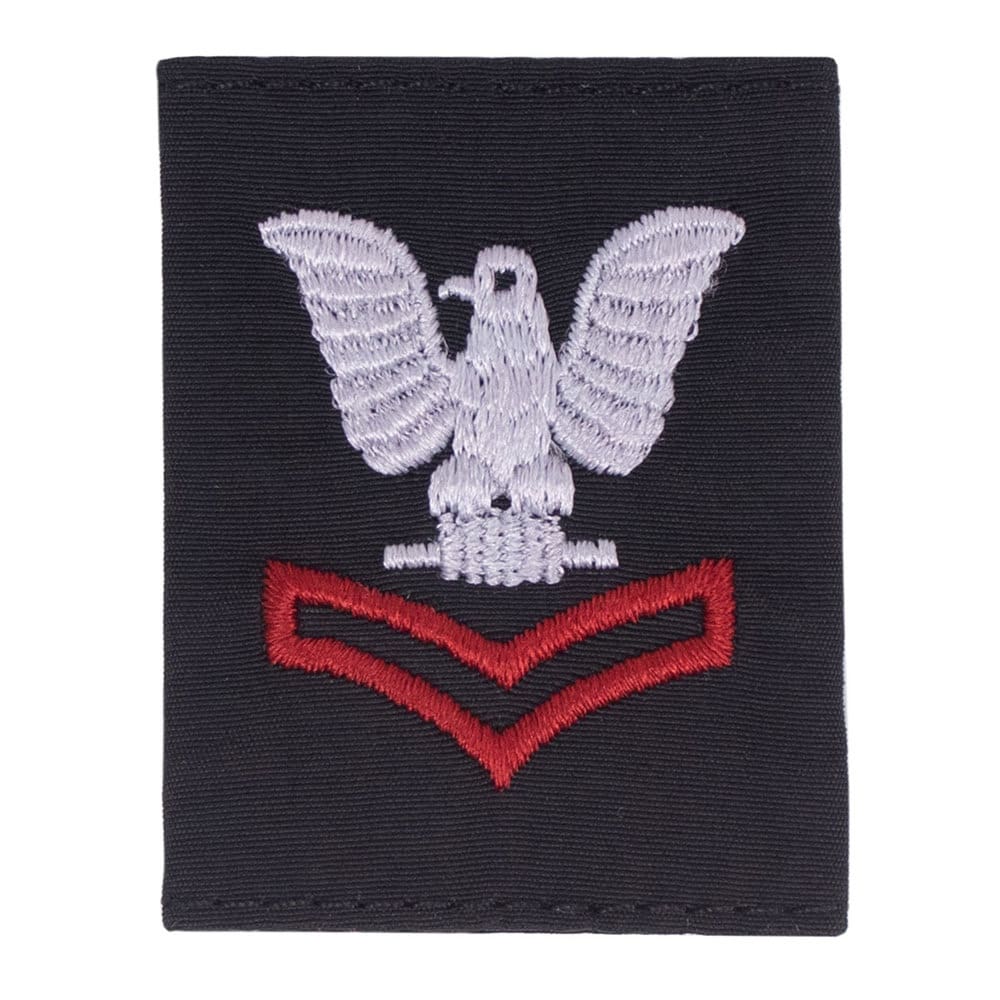
US Navy Approves Full Color Alternate Rank Tabs for Type III Work Uniform

Tuesday, November 3rd, 2020

The Navy has authorized Sailors the option to wear the black Cold Weather Parka (CWP) sleeve-style rank insignia with the Navy Working Uniform Type III (NWU Type III) in non-tactical environments.

The Navy has authorized Sailors the option to wear the black Cold Weather Parka (CWP) sleeve-style rank insignia with the Navy Working Uniform Type III (NWU Type III) in non-tactical environments. 

Effective immediately, the change was announced Oct. 29 in NAVADMIN 292/20. It allows wearing of the black CWP rank insignia with the NWU Type III parka and shirt as well as with the black fleece liner for all ranks, E-4 through O-10.

The black tab is not authorized in tactical environments, or where training requires complete camouflage protection, the message said.

“This policy change is based on the feedback received from the fleet via the rank insignia wear evaluation, Question of the Day video responses regarding insignia options, and ongoing complaints regarding the limited visibility of the camouflage pattern NWU Type III rank insignia,” Vice Adm. John B. Nowell, the Navy’s chief of personnel, wrote in the message.

Opting for the solid black parka tab was the best decision because fleet feedback showed it provides quick and easy identification of the wearers rank at the greatest possible distance with just a glance.

In addition, the items are already approved, in production and available at the Navy Exchanges, both in select uniform stores and can be ordered online at the Navy Exchange website.

Though metal insignia are authorized for wear with the cold-weather parka, the authorization is only for the sleeve-style rank insignia.  The message describes the insignia as being of “solid black fabric with color thread (gold, silver, scarlet) denoting the wearers rank,” the message states. 

“The back of the insignia is sewn together in the center to form a loop which facilitates placement on the NWU Type III rank tab.”

Feedback and recommendations regarding uniform policy, uniform components and uniform availability are welcome and can be provided via MyNavy Portal at www.mnp.navy.mil. Select Professional Resources, U.S. Navy Uniforms and *Ask The Chiefs.*  Feedback can also be provided via the MyNavy UNIFORMS Mobile App.

By MC1 Mark D. Faram, Chief of Naval Personnel Public Affairs

Happy Birthday US Navy!

Tuesday, October 13th, 2020

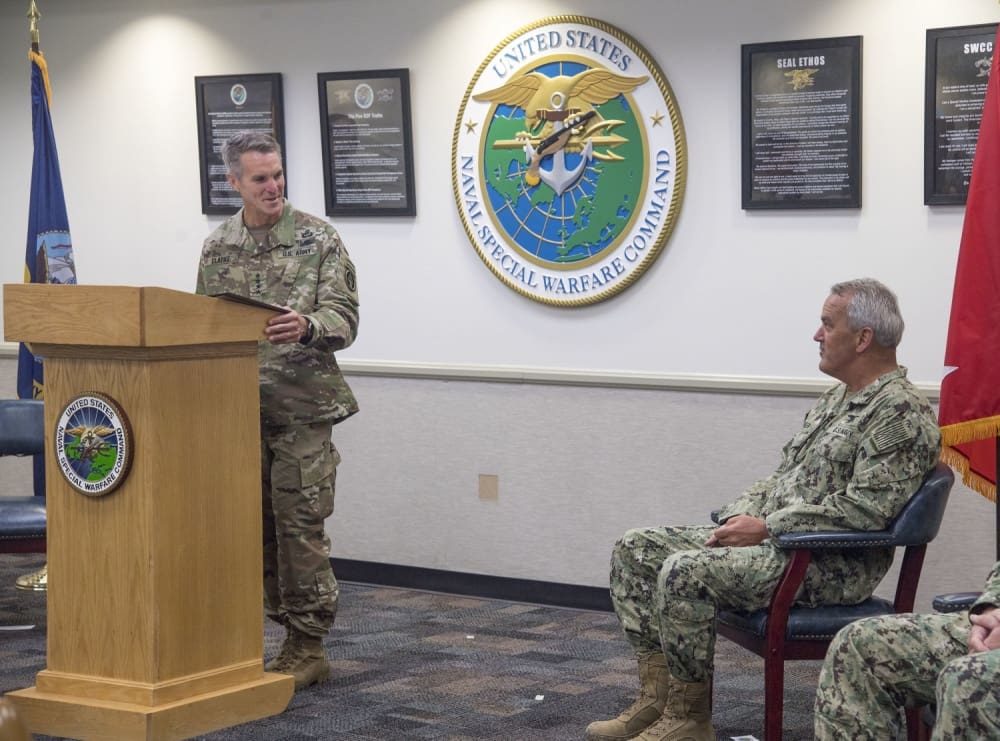
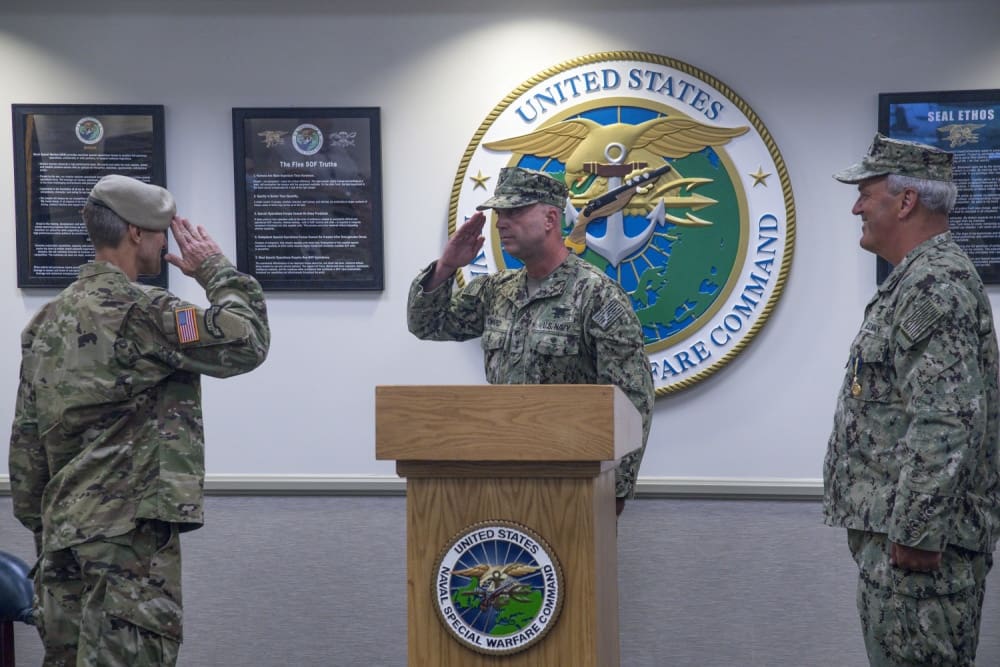
RADM HW Howard III Relieved RADM Collin P Green as Commander, Naval Special Warfare Command During Recent Change of Command Ceremony

Saturday, September 19th, 2020

NAVAL AMPHIBIOUS BASE CORONADO (NNS) – (Sep. 11, 2020) Rear Adm. H. W. Howard III relieved Rear Adm. Collin P. Green as Commander, Naval Special Warfare Command (NSWC) during a change of command ceremony at Naval Amphibious Base Coronado, Sept. 11, 2020.

U.S. Army General Richard D. Clarke, commander, United States Special Operations Command (USSOCOM) was the presiding officer.

“But on all days, today, September 11th, we all remember an event that changed many things for our country. And for our special operations forces, it changed our course, it changed many of our joint force individuals, and changed many families for years to come. And I would ask everyone to keep that foremost in your mind today, as we recognize the import of today’s event,” said Clarke. “For 19 years, SOF has been the tip of the spear operating around the globe to protect our American people, our interest and our way of life. From the beginning the Navy SEALs and the entire NSW team has been an absolutely essential part of that effort. …The incredible ethos of teamwork and excellence established in the tradition of this command firmly holds true today.”

Green assumed command of NSWC in July 2018 and in his next assignment, he will serve as chief of staff, U.S. Special Operations Command.

Howard arrives as Commander, NSWC from his most recent assignment as Commander, U.S. Special Operations Command Central located at MacDill Air Force Base, Fla.

NSW Command is committed to its Sailors and the deliberate development of their tactical excellence, ethics, and leadership as the nation’s premiere maritime special operations force supporting the National Defense Strategy.

NSW is the maritime component of U.S. Special Operations Command, and its mission is to provide maritime special operations forces to conduct full-spectrum operations, unilaterally or with partners, to support national objectives.

Courtesy Naval Special Warfare Command

Mountain Horse and NP Aerospace Selected for US Navy Maritime Body Armor Contract

Thursday, August 6th, 2020

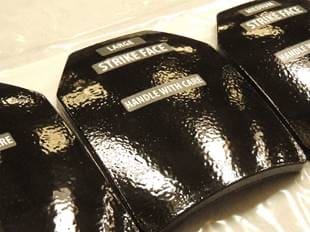
LASA LWB III+ IC06 MBP Maritime Buoyant Plate

Mountain Horse Solutions, a U.S. Defense and Mission Critical Equipment Supplier, based in Union City TN, and NP Aerospace, a ballistic hard armor company, have been awarded a four-year U.S. Navy Maritime Buoyant Plate body armor contract framework valued at over $20m.

Mountain Horse and NP Aerospace will supply up to 11,000 of the LASA LWB III+ IC06 MBP Maritime Buoyant Plates, which are lightweight and feature a highly durable waterproof Polyurea coating. The contract framework is for a four-year period and has a maximum value of $20,599,334. Mountain Horse and NP Aerospace were selected due to their ability to meet U.S. Navy strict performance requirements.

Mountain Horse, a key supplier to the U.S. Armed Forces and Government Agencies, selected NP Aerospace as hard armor manufacturer due to the company’s extensive experience working with global defense organizations including Canada’s Department of National Defence and the UK Ministry of Defence. NP Aerospace has supplied over 200,000 body armor plates to British and Canadian Armed Forces, more than 1 million ballistic helmets and armor systems for over 2,000 NATO vehicles used in overseas operations.

Chris Witts, Director, Mountain Horse Solutions, said: “We are thrilled and honored to be awarded this contract. Supplying the U.S. Navy with a top-quality critical safety product, like the Maritime Buoyant Hard Armor plate, is a significant achievement. Mountain Horse Solutions is an expert in supply chain management and prides itself in providing the US Armed Forces with the highest quality and most innovative equipment available. This award confirms the strength of Mountain Horse Solutions’ partnership with NP Aerospace and our commitment to supplying rapid response innovative solutions to the military.”

James Kempston, CEO, NP Aerospace, said: “Being awarded the U.S. Navy Maritime Buoyant Plate body armor contract is a testament to our experience in composite armor technology. Our personal armor has been used by frontline allied forces for over 25 years.  We are proud to be supporting Mountain Horse and the U.S. Navy in supplying our troops with the lightest weight, highest performing, top quality products in the market. The LWB III+ IC06 MBP Maritime Buoyant Plate is able to comfortably meet the ballistic threat required by the U.S. Navy and delivers the wearability and buoyancy required in maritime operations.”

NP Aerospace is a global armor manufacturer with extensive experience in complex, military programs. The company’s body armor portfolio includes a range of ballistic plates to meet demanding defense requirements from NIJ Level III plates for standard military operations to NIJ Level IV plus special threats plates.

Mountain Horse Solutions and NP Aerospace were awarded the Naval Sea Systems Command (NAVSEA) contract N61331-20-D-0014, as an ID/IQ (Indefinite Delivery / Indefinite Quantity) to provide Maritime Buoyant Body Armor (MBP), both in torso and side configurations.

SCUBAPRO Sunday – Draper Kaufman the Godfather of UDTs/SEALS

Sunday, August 2nd, 2020

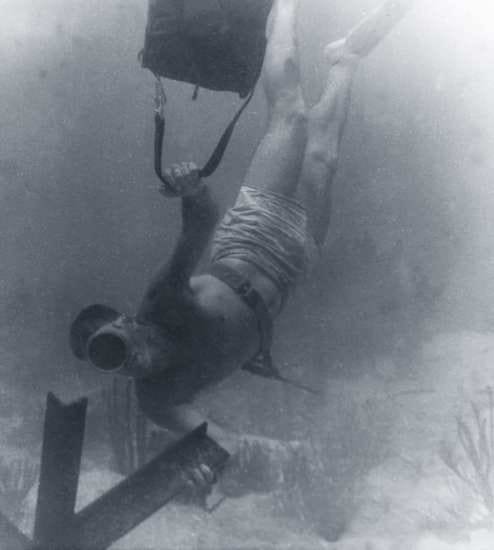
On August 4 we celebrate Rear Admiral (ret) Draper Laurence Kauffman birthday. Admiral Kauffman is credited with starting the Underwater Demolishing Teams and being the first U.S. frogman. He is called the father or Godfather of the SEALS teams.

He graduated from the US Naval Academy in 1933. But because he had bad eyesight, he was made a reserve officer. At the start of WWII, he volunteered for the America Volunteer Ambulance Corp in Paris. During the German blitz of London, he severed as a bomb disposal officer. One month before Pearl Harbor he returned to the U.S. and joined the Naval Reserve. He is credited with inventing Motivation week, better known as Hell Week in Basic Underwater Demolition / SEAL training (BUD/S). Just that last accomplishment is worthy of calling him the Godfather.

en.wikipedia.org/wiki/Draper_Kauffman

huckberry.com/journal/posts/the-godfather-of-the-navy-seals

SCUBAPRO Sunday – Americans Navy

Sunday, July 5th, 2020

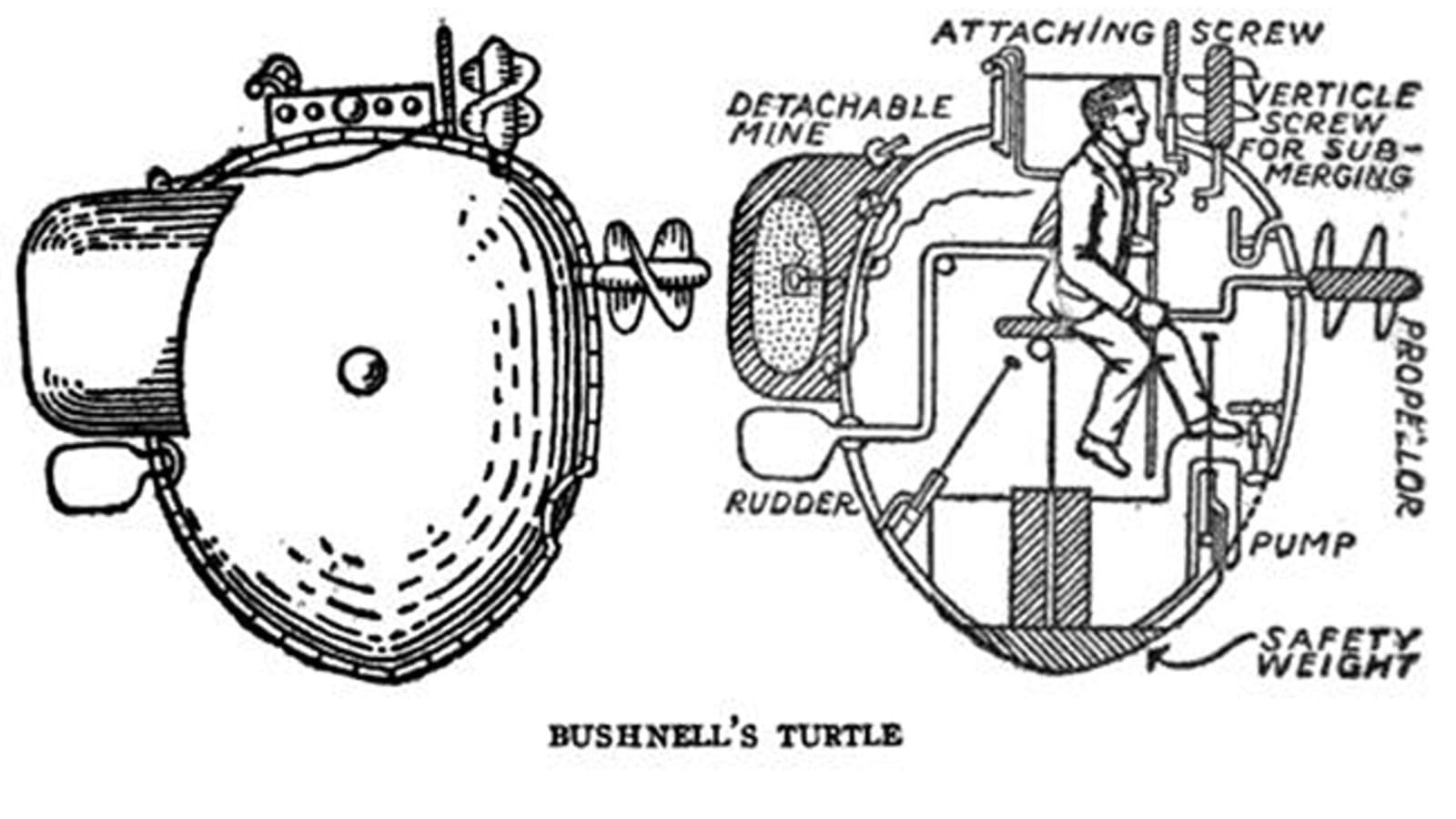
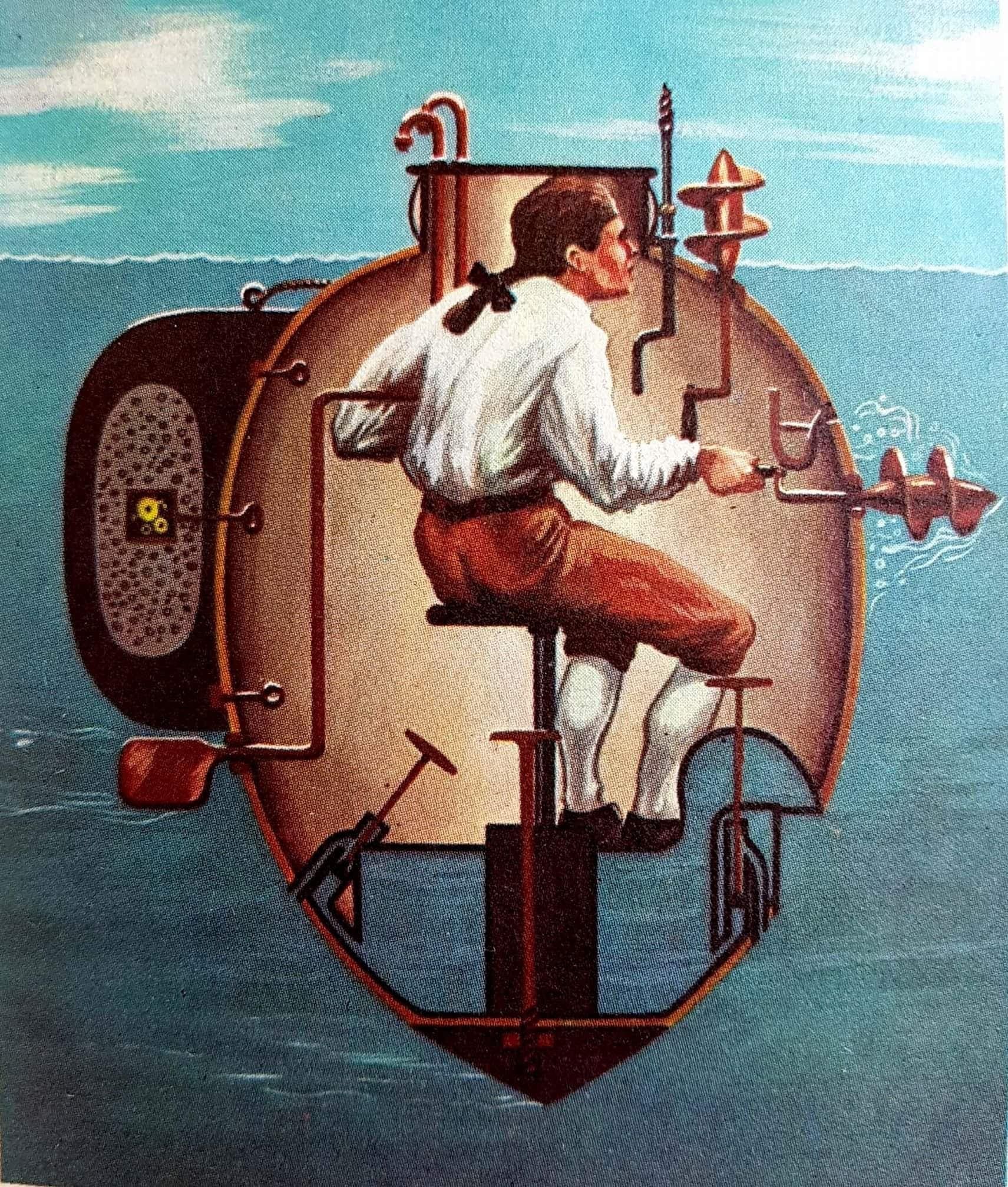
In the early 1770s, a Connecticut inventor David Bushnell started designing what would be the first submersible. It was a small egg-shaped and less than eight feet tall. Her hull was constructed from two oak shells held together by steel bands and waterproof with a thick layer of tar. It had ventilation tubes, a compass, and a device for determining depth. Attached to the exterior was a primitive bomb. The pilot entered the vessel through a hatch at the top. There were a couple of small glass windows that provided very light and visibility. It was operated by a hand crank that propelled it and a tiller that steered it. The operator also controlled the hand pump that regulated the ballast that submerged and surfaced the craft. Once submerged and the ventilation tubes were closed, there was about 30 minutes worth. It was called “Turtle” because of the two “shells” put together to make it. It is also referred to as Americas Turtle.

In the spring of 1776, about a year into the Revolutionary War, Bushnell wrote to General George Washington asking if the Turtle could be used in defense of New York City’s harbor. Washington accepted the offer. Around midnight on 6 September, the Turtle, piloted by Army sergeant Ezra Lee. That’s right, the first submarine action by the U.S. Navy was led by an Army guy.

It took Lee two hours to get to his target; a British ship named the HMS Eagle. Once he positioned himself beneath the vessel, he was supposed to drill into her hull using a bit attached to Turtle’s top hatch. Once the hole was deep enough, he would anchor his explosive device to the ship’s hull. He had about 30 minutes to get away from the Eagle before the charge would detonate. That was the plan, but Lee’s bit got stuck in a metal part of the hull. On his second attempt, the Turtle bobbed to the surface and he was spotted. As he headed for shore, Lee released his “torpedo,” which exploded harmlessly in the middle of the East River.

Even though Lee wasn’t successful in sinking or doing damage to the HMS Eagle (other than a small drill hole) it was the U.S. first attempt at underwater warfare, and it was one of the first in a very young countries Navy. Secondarily the failed attack ultimately forced the British to move their fleet of 200 ships to where they thought was a safer location. The threat of underwater attack kept the British fleet on their toes throughout the war and made them use more resources and manpower to protect their ships then they normally would have. Much like using Special Forces behind the enemy lines in modern warfare. So, it turns out it wasn’t as big of a failure as first thought. The basic principles used by America’s Turtle still remain valid in submarine warfare today. In recognition of Bushnell’s achievement, the U.S. Navy named two submarine tenders in his honor, one during World War I and one during World War II. Inevitably, the ships were nicknamed “Turtle.”

Coronavirus Defense: Navy Develops 3D-Printed Tactical Masks for US Forces Korea

Thursday, June 25th, 2020

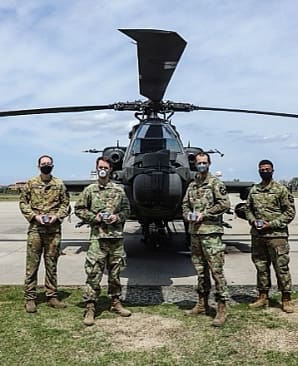
ARLINGTON, Va. (NNS) — The coronavirus pandemic has caused a global shortage of surgical face masks and other personal protective equipment (PPE), including for warfighters stationed at U.S. Forces Korea.

To address this, the Office of Naval Research (ONR) Global TechSolutions is working with multiple partners to develop prototypes of 3D-printable (also called additive manufactured) masks for use at Camp Humphreys in South Korea.

The prototypes are designed for warfighters needing masks for use with tactical gear like combat helmets and protective visors—security personnel, for example. Printed from medical-grade plastic, with a replaceable filter, the masks form a tighter seal around the nose and mouth. This forces breathed air through the filter only, instead of through gaps between the fabric and skin, reducing infection risk.

“This shows the power of effective collaboration in meeting an urgent need,” said TechSolutions Director Jason Payne. “It enables us to do whatever we can to slow the spread of coronavirus and keep it contained to the best of our ability—so it doesn’t prevent our warfighters from performing their missions.”

TechSolutions is ONR Global’s rapid-response science and technology program that develops prototype technologies to address problems voiced by Sailors and Marines, within approximately 12 months. The PPE collaboration involves the U.S. Army’s Combat Capabilities Development Command, U.S. Forces Korea and the Naval Undersea Warfare Center (NUWC) Division Keyport.

The project stems from efforts by Mark Buffum, the ONR Global science advisor assigned to U.S. Forces Korea. When the coronavirus pandemic began, South Korea emerged as a hotspot, resulting in PPE shortages throughout that country. Other regions of Asia saw similar shortages, including multiple suppliers to U.S. Forces Korea.

Buffum researched creative ways in which command personnel responded to PPE shortages. He coordinated with the Army’s Combat Capabilities Development Command to leverage a donation of bulk filter material from a Pennsylvania-based manufacturing supplier—as well as a mask design from an Army officer stationed at U.S. Forces Korea—to 3D-print masks. Unfortunately, the “hobby-grade” machine available at Camp Humphreys could only produce seven masks daily. 

Seeking to expand this capability, Buffum contacted TechSolutions and partnered with Payne’s team and NUWC Keyport—which has industrial-grade 3D printers able to manufacture hundreds of masks a day.

TechSolutions agreed to sponsor a project consisting of multiple products:

—Several 3D-printed prototypes for evaluation

—500 3D-printed masks comprising all prototype styles

—Resin molds of the prototypes. Creating masks from resin, instead of medical-grade plastic, enables hobby-grade 3D printers to produce 10 times as many masks each day.

—Technical data packages with instructions for 3D-printing or resin pouring, as well as maintaining mask designs 

U.S. Forces Korea and the Army’s Combat Capabilities Development Command are evaluating the prototype masks. Once they decide on a design, they’ll work with NUWC Keyport to 3D-print large quantities of masks.

“This is a good test of how we can respond to the needs of the fleet in an emergency,” said Ross Wilhelm, principal technologist for NUWC Keyport’s Maintenance, Engineering and Industrial Operations Department. “How many masks can we produce and how fast? We hope this serves as a model for Department of Defense commands worldwide.”

In addition to tactical applications, Buffum hopes to see versions of the masks made for medical personnel and first responders to use during the coronavirus pandemic as well as future health crises.

“These masks can play a key role in strengthening our medical infrastructure of preparedness,” he said. “That way, people won’t be scrambling for supplies at the beginning of another pandemic.”

For more news from Office of Naval Research, visit www.navy.mil/local/onr.

Story by Warren Duffie Jr., a contractor for ONR Corporate Strategic Communications.

US Army photo by KCpl. Hanmin Yun. 2ID/RUCD Public Affairs