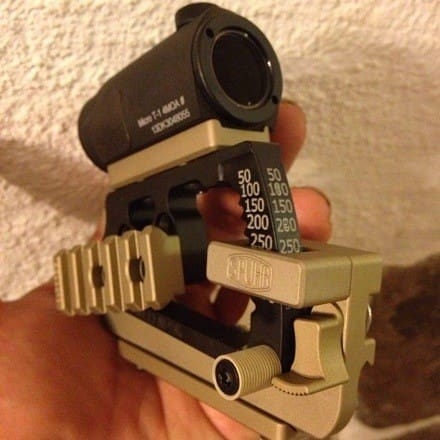
This is the Aimpoint T1 sight mount for the M203 40mm Grenade Launcher manufactured by Spuhr AB..


There are limitations when mounting a PVS-14 to a rifle. Chip discusses those limitations in this week’s episode.
In this week’s episode, Kyle talks about several options for mounting a PVS-14 to a rifle.
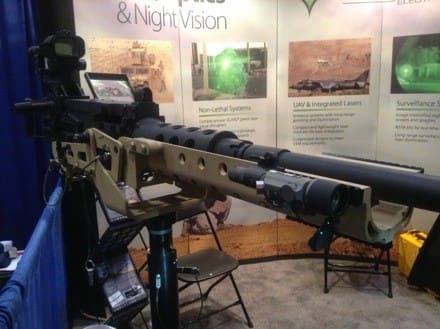
BE Meyers is the new exclusive domestic distributor for the Mil Systems Group TriRail Light Bracket which extends a standard Mk 93 cradle, offering forward of the turret shield mil-std 1913 mounting of optics and illuminators.
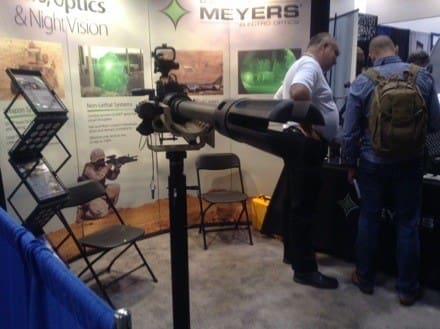
Here you can see an IZLID 200 CR123 version which would be remotes via a cable operationally. The gun shield is not installed for this demonstration.
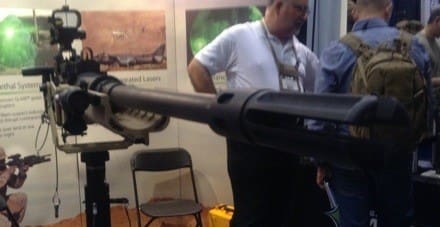
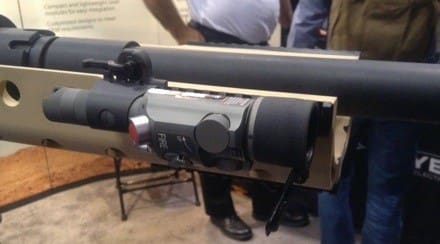
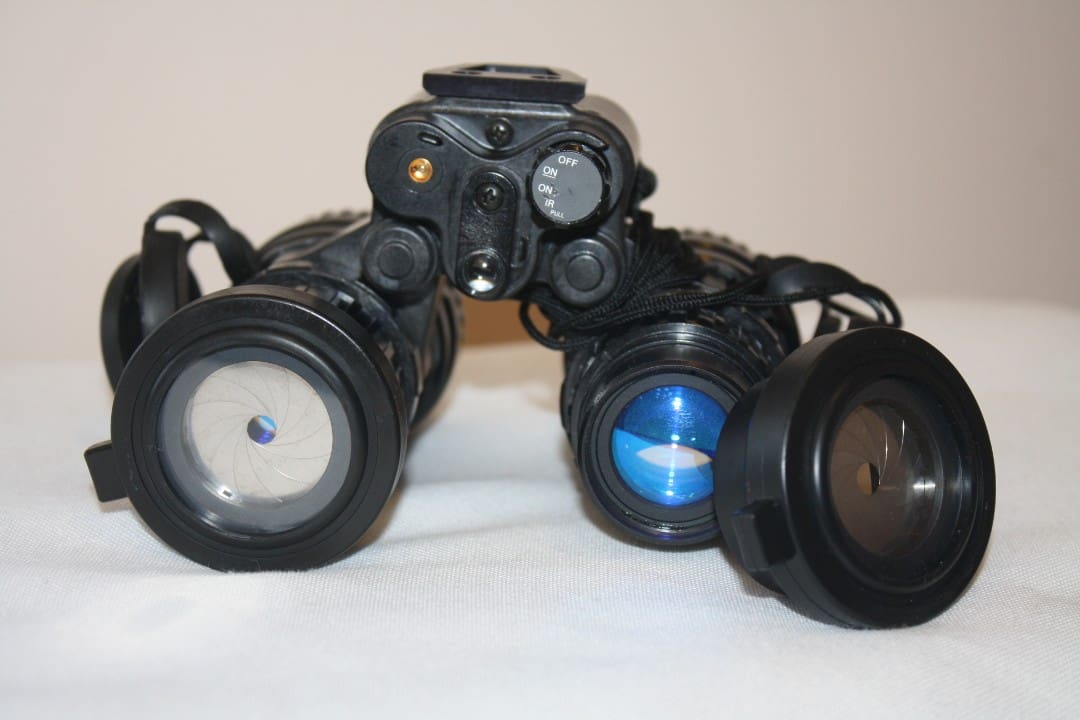
The Tarsier Eclipse from MATBOCK is an easily adjustable, add-on lens for night vision systems that provides the ability to see objects at all distances without adjusting focus on the NVG tubes themselves. Back in December MATBOCK shared this new technology with us. At the time, they were a few weeks away from going live; but they just weren’t 100% satisfied with that final prototypes so they went back and redesigned their product. Now, they are satisfied with its performance and are ready to release the product.
Below is the data that Matbock collected back in November using PVS-14’s and a 5.0 megapixel point and shoot camera.
Test #1:
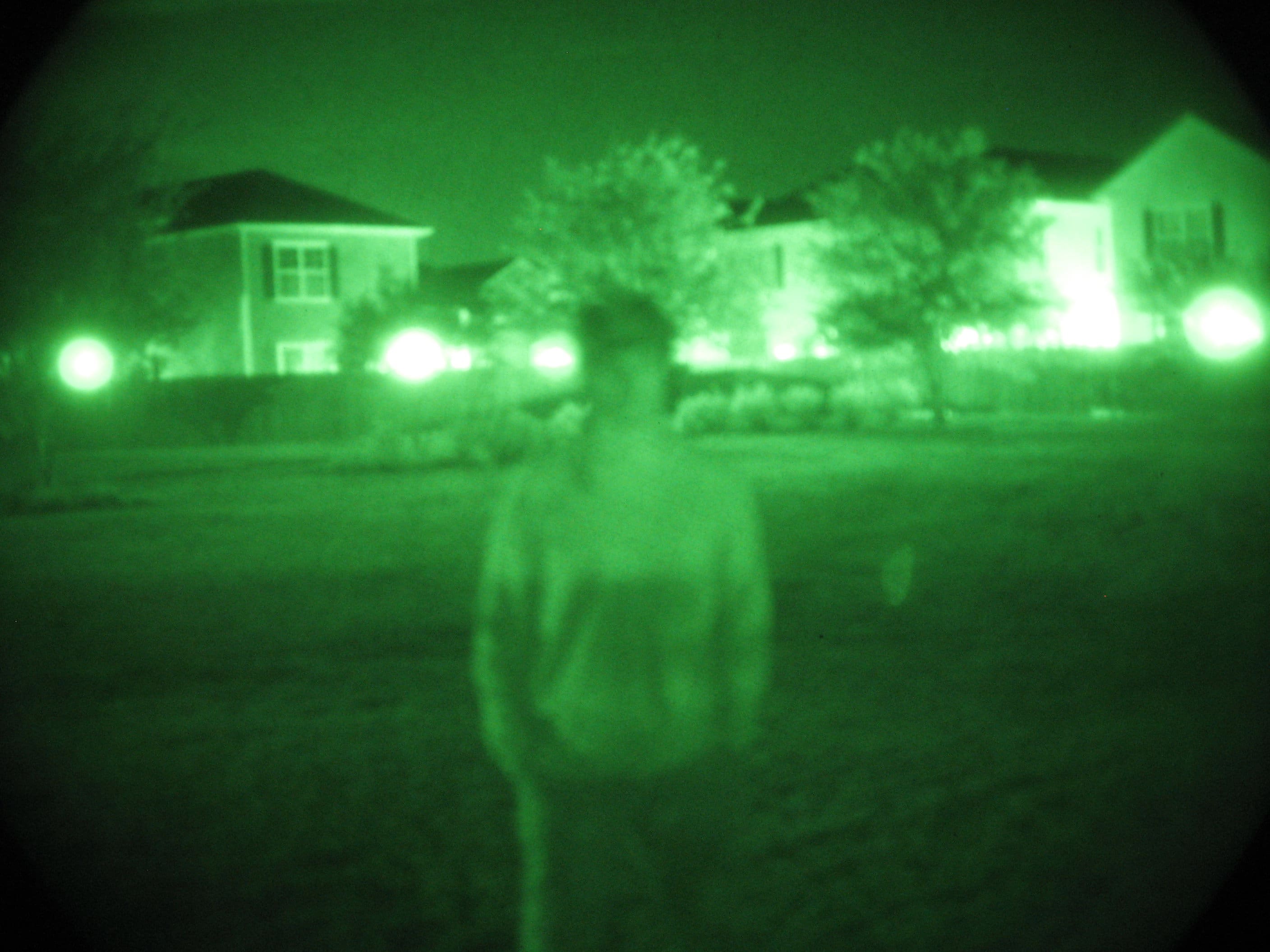
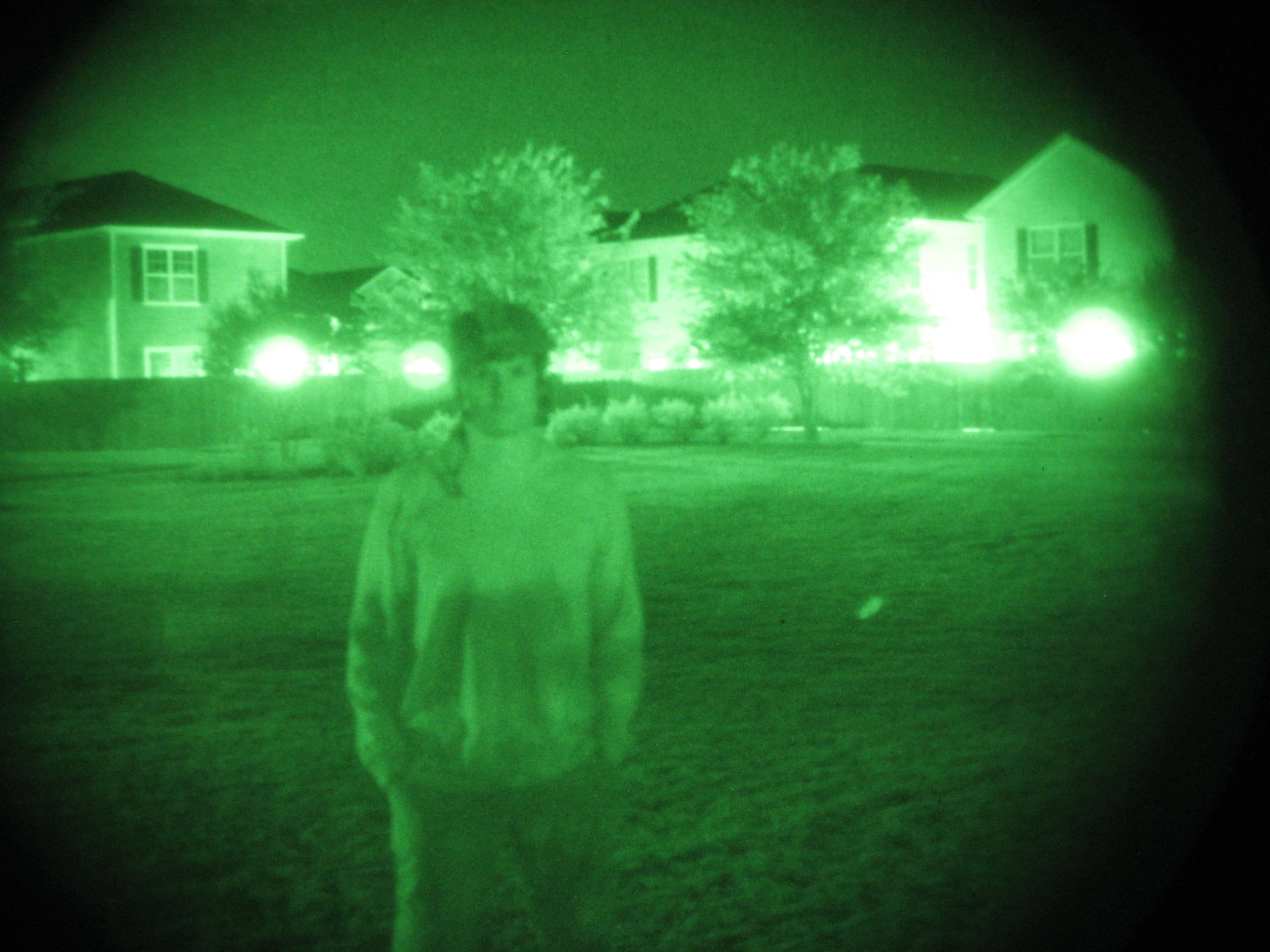
Urban area with a lot of lights surrounding us. The 1st picture we focused the Night Vision Goggles (NVGs) onto the corner of the house in the distance. In the 2nd picture we kept the focus at the corner of the building but then started to engage the Tarsier Eclipse, immediately the person started to come into focus.
Test #2:
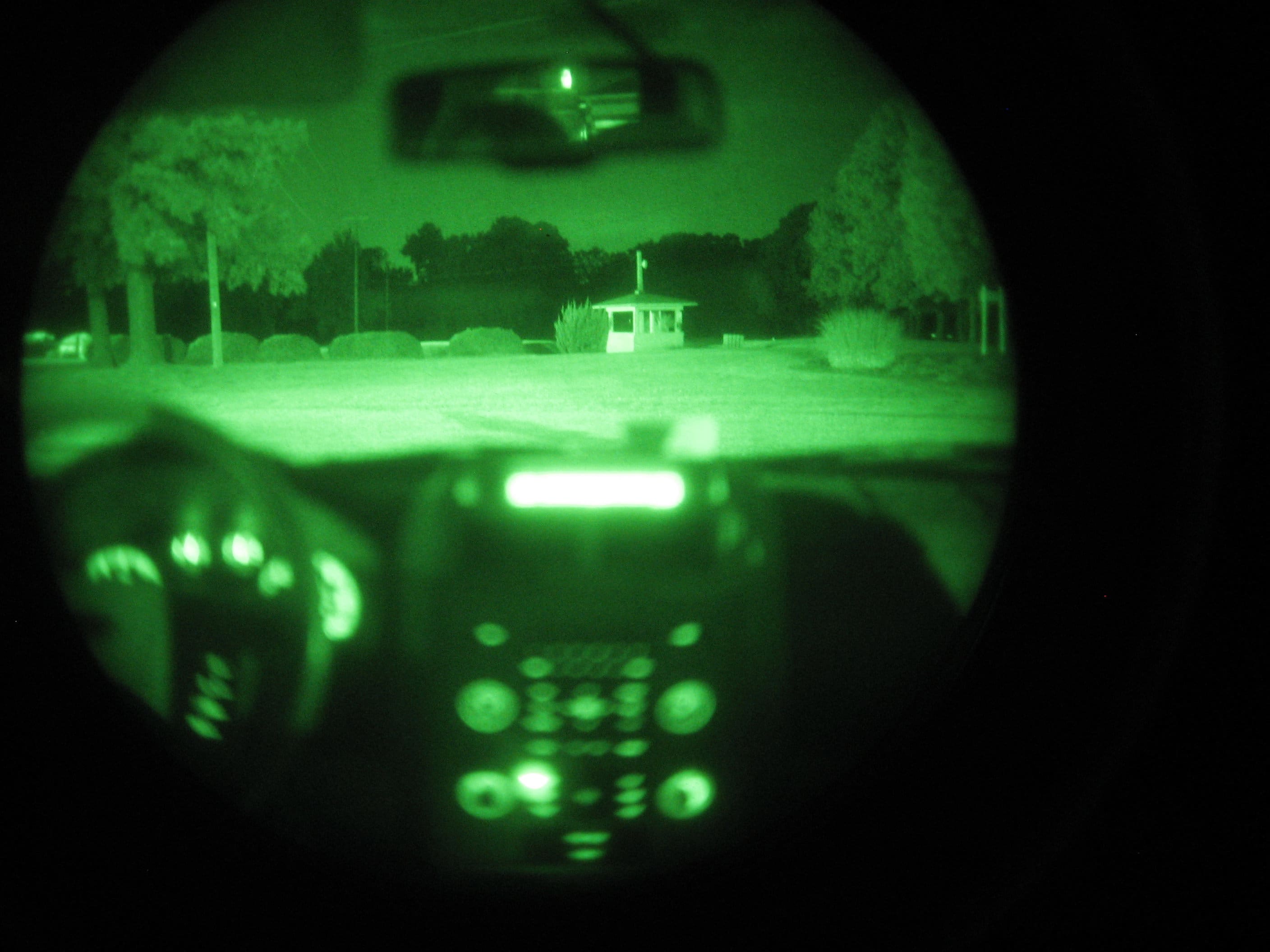
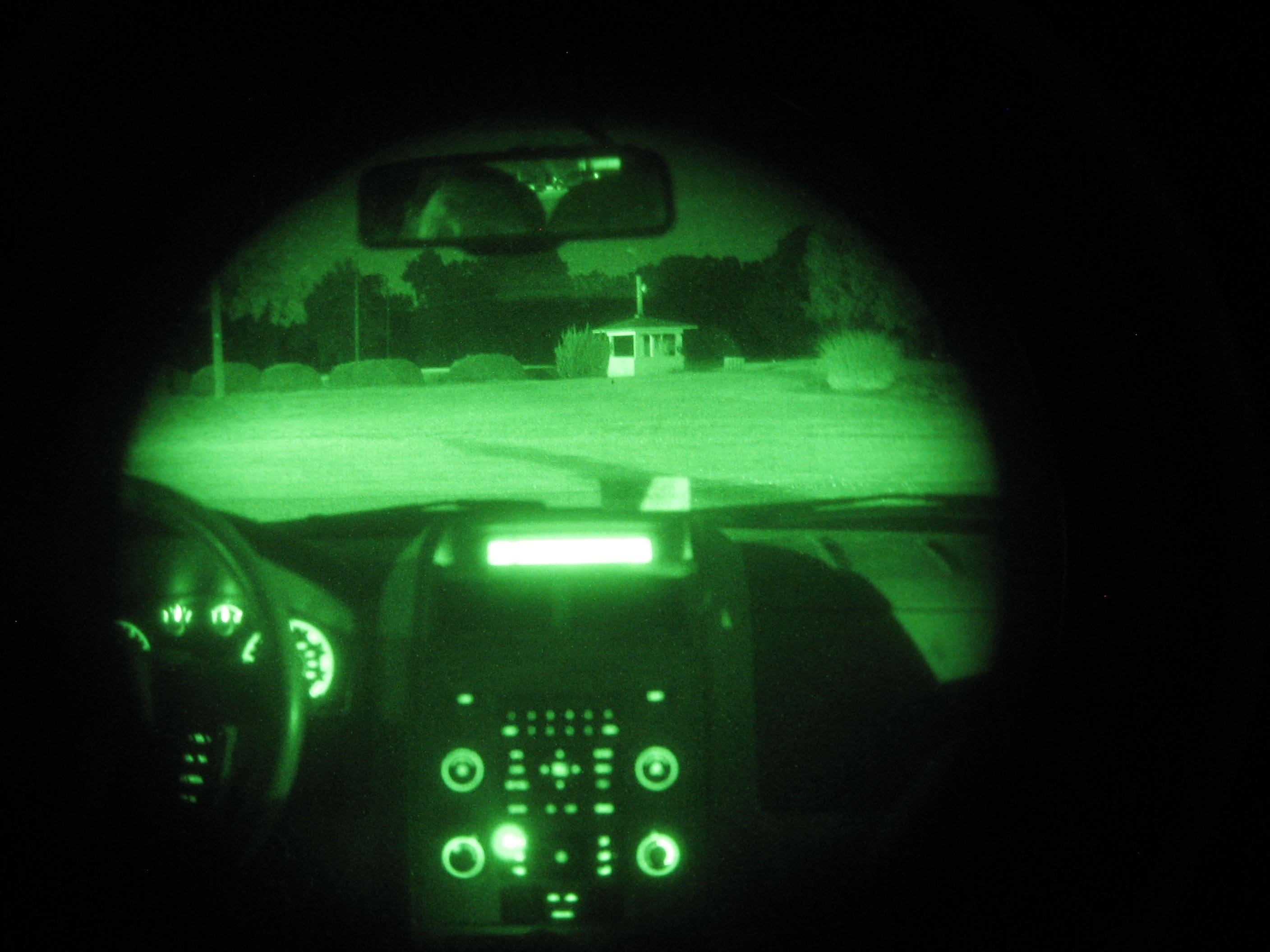
Dashboards or lighted panels are a huge problem for NVGs without using the Tarsier Eclipse. In picture 1 we focused on the gazebo (maybe 150-200 yards away), and you will notice how the panel becomes “washed out” from the NVGs. In picture 2, we kept the focus on the gazebo and started to engage the Tarsier Eclipse, while you cant read the numbers or letters on the buttons you can distinguish that there are actually buttons now.
Test #3:
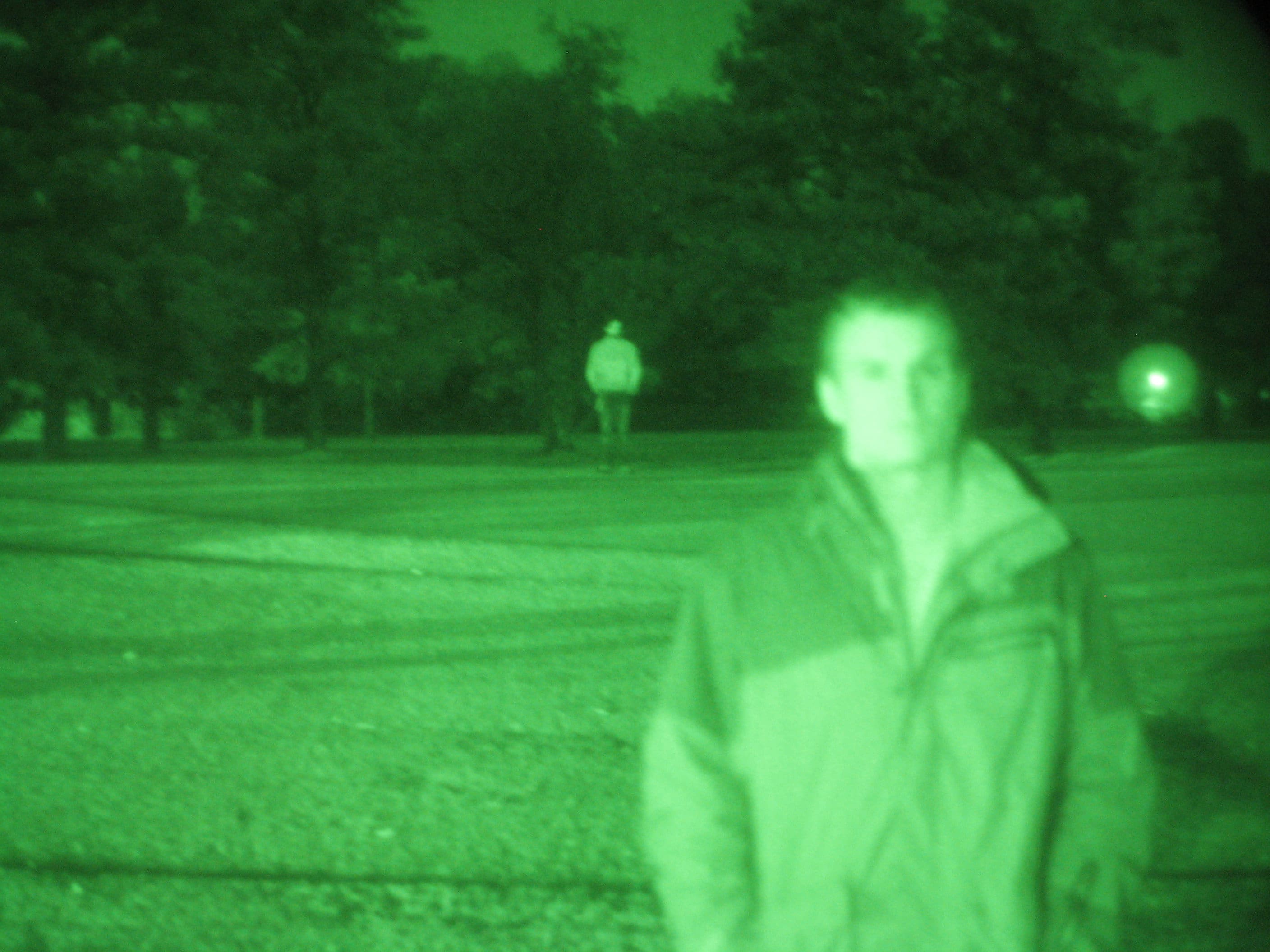
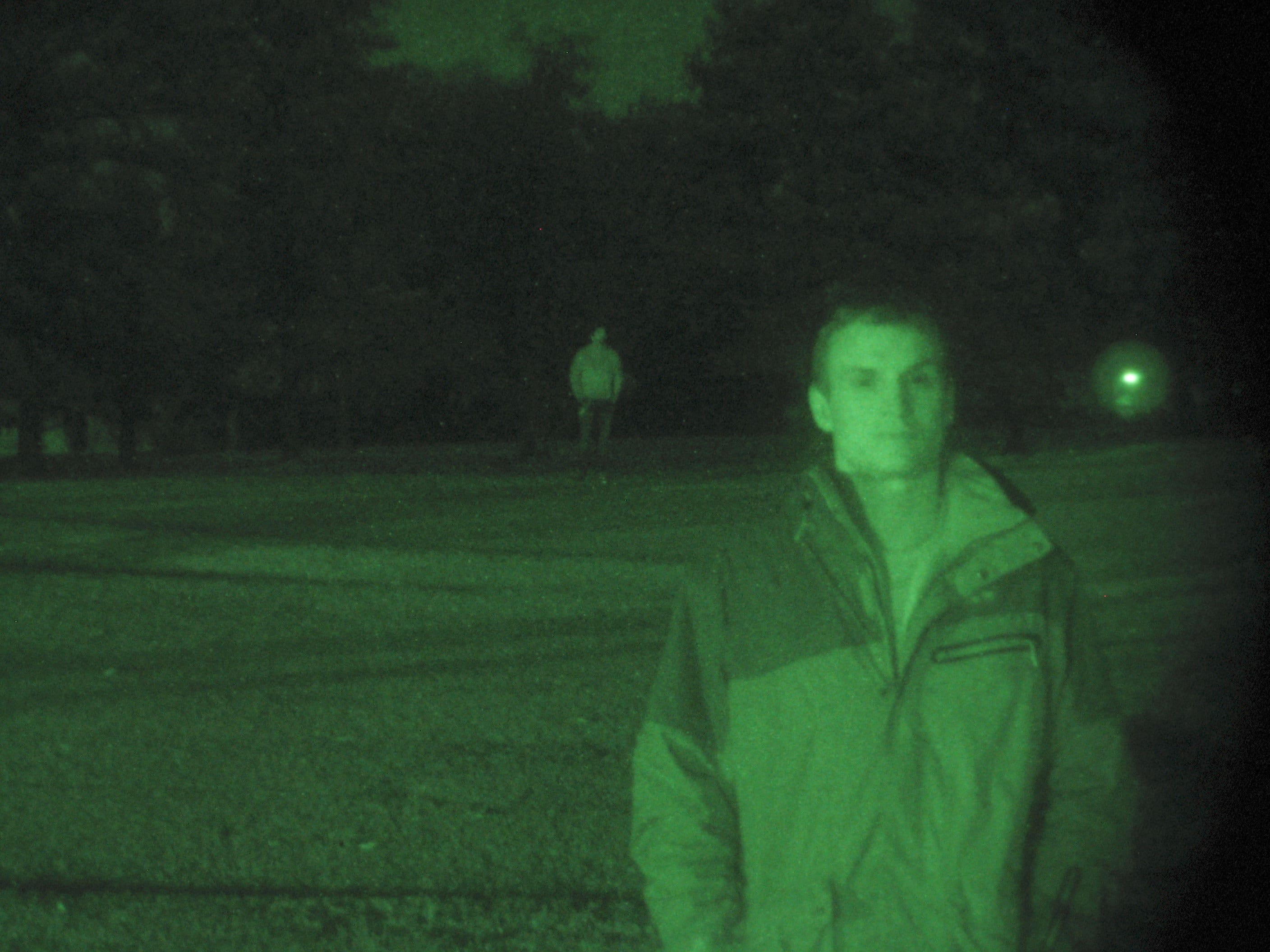
Rural area that had some background lights, but no direct lighting. Picture 1 we focused the goggles to the person in the distance. In picture 2 we focused the goggles on near person. Picture 3 we focused back on the person in the distance and then started to engage the Tarsier Eclipse, which allowed both objects to remain in focus for the current lighting conditions.

The Tarsier Eclipse is designed to fit the following models:
AN/PVS-7, AN/PVS-7B/D, ANVIS-9, AN/PVS-14, NEPVS-14, AN/PVS-15, AN/PVS-18, BNVD, BNVD-G, AN/PVS-23 (F5050YG), and M944 Pocket Scope.
In this week’s episode, TNVC University covers head mounting a PVS-14, as opposed to helmet mounting.
“Mounts, Shrouds and J-Arms” sums up Episode 3 of TNVC’s weekly look at night vision systems.
In addition to this great info, we wanted to show you TNVC’s latest, a line of T-shirts.
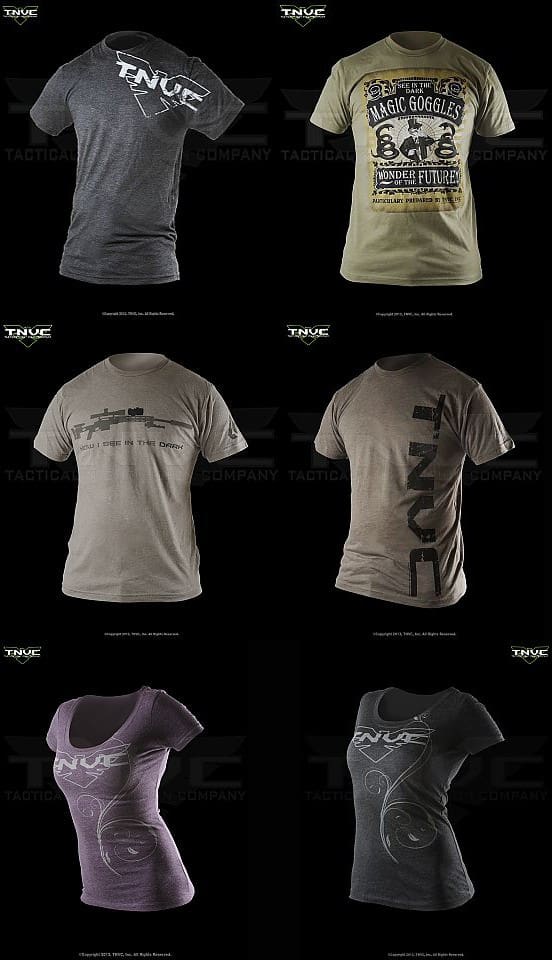
Available in Men’s and Ladies’ styles, I’ve got to admit that my favorite is the “Snake Oil” Tee.
tnvc.com/shop/category/apparel
In this the second installment of the series, TNVC covers several different aftermarket accessories that are available for the PVS-14, and how they can be utilized.