XC3 Weaponlight

Archive for the ‘Optics’ Category

XS Sights Introduces New Line Extensions

Wednesday, July 1st, 2020

Fort Worth, TX (June 30, 2020) – XS Sights is pleased to offer line extensions for its popular second-generation DXT2 Night Sights and a non-tritium rear option in the new DXW2 Night Sights for Glock, SIG SAUER, Smith & Wesson and other select pistol models.  The front sights of all new products feature tritium in the center surrounded by XS’s photoluminescent Glow Dot technology.

For a full list of specific models and part numbers, visit xssights.com/LineExtensions.

Overview of Benefits

Tritium Rear vs. Non-Tritium rear:

The DXT2 Night Sights have tritium in the rear, which provides the brightest indexing point for sight alignment in low light. The DXW2 Night Sights have a white-stripe rear, which reflects light to offer an excellent, bright-light sight picture and provides more affordability for the set. 


Color Options:

The Big Dot variants are offered in Optic Yellow or Optic Orange while the Standard Dots come in green. All front sights feature tritium surrounded by XS’s photoluminescent Glow Dot technology.

Optic Yellow: 

Optic Yellow is the best option for low light and has the brightest glow intensity. Primarily based on the white light spectrum, Optic Yellow is very reflective and will excite the dot’s photoluminescent properties faster than any other color. The increased surface area of the convex dot increases light absorption, intensifying the charge of the dot’s glow properties, making this a great low-light choice.

Optic Orange: 

Optic Orange is based primarily on yellow with a hint of red to ensure visibility in low light when uncharged. The increased surface area of the convex dot increases light absorption, intensifying the charge of the glow properties of the dot. Orange is the preferred bright-light choice of many XS customers.

Green: 

Green is our bridge color for the Standard Dot sights. It glows well in low light and offers vibrant, bright-light sight indexing. This color performs well on the smaller-sized Standard Dot and still manages to focus the shooter’s attention, in any light.

While there are scientific reasons these specific colors excel in certain light, many times, the choice comes down to personal preference and which color an individual’s eye sees best.

Big Dot:

Sized at .188″ and positioned for defensive shooters, our Big Dot front sights are an excellent option for EDC guns or shooters who have vision difficulty and struggle to see their sights. The Big Dot’s provide a distinctive front that offers a great glow and the biggest front sight on the market.

Standard Dot:

Sized at .144″ and positioned for target shooters, our Standard Dot front sights are an excellent option for target guns or shooters looking for a smaller front sight option. 

Suppressor Height Sights: 

All XS Red Dot Optics (RDO)/Suppressor-Height sets are lower 1/3 co-witnessed for Glock 9mm MOS pistols equipped with a Trijicon RMR or Holosun 507C. The lower 1/3 co-witness minimizes the amount of space the front sight takes up in the optic’s window. XS’s durability and color options allow for greater flexibility and confidence when using suppressor heights as back-up iron sights for RDO. 

Visit xssights.com for a full list of all products and models.

All XS Sights are backed by a 10-year, No Questions Asked Warranty and 30-Day Satisfaction Guarantee.


FT Polk’s 3rd Squadron, 89th Cavalry Regiment Trains and Fields Enhanced Night Vision Goggles-Binoculars

Wednesday, July 1st, 2020

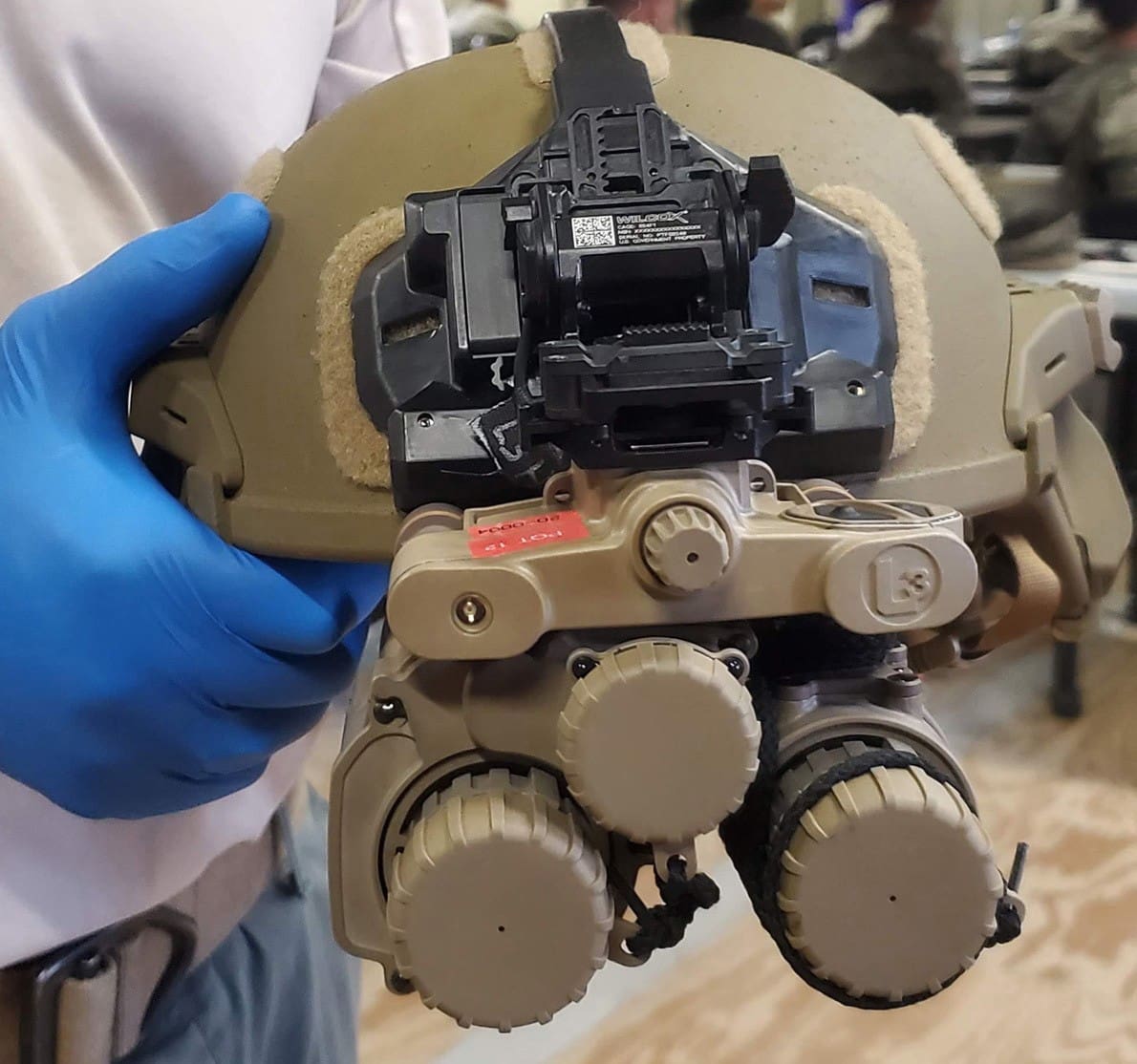
FORT POLK, La. — Throughout June, C Troop, 3rd Squadron, 89th Cavalry Regiment is conducting in-class and field training with the latest in night-vision goggle (NVG) technology. The new equipment, the enhanced night vision goggles-binoculars (ENVG-B), not only provides an all-around upgrade in clarity, but also comes with thermal vision capabilities, augmented reality with heads-up display and integrates with weapon optics.

As with all training efforts, the unit is keeping COVID-19 precautions in mind by using the “same social-distancing guidelines that they use at Ranger School and here at the Joint Readiness Training Center. This includes limiting the number of Soldiers and new equipment trainers allowed in the classroom at a given time,” said Capt. William Hess, commander, C Troop 3rd Sqdn, 89th Cav Reg.

During the first week of June, 30 Soldiers received the new equipment training in a classroom environment. Twenty-eight Soldiers, with two on stand-by, completed a range density week beginning June 8, “logging hours with the equipment, executing training according to the Army’s standard qualification tables,” said Hess.

The last two weeks of June are dedicated to situational training exercises. The STX lanes will “use the tactical environment to allow the unit to integrate the newly learned capabilities into our troop leader procedures,” said Hess.

“These Soldiers will be getting a lot of training with the ENVG-Bs.”

Program Executive Office Soldier (PEO Soldier) members from Fort Belvoir, Virginia prompted and supported the ENVG-B training for C troop. Maj. John Nikiforakis, assistant program manager, ENVG-B, PEO Soldier said, “We need to test our night vision technology in a simulated combat environment, so that, by the time it gets to combat, the equipment is refined and ready.”

“As PEO, we are the material developers for technology for the warfighter. Everything we do is geared toward making our Soldiers more lethal, more survivable, and more capable on the battlefield.”

Throughout their training, within and outside of the classroom, Soldiers will gain direct insight into equipment functionality. According to Hess, the Soldiers will also run through the training with the monocular night vision device (PVS-14) — the older NVG model — and then with the ENVG-Bs. Their performance and experiences will be logged, creating a dataset for analysis.

“What we rely on is ‘Soldiers in the loop,’ and that is the Soldier feedback, which ensures the equipment that they are going to fight with is something they actually want to use,” said Nikiforakis.

C Troop Soldiers are excited about the ENVG-B’s and the opportunity to train with the equipment.

Pfc. Hunter Shor, C Troop, 3rd Sqdn, 89th Cav Reg, said, “Compared to the PVS-14s, I just feel the ENVG-B’s are exponentially ahead of their time with thermal technology and integrated systems.”

Similarly, Spc. Simon Ly, C Troop, 3rd Sqdn, 89th Cav Reg said, “It’s been really interesting. I’ve never used equipment with these capabilities before. There are things we can do with the ENVG-Bs that I didn’t think we could do before. For example, the augmented reality that allows us to see checkpoints in the NVGs: I just didn’t know the technology had reached that point.”

With the Soldiers’ feedback and training data, PEO Soldier is able to further ready the device for combat, exceed expectations and meet the needs of Soldiers on the battlefield.

“We go beyond ‘own the night’. We want to be able to identify all threats, under all conditions and be able to shoot first,” said Nikiforakis.

By Christy Graham

Reptilia ROF-Diving Board for 34mm Geissele Super Precision Magnified Optic Mounts

Wednesday, July 1st, 2020

Introducing the Reptilia® ROF™-Diving Board for 34mm Geissele® Super Precision® Magnified Optic Mounts. Manufactured at the request of a DoD customer the Diving Board places a MIL-STD-1913 rail at the ideal position and height to mount laser range finders such as the Wilcox® RAPTAR laser designators or miniature red dot optics. Additionally the Diving Board doubles the support area on the optic tube by reusing the ring cap from the Super Precision® Mount. While it has been optimized for use with the NightForce® ATACR™ it is compatible with a wide range of other magnified optics. Initially the Diving Board will be available in our FDE MIL-STD anodized finish. Like all Reptilia products the Diving Board is 100% designed and manufactured in the USA.

Now available at www.reptiliacorp.com.

Cinch-LR Binocular Adapter from Really Right Stuff

Saturday, June 27th, 2020

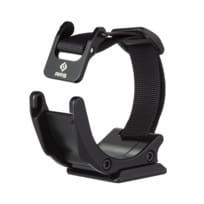
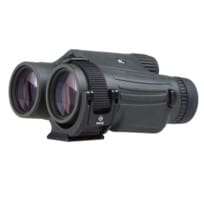
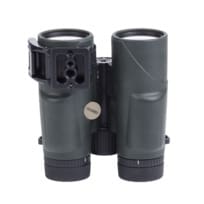
The Cinch-LR BA is a semi-permanent clamp mount, that should fit in most supplied harnesses. The RRS 1.5″ dovetail standard, coupled with the Manfrotto RC2 standard, should allow the majority of tripod users to quickly attach and detach their optic from multiple ball head manufacturers. 

If using a standard other than one of the two mentioned above, there is a 3/8″-16 mounting socket on the bottom of the Cinch-LR to adapt to a system of your choice. 

The Cinch-LR BA can be mounted perpendicular or parallel to the optical plane. The removable strap can be fed through the buckle with the excess strap exposed on the outside, or reversed with the excess following the contour of the optical housing. 

soar.reallyrightstuff.com/Cinch-LR-BA

Aimpoint Awarded Follow-Up Contract for Fire Control Systems by US Armed Forces

Monday, June 22nd, 2020

Manassas, Virginia – Aimpoint, the originator and worldwide leader in reflex sighting technology, has been awarded a second contract for supply of the Aimpoint® FCS13RE Fire Control Systems to the U.S. Military. The system is currently being deployed as the primary Fire Control on the M3E1 MAAWS lightweight 84mm Carl-Gustaf produced by SAAB Dynamics for use by the U.S. Army, U.S. Marine Corps, and U.S. Special Operations Command.

The FCS13RE is a direct view, Dynamic Universal Reflex Sight (DURS) which utilizes an integrated laser range finder and ballistic computer to give the gunner an aiming point corrected for range, type of munition, terrain angle, and environmental conditions. In addition to the 84mm Carl-Gustaf, the system can also be utilized on other weapons including the AT4, 40mm high velocity grenade launchers (Mk19), .50 caliber heavy machine guns (M2), and the M134D Minigun. The FCS13RE provides an extremely high probability of first round hits on both stationary and moving targets during day and night. The system can be enhanced with a magnifier, a thermal imager, and is compatible with all generations of military night vision.

For FCS13RE specs, technical details, and images visit the Aimpoint FCS13RE product page. Any additional information on Aimpoint or other Aimpoint products, visit the company’s webpage.

Bushnell Named Official Optic of Realtree

Saturday, June 20th, 2020

Bushnell to be the Exclusive Optic of Realtree Television and Digital Properties
 

OVERLAND PARK, Kansas – June 11, 2020 – Bushnell, an industry leader in performance optics, announced today that it has become the “Official Optic” of Realtree. This new agreement expands the partnership between two of the industry’s most iconic hunting brands, with Bushnell optics enjoying exclusive placement across all Realtree television, digital and social channels.

Fans of the Realtree TV and digital properties will have the ability to see the latest Bushnell products in action every week. As the Realtree prostaff sets off in search of every wild game imaginable, viewers will have a front row seat to all the action along with a first-hand account of why these hunters put their trust in Bushnell products. Throughout the season, viewers will get an inside look at Bushnell’s newest products, helpful tips and tricks plus other product insights from the company’s full breadth of optics including: riflescopes, binoculars, rangefinders, spotting scopes and night vision products.

“Hunters know great optics make all the difference for a lot of reasons. This partnership with Bushnell brings their quality optics in Realtree camo to hunters everywhere, and that will make for a lot of successful hunts,” said Realtree Designer and President Bill Jordan.

“At Bushnell, we have made it our primary mission to develop and bring to market quality, purpose-built products to improve our customers outdoor experience,” said Mark Bauman, Director of Optics for Bushnell. “Through our expanded partnership with Realtree, we’re excited that hunters will now have the opportunity to see how our products improve the hunting experience in real world situations across Realtee’s broad offering of quality outdoor programming.”

Bushnell will continue to sponsor both Realtree Outdoors® and Realtree Road Trips® TV in addition to extending its support to Realtree’s Monster Bucks® and across the Realtree 365 network. New video and digital series where viewers can now see Bushnell products include: Midwest Whitetail & Chasing November, Spring Thunder, Black Cloud, Whitetail TV, Pay Dirt, Hunt United, Grigsby and Sea Bucks.

Click here for more information regarding Bushnell’s full line of optics offered in Realtree patterns. 

New Affordable Miniature Variable Power Class I IR Aiming Laser TNVC/Steiner eOptics Collaboration (TOR-MINI IR VPC) in Full Rate Production—Shipping Now!

Friday, June 19th, 2020

tnvc.com/shop/steiner-tnvc-tor-mini-ir-vpc-variable-power-control

Redlands, CA

TNVC is proud to announce that the highly anticipated TNVC/Steiner TOR-MINI IR Variable Power Control IR aiming laser is now in full rate production, and shipping to customers and dealers!

TNVC was the first company to partner with Laser Devices, Inc. (now Steiner eOptics) in 2011 to bring Class I IR aiming lasers to the commercial market for direct retail sales, and we are pleased to be collaborating with them once again to support the commercial market with an innovative and affordable new product, proving that quality Night Vision accessories and IR lasers do not have to be expensive!

With an MSRP of $269 and weighing less than 2 ounces, the TOR-MINI IR was designed to offer a miniaturized, budget friendly Class I IR aiming laser to the market, and is equally at home on pistols, long guns, SMGs and PDWs, and even on thermal devices and spotting scopes! The TOR-MINI IR Variable Power Control features a “step down” feature that allows the user to easily select between 0.7, 0.4, and 0.2 mW outputs by holding down the activation paddle attenuating the aiming dot size and bloom based on range, target size, and ambient lighting conditions.

Learn more and order yours today:

tnvc.com/shop/steiner-tnvc-tor-mini-ir-vpc-variable-power-control

Integrated Visual Augmentation System Update

Friday, June 19th, 2020

Here one of the latest photos of the US Army’s Integrated Visual Augmentation System, a which fuses image intensification and thermal imaging with Augmented Reality overlays. It’s built by Microsoft.
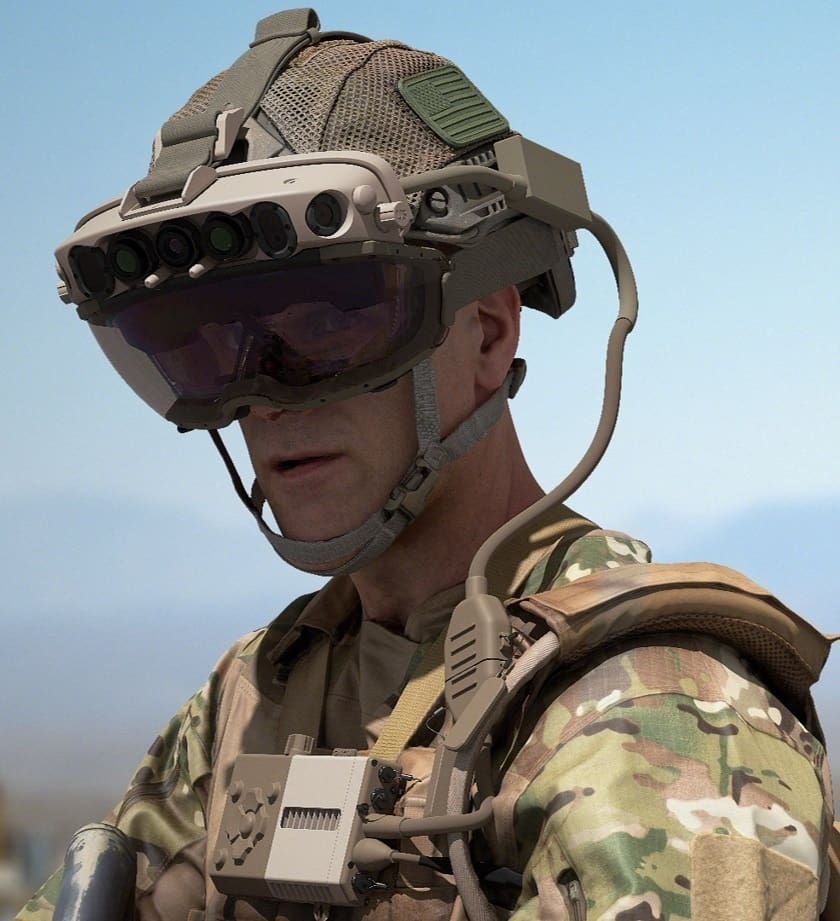
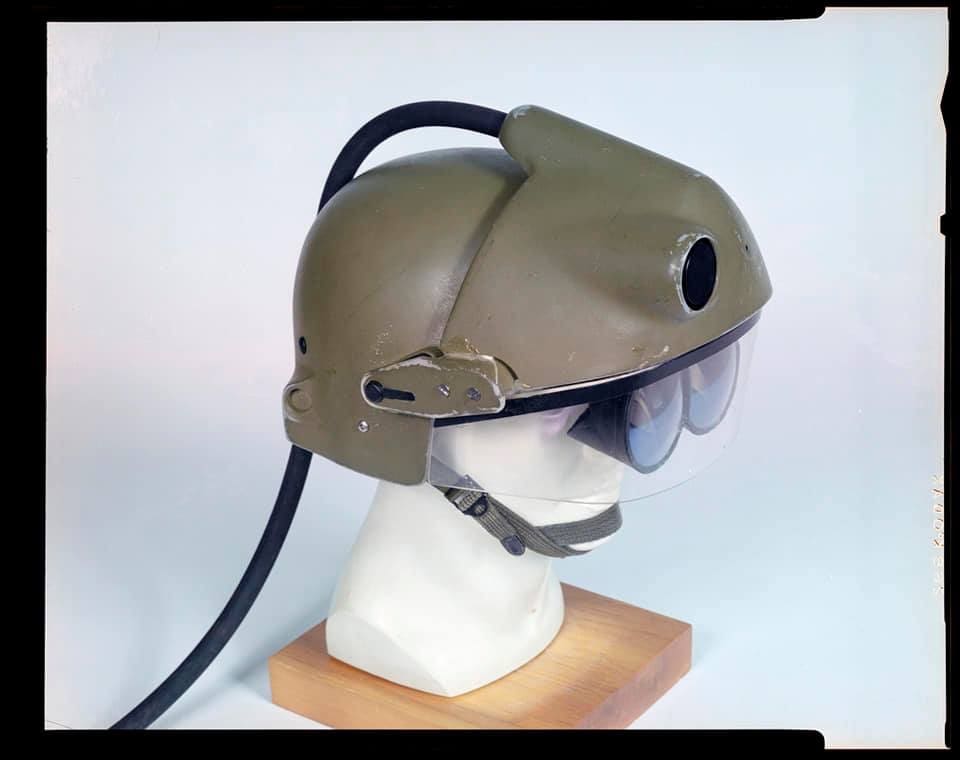
Interestingly, the form factor is pretty similar to the Soldier Integrated Protective Ensemble headborne subsystem from the early 90s.
Here’s an update from the Program Office.

Team IVAS Continues to Deliver Despite COVID Obstacles
“I can absolutely say that today we are on track to meet a fourth quarter ‘21 delivery for our first unit equipped.”
– COL. Chris Schneider, PM IVAS

FORT BELVOIR, Va.– Cutting-edge modernization efforts come with their own set of challenges, and COVID-19 has ensured that there are no exceptions.

Program Executive Office (PEO) Soldier’s Project Manager Integrated Visual Augmentation System (PM IVAS) continues to leverage the team’s unique structure, talents, and culture to contribute to the force’s readiness, even with the additional challenges presented by COVID-19.
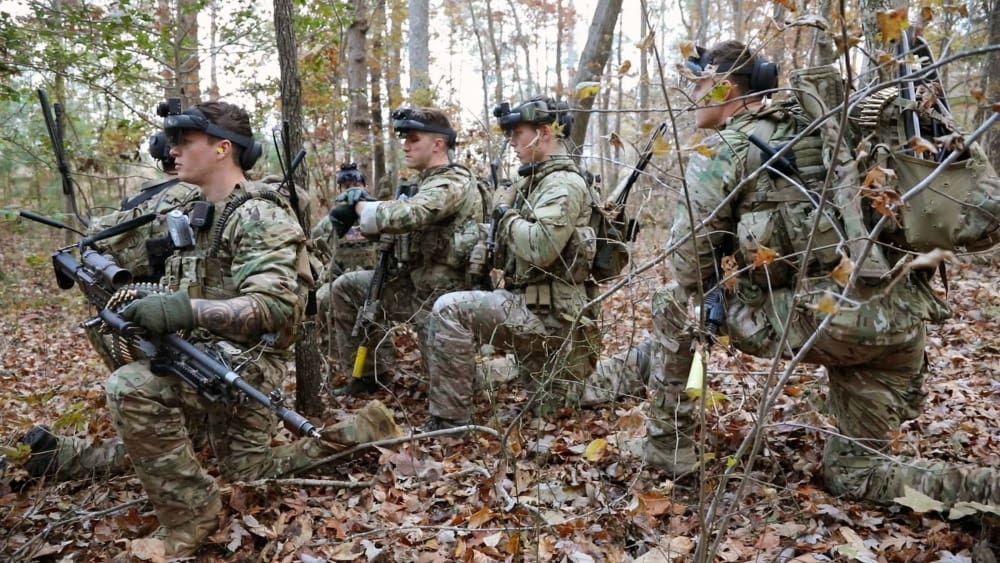
Mark Stephens, PM IVAS Director of Acquisition and Operations, and Jared Walega, PM IVAS Test Director, highlighted how problem solving, routine distributed work solutions, modular architecture design, Soldier Centered Design (SCD), and Supply Chain Risk Management (SCRM) have allowed the project flexibility during the COVID pandemic.

Stephens emphasized how Team IVAS has applied efficient problem-solving skills from the project’s inception.

“Senior defense officials recognized the erosion in close combat capabilities and saw an immediate need to ensure overmatch for our dismounted force,” said Stephens. “Congress recognized the requirement and reprogrammed funds to start IVAS in FY19. Within six months from the Secretary of Defense’s approval in late May, Team IVAS awarded multiple Other Transaction Agreements to industry and kicked off IVAS before Christmas 2018.”

Team IVAS has rapidly solved problems ever since. This includes the successful integration of partners from around the country. Because the team overcame this initial obstacle, remote work is now routine.

The distributed team has built and relied on a digital infrastructure to manage the mission from any physical location. Therefore, they are able to maintain the mission even with the obstacles COVID has presented.

“When COVID hit we had already established a solid Integrated Product Team [IPT] Battle Rhythm using long distance collaboration methods like SharePoint, TEAMs, and Power BI,” Stephens said. “Using TEAMs over the past 18 months allowed video teleconferencing, sharing document collaboration, and reviewing our program management dashboards, so all our leaders were battle tested”.

Secure remote tools have allowed for continued IVAS prototyping through Army Enabled Tests (AET) even while team members are quarantined at home.

“We also implemented a practice of what we call Army Enabled Testing that allows us to get updates from our partners, test the updates in a safe environment, and provide feedback. This methodology helps us manage our performance risks, and not have to wait until Soldier Touchpoint 3 [STP 3] to discover problems,” said Stephens.

Team IVAS’ dynamic problem solving and reliable remote infrastructure guaranteed that aspects of testing continued to ensure minimal overall impacts to the program’s timeline.

“As COVID-19 impacted the organization, the Test Directorate determined we could still conduct a thorough AET with focus on Rapid Target Acquisition (RTA), Tactical Assault Kit (TAK), Synthetic Training Environment (STE), and other necessary capabilities while maintaining requisite social distance and implementing COVID-approved decontamination procedures for the Heads Up Displays (HUD),” said Walega.
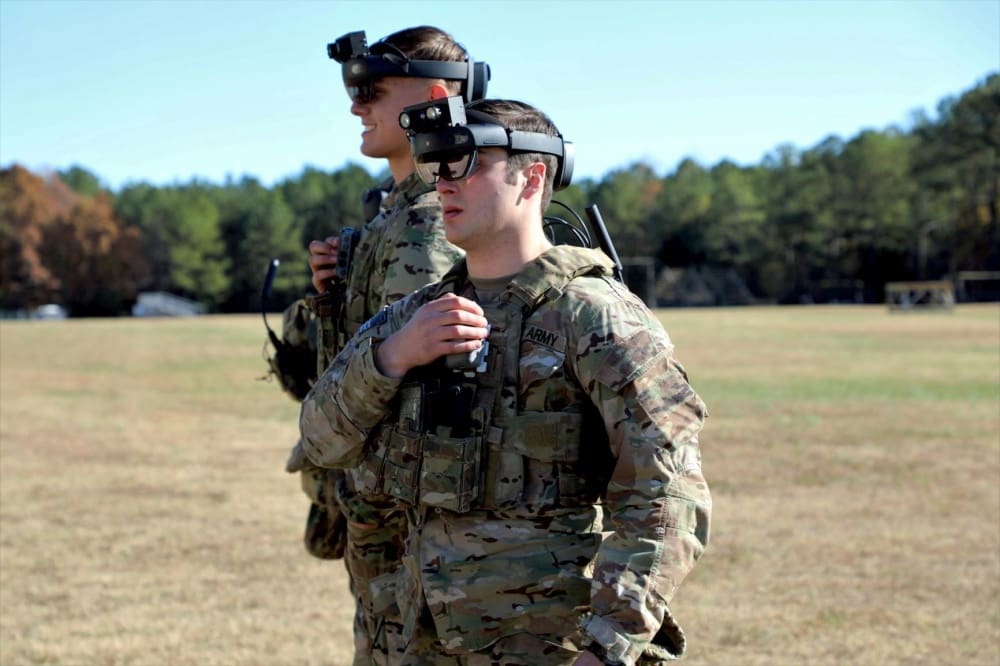
“We have a dispersed team that is capable of downloading the latest software build and loading it onto their HUDs. This process has enabled remote testing of software builds and the ability to provide rapid feedback to Microsoft to include live fire video, data, and assessments,” Walega added.


The continued AET testing and iteration of specific IVAS capabilities through the COVID pandemic has been largely based on the Soldier feedback collected at every stage in development over the last 18 months.

“Soldier Centered Design (SCD) was developed in IVAS as a combination of Human Centered Design and tailored acquisition best practices,” said Walega. “SCD focuses on current Soldier and Marine input throughout the entire development process to prevent engineers and developers from building a product that does not meet the priorities of our warfighters.”

The process puts emphasis on making a product that Soldiers will enjoy using to increase their lethality in training and on the battlefield.

According to Walega, “If a Soldier loves and uses IVAS, then we have provided a system that has much greater capability than the current kit.”

In order to ensure that IVAS will truly maximize Soldier lethality, intentional Soldier feedback at every design and decision point has been a program priority.

“We have collected over 23,000 hours of Soldier feedback,” said COL. Christopher Schneider, Program Manager IVAS. “Because we’ve got so much feedback, we’re highly confident in the current design and STP 3.”

The Soldier-centric approach has turned out to be a key asset to the program during the change in normal operations. Though large scale events such as the IVAS STP 3 will shift due to COVID restrictions, the team has reorganized the internal program schedule so that IVAS is not delayed in deploying to the warfighter.

The team is reordering the intensive hardware and software design reviews that were initially planned for after STP 3, and is leveraging their ingenuity, remote tool infrastructure, and plethora of Soldier feedback to expedite the hardware design review to before the October event. This will allow the formal software design sprint to be completed after STP 3, and both designs to be finalized during Capability Set 4 iterations.

“We wouldn’t have the flexibility that we do, frankly, if we hadn’t been doing Soldier Touchpoints, user juries, user studies, and human factors engineering excursions throughout the last 18 months of the program,” said Schneider.

Though the pandemic has impacted every aspect of the program, including supply chain logistics, industry partners have continued to support with solutions.

“With the advent of the Coronavirus, the supply chain risk management strategy has taken on a new level of importance,” said Nicholas Pate, PM IVAS Manufacturing Engineer.

“IVAS vendors have worked tirelessly to assess, analyze, and make quick decisions to avert imminent delays. Luckily, the PM IVAS supply chain strategy, from the very start of the program, has always been to mitigate risk by avoiding sole sources of supply, cultivating multiple sensor vendors, and ensuring parallel paths of supply,” said Pate.

To date, IVAS vendors have been able to react quickly to minimize negative impacts from the Coronavirus.

“Microsoft, as well as the low light and thermal sensor vendors, delivered preliminary supply chain information on critical components for early risk mitigation assessment on the IVAS supply chain,” Pate added. “This information ensures that quality and security controls are implemented to ensure a stable and sustainable supply chain.”

As Team IVAS continues to overcome COVID’s obstacles, leadership is unwavering in its dedication to the safety of both Soldiers and the team.

“We really took a deliberate thought process and approach to moving the Soldier Touchpoint into October,” said Schneider. “We wanted to make sure that we had the opportunity to get it right.”

Overall, every decision has been made with the safety of the team and readiness of Soldiers as top priorities. Though STP 3 is now taking place in October at Fort Pickett, Va., the rest of the program deliverables remain on track.

“I can absolutely say that today we are on track to meet a fourth quarter ‘21 delivery for our first unit equipped,” said Schneider.

Story by Courtney Bacon.