Phantom Lights

Archive for the ‘Press Release’ Category

First Javelin Lightweight Command Launch Units Delivered to the US Army

Thursday, May 28th, 2026

Continued Raytheon investment will increase annual production

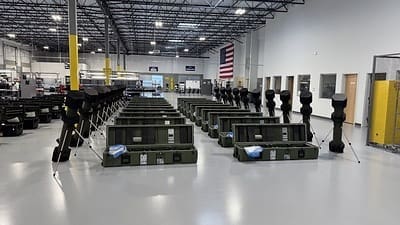
TUCSON, Ariz., May 26, 2026 — The Javelin Joint Venture (JJV), a partnership between Raytheon, an RTX (NYSE: RTX) business, and Lockheed Martin, has delivered the first Lightweight Command Launch Units (LWCLU) to the U.S. Army. The LWCLU, a next-generation launcher for the Javelin® weapon system, is designed to be adaptable and compatible with all current, past and future Javelin variants. The launcher is replacing the weapon system’s legacy command launch unit.


To date, Raytheon has invested $22 million to modernize the LWCLU factory to increase speed of production and expand capacity. In collaboration with the U.S. Army, the facility in Tucson, Ariz., is ramping annual production. 

“Delivering the first LWCLUs to the U.S. Army reflects the Javelin Joint Venture’s commitment to continuously advancing technology for service members,” said Jenna Hunt Frazier, JJV president and Javelin program director at Raytheon. “Our investments in modernization and production capacity ensures soldiers receive this cutting-edge capability faster.”

The Javelin LWCLU provides soldiers with twice the target detection and recognition range while reducing size by 30% and weight by 25%. The LWCLU maximizes surveillance for soldiers, offering day and night engagement capability.

“The production and delivery of the LWCLU marks a pivotal step in modernizing the Javelin system for today’s warfighter,”?said Rich Liccion, JJV vice president and Lockheed Martin Javelin program director. “Its innovative design enhances mobility and survivability while preserving the precision firepower that users rely on.”

Javelin is developed and produced by the JJV between Raytheon in Tucson, Arizona and Lockheed Martin in Orlando, Florida.

American Rheinmetall and Harbinger Announce Partnership to Deliver Next-Generation Robotics and Uncrewed Ground Vehicles to the Department of War

Thursday, May 28th, 2026

American Rheinmetall, and Harbinger have formed a partnership to develop and field a family of robotic and uncrewed ground vehicles (UGVs) in support of U.S. Department of War (DoW) modernization priorities. The teaming pairs American Rheinmetall’s combat-proven vehicle integration, mission systems, and modular architecture development with Harbinger’s commercially based, autonomy-ready hybrid vehicle platform to deliver affordable, scalable robotic solutions that can be fielded at the pace of relevance.

Under the agreement, the companies will jointly pursue current and emerging DoW programs where commercial-derived, hybrid-electric, and fully drive-by-wire architectures can accelerate the delivery of robotic combat, logistics, and sustainment capabilities. Initial areas of collaboration include autonomous tactical wheeled vehicles, contested-logistics resupply, and next-generation robotic platforms aligned with U.S. Army autonomy and manned-unmanned teaming priorities.

“Soldiers need robotics they can trust, at a cost that lets them field them in the numbers required to win,” said Matthew Warnick, CEO of American Rheinmetall. “Harbinger’s drive-by-wire, hybrid-electric platform is one of the most autonomy-ready commercial chassis ever built in the United States, and combined with American Rheinmetall’s deep experience integrating mission systems for the Army, gives the DoW an attritable, sovereign, and rapidly scalable option, engineered here, built here, and ready to fight.”

The partnership directly addresses DoW priorities around combat effectiveness, affordability, and industrial readiness. American Rheinmetall brings combat vehicle integration experience, a mature modular architecture and adaptable mission kit interface, and an established U.S. industrial footprint supporting major ground combat vehicle programs. Harbinger’s platform is designed from the ground up with scalable battery architecture, and a range-extended hybrid powertrain, enabling silent watch, reduced thermal and acoustic signatures, and extended operational endurance. Harbinger’s hybrid platform leverages the company’s proven electric chassis, and pairs it with a gas-powered range extender that recharges the battery to keep missions going in the most demanding environments. 

“Harbinger has always built for the toughest commercial missions, and the Warfighter’s mission is the toughest of all,” said John Harris, Co-Founder and Chief Executive Officer of Harbinger. “Partnering with American Rheinmetall, one of the most capable ground systems integrators serving the DoW, allows us to bring our autonomy-ready platform at a price point that makes true attritable mass possible. Together, we can give Soldiers robotic systems that are affordable enough to be everywhere they’re needed, and tough enough to do the job when they get there. Most importantly, by taking the driver out of the vehicle with advanced autonomy and teleoperation, we can keep service men and women out of harm’s way”

Both companies are committed to U.S. design, engineering, and manufacturing. American Rheinmetall operates manufacturing, integration, and sustainment facilities in Michigan and is scaling additional U.S. production capacity across facilities in MI, OH, and ME in support of its growing portfolio of Army programs. Harbinger designs and assembles its powertrain, battery systems, and chassis in-house at its California headquarters. 

The companies expect to begin joint demonstrations this summer and will pursue near-term prototyping opportunities through Commercial Solutions Openings (CSOs), Other Transaction Authorities (OTAs), and traditional programs of record.

www.rheinmetall-us.com 

Daniel Defense Announces Return of a Legend, the Iconic GL/SSC Platform in Pistol Caliber and SBR Configurations

Thursday, May 28th, 2026

BLACK CREEK, Ga. — Daniel Defense is announcing the return of its legendary GL/SSC (Grenade Launcher/Sound Suppressor Capable) platform, now available to the commercial market for the first time in both short-barreled rifle (SBR) and pistol caliber configurations.

Originally developed as a hard-use, mission-ready system for US Special Forces, the GL/SSC helped establish Daniel Defense’s reputation as a global leader for purpose-built combat rifles. The GL/SSC is now being reintroduced with modern enhancements for the civilian market while maintaining its proven performance characteristics.

The GL/SSC features a 12.5-inch, cold hammer forged, chrome-lined government-profile barrel paired with a carbine-length gas system, delivering durability and consistent reliability. The platform is chambered in 5.56 NATO and incorporates Daniel Defense’s battle-proven RIS II rail system, offering a free-floating design that preserves barrel harmonics while providing ample space for accessories.

“The GL/SSC represents a significant part of our history,” said Travis Tipps, Brand Manager at Daniel Defense. “Bringing this platform back- now accessible to a broader audience-demonstrates our continued commitment to innovation rooted in proven design.”

Engineered for versatility, the GL/SSC is compatible with suppressors and M203 mounting accessories via its free-float hangar system. The firearm is equipped with a 1:7 twist rate barrel, A2 flash hider and maintains an unloaded weight of approximately 6.2 pounds, with an overall length ranging from 29 to 32.25 inches depending on configuration.

The platform is available in multiple variants, including SBR and braced pistol models, as well as upper receiver groups, allowing users to tailor their setup to mission or personal preference.

For more information, visit DanielDefense.com.

Dräger DOB 200 ECO Oxygen Filling Station Earns Authorized for Navy Use Listing

Thursday, May 28th, 2026

Authorized for Navy Use listing expands access to the Dräger DOB 200 ECO, giving U.S. military teams across the joint force a compact oxygen filling station for deployed, shipboard, and remote operations.

Authorized for Navy Use

Dräger’s DOB 200 ECO oxygen filling station is now listed on the Authorized for Navy Use (ANU) List, giving U.S. military teams across the joint force access to a compact system designed for high-pressure oxygen filling in deployed, shipboard, remote, and space-constrained environments.

The listing marks an important step for military teams that need oxygen filling capability closer to the point of operation. Designed as a complete oxygen filling station in a compact, deployable format, the Dräger DOB 200 ECO supports oxygen cylinder filling for military diving teams, rebreather support, parachutist oxygen programs, ship maintenance crews, and expeditionary units.

Built for Operational Oxygen Support

Military oxygen logistics are often shaped by space, mobility, and time. During deployment, teams may already be moving with dive rigs, flotation devices, oxygen bottles, tools, support equipment, and mission-specific gear. Traditional oxygen filling setups can involve multiple separate components that need to be packed, moved, connected, monitored, and maintained.

The DOB 200 ECO helps reduce that burden by combining the pump, gauges, valves, and fill panel into one rugged, transportable system. Its compact design supports teams working outside fixed infrastructure, bringing oxygen-fillingcapability closer to the mission.

Deployable by Design

The system is packaged as a complete oxygen filling station for movement and storage in demanding environments. Its rugged Pelican™ case format supports the way military equipment is transported, whether by vehicle, aircraft, vessel, or hand carry.

For teams working aboard ships, in pierside support areas, or at remote field locations, the DOB 200 ECO can help make oxygen filling more practical and accessible. The compact format helps units move oxygen support where it is needed, rather than relying only on fixed filling infrastructure.

Designed for High-Pressure Oxygen Use

Built for high-pressure oxygen use, the DOB 200 ECO is designed with oxygen safety in mind. Its oil-free configuration helps reduce the risk of contamination in oxygen service, an important consideration when filling high-pressure oxygen cylinders.

The system also supports controlled filling, including automatic shutoff when the target pressure is reached. For military teams filling oxygen bottles in operational environments, that control can help make the process more repeatable and practical.

Configured for the Mission

The DOB 200 ECO can be configured to support the unit’s mission profile, whether the requirement is mobile oxygen filling in the field or a more permanent setup in a support facility. The fill panel can be integrated with the transportable unit for deployed use or mounted separately for workshop, shipboard, or maintenance operations.

The system can also be configured around operational power and cylinder requirements, including 120V and 220V options based on destination and infrastructure. Depending on the setup, the DOB 200 ECO can support simultaneous filling for four to six oxygen cylinders, helping teams reset bottles more efficiently after dive operations, jump preparation, shipboard support, or daily readiness cycles.

Operator Focused on Field Conditions

For operators, simplicity matters. Oxygen filling in the field may be handled by team members who are also managing equipment resets, cylinder rotations, dive support, jump preparation, or maintenance activities.

A system with fewer loose components and a more straightforward setup can help reduce manual oversight and support a more disciplined filling process. For units operating away from fixed infrastructure, that flexibility helps keep oxygen support aligned with the mission’s pace.

Supporting Joint Force Applications

The DOB 200 ECO can support a range of military oxygen applications, including military diving, rebreather support, parachutist oxygen programs, shipboard operations, ship husbandry, submarine maintenance support, remote oxygen logistics, and expeditionary operations.

With its ANU listing, the Dräger DOB 200 ECO provides military teams with a vetted oxygen filling solution that aligns with the realities of modern operational support. It bridges the gap between large fixed filling systems and smaller, limited-capability boosters by bringing high-pressure oxygen support, mobility, and simplified operation into one compact system.

For military teams planning oxygen support needs, the listing provides a direct path to evaluate a complete oxygen filling station built for deployment, shipboard operations, and field use.

Learn more: t4.life/QxI.

Further Major Contract: Rheinmetall to Supply Further Laser-Light-Modules for the Bundeswehr’s New Assault Rifle – Contract Worth Several Hundred Million Euros

Wednesday, May 27th, 2026

The Bundeswehr has once again awarded Rheinmetall a major contract for Laser-Light-Modules. Following budget approval by the German Bundestag’s Budget Committee in December 2025, a further definitive call-off has now been made under the framework contract, which was concluded in June 2021 and extended in December 2025. Between 2026 and 2032, and additional six-figure quantity of ‘LLM-VarioRay’ Laser-Light-Modules is to be delivered to the troops. This second definitive call-off represents a further net order intake of several hundred million euros for Rheinmetall. It will be booked in the second quarter of 2026. The devices are ‘made in Germany’ and are manufactured by Rheinmetall Soldier Electronics in Stockach at Lake Constance. Numerous other small and medium-sized German businesses will also benefit from the contract as suppliers.

“Our versatile and battle-proven LLM-VarioRay is a key tactical combat enhancer for dismounted soldiers”, said Dr. Timo Haas, Head of Rheinmetall’s Digital Systems division. “This further major contract from the Bundeswehr demonstrates the troop’s confidence in our capabilities and underlines the constructive cooperation between industry, procurement authorities and the armed forces”.

The Rheinmetall LLM-VarioRay Laser-Light-Module is part of the latest generation of devices of this type. The Laser-Light-Modules are primarily used on the small arms carried by infantry and dismounted forces, and serve to detect, identify and mark targets.

Weighing approximately 250 grams, including its mount, the LLM-VarioRay can be attached to any assault rifle via a MIL-STD 1913 rail/STANAG 4694 and can be operated via a trigger cable. It features a powerful white light LED, a red-light laser marker, an infrared laser marker and an electrically focusable infrared illuminator. The light source can be selected and adjusted stepless using a rotary switch. The device is equipped with a fully integrated, factory-aligned laser block. This laser block allows for easy adjustment and alignment of the visor and the weapon. Equipped with night vision and thermal imaging devices, the German Armed Forces can thus accomplish their missions across the entire spectrum of operations, regardless of day- or night-time and in all weather conditions.

The LLM-VarioRay product family is also part of the German soldier system ‘Future Soldier – Extended System (IdZ-ES)’ and is likewise used in the British Army as the Laser-Light-Module MK3 and in the Swiss Army as the Laser-Light-Module 19.

Rheinmetall’s product portfolio encompasses a wide range of infantry equipment, including various targeting and illumination modules. These were developed in order to increase the tactical value of modern small arms. The LM-VTAL (‘Laser Module – Variable Tactical Aiming Laser’) has been used by the Bundeswehr’s special operators for several years.

NP Aerospace Canada Celebrates Over 30 Years of Successful Business Growth

Wednesday, May 27th, 2026

NP Aerospace, the defence multinational, located in Canada and the UK, has risen to the defence industrial challenge, building Canadian capability and reporting strong growth in revenues and workforce as it marks over 30 years of Canadian operations. This announcement coincides with CANSEC in Ottawa this week (27-28 May) where NP Aerospace is showcasing its latest survivability solutions at booth 1729.

NP Aerospace Canada, based in London, Ontario, specialises in armour technology and vehicle engineering and has built a reputation for delivering complex military survivability programs working with the Canadian Department of National Defence and law enforcement agencies. Over the past two years, the business has reported significant growth in revenues, doubling its facility floorspace and achieving a five-fold increase in its Canadian workforce.

The company began trading in Canada in the mid-1990s, entered the defence market in 2009, and was acquired by Canadian entrepreneur James Kempston in 2018. Since then, it has expanded with new London facilities and secured major defence contracts including Armoured Personnel Transport Modules through Marshall Canada as part of the Logistics Vehicle Modernization (LVM) program, Dismounted Infantry Capability Enhancement (DICE) ballistic plates and the Canadian Department of National Defence Land Equipment (LEP-ETSS) Program, alongside specialist armour and vehicle contracts across Canada and the U.S. In 2022, NP Aerospace was one of the first to supply life-saving protection equipment to support those at risk in current global conflicts.

According to James Kempston, CEO of NP Aerospace, the company is well placed to support Canada’s rapid growth in military capability. He said: “The focus right now is on products made in Canada, for Canada and our allies. As a multinational armour manufacturer and vehicle integrator partnering with some of Canada’s largest defence primes,

NP Aerospace has risen to the challenge, increasing manufacturing and engineering capacity and accelerating recruitment and financial investment. Since acquiring NP Aerospace in 2018, we have seen consistent growth in both domestic and export programs and this is set to continue at pace.”

A key contract driving incremental improvements for the Canadian Armed Forces is the Department of National Defence Land Equipment Program. As prime contractor on the program, NP Aerospace has delivered multiple ongoing equipment and vehicle support tasks building supply chain capability, and expertise in testing and evaluation, prototyping and fabrication and field support.

Elizabeth Spear-Goble, Business Operations Manager at NP Aerospace Canada, said: “2026 is one of the most dynamic periods the defence industry in Canada has seen in decades. The Government is investing billions of dollars to ramp up Canadian sovereign capabilities and NP Aerospace Canada is rising to the challenge and ‘answering the call’ with hiring, expansion, and innovation. As we mark 30 years of operations in Canada, we are focused on the next phase of growth, continuing to deliver improvements to life-saving equipment for the Canadian Armed Forces, law enforcement agencies and export customers.”

Dynamic Principles and Qore Performance Announce Pricing Update for ICEPLATE MOLLE Back Panel to Sustain High-Performance Manufacturing Standards

Wednesday, May 27th, 2026

Knoxville, TN — May 15, 2026 — Dynamic Principles, in collaboration with Qore Performance, Inc., is announcing a pricing adjustment for ICEPLATE® MOLLE Back Panel. This update ensures the continued use of premium, Berry-compliant materials and the precise, American-based laser-cut manufacturing required to meet the rigorous demands of professional end-users.

Since its launch, ICEPLATE® MOLLE Back Panel has become a cornerstone for operators seeking a rugged, low-profile external mounting solution. This pricing update allows both companies to maintain the uncompromising quality and rapid fulfillment capabilities that military and law enforcement customers rely on for mission success.

External Hard-Cell Hydration Integration

ICEPLATE® MOLLE Back Panel remains the premier solution for mounting ICEPLATE® Gen 3 to the rear PALS field of any plate carrier featuring a rear MOLLE field. It is specifically designed to support the carry of heavy packs, mortar base plates, or breaching tools directly over the hard-cell bladder without risk of rupture.

Key features include:

  • Laser-Cut Laminate Construction: Hydrophobic, lightweight, and extremely low profile.
  • Modular Versatility: Full external PALS field for pouch attachment and Crye JPC 2.0 pattern-style zippers for seamless back panel integration.
  • Drink Tube Management: Three removable One-Wrap loops for streamlined routing.
  • Rock-Solid Stability: A fixed four-column MOLLE strap array designed to handle the heaviest equipment loads.
  • 100% Berry Compliant: Proudly made in the USA by Dynamic Principles using NIR-compliant materials.

“Our commitment to 100% American manufacturing and premium Berry-compliant materials is non-negotiable,” said Daniel Podsiedlik, Founder of Dynamic Principles. “This pricing adjustment allows us to navigate rising material costs while maintaining the precise, laser-cut quality our customers depend on. By prioritizing our ‘Made in USA’ supply chain, we ensure that every ICEPLATE® MOLLE Back Panel continues to meet the highest standards of durability and performance for the professional end-user.”

ICEPLATE® MOLLE Back Panel is back in stock as of 1700 ET May 15 in MultiCam, Coyote, Ranger Green, and Black at QorePerformance.com and Dynamicprinciples.us.

Mountain Horse Solutions Selected for Drone Dominance Program Phase II Qualifier

Wednesday, May 27th, 2026

SARASOTA, FL – (May 26, 2026) – Mountain Horse Solutions, a Global Ordnance company focused on mission-critical support, unmanned systems, and integrated defense solutions, in partnership with AG3 Labs and Draganfly, has been selected to participate in the Drone Dominance Program Phase II Qualifier in June 2026 at Camp Grayling, Michigan.

“Being selected to compete in Phase II of the Drone Dominance Program is a testament to our approach to rapid, scalable drone production,” said Bill Allen, president of Mountain Horse Solutions. “We’re proud to demonstrate capabilities that support the warfighter in the complex operational environments that define modern conflict.”

The companies received invitations for multiple mission areas and drone platforms:

  • Mission Area A with the Flex FPV drone
  • Mission Area B with the SPADE drone and the Flex FPV drone

Mission Area A focuses on long-range strike capabilities designed to identify and engage targets at ranges of 5–20 kilometers beyond visual line of sight, while Mission Area B focuses on close-quarters tactical operations in environments such as buildings, trenches, and tunnels at ranges under 2 kilometers. Both mission areas require systems capable of operating in all-weather, low-light, and contested electromagnetic environments where radio frequency (RF) and global navigation satellite systems (GNSS) may be disrupted.

The SPADE and Flex platforms were developed to support modern tactical operations, combining autonomous navigation, modular payload configurations, swarm-ready architecture, and low operator overhead. The mission-ready FPV systems are designed for rapid deployment in complex operational environments.

“Being selected as a Phase II qualifier for Drone Dominance is validation of what we’ve been building toward — attritable, American-made systems purpose-built for exactly this kind of high-stakes operational environment,” said Nick Smock, head of strategy at AG3 Labs. “We’re proud to be competing alongside Mountain Horse Solutions, a partner who shares our commitment to getting the right capabilities into warfighters’ hands fast.”

“Draganfly is honored to have been down-selected by the Drone Dominance Program in partnership with Mountain Horse Solutions and Global Ordnance,” said Cameron Chell, CEO and president of Draganfly. “We look forward to the next round of work and progressing our operationally proven model forward within the program.”

The Drone Dominance Program is expected to award up to $1.1 billion in prototype delivery orders across four phases, with a goal of delivering more than 300,000 drones to U.S. forces by 2027. Participating companies will be evaluated through live qualification events focused on production readiness, military utility, and supply chain resilience.

Phase II is designed to assess operationally relevant unmanned aerial systems capable of supporting modern battlefield requirements at scale, including operations in contested electromagnetic environments and beyond visual line of sight. Following the qualifier event, approximately five vendors from each mission area are expected to advance to the next phase of the program and receive prototype delivery orders.