FirstSpear

Archive for the ‘Press Release’ Category

Federal Ammunition Expands Its HammerDown Lineup: The Only Hunting Ammo Truly Optimized for Lever-Action Rifles

Tuesday, February 8th, 2022

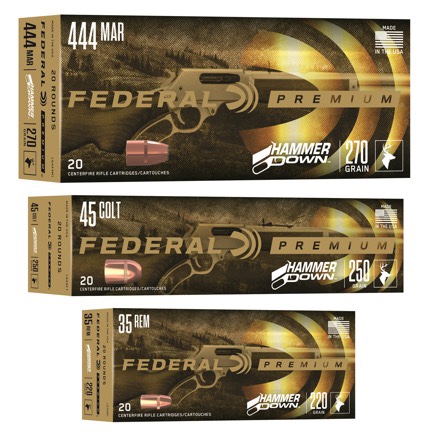
ANOKA, Minnesota – February 4, 2022 – Federal Ammunition is proud to announce three new loads in the industry’s only ammunition product line truly designed for optimal cycling and overall performance from the time-tested, lever-action rifle platform. Federal successfully launched Its HammerDown line in 2020, and now the company is expanding that product line’s options to include the 45 Colt, 35 Remington and 444 Marlin cartridges.

“Our goal for HammerDown was to deliver enhanced performance in any lever-action rifle. HammerDown provides the velocity and terminal performance required to be an effective and ethical hunting round for big game,” said Federal Ammunition Centerfire Rifle Product Manager Eric Miller. “With the addition of the 45 Colt, 35 Remington and 444 Marlin options to our lineup, that performance is now available to a broader audience of hunters and shooters.”

The velocities of all-new HammerDown offerings are customized to produce superior ballistics and terminal performance through lever-action barrel lengths. The construction of the molecularly bonded soft point bullets has also been adjusted for the best accuracy and expansion at those velocities. The geometry of each round’s case, bullet and cartridge ensures flawless cycling through tubular magazine and typical lever-action feeding systems. HammerDown is now offered in .45 Colt, 35 Remington and 444 Marlin in addition to the original loadings of 30-30 Win., 357 Magnum, 327 Federal and 44 Rem. Magnum.

“One of the enhanced design features found in all HammerDown ammo is that we chamfered the front face of the case rim on all the nickel-plated cases. This removes any sharp edges to increase reliability of feeding,” continued Miller. “This feature essentially improves cycling in all lever-action feeding systems, such as side-gate loading and tubular magazines.”

Federal ammunition can be found at dealers nationwide or purchased online direct from Federal. For more information on all products from Federal or to shop online, visit www.federalpremium.com.

Kalashnikov USA and Community Partners Connect USMC Veteran with Emotional Support Dog

Tuesday, February 8th, 2022

Pompano Beach, Florida February 7, 2020 – If dogs are man’s best friends, then service dogs are their life-enhancing faithful companions.  Service dogs for veterans take it one step further: providing their valuable assistance to those who have selflessly served our country.  

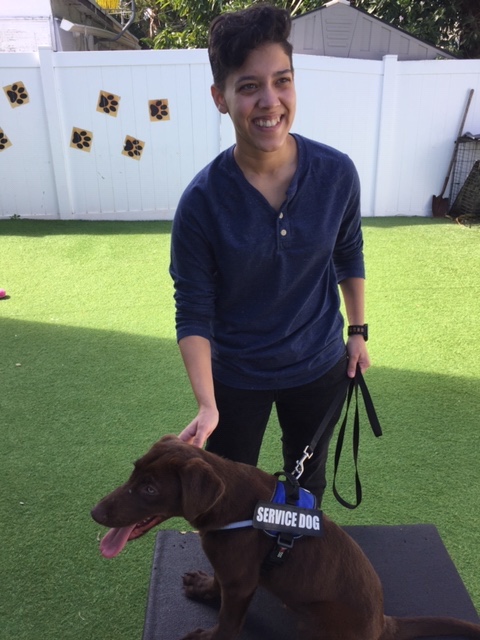
Kalashnikov USA (KUSA) believes in giving back, especially to military veterans.  The company is also filled with dog lovers.  Recently KUSA decided to help a very deserving Marine veteran by providing her with an emotional support service dog.  Meet US Marine Corps veteran Lorena Guimares and her new canine companion, Vityaz, a male Labrador Retriever puppy:

K-9 recruit Vityaz, sitting on the yellow paw prints at Recruit Depot Pawris Island, meets his new battle buddy, former US Marine Corps Sergeant Lorena Guimares

Over the next six-months, and under the watchful eye of professional dog trainer (and senior drill instructor) Fletcher Swain of Custom K-9, K-9 recruit Vityaz and former “Devil Dog” Lorena G. will be honed into a lean, mean, finely-tuned human/canine machine.

Kalashnikov USA (KUSA) is grateful to several key individuals and organizations who helped make this happy connection happen.   Sgt. Adams Lin of the Palm Beach County Sheriff’s Office (PBSO) made the introduction to Marine veteran Lorena Guimares.  In addition to being the county’s largest law enforcement organization, the PBSO is well known for their support of military veterans and their annual Bark-A-Thon event designed to promote pet adoptions.

Dog trainer Fletcher Swain helped identify and secure a suitable puppy with the right temperament and intelligence needed to become a fully-trained emotional support service dog.  Custom K-9 is providing lodging for Vityaz as well as a suitable parade ground where he and his human companion can learn to march in unison and communicate with each other.

“This really was a team effort involving KUSA employees, community partners, and even our customers (especially Dennis M.) who helped us select “Vityaz” as the name for the service dog in training.  In Slavic mythology, a vityaz was a noble knight who fought dragons, giants and other creatures using a combination of strength, wits, and courage.  We’re confident our canine Vityaz will likewise help Lorena overcome her challenges” said David Garretson, VP of Marketing for Kalashnikov-USA.  ‘Stay tuned as we follow this dynamic duo on their Semper Fidelis bonding journey” he added.

TNVC & Night Goggles Inc. Present vSHOTT 2022: 8PM Eastern / 5PM Pacific, Tuesday, February 8th – Thursday, February 10th

Tuesday, February 8th, 2022

Tuesday, February 8, 2022

Tactical Night Vision Company and Night Goggles, Inc. are proud to present the Second Annual virtual Shooting, Hunting, Outdoors, & Tactical Tele-Event, vSHOTT 2022! STARTING TONIGHT AT 8:00PM Eastern / 5:00PM Pacific at:

tnvc.com/vshott

With so many changes in the industry and the world and the way business is done over the past several years, vSHOTT was been a concept that we’ve kicked around for many years—we have long recognized that not everyone is an “industry insider,” nor does everyone want to spend so much on travel, lodging, and other expenses, especially year after year, yet it does not mean that they are any less deserving of taking part in industry events and new product showcases.

The Second Annual TNVC/NGI vSHOTT will consist of three days of online events starting tonight, February 8th, 2022 and beginning at 5:00PM PT/8:00PM ET until February 10th, 2022 and will feature new product announcements and features, training and dealer updates, educational videos, and a daily, interactive live panel discussion event every night where participants can ask questions directly to the TNVC’s Staff and Special Guests! There will also be exclusive vSHOTT discounts, specials, and giveaways, including a Grand Prize of an L3Harris Unfilmed White Phosphor PVS-14 (M914A – 2376 Minimum Figure of Merit) Monocular Night Vision Device Package!*

Don’t forget to register and subscribe at:

tnvc.com/vshott

You DO NOT need to be registered to watch or participate, however registered members will receive EXCLUSIVE discount codes and deals, and you must be registered to be eligible for the giveaways.

*ITAR restricted item, open to U.S. citizens residing in the United States only  

Robot Dogs Take Another Step Towards Deployment at the Border

Tuesday, February 8th, 2022

The American Southwest is a region that blends a harsh landscape, temperature extremes and various other non-environmental threats that can create dangerous obstacles for those who patrol the border. The territory is vast and monitoring it is critical to our nation’s security. That’s why the Science and Technology Directorate (S&T) is offering U.S. Customs and Border Protection (CBP) a helping hand (or “paw”) with new technology that can assist with enhancing the capabilities of CBP personnel, while simultaneously increasing their safety downrange.

S&T has a deep understanding of CBP’s technology needs in the field. In its role as the research and development arm of the Department of Homeland Security (DHS), S&T is always identifying solutions to support the complex CBP mission. For instance, S&T is currently supplementing CBP’s bipedal human personnel with quadruped mechanical reinforcements to help the agency better allocate resources. In this case, Man’s best friend comes with a very futuristic twist.

“The southern border can be an inhospitable place for man and beast, and that is exactly why a machine may excel there,” said S&T program manager, Brenda Long. “This S&T-led initiative focuses on Automated Ground Surveillance Vehicles, or what we call ‘AGSVs.’ Essentially, the AGSV program is all about…robot dogs.” 
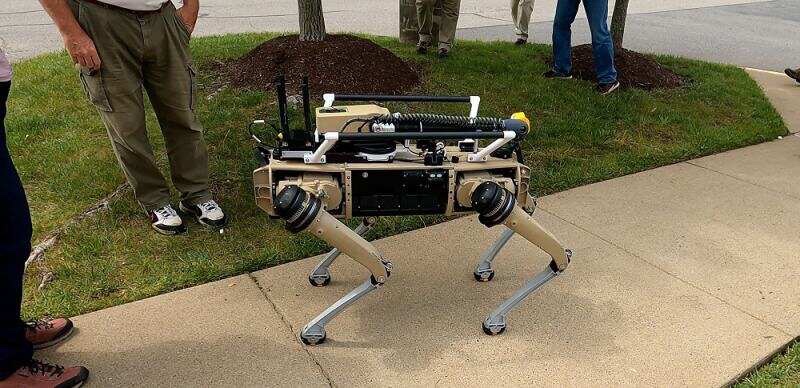

A robot dog showing off capabilities during testing in Lorton, Virginia.

The goal of the program is to leverage technology to force-multiply the CBP presence, as well as reduce human exposure to life-threatening hazards.

Early on, CBP voiced interest in a four-legged ground drone solution, and Long was more than happy to get to work on it. S&T’s AGSV Program collaborated with Ghost Robotics, an industry partner that develops advanced AGSV systems, to achieve the objective. When Ghost Robotics was brought into the fold, they saw an opportunity to re-engineer a version of their pre-existing robot dog for the multifaceted CBP mission.  

According to Gavin Kenneally, the chief product officer at Ghost Robotics, their 100-pound robot dog was bred for exactly the type of work that CBP needs done, “It is a rugged, quadruped robot. It traverses all types of natural terrain including sand, rocks, and hills, as well as human-built environments, like stairs. That’s why you want legs, and not tracks.”

Downrange, the Danger to CBP Agents and Officers Is Very Real

Due to the demands of the region, adding quadruped mechanical reinforcements is a smart use of resources. Despite the dangers, and maybe even using them as cover, there are many types of illegal activity that happen in the harsh border zones.

“Just like anywhere else, you have your standard criminal behavior, but along the border you can also have human smuggling, drug smuggling, as well as smuggling of other contraband—including firearms or even potentially, WMD,” explained Agent Brett Becker of the CBP Innovation Team (INVNT). “These activities can be conducted by anyone from just a lone individual, all the way up to transnational criminal organizations, terrorists or hostile governments—and everything in between.”
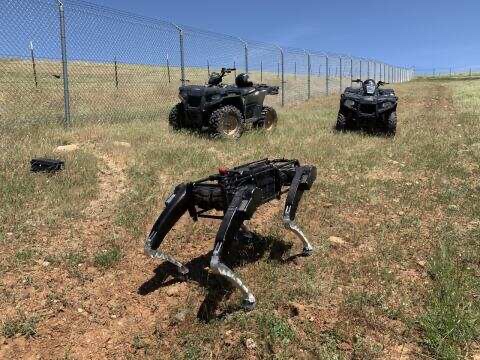

A robot dog operating alongside ATVs in the southwest U.S. Photo: Courtesy Ghost Robotics.

Becker elaborated on the perils by adding, “Operating out in the desert or mountains, agents and officers have to contend with the rugged terrain, high heat and humidity, and then, of course, they can come across those who wish to do harm. But there are plenty of risks closer to home, too. For instance, when missions take Border Patrol Tactical Operators into towns, cities, or ports, they can encounter hazardous environmental conditions, volatile individuals, or hostile threats. These situations can all be inherently dangerous.”

The challenges that CBP faces are not lost on Long, “A big part of our job here at S&T is to understand the current operational needs of our DHS components and find innovative technologies to support them. We are keenly aware that the CBP mission is broad and the risks to personnel are many, and that’s why S&T’s work to fill capability gaps is so critical. And that’s specifically why we think that the robot dog solution is such a great fit.”

S&T Knows That Teamwork Makes the Machine Work

S&T has been working with CBP, Ghost Robotics, and the team for about two and a half years on specifications, development, and capability testing. This collaboration has yielded important CBP mission-focused advancements to the AGSV platform.

For S&T, building and managing partnerships (both interagency and public/private) is an integral part of executing its mission. S&T also understands that good communication is essential in any relationship, and that’s especially true when it comes to its valued partners.

“After talking with our partners at CBP INVNT, we built a team, and together, we identified the capability gaps, defined the challenges, and developed criteria and testing simulations called ‘use-case exercises.’ Then, having set the bar of expectation for the technology, we communicated all of that to our performer,” said Long.


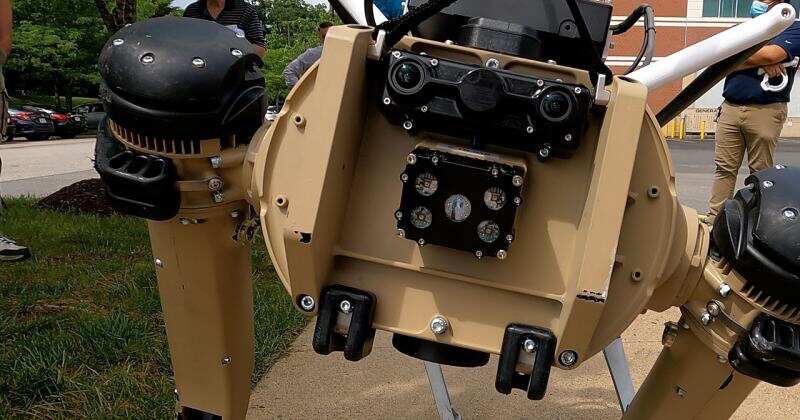
A video camera or sensor package (known as a “payload”) can be attached to a robot dog. Photo: Courtesy Ghost Robotics.

Before moving into the use-case exercise phase, the robot dogs first went to a facility in Lorton, Virginia, for the “initial payload integration” phase. The so-called “payloads” are video and other sensor packages that, after being mounted onto the robot dog, can transmit real-time video and other data back to the human operating or monitoring the AGSV. The team assessed the ease and integration of loading different payload cameras, sensors, and radios onto the AGSVs, and then tested their ability to be controlled from a laptop or a handheld remote. Movement on asphalt, grass, and hills was also evaluated.
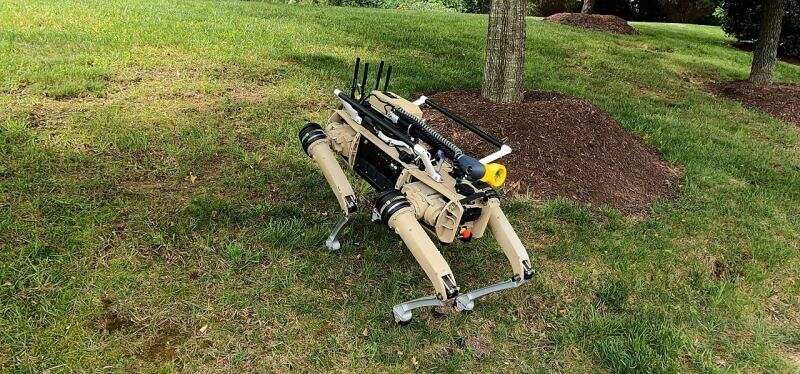

A robot dog practices climbing up and down grassy hills.

Having successfully passed the milestones in Lorton, things moved to El Paso, Texas, for advanced testing and evaluation.

S&T Capability Assessments Determine if the Programmable Pooches Are Up to the Task
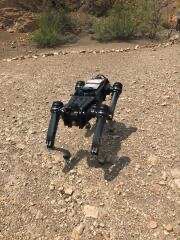
A robot dog on maneuvers, traversing a rugged landscape in the desert southwest.
Along the border, the challenges ramped up as the use-case exercises began. This phase assessed the capabilities of the robot dogs in realistic scenarios.

Long’s team worked with the U.S. Army’s Night Vision and Electronic Sensors Directorate (NVESD) and Ghost Robotics to ensure the robot dogs were prepared to engage in a diverse set of evaluation tasks. The El Paso use-case exercises would require the ability to maneuver in harsh environments, operate in tight spaces and be unphased by high heat, as well as low oxygen conditions—situations that are especially dangerous for CBP agents and officers.

“In a nutshell, the robot dogs would need to (figuratively) jump through a lot of hoops and show a significant amount of mission adaptability,” noted Long.

In an example of the platform’s desired flexibility, Ghost Robotics designed their payload capabilities as an open system. The benefit there is that it makes it easier to integrate different types of cameras (360-degree, thermal, night vision, zoom, etc.) and sensors (chemical, biological, radiological, nuclear, etc.) onto the robots. Once mounted, the payload is plugged into the high-performance CPU that runs the AGSV. During use, the AGSV maintains a connection to the operator via standard frequencies, such as radio, Wi-Fi, GPS, or other means. 

To ensure that the AGSVs could deliver as promised, they were tested by walking up hills, down ravines, and over rocks, all while carrying 20-pounds worth of payload.
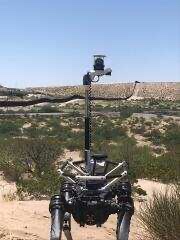
A robot dog scans a desert landscape with its camera and sensor while on sentry duty.
Then, the testing transitioned to an indoor training facility that was built to replicate a residential building. There, the robot dogs would encounter a scenario that simulated being met by potentially hostile individuals. Set to the operator driven mode and using the wireless connection, the operator would maneuver the AGSVs to enter the structure, move through hallways, and peer around corners, as well as navigate stairs.

Later, in a desert area, the dogs were programed to go on simulated sentry duty. Under this autonomous mode setting, the AGSVs headed out and made turns when they reached pre-determined GPS waypoints. After completing their circuit, they returned to base. This was done in the daylight, as well as at night.

Additional testing included putting the dogs through the paces of simulated inspections outside, inside, and under train cars at railyards.

Endurance testing was also an important part of the overall exercises. Data was collected on battery life and impact of terrain on that endurance.  Fortunately, when the Ghost Robotics team was working on its robot dog for CBP, the team focused a lot of energy on motor efficiency. Their objective was to ensure the battery-powered pooch could complete longer missions with the maximum payload onboard. They also designed their AGSV to be extremely nimble.
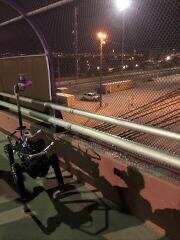
A robot dog inspects a railyard at night.
Kenneally says that their robot dog’s legs are so advanced and sensitive that, “It has the ability to feel through its motors and can estimate friction forces and automatically correct for uneven or slippery ground.” This self-correcting ability makes it an ideal platform for off-road operations across multiple environments.

Some of the other mechanisms the team evaluated were basic field maintenance and repair, such as the ease of swapping out worn “paw” treads.

Valuable information was compiled from each of the exercises. Long explained the process, “When industry develops a prototype, we (along with our partners in the field) evaluate the new technology and give feedback to the developer. That way, the next iteration of the tech accomplishes what we need it to do—and thus fills the capability gap we are targeting.” The benefit to industry is that the performers can potentially position themselves to be even more useful to CBP in the future, when the prototypes become commercial products available for procurement.

S&T Is Committed to Addressing Capability Gaps

Overseeing programs to develop and test robot dogs in real-world scenarios is a great example of how S&T is dedicated to bringing the most innovative advancements to its DHS components.

Long demystified the AGSV program by saying “Technology such as semi-autonomous drones (air, ground, and even water) are used effectively as force multipliers elsewhere—and robot dogs are no different.”
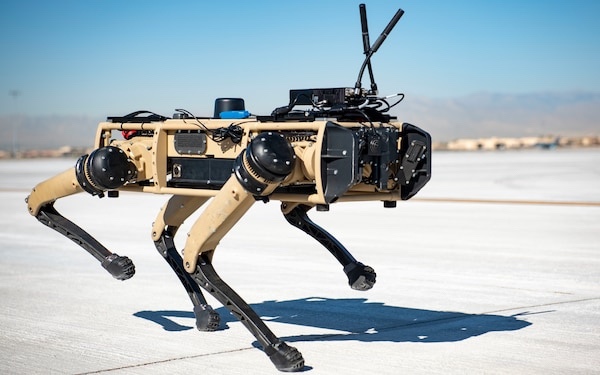

Robot dogs could fill important capability gaps and assist in the DHS mission. Photo: Courtesy Ghost Robotics.

In the future, could metallic beasts of burden shoulder some of the physically taxing and dangerous operational work to become a CBP agent or officer’s best friend?

After the successful completion of the use-case scenarios (that confirmed real-world capabilities) the robot dog work will continue with S&T leading the way. So, don’t be surprised if in the future we see robot “Fido” out in the field, walking side-by-side with CBP personnel.

Potentially a new best friend for CBP personnel in the field.

Saab Awarded Indian Contract for AT4 Support Weapon

Monday, February 7th, 2022

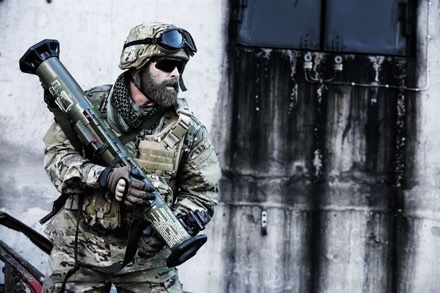
Saab’s AT4 weapon has been selected by the Indian Armed Forces through a competitive programme for a single-shot weapon. AT4 will be used by the Indian Army and the Indian Air Force. 

The Indian Armed Forces are a new customer for AT4. This order includes the AT4CS AST, which can be fired from confined spaces such as from inside buildings, bunkers and other urban environments. The AT4CS AST offers a tandem warhead with a breach or blast mode, which is optimised to defeat enemies within buildings and to destroy structures, which can create a point of access into them.

The contract was signed by FFV Ordnance AB, responsible for Saab’s Ground Combat offer in India. 

“We are honoured that the Indian Armed Forces, which are already users of our Carl-Gustaf system, have also selected Saab for their single-shot weapon need. The Indian Army and Indian Air Force can be confident in the knowledge that they have the necessary firepower to give them the advantage,” says Görgen Johansson, Head of Saab’s business area Dynamics. 


AT4 is one of the most popular and successful support weapon families on the market. Operated by a single soldier, this single-shot system has proven efficacy against structures, landing craft, helicopters, armoured vehicles and personnel. Its 84 mm calibre warhead offers enhanced power and performance. 

www.saab.com

8th Annual Future Soldier Technology Conference and Exhibition

Monday, February 7th, 2022

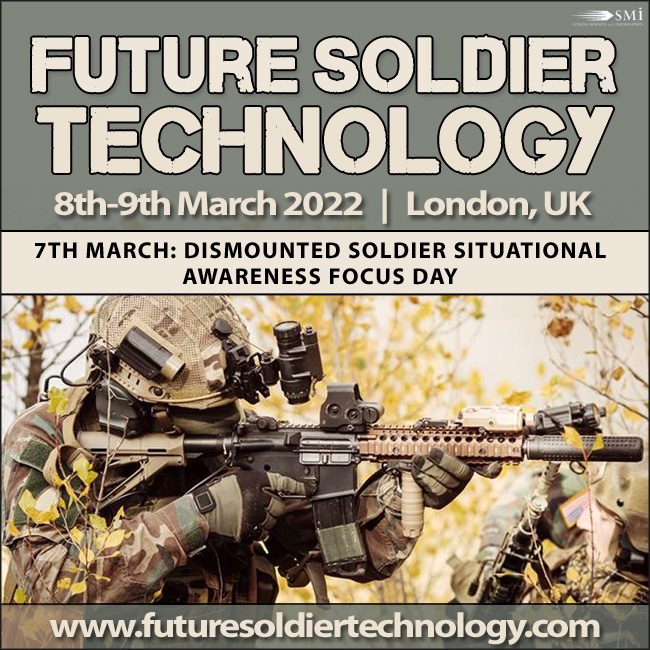
LONDON, LONDON, UK – There is only one month left for the 8th Annual Future Soldier Technology Conference and Exhibition to return to London on March 8-10, 2022 along with The State of the Dismounted Soldier Awareness Focus Day on March 7, 2022.

As the world’s leading meeting dedicated to promoting the technology of the late soldier, Future Soldier Technology 2022 will provide an attractive network space to foster new business relationships and discuss current requirements and experiences in equipment modernization.

This event usually sells out early – for those interested in attending the conference, it is advised to register soon to avoid disappointment. Register at www.futuresoldiertechnology.com/pr2.

Delegates will have the opportunity to hear key updates on future soldier programs from these countries: UK, France, Portugal, Canada, Australia, Netherlands, Sweden, Germany, USA and more.

Featured presentations include:

• Brigadier General Matthew Kansdale, Head of Future Force Development, British Army, presents: “Soldier of the Future: Transforming the British Army

• Lieutenant-Colonel Sebastien Jasnier, Deputy Branch, Department of Doctrinal and Advanced Studies of the Infantry, School of Infantry of the French Armed Forces, Presentation: Increasing Awareness of the Soldier’s Mortal and Dismantled Condition through Improving Weapons Optics

• Major Pedro Miguel Martins Grifo, Staff Officer (Area Coordinator – C4I, ISTAR, EW) Capabilities Branch, Portuguese Army*, Presentation: Development of Disassembled Portuguese Soldiers Systems to Enhance Situation Awareness

• Major Philip Riom, Soldier System Project Manager, Land Requirements Directorate, Canadian Armed Forces, Presentation: Improving Soldier Maneuverability through the Canadian ISSP

• Colonel Michael Basingthwaite, Army Adviser, London, Australian Defense Staff, Presentation: Promoting Situational Awareness for the Disbanded Australian Soldier

• Colonel Jan H. Funk, Program Leader STRONG, Defense Materials Organization, Dutch Ministry of Defense and Ms. Elsie Crosen, Director of System Integration Single Soldier, Defense Materiel Organization, Dutch Armed Forces Presentation: Strong Program: Strengthening the Capabilities of the Dutch Separate Soldier

• Major Magnus Hallberg, Chairman of the Board of Directors of the Digital Security Support System (LCD DSS), NATO/Swedish Armed Forces, Presentation: Development of the future NATO Soldiers System

• Mr. Geert Vanlenthout, Program Director, Night Vision Capability Program, OCCAR-EA, Presentation: OCCAR: Enhancing Night Vision Capacity for Participating Countries

• Lt. Col. Denny Drich, PdM PEO Ground Soldier Systems, PEO Soldier, US Army, Presentation: Transforming a Soldier’s Awareness of Conditions through the Nett Warrior IVAS Program

*Subject to final confirmation

The full agenda and speaker line is available at www.futuresoldiertechnology.com/pr2.

Future Soldiers Technology Conference
Conference: 8-9 March 2022
Pre-Conference Focus Day: 7 March 2022
Main Sponsor: Glenair | Golden Sponsor: Thales | Sponsors and exhibitors: 3M, Bren-Tronics, Domo Tactical Communications, Excelitas Qioptiq, FalCom, Instro Precision, L3Harris, Marlborough Communications, Silvus Technologies, Steatite, Teleplan Globe, Ultra Electronics

For inquiries related to sponsorship and exhibition, contact Sadia Malik Saadia Malik, Director at: +44 (0) 20 7827 6748 or email smalick@smi-online.co.uk

For delegate inquiries, contact James Hitchen at: +44 (0) 20 7827 6054 or email jhitchen@smi-online.co.uk

ExperienceFR 2022 – The Equipment Showcase and Training Event for Military and First Responders

Monday, February 7th, 2022

ORCE PROTECTION, SAFETY DEMOS, C5ISR, CBRNe, EOD, EXPEDITIONARY EQUIPMENT, & MORE

ExperienceFR 2022, the 10th Annual Exposition and Training Conference for today’s warfighter and first responder, is coming to the MGM National Harbor in Oxon Hill, Maryland, on March 1-2, 2022. This event, organized by Federal Resources, a Noble company, is an exhibition of technologically innovative solutions, focused training, live product demonstrations, and engaging presentations. The event will feature over 100 exhibitors and offer hands-on demonstrations of the latest products and technology available. Additionally, manufacturer representatives will answer questions and demonstrate the latest products for C5ISR, CBRNe, EOD, Medical/Fitness, and numerous other solutions for those who protect and serve in the Armed Forces and Federal Law Enforcement.

Manufacturer Exhibits

Product Demonstrations

Industry-Led Seminars

Response & Equipment Training

WHEN: March 1-2, 2022

WHERE: MGM Grand National Harbor, 101 MGM National Ave., Oxon Hill, MD 20745

Register at www.federalresources.com/experiencefr-2022

Cobalt Kinetics Expands Pro-staff to include Greenline Tactical

Monday, February 7th, 2022

Feb 7th, 2022: Cobalt Kinetics, a manufacturer of American Masterpiece firearms; is proud to announce the addition of team Greenline Tactical to the Cobalt Kinetics pro-staff of factory shooters. Team Greenline features a cadre of highly skilled instructors like; Sam Houston, Erik Vargas, Eric Butler, Jim Carter, and Don Edwards (as the main instructor & CEO).

The Greenline Tactical team brings a plethora of experience stemming from the Law Enforcement, Military, and Night Vision technology sectors. For example, Don Edwards and Sam Houston have become subject matter experts (and leaders) in the Night Vision industry and have lent their expertise to help create a standardization for NVG “Night-fighting” and NVG use for LE Patrol/ SWAT operations. Additionally, Erik Vargas is a skilled precision instructor, a former U.S Army Ranger (Sniper), and a champion level competitive shooter (2X National Sniper champion). These are just a few examples of the multitude of expertise that Greenline Tactical brings to the Cobalt Kinetics team.

“As we build our company’s new path, we want to make sure that real world expertise is introduced into our R&D and QC processes. By adding the Greenline Tactical team to our pro-staff we are ensuring that our approach to introducing new products is not met with an echo chamber of approval. We need individuals that will pick apart our designs before they have even left the prototype phase. If the product is not ready, then we need to know ASAP. This will ensure that customers receive only the very best that we can possibly offer. We also hope to curve the trend of having celebrity names on a company’s roster solely to draw attention. Everyone on the Cobalt team is expected to roll up their sleeves and help with the unified goal of continuously refining the product.”

-Aaron Quinn (Owner/ CEO)

For more information on Cobalt Kinetics and their products go to www.CobaltKinetics.com