Streamlight TLR VIR II

Archive for the ‘Profession of Arms’ Category

SIGMAN Camouflage SOP: A Guide to Reduce Physical Signature Under UAS

Wednesday, August 5th, 2020

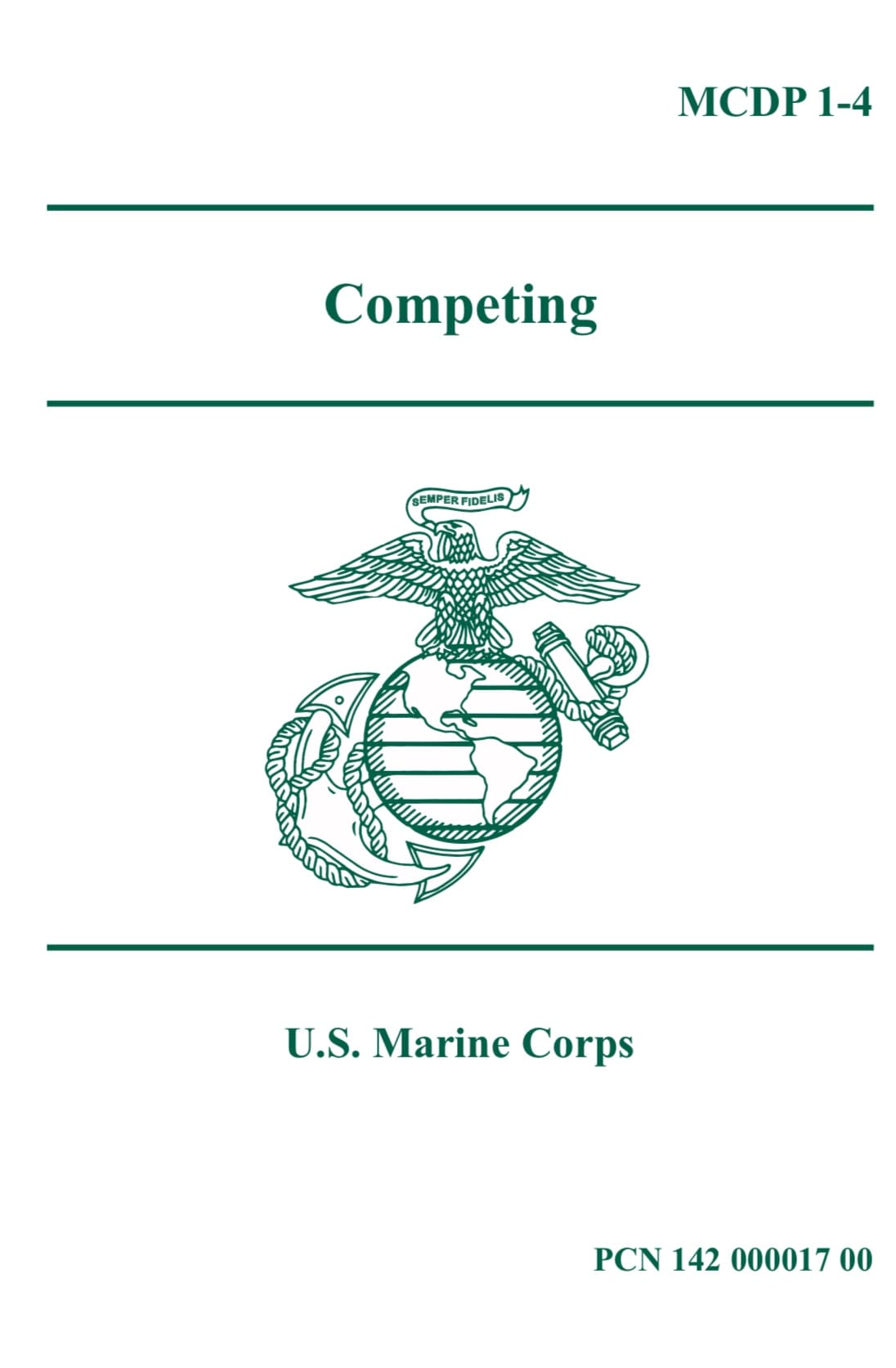
Written by a group of US Marines, ‘SIGMAN Camouflage SOP: A Guide to Reduce Physical Signature Under UAS’ goes into great detail regarding signature management against Unmanned Aerial Systems.

The Marines have changed up their doctrine, adopting Littoral Operations in a Contested Environment (LOCE) and Expeditionary Advanced Base Operations (EABO), which require Fleet Marine Forces to support Navy sea control missions. This disperses small units along key littoral terrain. As you can imagine, our adversaries will be looking for them and one of the most effective means is via air, UAS in particular. Remaining hidden from these eyes in the sky isn’t just critical for mission success, but for survival.

Available for download from 2ndbn5thmar.com.

Assessing Revolutionary And Insurgent Strategies (ARIS) Studies – Free Publications

Sunday, July 26th, 2020

If you want to understand what is going on in American cities, check out these free publications from the US Army Special Operations Command. This research was conducted by the National Security Analysis Department of The Johns Hopkins University Applied Physics Laboratory.

Many SSD readers will just nod, but some of you will have your eyes opened once you read about how insurgencies are conducted. Take for example, that fist on the cover…look familiar?


There’s a whole library available. Get yours here.

Aimpoint Announces Professional Discount Program

Tuesday, July 21st, 2020

Manassas, Virginia – Aimpoint, the originator and worldwide leader in reflex sighting technology has launched a new webstore, www.aimpoint.us. This new site offers consumers the ability to engage with Aimpoint and purchase the company’s products directly.

U.S. Military, law enforcement, EMTs, firefighters, private security, and state, local, and federal government employees will find access to discounts on Aimpoint products at the new webstore. To gain access, qualified individuals need only register by creating an account, and provide proof of affiliation from a list of acceptable documents. This program is available to both active and retired personnel. Further information regarding this program can be found on the Aimpoint Law Enforcement/Military Discount program page.

Maj Gen James F Glynn Takes Command at MARSOC

Wednesday, July 1st, 2020

Marine Forces Special Operations Command hosted a change of command ceremony today, as the Marine Raiders bid farewell to Maj. Gen. Daniel D. Yoo and welcomed Maj. Gen. James F. Glynn.

Glynn returns to MARSOC to serve as it’s eighth commander, having previously served as the commanding officer of the Marine Raider Training Center from 2011-2013.

“You don’t get too many opportunities to come back to a unit,” said Glynn, “but when you come back, you stand among giants… people of character, people who care, people of concern that transcends the operational mission. It is personal.” Glynn summarized his feelings about taking command in three words. “Pride, at the opportunity to come back to this formation and have the opportunity to stand amongst you. Humility at the opportunity to command in an organization like this. And some would call it a burden of command. It is actually a privilege to have the opportunity to be a part of and to contribute to all the great things that this force and its families do.”

As the MARSOC commander, Glynn will be responsible for manning, training and equipping Marine Raiders for deployments in support of special operations missions across the globe. MARSOC maintains a continuous deployed presence in the areas of operations for U.S. Indo-Pacific Command, U.S. Central Command and U.S. Africa Command.

“We have lots of stuff in the Marine Corps three Divisions, three Wings, three Logistics groups. We have one MARSOC, it is that unique,” said Gen. David H. Berger, 38th Commandant of the Marine Corps and the senior officer presiding over the ceremony. “There is no part of the globe that this command does not operate in,” going on to explain how much the organization provides the service. “We get back so much from MARSOC in the Marine Corps, in equipment, in training…the most that we are going to draw from MARSOC in the next couple of years, is not a technique, it’s not a weapon and it’s not a radio. It is the focus on the individual.”

Also in attendance were Gen. Richard D. Clarke, the commander of U.S. Special Operations Command, previous commanders of MARSOC, and various dignitaries from the local government, as well as the Marine Corps and interagency.

“When I think of MARSOC, I always think of SOCOM’s Sparta. When you look at this force, it is 2% of our budget from SOCOM, 6% of our manpower, conducting over 10% of SOCOM’s missions globally.It’s a great payback for what we put into it. Much of it is the human capital invested…the great Marines represented out here on the field,” said Clarke.

Yoo departs the command after two years leading the organization. During his time commanding MARSOC, Yoo drove the implementation of MARSOF 2030, the vision document designed to shape and inform the next decade of acquisitions, capability development, and operations for the command. In the same vein, he merged the G-5 Plans Directorate, and the G-8 Requirements Directorate, creating the Combat Development and Integration Directorate to continue expanding MARSOC’s role beyond the traditional battlespace. Yoo directed the establishment of MARSOC’s Cyber Integration Working Group to build the command’s future cyber capability and implemented the annual Cognitive Raider Symposium to increases awareness and critical thinking of key issues facing the Department of Defense and Special Operations Forces.

“As a commander, your time is fast, and as the commandant eluded to, we are the caretaker of the organization and the organization is a reflection of the individuals,” said Yoo. “From the moment you take the colors as a commander, you hope you can move the organization forward and that the things you do will have lasting impacts. It has been a life time of honors to be a part of these different formations, but to conclude with you all here at MARSOC, makes me very, very grateful.”

MARSOC is the Marine Corps service component of U.S. Special Operations Command and was activated Feb. 24, 2006. Its mission is to train, organize, equip and deploy task-organized Marine special operations forces worldwide.

Story by Lance Cpl Christian Ayers, Marine Forces, Special Operations Command

AUSA – Medal of Honor Graphic Novel Series: Henry Johnson

Tuesday, June 30th, 2020

On Tuesday, June 30, the Association of the United States Army is proud to announce the latest entry in the Medal of Honor graphic novel series: Medal of Honor: Henry Johnson.

Henry Johnson served on the Western Front of the First World War as member of the 369th Infantry Regiment, an African American unit that later became famous as the Harlem Hellfighters. While on sentry duty, Johnson fought off a German raiding party in hand-to-hand combat, despite being seriously injured. He was the first American to receive a Croix de Guerre with a golden palm, France’s highest award for bravery, and became a national hero back home.

The AUSA Book Program recognizes these remarkable acts of valor with Medal of Honor: Henry Johnson. This full-color digital graphic novel was created by a talented team of professionals:

Script: Chuck Dixon (Batman, The Punisher, The ‘Nam)

Pencils, Inks, Cover: PJ Holden (Judge Dredd, Battlefields, World of Tanks)

Colors: Peter Pantazis (Justice League, Superman, Wolverine)

Lettering: Troy Peteri (Spider-Man, Iron Man, X-Men)

The Association of the United States Army is a non-profit organization devoted to the US Army and Its Soldiers, and the book is being distributed free of charge as part of our educational mission. The new graphic novel is the first issue in the second volume of the Medal of Honor series, which launched October 2018 with Medal of Honor: Alvin York and continued with profiles of Roy Benavidez, Audie Murphy, and Sal Giunta. These graphic novels are available on Medal of Honor series page at www.ausa.org/moh.

This year’s graphic novels, in addition to Henry Johnson, will highlight Sen. Daniel Inouye, who finished a World War II assault despite losing an arm; Dr. Mary Walker, a Civil War surgeon and the only woman to receive the Medal of Honor; and Cpl. Tibor Rubin, the Holocaust survivor who later fought in Korea.

To read Medal of Honor: Henry Johnson online or download a free copy, please visit www.ausa.org/johnson.  

US Army’s Project Inclusion to Cut Board Photos in Holistic Effort to Promote Diversity

Tuesday, June 30th, 2020

WASHINGTON — Starting in August, photos will be eliminated from promotion and selection boards as the Army launches “Project Inclusion” to identify practices that inadvertently discriminate, senior leaders announced Thursday.

The project is a holistic effort to listen to Soldiers, civilians and family members and enact initiatives to promote diversity and equity, according to Secretary of the Army Ryan. D. McCarthy.

“A lot has to be done to address the symbolic challenges that we face that could create divisiveness within our ranks,” McCarthy told reporters.

Before deciding to eliminate photos from officer, enlisted and warrant officer promotion boards, leaders looked at a 2017-2018 study that determined, regardless of race or gender, people looking at photos will have an unconscious bias toward individuals with similar characteristics, G-1 officials said. Further, they said Department of the Army photos provide minimal information compared to the rest of a promotion board file.

During an experiment in the study, researchers ran two identical promotion boards: one that included photos and one without. In the one that did not contain photos, researchers found that the outcomes for women and minorities improved. The results contributed to the decision to remove the photos.

Project Inclusion

Project Inclusion will enact a series of initiatives in the next few months to help build a diverse, adaptive, and cohesive force, said Anselm Beach, the deputy assistant secretary of the Army for equity and inclusion.

“We, as a leadership team, recognize that we need to take a harder look at ourselves and make sure that we’re doing all that we can to have a holistic effort to listen to our Soldiers, our civilians and our families to enact initiatives that promote diversity, equity, and inclusion,” McCarthy said.

In the coming weeks, the Army inspector general and members of the Army Equity and Inclusion Agency will join Army senior leaders as they visit installations, said Under Secretary of the Army James McPherson.

During each visit, leaders will engage in an open and transparent conversation about race, diversity, equity, and inclusion.

“We know that we have to do more,” McCarthy said. “We are going to have very hard and uncomfortable conversations.”

McPherson said that he wants to hear Soldiers’ thoughts about current events and listen to their ideas on inclusivity.

Each “listening session” will look to identify any impact to mission readiness caused by current social issues, Beach said.

“If a Soldier [or civilian] is distracted by an issue, then they are not fully present to accomplish the mission,” Beach said. “Understanding those impacts allow the Army to enhance mission readiness,” which can lead to new policy or adjustments to an operating environment.

Each session would create a “safe place” for Soldiers to express themselves without fear of reprisal. By creating an open dialogue, people will have a chance to understand and support each other, Beach added.

“This is about leadership,” said Gen. Joseph Martin, the vice chief of staff of the Army. “Leaders have to set conditions for these discussions to happen and be productive. They’ve got to create an environment where a Soldier feels safe. And it’s also an environment that’s free of disbelief.”

McCarthy said leaders will also examine racial disparities within the Uniform Code of Military Justice. The Army’s inspector general, Lt. Gen. Leslie Smith, and the Army’s judge advocate general, Lt. Gen. Charles Pede, will then evaluate findings after 60 days and attempt to address the causes of the disparities, McCarthy said.

Changes under Project Inclusion also include the reconstitution of the Army Diversity Council. Led by the secretary of the Army and chief of staff, the council will prioritize diversity programs throughout the Army, all while addressing symbolic and systemic issues, Beach said.

“Part of why we wanted [to host meetings with Soldiers] is to get out and invest exponentially more time engaging with Soldiers at every echelon about these unconscious biases that may exist,” McCarthy said. “We must have a better understanding [of] the challenges every day that ethnic minorities may face. Are there systemic flaws within the promotion system or are there things that may be of a symbolic nature that cause division within our ranks?”

The force is also making changes to the Army People Strategy with the addition of the “Expanding Diverse Talent of the Army Officer Corps Strategic Plan.”

The new plan will focus on diversity and inclusion initiatives to strengthen the Army’s ability to acquire, develop, employ current and future leaders. Similarly, the Army will continue to expand its outreach to Historically Black Colleges and Universities and other minority-serving institutions.

Military justice reform

Tied to the project is an evaluation of the military justice system to determine if any racial disparity or bias exists in the investigation or court-martial processes, McPherson said.

During the assessment, the Army judge advocate general, the Office of the General Counsel, inspector general, and provost marshal will partner and review a range of cases to include absence without leave, urinalysis, and sexual assault or sexual harassment cases.

The review will “compare the severity of punishments by race, and see if there is a disparity… in the result of unconscious bias,” McPherson said.

The Army is also working to determine if the military justice system is more likely to investigate a specific Soldier due to unconscious bias. However, accurately assessing the investigation process could be a challenge, as race and ethnicity information is rarely documented during this stage, he added.

The enduring effort will not only improve equality, but make the force stronger, said Army Chief of Staff Gen. James C. McConville.

“It’s really more about inclusion,” he said. “It’s not just about percentages. It’s not just about numbers. It’s about making people feel that they are a valued member of the team and that you recognize the importance of having different perspectives.”

By Devon L. Suits and Joseph Lacdan, Army News Service

US Army Doctrine Smart Card

Monday, June 29th, 2020

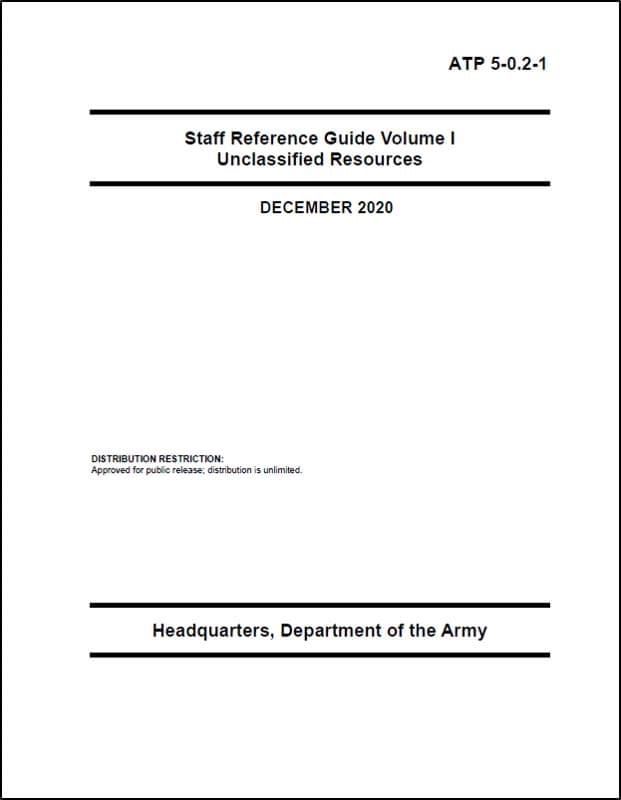
New from the U.S. Army Combined Arms Doctrine Directorate, Graphic Training Aid (GTA) 19-10-007 “Doctrine Smartcard.”

Analysts from the Center for Army Lessons Learned, having observed numerous iterations of the Mission Command Training Program’s Warfighter Exercises and Combat Training Center rotations, have identified key doctrinal areas that most junior Soldiers and leaders routinely reference. These include areas relevant to Army planning and Army offensive and defensive operations. This quick reference aid aims to help Soldiers quickly identify and reference key doctrinal terms and steps in high operational tempo training environments. Download yours today at usacac.army.mil/node/2704

ACFT 2.0: Changes Sparked by COVID-19

Friday, June 26th, 2020

FORT EUSTIS, Va. – The Army Combat Fitness Test, or ACFT, will be the force’s test of record Oct. 1, but the Army’s top enlisted Soldier says troops will have more time to train for and pass the six-event test — without fear of it negatively impacting their careers during that time.

Despite hold ups caused by COVID-19, Sgt. Maj. of the Army Michael A. Grinston is confident the long-planned ACFT will stay on track. In addition to the new training timeline, he also announced a handful of other modifications to the test, dubbing it ACFT 2.0.

It’s the same six-event physical fitness test — just an updated version, Grinston said. So even though troops don’t have to pass the test this year, they still have to take the ACFT as scheduled.

“When it’s the test of record, you have to put it into the system of record, and that’s the only requirement right now,” Grinston said. This means the Army won’t take administrative actions against Soldiers for potential ACFT failures.

Potential career impacts like separation, derogatory or referred evaluation reports, and a Soldier’s Order of Merit List standing are all off the table to be negatively impacted due to an ACFT failure.

This news comes as the Army,  in response to social distancing guidelines, hit the brakes on all physical fitness tests in March. Although fitness tests slowed down, Army leaders went full-steam ahead to plan how Soldiers will jump from the 40-year-old Army Physical Fitness Test, or APFT, to the new ACFT 2.0.

So what are the changes?

First, for many, the APFT is gone for good. Once testing suspensions are lifted, the only Soldiers required to take an APFT ever again will be troops without a current passing score, the sergeant major confirmed.

“As for everyone else [with a current passing APFT score] — they should start training for the ACFT,” he added.

As far as the evolution of the ACFT, the biggest change for Soldiers is the option to substitute a two-minute plank, once a Soldier has attempted the leg tuck.

The other six events are still locked in; the 3 repetition maximum dead-lift, standing power throw, hand release pushups, leg tuck, 2-mile run, and sprint, drag, carry. The plank is just an interim assessment.

The plank is seen as a transitioning tool for Soldiers jumping from the APFT to the six ACFT events, said Maj. Gen. Lonnie G. Hibbard, the U.S. Army Center for Initial Military Training commanding general.

Depending on an individual’s physical starting point, switching back to the leg tuck should take “anywhere between six to three months,” Hibbard added, but for now, the plank is an alternative.

Planks are a core muscle-burning exercise, completed by individuals who remain static with their elbows planted to the ground directly beneath the shoulders at a 90-degree angle while maintaining a straight posture.

Plank exercises can be conducted almost anywhere, Hibbard said, and do not require equipment to train for. Under the current COVID-19 conditions, this could be an ideal transitional assessment.

Also, the stationary bike event dropped its initial 15,000-meter standard down to a 12,000-meter standard. Biking is an Alternate Assessment for Soldiers with permanent profiles unable to complete the two-mile run.

Additional changes for fiscal year 2021 also include scoring standards. All Soldiers are challenged to pass the ACFT at the “Gold Standard,” Hibbard confirmed, which is an overall minimum total score of 60.

To pass, all troops are required to meet the  moderately challenging “gold standard” instead of the more grueling “grey or black” scoring minimums — typically reserved for harsher, more physically demanding career fields. This standard applies to all Soldiers, regardless of age or gender.

Until COVID-19 hit, “we were seeing vast improvements with the ACFT,” Grinston said, adding the changes to the ACFT promotes a better physical fitness standard that will mirror the physical demands of the Army, while also decreasing injuries and having more effective Soldiers within the ranks.