SIG SAUER - Never Settle

Archive for the ‘SOF’ Category

USSOCOM To Host Small Business Roundtable

Wednesday, April 26th, 2017

The United States Special Operations Command (USSOCOM) is hosting a Small Business Roundtable in Tampa, FL on 28 June 2017 from 2:00pm-4:00pm, with a no host social from 4:00pm-5:00pm. Government participants will be the Acquisition Executive, the Director of Procurement, and the Director of the Office of Small Business Programs. USSOCOM would like to have participation from all socio-economic categories and a variety of industries. Space is limited to 25 individuals; therefore, participation is restricted to one participant per small business.
If interested in participating, please send the following information to paul.ward@socom.mil:

Company Name
Company CAGE code or DUNS number
Predominant NAICS Code(s)
Socio-economic status
Name of Person attending
Contact Phone Number
Contact email

Responses are due by close of business on 19 May 2017. Responses received after the due date may not be considered. Invitations for those selected to attend will be sent out no later than close of business on 26 May 2017. If not selected for this event, your contact information will be saved in the event we hold future round tables.

Questions can be directed to Paul Ward, paul.ward@socom.mil, (813)826-2279

USSOCOM Seeks Advanced Technologies

Tuesday, April 25th, 2017

USSOCOM Science and Technology Directorate’s (SOF AT&L-ST) has issued addendum J of their Broad Agency Announcement for advanced technologies. The directorate’s vision is to Discover, Enable, and Transition technologies to provide an asymmetric advantage for Special Operations Forces (SOF). SOF AT&L-ST has identified specific technology Areas of Interest to accelerate the delivery of innovative capabilities to the SOF warfighter.

Fires/Scalable Effects Weapons (SEW):
USSOCOM seeks to study, design, develop, and demonstrate advanced technologies associated with the application of fire from non-lethal through lethal. These technologies include, but are not limited to, weapons, munitions, and fire control, with the major development goals being lighter weight, lower cost of ownership throughout the entire lifecycle of the product, and increased effectiveness. Highly desired are:

Improved Effectiveness of Fragmentation Weapons. Alternatives to existing fragmentation weapons, or weapons where the casing is shattered upon detonation, and identifying munitions with greater effectiveness while applying the FBI standard for bullets (10-12 in penetration of tissue simulant) in the design of fragmentation munitions. The technology and approaches should assess what industries such as aerospace, automobile manufacturing and other non-ordnance suppliers have available or in development that applies to the needs. Specifically desired are:

Analysis of alternatives on potential of fragmentation weapons.

Enhanced 40mm x 46xx fragmentation grenade. USSOCOM is interested in an enhanced 40mm x 46mm cartridge propellant system that optimizes the acceleration curve enabling heavier payloads at current ranges or current payloads a longer range while remaining within current pressure and recoil limits. Peak chamber pressure is approximately 2320-3000 psi depending on barrel material and thickness. Recoil safety limit is 45 ft-lbs to 50 ft-lbs. USSOCOM is interested in increasing the lethal area of a 40mm x 46mm fragmentation projectile with enhanced energetics and optimize controlled fragmentation. USSOCOM defines lethal area as having a minimum of 2 fragments per square meter and 90% of those fragments penetrating 12 inches of 10% tissue simulant.

Payload Development. Technologies that can be employed as a payload to stop/disable maritime vessels and that can be delivered from an unmanned underwater vehicle (UUV). The payload can deliver a non-reversible effect, however, the effect should not betray hostile intent. Technologies/payloads that can be transported in a UUV compartment and can be exposed to a harsh, marine environment. Technologies/payloads should stop a vessel less than 50 meters long.

Human Performance
USSOCOM seeks to conduct research, design, development and demonstration of capabilities that enhance physiological, physical, psychological, and intellectual performance, and improve resistance to disease, stress, or injury caused by the demands of sustained operations in extreme environments. Highly desired are:

Performance Enhancements. Innovative solutions that will optimize human performance, reduce recovery time, and increase peak performance sustainability, including increased endurance, strength, energy, agility, enhanced senses, provide restorative effects of sleep, and enhance tolerance to environmental extremes. The technologies can be demonstrated through studies that provide proof of concepts or through solutions demonstrated in humans that quantify operational performance improvements. Technologies should not consist of new software applications, wearables, and additional studies on existing nutraceuticals that have been previously researched in depth. SOF AT&L-ST is specifically interested in:

Genomics, epigenetics, proteomics, and synthetic biology

Nutraceuticals and/or pharmaceuticals

Enhancing metabolic efficiency

Methods of improving oxygen delivery to muscles

Reducing the potential for musculoskeletal injury

Increasing tolerance to pain

Cognitive Enhancement

Sleep Restoration

Submissions should consider methods of demonstrating safety and efficacy, and a regulatory approval strategy if required. Proposed solutions do not have to be FDA cleared as a prerequisite, but nutraceuticals and/or pharmaceuticals must be US-sourced. Submitters should have access or partners with access to lab facilities.

Protection
USSOCOM seeks to conduct research, development and demonstration of advanced technologies associated with protecting the future dismounted SOF Operator. These technologies include, but are not limited to, ballistic body armor, helmets, and eye protection, with the major development goals being lighter weight and increased protection. SOF AT&L-ST is specifically interested in chemistry and microstructure improvements for advanced armor materials, including the following:

Mechanical property enhancements in existing armor ceramics through microstructure modifications

Development of new ceramic armor materials

Continued optimization of fiber-based armor materials, to include aramids, ultrahigh molecular weight polyethylene, and their associated resin systems

Investigations into additive manufacturing of armor materials (metals, polymers, and ceramics)

Thin, lightweight and low-cost transparent armor (polymer, glass and ceramic based solutions)

While the main focus of the research should be development of advanced armor materials, other considerations include projectiles of interest (7.62 x 39 mm MSC at 2400-2450 ft/s, 7.62 x 39 mm API BZ at 2400-2450 ft/s, 7.62 x 54R mm API B32 at 2850-2900 ft/s, and 7.62 x 51 mm AP M993 at 3050-3100 ft/s), a final system thickness of less than 1.0 inch, backface signature performance of less than 44.0 millimeters at the velocities listed above, and an ultimate goal of areal density reduction (with similar or improved ballistic performance).

Optical Electronics
USSOCOM seeks to conduct research, design, develop, and demonstrate advanced technologies associated with target engagement, intelligence, surveillance & reconnaissance, and neutralization of opposing force capabilities. These technologies include, but are not limited to, optics, lasers, sensors, and radar, with the major development goals being transition to the field within 5 years, backwards compatible with existing infrastructure, and do not require a significant cost investment to produce and sustain. SOF AT&L-ST is specifically interested in:

Observer to Point of Interest: Ground-to-Ground/Air-to-Ground

Man Portable Equipment and Turrets / Pods to Tower-Test

Characterization Abilities: Ability to identify and detect persons or objects of interest, identification of and thru material layers

Technologies that can be employed to effect long range enemy identification, to include laser vibrometry. Specific distances have yet to be determined, but should work outside the signature ranges of Intelligence, Surveillance and Reconnaissance (ISR) platforms to ensure surreptitious collection

Interested parties must submit whitepapers for this BAA Addendum which closes on June 5, 2017, at 11:59 p.m. EDT. USSOCOM may select some candidates which will then be funded up to $3m and given up to three years of development.

For full details, visit www.fbo.gov.

Remembering The Fallen Of Operation Eagle Claw

Monday, April 24th, 2017

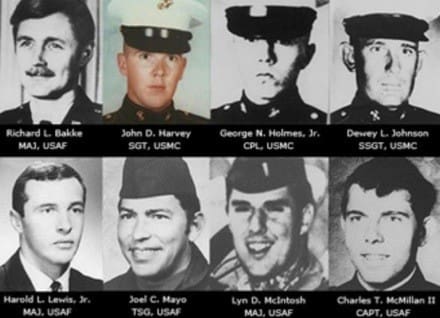
Today marks the anniversary of Operation Eagle Claw. In the early morning hours of 25 April, 1980 President Carter announced to a stunned world that the United States had undertaken an ambitious raid into Iran to liberate 52 American hostages held illegally at our Embassy in Tehran. Unfortunately, Operation Eagle Claw was unsuccessful and we lost eight American servicemen in a horrible aircraft ground collision. Join me in remembering their sacrifice.


20120424-214950.jpg

Their sacrifice was not in vain. The hostages were eventually repatriated and the accident was the watershed event that created over the next several decades, the world’s preeminent Special Operations capability; USSOCOM and its components. We wouldn’t be where are today without the determination of that fledgling task force. Join me in remembering those that had the guts to try.

An Imprecise History of the USASASODS

Monday, April 17th, 2017

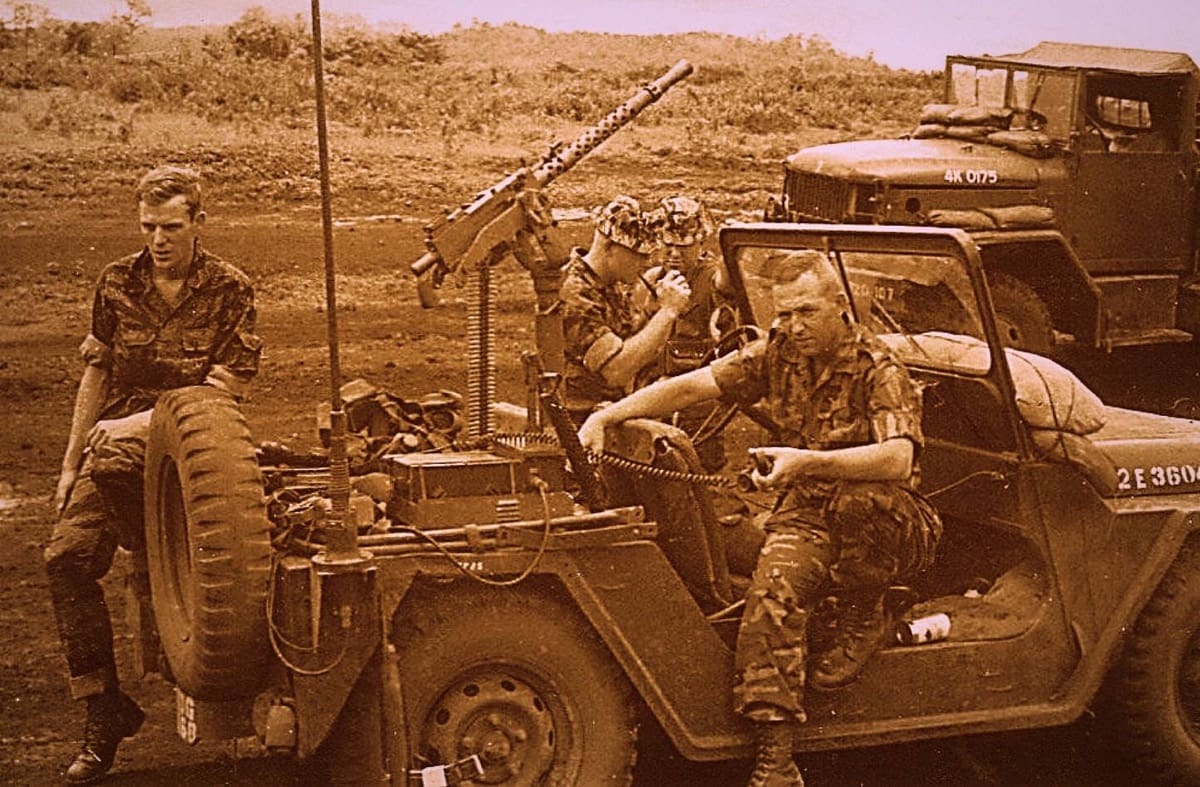
Organic to each of the US Army’s Special Forces Groups are small teams of Signal Intelligence specialists operating in teams called Special Operations Team – Alpha or SOT-A. These in turn are supported by fewer still SOT-Bs. I served on a SOT-A from 1990-96 in 2nd Bn, 3td SFG(A). The SOTs-A are the direct descendants of the United States Army Security Agency Special Operations Detachments (USASASODs). While other SOF components have just recently stood up SIGINT support elements, SF has had the capability since before the Vietnam War.


Photograph: The 403rd SOD courier run – Plei Ku to Kontum – 1968 (Photo: INSCOM)

What follows is an “imprecise” history of thier existence from an ASA veteran website.

AN IMPRECISE HISTORY OF THE USASASODS

In the history of mankind, there are fleeting moments of time where, by fate or good judgement on the part of someone, a group of people are brought together at the most appropriate time and place or places to form extraordinary military units.

One such fleeting moment of history, was the formation and life cycle of an extraordinary military unit called the United States Army Security Agency Special Operations Detachment, more commonly referred to as the ASASOD.

One may ask why the ASASODs were called extraordinary and not elite. There are many elite military organizations such as the Roman Legions, Merrill’s Marauders, Rangers, Special Forces, SEALs, etc., however, there are few extraordiary units such as the ASASODs.

Why were the SODs extraordinary? Certainly, the timing was there and so were the places. But, the thing that really made the SOD an extraordinary unit was the people… good Special Forces soldiers…good technicians…loyal, dedicated, brave men…but, most of all, trusted and true friends.

The first SOD was originally formed at Vint Hill Farms Station, VA and relocated to FT Bragg, NC during the summer of 1960 with the 5th and 7th SFG(A)s. Later in 1960, units were organized and located in Okinawa with the 1st SFG(A) and Bad Toelz, GE with the 10th SFG(A). These original SODs were then designated as the 1st (1st SF), 2d (10th SF), 3d (7th SF), and 4th (5th SF) Operational Detachments of the 80th USASA Special Operations Unit (80th USASASOU).

In 1962 these Operational Detachments of the 80th SOU were redesignated as USASA Radio Research Units (RRUs); the 10th RRU (400th SOD) 1st SFG(A), and the 11th RRU (401st SOD) 8th SFG(A) was created, 12th RRU (402d SOD) 10th SFG(A), and the 13th RRU (403d SOD) 5th SFG(A).

During 1963 the units were again redesignated to the final designations we know them as today; the 400th ASASOD, 1st SFG(A); 401st ASASOD, 8th SFG(A); 402d ASASOD, 10th SFG(A); 403d ASASOD, 5th SFG(A) until Jan 64, 7th SFG(A) until Jan 65, and then to the 3d SFG(A) until the 403d’s deployment to RVN with the 5th SFG(A) in 1966.

The SODs remained the same from 1966 until the post-Viet Nam stand down of Special Forces during the early 1970s. With the stand down of the 5th SFG(A) in Viet Nam, the 403d was deactivated and was never again reactivated. On deactivation of the 8th SFG(A) in Panama, the 401st was deactivated for a short while and later reactivated with the 7th SFG(A) at Ft Bragg, NC. In 1974, on deactivation of the 1st SFG(A), the 400th was redeployed from Okinawa to Ft Bragg with the 5th SFG(A). The 402d redeployed from Germany with the 10th SFG(A) to Ft Devens, MA.

The official end of the USASASODs as United States Army Security Agency units came with the deactivation of HQs, USASA and conversion to Combat Electronic Warfare Intelligence (CEWI) organizations in December, 1976. However, even after the designation of USASA, the SODs continued to carry the ASASOD unit designations into the early 1980s when they were redesignated as Military Combat Intelligence Companies.

USSOCOM – Happy 30th Anniversary

Sunday, April 16th, 2017

Pursuant to the Goldwater-Nichols Defense Reorganization Act of 1986, the United States Special Operations Command was established on April 16, 1987, at MacDill Air Force Base, Florida.

USAF Special Tactics Form SOTF During Exercise Emerald Warrior

Tuesday, April 11th, 2017

This is a very big deal. It means Special Tactics have come a long way from when I was an LT, 20 years ago at the 720th STG and we had just created the Special Tactics Operations Center UTC to provide C2 for deployed ST forces. We didn’t even have enough manpower billets to conduct 24 hour operations in all specialties. ST has not only matured into a Wing with two Groups, but its organic support infrastructure has grown to the point where operators can concentrate on their mission rather than providing support functions.

HURLBURT FIELD, Fla. — Emerald Warrior is an annual air-centric irregular warfare exercise directed by U.S. Special Operations Command, but this year, something different happened: the Air Force’s ground special operations force specifically trained joint leaders how to win across multiple domains.

For the first time during EW17, Air Force Special Tactics executed command and control of all ground special operations forces during the two-week irregular warfare exercise, which ended March 10.

“This was the first time that Special Tactics has fielded a SOTF headquarters — everything from leadership to sustainment, planning of operations to execution,” said Lt. Col. Daniel Magruder, commander of the 22nd Special Tactics Squadron.

For Special Tactics Airmen, EW17 was a proof of concept for the Air Force’s role in future joint operations: employing Airmen in leadership positions against an enemy-centric problem.

“EW 17 provided us a great opportunity to further refine and train toward the responsibility to lead at the O-5/E-9 joint special operation forces task force level,” said Col. Michael E. Martin, commander of the 24th Special Operations Wing. “Lt. Col. Magruder and Chief Innis surpassed our expectations and the joint standards to lead and employ as Special Operations Task Force command team.”

IMG_0824

The ground component of EW17 was led by an ST Airman, Magruder, who acted as the exercise’s SOTF commander, and Chief Master Sgt. Scott Innis, who acted as the senior enlisted leader.

Magruder and his staff led EW17’s entire ground component special operations force, including 300 operators from France, the Netherlands, the U.S. Army’s 7th Special Forces Group and Air Force Special Tactics teams.

IMG_0825

The SOTF planned and executed 21 full mission profiles in compressed timeline of 10 days. Primarily, special operations teams performed an array of congressionally-mandated missions spanning global access, direct action and personnel recovery.

“From our perspective, this was about developing joint leaders in the Air Force,” said Magruder. “This is a great venue in terms of developing some experience in the ground scheme of maneuver and translating that into something that Airmen understand in terms of what higher headquarters is expecting to achieve from a joint-force perspective.”

Special Tactics Airmen were the preponderance of ground special operations force, and integrated the air component, to include fighter and global strike bomber aircraft into their missions, instead of visa versa. As with many firsts in a complex operating environment, the Air Force-led SOTF faced and overcame a multitude of challenges.

According to Magruder, it was challenging to effectively manage information and synchronize resources while meeting training objectives and executing safe operations on such a large scale– another reason Special Tactics dedicates itself to training like they will fight.

“Special Tactics is all about looking at ways to solve hard problems and contribute to the win,” said Martin. “The 22 STS successfully deployed and led a SOTF at Weapons School Integration phase on Dec. 16, and then to EW 17. I have all the confidence in them to lead during crisis and combat.”

All photos from US Air Force.

USSOCOM Releases Sources Sought Notice for Advanced Sniper Rifle

Monday, April 10th, 2017

USSOCOM is seeking sources within the national technology and industrial base for a Commecial Off The Shelf convertible caliber rifle which will serve as the replacement for the Precision Sniper Rifle system.

They are interested in:
-complete system to include all 3 caliber conversion kits
-any tools needed to complete the conversion
-a light/sound suppressor that can be attached to the system when needed

ASR System specifics: The system must be adaptable to fire the 7.62mm NATO, .300NM, and .338NM cartridges. The system must have total system weight, less suppressor and with unloaded magazine, not to exceed 17lbs (T), 13lbs (O). Length with stock extended, less suppressor, not to exceed 50″(T), 40″(O), length for transport, by means of folding or collapsing shall be 40″ (T), 36″ (O). Accuracy shall be:

Configuration Precision
7.62 mm 1.0 MOA (ES) at 328 yards (300 meters) (T) 0.5 MOA at 328 yards (300 meters) (O)
.300 NM 1.0 MOA (ES) at 328 yards (300 meters) (T) 0.5 MOA at 328 yards (300 meters) (O)
.338 NM 2.5 MOA (ES) at 328 yards (300 meters) (T) 1.5 MOA at 328 yards (300 meters) (O)

For thise of you unfamiliar, T means Threshold or the miminum acceptable performance, while O means Objective which is where they’d really like to be. As they haven’t specified a specific cartridge, the accuracy specifications at this point are much more subjective.  They desire full systems, including suppressor, but SOCOM is simply looking for potential solutions for this emerging requirement at this stage in the game. Eventually, they’ll either specify cartridges they plan to use or open it up the various offers as part of the solicitation.  However, the caliber choices are very interesting. Not only are the Norma Magnum cartridges not standard military fare, consider a single chassis that will accept 7.62 NATO along with .300 NM and .338NM.

Offerers have until 24 April, 2017 to provide information to USSOCOM, which isn’t much time at all.

Visit www.fbo.gov for more information.

Revision SOF Helmet In Action

Sunday, April 9th, 2017

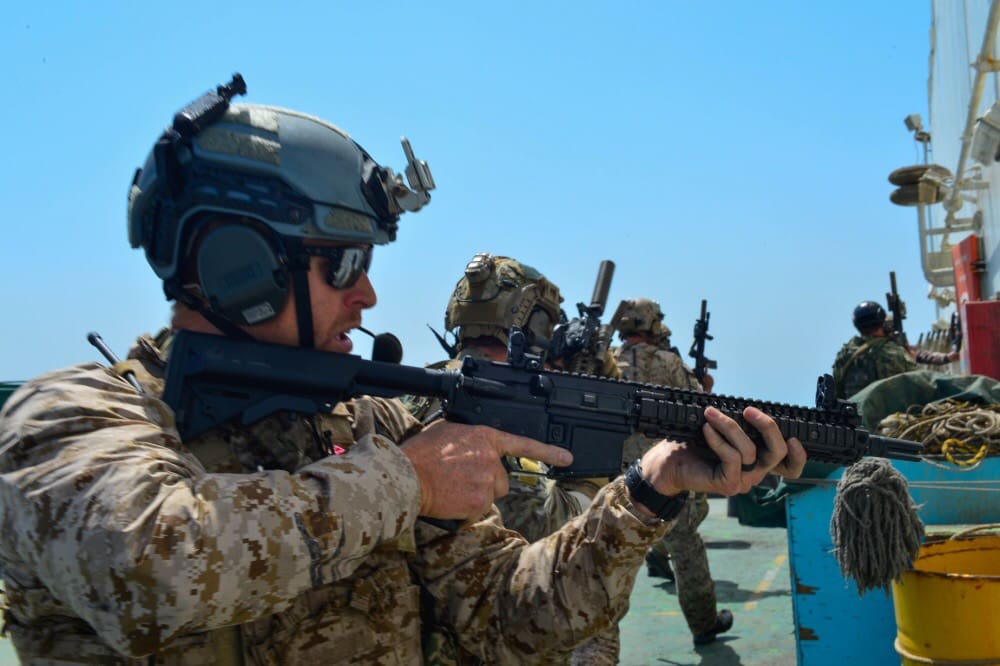
Interesting to see one of the Revision Military Family of Tactical Headborne Systems submissions for USSOCOM’s Next Generation Helmet program, out in the wild.

KUWAIT – Elite military special operations forces from the Gulf Cooperation Council, and the U.S. conducted a simulated rapid response to the hijacking of the motor tanker, or oil tanker, the Hadiyah, April 3, in Kuwait territorial waters.

Special forces teams from the GCC, and U.S. Naval Special Warfare and rigid-hull inflatable boat teams simulated an air and sea-borne rapid insertion, search and seizure of the occupied tanker and its hijackers, and the safe release of the tanker crewmen.

The raid was a cumulative joint exercise that tested the participants’ tactical skills and abilities to operate cohesively in an operational mission with our GCC partner nations.

Exercise Eagle Resolve is the premier U.S. multilateral exercise within the Arabian Peninsula. Since 1999, Eagle Resolve has become the leading engagement between the U.S. and GCC nations to collectively address the regional challenges associated with asymmetric warfare in a low-risk setting.

This work, Elite Special Forces from GCC and U.S. simulate a raid on hijacked tanker [Image 1 of 74], by MSG Timothy Lawn, identified by DVIDS, is free of known copyright restrictions under U.S. copyright law.

Thanks DM!