Phantom Lights

Archive for the ‘Training’ Category

Wind Tunnel Training: Key to Expeditionary and Special Warfare Readiness

Wednesday, August 16th, 2023

NORFOLK, Va. – Several members from the Naval Safety Command (NAVSAFECOM) Expeditionary and Special Warfare Directorate participated in simulated skydiving training at the iFly Virginia Beach July 17. This periodically scheduled training allows jump participants a simulated free fall environment to work on various body positions, corrective actions and emergency action procedures in a controlled and supervised environment.

IFly provides an indoor skydiving experience that creates free fall conditions without having to jump out of an aircraft. The facility’s vertical wind tunnel generates 1600 horse power from four powerful fans, creating a wall-to-wall cushion of air on which participants can safely float. While an entertainment venue for the general population, the wind tunnel is more than just fun for the DoD personnel who use it for training purposes. 

“I have been doing the wind tunnel training for about six years and the training is the closest we can get to representing the feeling, motion and training to actual flight,” said a Senior Chief Special Warfare Operator stationed at NAVSAFECOM as a naval special warfare safety analyst. “This training is important to me and others as it allows the opportunity to maintain jump qualification proficiency while stationed at a non-operational command.”

The wind tunnel is a low-risk atmosphere that provides the jumper with a realistic experience of falling through the air at 125 mph. Jumpers work on stability, 360-degree turns, side slide and forward or back movements. Once the basic movements have been mastered, jumpers can transition into emergency procedures and simulate each emergency procedure they might encounter at the “bottom end” of their jump. Not only will jumpers practice their wave off procedure, but they will simulate and conduct a hard pull Emergency Procedure (EP), learning how to stay stable and still execute with quick but precision hard pull.

On this training day at the wind tunnel, participants had their own individual areas they aimed to train in. Participants have different levels of experience and specific training goals to work toward.

“Today I worked on various free fall body positions. Moving forward and back, left to right in different varieties,” said the Senior Chief Special Warfare Operator. “The other thing I worked on was recovery stability, having the instructor push or pull me and roll me over and working on my recovery.”

Senior Chief Special Warfare Boat Operator Brad Rumbaugh, a small boat safety analyst with NAVSAFECOM, has over 200 military free fall (MFF) jumps and countless hours going into the tunnel. Rumbaugh’s training focused on his “Coach’s Position,” which uses legs to maneuver, freeing one’s hands for hand signals while instructing another flyer.

“The position is for assisting another jumper. If someone hasn’t jumped in a while or asks for someone to jump out with them, that position allows for the “coach” to use his or her hands to either help or eventually pull the rip cord if the jumper freaks out or freezes in the air and misses their pull altitude,” said Rumbaugh. “When coaching you have to be ready to stop their spin, direct and communicate corrections with your hands. You can’t be using your hand to maneuver and pass hand signals at the same time, so you have to learn to fly with your legs so your hands are free.”

The participants know the value of wind tunnel training and seize every opportunity they have to participate.

“Training like this is important to DoD because like everything else you have to stay current with your skills. You either use or lose your skills with things like shooting, skydiving, scuba diving, etc.,” said Rumbaugh. “Wind tunnel training allows military free fall parachutists the ability to knock the rust off, gain more experience and boost their confidence in emergency procedures prior to the real evolution of military free fall.”

Chief Explosive Ordnance Disposal Technician Jeremy Marco, a NAVSAFECOM expeditionary warfare safety analyst stressed the importance of the free fall emergency and survivability procedures and the opportunity the vertical wind tunnel provides.

“Vertical wind tunnel training with procedures increases the jumper’s in-air survivability and ability to withstand and cope with malfunctions and in-air emergencies that could occur,” said Marco. “Today, I worked specifically on belly fly, turns using hands and feet, situational awareness and air space management.”

Risk is inherent in all tasks, training, missions, operations and personal activities no matter how routine. While there is no shortage of inherent risk in the Navy’s expeditionary and special warfare communities, training such as the wind tunnel remains key to readiness ? Navy’s top priority. Today’s operational environment demands ships, aircraft, submarines, expeditionary forces, special operations forces and personnel that are ready to fight and win.

From Leslie Tomaino

DISCLAIMER: The use of IFLY by name in this article does not imply endorsement by the Naval Safety Command.
SureFire Field Note Ep 77 – Left Foot Braking for Better Vehicle Control Offroad with Alex Fleming

Saturday, August 5th, 2023

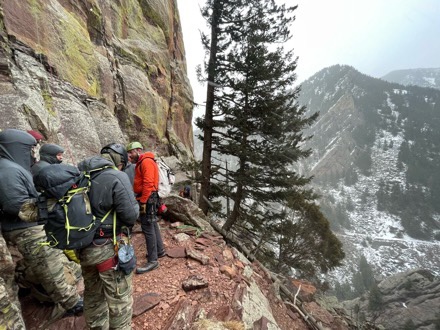
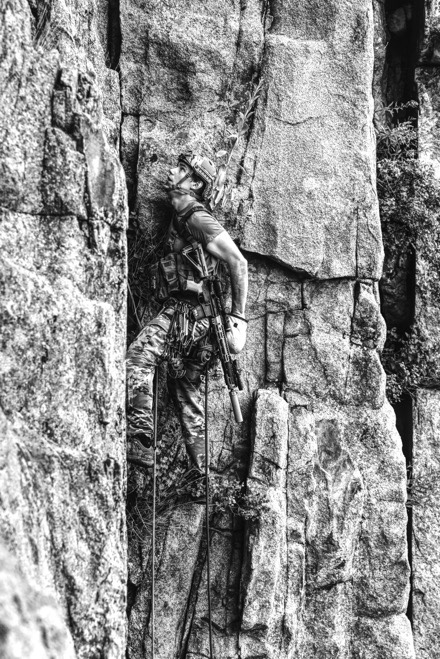
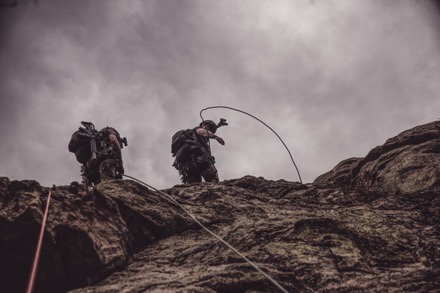
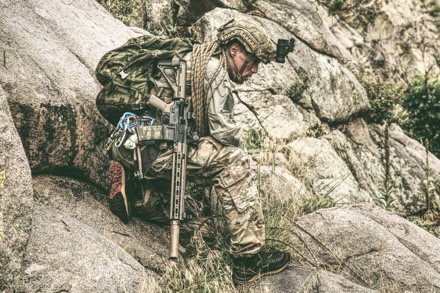
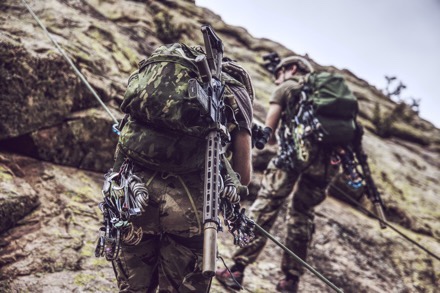
Peak Rescue Establishes Elite Mountain Services Team to Provide Specialized Military Mountaineering Training

Monday, July 31st, 2023

Casper, Wyoming – Peak Rescue, a renowned leader in rescue training and crisis response, is proud to announce the formation of a new division, Peak Rescue Mountain Guides. This specialized division is dedicated to offering Military Special Operations Units comprehensive mountaineering training. With over a decade of experience in training rescue professionals in mountain rescue, technical rescue, and industry rope access, Peak Rescue continues its commitment to excellence with this new venture.

Led by Industry Experts:

The newly established Peak Rescue Mountain Guides will be spearheaded by a team of industry experts, each holding an impressive array of certifications and experience in their respective domains. Heading the division is Micah Rush, a distinguished rescue tech with credentials encompassing Rope Access, Rope Rescue, Mountain Rescue, ITRA Instructor Confined Space & Rope Level 3, ITRA Registered Assessor, and full International Federation of Mountain Guides Association (IFMGA) certifications.

Working alongside Micah is Joe Thompson, Chief Guide and licensed by the IFMGA – the highest level of professional guiding in the world. Joe’s expertise extends to being a senior instructor for the AMGA, proficient in alpine, rock, ice, and ski disciplines, and holding two of the highest Avalanche Forecasting certifications in the US with the American Institute of Avalanche Research and Education and the American Avalanche Institute.


Additionally, Cody Carroll, former Force Reconnaissance Officer and Mountain Leader, assumes the role of Military Program Director, bringing over 23 years of military experience, specializing in military mountaineering, special insertion and extraction techniques in mountainous terrain, and tactical application of mountaineering.

The medical director position is held by Alan Oram of Mountain Medicine LLC, a board-certified physician specializing in Emergency Medicine and internationally licensed by the IFMGA.

Expert Instructor Staff:

The instructor staff at Peak Rescue Mountain Guides comprises fully certified IFMGA mountain guides, including Mike Abbey (Former Force Recon and current IFMGA certified, AMGA Rock, Alpine, and Ice Instructor), Matt Hartman (IFMGA certified, and AMGA Instructor), Karsten Delap (IFMGA Certified), and current Special Operations Mountain Warfare Specialists. With their extensive experience in training military personnel in mountaineering skills, the team is poised to deliver tailored programs to meet the specific requirements of military units.

Comprehensive Training Programs:

Peak Rescue Mountain Guides offers a diverse range of training programs, including Basic Summer and Winter Programs, mountain rescue, and medical training, as well as deployable advisors to mitigate risk for DFTs and training missions. By leveraging the expertise of world-class mountain guides and current/former special operations staff, the division equips military units with the knowledge and skills to navigate complex scenarios involving casualties, heavy weapons, and transporting equipment through challenging mountainous terrain, granting commanders access to areas previously considered denied.

Full-Service Solutions:

As a full-service mountain and rough terrain solutions company, Peak Rescue Mountain Guides also provides outfitting of personnel with environmental clothing and specialized equipment. The company will soon announce industry partners to further enhance its capabilities.

For inquiries about the military program, interested parties can reach out to Cody Carroll at codycarroll@peak-rescue.com.

MARSOC Multi-Discipline Logistics Operations Course

Thursday, July 27th, 2023

CAMP LEJEUNE, North Carolina —

Marine Forces Special Operations Command held a Multi-Discipline Logistics Operations Course, March 6-31, 2023, to certify a new class of special operations capability specialists in the logistics (SOCS-L), maintenance (SOCS-M), and ordnance (SOCS-O) fields.

MDLOC is the final aspect of an 11 to 12-week training pipeline designed to create multi-disciplined logisticians able to provide expertise and support unique to the special operations forces operating environment. Each SOCS training pipeline includes Special Operations Forces Fundamentals; Survival, Evasion, Resistance, and Escape; and a culminating military occupational specialty specific course.

“The Multi-Discipline Logistics Operations Course is tailored for logistics enablers at MARSOC,” said the MDLOC lead instructor. “Marines from multiple different MOSs can come to MDLOC and get further trained on their occupational specialties and enhance their capabilities, broadening the spectrum of things that they would learn from one platform or technical background to multiple different technical backgrounds to better enable small teams in austere environments with limited logistical support to accomplish their mission.”

MDLOC is open to all Marines within the logistician communities who are interested in advancing their skills and potentially serving at MARSOC later in their careers.

“We are looking for Marines that have been recommended by command, that have a lot of experience, that they’re proficient in their MOS, and have capacity for more,” continued the lead instructor. “Not only should they have interest in MDLOC and in expanding their knowledge, their technical background, and their technical specialty, but they should also be coming here eager to learn.”

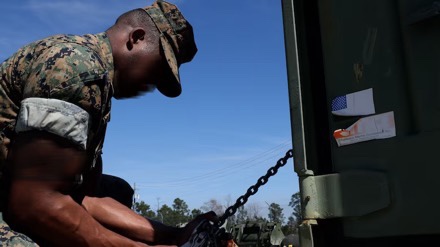
The logistics and sustainment track of MDLOC focuses on mobility, supply, and procurement catered to the special operations logistics architecture.

“Being at MARSOC and being a logistician will make you more effective when you go back to the fleet because you are now seeing the bigger picture of logistics,” explained a supply chief with MARSOC. “SOCS-L is now incorporating all the functions of logistics and supply and how to transport and support the teams and units you’re deploying with. In the fleet, you’re only seeing that one function of logistics or supply that you’re attached to, whether that be embark, supply or ammo. Understanding the overall picture of all the functions of supply and how they work together will make you a more efficient Marine going back to the fleet.”

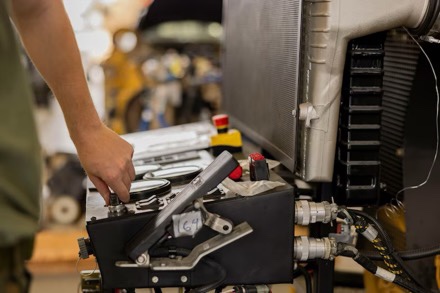
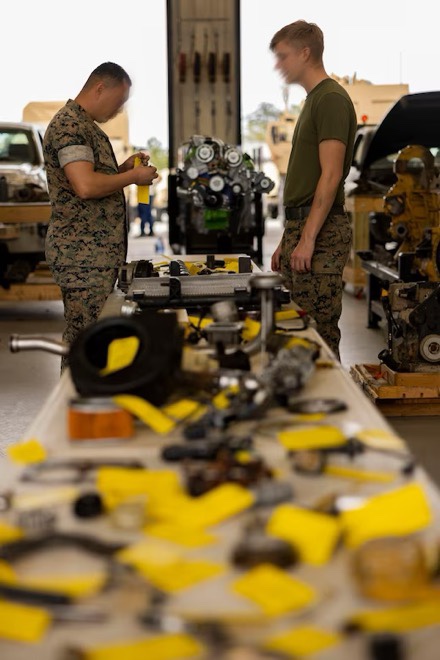
The maintenance Marines receive commercial training on diagnosing and repairing a wide variety of combustion engines with limited access to parts and tools.

“I did benefit from MDLOC,” said a motor transport maintenance chief with MARSOC. “In my experience, the technical side of my MOS is very important to help support the [Marine Special Operations Team’s] mission down range. Focusing on the fundamental theories of electrical, engine, powertrain, and troubleshooting, helps the Marine understand how the components work and how they can apply mechanical theory to all the gear sets they may fall in on down range.”

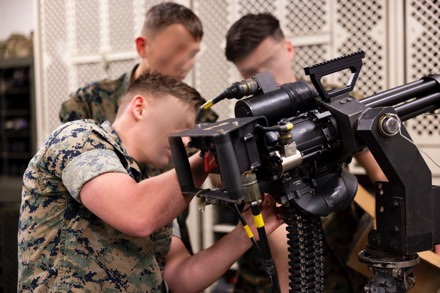
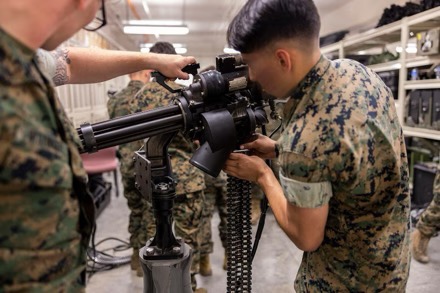
The ordnance curriculum cross-trains Marines in a wide variety of weapons systems and optics, including SOF-peculiar and foreign weapons.

“I benefited from this course due to the [number] of weapons we were able to get our hands on during this course that generally I don’t have time to work with,” said an electro optical ordnance repairer with MARSOC. “The main difference with this course is it’s specificity to MARSOC weapons and foreign weapons that MARSOC uses that isn’t implemented in the Fleet Marine Force.”

The MARSOC graduates of MDLOC will go on to be assigned to Marine Raider Support Teams with the unique skills needed to support and sustain Marine Special Operation Companies.

By Sgt Jesula Jeanlouis, Marine Corps Forces Special Operations Command

Blast From The Past – Follow Through Consulting: Weapon Grip For Rapid Movement

Saturday, July 15th, 2023

Recently, I saw someone on Instagram bring up Buck Doyle’s technique for carrying a carbine in combat. As I had written something in this back in 2016, I thought it was worth sharing again.

This week I got to spend some time out in Utah with Buck Doyle, owner of Follow Through Consulting. Buck is very well known and respected in the Marine Reconnaissance and MARSOC communities, as well as industry. I expected to learn a lot from him and he did not disappoint.

One quick takeaway I picked up during the scoped carbine course he presented for hosts Proof Research, Erathr3, Leupold and Surefire, was this weapon grip for fast movement. I thought it was a great, quick share because anyone can easily adopt it on their own.

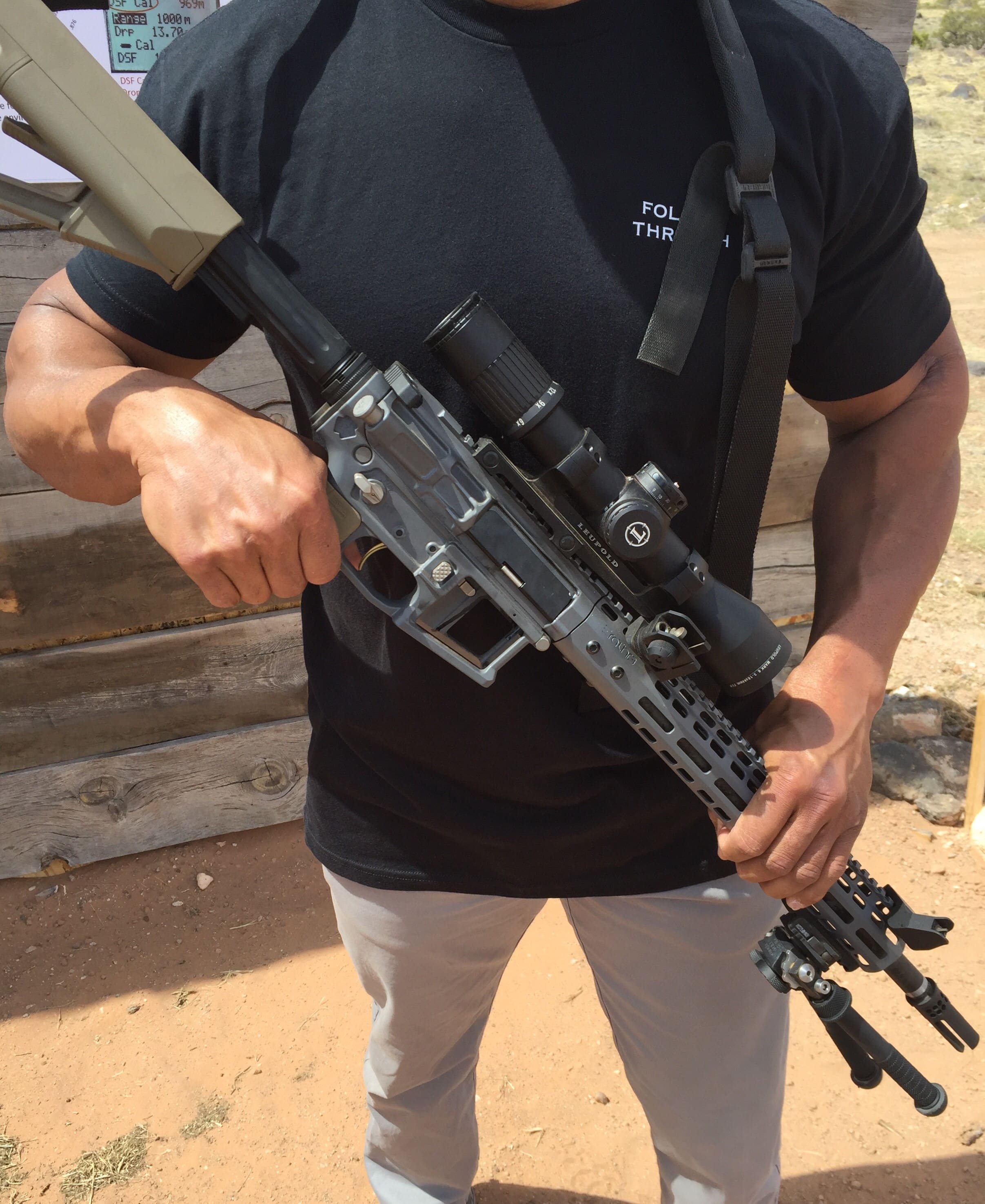
In the Army, I was taught to carry my rifle in a modified port arms by wrapping the fingers of my firing hand around the pistol grip with my trigger finger extended along the lower receiver above the trigger. Alternatively, I’ve seen guys extend their finger across the trigger with their fingertip resting on the magwell, as seen above. Additionally, I was taught to position my support hand under the forearm with my finger and thumb holding it securely.

Buck was taught the same thing in the Marine Corps. But the realities of combat taught him to modify this grip. Twice, he injured his trigger finger during falls in combat while rushing from one position to another. The first time he dislocated his finger and on the second, he sprained it. He said the sprain was worse because it took longer to heal. Once Buck started wrapping all of his fingers around the pistol grip, he didn’t injure it again.

I told Buck, “That makes sense for the firing hand, but what gives with the upside down grip on the support hand?” He told me that this method of carry served two functions. First, it serves the four rules of firearms safery quite well. It forces the muzzle down in a safe direction during movements. If you stumble, you won’t bring your muzzle up in the air like you would with the more tradtional port-style carry. Second, you can more naturally pull the weapon down into yourself in a full fall.

An important note. Buck adopted this technique for moving rapidly (ie running) while in combat. He fully acknowledges that you will have to transition your grip to shoot your weapon.

One of the things I find most refreshing about Buck Doyle is that there’s no BS. I talked to him about the grip and asked him what he called it. Unlike many tactical trainers, he didn’t have some fancy, trademarked name for it. For Buck, this wasn’t some theory-based technique he had dreamed up, but was based on years of actual combat as a Marine. It’s just an adaptation of a long-standing technique for use in certain circumstances. That’s the kind of thing you take away.

For those curious, the rifle is by Erathr3 with a PROOF Research barrel. The scope is Leupold and furniture by Magpul. More on all of that soon, but yes, I was hitting steel at 1164 meters with this 5.56mm package.

If you’re interested in learning more about Follow Through Consulting, visit www.followthroughconsulting.com.

Warrior East 23 – IR-Tools

Friday, July 7th, 2023

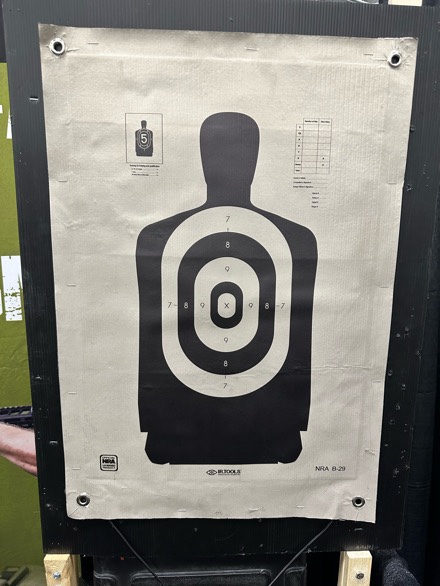
IR.Tools showed us their Thermal Targets. This is the NRA Approved B29 Upright Powered Thermal Target. It relies on rubberized heat technology which provides thermal contrast. It runs for 13 hours on a BA5590 at 10 deg C temperature differential or for 2.5 hours on a BA5590 at 25 deg C temperature differential.

Units and agencies can procure products seen at Warrior East by contacting ADS, Inc.

US Special Forces Partner with Bosnian SIPA for Joint Combined Exchange Training

Tuesday, July 4th, 2023

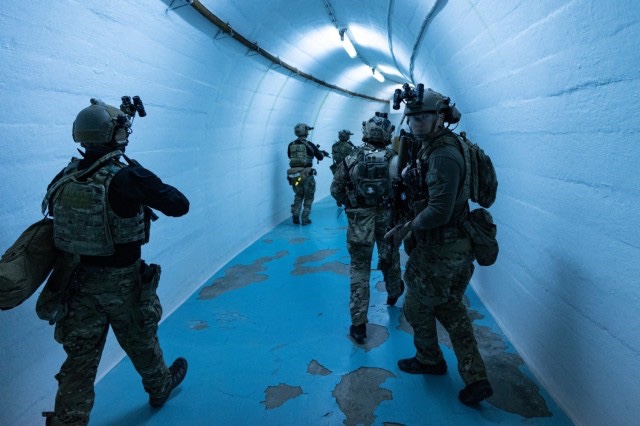
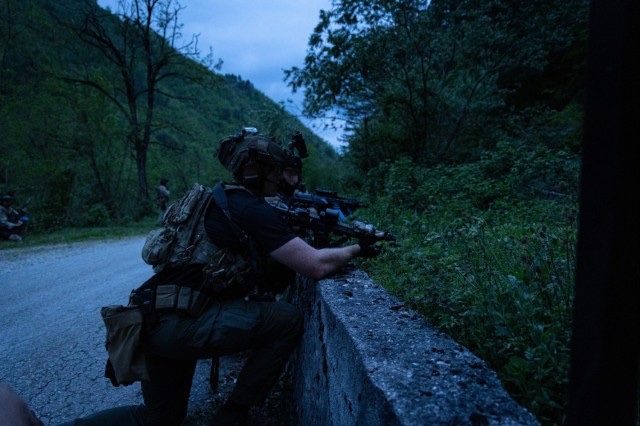
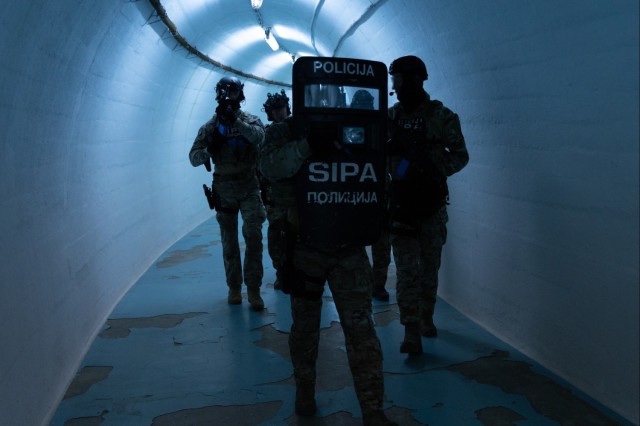
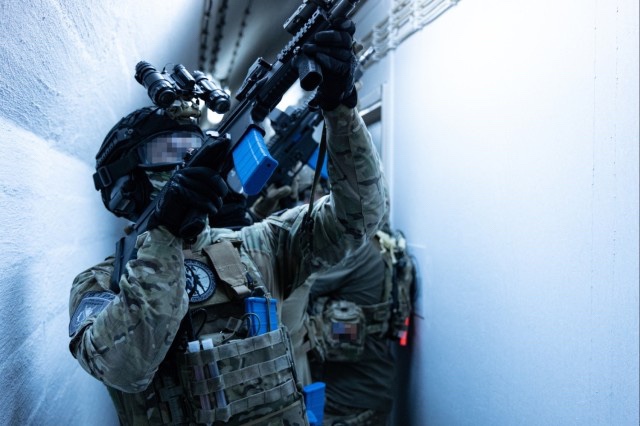
SARAJEVO, Bosnia-Herzegovina — Forty miles southwest of Sarajevo, enemies are holed up in an underground government facility built inside a mountain during the Cold War to protect a former Yugoslav president against nuclear attack.

From a Sarajevo compound, U.S. Army Green Berets assigned to the Critical Threats Advisory Company, or CTAC, take off to raid the 70,000-square-foot protective bunker alongside Bosnia-Herzegovina State Investigation and Protection Agency, known as SIPA, officials May 8, 2023.

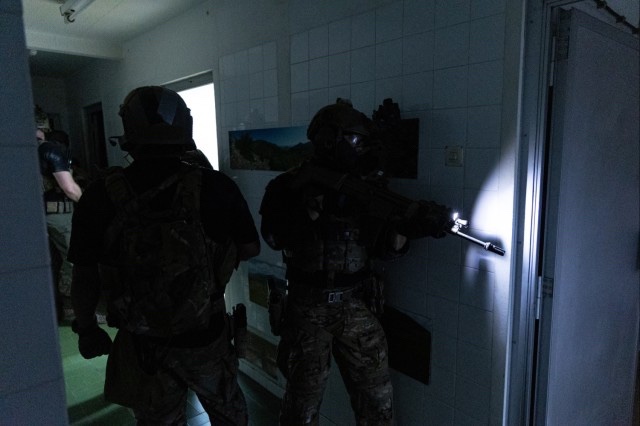
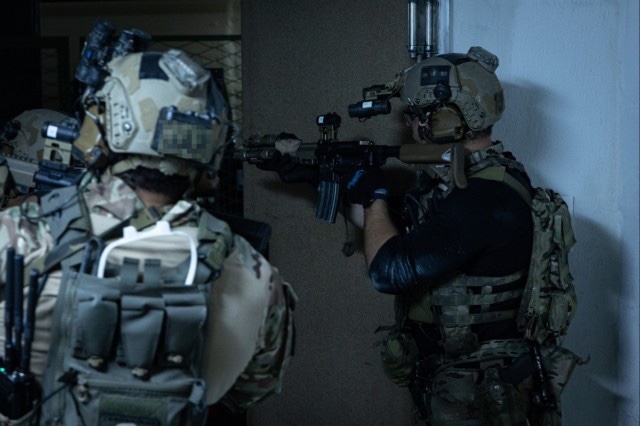
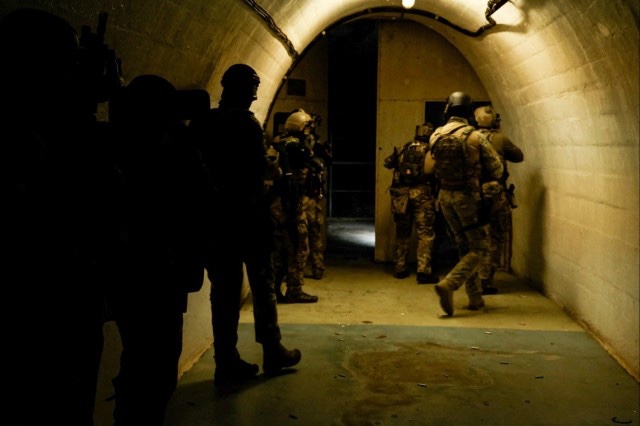
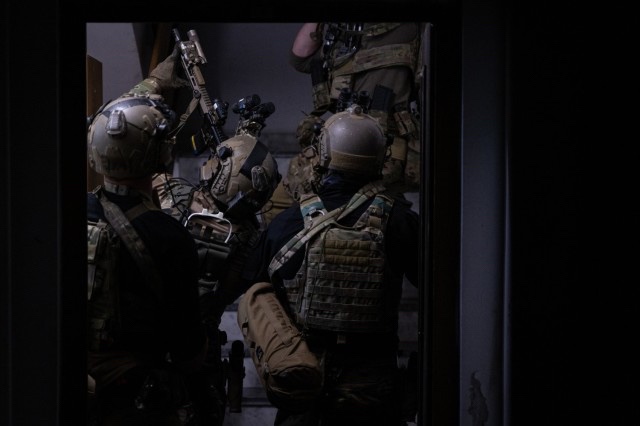
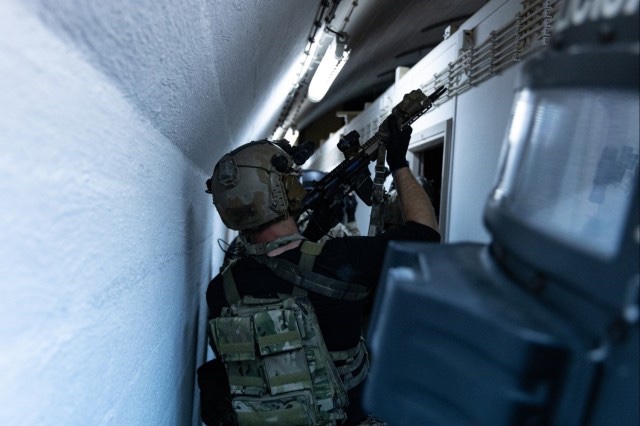
Three nondescript houses disguise each entrance to the facility. Through the houses and inside the labyrinthine structure, intermittent volleys of gunfire with the enemy reverberate through tunnel corridors. Room by room, the combined force of assaulters systematically clear the protective bunker.

This raid was the culmination exercise of a six-week-long joint combined exchange training focused on close-quarters battle and small unit tactics.

“It was a time-sensitive target, so the planning cycle was condensed,” said the troop leader assigned to CTAC, 10th Special Forces Group (Airborne) — a highly lethal force capable of collaborating with elite special operations forces elements worldwide. “The bunker has small hallways and small rooms … I wanted to raid the bunker to see how the team would react; to see how I would command and control.”

The 100-room structure was selected as a target to test the force’s methods due to its complexity and extensive size.

Providing solutions for the most sensitive problems and succeeding is paramount, said the special support unit executive officer, a SIPA official with over thirty years of police experience. The mission’s challenging location, time constraints and finite resources presented a nightmare scenario that compelled partners to combine efforts, overcome adversity and get results.

The mission succeeded, shortfalls and gaps were identified, and both sides provided recommendations for future reference, said the special support unit executive officer. Experience and lessons learned from the CTAC are valuable resources that will align the special support unit in solving complex problems.

“I do truly believe that the systems were tested that day,” said the CTAC troop leader. “We definitely learned lessons working with a new partner force which is key in refining troop standards. It’s the Green Beret way.”

By SSG Anthony Bryant

MDM 23 – Marathon Targets

Wednesday, June 28th, 2023

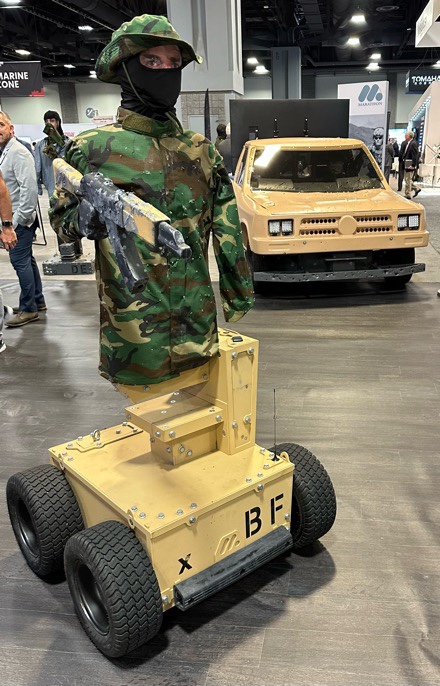
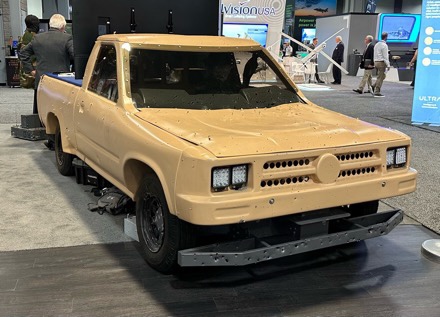
It’s been quite awhile since we’ve mentioned Marathon’s autonomous targets. In addition to their individual robots, they’ve also introduced a vehicle.

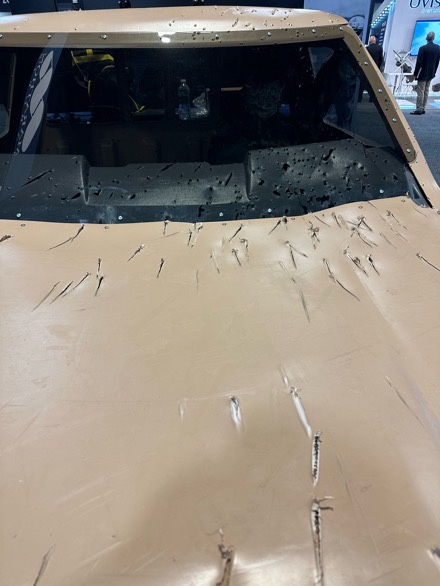
Shaped like a light pickup, it can be engaged with small arms fire to stop the vehicle.