Lowa Zephyr Mk 2 GTX

Archive for the ‘Training’ Category

SWAT, Military Practice Tactical Casualty Care During 2023 Tactical Rescue Challenge

Sunday, September 10th, 2023

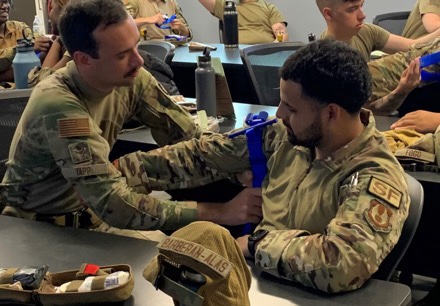
SWAT and Military teams put their tactical combat care skills to the test during the 5th Annual Tactical Rescue Challenge at the Connecticut National Guard’s Camp Hartell in Windsor Locks, Conn. Aug. 14, 2023.
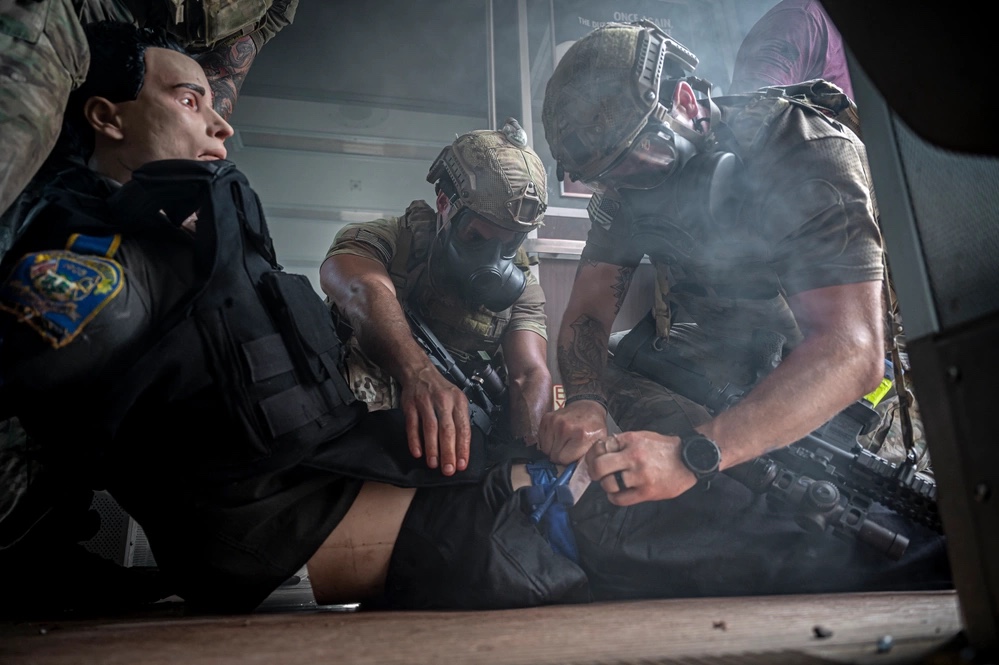
The Tactical Rescue Challenge was created in 2018 as an additional piece to the annual Connecticut SWAT Challenge and tests police and rescue teams on critical medical skills and tactics necessary during rescue operations in austere environments.

“[The challenge is] really geared toward the team medic although operators are cross trained into medicine, so you have not just medics participating in the event but other operators for any kind of tactical team,” said Maj. Wesley Kyle. “There’s a heavy emphasis on medicine in addition to casualty evacuation rescue techniques, moving the casualties off the “X”, and performing treatments at appropriate times.”
Prior to 2001, a trauma patient may have received basic life-saving medical care when an Emergency Medical Technician arrived on the scene. However, Kyle said the wars in Iraq and Afghanistan lead to a shift in the point of origin for beginning emergency medical care from the EMT to the police officer or other first responders.

“Moving care toward the point of injury really started out of those wars and then quickly transitioned to the civilian tactical teams,” said Kyle, an Emergency Room doctor in the civilian sector with experience working with SWAT during his residency. “We’re still translating lessons learned from the battlefield because there was such a large loss of life with penetrating trauma, and there was kind of an explosion of new ideas … it’s changed the whole landscape and it’s incredible to see all these things fully adopted on the civilian side.”
Medical innovation is, of course, not something new on the battlefield. Tourniquets were first developed by the Roman army. The concept of triaging patients was developed by Baron Dominique Jean Larrey, chief surgeon in Napoleon’s Army. The ambulance was invented during the American Civil War. Tactical Combat Casualty Care, or TC3, methodologies were developed in the early 90s and fine-tuned during the Global War on Terror. There have also been massive advancements in preventative medicine, mental and emotional health, sanitation, plastic surgery and prosthetics, and many, many more.

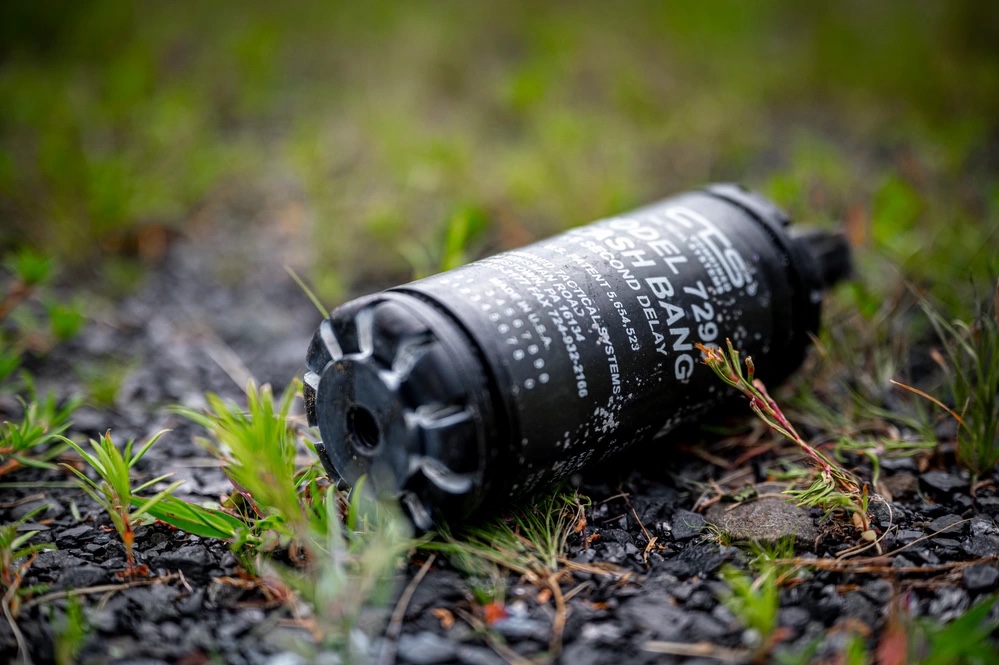
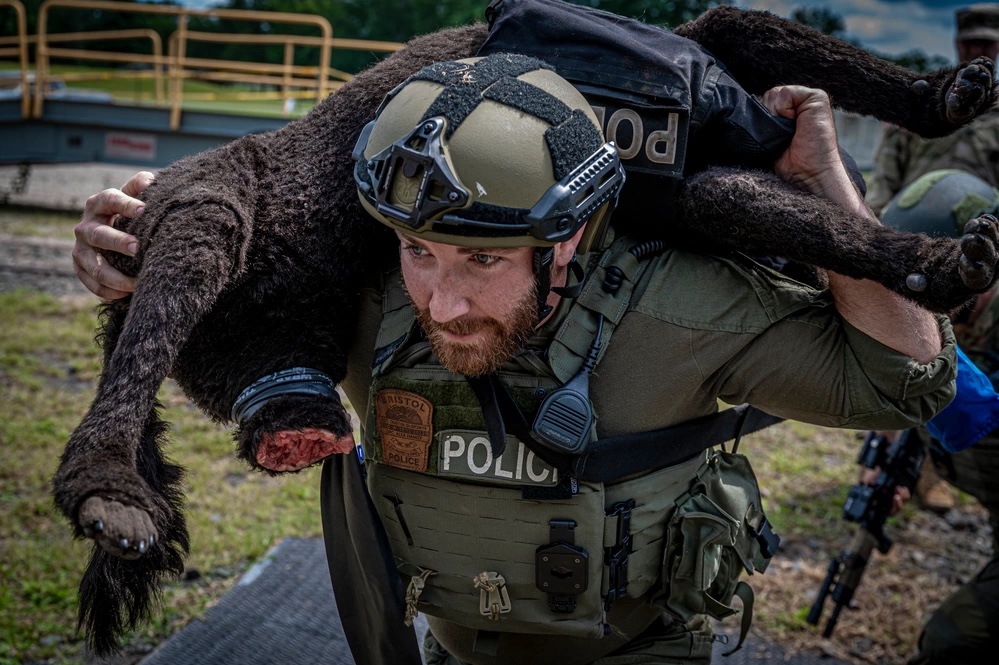
For competitors in the Tactical Rescue Challenge, the primary focus was on TC3: care under fire, tactical field care, and tactical evacuation care. In one scenario, teams were required to breach a train and eliminate a threat before evaluating and applying field care to a simulated casualty and extracting the patient to a higher-level of care. A second scenario had teams extract a wounded K-9 from a tear gas-filled train car before administering a tourniquet.

While the idea of a first responder, such as a police officer, having the capability, training, and resources available to administer lifesaving first aid may seem logical, the truth is not every department or officer is afforded this luxury. In addition to providing a competitive environment for officers and operators to practice their skills in a stressful, high-pace environment, the Tactical Rescue Challenge is also meant to demonstrate the importance of incorporating these skills at the lowest level to improve the survivability for people in harm’s way.

To learn more about the Tactical Rescue Challenge, visit: www.ctswatchallenge.com/tactical-rescue-challenge

Photo by Timothy Koster, Connecticut National Guard Public Affairs Office
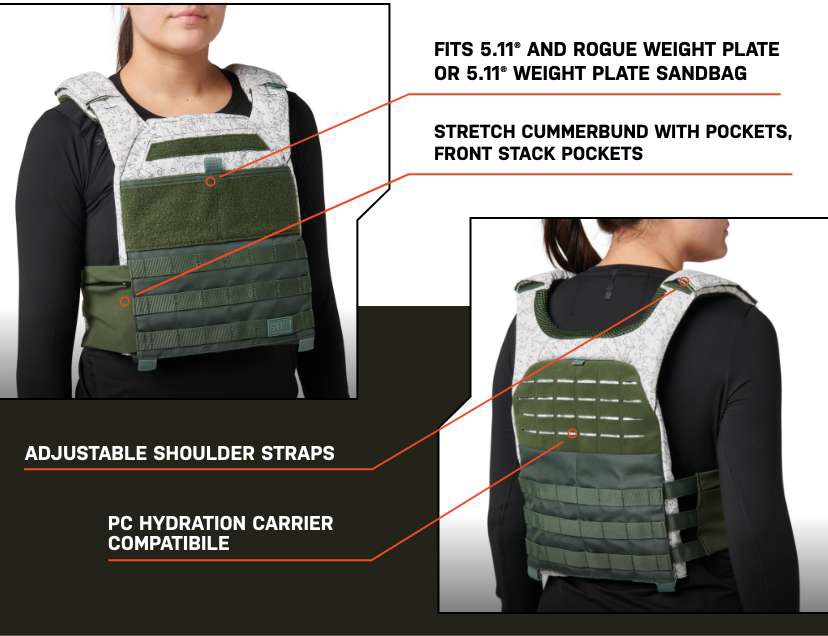
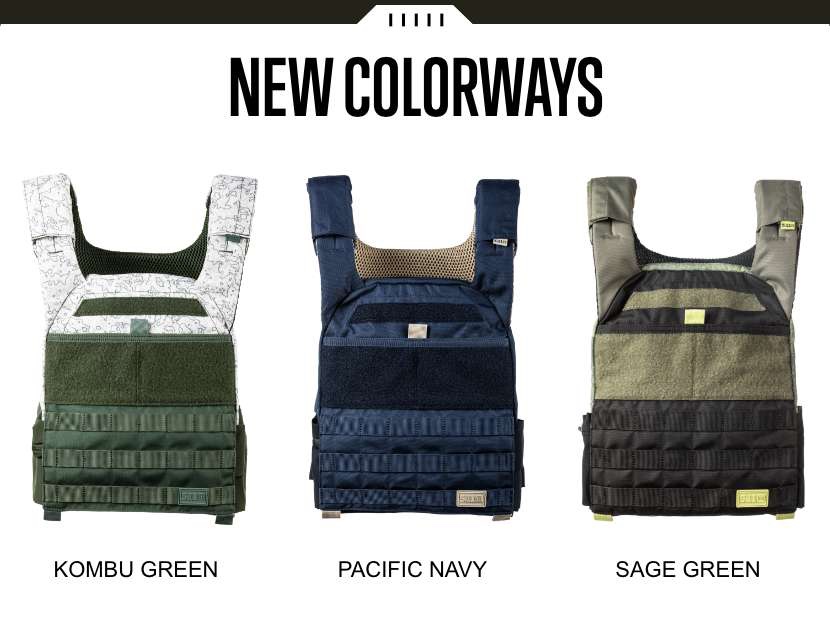
New TacTec Trainer Weight Vest Colors from 5.11 Tactical

Wednesday, August 30th, 2023

The TacTec Trainer Weight Vest is very popular with those involved in CrossFit. It’s made from 600D polyester and features adjustable yoke shoulder straps with breathable mesh padding and is PALS compatible.

Fits 5.11 and Rogue weight plates and Tactec Weight Plate Sandbag.

The new colors include Kombu Green, Pacific Navy, and Sage Green.

www.511tactical.com/accessories/load-bearing-equipment

Note: This is NOT an armor carrier.

Garmin Smartwatches Help Launch U.S. Space Force Fitness Study

Monday, August 28th, 2023

Trial program measures Guardians’ physical activity and biometric data to assess readiness

Photo: U.S. Space Force / Rick Eldridge

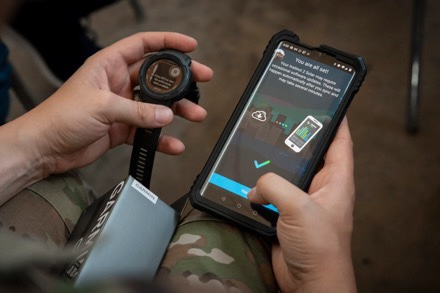
OLATHE, Kan./August 28, 2023 — Garmin smartwatches are being deployed by the thousands to help assess the physical fitness of U.S. Space Force Guardians, the company (NYSE: GRMN) announced today. Commissioned by the Air Force Research Laboratory (AFRL), the two-year study will explore the effectiveness of smartwatch technology to supplant annual physical fitness assessments.

“Garmin is gratified to be part of this exciting research effort that will help ensure Space Force Guardians are physically prepared to perform their duties. The accurate health metrics and exceptional battery life of our smartwatches will provide a reliable snapshot of a Guardian’s physical readiness, potentially saving the U.S. Military time and money.” — Scott Burgett, Senior Director of Garmin Health Engineering

Guardians who actively participate in the study will be exempt from U.S. Air Force physical fitness assessments. Enrollment has been robust, with over two-thirds of the 8,400-strong Space Force signing up since the program was announced in May. To date, more than 6,000 Garmin smartwatches have been or will be issued to active military members who have agreed to log workouts and complete monthly surveys provided by AFRL, and a second wave of enrollment is expected to begin in October.

“By tracking two basic metrics—cardiorespiratory fitness and physical activity—we can quickly verify that a Guardian has met their physical requirements and is ready for duty,” said Dr. James Christensen, a product line lead with AFRL’s 711th Human Performance Wing. “We hope that continuous fitness assessment, implemented via wearable technology, will promote a higher, more consistent level of fitness across the force with expected outcomes like reduced injury and stress, improved resilience and higher overall operational performance.”

Garmin Instinct® 2 Solar and Forerunner® 55 smartwatches were chosen for the U.S. Space Force’s Continuous Fitness Assessment (CFA) project because they offer abundant battery life, high-quality biometric data and the ability to disable GPS functionality. Further, the Garmin Health API and secure data collection practices are compliant with federal privacy and cybersecurity standards for software, sensors and data encryption.

“We were pleased that the Garmin wearable ecosystem went through a rigorous U.S. Air Force cybersecurity and privacy review,” Burgett said. “The U.S. military has high security standards, and our system is designed end-to-end to protect sensitive user data.”

The AFRL team will analyze study results to determine the effectiveness of smartwatches relative to the current physical fitness tests and advise on future efforts to make smartwatches a permanent option. If successful, the program could be adopted by other branches of the Armed Services and include broader Department of Defense requirements such as musculoskeletal injury risk. 

Garmin Health provides custom enterprise business solutions that leverage Garmin’s extensive wearable portfolio and high-quality sensor data for applications in the corporate wellness, population health, and patient monitoring markets. The Garmin Health API allows third parties to ask customers to share their data in accordance with their specific privacy policies. As part of a global company that designs, manufactures and ships products worldwide, Garmin Health supports its customers’ commerce and logistics needs, allowing enterprises to scale with a single, trusted provider. For more information, email our media team, connect with us on LinkedIn, or visit us online at garmin.com/health. 

SOFWERX – USSOCOM Enterprise Training Solution Collaboration Event

Monday, August 21st, 2023

SOFWERX, in collaboration with USSOCOM Program Executive Office-Services (PEO-SV), will host a Collaboration Event on 19 September, 2023, to identify, collaborate, and find solutions to streamline the acquisition, purchasing, and scheduling of enterprise training. The purpose of this effort is to alleviate the burden on units of ordering and purchasing required training multiple times throughout the year.

The goal of this series of events is to identify capabilities for a tool that will enable government stakeholders to sort through a menu of available training options from available companies. The tool should allow customers to rate companies’ past performance and allow units to purchase and schedule training without resoliciting and/or renegotiating a contract or purchase order. Ideally, the tool will also provide firewalls to protect company proprietary data and ITAR information and reside on the unclassified network.

See more details at events.sofwerx.org/enterprise2.

Request to Attend NLT 05 September 2023, 11:59 PM ET.

Challenge Fuels Transition for Army’s Newest Infantry Soldiers

Sunday, August 20th, 2023

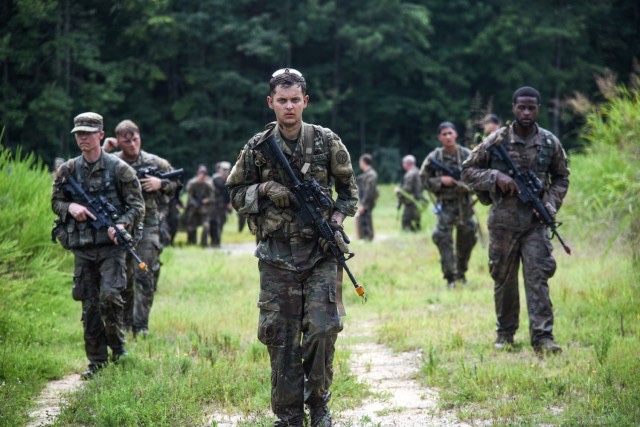
FORT BARFOOT, Va. — A few times each year, the Virginia National Guard’s 1st Battalion, 183rd Regiment, Regional Training Institute, conducts an 11B Infantry Transition Course.

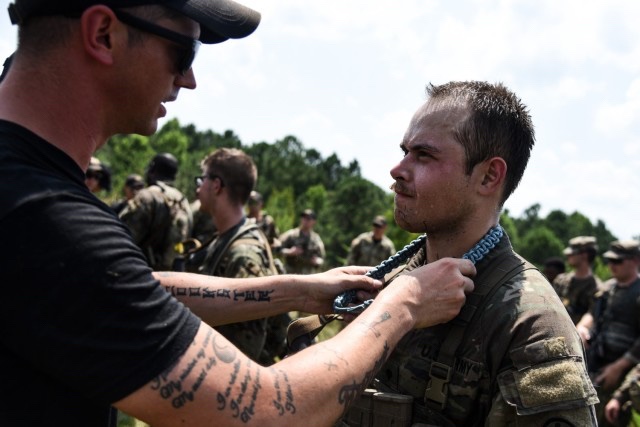
Some of the Soldiers who attend the course, all junior Soldiers and noncommissioned officers, want to test themselves. Others are fulfilling childhood dreams or chasing promotion opportunities. Whatever their reason, their goal is singular: to earn the 11B military occupational specialty and leave Fort Barfoot with a blue infantry shoulder cord.

“It is not an easy MOS, but it is a very rewarding one at the same time,” said Sgt. 1st Class Brian Cook, a long-time cadre member at the 183rd RTI.

During the course, Cook and the rest of the cadre put Soldiers, who arrive as engineers, medics, intelligence analysts and mechanics, through three rigorous weeks of infantry training. Soldiers gain proficiency on weapons, improve their land navigation skills, learn how to communicate and move effectively across a battlefield. The days are long and often made more challenging by sweltering heat and humidity.

The challenge of becoming an infantryman motivated many of the students as they worked their way through the course.

“The reason I wanted to become an 11B is because I like to put myself to the test,” said Staff Sgt. Patrick Powers, a 91B wheeled vehicle mechanic in the Virginia National Guard. He said the course would also help prepare him for his next challenge, U.S. Army Ranger School.

Sgt. Allison Stanton, assigned to the 82nd Airborne Division as a 35F intelligence analyst, was also there to challenge herself.

“I wanted to become at 11B because it’s really the only MOS that I felt was out of my comfort zone,” she said. “I felt like the whole job would be very challenging for me, so that’s why I chose it.”

Spc. Alexander Wyatt started his military career as an infantryman in the U.S. Marine Corps. He was discharged due to an injury but rehabilitated himself and worked on an ambulance while out of the military. When he joined the Army, he returned as a 68W combat medic but felt pulled toward the infantry.

“I wanted to become an infantryman because it’s always been a dream of mine. I just always had the itch to still be an infantryman, and I finally scratched that itch,” Wyatt said. He’s now assigned to the 75th Field Artillery Brigade at Fort Sill, Oklahoma.

Spc. Steven Schmidt drove across the country to attend the infantry transition course. He started his military career as a medic.

“During my time in the military, I’ve met all sorts of people with different MOSs, but the 11Bs stood out to me in their brotherhood,” Schmidt said. “I’ve always believed that going through difficult times is what brings people together, and I think 11Bs go through that more than any other MOS. I just wanted to be a part of that.”

As the most recent course came to a close, after the Soldiers hauled themselves, their gear and their weapons through the forests, roads and fields of Fort Barfoot, after they tested their endurance with a timed 5-mile run and sent thousands of rounds down range from a variety of weapons systems, they gathered near a small pond. The cadre, decorated with an assortment of badges, tabs and scrolls, formed a corridor through the water. Tired and dirty from days spent in the field, the students were called forward into the water, guided through the protected passage formed by the cadre. Then, dripping pond water and steaming in the midday sun, they worked their way to the top of a hill.

The immersion and ascent served to mark the transition from what they were before to what they had become.

On top of a Fort Barfoot hill on July 26, 2023, 22 Soldiers received their blue infantry cords and officially became the newest infantry Soldiers in the U.S. Army.

By SFC Terra C. Gatti, Virginia National Guard Public Affairs Office
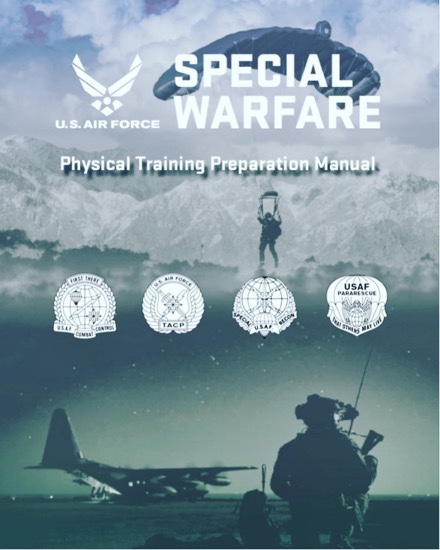
USAF Special Warfare Physical Training Preparation Manual

Saturday, August 19th, 2023

www.specialwarfaretw.af.mil/Portals/69/Pre-accessions%20manual_1

Combat Support Training Ranges Proof of Concept Tests Defender Unit-Led Training, Equipment Delivery

Saturday, August 19th, 2023

TYNDALL AIR FORCE BASE, Fla. (AFNS) —  

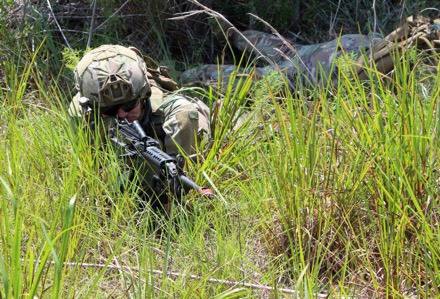
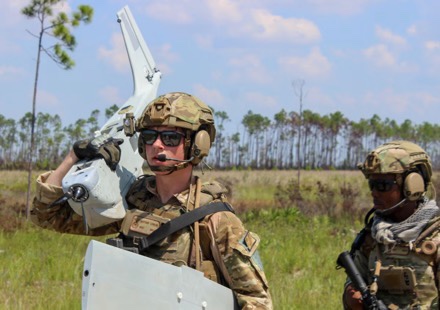
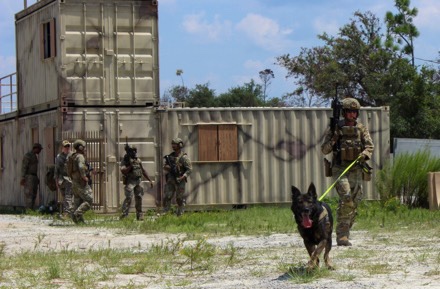
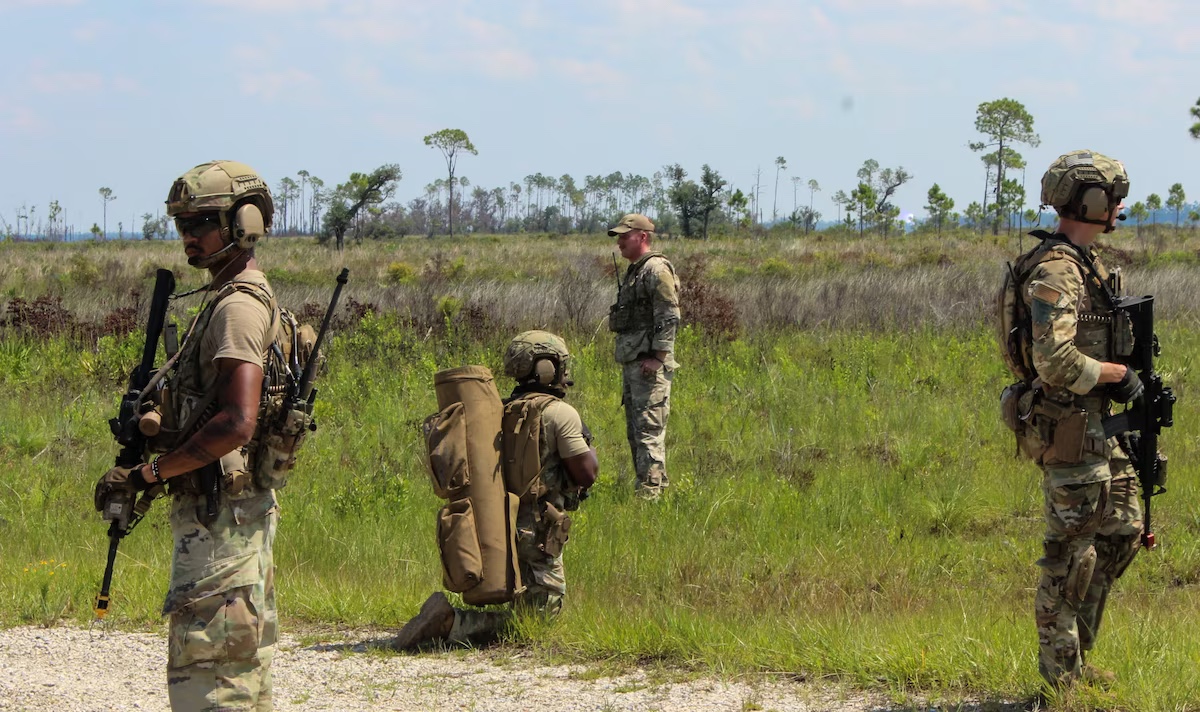
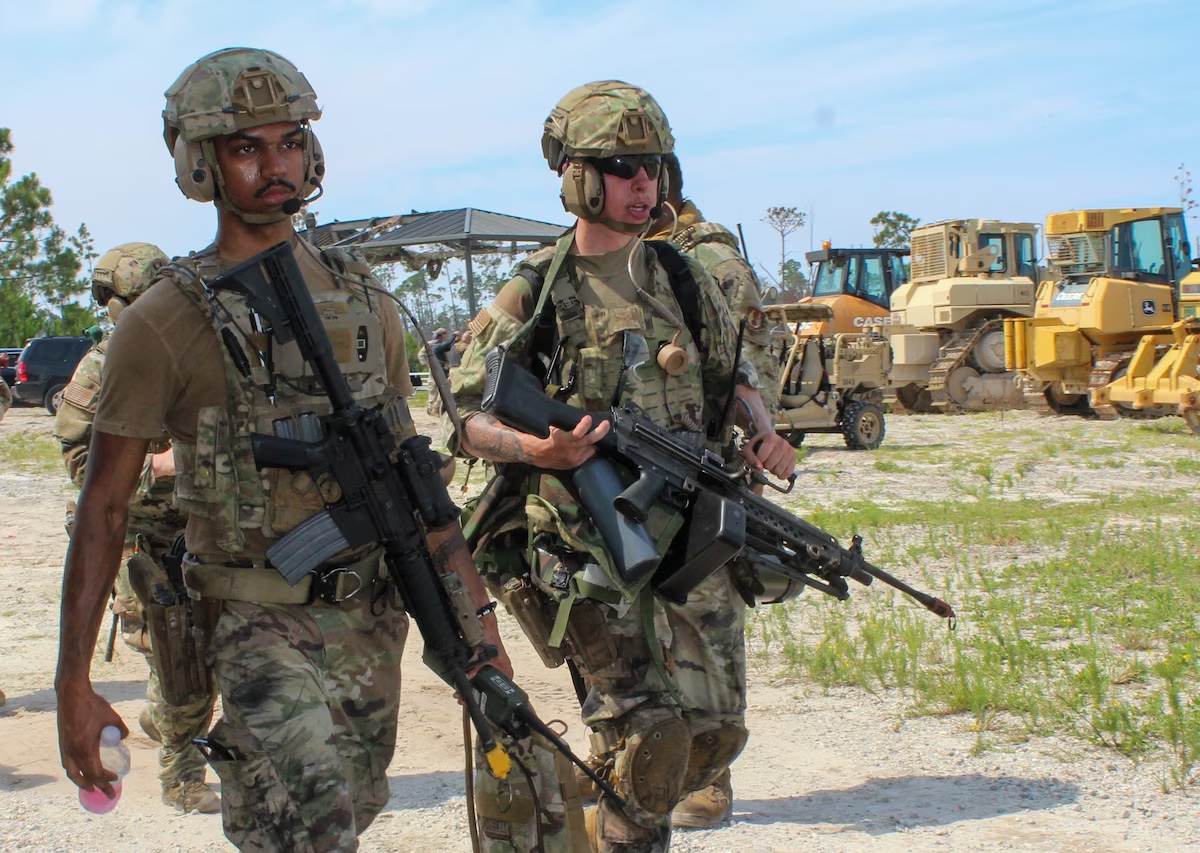
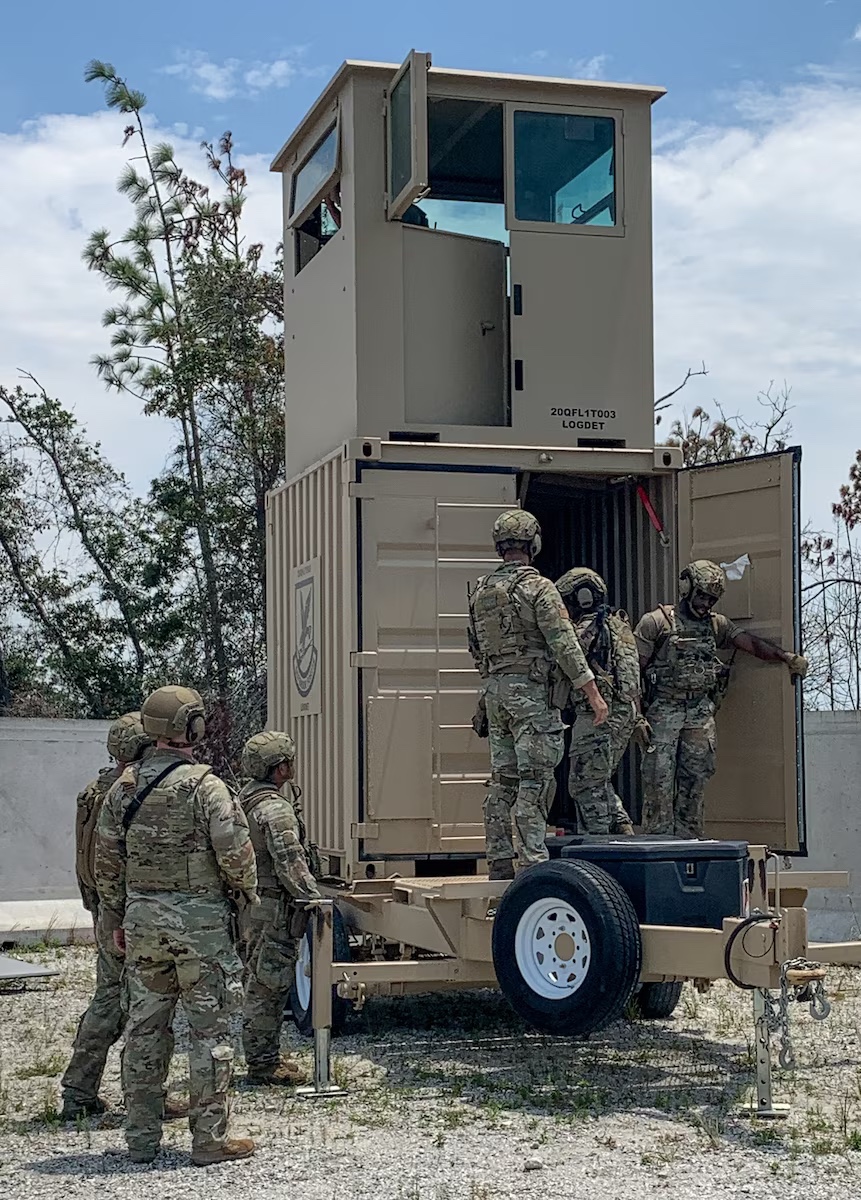
The Air Force Installation and Mission Support Center moved another step forward in establishing combat support training ranges across the enterprise with a security forces-focused proof of concept exercise at the Silver Flag site on Tyndall Air Force Base, Florida, July 17-28.

As part of the CSTR concept, the exercise tested the delivery of Defender unit-led combat skills training using low-density, high-demand equipment at a new site.  

Florida’s 801st RED HORSE Training Squadron Silver Flag site is primarily used for civil engineer combat training.

Currently, security forces deployment training is only available at the Air Force Security Forces Center’s Desert Defender Ground Combat Readiness Training Center at Fort Bliss, Texas, because it uses equipment categorized as low density, high demand, meaning it’s only at select overseas locations or the Fort Bliss training site because of cost-effectiveness, said David Clifford, AFIMSC expeditionary and readiness training lead analyst and CSTR action officer.

The Tyndall proof of concept exercise involved two squads of 13 Defenders from the 78th Security Forces Squadron at Robins Air Force Base, Georgia, and the 96th SFS from Eglin Air Force Base, Florida.

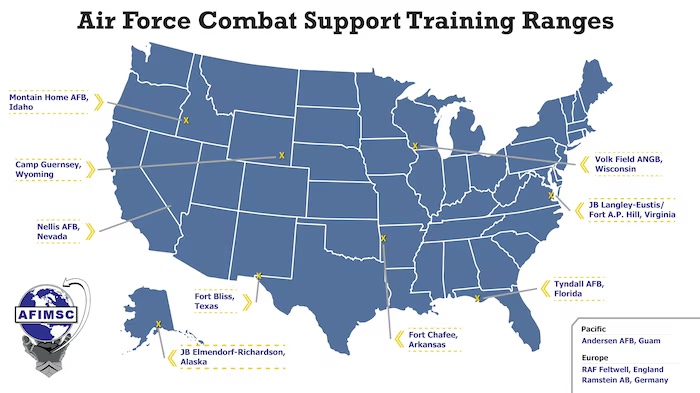
It is one of several beta tests organized and funded by AFIMSC this summer as the center builds out a CSTR plan for fully equipped, multi-functional installation and mission support training sites across the Department of the Air Force. Its goal is CSTR training sites within 400 miles of most installations, giving commanders the flexibility to conduct unit-led training without having to travel long distances with troops and equipment. Thus far, nine sites are proposed in the continental U.S. and three overseas at Andersen Air Force Base, Guam; RAF Feltwell, England; and Ramstein Air Base, Germany.

Helping commanders maintain readiness and ensuring Airmen are prepared to deploy and win future wars is the focus of the CSTR initiative, said Col. Lance Turner, director of AFIMSC Expeditionary Support and Innovation Directorate.

“We don’t get to win wars because of what the previous generation of Air Force leaders did,” Turner said. “We win wars because of what we are doing today and how we are preparing Airmen today. That’s what this is all about.”

Leaders use the terms “sets and reps,” Clifford said. “The CSTR locations will allow our agile combat support Airmen to complete unit-led training … sets and reps … on low-density, high-demand equipment unit type codes in austere field conditions.

“That’s what this is about … prepping our ACS Airmen for the next high-end fight against near-peer competitors in distributed operations and theaters,” Clifford said.  

Previous and planned proof-of-concept events allow units to create scenarios that cover the full range of military operations, said Pervis King, counter improvised explosive device integrator at the Air Force Security Forces Center.


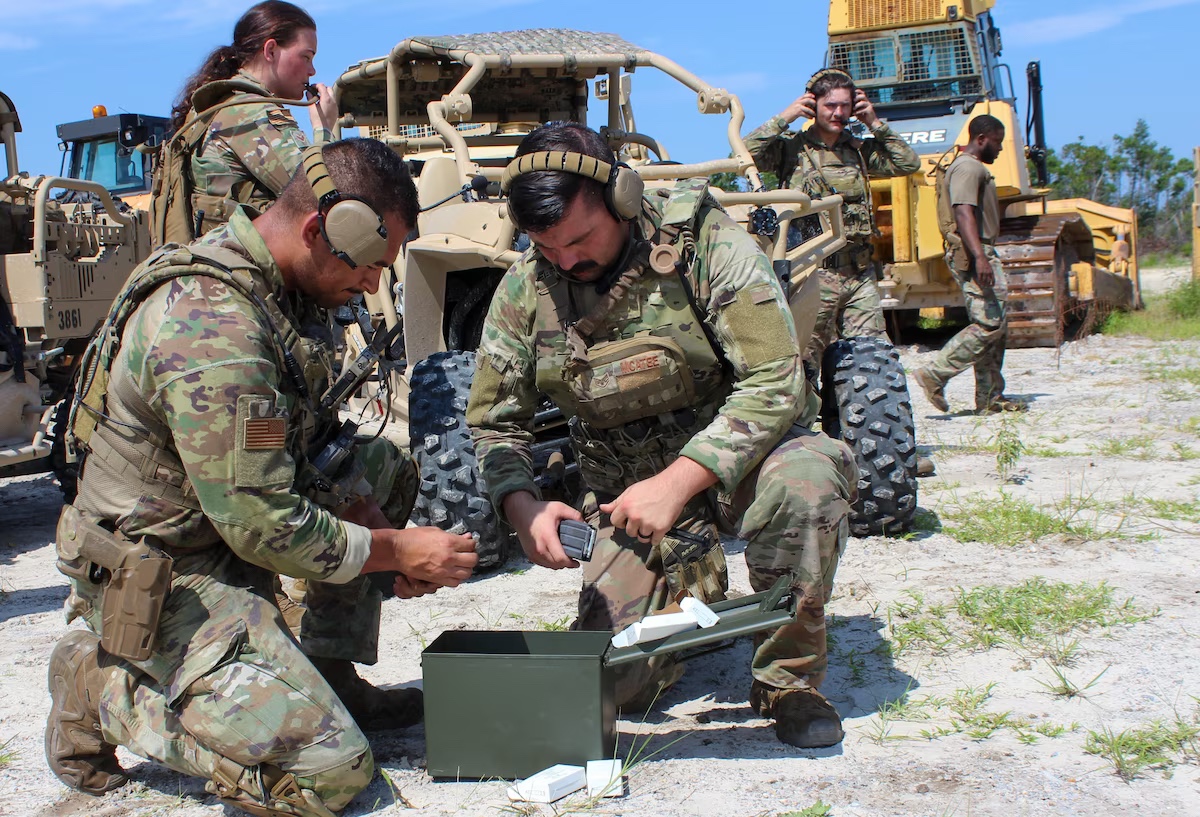
The exercise began with cadre from Desert Defender transporting equipment from Fort Bliss to Florida, setting it up and standing ready for security forces to begin training July 17.

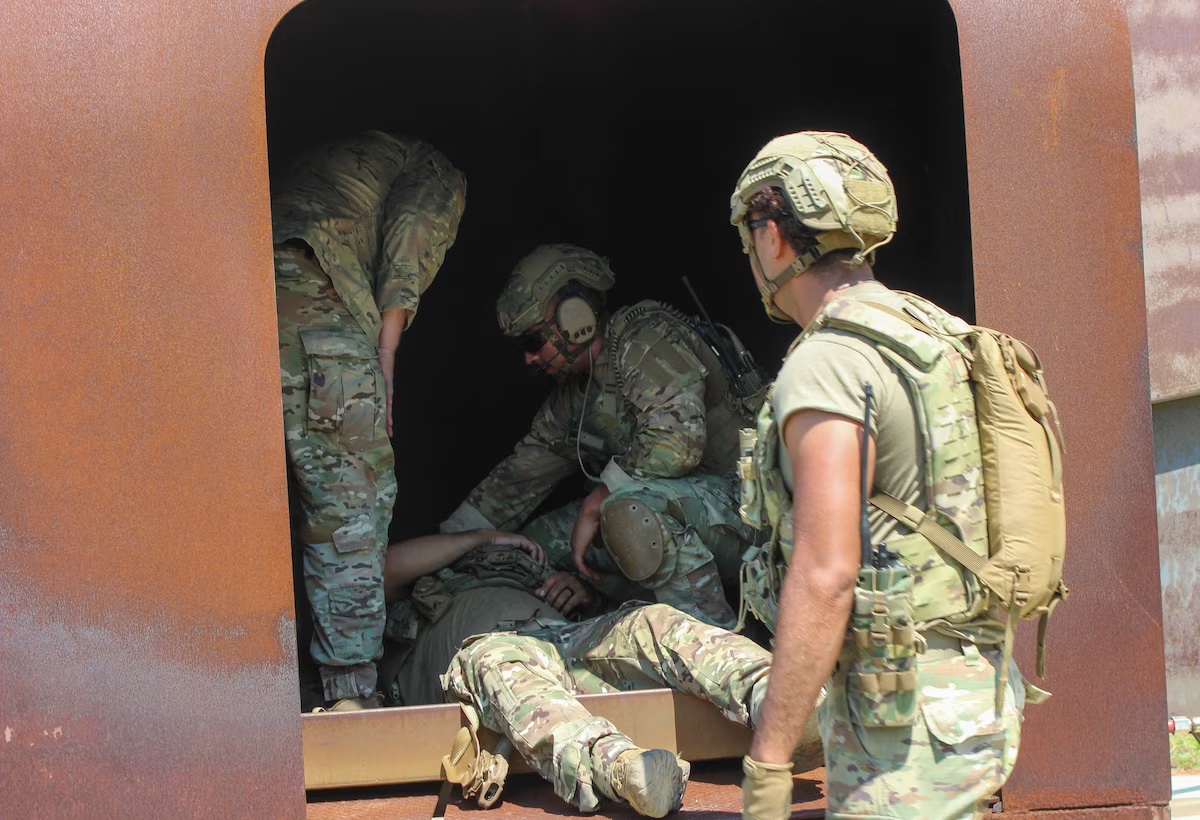
The equipment, like a Base Defense Operations Center and tactical radios normally only found at Fort Bliss or in a deployed environment, allowed security forces teams to receive deployment training on mounted and dismounted patrols, base defense scenarios involving land navigation, night vision goggles, intelligence, prepping the battlespace, formations, troop movements, battle drills, urban operations and mission planning. The event ended with a field exercise and evaluation.

“Access to this equipment allows Defenders to come out and practice their full scale of operations using equipment not readily available at home station,” King said. It’s also an opportunity to train in austere, simulated operational environments before they are deployed to permissive or non-permissive hostile locations.”

The security forces-focused event “went very well, as we’d hoped it would,” he said.

“Each unit sent well-trained Airmen to oversee the training and develop lesson plans and timelines, and the squads supporting it executed it with excitement and vigor even though the heat and elements were harsh at times. They were still excited and executed at a high level,” King said.

This exercise and others like it this summer serve as beta tests that allow CSTR planners to gather data and lessons learned from after-action reports.

“All of this data will allow AFIMSC to select sites, gather cost data, build our requirements and resources needed, and eventually submit that information into a program objective memorandum, or POM, to allocate future funding,” Clifford said.

A final proof of concept is set for next month at Desert Defender site at Fort Bliss. The AFIMSC team will then hold a CSTR lessons-learned conference in mid-September in San Antonio to capture and discuss the data and after-action reviews.  


“From there, our CSTR working group will meet sometime late May 2024 to transition the program with final site selection and a fiscal year 2026 POM build,” Clifford said. 

Story by Debbie Aragon, Air Force Installation and Mission Support Center Public Affairs

Photos by Emily Mifsud

Advanced Infantry Marine Course Hawaii

Thursday, August 17th, 2023

MARINE CORPS BASE HAWAII, HI —

Across the thick jungles and mountainous terrain of Oahu, U.S. Marines participating in the Advanced Infantry Marine Course execute their patrol plans under the watchful eye of their combat tested instructors. Each iteration of the course is mentally rigorous and physically demanding, pushing Marines to the limit of their capabilities, and molding them into ready, highly proficient warriors.

Over seven intense weeks, Marines hone multiple infantry skills such as calling for fire and close air support, patrolling techniques, jungle and urban terrain warfare, and casualty care. Each skill is first taught in the classroom, followed by demonstrations and practical application in the field. For these Hawaii Marines, training took place aboard Marine Corps Training Area Bellows and throughout the Kahuku Training Area, each offering a unique, and realistic venue to prepare for modern warfare. “MCTAB and KTA are perfect for creating authentic and realistic training scenarios for our students…” said Staff Sergeant Ricardo Hernandez, Staff non-commissioned officer in charge for Advanced Infantry Training Battalion, Hawaii Detachment.

[blockquote: “MCTAB serves as a crucial component in shaping the training experiences of our infantry marines.”: Staff Sergeant Ricardo Hernandez, Staff non-commissioned officer in charge for Advanced Infantry Training Battalion, Hawaii Detachment.

“The training areas have been designed to simulate urban environments, encompassing a diverse range of scenarios.”

For the students, all infantry Marines, the tropical climate, and the effects on the body present another variable for consideration during long patrols and extended operations in the field. This additional layer of realism offers a unique opportunity to students to make decisions and gain leadership experience when they are tired, hot, sweaty, and hungry. Sgt. Connor Hoovler, a rifleman with 3d Littoral Combat Team, 3d Marine Littoral Regiment, 3d Marine Division, attests to the environmental impacts, “The climate and humidity make this course more difficult. Staying hydrated and maintaining peak performance are a constant struggle we face.” 

Aside from development of individual skills and the opportunity for Marines to learn more about themselves in stressful situations, AIMC also collectively develops cohesion, teamwork, and camaraderie. Even in the thick and humid jungle air, the students share a common bond – the ‘ohana spirit’ – thought responsible for building strong and resilient families. “Living out in the field for weeks at a time, your Marines to your left and right become life family,” Hoovler added. “Trust and seamless cooperation are crucial for team success.”

At the heart of AIMC lies the development of an adaptable mindset and decisive problem-solving skills. Marines learn to thrive in unpredictable environments and must make sound decisions on the fly. “The ability to devise effective solutions under pressure is invaluable,” said Lance Cpl. Nicholas D’angelo, a rifleman with 3d LCT, 3d MLR, 3d MARDIV. “It instills confidence and transforms us into more capable leaders.” Under high-pressure scenarios, trainees are tasked with crucial leadership roles and decision-making. “During the fleet event, I led my squad through a challenging blocking position, formulating and executing a plan under tight timeframes that tested my leadership abilities,” Hoovler said.

Completing the AIMC is a badge of honor and garners respect within the Marine’s platoon and their entire company. While it is a career requirement for many Marines, it serves as a stepping stone and showcases their dedication to their Military Occupational Specialty. AIMC is more than a training regimen; it’s a transformative journey that forges warriors. “The training environment at Marine Corps Base Hawaii is meticulously designed to deliver an unmatched level of realism, preparing our Marines for the complex and ever-evolving challenges of modern warfare,” said SSgt. Hernandez. These Marines emerge stronger, more resilient, and better equipped to face the unknown challenges that await them on the battlefields of the future, standing ever ready for any clime and place.

By Cpl Cody Purcell | Marine Corps Base Hawaii