SIG SAUER - Never Settle

Archive for the ‘Training’ Category

Welcome to the Jungle: Special Warfare Airmen Acclimate to Indo-Pacific Environment

Friday, April 15th, 2022

WAHIAWA, Hawaii (AFNS) —  

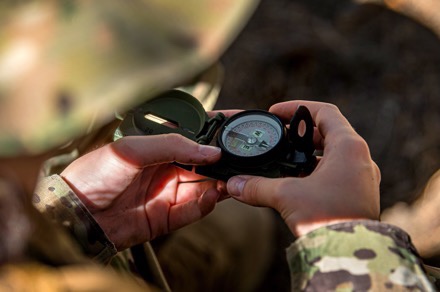
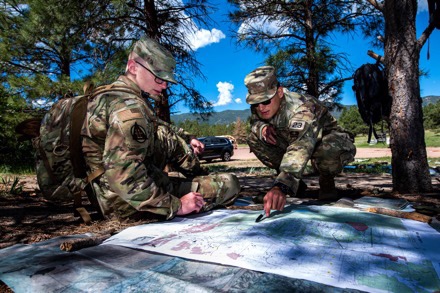
The 38th Rescue Squadron’s Blue Team traveled to Hawaii to conduct jungle warfare training, March 26 – April 10.

Moody Air Force Base’s pararescuemen are special warfare operators charged with the responsibility of rescuing personnel all around the world. As such, it’s vital they familiarize themselves with all types of environments.

In an effort to sharpen their capabilities in rescue operations throughout the Indo-Pacific region, Blue Team learned how to track personnel in the jungle.

“The jungle is a very unforgiving environment,” said Lt. Col. Michael Vins, 38th RQS commander. “There are areas in the jungle where you can only travel 100 meters in an entire day. We need to be ready for that kind of environment by training there, understanding how to survive there, using different equipment … everything is so different, so we need to get used to that kind of environment to be effective in (Indo-Pacific Command).”

Blue Team put their tactics, techniques and procedures (TTP) to the test in a climate they had never experienced before by performing a series of training scenarios to include team vs. team tracking and anti-tracking exercises.

“Over the last 20 years, we’ve gotten really good at desert warfare with the war in Afghanistan and Iraq,” said Staff Sgt. Evan Rogowski, 38th RQS Blue Team pararescueman. “With that kind of phasing away, and the new area of responsibility quickly becoming the INDOPACOM region, we’re really having to take a step back from some of the older TTPs that seemed to work well in the desert and figure out how to adapt to this environment, which is way more difficult to operate in.”

Upon arriving in the jungle, the team set up an outpost to conduct operations. Over the duration of five days and four nights, they survived with only the rucks on their backs and the knowledge they gained as special warfare operators in the Air Force. Rogowski said one of the biggest challenges they faced was the weather.

“It’s pretty unpredictable out here in the jungle,” Rogowski said. “It can be raining in the morning and then completely sunny in the afternoon, and back to rain. Outside of carrying the proper equipment, there’s not much we can do to control that.”

The unique experience tested their ability to adapt in an unforgiving environment. To combat the risks associated with sleeping on the ground, the team slept in enclosed hammocks.

Encounters with centipedes, spiders, steep inclines and thick foliage made it difficult to execute the mission. Despite the challenges, the team was able to effectively track their targets in the jungle. Using tactical formations and hand signals, they practiced combatting potential threats from simulated enemies and booby traps.

“As highly trained special warfare operators, we’re always thinking about modern-day warfare and high-tech weapon systems, but something so primitive like grenades that roll out of bamboo if you kick the wrong stick over is enough to wipe us all out,” said Staff Sgt. Evan Orth, 38th RQS Blue Team pararescueman. “Getting this training makes us more aware of threats we would have never expected in this environment, which could be the difference in saving not only our lives but the life of the person we’re trying to locate on the ground.”

Blue Team learned mostly through action, however instructors from the Tactical Tracking Operations School also provided an array of tips in a classroom setting before they ventured out into the jungle.

“They’ll sleep in the field for four nights to give them an opportunity to live in the environment, assess their gear, work out the little kinks or whatnot and make sure their sleeping systems are good,” said Pete Kerr, TTOS president and instructor. “The more time you spend out in the field, you start to hone those senses.”

Kerr expressed the importance of attention to detail. Whether tracking an adversary or a missing ally, such as a downed pilot, being able to notice subtle disturbances in the terrain is crucial to finding a target.

“What that’s doing is programming the subconscious mind to pick up on these indicators,” Kerr said.

TTOS provided detailed hands-on training enabling the special warfare operators to determine a person’s direction of travel and intent.

“That footprint is going to explain a story to you,” Rogowski said. “Where that person went, what they did, how fast they were moving, where they’re going to, are they paranoid? And I think that’s kind of hard to put into words unless you’ve actually been there.”

Using the skills they learned during the training scenarios, the team was put to the test in a final two-day, one-night exercise. During the exercise, Blue Team tracked a simulated downed pilot while traversing the terrain undetected from potential danger. Once they retrieved the isolated personnel, the team made their way to an extraction point.

After a sleepless 24 hours and hiking 6 kilometers through grueling terrain, the team completed their mission.

By the end of the two-week course, Blue Team gained the knowledge necessary to refine their TTPs for the unique jungle environment, thus enabling them to operate effectively in the Indo-Pacific region.

“The culmination of this exercise validates the effectiveness the rescue teams will have in a contested jungle environment,” Rogowski said. “The lessons and skills learned here will further expand the way we operate in the INDOPACOM area of responsibility. We’ll take these lessons and shape our TTPs for the future of special operations, personnel recovery, and combat search and rescue.”

By SSgt Devin Boyer, 23rd Wing Public Affairs

Georgia National Guard Tests New Live-Fire Range System

Sunday, April 10th, 2022

FORT STEWART, Ga. – The Georgia Army National Guard’s 122nd Tactical Support Detachment traveled to Fort Stewart for the April 1-3 drill weekend to train and qualify Soldiers on the M4 carbine rifle and M17 pistol.

The training, conducted annually to ensure unit readiness, was unique due to the software that Soldiers from the 122nd TSD operated from the range tower to control targets, score shooters and provide statistical feedback. TRACR II had been an untested Army system; the 122nd TSD was the first unit to use the new technology.

Targetry Range Automated Control and Recording (TRACR II) provided these Georgia Guardsmen with firsthand experience on a fresh interface that addressed many of the after-action reviews and suggestions made by previous operators of the legacy system.

“No Soldier has ever operated TRACR II yet,” Alex Stinefast, Program Executive Office Simulation, Training and Instrumentation (PEO STRI) program manager for TRACR II, said before the 122nd used the system on the range. “The intent is to leave it in Fort Stewart for 120 days and gather Soldiers’ feedback so that we can make improvements prior to going into full-rate production and send it out to all of the Army.”

The legacy TRACR software has been in use since its development and implementation in 2005-08 and has been updated approximately six times, according to David Howard, TRACR II program engineer.

“We’ve gone from the old Java-based type of application to more of a web-based application, which you see now on your phones,” said Howard.

Soldiers of the 122nd TSD said the software had a familiar app-like feel and was easy to learn and use when supporting range operations.

“I think it’s very beginner-friendly,” said Sgt. Desmond Albright, from the 122nd TSD.

Within 30 minutes, he learned the program and navigated the controls. The new colorful display on the system allowed him and other users from the detachment to select multiple targets, create scenarios, and assign motions to the silhouettes on the range. The leaders overseeing the training and qualification could provide individual scorecards to all the shooters to let them know which targets they had engaged or missed.

“It was a great experience,” said Albright. “As far as being newly introduced to [TRACR II] for the first time, it was pretty easy to use.”

Supported by the new TRACR II software, all participating Soldiers successfully engaged the required amount of targets with their assigned weapons and recorded qualifying scores.

The TRACR II team hopes the new software provides a platform for better training in Fort Stewart and throughout the Army.

“We are expecting the new equipment training to be significantly shorter,” said Stinefast. “We are hoping that the range operators can come in and figure out how to operate it and then start running the range.”

By MAJ Charles Emmons, Georgia National Guard

After Denmark, Lithuania Joins the Growing List of Small Arms Training Indoor Simulator (SATIS) Customers

Wednesday, April 6th, 2022

On March 17th, RUAG Defence France and the Lithuanian Armed Forces signed a major contract for the delivery of Small Arms Training Indoor Simulators (SATIS), following an international competitive bid process.

SATIS is a high-fidelity simulator for indoor shooting training at individual and unit levels. It is an evolution of SITTAL, which is used by the French Armed Forces in more than 50 garrisons countrywide, and by the Ivorian Armed and Law Enforcement Forces. Lithuania opted for the mobile version, allowing fast and easy deployment from garrison to garrison.

Enhanced, tetherless technology

Supporting a variety of tetherless weapons, SATIS helps individuals improve weapon handling, accuracy, and shooting procedures. Instructors can monitor and analyze all relevant data, including firing position, aiming, cant, cast and pitch, shots, and trigger pressure. SATIS features an automatic after-action review (AAR) to improve the assessment of all shooting parameters and results.

Customizable combat scenarios

The Lithuanian Armed Forces will also be able to use SATIS to strengthen decision-making and coordination competencies by running exercises with groups of up to ten soldiers.

SATIS supports AI (artificial intelligence) managed combat scenarios customizable by the instructor and taking place in a great variety of terrain ((urban, countryside, semi-desert, …).

Strong market position

With this new contract, RUAG Simulation & Training further reinforces its position as a benchmark in the field of combat simulators.

TMS Tuesday – The M.A.R.C.H. Algorithm – Hypothermia

Tuesday, March 29th, 2022

The M.A.R.C.H. algorithm is laid out differently from Advanced Trauma Life Support (ATLS) which uses Airway, Breathing, and Circulation (ABC) as the order of treatment to instead use Massive Hemorrhage, Airway, Respiration, Circulation, Hypothermia/Head Injury for prioritizing lifesaving treatments. Among these critical steps, hypothermia is included in the algorithm’s final phase of care.

Despite advancements in trauma care over the past three decades, trauma remains among the leading causes of death. In penetrating trauma, what you cannot see occurring is the lethal diamond of hypothermia, hypocalcemia, acidosis, and coagulopathy. The lethal diamond is recognized as a significant cause of death in patients with traumatic injuries. Thus, failing to stop any one of the diamond’s complicating factors leads to worsening hemorrhage and eventual death.

If a patient has lost blood, they have lost body heat meaning you are fighting an uphill battle to intervene. If you are not preventing hypothermia, then you are not properly treating your patient. So, what should you do?

According to TCCC Guidelines, these are the steps that you should take:

1. Take early and aggressive steps to prevent further body heat loss and add external heat, when possible, for both trauma and severely burned casualties.

2. Minimize casualty’s exposure to cold ground, wind, and air temperatures. Place insulation material between the casualty and any cold surface as soon as possible. Keep protective gear on or with the casualty if feasible.

3. Replace wet clothing with dry clothing, if possible, and protect from further heat loss.

4. Place an active heating blanket on the casualty’s anterior torso and under the arms in the axillae (to prevent burns, do not place any active heating source directly on the skin or wrap around the torso).

5. Enclose the casualty with the exterior impermeable enclosure bag.

6. As soon as possible, upgrade hypothermia enclosure system to a well-insulated enclosure system using a hooded sleeping bag or other readily available insulation inside the enclosure bag/external vapor barrier shell.

7. Pre-stage an insulated hypothermia enclosure system with external active heating for transition from the non-insulated hypothermia enclosure systems; seek to improve upon existing enclosure system when possible.

8. Use a battery-powered warming device to deliver IV/IO resuscitation fluids, in accordance with current CoTCCC guidelines, at flow rate up to 150 ml/min with a 38°C output temperature.

9. Protect the casualty from exposure to wind and precipitation on any evacuation platform.

These recommendations are from the TCCC Guidelines which can be found at: www.deployedmedicine.com/content/40

Tools to Aid in Hypothermia

TacMed Solutions™ offers a variety of products built to assist preventing and treating hypothermia including the HELIOS® System, Emergency Bivvy, and more. To stock your kit with these essential tools, check out TacMed Solutions™ at tacmedsolutions.com/collections/m-a-r-c-h-tccc/hypothermia.

SureFire Field Notes Ep. 68: How to Draw a Handgun with Robert Vogel

Friday, March 25th, 2022

SureFire Field Notes is a multi-segment informational video series with tips and techniques from subject matter experts of all backgrounds. In this episode, Robert Vogel of Vogel Dynamics discusses how to properly draw a handgun. This video references a previous video on grip: youtu.be/688tyvWxaYg

Robert Vogel is a professional marksman, competition shooter, and National/World champion. He is the only Law Enforcement Officer ever to win World and National Championships in the Practical Pistol Disciplines of IPSC, IDPA and USPSA.

www.vogeldynamics.com

www.surefire.com

VSS and Centre Support Offering Foreign Weapons Training, Manuals & Procurement

Tuesday, March 22nd, 2022

Vigilant Security Services in conjunction with Centre Supprt has become a one-stop shop for foreign weapons and ammunition procurement, training and technical expertise.

If you haven’t familiarized yourself with the use and maintenance of foreign weapons, now is the time to do it.

They offer Non-Standard Weapon Familiarization, Armorer training and custom courses.

Students will also receive a complete set of 11 Non-Standard Weapon Manuals which cover weapon specifications & variations, operation, disassembly & assembly, firing procedures and misfire & malfunction drills.cover weapon specifications & variations, operation, disassembly & assembly, firing procedures and misfire & malfunction drills.

Additionally, they can fulfill your unique non-standard weapon requirements, including ammunition and munitions.

*Services are restricted to US Government Agencies, DoD & qualified Law Enforcement officers

For more information contact support@vig-sec.com

TMS Tuesday – The M.A.R.C.H Algorithm – Circulation

Tuesday, March 22nd, 2022

The MARCH algorithm is laid out differently from Advanced Trauma Life Support (ATLS) which uses Airway, Breathing, and Circulation (ABC’s) as the order of treatment to instead use Massive Hemorrhage, Airway, Respiration, Circulation, Hypothermia/Head Injury for prioritizing lifesaving treatments.

The “C” portion of the MARCH acronym refers to the broad topic of Circulation. In the context of MARCH, circulation covers a wide gamut of responsibilities, from assessing for hemorrhagic shock to administering blood transfusions to non-blood-based fluid replacements like Tranexamic Acid (TXA). However, the “C” phase is also an opportunity to “SEE”, i.e. Not just LOOK at our patient, but to really SEE our patient.

In TCCC, we use the “C” phase to expose and reassess the need and effectiveness of our previous efforts and “SEE” the overall view of our patient’s status. In the “C” (or “See”) portion, we use a discriminate eye to determine and answer the following:

1. Does the method of injury indicate that we should stabilize the pelvis?

2. If we used a tourniquet, did the injury need it?

3. How is our tourniquet placement? If you performed a hasty tourniquet application in a care under fire circumstance, can we apply a new device now two to three inches above the wound directly on the skin?

4. Can we safely perform a tourniquet conversion to a pressure dressing if the situation warrants it?

5. Have we marked times of application on the tourniquet(s) we applied or converted?

6. Do we see signs of hemorrhagic shock such as altered mental status in the absence of brain injury?

7. Do we need to gain IV access?

8. Is fluid replacement or TXA applicable?

9. Field blood transfusion?

10. Blood product administration?

11. Is blood loss even the culprit behind the symptoms we are observing with our patient?

The circulation phase is where these deeper dive questions get answered, and we must use the “C” phase to “See” the answers.

Tools to Aid in Circulation

TacMed Solutions™ offers a variety of products built to help with this circulatory emergencies including the TacMed™ Vascular Access Kit (VAK), the Compact Syringe Kit, the Field Blood Transfusion Kit, the Saline Lock Kit (SLK), the IV Evaporative Cooling System (IVECS™), and more. To stock your kit with these essential tools, check out TacMed Solutions™ at tacmedsolutions.com/collections/m-a-r-c-h-tccc/circulation.

Orolia to Host Defense Days Webinar Series to Highlight Critical Defense Applications for the Future of Warfighting March 29 – 31

Monday, March 21st, 2022

Event to support Still Serving Veterans, national nonprofit helping veterans reintegrate into civilian lives and careers

ROCHESTER, N.Y. – March 21, 2022 – Orolia. the world leader in Resilient Positioning, Navigation and Timing (R-PNT) solutions,  is proud to present Orolia Defense Days 2022, a three-day webinar series highlighting critical defense applications in radar, GNSS simulation, and an overview of the Sensor Open Systems Architecture (SOSA) initiative and CMOSS architecture.

The sessions, scheduled from March 29-31, are listed below with links to register.

Session #1: High Accuracy Timing for Radar

• When: March 29 at 10:30 a.m. E.T.

• Presenter: Carlos Valenzuela Morales, Senior Applications Engineer, Orolia

• Details: Presentation of solutions based on White Rabbit/ IEEE-1588-2019 HA for highly accurate time transfer and low phase noise frequency distribution for distributed radar applications.

• Who Should Watch: Engineers and architects of radar applications as well as defense contractors and military personnel responsible for radar applications.

Session #2: Preparing the Warfighter for Adverse GPS Environments Through Simulation

• When: March 30 at 10:30 a.m. E.T.

• Presenter: Alaiya Tuntemeke-Winter, Applications Engineer, Orolia Defense & Security

• Details: This session will define resilient PNT and discuss its importance to the warfighter as well as outlining and defining risks such as jamming and spoofing. It will also identify which type of simulator is appropriate for multiple different use cases.

• Who Should Watch: Test and simulation engineers and solution architects for the defense industry.

Session #3: Open Standards, the Future of PNT for the Warfighter

• When: March 31 at 10:30 a.m. E.T.

• Presenter: Alex Payne, Applications Engineer, Orolia Defense & Security

• Details: This session is an introduction to open standards, the Sensor Open Systems Architecture (SOSA) initiative, and CMOSS architecture.

• Who Should Watch: Defense system engineers interested in CMOSS architecture and the Sensor Open Systems Architecture.

During Defense Days, Orolia will partner with Still Serving Veterans, a nonprofit organization dedicated to serving veterans and their families by empowering them to build meaningful lives through connections to fulfilling careers, benefits and services; and to proactively strengthen veteran communities through leadership and collaboration. To learn more, please visit ssv.org.