Tropo Performance

Archive for the ‘Training’ Category

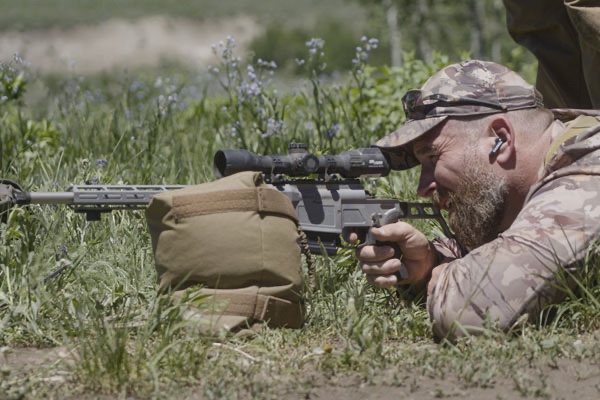
SureFire Field Notes Ep 72 – How to Cheat: Max Point Blank Theory with Alex Hartmann

Friday, July 29th, 2022

Alex Hartmann is a former Marine Corps Scout Sniper with multiple deployments to Iraq and Afghanistan. After leaving active service in 2016, his mission to serve the tactical population continued as a co-founder of Ridgeline Defense, a Service-Disabled Veteran Owned Small Business whose mission is to defend America and her interests both at home and abroad, through the training and equipping of Military, Law Enforcement, and vetted Civilian clients. The Ridgeline Training Center is located in Dalton, NH, in strategic partnership with the Team O’Neil Rally School. Their facility is designed by Special Operators and purpose-built to support world-class training, as well as to provide a discrete location for Research, Development, Testing, and Evaluation.

www.ridgelineshooting.com

Special thanks to The Ranch TX and Shooter Symposium for making this episode possible.


www.theranchtxclub.com

For more on SureFire:

www.surefire.com

SERE Specialists Thrive in Harshest Conditions: Teaching Next Generation of Officers to Do the Same

Friday, July 22nd, 2022

JOINT BASE SAN ANTONIO – RANDOLPH, Texas —  

Organizing safe, effective survival and evasion training for nearly 1,000 people isn’t easy – especially in an austere and unforgiving environment that’s hours from the nearest signs of civilization. But Capt. Jason Walker and Master Sgt. Brian Youngberg’s team of 33 Survival, Evasion, Resistance and Escape Specialists are doing just that this summer as they train hundreds of U.S. Air Force Academy cadets during three 21-day courses on critical survival and evasion skills at the Air Force Academy and Pinon Canyon Military Site near Trinidad, Colorado.

The Air Force Academy Combat Survival Training program enables cadets to practice and learn the skills required to survive as an isolated personnel in a combat environment.  This training also provides leadership opportunities for upper-class Cadets and shortens the training timeline for new lieutenants in certain AFSCs. 

“SERE provides the tools necessary to survive in multiple situations and to return with honor,” said Walker. “This program is designed to not only introduce cadets to these survival skills, but also offer them a leadership opportunity.”

On a normal day these specialists instruct at the 336th Training Group at Fairchild Air Force Base, Washington, where they’re responsible not only for teaching SERE to more than 6,000 Airmen annually but also training candidates in the SERE technical training pipeline.

“Helping people has always driven me,” Youngberg said. “SERE as a career field is predominantly helping people, whether to learn the skills that will help them return with honor or to do their jobs.”

While teaching SERE isn’t new to the specialists, the scale of the program is. A small-group try-out was conducted in 2021 with just over 130 cadets completing the program. This year’s iteration, consisting of three 300-plus blocks of students, represents a nearly 800% increase in student training.


One unique aspect to the program is that cadet cadre act as primary instructors, having completed a hands-on training course with SERE Specialists, who help guide student learning and ensure course objectives are met.  This provides cadet cadre with opportunities to grow their leadership and develop in a controlled training environment.

Nearly 1,200 cadets are anticipated to complete the program by the end of the summer.

“Any time you’re dealing with 1,200 people, there are a whole bunch of gears that have to fit together the right way,” Walker said. Weather, environmental factors, instructional timelines, safety and more all have to be factored in and adjustments made to ensure students receive proper training. 

The team of SERE Specialists are eagerly tackling the challenge of adapting their training to the cadets.

“Uncertainty is where SERE specialists thrive,” Walker said. “The team out here has one officer, a senior NCO, a couple NCOs, and then the rest are all Airmen. These Airmen are problem-solving nonstop to get the mission accomplished. It’s awesome to watch them.”

The team of SERE specialists also appreciate the chance to mentor the future officers.

“For a lot of the cadets, this is their first exposure to active duty non-commissioned officers,” Youngberg said. “So they’re able to talk with our SERE Specialists for perspective on what it’s like being active duty and understand the importance of the officer and NCO relationship.”

Walker agrees. “Mentoring is my favorite part,” he said. “It’s great when you see the light switch flip on, because it means you were able to connect and get information across in a way that people understand. And then also seeing students do things they didn’t think they could do or hadn’t done before.”

To become a SERE Specialist, Airmen must be both physically capable and mentally prepared for extreme conditions, requiring more than a year of intense, and grueling training. Candidates are initially assessed through a 19-day screening course at Joint-Base San Antonio-Lackland, where they are evaluated on their physical fitness, aptitude, dedication, and leadership potential. After passing those tests, candidates undergo the rigorous SERE Specialist training that prepares them to survive in any environment, including deserts, mountains, arctic conditions and on the open water.  Following graduation, SERE Specialists undergo more dive, parachute and emergency medical technician training, ensuring they have the right skills to operate in any situation. Only 40% of candidates that begin the pipeline end up earning the coveted pewter-green SERE beret.

The Combat Survival Training program at the Air Force Academy concludes July 29, and is expected to continue to impact future leaders for years to come.

Story by Capt Lauren Woods, Air Education and Training Command Public Affairs

Photos by Trevor Cokley

US, Moroccan Special Forces Team Up For Inaugural Cyber Training

Tuesday, July 19th, 2022

TIFNIT, Morocco – U.S. Army Soldiers with 3rd Special Forces Group (SFG) Tactical Information Support Center, Expeditionary Cyber Team 2, and Royal Moroccan Special Operations Forces (SOF) teamed up to conduct prototype cyber effects training during African Lion 22, June 26, 2022.

African Lion 22, U.S. Africa Command’s largest, premier, joint, annual exercise hosted by Morocco, Ghana, Senegal and Tunisia, June 6 – 30, is a critical opportunity for members of the joint team to build and test their strategic readiness to deploy, fight and win in a complex, multi-domain environment. The cyber training collaboration was the first of its kind and sought to discover how low equity cyber solutions can expand options for key decision makers at the tactical, operational, and strategic levels.

The cyber effects training included hands-on cyber lab demonstrations using commercial tools and comparing them to less accessible high-tech devices. The lead 3rd SFG trainer described the hands-on training as an ‘opportunity to take cyber security to the field and into the mind of each Service Member in a combat situation.’

3rd SFG endeavors to learn, iterate, and eventually offer flexible cyber options at scale while maximizing the indigenous approach through partner forces.

“By actually shifting the focus of training to the modern combat environment, which is now becoming rapidly digital, you create a more potent, lethal force, moving into the future,” stated a member of 3rd SFG.

Building an understanding of multi-domain digital activities would allow U.S. and partner forces to work with more sustainable equipment and better understand digital threats to their missions.

U.S. Africa Command is ready to provide the necessary resources to advance mutual interests and respond to crisis in Africa because of successfully forged and maintained partnerships and demonstrated operational success.

African Lion 22 is a joint all-domain, multi-component, and multinational exercise, employing a full array of mission capabilities with the goal to strengthen interoperability among participants and set the theater for strategic access. More than 7,500 participants from 28 nations and NATO train together with a focus on enhancing readiness for U.S. and partner nation forces.

Story by Charli Turner, U.S. Army Southern European Task Force, Africa

Photo by SFC Katie Theusch, U.S. Army Southern European Task Force, Africa

2022 Connecticut SWAT Challenge August 15-18

Wednesday, July 13th, 2022

The 2022 Connecticut SWAT Challenge is coming up soon, August 16-18 in the Hartford area.

Not only does the Connecticut SWAT Challenge host teams from all over the US to challenge themselves against various events and one another, there are also training courses.

For vendors it’s a great way to meet face to face with these teams and show off your wares. Spots are still available.

To learn more, visit www.ctswatchallenge.com.

US and Finnish Soldiers Kick Off Summer Exercise

Tuesday, July 12th, 2022

HELSINKI – Soldiers of the 3rd Brigade Combat Team, 82nd Airborne Division; the 3rd Armored Brigade Combat Team, 4th Infantry Division; and the Guard Jaeger Regiment of the Finnish Army, conducted bilateral training in Santahamina Island, Finland, June 28, 2022.

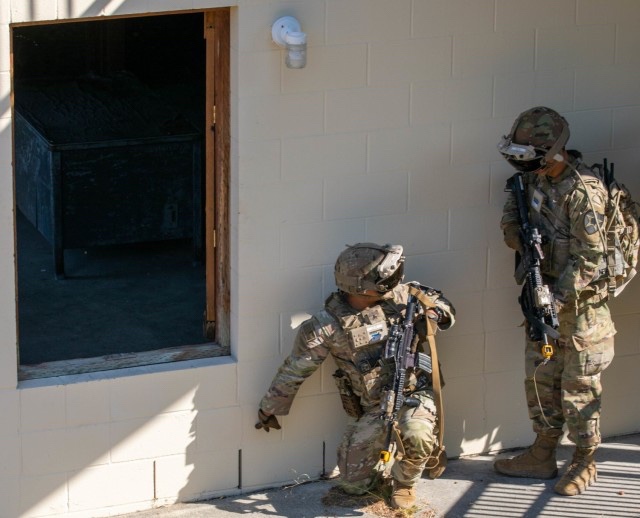
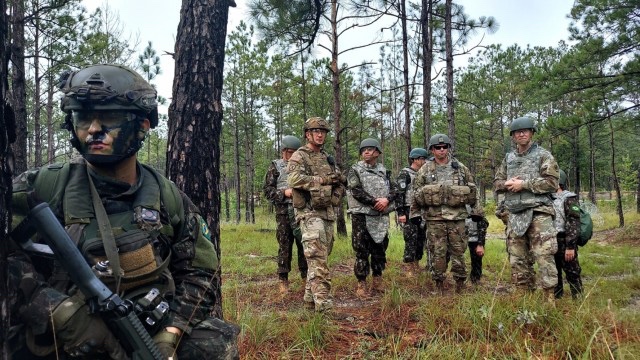
Over 200 U.S. Soldiers conducted urban operations training alongside Finnish soldiers, learning tactical skills from each other in order to operate seamlessly with partner nations.

The training is part of the Finnish Summer Exercise, a training exercise conducted in various bases throughout Finland, running from the end of June to September.

“Finland has been great. We appreciate the hospitality. From a military standpoint, the training has been exceptional. The Guard Jaeger Regiment has been very accommodating for anything we need,” said U.S. Army Lt. Col. Jacob Teplesky, commander of the 4th Squadron, 10th Cavalry Regiment, 3rd Armored Brigade Combat Team, 4th Infantry Division.

During the exercise, U.S. engineers and sappers conducted training on breaching, demolitions, and have learned how to use Finnish type charges they’ve never experienced before, said Teplesky

The Guard Jaeger Regiment’s primary mission is to train soldiers for urban operations. These soldiers would defend the capital as part of wartime units formed by the regiment.

“It’s very important, the cooperation between Finnish and U.S. forces. I think you will continue to see, as we continue to expand these exercises, throughout the summer as … we move from squad and platoon level, to a battalion command post exercise, we fly our unmanned aerial systems and we shoot a mechanized gunnery,” said Teplesky.

The 3rd Armored Brigade Combat Team, 4th Infantry Division is among other units assigned to the 1st Infantry Division, proudly working alongside regional security partners to provide combat-credible forces to V Corps, America’s forward deployed corps in Europe.

SPC Hassani Ribera Soto

SureFire Field Notes Ep. 71: Precision Rifle Tripod Techniques with Sean Murphy

Friday, July 8th, 2022

In this episode, Sean Murphy of Nightforce Optics discusses several ways to utilize a tripod in precision rifle shooting.

Sean Murphy is the Training Manager for Nightforce Optics and highly successful competitive shooter. Starting with an interest in firearms from a young age, Sean has been shooting competitively since 2006 and has worked in the firearms industry since 2011. He has experience with pistols, carbines and rifles; competing and training in many different shooting sports across the United States.

www.nightforceoptics.com

www.surefire.com

Kit Badger – Modern Minuteman Course

Thursday, June 30th, 2022

My friend Ivan recently attended the Modern Minuteman Course with AMTAC Shooting. He related that it is a pretty cool blending of skills and competition.

Read the whole thing at kitbadger.com/modern-minuteman-course-2022-by-amtac-shooting

Army Melds Virtual Technology with Real Weaponry to Optimize Soldier Training

Thursday, June 30th, 2022

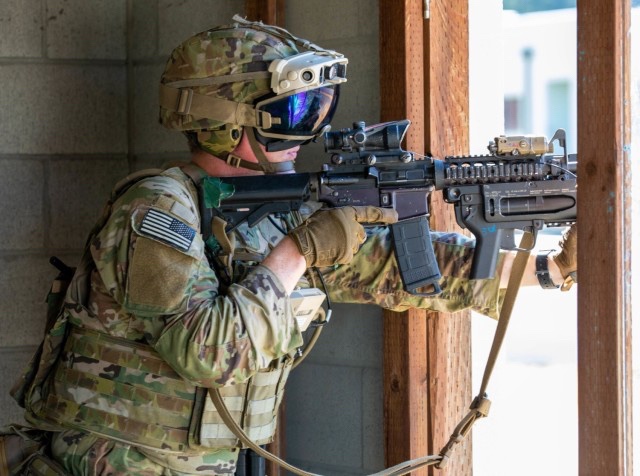
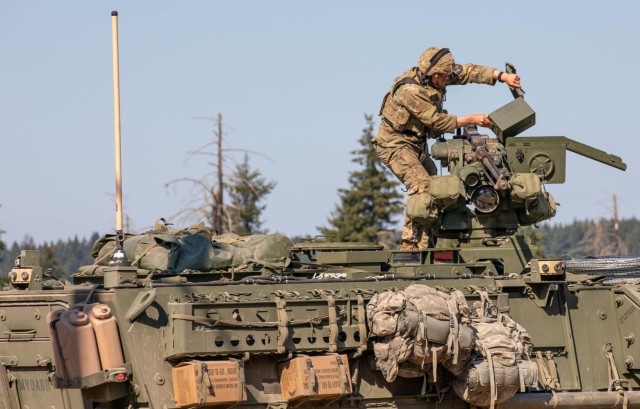
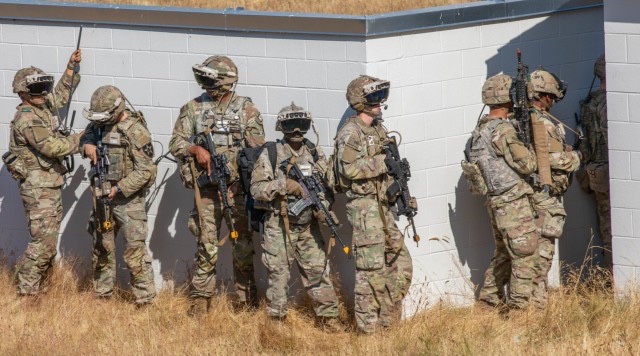
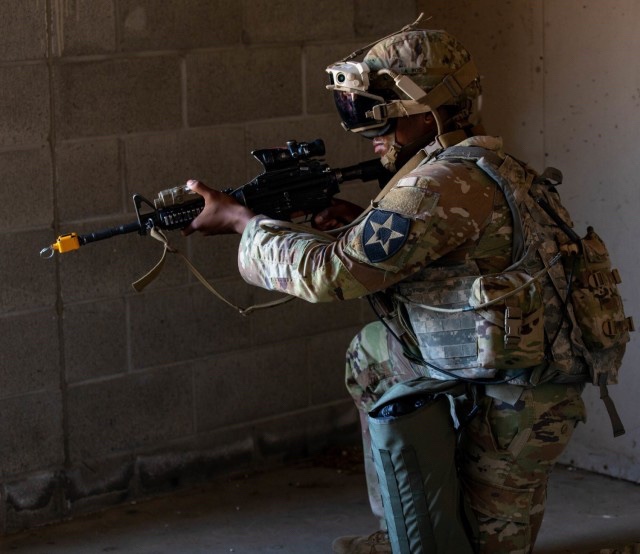
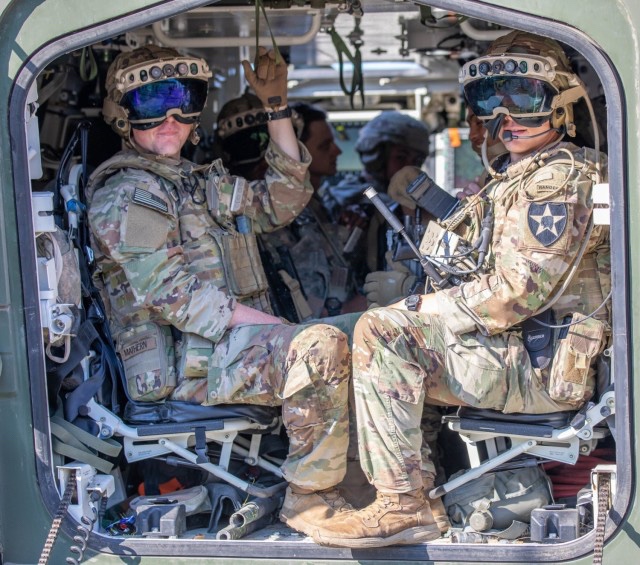
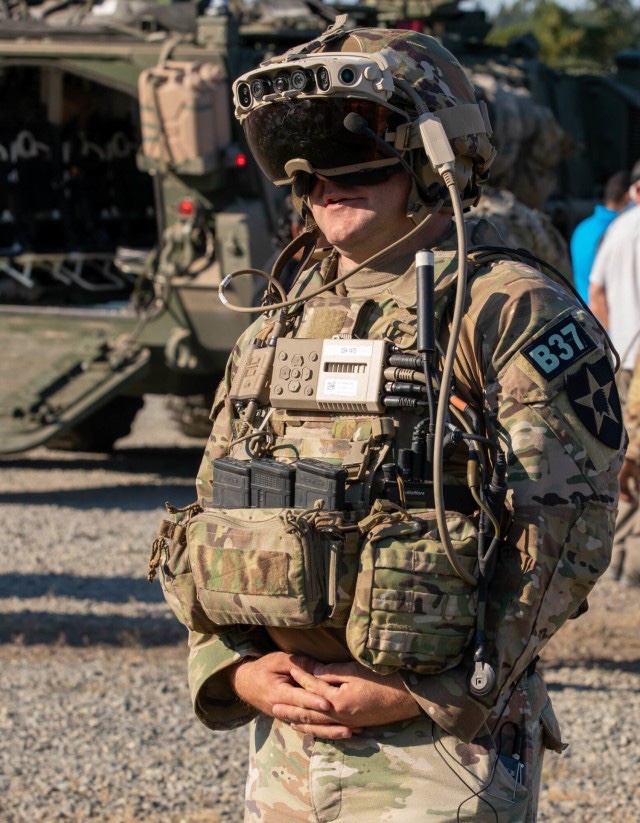
AUSTIN, Texas – To address the need to simulate the effects of key weapons systems more accurately during live training exercises, the Army recently developed the Synthetic Training Environment Live Training System (STE LTS) program.

The STE LTS program will accelerate the evolution of cutting-edge equipment and software to amplify and expand the realism of the operational training environment.

The program specifically seeks to offer improvements to engagements – known as the 12+5 – involving direct and indirect fire; counter-defilade; dropped, placed and thrown objects; guided and autonomous weapons; directed and radiant energy weapons; chemical, biological, radiological and nuclear / plume; and information warfare. It plans to accomplish this task through implementation of enablers in the categories of calculations, network, sensors, terrains and transmitters.

Creation of the STE LTS spans multiple stages from concept development to final product fielding and is thus a collaborative endeavor of Army Futures Command’s Synthetic Training Environment Cross-Functional Team (STE CFT), the Program Executive Office for Simulation, Training and Instrumentation (PEO STRI), the U.S. Army Operational Test Command and the U.S. Army Training and Doctrine Command Project Office Live, among other Army training experts and stakeholders.

The system, which is being built out as part of a five-year, middle-tier acquisition rapid prototype authority managed by the PEO STRI Agile Acquisition Response (STAAR) Team, has been evolving swiftly since its 2021 inception in large part due to the Army’s strategic execution of STE LTS Soldier touchpoints and STAAR Testbed engineering assessments of vendor prototypes.

Soldier touchpoints provide a unique, hands-on venue for Soldiers to test and offer honest feedback on vendor prototypes designed to fulfill STE LTS 12+5 requirements.

Soldier feedback and STAAR assessments often translate into iterative adjustments and upgrades that bring training capabilities closer and closer to meeting Soldiers’ needs.

The opportunity to conduct rigorous testing early in the acquisition life-cycle allows the Army to invest in – or divest from – new technologies more efficiently.

Funneling energy and resources into an improved live training system is important because constraints in training can become constraints on actual battlefields.

“There are two primary objectives for this program. Modernization of existing live training capabilities due to performance constraints and component obsolescence is key, but equally important is the representation of weapons that cannot be trained during force-on-force engagements due to legacy technology limitations,” explained Curtis Leslie, Director of the STAAR Team.

“We’re collaborating with the Army’s science and technology community, traditional and non-traditional industry partners and a bevy of stakeholders to push the limits and provide next-generation technologies that will enable the Army to effectively represent kinetic and non-kinetic battlefield effects, to include near-peer adversary systems for OPFOR units, and ensure the Army maintains overmatch across current and emerging warfighting domains,” Leslie said.

Currently, roughly 60 percent of the Army’s weapons portfolio is being exercised in force-on-force live training environments. The STE LTS program aims to increase the percentage of weapons being used – particularly those that capitalize on breakthrough technologies – to enable a more dynamic training experience for Soldiers.

By combining promising technologies with robust end-user feedback, the Army is improving its ability to develop and implement training that imitates real-life missions.

“We’re making training more realistic,” summarized Lt. Col. T.J. Naylor of the STE CFT.

Naylor, who leads STE LTS capability development, explained that the Army is “looking to improve the amount of weapons the warfighter is able to bring to their training that they could actually use in combat.”

While previous live training mechanisms introduced new-at-the-time simulation enablers, such as lasers, recent advances in terrain imaging and virtual reality ecosystems have opened the door to more precise and interactive technologies.

These next-generation technologies include devices that can be appended to or integrated into existing weapons to enable a digital fire – one that can be traced and evaluated in a manner akin to that of a real fire, but that is visible only to computers and the individuals using those computers.

Such technologies can enhance a Soldier’s ability to operate and maneuver with real weaponry, as well as the Army’s ability to create realistic surrogates when necessary.

The capacity to analyze the digital impact of a weapon’s deployment also means unit commanders can provide more nuanced direction and adjustments during and after live training scenarios.

Equipped with these new resources and a focus on strengthening future readiness, the Army is “at the forefront of pushing the boundaries of technology to improve the capabilities of training, whether that’s through improved laser or non-laser systems, such as geo-pairing or geo-optic training solutions,” Naylor said.

By Maureena Thompson, Army Futures Command