SIG SAUER - Never Settle

Archive for the ‘Training’ Category

137th Combat Training Flight Hosts First Female JTAC Student

Tuesday, June 28th, 2022

WILL ROGERS AIR NATIONAL GUARD BASE, Okla. —  

The 137th Combat Training Flight (CTF) hosted its first female student in the joint terminal attack controller qualification course (JTAC QC).

The course, held March 21-April 22, 2022, in Oklahoma City, included two NATO students, an Estonian tactical air control party specialist and a German Air Liaison Officer, who was the first female participant in the 137th CTF JTAC QC.

“I enjoy the spectrum of coalition students we get through here because each one is a very different dynamic for instruction. Some are already trained, and for others it’s their first time passing a 9-line,” said Tech. Sgt. Justin Davis, 137th CTF instructor. “Our students essentially get seven or more full mission profiles in our simulator and three full mission profiles with live contract close air support (CAS) during our field week.”

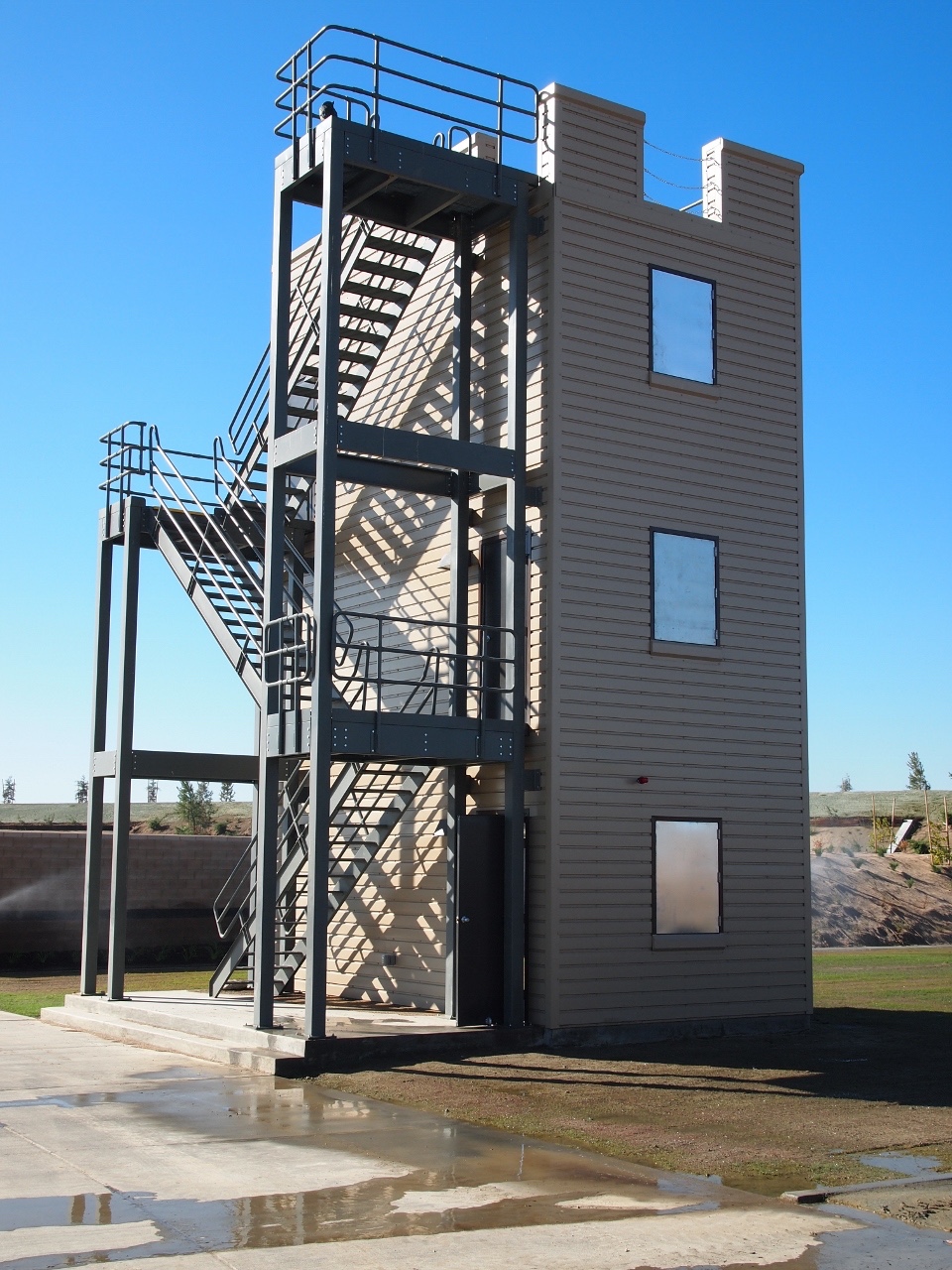
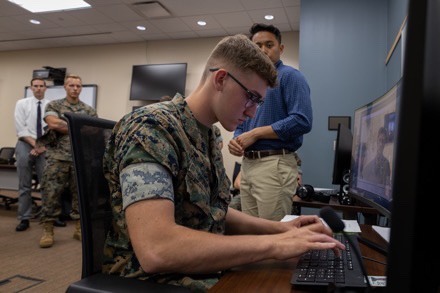
Students go through three phases within the course over five weeks: two weeks of academics, two weeks simulator testing command and control skills in the Advanced Joint Terminal Attack Controller Training System (AAJTS), and field training that consists of daytime and nighttime calls for fire on a training range with contracted CAS aircraft.

“The contract CAS piece makes a big difference in training because it doesn’t have the same flight time restrictions as working with military aircraft,” said Davis. “Students have triple the time, in addition to in-depth instruction in the simulator where we can start and stop scenarios to adjust as needed. All that being said, I don’t know that there’s any one thing in particular that we’re doing right, but I know it’s the combination of things we’re doing right that initially brought NATO coalition partners here and why they continue to send students.”

The 137th CTF is one of two schoolhouses in the U.S. able to qualify JTACs and is one of three in the U.S. Air Force. Since 2016, the 137th CTF has hosted students from every U.S. military branch and a dozen NATO partner nations. It is unique as a schoolhouse for its manning ratio between instructors and students. Other class sizes can reach up to two dozen students with only a handful of instructors, whereas the 137th CTF class size allows for nearly a one-to-one ratio that provides time for more personalized and in-depth instruction.


“Several of our international students come here already qualified as JTACs and use our course as a stepping stone to become instructors back home,” said Maj. Jeffrey Hansen, 137th CTF director of operations. “Our instructors are also better for having our coalition partners, especially those already JTAC qualified, as students because their feedback allows us to expand on our training and improve how we teach. Plus, the relationships we have built with international students have been leveraged into continuation training, such as with Estonia through the State Partnership Program.”

Once graduated from the course, military members have a Department of Defense certification to go into a deployed environment and conduct CAS, which is the ability to provide joint fire close air support to ground forces, with any available U.S. or NATO asset.

“When it comes to military doctrine, especially on the NATO side, it remains vague because you have to incorporate 30 countries,” Hansen noted. “CAS is different because anywhere you go in the world, we all share a language, forming an intense bond. The diversity of our classes and the bonds we form with all of the students who have come through demonstrates firsthand that our shared language forges a connection that transcends any differences between branch of service or nation of service.”

By TSgt Brigette Waltermire

137th Special Operations Wing

Prepared Pathfinder – Jungle Kit

Monday, June 20th, 2022

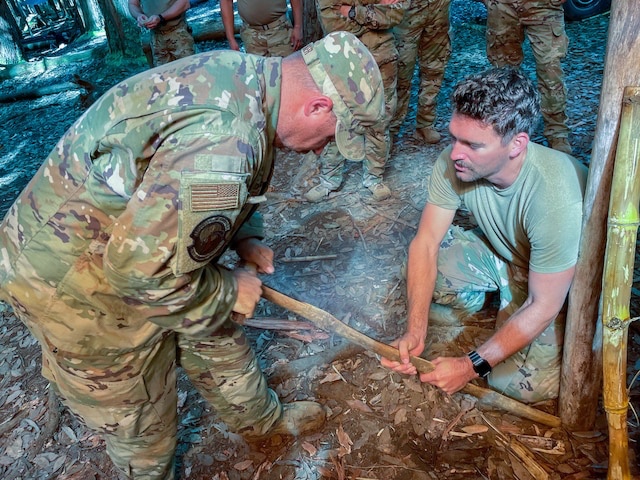
Former British Pathfinder Tom Blakey completed the British Army Jungle Warfare Instructor Course (JWIC) in 1997 and used this kit on three Continents, including Brunei, the Philippines, Belize, and Kenya. He goes over considerations for preparing your kit for use in the jungle.

ORSM 22 – Lowa

Wednesday, June 15th, 2022

The Lowa Fusion Lo is a post-workout recovery shoe.

Featuring Lowa’s patented PU MONOWRAP frame you’ll get plenty of support. Breathability is thanks to knit construction. Plus there’s a microfiber lining.

These are made in Slovakia.

www.lowaboots.com/mens/everyday/lowa®-fusion-lo-grey-black

SureFire Field Notes Ep 70: Driver Skills with Scott Brady

Thursday, June 9th, 2022

Using VR Through VALOR to Improve Combat Casualty Care

Tuesday, June 7th, 2022

HURLBURT FIELD, Fla. —  

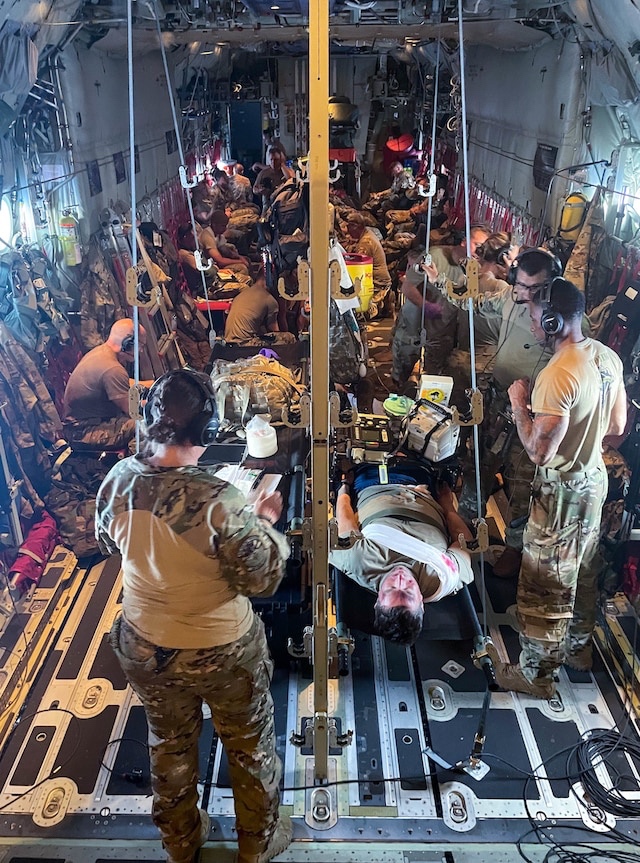
The 24th Special Operations Wing Surgeon General’s office has implemented the use of virtual reality training devices, in partnership with SimX, throughout special tactics to maintain the critical pararescueman’s skill in an ever-changing operational environment.
“The operational mission is going to continue to grow in complexity in the future fight,” said U.S. Air Force Col. John Dorsch, 24th SOW Surgeon General. “The PJs must be prepared to treat both injury and illness in austere environments for longer periods of time with limited reach-back.”


When looking at what the future operational environment may look like, the 24th SOW SG team must consider the implications to operational medicine. Scenarios PJs face could be in low-visibility areas where they have to keep patients alive for longer periods under possible chemical, biological, radiation or nuclear conditions.


“Preparing PJs medically for the future fight will require an advanced interoperable standard, optimized initial and sustainment training, deliberate tech development and integration, and enhanced performance tracking and feedback,” said Dorsch.
The virtual reality program objectives are to improve realism, increase flexibility and reduce cost. Through more than $10 million in Department of Defense Research and Development Funding and the Air Force Small Business Research Innovation Research program, SimX and the 24th SOW have been able to create more than 80 training scenarios including canine treatment and care, blast injuries, severe gas exposure, and more.
These training devices provide intricate and realistic training scenarios that other methods, such as medical dummies, cannot, and improves the effectiveness of the training.
“By using a flexible piece of equipment, we are able to deliberately and efficiently target specific desired learning objectives based on evolving mission requirements,” said Dorsch. “We now have the time and bandwidth to provide trainees with enhanced real-time feedback from the through the program, which grades the trainee on a point system through data analysis and a performance tracking system.”


Currently, there are 14 sites online using the PJ Tactical Combat Casualty Care curriculum, including Air Force Special Operations Command and Air Combat Command. In the future, they plan to expand access to the existing medical training portfolio across all SOF TCCC responder tiers, broaden capabilities and integrate partner force training.
“The VALOR program has increased the availability of efficient and effective medical training and has allowed us to develop complex decision-making, which will improve survival rates in U.S., coalition and partner force combat casualties in the future fight,” said Dorsch. “VR training is critical for ensuring that the highest level of combat trauma and austere medical care are provided by our special operations ground forces. We have only scratched the surface of its incredible potential.”

Story by Capt Savannah Stephens, 24 SOW Public Affairs

Photos by TSgt Carly Kavish

Rampart Range Day 22 – ChimeraXR

Wednesday, June 1st, 2022

ChimeraXR demonstrated their VR training system. I originally met them about a year ago and they’ve stepped up their capabilities since then adding PC based training and Taser to the mix.

ChimeraXR products can be procured by agencies, departments, and units in Canada from Rampart International.

Rheinmetall Announces Its Canadian Partners and Reveals its Team Name for the LVCTS Project: FORC3

Tuesday, May 31st, 2022

The partnership between Rheinmetall and Lockheed Martin in pursuit of the Canadian Army’s Land Vehicle Crew Training System (LVCTS) project has a new name—FORC3—and a lineup of Canadian suppliers to fulfill its mission.

First announced in June 2020, the strategic partnership led by Rheinmetall Canada includes Lockheed Martin Canada, Rheinmetall Electronics (Bremen, Germany), and Lockheed Martin Training and Logistics Solutions (Orlando, Florida). The agreement created an international alliance with unrivalled experience and expertise in the design, development, and implementation of world-class combat vehicle virtual simulation centres used by Canada’s most important allies.

Pietro Mazzei, Vice-president, Rheinmetall Canada, explains, “The name FORC3 is all about promoting a partnership between Rheinmetall, Lockheed Martin, and the Department of National Defence (DND), united through excellence to enable training for adaptive dispersed operations.”
Together with the leading Canadian defence, service, infrastructure, and simulation companies, FORC3 has secured the domestic capabilities to build and operate five state-of-the-art LVCTS simulation centres across the country. The Canadian team comprises Rheinmetall Canada (Saint-Jean-sur-Richelieu), Lockheed Martin Canada (Ottawa), the ADGA Group (Ottawa), Bluedrop Training and Simulation (Halifax), EllisDon Construction and Building Services (London), Paladin AI (Montreal), and REDspace Incorporated (Halifax).

FORC3 will draw upon its partners’ global experience and cutting-edge technologies to fundamentally transform operational training for the Canadian Army. Each proposed simulation centre will create highly realistic synthetic environments that replicate the future land operating environment. Canadian forces will train as they will fight and where they will fight, encountering virtual adversaries posing a full range of hybrid, conventional, and emerging threats. Within these simulated operational scenarios, Canadian soldiers will have access to sophisticated analytical tools to exploit training to the fullest. The LVCTS will become a key enabler in training for adaptive dispersed operations, the Canadian Army’s capstone operating concept.
With FORC3’s team, the LVCTS program’s benefits will be felt across Canada. The project will bring modern technologies to the nation’s industries and create new and enduring high-quality jobs at the five simulation centres. As a member of the Canadian Council for Aboriginal Business (CCAB), Rheinmetall Canada is committed to including Aboriginal businesses in its supply chains for the project. Additionally, the LVCTS project offers significant environmental benefits as traditional field training makes way for simulated operations hosted in carbon-neutral buildings.

Says Mazzei, “FORC3 is about Canadian industries uniting with DND to effectively and comprehensively prepare the Army’s women and men for the challenges they will face in the coming decades.”

The five custom-built simulation centres will enable progressive training at the individual, crew, platoon, and higher echelon levels using high-fidelity trainers, medium-fidelity reconfigurable trainers and standard trainee workstations combined with a robust virtual environment and comprehensive instructional system.

Emerald Warrior 22.1 Concludes for AFSOC, Czech Special Forces

Tuesday, May 24th, 2022

HURLBURT FIELD, Fla. —  

Air Force Special Operations Command wrapped up its 15th Emerald Warrior exercise that provided realistic and relevant training to prepare special operations forces, conventional forces and international partners for conflict in an evolving, strategic environment. 

The EW 22.1 planning team applied lessons learned from real-world operations to train and ready forces to the joint force, while staying focused on security priorities laid out within the 2022 National Defense Strategy; specifically, pacing strategic competitors. Trained, credible forces and strong international partnerships are pivotal to this effort.  

“In this year’s iteration, we improved our approach to command and control through the employment of the Special Operations Task Group and Special Operations Task Unit,” said U.S. Air Force Col. Kevin Koenig, exercise director of Emerald Warrior. “This dispersion of leadership allowed for real-time, on-the-ground decision making and allowed commanders to perform operations quickly and more efficiently. We exercised our agile combat employment capabilities and focused additional training on non-kinetic skillsets to include public affairs and information operations. With our partner nations and sister services, our goal is to continue to deter adversaries, now and in the future, in all domains.” 

The objective for this year’s EW was to gain and maintain an advantage on the battlefield and in the information environment, and grow kinetic and non-kinetic effects above and below the threshold of armed conflict from strategic competitors. 

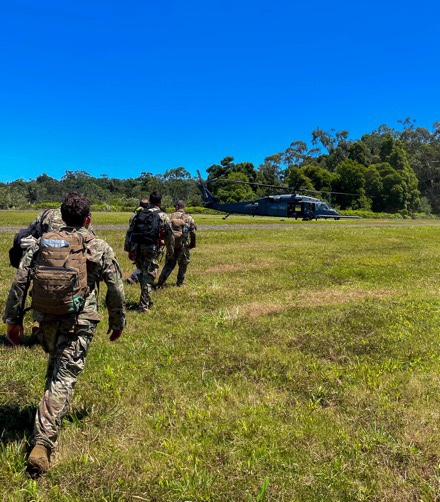
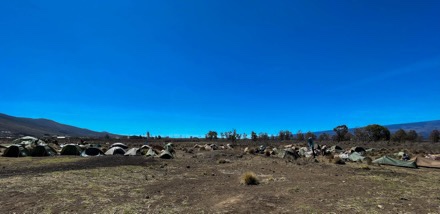
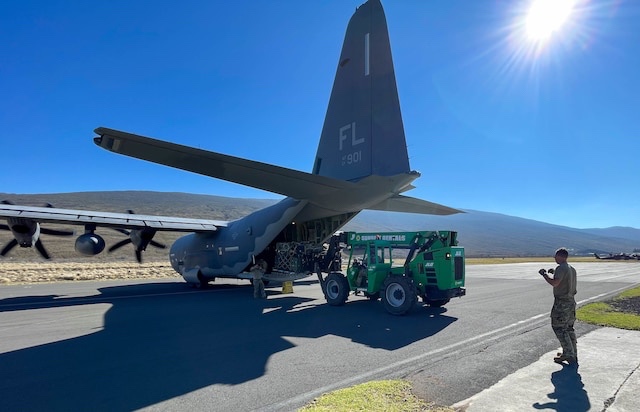
This annual exercise is an opportunity to further test and improve future approaches to AFSOC units like the mission sustainment teams. These MSTs established forward-operating bases by providing initial site security, receiving cargo and personnel, and setting up shelter. 

“It was very impressive how the 1st SOW and 27th SOW [from Cannon Air Force Base, New Mexico] capabilities came together in order to forward stage our contingency locations during this exercise,” said U.S. Air Force Lt. Col. Travis Deutman, commander of the Emerald Warrior SOTG. “As these capabilities continue to progress, it’ll definitely be something that’ll be useful within AFSOC.” 

In line with AFSOC’s Strategic Guidance, the exercise fuels on-going innovation and experimentation efforts within the command.   

“The most important idea to understand about Emerald Warrior is that as AFSOC implements force generation, we’re building new concepts; the two biggest concepts being the SOTG command team and our MSTs,” said U.S. Air Force Col. Michael Haack, deputy director of operations for AFSOC. “These concepts combine to enable the force to do agile combat employment in a contested environment. We increased our agility; we pushed our decision making forward to the lowest level. These teams are trained and enabled, and ready to fight the fight in the contested and uncontested environment.” 

In addition to introducing new command and control structure, the exercise continued as a forum of collaboration between the U.S. and its international partners and allies. This year, AFSOC hosted partners from the Czech Republic. 

“We look forward to working with our partner nations and coalition forces from across SOF,” said Haack. “Emerald Warrior allows us to problem solve in an exercise environment, establish communication and build enduring relationships. Those relationships with our Czech partners and fellow SOF coalition forces are critical so we’re not meeting them for the first time down range.” 

By 2nd Lt Cassandra Saphore, Air Force Special Operations Command Public Affairs