SIG SAUER - Never Settle

Archive for the ‘Training’ Category

Ben Franklin Range in Armstrong County, PA

Wednesday, March 16th, 2022

For immediate release

There is a new name in the training industry.  

The Ben Franklin Range is a new training facility in Armstrong County, PA. It is built on over 1100 acres and will have the capability to host a variety of training and special events.  It will be open to both public and private groups.

The reality of BFR came about after a small group of Special Forces veterans and another group of Law Enforcement joined together.  Independently, unbeknownst to each other, they had been working for years to find the right property.  Their goals were almost identical, having never been fully satisfied with the ranges and training locations that they have used in the past.  After a series of meetings in early 2021, they realized that they would complement each other and combined to make their dream a reality.  

They found and purchased the perfect location at 1130 Ridge Rd Templeton in Armstrong County PA.  It is the site of the former Scrubgrass OHV park.  It already consists of 60 plus miles of off-road trails and 4 HLZs.  BFR will have a Gun Shop, Pro Shop, Bunk house, 6000 square ft modular Sims/UTM shoot house, as well as numerous ranges.  There are points for land navigation and outdoor space for Small Unit Tactics classes.  There will be camping on site and trailer hook ups as well.

Themis Arms Center and Lodestone Training and Consulting will be making the Ben Franklin Range their home.  They will be providing a wide variety of training opportunities, but BFR, its ranges and facilities will be open to trainers and training companies to run their courses.  With decades of experience taking and running training all over the world, The BFR is the place we have always wanted. It will be a one- stop shop for everything training.

For the calendar of events, information, and to inquire for use, go to www.benfranklinrange.com

Follow us on Instagram @benfranklinrange

Grand opening will be Saturday, July 2nd

BFR will feature:

Experienced training staff

On-site firearms dealer

Multiple-bay shooting ranges – used for pistol/rifle shooting and training

Dynamic shooting range – used for pistol/rifle tactical shooting and training

Sim shoot house and village with ability for changing configurations/rooms for training purposes

Several high-angle ranges for rifle shooting and training

A long-distance rifle shooting range (1 mile) for shooting and training

A known-distance rifle shooting range for shooting and training

A live-fire driving range for training

A wilderness skills area

A land navigation area

A minimum of 4 helicopter landing zones

On-site Pro Shop

Lodging for class participants on site

Trailer hook-ups on site

State of the art classroom training facilities

Over 60 miles of OHV trails

Camping facilities throughout property

Paintball and airsoft setups on site

Will have the capability to host a variety of training and recreational events.


TMS Tuesday – The M.A.R.C.H Algorithm – Respiration

Tuesday, March 15th, 2022


The MARCH algorithm is laid out differently from Advanced Trauma Life Support (ATLS) which used Airway, Breathing, and Circulation (ABC’s) as the order of treatment. MARCH stands for Massive Hemorrhage, Airway, Respiration, Circulation, Hypothermia/Head injury. Respiration consists of penetrating thoracic trauma.

When it comes to penetrating thoracic trauma, it is important to systematically check the entire torso for wounds, from the umbilicus to the clavicle, including the axillae and any folds of skin. Medics often use a raking motion in opposite or off angle directions to assist in identifying difficult to see or smaller wounds.

An open chest wound, sometimes referred to as a “sucking chest wound”, will trap air in the chest, creating a pneumothorax. If too much air builds up, it will create enough pressure to become a tension pneumothorax, which can lead to decreased function in the non-injured lung and heart and could lead to death.

According to the Committee on Tactical Combat Casualty Care, assessing and treating tension pneumothorax should progress as follows:

Suspect a tension pneumothorax and treat when a casualty has significant torso trauma or primary blast injury and one or more of the following:

• Severe or progressive respiratory distress

• Severe or progressive tachypnea

• Absent or markedly decreased breath sounds on one side of the chest

• Hemoglobin oxygen saturation < 90% on pulse oximetry

• Shock

• Traumatic cardiac arrest without obviously fatal wounds

If not treated promptly, tension pneumothorax may progress from respiratory distress to shock and traumatic cardiac arrest.

All open and/or sucking chest wounds should be treated by immediately applying a vented chest seal to cover the defect. If a vented chest seal is not available, use a non-vented chest seal. If you must use a non-vented chest seal, then you must be vigilant in continued patient assessment, as air from the damaged lung may continue to build up inside the chest. For the layperson, this means “burping” the dressing to release air. For providers, this means needle decompression, finger thoracotomy, or tube thoracostomy.

Initial treatment of suspected tension pneumothorax:

• If the casualty has a chest seal in place, burp or remove the chest seal.

• Establish pulse oximetry monitoring.

o All individuals with moderate/severe TBI should be monitored with pulse oximetry. Readings may be misleading in the settings of shock or marked hypothermia.

• Place the casualty in the supine or recovery position unless he or she is conscious and needs to sit up to help keep the airway clear as a result of maxillofacial trauma.

• Decompress the chest on the side of the injury with a 14-gauge or a 10-gauge, 3.25-inch needle/catheter unit.

• If a casualty has significant torso trauma or primary blast injury and is in traumatic cardiac arrest (no pulse, no respirations, no response to painful stimuli, no other signs of life), decompress both sides of the chest before discontinuing treatment.

o Either the 5th intercostal space (ICS) in the anterior axillary line (AAL) or the 2nd ICS in the mid-clavicular line (MCL) may be used for needle decompression (NDC.)  If the anterior (MCL) site is used, do not insert the needle medial to the nipple line.

o The needle/catheter unit should be inserted at an angle perpendicular to the chest wall and just over the top of the lower rib at the insertion site. Insert the needle/catheter unit all the way to the hub and hold it in place for 5-10 seconds to allow decompression to occur.

o After the NDC has been performed, remove the needle and leave the catheter in place.

The NDC should be considered successful if:

• Respiratory distress improves, OR

• There is an obvious hissing sound as air escapes from the chest when NDC is performed (this may be difficult to appreciate in high-noise environments), OR

• Hemoglobin oxygen saturation increases to 90% or greater (note that this may take several minutes and may not happen at altitude), OR

• A casualty with no vital signs has return of consciousness and/or ` radial pulse.

If the initial NDC fails to improve the casualty’s signs/symptoms from the suspected tension pneumothorax:

• Perform a second NDC on the same side of the chest at whichever of the two recommended sites was not previously used. Use a new needle/catheter unit for the second attempt.

• Consider, based on the mechanism of injury and physical findings, whether decompression of the opposite side of the chest may be needed.

• Continue to re-assess!

If the initial NDC was successful, but symptoms later recur:

Perform another NDC at the same site that was used previously. Use a new needle/catheter unit for the repeat NDC.

• Continue to re-assess!

If the second NDC is also not successful:

• Continue on to the Circulation section of the TCCC Guidelines.

These recommendations are from the TCCC Guidelines which can be found at: www.deployedmedicine.com/content/40

Tools to Aid in Respiration

TacMed™ Solutions offers a variety of products built to help with this respiratory emergencies including HALO™ Chest Seals, TPAKS for Needle Decompression, a Standard and Complete Chest Tube Kit, a Basic Chest Wound Kit and more. To stock your kit with essential tools, check out TacMed™ Solutions at tacmedsolutions.com/collections/m-a-r-c-h-tccc/respiratory.

Enforce Tac 22 – TACWRK

Thursday, March 3rd, 2022

Congratulations to Berlin’s TACWRK recently celebrated their 10th year of doing business.

They’ve worked to expand their military fitness lines and now provide the German military’s 30 basic training sites with equipment to conduct fitness testing and training under the Soldaten-Grundfitness-Tool program.

www.TACWRK.com

AFSOC’s 137th CTF Teaches Land Nav Skills During MST Training

Thursday, March 3rd, 2022

WILL ROGERS AIR NATIONAL GUARD BASE, Okla. —  

The 137th Combat Training Flight (CTF) taught 33 students land navigation, radio communication and radio programming skills during Mission Sustainment Team (MST) training held at Will Rogers Air National Guard Base, Oklahoma City, Feb. 7-10, 2022.

The students, from squadrons around the base, were divided into two teams and learned from four 137th CTF instructors throughout the week. The MST members worked with specialized equipment and learned how to read maps, find a grid coordinate, and use compasses to navigate over terrain.

“With this training we are taking a skill set we have built specifically for joint terminal attack controller qualification and are transferring that to the rest of the force,” said Maj. Jeffrey Hansen, 137th CTF director of operations. “Using our instructors’ teaching experience means we are more effectively tailoring the classes to the students, who range from tactical backgrounds like security forces members to technical backgrounds like civil engineers.”

Learning skills outside of regular training will ensure long-term mission sustainment in austere locations, making Airmen more capable to operate in diverse deployed environments. 

“It was good going back to basics as far as land navigation, moving as a team with a weapon and pulling security,” said Tech. Sgt. Justin Davis, 137th CTF joint terminal attack controller (JTAC) qualification course manager. “These skills — for our Air Force specialty — are some of the first we learn because they are how we get to work. It was interesting finding the cutoff of what we needed to teach these students to help them understand basic land navigation and radio operation without getting into the weeds of the specific skills we instruct that help a JTAC drop bombs.”

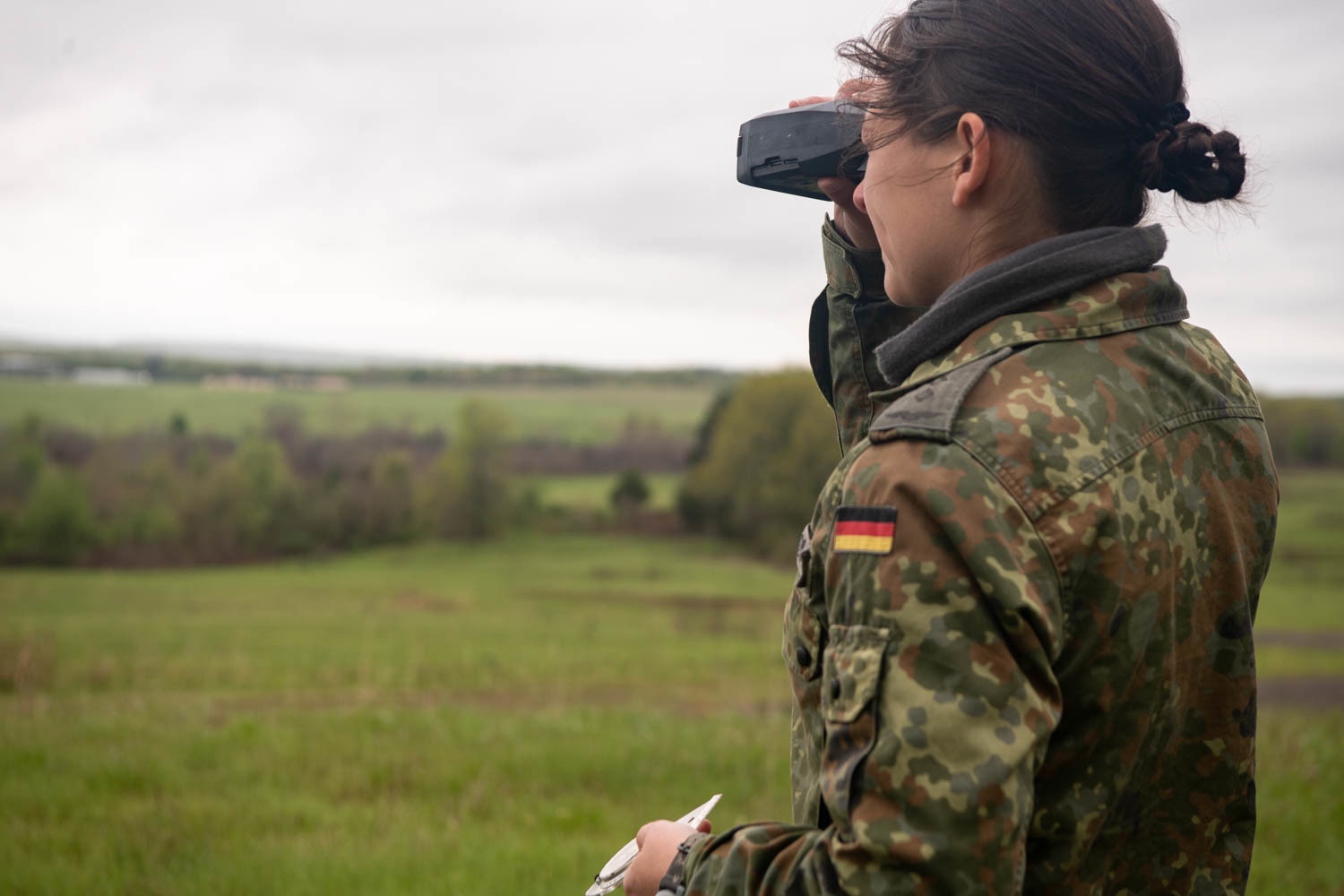
One day of training consisted of land navigation skill development in the field. Instructors set up points and gave students a grid location. Students then plotted a trail to find and report those points using maps, compasses and protractors. Once they reported their first checkpoint, the Airmen were given the location for the next one. 

“All of the skills we learned were brand new to me, so it was difficult to learn it all in the span of a week,” said Senior Airman Andrea Kuzilik, a services specialist with the 137th Special Operations Force Support Squadron. “The instructors were great, and super hands-on. It definitely got better the more we ran through it, and the field day really helped put everything together.” 

This exercise tested students’ radio programming and communication skills in addition to navigation. Students also learned how to move in a formation, react as a team to a direct contact with an adversary, and use night vision goggles to move in the dark and drive a Humvee.

“It was good to see the different Air Force specialties come together for a common purpose during the training,” said Davis. “I think we as instructors are also excited to improve and streamline the course with each training iteration, especially because we saw a successful end result with this initial class using these skills in a practical setting versus a classroom setting.”

By TSgt Brigette Waltermire, 137th Special Operations Wing

US Army’s 4th SFAB Joins the Fight at Allied Spirit

Saturday, February 26th, 2022

HOHENFELS, Germany – Advisors from the U.S. Army 4th Security Forces Assistance Brigade participated in their first multinational exercise in Europe as they worked alongside their Latvian counterparts during Allied Spirit 22 at the Joint Multinational Readiness Center Jan. 21- Feb. 5.

Approximately 5,000 soldiers from 15 nations including Germany, Hungary, Italy, Kosovo, Latvia, Lithuania, Netherlands, Moldova, Poland, Portugal, Slovenia, Spain, Turkey, the United Kingdom, and the United States took part at 7th Army Training Command’s JMRC in Allied Spirit 22.

Advisor teams from the 4th SFAB, which is stationed at Fort Carson, Colorado, arrived in Europe in September, 2021, and are currently advising land forces in Georgia, Latvia, North Macedonia, Poland and Romania. The SFAB concept was developed as special advisory teams to aid in training and advising armies in specific needs that are developed in close coordination with allies and partners. There are five active duty SFABs and one National Guard SFAB, each with a different geographic focus.

Twenty-one 4th SFAB Soldiers serve as team advisors in warfighting functions such as infantry, engineering, medical, logistics, and field artillery within the Latvian Mechanized Infantry Brigade while deployed to Camp Adazi, Latvia, and integrated into positions across the brigade during exercise Allied Spirit.

“Our main mission here is to improve interoperability between us and our NATO allies and partners, while doing whatever we can to gain understanding of how our allies and partners conduct large-scale combat operations,” said U.S. Army Cpt. Andrew Shanks, a logistics advisor team leader assigned to 4th SFAB, who served as a battle captain within the MIB’s Latvian Combat Service Support Battalion during the exercise.

Unlike the Saber Junction and Combined Resolve series at JMRC, which feature U.S. brigade combat teams in a lead role augmented by allies and partners, Allied Spirit places an allied unit as the main training audience. For the second time since 2017, the Latvian MIB served as the allied brigade headquarters for Allied Spirit.

“This is the first large exercise of its kind in which SFAB teams have integrated with a persistent partner as advisors months prior to the exercise, during the exercise and months after the exercise,” Shanks said.

Allied Spirit 22 was led by the German Army’s 1st Armored Division, whose staff provided command and control over a multinational brigade and other constructive elements. Based in Oldenburg, the division is part of NATO’s 1st German Netherlands Corps.

“The absolute best part of the exercise was working closely with our partners, and as much we could hope to teach, we also learned just as much,” said U.S. Army Sgt. First Class Joshua Kirby, a 4th SFAB advisor who worked with fire support officers in two command posts within the Latvian MIB.

In 2018 the first SFAB was activated in Fort Benning, Georgia. The vision was to take mature and experienced Army leaders and utilize them as small teams of select training advisors trained to deploy worldwide to liaise, support, assess and advise our international partners and allies.

The 4th SFAB initiatives include advising, support, liaising and assessments of military capabilities of allied and partner forces. Building trust through persistent presence aims to improve the security environment and to ensure continued interoperability, 4th SFAB will train with partners and allies to deter aggression and defeat adversaries. The 4th SFAB builds on enduring partnerships in multi-domain areas, extending cooperation throughout the European theater.

“Allied Spirit 22 proved a tremendous opportunity for 4th SFAB to enhance interoperability between allies while building readiness for large scale combat operations. Advisors from the 4th SFAB have established our reputation in Europe as a force multiplying asset since their arrival in October of 2012,” said Col. Robert Born, commander of the 4th SFAB. “The experience gained by our Advisors, in support of the Latvian Mechanized Infantry Brigade, will prove invaluable and dramatically increase the effectiveness of 4th SFAB.”

The U.S. Army’s only overseas training command and combat training center is located in Germany, to provide ready and capable theater assigned U.S. forces but also to facilitate testing and strengthening interoperability with allies and partners to support theater operations and drive readiness within the North Atlantic Treaty Organization.

“There’s only certain times we’re able to go through this Combat Training Center rotation at JMRC,” said Maj. Edward Gibbons, 4th SFAB Team Leader. “For us to do this rotation in a multinational context is significant for our own internal professional development. The lessons we learned, and seeing how other brigades and battalions performed, was a great experience for us.”

The 4th SFAB is scheduled to support multiple scheduled exercises in Albania, Bosnia, Germany, Kosovo, North Macedonia, Poland, and Turkey in spring, 2022.

For more photos, videos and news stories from exercise Allied Spirit, visit: www.dvidshub.net/feature/AlliedSpirit

Follow the 4th SFAB on Facebook: https://www.facebook.com/4SFAB

Follow the 7th Army Training Command on Facebook: www.facebook.com/7thATC

Follow U.S. Army Europe and Africa on Facebook: www.facebook.com/USArmyEURAF

By SPC Nathaniel Gayle

TMS Tuesday – Types of Training: Online vs. In-Person

Tuesday, February 22nd, 2022

A dryer, a toilet, a flashlight, and a refrigerator door. Although you may not be an expert on these items, you could probably find out how to fix them all by watching a YouTube video. But can you expect the same success by watching a video or taking an online course on a trauma-related skill? Let’s try and figure it out.



Over the years, trauma and austere medicine is often described as a contact sport; let’s face it, when things get hectic, you have got to get in there and get your hands dirty. However, to do this well, you need competent instruction. You will probably not be able to achieve this through online education alone. While online training has its strengths, it’s a poor substitute for quality in-person training for trauma medicine. It all comes down to getting your hands dirty, and that is where online training loses out. Having a competent instructor watching you or watching them demonstrate a task (especially one that you might have to perform under stress) is still not replicable online.


That’s not to say online training is without benefits. For example, in today’s pandemic, factors like ease of access, cost-effectiveness, and social distancing sometimes make online training the only option available for staying current or improving your skills. Here are some ways to use online training to augment and enhance your knowledge, skills, and even improve your in-person sessions:

Pre-Training Materials:

Online materials like videos, PDFs, or PowerPoint presentations you provided to students or read before attending the class. Having a better understanding of the subject before training cuts down on time spent hammering in on more straightforward topics and allows you and the instructor to focus on the more complex subjects.

Post-Training Materials:

Online training works great to refresh our memory after hands-on training is over and later provides reference materials for study.

As you build your skills in trauma medicine, in-person training with a competent trainer teaching solid, evidence-based instruction should always be your first choice. However, using online training to augment this will only make you a more qualified provider in the long run.

At TacMed™, we offer TMS University™, our online training portal, for e-learning and information-sharing to find relevant information of pre-hospital trauma treatment and equipment. This online platform is a great opportunity to have better knowledge pre-training and serves as a great tool to refresh your memory post-training.

For access to TMS University™, check out tacmedsolutions.com/tms-university.

Cobalt Kinetics Expands Pro-staff to include Greenline Tactical

Monday, February 7th, 2022

Feb 7th, 2022: Cobalt Kinetics, a manufacturer of American Masterpiece firearms; is proud to announce the addition of team Greenline Tactical to the Cobalt Kinetics pro-staff of factory shooters. Team Greenline features a cadre of highly skilled instructors like; Sam Houston, Erik Vargas, Eric Butler, Jim Carter, and Don Edwards (as the main instructor & CEO).

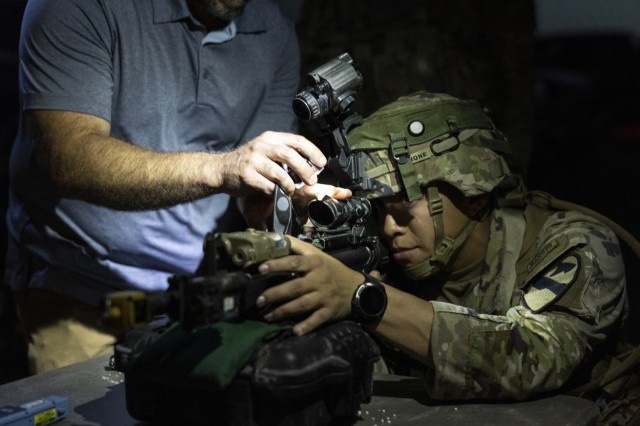
The Greenline Tactical team brings a plethora of experience stemming from the Law Enforcement, Military, and Night Vision technology sectors. For example, Don Edwards and Sam Houston have become subject matter experts (and leaders) in the Night Vision industry and have lent their expertise to help create a standardization for NVG “Night-fighting” and NVG use for LE Patrol/ SWAT operations. Additionally, Erik Vargas is a skilled precision instructor, a former U.S Army Ranger (Sniper), and a champion level competitive shooter (2X National Sniper champion). These are just a few examples of the multitude of expertise that Greenline Tactical brings to the Cobalt Kinetics team.

“As we build our company’s new path, we want to make sure that real world expertise is introduced into our R&D and QC processes. By adding the Greenline Tactical team to our pro-staff we are ensuring that our approach to introducing new products is not met with an echo chamber of approval. We need individuals that will pick apart our designs before they have even left the prototype phase. If the product is not ready, then we need to know ASAP. This will ensure that customers receive only the very best that we can possibly offer. We also hope to curve the trend of having celebrity names on a company’s roster solely to draw attention. Everyone on the Cobalt team is expected to roll up their sleeves and help with the unified goal of continuously refining the product.”

-Aaron Quinn (Owner/ CEO)

For more information on Cobalt Kinetics and their products go to www.CobaltKinetics.com

10th SFG(A) – Cold Weather Training Instructor Course

Sunday, February 6th, 2022

What does it mean to be a Winter Warfighting Expert?

Currently, 10th SFG(A) Green Berets are in a frozen wilderness mastering the aptitude to train, plan and facilitate cold-weather training at the battalion level to meet our specific arctic warfare mandate.

CWT encompasses backcountry mobility, avalanche awareness and preparedness, winter survival, snowmobile operations and advanced riding techniques and special operations small unit tactics on skis or snowmobiles.

Accordingly, the Cold Weather Training Instructor Course is designed to develop professional instructors to return to their unit as skilled teachers and leaders for their unit’s CWT events.