Archive for the ‘Training’ Category
SureFire Field Notes Ep 70: Driver Skills with Scott Brady
Thursday, June 9th, 2022Using VR Through VALOR to Improve Combat Casualty Care
Tuesday, June 7th, 2022HURLBURT FIELD, Fla. —
The 24th Special Operations Wing Surgeon General’s office has implemented the use of virtual reality training devices, in partnership with SimX, throughout special tactics to maintain the critical pararescueman’s skill in an ever-changing operational environment.
“The operational mission is going to continue to grow in complexity in the future fight,” said U.S. Air Force Col. John Dorsch, 24th SOW Surgeon General. “The PJs must be prepared to treat both injury and illness in austere environments for longer periods of time with limited reach-back.”
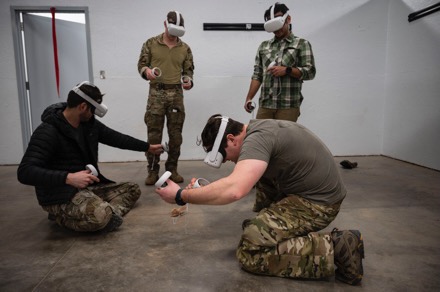
When looking at what the future operational environment may look like, the 24th SOW SG team must consider the implications to operational medicine. Scenarios PJs face could be in low-visibility areas where they have to keep patients alive for longer periods under possible chemical, biological, radiation or nuclear conditions.

“Preparing PJs medically for the future fight will require an advanced interoperable standard, optimized initial and sustainment training, deliberate tech development and integration, and enhanced performance tracking and feedback,” said Dorsch.
The virtual reality program objectives are to improve realism, increase flexibility and reduce cost. Through more than $10 million in Department of Defense Research and Development Funding and the Air Force Small Business Research Innovation Research program, SimX and the 24th SOW have been able to create more than 80 training scenarios including canine treatment and care, blast injuries, severe gas exposure, and more.
These training devices provide intricate and realistic training scenarios that other methods, such as medical dummies, cannot, and improves the effectiveness of the training.
“By using a flexible piece of equipment, we are able to deliberately and efficiently target specific desired learning objectives based on evolving mission requirements,” said Dorsch. “We now have the time and bandwidth to provide trainees with enhanced real-time feedback from the through the program, which grades the trainee on a point system through data analysis and a performance tracking system.”

Currently, there are 14 sites online using the PJ Tactical Combat Casualty Care curriculum, including Air Force Special Operations Command and Air Combat Command. In the future, they plan to expand access to the existing medical training portfolio across all SOF TCCC responder tiers, broaden capabilities and integrate partner force training.
“The VALOR program has increased the availability of efficient and effective medical training and has allowed us to develop complex decision-making, which will improve survival rates in U.S., coalition and partner force combat casualties in the future fight,” said Dorsch. “VR training is critical for ensuring that the highest level of combat trauma and austere medical care are provided by our special operations ground forces. We have only scratched the surface of its incredible potential.”
Story by Capt Savannah Stephens, 24 SOW Public Affairs
Photos by TSgt Carly Kavish
Rampart Range Day 22 – ChimeraXR
Wednesday, June 1st, 2022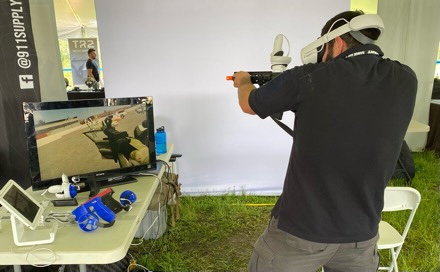
ChimeraXR demonstrated their VR training system. I originally met them about a year ago and they’ve stepped up their capabilities since then adding PC based training and Taser to the mix.
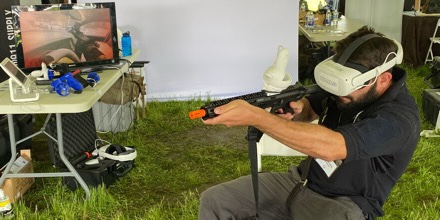
ChimeraXR products can be procured by agencies, departments, and units in Canada from Rampart International.
Rheinmetall Announces Its Canadian Partners and Reveals its Team Name for the LVCTS Project: FORC3
Tuesday, May 31st, 2022The partnership between Rheinmetall and Lockheed Martin in pursuit of the Canadian Army’s Land Vehicle Crew Training System (LVCTS) project has a new name—FORC3—and a lineup of Canadian suppliers to fulfill its mission.
First announced in June 2020, the strategic partnership led by Rheinmetall Canada includes Lockheed Martin Canada, Rheinmetall Electronics (Bremen, Germany), and Lockheed Martin Training and Logistics Solutions (Orlando, Florida). The agreement created an international alliance with unrivalled experience and expertise in the design, development, and implementation of world-class combat vehicle virtual simulation centres used by Canada’s most important allies.
Pietro Mazzei, Vice-president, Rheinmetall Canada, explains, “The name FORC3 is all about promoting a partnership between Rheinmetall, Lockheed Martin, and the Department of National Defence (DND), united through excellence to enable training for adaptive dispersed operations.”
Together with the leading Canadian defence, service, infrastructure, and simulation companies, FORC3 has secured the domestic capabilities to build and operate five state-of-the-art LVCTS simulation centres across the country. The Canadian team comprises Rheinmetall Canada (Saint-Jean-sur-Richelieu), Lockheed Martin Canada (Ottawa), the ADGA Group (Ottawa), Bluedrop Training and Simulation (Halifax), EllisDon Construction and Building Services (London), Paladin AI (Montreal), and REDspace Incorporated (Halifax).
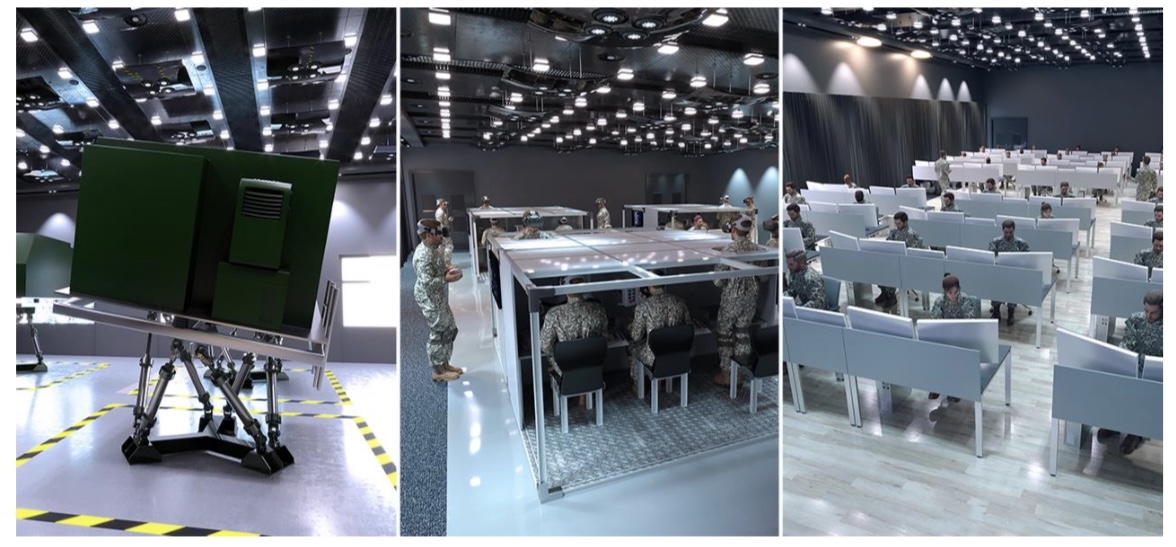
FORC3 will draw upon its partners’ global experience and cutting-edge technologies to fundamentally transform operational training for the Canadian Army. Each proposed simulation centre will create highly realistic synthetic environments that replicate the future land operating environment. Canadian forces will train as they will fight and where they will fight, encountering virtual adversaries posing a full range of hybrid, conventional, and emerging threats. Within these simulated operational scenarios, Canadian soldiers will have access to sophisticated analytical tools to exploit training to the fullest. The LVCTS will become a key enabler in training for adaptive dispersed operations, the Canadian Army’s capstone operating concept.
With FORC3’s team, the LVCTS program’s benefits will be felt across Canada. The project will bring modern technologies to the nation’s industries and create new and enduring high-quality jobs at the five simulation centres. As a member of the Canadian Council for Aboriginal Business (CCAB), Rheinmetall Canada is committed to including Aboriginal businesses in its supply chains for the project. Additionally, the LVCTS project offers significant environmental benefits as traditional field training makes way for simulated operations hosted in carbon-neutral buildings.
Says Mazzei, “FORC3 is about Canadian industries uniting with DND to effectively and comprehensively prepare the Army’s women and men for the challenges they will face in the coming decades.”
The five custom-built simulation centres will enable progressive training at the individual, crew, platoon, and higher echelon levels using high-fidelity trainers, medium-fidelity reconfigurable trainers and standard trainee workstations combined with a robust virtual environment and comprehensive instructional system.
Emerald Warrior 22.1 Concludes for AFSOC, Czech Special Forces
Tuesday, May 24th, 2022HURLBURT FIELD, Fla. —
Air Force Special Operations Command wrapped up its 15th Emerald Warrior exercise that provided realistic and relevant training to prepare special operations forces, conventional forces and international partners for conflict in an evolving, strategic environment.
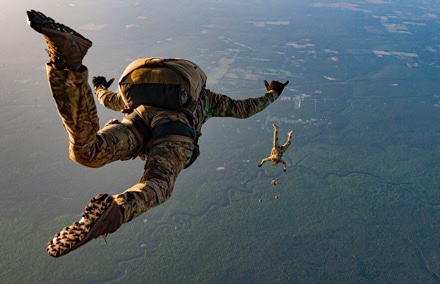
The EW 22.1 planning team applied lessons learned from real-world operations to train and ready forces to the joint force, while staying focused on security priorities laid out within the 2022 National Defense Strategy; specifically, pacing strategic competitors. Trained, credible forces and strong international partnerships are pivotal to this effort.
“In this year’s iteration, we improved our approach to command and control through the employment of the Special Operations Task Group and Special Operations Task Unit,” said U.S. Air Force Col. Kevin Koenig, exercise director of Emerald Warrior. “This dispersion of leadership allowed for real-time, on-the-ground decision making and allowed commanders to perform operations quickly and more efficiently. We exercised our agile combat employment capabilities and focused additional training on non-kinetic skillsets to include public affairs and information operations. With our partner nations and sister services, our goal is to continue to deter adversaries, now and in the future, in all domains.”
The objective for this year’s EW was to gain and maintain an advantage on the battlefield and in the information environment, and grow kinetic and non-kinetic effects above and below the threshold of armed conflict from strategic competitors.
This annual exercise is an opportunity to further test and improve future approaches to AFSOC units like the mission sustainment teams. These MSTs established forward-operating bases by providing initial site security, receiving cargo and personnel, and setting up shelter.
“It was very impressive how the 1st SOW and 27th SOW [from Cannon Air Force Base, New Mexico] capabilities came together in order to forward stage our contingency locations during this exercise,” said U.S. Air Force Lt. Col. Travis Deutman, commander of the Emerald Warrior SOTG. “As these capabilities continue to progress, it’ll definitely be something that’ll be useful within AFSOC.”
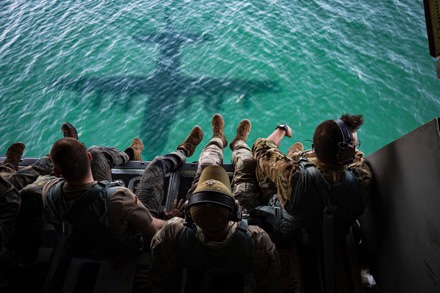
In line with AFSOC’s Strategic Guidance, the exercise fuels on-going innovation and experimentation efforts within the command.
“The most important idea to understand about Emerald Warrior is that as AFSOC implements force generation, we’re building new concepts; the two biggest concepts being the SOTG command team and our MSTs,” said U.S. Air Force Col. Michael Haack, deputy director of operations for AFSOC. “These concepts combine to enable the force to do agile combat employment in a contested environment. We increased our agility; we pushed our decision making forward to the lowest level. These teams are trained and enabled, and ready to fight the fight in the contested and uncontested environment.”
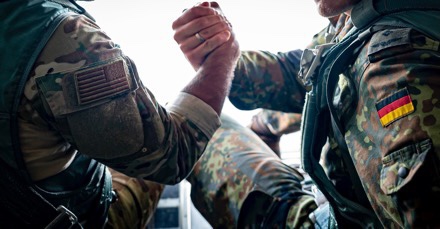
In addition to introducing new command and control structure, the exercise continued as a forum of collaboration between the U.S. and its international partners and allies. This year, AFSOC hosted partners from the Czech Republic.
“We look forward to working with our partner nations and coalition forces from across SOF,” said Haack. “Emerald Warrior allows us to problem solve in an exercise environment, establish communication and build enduring relationships. Those relationships with our Czech partners and fellow SOF coalition forces are critical so we’re not meeting them for the first time down range.”
By 2nd Lt Cassandra Saphore, Air Force Special Operations Command Public Affairs
Victory First RDS Law Enforcement Handgun Program Selected and Certified by the State of Maryland
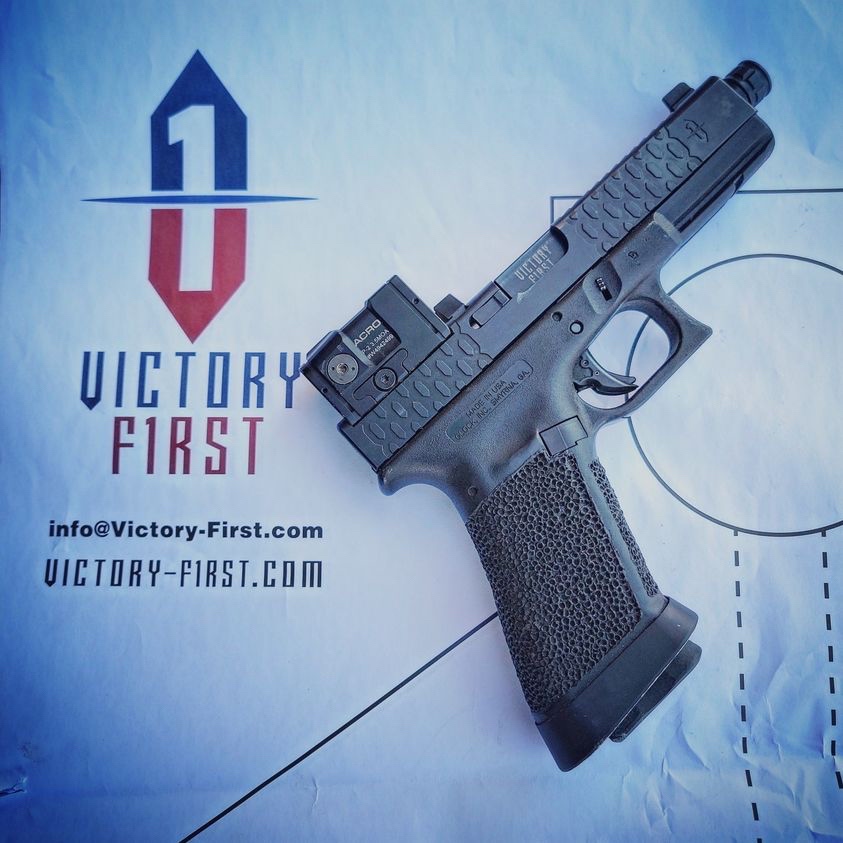
Monday, May 23rd, 2022The RDS (Red Dot Sight) Handgun for Law Enforcement program from Victory First was the first RDS course to be approved and selected by the Maryland Police and Correctional Training Commissions to be taught at their firearms training facility.
The Owner of Victory First, Matt Jacques is a retired Law Enforcement Officer from Virginia. Since his retirement, he has had over 15 years of RDS experience in firearms development and instruction specifically focused on the specialty of RDS handguns and Law Enforcement. As the Senior Manager of Assault Weapons employed by FN America, he was part of the development team for the Joint Combat Pistol (JCP) program which was eventually offered on the commercial market as the FNP45 Tactical. That was the first handgun with RDS mounting capabilities to be offered on the market from a manufacturer. He has conducted RDS transition programs for several Federal and major Law Enforcement agency teams and Firearms Training Units in the last decade since starting Victory First.
In 2019, Matt was contracted by VirTra, the advanced Law Enforcement firearms simulator company to develop and assist in launching the first simulator based RDS Transition program. Launched at Shot Show 2022, that program was the first of its kind and now allows VirTra customers to train in the simulators on RDS based training and sustainment programs.
“It is an honor to have been chosen to help get the Officers from the state of Maryland RDS implement their handgun training.” said Matt Jacques of Victory First. “This program was developed to help them make educated decisions on how to choose the gear that meets their requirements, but how to write the requirement, then conduct proper testing and procurement of that gear, then how to employ it correctly to keep themselves safe and protect their citizens with better equipment. The speed at which the RDS Handgun has been growing in acceptance within the Law Enforcement community is moving faster than anything I have witnessed in nearly 30 years of being a cop or involved with the training of this profession.”
Jamie Green, Rangemaster for the Department of Public Safety and Correctional Services Maryland Police and Correctional Training Commissions contacted Victory First about their program. “I was hearing from police agencies throughout the state and felt like there was quite a bit of interest in red dot sights for duty weapons. That being said, I also knew there would be a need for both regulation and different training protocols for their use. That’s when a work group was formed to research the sights and recommend changes to the existing Code of Maryland Regulations.”
The first class will be in July at the Maryland State Training Facility in Sykesville, Maryland and agencies can register for any of the classes on the Victory First website www.Victory-First.com.
If your department or agency would like to learn more about the RDS programs or other LE specific courses offered by Victory First, please contact Matt Jacques directly via email: Matt@Victory-First.com
Army’s Synthetic Training Environment Harnesses Evolving Mapping Technology
Thursday, May 19th, 2022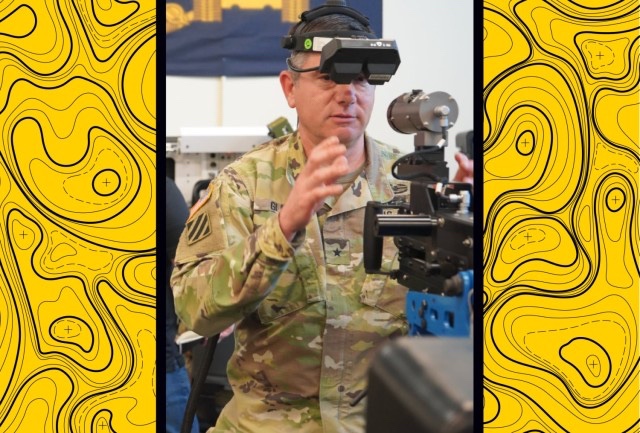
AUSTIN, Texas — Geospatial intelligence professionals gathered at the United States Geospatial Intelligence Foundation’s GEOINT 2022 Symposium in Aurora, Colorado, last month to discuss new efforts and achievements in the rapidly growing field.
Topics highlighted at the event included how technological advances have influenced the creation and use of maps, including within military and intelligence communities.
During an April 26 “What is a Map?” panel, guest speakers from the U.S. government and private industry explored how maps have evolved in recent years, what new types of information maps can communicate and why maps continue to be indispensable tools in everything from personal navigation to foreign policy development to warfighting.
“Maps and terrain and that data set is foundational to everything we do,” said Brig. Gen. William Glaser, director of the Army Futures Command Synthetic Training Environment, or STE, Cross-Functional Team.
Glaser and fellow panelists detailed how today’s dynamic, high-performance maps — which frequently utilize 3D imagery and are often informed by an amalgamation of artificial intelligence, fluid data inputs and precision sensors — can improve visibility and thereby increase a user’s understanding of a situation, along with options for action.
“Our relationship with a map now is not just passive,” said panelist Ed Parsons, geospatial technologist at Google. “We’re interacting with the map. The map is changing its contents depending upon what we’re doing, but we’re also sharing what we’re doing with the developers of that map.”
As a result, many of today’s maps are “elastic,” meaning that they can morph and adapt as conditions and user input fluctuate, Parsons explained.
It is this near real-time visibility that can provide Army map users with distinct tactical advantages.
“The ability to visualize the terrain in 3D is absolutely critical for commanders and Soldiers to understand the operational environment,” Glaser said.
He noted that one of the Army’s core STE efforts, One World Terrain, provides a singular synthetic format for use in multiple scenarios. Viewable in “everything from goggles to laptops to PCs,” the 3D terrain data set is helping to more closely link operational and training activities, thereby enhancing overall readiness.
The Army is also developing the STE Information System, a virtual training suite, and equipment such as the Squad Immersive Virtual Trainer, a mixed-reality tool that utilizes a heads-up display.
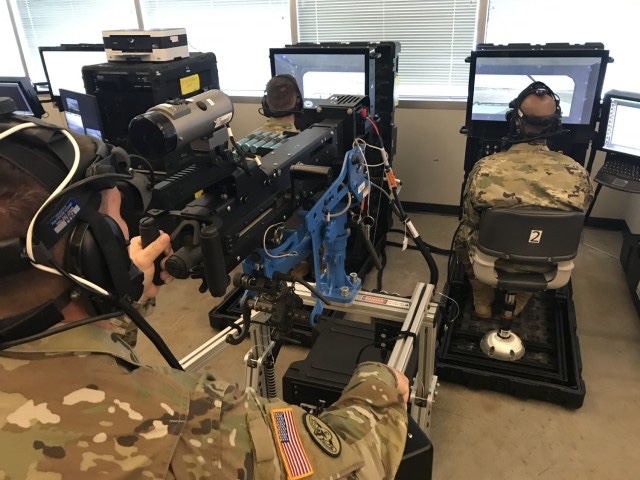
The ongoing development of a synthetic training platform enabled by advanced mapping technology is groundbreaking because it means the Army “can fight a thousand bloodless battles before we ever put a Soldier into harm’s way,” Glaser said.
The multi-faceted nature of digital maps extends across sectors, of course, and often translates to many users having access to — but also influence on — collective maps.
“Maps are probably more widely used now than at any point in our history,” Parsons said.
This expanded use of maps has also increased demand for functionality and format.
“Cartography is an art, not just a science,” said Dr. Lee Schwartz, director of the Office of the Geographer and Global Issues at the State Department’s Bureau of Intelligence and Research. “Maps need to be visually compelling as well as providing a lot of information.”
Ensuring map development is participatory, such as by involving the contributions of individuals who live in areas being mapped, is also an important consideration in modern map development.
“You have to include the human element always,” Schwartz said.
Moreover, the way maps are used to make decisions means the information they contain needs to be secure and valid. While this is an area for further growth, in many cases, accuracy is attained simply through critical mass.
“The maps are now sort of self-healing; by using the maps, you’re contributing to the content,” Parsons said.
Dr. Daniela Moody, vice president of artificial intelligence at Arturo, also highlighted the storytelling nature of maps, which are increasingly moving beyond instructing the user how to get somewhere to informing the user why to go somewhere.
“This is no longer a static environment,” Moody said. “Maps are becoming the way to tell a story, the way to make that quick decision.”
Glaser emphasized that while digital maps are ushering in transformational capabilities, traditional paper maps are still necessary, particularly for maneuvering in degraded environments. As such, the Army will continue to promote analog map reading skills and compass navigation fluency even as it implements more interactive mapping systems.
“Every Army officer who’s worth his weight in salt loves maps,” Glaser said.
“It’s that one thing that’s going to lead his Soldiers to victory safely.”
You can watch a video of the presentation here.
By Maureena Thompson, Army Futures Command
Special Operations Command Europe Kicks Off Trojan Footprint 22 With Participants From More Than 30 Nations
Saturday, May 7th, 2022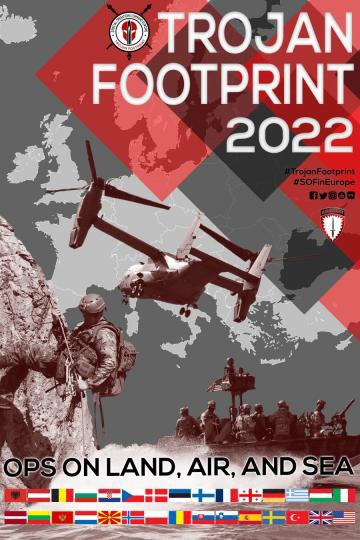
STUTTGART, Germany – Trojan Footprint (TFP) 22 is set to begin May 2 and conclude May 13, with U.S. Special Operations Forces (SOF) proactively working and training together with NATO allies and European partners across Southeastern Europe, the Baltics and the Black Sea Region to demonstrate their collective military readiness to deploy and respond to any crisis that may arise.
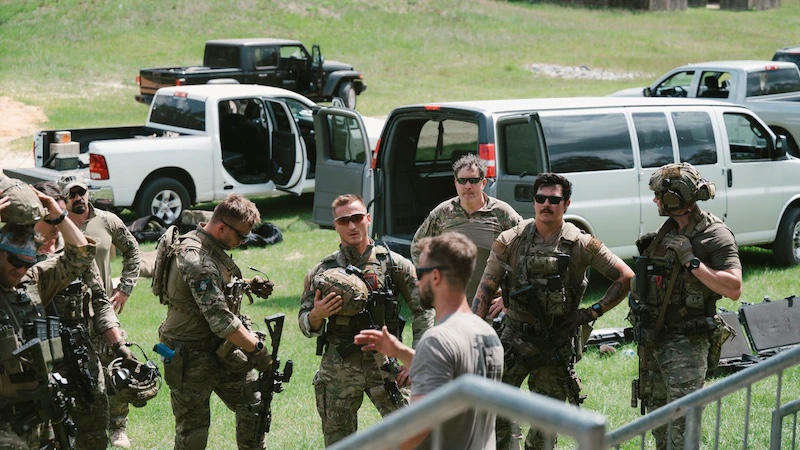
This year’s TFP includes more than 3,300 participants from 30 nations, doubling in size from the previous year and making it the largest SOCEUR exercise to date. Land, air, and sea operations for Trojan Footprint 22 will occur across Bulgaria, Croatia, Estonia, Germany, Greece, Hungary, Latvia, Lithuania, Montenegro, North Macedonia, Poland, Romania, Slovakia, and Slovenia.
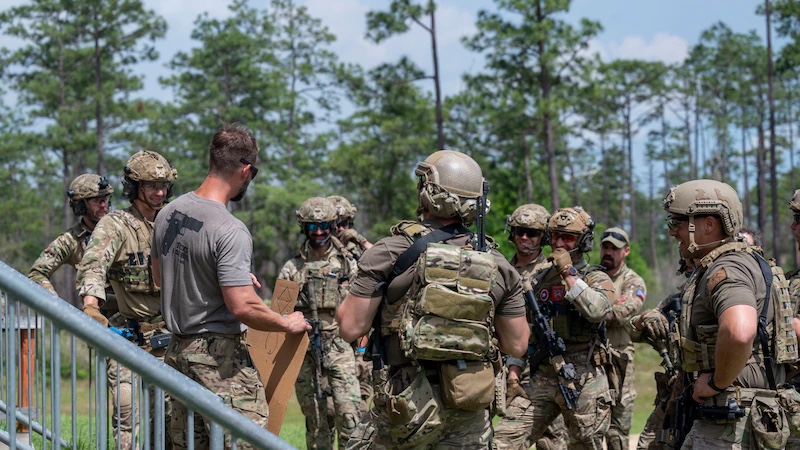
“One of our priorities is building resilience against adversary efforts to undermine democratic processes and values,” said Maj. Gen. David H. Tabor, Commander of Special Operations Command Europe. “This joint, combined training in Europe will continue to build and strengthen those relationships with our allies and partners, establishing a common sight-picture for combat and peacekeeping missions abroad.”
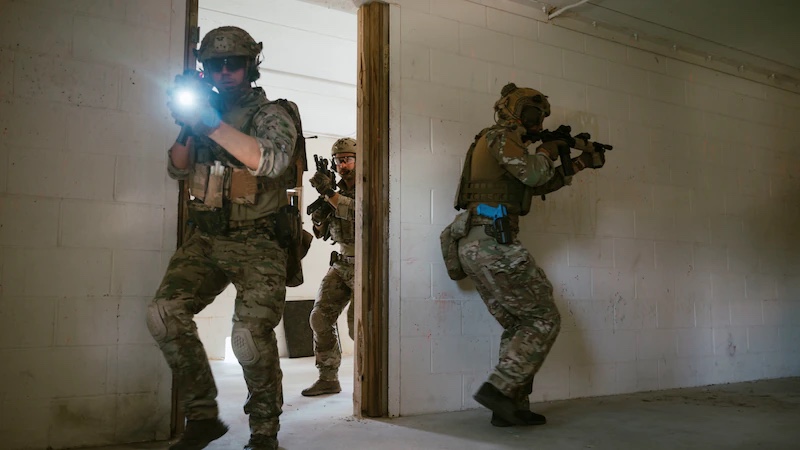
Trojan Footprint 22 is the premier exercise of U.S. Special Operations Command Europe (SOCEUR) and the primary SOF certification event to assess the readiness and ability of SOF to counter threats. It continues to demonstrate transatlantic solidarity and the security commitments of the participating nations to defense along NATO’s eastern flank.
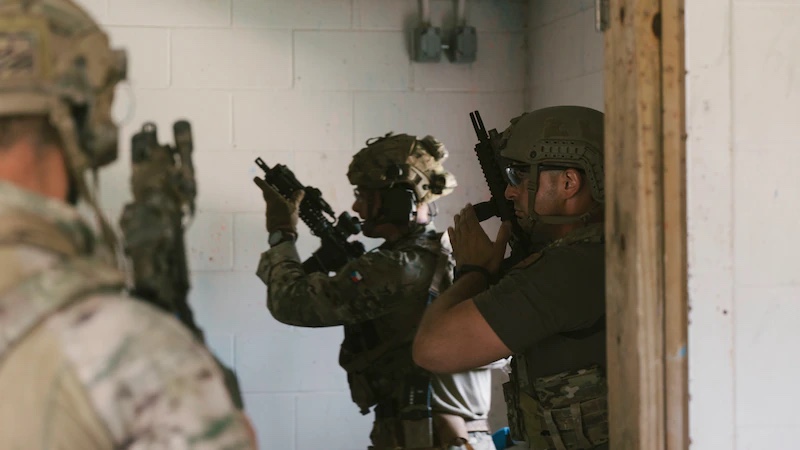
The two-week exercise also increases integration with conventional forces and will highlight the professional skillsets of land, air, and sea units to respond to hybrid threats through discreet theatre entry and exit. As an exercise in coalition building, TFP 22 is focused on cultivating trust and developing lasting relationships that will promote peace and stability throughout Europe.
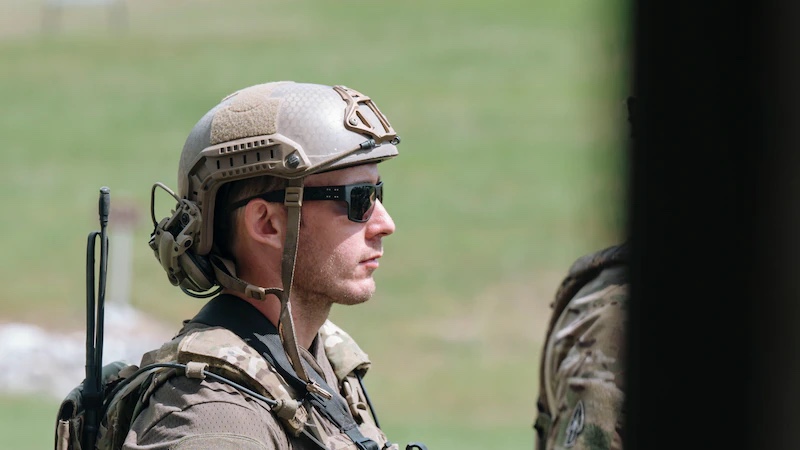
“Special Operations Forces remain a pillar of international defense, and close coordination between SOF and conventional forces acts as a force multiplier, leveraging the discreet capabilities of SOF to enhance lethality and dominance on the battlefield,” Tabor said. “SOF elements add capabilities, technology, and strength to conventional forces throughout Europe.”
Story by PFC Kirsti Brooksby, U.S. Special Operations Command Europe
Photos by Airman 1st Class Rachel VanZale