Phantom Lights

Archive for the ‘Training’ Category

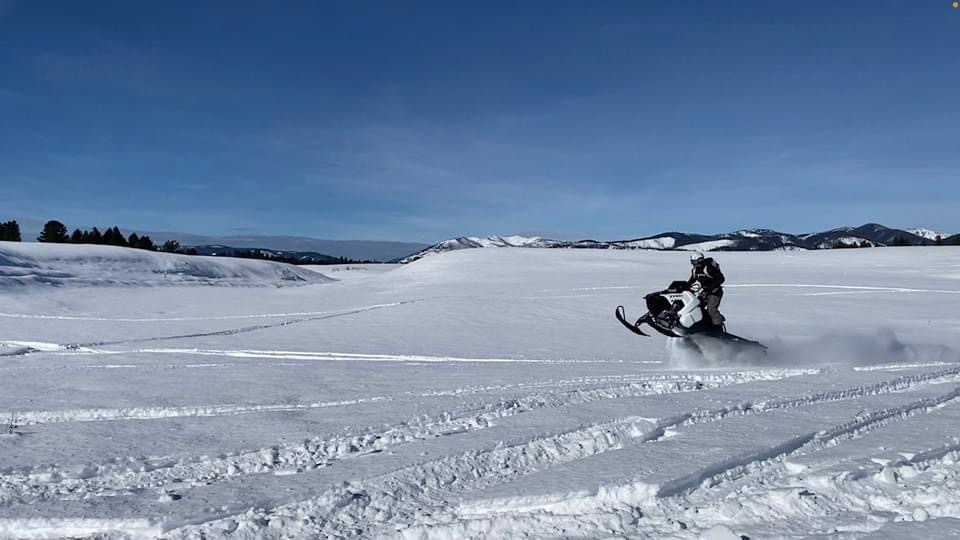
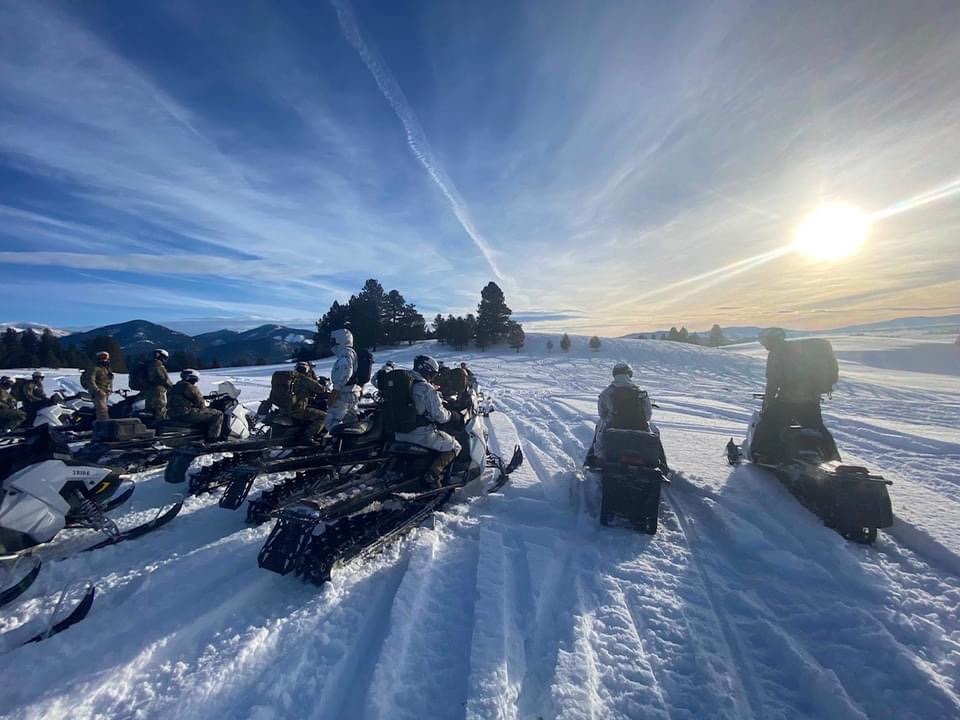
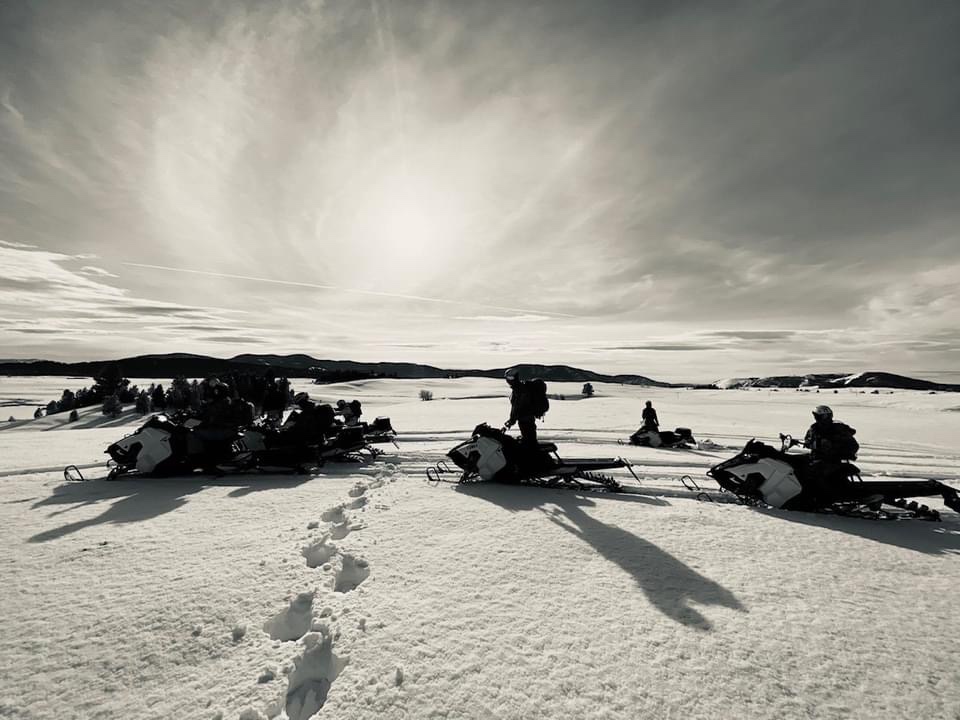
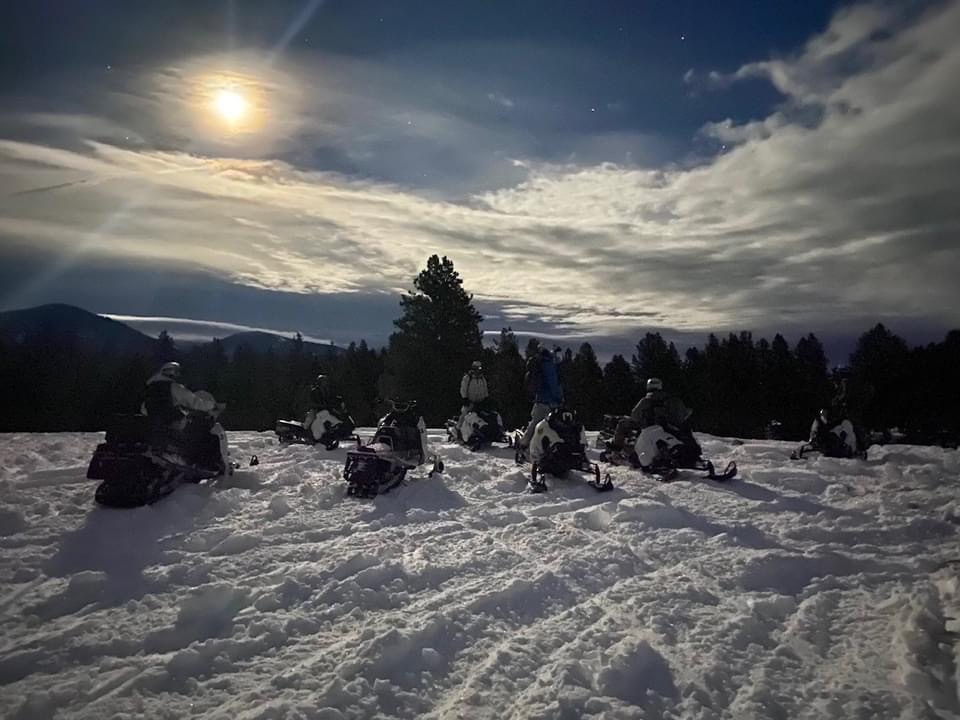
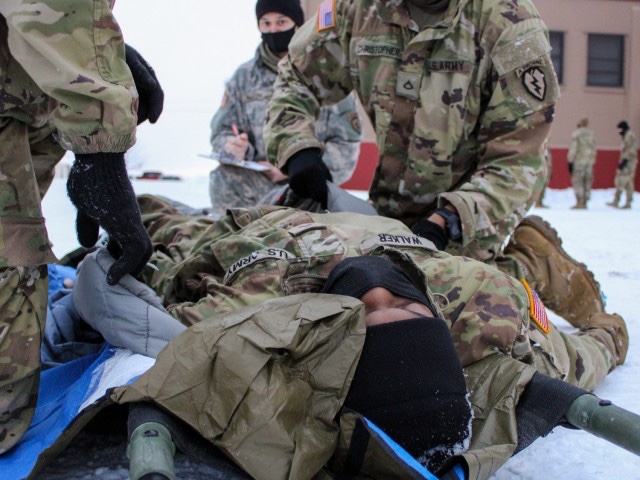
Northern Warfare Training Center Preparing Soldiers to Become Arctic Experts

Tuesday, December 7th, 2021

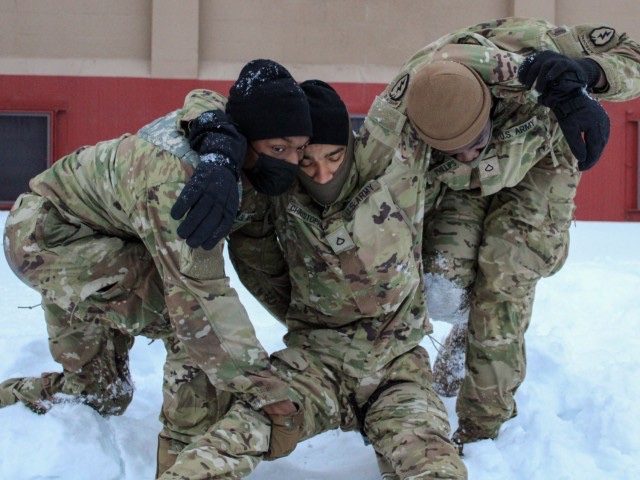
BLACK RAPIDS TRAINING AREA, Alaska — This past March the Army released its Arctic Strategy which plans to regain Arctic dominance by implementing improvements to increase readiness in the Arctic. One of the keys to that readiness is the Northern Warfare Training Center.

NWTC is where Soldiers go to learn what it takes to not only survive in up to 40 degrees below zero temperatures, operate in four to five feet of snow and endure winds up to 50 to 60 mph, but also how to succeed and thrive to become experts in the Arctic environment.

“An Arctic Expert would be someone, whoever that might be, infantry, armor or artillery in extreme cold weather and make their equipment function as expected and not letting the environment stopping them from finishing the mission,” said Steven Decker, longtime civilian instructor for the Northern Warfare Training Center, also known as “Father Winter” to others at NWTC.



Those trained at the school go back to their units and pass along the lessons learned to enable their Soldiers to survive in the cold environments of Alaska.

“We want noncommissioned officers that have just been stationed up here, we have them go through our train-the-trainer course. We also want squad lead leaders and fire team leaders because they’re the ones who actually train Soldiers,” one instructor said.

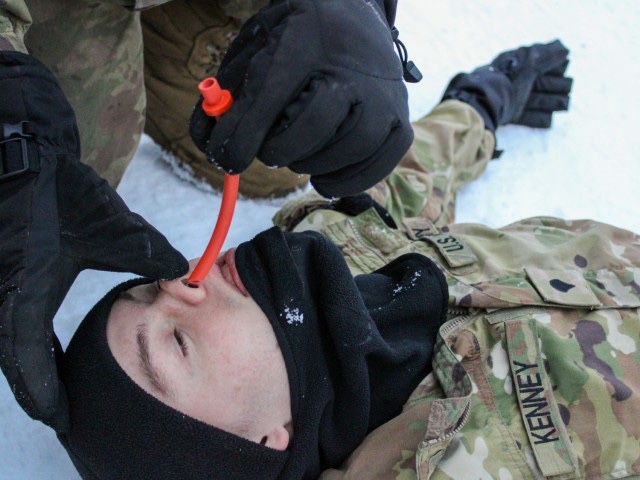
The Cold Weather Leaders Course is an 11-day course, with a field exercise that spans six days out in the cold, which pushes Soldiers to extremes they may have never gone through.

“Sometimes they think they’ll do better in the cold than they do. A lot of them learn hard lessons about themselves. Other people learn positive things, like they’re more resilient and tougher than they believed,” said Decker.

The school also makes it possible for Soldiers to become more resilient to the winter months and can improve the quality of life for them.


“Sometimes new people come here, and they’re intimidated or have preconceived notions about the cold, that Alaska doesn’t have the amenities that they are used to in the Lower 48, so this training can open their eyes to something that they may not have experienced before. To where they can take these skills and hike trails, go snow machining, skiing or ice fishing and be less intimidated, more inclined to get out and enjoy Alaska,” Decker said.

The Training Center also assist Army Futures Command in testing and equipping new Arctic Equipment for Soldiers to improve their ability to operate in the Arctic.

“[Army Futures Command] does count our opinion heavily because we are out there constantly, like the clothing we’re testing, there are technological and functional improvements to it, we also have influence on other things like the vehicle that will replace the Small Unit Support Vehicle,” according to Decker.

Teaching how to thrive in the Arctic, improving quality of life by exposing people to what they can do and preparing for the future are how the Northern Warfare Training Center is helping the Army increase our “deterrence capabilities” and regain the Army’s Arctic dominance.

By SGT Christopher Dennis, USARAK Public Affairs NCO

‘Talk to me, Airman’: Minnesota Reservists Learn to Shoot, Move, Communicate

Monday, December 6th, 2021

MINNEAPOLIS-ST. PAUL INTERNATIONAL AIRPORT AIR RESERVE STATION, Minn. —  

Two rounds to the chest and one round to the head.

934th Aeromedical Staging Squadron Airmen engaged their targets using this shooting method while working in two-person teams with M4 carbines at the new Shoot, Move and Communicate course at Minneapolis-St. Paul International Airport Air Reserve Station, Minnesota, in October.

This close-quarter shooting method is called the Failure Drill. This technique isn’t a critique of a shooter’s performance or a countermeasure to succumb from a weapons malfunction. Instead, it is more of a failure on the engaging target’s ability to return fire after receiving two rounds to the chest and one round to the head. Furthermore, adversaries are now wearing body armor. Therefore, the final round is needed to permanently neutralize the danger.    

Tech. Sgt. Charles Foster, 934th ASTS section chief of medical records, was invited to run through the new course with other ASTS Airmen. The lane structure and design were a complete mystery to him. “From word of mouth, what they had set-up here, I knew that it was out in the woods and they had a bunch of different targets with contact areas.” After going through the course five times, Foster said, “I didn’t know they had this amazing of a set-up.”

The 934th Security Forces Squadron spent most of the year building this course and making needed improvements to provide a viable training opportunity for Airmen. Before the SMC course was built, the area was a dense tree wood line with a lot of deadfalls. 934th SFS members used the base overlay to determine where the property started and ended before committing to this project. 

Preceding the new course, Defenders used to maneuver between multiple 4 x 8 sheets of plywood to engage one target on a service road. The overall intensity of this course was limited due to its scale, aesthetics and allure. The SFS Defenders worked with what they had to conduct training; however, they wanted an attractive, resilient and motivating course. What they needed was an extreme course makeover, and they needed it right away. 

“This whole plan fell on that cliché: design on a dime. Everything here was either from the forest naturally or donated wood from the Marines, Navy or actually from a stockpile here from pallets and things,” said Master Sgt. Kory Soderquist, 934th SFS chief of training.

Soderquist and a group of SFS Airmen and civilians volunteered to be the project managers and architects of the new course. The first thing that had to go was the flat single straight-lined lane. The new course would curve and have an upper and lower path for more Airmen to go through. Instead of engaging one single target, Airmen now have 56. Some targets were placed in plain view and others were camouflaged in a dense thicket. This forced Airmen to quickly scan their lane and rapidly react. To provide a sense of realism in an austere environment, the SMC was placed in a densely forested area. As a result, teams can’t see the course before they begin.  

“My Defenders basically took a hopscotch board and added a roller coaster to it,” said Lt. Col. Charles Trovarello, 934th SFS commander. “I was incredibly impressed with how they utilized the space because when you first looked at it, you think you can’t possible do anything more from what we already had set up.” 

“It is definitely one of those places we want to showcase because it’s so new,” said Soderquist. “It’s also really functional, easy to go through and easy to clean up. Basically, it’s zero maintenance when you have it up and running. You can run about 170 Airmen through it. It seems flawless and we have all the safety hazards out of the way. We haven’t had a single hang-up. It’s been good.” #ReserveReady

By Chris Farley

(Farley is assigned to the 934th Airlift Wing public affairs office.)

Strikeman Pro Releases Most Advanced Dry-Fire Training In World for Everyday Consumers

Sunday, December 5th, 2021

Strikeman Pro, the most advanced dry-fire target practice on the market for everyday consumers, released its breakthrough gaming software today featuring a rapid-fire, multi-target new training system. 

Strikeman Pro introduces the latest innovative firearm technology with the capacity to fire at several targets in real time, instead of the conventional single shot,  and to quickly improve reaction time and accuracy – all without the need for expensive, live ammunition.

“What sets Strikeman Pro apart from the other competitors is our new patented technology that allows the Smartphone app, laser cartridge and customized target panel to feature four gaming modules, with different target challenges emerging one after the other, in quick succession,” said Scott Hutchison, CEO of Strikeman.

“This all-new Strikeman Pro is a first-in-class product that allows you to shoot at several targets in a single training session, while enhancing your aim and training your trigger reflex to react with  precision and speed before firing on a field of twelve distinct targets from nine different templates.”

Available on the Apple Store and Google Play store, the Strikeman Pro Smartphone app records laser strikes from the Strikeman laser bullet on the Strikeman target, while competing online with friends, keeping track of training improvement, and setting improvement goals to achieve new personal best performances.

The Metrics section records detailed analysis on skill improvement in different app settings such as holster unload, re-load and fire, turnaround and fire, and call out rapid fire. Strikeman Pro offers a variety of shooting scenarios that challenges critical appraisal skills on a 12-point target sheet.

Law enforcement, the military, wildlife hunters, and recreational sharpshooters, including women, have used dry-fire training systems for years, but the new Strikeman Pro training system takes that training to a whole new standard, and replaces the need to travel to a shooting range, using expensive, live ammunition. Instead, Strikeman Pro offers the convenience of at-home dry-fire training with an endless variety of target challenges and  easy-to-use, practical affordability.

“The Strikeman Pro system is safe, soundless, and suitable for people of all ages to use in the comfort of their homes or any setting of their choosing,” added Hutchison. “Our customers are showing steady improvement within days of practice through live feedback from the app, and accuracy metrics that record and graph progress in every session. Beating your personal best is a daily occurrence with Strikeman Pro.”  

The Strikeman Pro system is available for sale in American markets in December 2021, and in Canada, Australia, Europe, and the UK in February 2022.

See Strikeman Pro videos here.

www.strikeman.io

New Range Simulates Combat Stress, Tests Precision, Speed

Friday, December 3rd, 2021

FORT CAMPBELL, Ky. — During Operation Lethal Eagle I, the 101st Airborne Division (Air Assault) assessed and validated a new stress shoot range by conducting the first iteration Nov. 18.

“I think this range is going to help dramatically,” said Sgt. David Lee, a team leader from Charlie Company, 1st Battalion, 187th Infantry, 3rd Brigade Combat Team. “There are strength and cardio elements with the stress of shooting and for me coming from the Army where we do static ranges all day to a move, shoot, move and communicate environment I think will really help the division out.”

There are eight engagements on the range to put 101st Soldiers to the test.

The tower engagement where each Soldier engages targets from three different heights ranging from 175 meters prone, 75 meters kneeling and 75 meters standing. At the base of the tower the Soldier picks up a battering ram and runs to the next station.

The breach engagement is where the Soldier breaches the door with the battering ram and engages three 50-meter targets with two rounds from a window in the building.

Next, the Soldier must drag a litter to a Humvee, taking cover behind the vehicle while engaging three 50-meter targets. After the targets have been engaged, the Soldier must pick up and carry two sandbags to the next location.

At the next location, the Soldier climbs the ladder to the rooftop and uses a barrier as cover to engage three more 50-meter targets. The Soldier then climbs down the ladder and secure two ammo cans to carry to the next position.

The Soldier must then drop the ammo can to maneuver over the top of the climbing wall to secure two water cans the he or she must carry to the bunkers from where he or she will engage the next three 50-meter targets.

For the eighth and final engagement, the Soldier moves to a location where he or she loads a magazine and engages with two rounds while walking toward the target.

“If you’re not in shape for one, get into shape and be the leader Soldiers want to follow,” Lee said. “Based on my interest in shooting I have participated in multiple three-gun competitions, so this is something that is familiar to me, but it helps set the example for the Soldiers as well.”

The stress shoot range is designed to make Soldiers and units in the 101st Abn. Div. more lethal and prepared for future combat.

“This is what we are going to expect our Soldiers to do in combat, varied terrain, heart rate up, stressed out,” said Maj. Gen. JP McGee, commanding general of the 101st Abn. Div. and Fort Campbell. “If you want to talk about increasing lethality and making it super easy for our Soldiers to get out there and work on it, this is it right here.”

This range is open to all units on Fort Campbell and its focus is to prepare the Soldiers in all units to react to enemy contact with precision and speed despite the stresses of combat.

– SFC Jacob Connor

New Army Range Pubs

Thursday, December 2nd, 2021

Here are some new Army publications regarding range ops available from Army Publications Directorate:

TC 25-8, 11/2/2021, Training Ranges

ATP 5-19, 11/9/2021, Risk Management

ATP 4-35.1, 11/8/2021, Ammunition and Explosives Handler Safety Techniques

VSS and Centre Firearms Co Team-Up to Provide IED Familiarization Training

Thursday, December 2nd, 2021

A three-day familiarization-level course which teaches the basic knowledge needed to identify possible Improvised Explosive Device (IED) threat situations and the skills to address the threat safely and effectively.  Topics covered in the course:

• History, overview, and evolution of explosives

• Detection, identification, and sample variations

• Awareness and countermeasure tactics

This course presented by a top-level subject matter expert with relevant operational experience spanning from the 1970’s until 2013.

2022 courses: January 14-16, April 11-13, July 25-27, October 3-5
Location: Henderson, NV
Minimum students: 5

*Restricted to US Government Agencies, DoD & qualified Law Enforcement officers

For more information visit www.centresupport.com/ied-familiarization

www.vig-sec.com


Infinadeck Experience Platform

Wednesday, November 24th, 2021

I first saw Infinadeck at Warrior West over the summer where I only hit a few minutes to discuss the possibilities. Fortunately, it was also at Warrior East and I was even more impressed. Having some limited experience with Virtual Reality training systems, one of the limitations is that you eventually run out of space and into a wall or other obstacle. But Infinadeck alleviates this problem via their omnidirectional treadmill which provides an infinite walking surface. The Infinadeck Experience Platform is a 360-degree floor that allows for true and natural movement in VR without the introduction of VR motion sickness. Users can walk, jog or run as they do on solid ground for as long as they need to train.

Unlike other systems which offer “infinity” training, there are no harnesses, shoes or other contraptions with Infinadeck. Instead, an active wireless control system reacts to movements.

Multiple systems can be networked for collective training.

Units and agencies can purchase the Infinadeck Experience Platform from ADS Inc.

NY Guard Uses NYC to Understand Urban Operations

Monday, November 22nd, 2021

NEW YORK — New York Army National Guard officers and senior sergeants used New York City to explore the challenges of military operations in big cities during a five-day class that ended Nov. 6.

The 18 officers and senior noncommissioned officers walked through the city’s neighborhoods, flew over them and toured the waterfront to gain an appreciation of the complexity of urban warfare. They also learned from New York City officials who deal with those urban challenges every day.

“This class was critical in terms of bridging a knowledge gap between military operations and working with our civilian counterparts,” said Lt. Col. Jason Secrest, commander of the 2nd Squadron, 101st Cavalry Regiment.

“The course was helpful for whether we’re involved in large-scale combat operations or if tasked with stability operations, like humanitarian assistance disaster relief at home,” Secrest said.

The New York National Guard is hoping to create a two-week Dense Urban Leaders Operation Course — DULOC for short — that would draw officers and NCOs from across the Army to New York City to get a first-hand look at the challenges of combat operations surrounded by high-rise buildings, tight city streets and hundreds of thousands of civilians.

“Here, in New York City, we were able to learn from our civilian counterparts about how these megacities and trends of urbanization affect operations, planning and troop movement,” said Lt. Col. Matthias Greene, commander of the 3rd Battalion, 142nd Assault Helicopter Battalion.

Some things Greene said he had to consider during the course were the complexities of the airspace, dense buildings, and population bases, all of which affect aviation operations.

Lt. Col. Brian Higgins, the class leader and a New York City Police Department detective, spent two and a half years on active duty as the officer-in-charge of the Dense Urban Terrain Detachment of the Army’s Asymmetric Warfare Group at Fort Meade, Maryland.

His job there, Higgins said, was to take the expertise he’d honed as a cop in one of the world’s densest cities — New York City’s population is 8.2 million and the metro area population is 20.3 million — and help the Army figure out how to fight in those places.

“The problem has to do with globalization trends,” Higgins explained. “The world is becoming more populated. The majority of people are living in cities for a variety of reasons.”

These cities include very tall buildings and subterranean geography of subways and service tunnels and are incredibly interconnected, Higgins said.

The Army’s traditional approach to cities in the past was to bypass them, isolate them, and avoid getting bogged down in a punishing fight, Higgins said. That may have worked when cities were smaller and more compact, he said. But with the rise of the megacity — those with populations of more than 10 million — it doesn’t work anymore. The city is too big to go around.

There’s nothing new about Soldiers using New York for exercises, Higgins said. Military teams continually visit to learn about cities.

Task Force 46, a National Guard team designed to react to chemical, nuclear, and biological attacks, trained there in August. The New York National Guard trains with the police and fire department regularly, focusing on civil support operations.

Lt. Col. Dan Colomb, commander of the 24th Weapons of Mass Destruction Civil Support Team (CST) based out of Fort Hamilton in Brooklyn, volunteered to participate in the course with his deputy commander and operations officer to offer their expertise in urban operations but to also take new concepts back to their team.

“Every day we work in New York City and the metro area,” said Colomb. “We’re those sensors that are out in the environment and these streets every day, so I’d like to take some of these methodologies, apply them and see if they work better,” he said.

The course focused on getting Soldiers in command and key staff positions, who all have different specialties, to understand how a big city works and how that can affect military operations.

The Soldiers walked through downtown Manhattan, where the streets are narrow and irregular, explored Harlem, where the streets are in a grid, and visited the world-famous subway system.

Secrest said it was the first time in his 22 years in the National Guard that he’d been part of a military course tailored to urban operations.

“We talk about liaison operations with other state and city agencies, but this is the first time we’ve sat down and say, ‘OK, how do we operate in an urban environment?’ ” Secrest said.

Instructors included experts from the Modern War Institute at the U.S. Military Academy and the National Center of Urban Operations, a think-tank that focuses on military operations in megacities. New York City fire officials, transit staff and emergency managers also took part.

Greene noted the collaboration of the course with civilian counterparts as well as having the opportunity to walk the terrain were critical.

“There’s practical knowledge by going onto the grounds, having subject matter experts, and collaborating with classmates who offer perspectives in their areas of expertise as well,” Greene said. “Learning from the perspective of our civilian counterparts is important because we’re able to gauge what they have to offer, what their limitations are, and how we can integrate ourselves into the solution.”

Every morning the class heard from the subject matter experts on military doctrine, military estimates and the “Five Is” of city fighting — infrastructure, interoperability, information operations, interagency, intensity. In the afternoons, they went out and looked around as part of terrain walks.

Higgins and New York National Guard leaders would like to create a two-week course exploring urban operations in more detail. But the week-long class was an excellent start, Higgins said.

Story by By Eric Durr and SPC Marla Ogden, New York National Guard