Phantom Lights

Archive for the ‘Training’ Category

Sky Soldiers Use BeaverFit’s 20’ Performance Lockers

Friday, March 20th, 2020

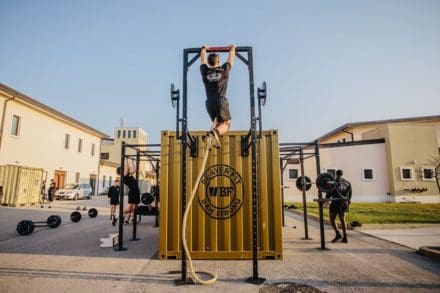
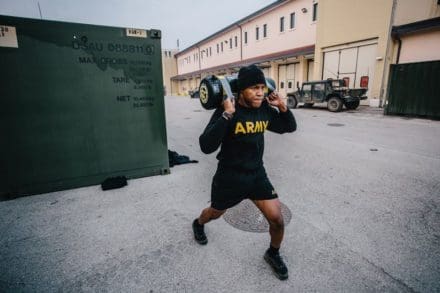
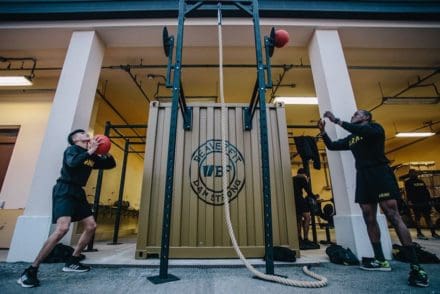
Gyms have been closed, but members of the 173rd Airborne Brigade are staying fit thanks to their BeaverFit 20′ Performance Lockers. The locker is a portable, versatile gym that is completely housed within a TRICON.

When using the BeaverFit, a dynamic variety of equipment can be unloaded and set up to create an immersive workout environment.

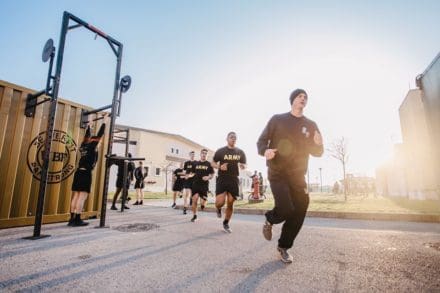
“I’m a big fan of working out outside,” said 1st Lt. Russ Parsons. “Once it starts to get warmer [and] you can come outside, the BeaverFit is perfect.”

The big focus right now is getting an H2F or Army Performance Locker down to each company across the Army. Units in the 4th, 82nd and 101st Divisions are using H2F or Army Performance Lockers.

BeaverFit can provide assistance with:
1. Human Performance Facilities (H2F)
2. Obstacle Courses and Punishers
3. Performance Lockers
4. ACFT Solutions (storage, fields, human performance SunPro or BeaverDome variant)
5. Rigs and Racks
6. Special Operations Equipment (Towers, Range Lockers, MOUT facilities)

Visit www.beaverfit.com.

Photos of the U.S. Army Europe U.S. European Command (EUCOM) 7th Army Training Command U.S. Army Garrison Italy & U.S. Army 173rd Brigade Support Battalion 2-503rd Airborne Infantry Regiment “The Rock” are by SPC Ryan Lucas.

Ruck March Keeps Airmen Mission Ready

Monday, March 16th, 2020

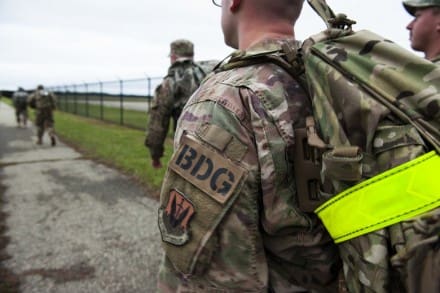
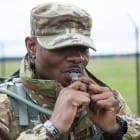
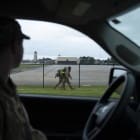
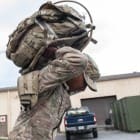
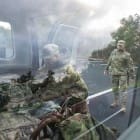
Airmen assigned to the 820th Base Defense Group perform a ruck march Feb. 21, 2020, at Moody Air Force Base, Georgia. Members of the 105th Base Defense Squadron from Stewart Air National Guard Base, New York, and 820th BDG participate in a ruck march as part of the Initial Qualification Training for Base Defense Group Airmen to ensure readiness in a deployed environment. Ruck marches allow Airmen to understand the feeling of carrying mission essential items to better pace themselves and stay fit.

(US Air Force photos by A1C Elijah M. Dority)

10th Special Forces Group (Airborne) Cold Weather Training

Sunday, March 8th, 2020

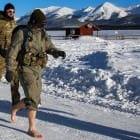
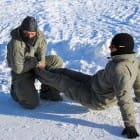
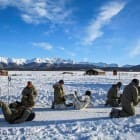
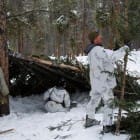
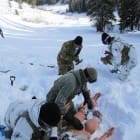
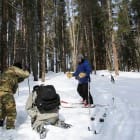
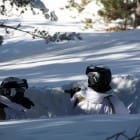
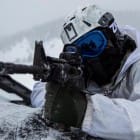
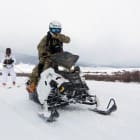
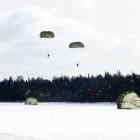
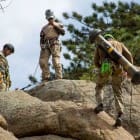
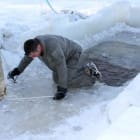
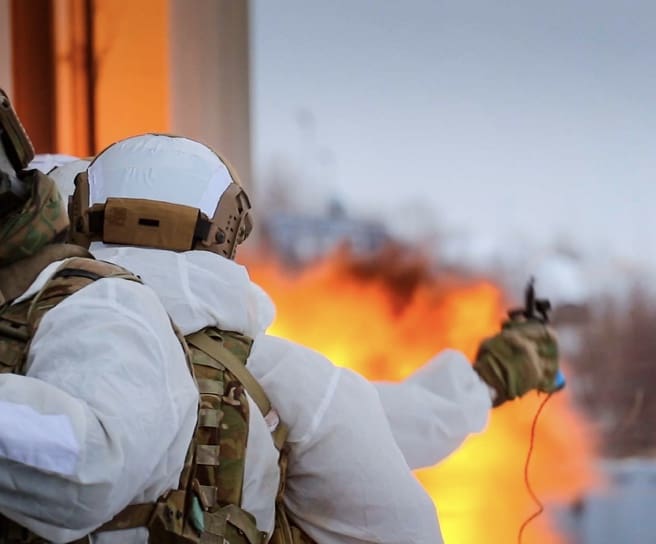
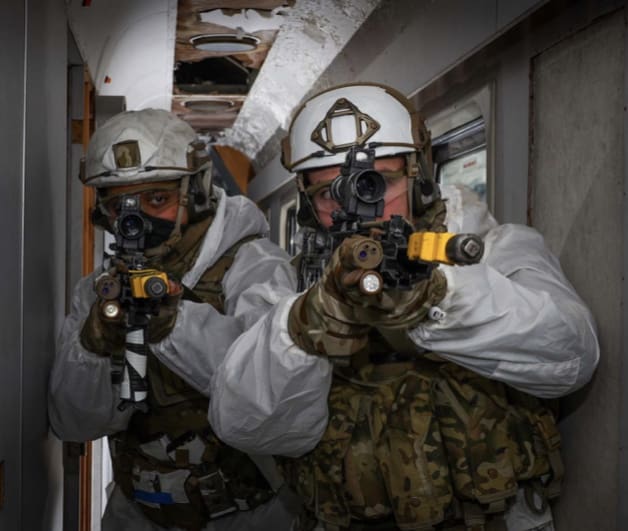
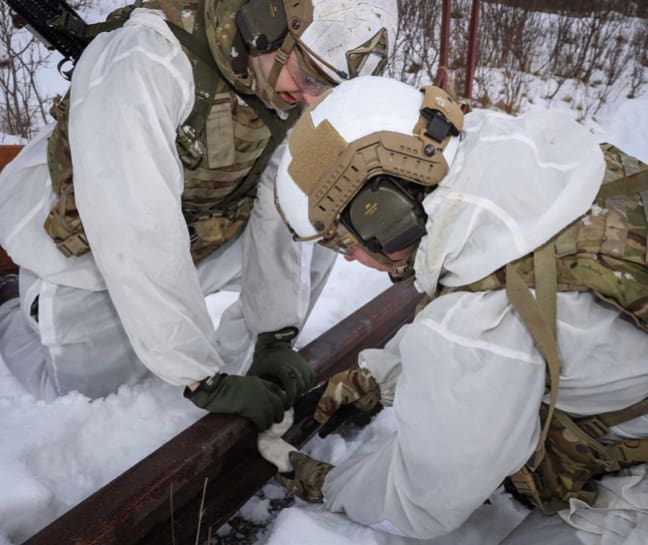
Over the course of this winter, “The Originals” of 10th SFG(A) have conducted a wide variety of cold weather and mountaineering training both at their home base of Ft Carson, CO and in at various locations in Europe.

USAF Rescue Squadron Athletic Trainer Rehabilitates Airmen

Thursday, March 5th, 2020

MOODY AIR FORCE BASE, Ga. —

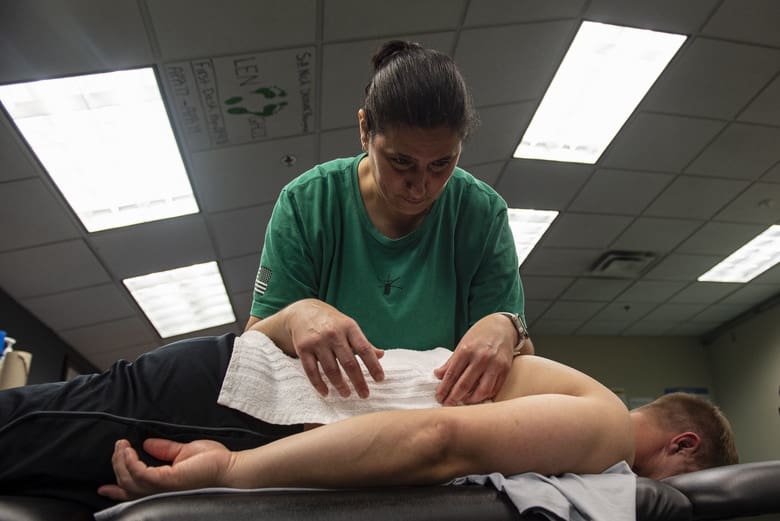
The 41st Rescue Squadron executes a physically demanding mission of personnel recovery, in doing so, rescue members require a recovery of their own.  

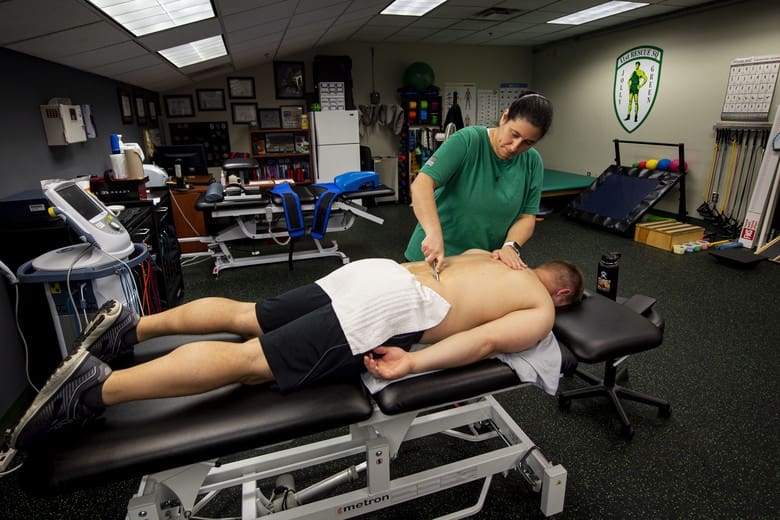
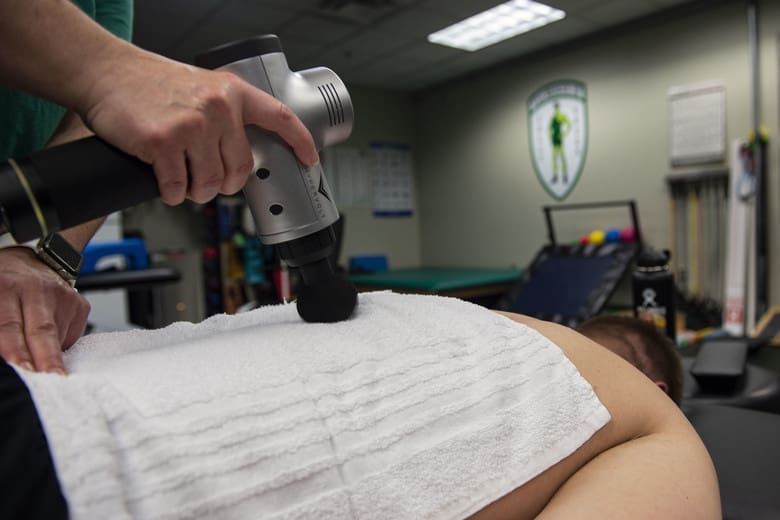
Lori Uretsky, 41st Rescue Squadron athletic trainer, provides these Rescue Airmen with preventative care and treatment for injuries to keep them mission ready.

“[Uretsky] does preventative maintenance,” said Tech Sgt. John Rosenberg, 347th Operations Support Squadron special missions aviator. ”She keeps minor injuries from becoming major injuries and sustains chronic injuries. Taking care of [injuries] on a regular basis keeps them from becoming major issues, which could take me off the flying schedule and have a direct impact on the mission.”

Uretsky has been working with the 41st RQS since October 2017 and has had more than 2,200 appointments and tended to 3,112 injuries.

“I see a lot of neck pain, upper back and lower back pain for the pilots and the special mission aviators usually have shoulders and knee pains because of their job duties,” Uretsky said.  “When I say neck and back pain that can range from muscle tightness to herniated disks to stress fractures in their back. I will say for the most part, a lot of neck pain [comes] from wearing helmets and night vision goggles because it adds weight to their head.”

Rosenberg, a patient of Uretsky’s, has been being seeing her for a leg injury for about a year.

“I’ve been having problems with scar tissue in my ankle” Rosenberg said. “We’ve been working on physical therapy with the ultrasound and sticks on my leg. It’s helping break all that stuff up. Yes, it hurts, but at the same time, I can actually feel it getting better. The prevented maintenance that she does is what enables me to still fly.”

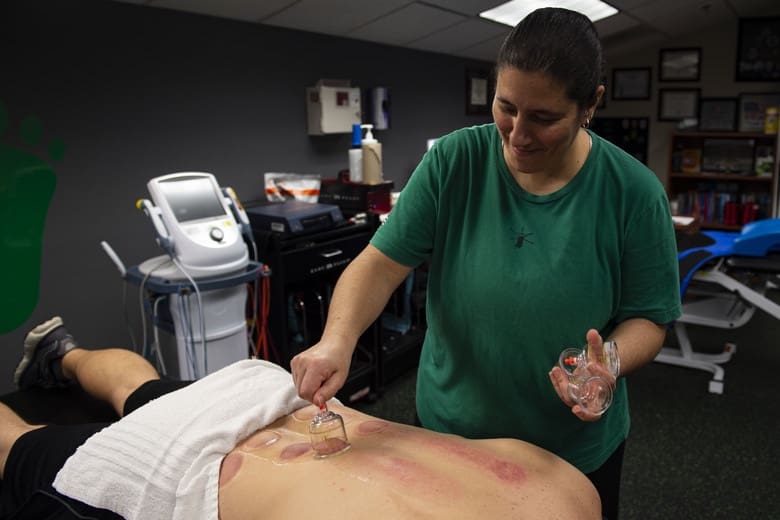
In addition to treating injuries with dry needling, cupping and physical therapy, Uretsky provides annual and post-surgery rehabilitation services that help get wounded Airmen back in the game.

“I was unfortunately fortunate that we had someone get hurt downrange and sent back early for surgery,” Uretsky said. “I say unfortunate, because I never want that to happen, but I was able to do his rehab with him here in-house and get him cleared to return to fly. So, what we thought was going to be career ending, wasn’t. He’s back flying. So, I mean, that is really rewarding to see that.”

According to Uretsky, she has only had to deny seven Airmen from flight, which is lower than numbers seen in previous years because Uretsky is, not only on hand to provide her services here, but has the ability to travel with the unit.

“I’m going to the red flag exercise next month. This will be my second TDY,” Uretsky said. “This red flags a little shorter last year. [It lasted for] five to six weeks. They’d fly three, four times a week, have all their issues, then have to wait for when they come back [for treatment]. So even though I’m not there the whole time, I go in the smack dab of it, treat them and [which should] last until they can come back and see me again.

“I am able to do teleconferences if [Airmen] have issues. I’ve sent things downrange so that they would be able to take care of [issues] the best they could before they had to go to a major base to get treated.”

Uretsky believes being embedded in the squadron also makes a big difference in the relationships between her and her patients.

“I love my relationships with the patients,” Uretsky said. “I joke all the time and tell them that they’re a tad bit crazy for going into a bad scene probably getting shot at to go save others. Most people would go away from that kind of stuff. So, I think they’re very special. To be able to take care of them is awesome. My dad and my grandfather are vets. So, working with the military is my way of giving back.

“If I help one person and keep them in their career, then that makes me happy,” Uretsky said.

By Airman Azaria E. Foster, 23d Wing Public Affairs

SureFire Field Notes Ep. 55: Point Shooting with Larry Vickers

Tuesday, March 3rd, 2020

Larry Vickers is a retired US Army 1st SFOD- Delta combat veteran with years of experience in the firearms industry as a combat marksmanship instructor and industry consultant. In recent years he has hosted several tactical firearms related TV shows. Currently Larry presents videos on the Vickers Tactical Youtube channel of which Bravo Company is the presenting sponsor. Larry Vickers special operations background is one of the most unique in the industry today; he has been directly or indirectly involved in the some of the most significant special operations missions of the last quarter century. During Operation Just Cause he participated in Operation Acid Gambit – the rescue of Kurt Muse from Modelo Prison in Panama City, Panama. As a tactics and marksmanship instructor on active duty he helped train special operations personnel that later captured Saddam Hussein and eliminated his sons Uday and Qusay Hussein. In addition, he was directly involved in the design and development of the HK416 for Tier One SOF use, which was used by Naval Special Warfare personnel to kill Osama Bin Laden. Larry Vickers has developed various small arms accessories, with the most notable being his signature sling manufactured by Blue Force Gear, Glock accessories by Tangodown, and 1911 specific products by Wilson Combat. In addition he has maintained strong relationships with premium companies within the firearms industry such as Blue Force Gear, BCM, Aimpoint, CCWSafe, Wilson Combat, and Tangodown. He has developed and offered a line of Vickers Tactical Glock pistols sold exclusively thru Lipseys Inc.. He is also author of the Vickers Guide series of firearm books. Larry Vickers travels the country conducting combat marksmanship classes for law abiding civilians, law enforcement and military.

www.vickerstactical.com

www.aztectrainingservices.com

www.surefire.com

Royal Marines Assault Engineers Conduct Sabotage And Denial Training In Norway

Thursday, February 27th, 2020

The Royal Marines are in the process of reshaping themselves as the “Future Commando Force” which looks an awful lot like becoming what they were in the 1970s and 80s, a light force of raiders from the sea.

45 Commando’s Assault Engineers conducted advanced demolition training in Norway at a facility which includes Norway’s state-of-the-art facilities that includes a train and 150ft ship. With an eye toward urban operations, they also conducted CQB training.

“We provide close combat engineering support to 45 Commando’s fighting companies and provide the ability to speedily conduct sabotage and denial of enemy assets (weapon systems, equipment, vehicles and vessels), infrastructure and routes,” said Colour Sergeant Ryan Selbie, of 45 Commando.

“Combat Assault Breachers operating within the Future Commando Force will be a key enabler to mission success.

“As the corps’ method of entry, demolition (sabotage and denial) and counter-explosive ordnance specialists, we bring a unique and invaluable skills set to the FCF small-team construct.

See the full report at www.royalnavy.mod.uk/news-and-latest-activity/news/2020/february/24/200224-arctic-assault-engineers.

US Army Small Arms Competitive Marksmanship Program

Tuesday, February 25th, 2020

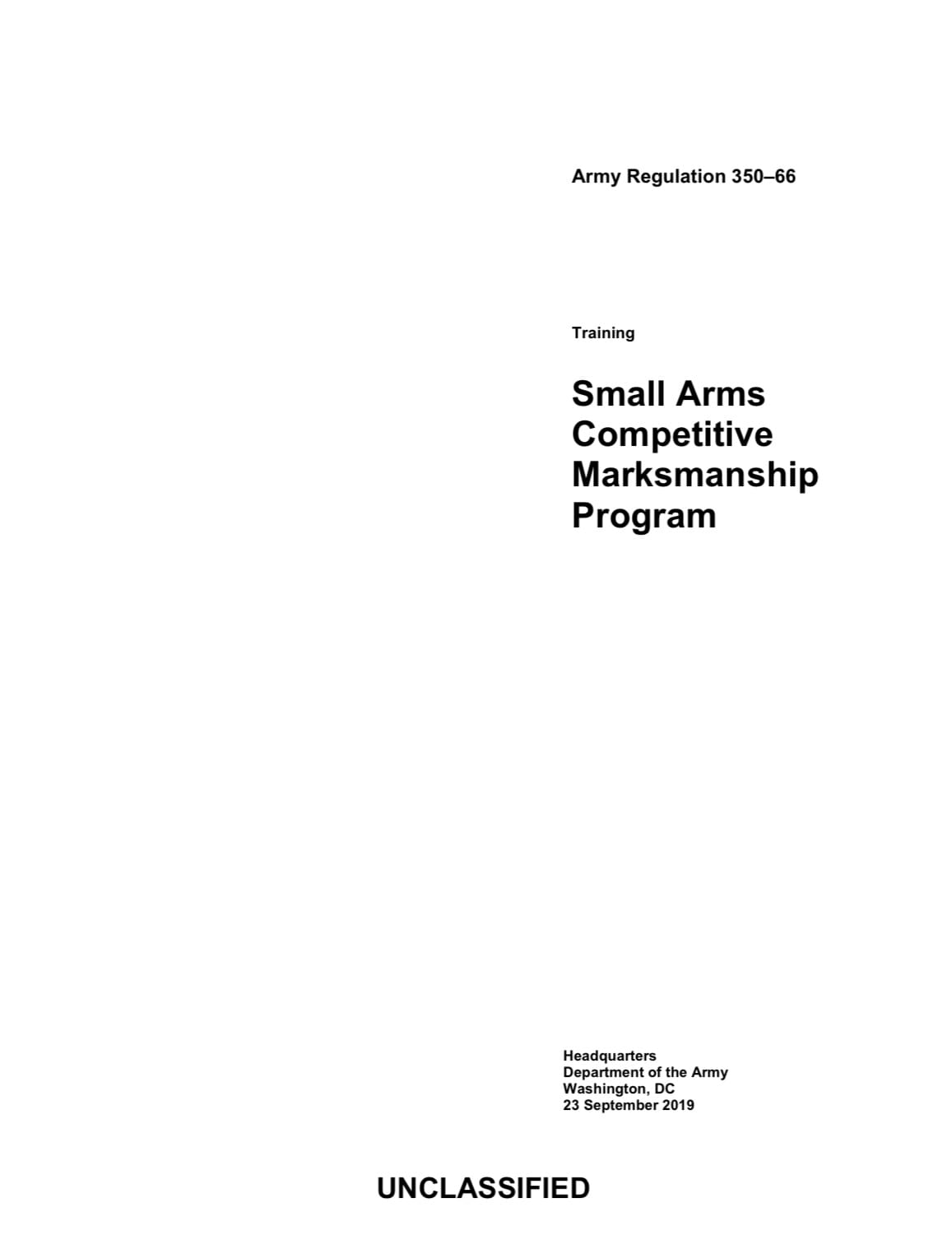
Here’s an Army Regulation that recently came to my attention. The latest version of AR 350-66, Small Arms Competitive Marksmanship Program, was published last September. It provides several updates such as allowing the use of optics and M855A1 ammunition in competitions. It also increased the number of competitions each year

Download your copy here.

Air Force Changes Path of Entry for Enlisted Special Warfare Operators

Friday, February 21st, 2020

JOINT BASE SAN ANTONIO-RANDOLPH, Texas – To better afford enlisted recruits the time and opportunity to find the path of their greatest calling, the Air Force has created a single path of entry into the special warfare recruiting and initial training pipeline.
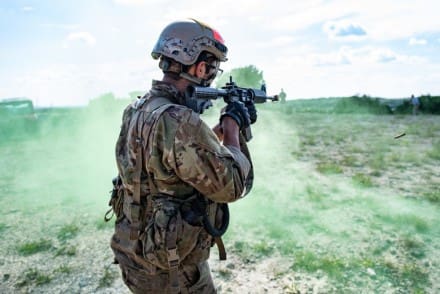
TACP FTX @ Camp Bullis, Texas

The Special Warfare Operator Enlistment Vectoring program will officially commence in early April of this year with a new Air Force Specialty Code for accessions and the first shipment of special warfare candidates to the service’s basic military training.

“On initial entry into the Air Force, the 9T500 AFSC will be the only path for new Airmen to pursue a career into the Combat Control, Pararescue, Tactical Air Control Party or Special Reconnaissance career fields,” said Lt. Col. Joseph Lopez, chief of the special warfare division at Air Education and Training Command headquarters. “This change allows candidates to make a more informed career decision, prior to being vectored, after months of education, training, development, and mentorship, to see what career field might be the best fit for them. The program also enhances the Air Force’s ability to assign Airmen a permanent AFSC in an equitable way across the special warfare community after a thorough “whole-person” evaluation has been conducted on every candidate going through through the accessions and initial phase of training.”

Every day, special warfare Airmen deploy around the world to project American military power through global access, rescue friendly forces through personnel recovery operations and to destroy the enemy through precision strikes.

The SWOE-V program centers on a “coach-develop-mentor” mindset that begins in the pre-accession phase where recruiting development teams identify potential special warfare operators and begin the process to prepare them for the rigors of the special warfare training pipeline and later, their designated career field.

“The typical special warfare scouting, recruiting and development process for a candidate from pre-accessioning to shipping to BMT takes from four to six months,” said Lt. Col. Heath Kerns, commander of the 330th Recruiting Squadron which specializes in special warfare and combat support recruiting. “During pre-accessioning with help from our developers, candidates begin a 21-day “Pass the PAST” workout program developed to help them pass the Physical Abilities Stamina Test, while at the same time being educated on special warfare components, missions and specialties and the SWOE vector process.”

Another key element to the SWOE-V program will be the base lining of enlistment standards for recruits.

“Having a standardized baseline of enlistment standards will eliminate confusion amongst potential recruits, as well as opens up a larger pool of candidates during the recruiting process who might be eligible for and interested in a career in special warfare,” Kerns said.

After a potential candidate passes the PAST, a test that represents the minimum physical fitness entrance standards for enlisted special warfare career fields, they compete for selection and receive a developer recommendation before contracting and shipping to BMT at Joint Base San Antonio-Lackland, Texas, as a SWOE candidate, Kerns said.

During BMT, SWOE candidates will master curriculum that includes the Air Force mission and vision, core values, drill and ceremony, history and priorities, field training and joint warfare like every other trainee, but undergo additional training to prepare them for the Special Warfare Prep Course.
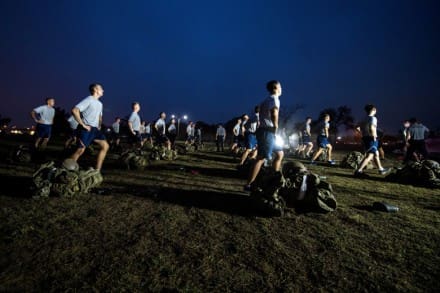
100% and then some, TACP apprentice course

“While assigned to their special warfare BMT flights, candidates conduct additional physical training and continue their education about all things special warfare related including components, missions and specialties and the SWOE vectoring process,” Lopez said.

SWOEs’ BMT performance evaluation data is collected throughout training to be included as part of the vectoring process once trainees enter the Special Warfare Prep course, administered by officials at the Special Warfare Training Wing, also at JBSA-Lackland.

“Along with the performance data from BMT, data from the Special Warfare prep course, and a SWOE’s career preference, candidates are vectored to either the Special Tactics and Guardian Angel, or the Tactical Air Control Party, courses of initial entry,” Lopez said.

Selection for a specific special warfare Air Force Specialty Code is heavily based on a candidate’s performance, which drives a competitive model early on, even before shipping to BMT, thus helping shape individual’s drive, determination and strengths, intended to create trust and team cohesion among candidates, Lopez said.
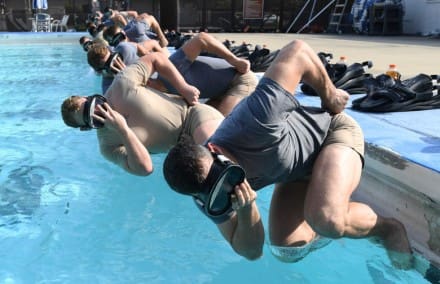
Special Warfare trainees honor fallen combat controller

“Nothing is given; Airmen must earn their spot in their chosen career field and fight for it,” Lopez said. “We are evaluating them continuously through pre-accessioning, BMT and the Special Warfare Prep Course, using a whole person concept that includes cognitive, physical skills, as well as Airmanship and instructors’ evaluation of teamwork and attitude.”

From this point in the pipeline, SWOE candidates are split into one of two paths: the four-week Special Tactics and Guardian Angel course of initial entry or the TACP initial course of entry.

“After successful completion of the ST/GA initial course of entry, candidates will be assigned into the combat controller, pararescue or special reconnaissance AFSC based on their continued performance during training and their preference,” Lopez said. “After successful completion of that course, candidates continue along their respective AFSC-specific training pipelines.”
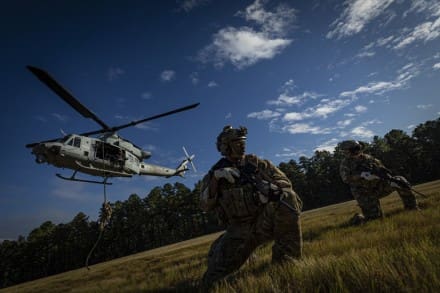
Special Warfare Airmen train with U.S. Marine Corps Reserve

Those who enter the TACP course of initial entry and successfully complete it will continue along in the remainder of the TACP training pipeline, said Lopez.

“The SWOE-V really is a big deal as it represents a momentous change for the Air Force special warfare community,” Lopez said. “By removing constraints in the recruiting and accessions process, we are expanding the talent pool while streamlining entry into the service. We also ensure ensure equitable distribution consistent with and proportional to Air Force-established production goals.”
By Dan Hawkins, Air Education and Training Command Public Affairs

AF Note: To hear more about the SWOE-V program, listen to “The Air Force Starts Here” podcast featuring Lt. Col Lopez, AETC’s special warfare division chief, and Lt. Col. Heath Kerns, 330th Recruiting Squadron commander. The podcast is available for download or streaming on Apple Podcasts, Spotify and Google Play, as well as on the AETC website.