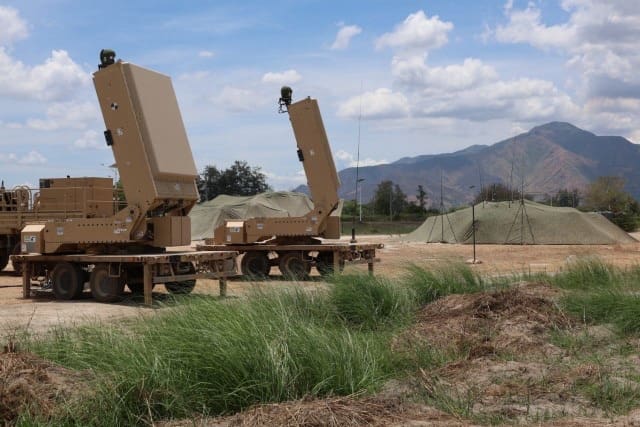
BOSS-Xe from Wilcox Industries

Archive for the ‘UAS’ Category

US Army Seeks Attritable FPV Drones

Monday, April 21st, 2025

If you’ve hung around with me over the last year all I want to talk about is attritable drones and you’ve likely heard me say “The attritable drone is the 155 shell of the future” so many times you’d like to rip off my arm and beat me to death. But right now I’m so happy that I don’t think I’d feel it.



Fortunately, I’m not the only person who thinks this way. The Marines have set up a drone team to work on requirements and TTPs and now the Army is jumping on board with First Person View (FPV) attritable drones.

To be sure, the Army (and all of DoD) have procured a lot of unmanned aerial systems but they’ve been what I refer to as “enduring capabilities”. Expensive and exquisite, we can’t afford to lose the vast majority of these systems due to cost and lack of industrial base capacity.

Ukraine on the other hand goes through around 10,000 attritable drones per month, using them as much as munitions as anything. Surging up to 30,000 per month, they are manufactured in small buildings and basements, often near the front.

The vast majority are sent on one-way missions to conduct ISR or deliver end effects like EW and kinetic strike. They allow the small unit commander to have his own dedicated Air Force and it’s changing the way we will fight. I’ve heard some executives in the defense industry look at the lessons learned from drone use in Ukraine and retort with “that’s not how we do it in the US,” demanding that the military continue to buy expensive drones packed with capabilities that will likely be destroyed in their first use. Fortunately, Soldiers and their leaders are seeing the issue and understand that it doesn’t make sense to destroy and bunker with a $50,000 drone when it can be done with a $2000 model. They know that our foes are going to be able to continue to generate these systems even when our exquisite systems are used up in the first days of a large scale conflict. Small, FPV drones provide an asymmetric advantage to even the smallest and least sophisticated of foes.

My vision is a drone categorized as a munition in order to acknowledge its attritable status and to streamline acquisition which ordered in quantity and shoes up at the unit where it is configured using Modular Open Source Architecture (MOSA) components for the day’s operations. Some may be configured with cameras and sensors while others receive effectors such as EW packages and explosive warheads or weapon racks to drop small munitions such as grenades like a mini-bomber. Taking a note from what we’ve seen in Ukraine a flying Claymore may also be an option. Using simple onboard computers and software defined radios, software will be uploaded to provide various flight and command and control enhancements like pixel lock and home on jam capabilities as well as follow the leader control for swarms.

Now on to what the Army is looking at. The other day the Army’s Uncrewed Aircraft Systems Project Office issued a Sources Sought Notice to industry for Purpose Built Attritable Systems (PBAS) First Person View (FPV) Small Uncrewed Aircraft Systems (SUAS).

This Sources Sought is to assess commercially available and viable Purpose-Built Attritable Systems (PBAS) First Person View (FPV) Small Uncrewed Aircraft System (SUAS) candidates for a possible invitation for a follow-on demonstration in support of the United States Army Maneuver Elements. This sources sought may be used to fulfill future procurement requirements.

The Program Executive Office (PEO) Aviation, Project Manager (PM), UAS, seeks information on commercially available products that are production ready, reusable, unretrievable components (uncrewed aircraft platforms, payloads, and ancillary equipment) and cost-effective SUAS to be employed at the maneuver small unit level. FPV enabled SUAS provide the maneuver force a low cost solution with increased maneuverability, precise lethal payload delivery, and operator concealability. As such, the PBAS FPV, hereafter referred to as PBAS, designed with baseline mission characteristics that focus on rapid reconfigurability and modular payload capabilities that allow for mission changes across target acquisition tasks, with the added flexibility to execute kinetic operations as needed. The system’s mission characteristics include a field-level reconfigurable, modular payload capability to execute the primary mission of Reconnaissance Surveillance and Target Acquisition (RSTA), secondary mission of communications relay, and enhanced mission set of lethal payload delivery and electronic support.

What is most critical to this plan, and as far as I know still unavailable, is the Interface Control Document for these MOSA drones. It will tell industry what connectors to use and what power they will have available.

Additionally, we need a domestic supply chain for the components to create these drones. Right now, most batteries, circuitry, and motors are coming from within the Chinese sphere of influence. The alternative suppliers are foreign.

Interested parties should visit sam.gov and have until May 8, 2025, 4:00 PM CST to submit. I’m sure they mean CDT, but then notice says CST.

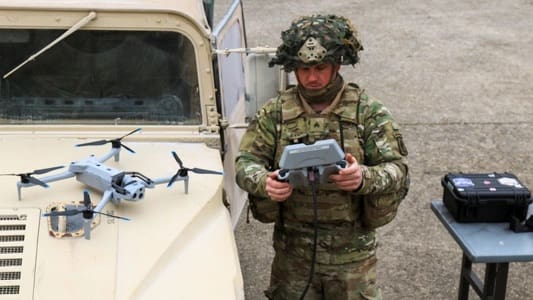
The image at the top was taken by SPC Israel Fernandez and depicts U.S. Army Sgt. Tucker Smith with the UAS Platoon, 1st Squadron, 91st Cavalry Regiment, 173rd Airborne Brigade prepares his Skydio X10D drone for its observation flight during “Project Shiv” at Grafenwoehr Training Area, Germany, Feb. 20, 2025. Project Shiv is an innovative exercise involving using first person view drones assembled at Balli Airfield in conjunction with development munitions created by the U.S. Army Combat Capabilities Development Command (DEVCOM) Armaments Center. This is the kind of innovation that is going to keep the Army relevant.

GA-ASI Announces Technology Investments From Blue Magic Netherlands

Friday, April 18th, 2025

SAN DIEGO – 16 April 2025 – General Atomics Aeronautical Systems, Inc. (GA-ASI) is pleased to announce two businesses that it will invest in from the inaugural Blue Magic Netherlands (BMN) event last November: Emergent Swarm Solutions and Saluqi Motors.

“The technologies presented by Emergent and Saluqi really stood out to us, and we’re proud to be working with them,” said Brad Lunn, managing director for GA-ASI. “I expect several other companies from the Blue Magic Netherlands event to emerge and we hope to make additional announcements in the near future.”

At the Blue Magic investment and innovation conference in the Netherlands, GA-ASI and its partners heard pitches from innovative Dutch companies about the important technologies they are developing. The event was organized collaboratively between GA-ASI, the Dutch Ministry of Defense, the Dutch Ministry of Economic Affairs, Brainport Development in Eindhoven, and Brabant Development Agency (BOM). The key areas of focus were Artificial Intelligence/Machine Learning, Autonomy, Advanced Materials, Sensors, Advanced Manufacturing, and Space. Close to 50 companies applied and after reviewing the applications, 16 companies were selected to pitch their capabilities.

Emergent Swarm Solutions and Saluqi Motors were selected by GA-ASI to make investments after both companies made compelling pitches about their respective technologies at the BMN event and following months of detailed business and technology discussions with the two companies.

Emergent Swarm Solutions develops innovative software solutions for autonomous flight and intelligent, decentralized swarming capabilities for a variety of unmanned vehicles. GA-ASI is partnering with Emergent to develop critical autonomy skills for GA-ASI’s current and future portfolio of aircraft.

“It is a pleasure to partner with General Atomics to develop and deploy our autonomy and swarming capabilities on the current and next generation of unmanned aircraft,” said Lennart Bult, Co-founder and Managing Director at Emergent Swarm Solutions. “Collaborating with the General Atomics team has been a fantastic experience, and we look forward to delivering advanced capabilities through this partnership.”

Saluqi Motors builds high-density motors with integrated electronics that significantly increase power and torque in small packages, which is well-suited for airborne platforms. GA-ASI is partnering with Saluqi to qualify their existing products within the strict environmental demands of aerospace applications and to develop new products for specific applications.

“We are deeply honored to be selected by GA-ASI from such a strong field of innovative companies,” said Matthijs de Haan, CEO at Saluqi Motors. “Our ultra-compact and high-performance motors are engineered to meet the demanding requirements of aerospace applications. This collaboration enables us to further validate our technology and develop new solutions for the defense and aerospace industries.”

GA-ASI is a global leader in unmanned aircraft systems and related mission systems. The company hosted its first Blue Magic event in 2019 in Belgium, with subsequent events held in 2020, 2021, and 2023. GA-ASI is delivering eight MQ-9A aircraft to the Royal Netherlands Air Force (RNLAF).

“GA-ASI is committed to continue working with the Dutch government and Dutch industry in supporting the growth of technology innovation in the Netherlands. GA-ASI anticipates holding additional BMN events in the near future,” Lunn added.

US Army Conducts First Battalion-Level All-Domain Home Station Training Exercise

Tuesday, April 15th, 2025

YAKIMA TRAINING CENTER, Wash.—Within the foothills of the Cascade Mountain range, the 1st Multi-Domain Effects Battalion (MDEB) from the 1st Multi-Domain Task Force (MDTF) conducted the Army’s first battalion-level All-Domain Home Station Training (HST) exercise, Static Focus 3. Held from March 3-14, the exercise took place at the Yakima Training Center in conjunction with Project Convergence Capstone 5 (PC-C5).

Static Focus 3 enabled live training of the MDEB’s family of systems used to conduct Reconnaissance, Surveillance, and Target Acquisition (RSTA) and non-kinetic effects execution. 1MDEB, activated concurrently with 1MDTF in 2020, integrates the task force’s information, intelligence, cyber, electromagnetic warfare, and space capabilities.

A highlight of the training was the network extension integration and deep sensing capability of High-Altitude Balloons (HABs) and the experimentation with ultra long-endurance, solar powered Unmanned Aircraft System (UAS).

“This is our first real exercise integrating government owned and operated ultra long-endurance UAS specifically designed for long-range deep sensing,” said Lt. Col. Joseph Mroszczyk, commander of 1MDEB.

Prior to the exercise, the unit spent two years testing and training with the platform alongside the long-endurance UAS system’s contractor, Kraus Hamdani Aerospace. It wasn’t until this event that the Soldiers were able to independently operate the system.

“We’ve got trained pilots and mechanics gaining valuable experience on the platform now,” Lt. Col. Mroszczyk added. “They’re logging hours and providing crucial sensor data, enabling us to serve as the task force’s eyes and ears, and as key contributing Army sensor to the Joint Force.”

During Static Focus 3, 1MDEB logged over a hundred UAS flight hours in various configurations.

“From a maintenance perspective, I was astonished by how little time and resources the platform demanded,” said Sgt. Jake Meyer from the UAS platoon from 1MDEB’s Extended Range and Sensing Effects (ERSE) Company. “Compared to traditional platforms, which require several months to get familiarized with, we were up and running in just two days.”

Max endurance testing was included in the experimentation of the platform, to include multi-ship flights.

“Multi-ship flight operations are the most complex missions, but the autonomous capability allows me, as an operator, to focus on the mission instead of my continuous direct management of each aircraft,” said Staff Sgt. Jacob Wilbert from the UAS platoon from 1MDEB’s ERSE Company.

Complementary to the long-range deep sensing UAS, the unit also experimented with HABs from three vendors, sponsored by the Army Intelligence, Surveillance, and Reconnaissance (ISR) Task Force for inclusion in the event and in conjunction with PC-C5.

“For me, the highlight of the event was witnessing the successive launches from all three HAB vendors and creating a constellation. Being part of this was exhilarating, because each vendor offered their own unique features and capabilities,” said Sgt. Antonio Morales from 1MDEB’s ERSE Company’s HAB platoon.

Previously, the unit had to travel to Fort Huachuca, Arizona, to access the same level of training. Static Focus 3 not only reduced the cost of traveling to Arizona to train, but also served as a valuable technical rehearsal for future employment.

“The progress that we’ve made over this last week greatly enhanced our capability as a task force,” said Mroszczyk.

As a theater-level unit and Joint Force enabler, assigned to the Indo-Pacific, the 1MDTF plays a vital role in synchronizing long-range precision fires layered with long-range precision effects to create multiple dilemmas and neutralize adversary anti-access and area denial networks. The MDTF’s proven innovation, agility, and lethality have led the Army to direct five full MDTFs in strategically significant locations worldwide.

PC-C5 is an Army hosted experiment that provides Joint and Multinational participants various locations that supports individual modernization efforts while solving problems through applications with Combined, Joint All Domain Operations (CJADO). PC-C5 ensures that the Army, can rapidly and continuously converge effects across all domains – air, land, sea, space, and cyber, to increase operational tempo and generate decision advantage over our adversaries. These structured series of experiments demonstrate transformation and modernization efforts, expand war-winning capabilities, and deliver the Army of 2030 while designing the Army of 2040.

By SSG Brandon Rickert

Draganfly and SafeLane Global Enter into Multi-Year Agreement with Draganfly as the Preferred Global Provider of Landmine Mapping Drones and Aerial Survey Services

Monday, April 14th, 2025

First Ukraine Landmine Aerial Survey Contract Underway

Tampa, FL — April 10, 2025 — Draganfly Inc. (NASDAQ: DPRO) (CSE: DPRO) (FSE: 3U8) (“Draganfly” or the “Company”), an industry-leading developer of drone solutions and systems, today announced that it has been selected by SafeLane Global Ltd. (“SafeLane”) as its preferred unmanned aerial systems (UAS) and aerial survey provider.

SafeLane, a world-renowned specialist in explosive threat mitigation, is one of only two private organizations licensed by the Ukrainian Ministry of Defense to conduct landmine and explosive ordnance clearance operations in Ukraine. With over 30 years of experience across more than 60 countries, SafeLane supports governments, humanitarian organizations, and commercial clients in the clearance and disposal of landmines, unexploded ordnance (UXO), and explosive remnants of war (ERW), both on land and underwater.

Under the agreement, Draganfly will provide advanced drone solutions, including UAVs, specialized sensors, and data analysis services, to support SafeLane’s global mine action initiatives. The collaboration aims to enhance the speed, accuracy, and safety of explosive threat detection and removal operations in high-risk environments.

“We are honored to be selected as SafeLane’s UAS partner,” said Cameron Chell, President and CEO of Draganfly. “This partnership represents a significant opportunity to leverage Draganfly’s technology to support critical humanitarian and defense efforts. Together, we will work to deliver scalable, innovative solutions for global landmine action.”

The companies will co-develop joint intellectual property and standard operating procedures tailored for aerial mine detection and clearance. SafeLane will lead proposal submissions and operational deployment, while Draganfly will provide technology, mission planning, piloting, and survey analysis.

According to the Landmine Monitor 2023, more than 60 million landmines remain buried across over 60 countries, posing a persistent threat to civilians, especially children, who account for nearly half of the casualties. Ukraine is currently one of the most mine-contaminated countries in the world.

“Draganfly’s drone-based technology will significantly increase the safety and efficiency of our operations,” said Asa Gilbert, Director of Business Development at SafeLane. “This partnership is a critical step in helping communities recover from the legacy of conflict.”

The collaboration further positions Draganfly as a key player in the defense and humanitarian sectors, supporting efforts to create safer environments in some of the world’s most vulnerable regions.

draganfly.com

GA-ASI Inks Collaboration Deal With South Korea’s Hanwha

Wednesday, April 9th, 2025

The Companies Will Pursue Global UAS Programs

SAN DIEGO – 08 April 2025 – General Atomics Aeronautical Systems, Inc. (GA-ASI) and South Korea’s Hanwha Aerospace have agreed to collaborate on the development and production of Unmanned Aircraft Systems (UAS) for the global defense market. The joint effort follows the successful completion of a major flight demonstration in 2024 when the two companies launched a GA-ASI MQ-1C Gray Eagle® STOL (GE STOL) UAS from the South Korean Navy’s amphibious landing ship ROKS Dokdo (LPH-6111) as it was underway at sea off the coast of Pohang, South Korea.

The demonstration illustrated the ability of the GE STOL to safely operate on many types of aircraft-capable ships, which opens myriad new ways for the U.S. and its allies to use this UAS to support multi-domain operations. It also paved the way for GA-ASI and Hanwha to sign this new agreement to jointly invest in and pursue new UAS business opportunities.

“We’re excited to extend and deepen our business relationship with Hanwha,” said GA-ASI CEO Linden Blue, who supervised the November 12, 2024, at-sea demonstration. “Our test flight with Gray Eagle STOL was well-received by the Republic of Korea Navy, and we know Hanwha is ready to invest to grow a UAS business with GA-ASI both in Korea and the U.S.”

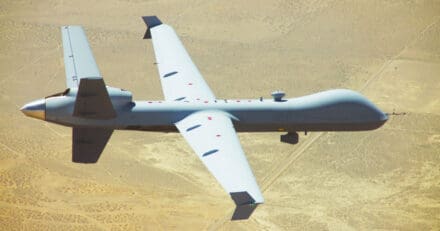
Gray Eagle STOL—which stands for short takeoff and landing—is the only medium-altitude, long-endurance aircraft of its kind with the ability to operate without a catapult or arresting gear from fight deck-equipped warships such as amphibious ships and aircraft carriers. It additionally enables true runway independence by operating from unimproved fields and roads, beaches, parking lots, etc.

Hanwha Aerospace plans to invest more than 300 billion KRW (US $203.5M) in the development and production facilities for GE STOL and UAS engines, expand research and development activities, and provide production infrastructure in both South Korea and with GA-ASI in the U.S. This is in addition to GA-ASI’s past and ongoing investment in UAS STOL development. Hanwha also plans to create jobs by securing talent in related fields and to foster the domestic (Korean) UAS industry ecosystem by discovering domestic parts and material partner companies. GA-ASI expects the endeavor to create nearly 10,000 jobs based upon the expected sales and support over the next 10 years, and at least 500 jobs in the U.S.

“Hanwha Aerospace views unmanned systems as a strategic pillar for the future of defense. Through our collaboration with GA-ASI, we aim to strengthen sovereign defense capabilities, expand Korea’s presence in the global UAS market, and contribute to a more robust ROK-U.S. alliance, said Dong Kwan Kim, Vice Chairman of Hanwha Group. 

Previously known as Mojave, Gray Eagle STOL leverages extensive commonality with the well-proven, in-production Gray Eagle 25M airframe to offer a highly capable new aircraft at greatly reduced cost and technical risk compared to a clean-sheet design. Gray Eagle STOL has recorded a number of first-of-their-kind aviation milestones, including the flight from the Dokdo, launch and recovery aboard the British aircraft carrier HMS Prince of Wales (09), live-fire testing at Yuma Proving Ground, Ariz., and several others. Gray Eagle STOL offers international militaries a unique platform: a full-featured medium-altitude, long-endurance UAS with a significant battlefield payload that can take off in short distances from ships, unimproved surfaces, or other highly combat-relevant locations.

UVision Acquires Trim Robotics, Expanding its Loitering Munition Capabilities

Tuesday, April 8th, 2025

Strengthening UVision’s Tactical Loitering Munition Portfolio with Innovative Ground-Breaking Precision Strike Capabilities

April 7 2025, UVision USA., a global pioneer in loitering munition systems, announced the acquisition of Trim Robotics, a cutting-edge developer of next-generation rotary-wing high maneuver loitering munitions. This strategic acquisition strengthens UVision’s operational portfolio by integrating the HERO series with Trim’s innovative Quadikaze missile, creating a more versatile and synergized loitering munition portfolio. Trim Robotics’ QuadiKaze missile is a groundbreaking dual-frame rotary-wing loitering munition system that offers unprecedented aerodynamic efficiency and enhanced flight performance. Unlike conventional rotary wing solutions, Trim’s designintegrates dual fuselage ensuring superior in-flight control, optimized attack trajectories with a high angle of attack.

The Trim QuadiKaze missile bridges the gap between the limited maneuverability of traditional attack quadcopters and UVision’s advanced fixed-wing Hero series of loitering munitions. It offers significant operational advantages, including extended flight endurance, longer mission durations, and rapid engagement of time-sensitive targets. Its compact dual-fuselage design is ideal for urban warfare and dense environments such asforests and narrow alleyways. Autonomous target identification and attack capabilities ensure stealthy, high-speed engagements, enhancing lethality. The Trim solution is man-portable, requires minimal training, and allows for rapid deployment without extensive preparation. It weighs approximately 4 kg with a highly efficient payload-to-platform ratio.

Dr. Ran Gozali, CEO of UVision Air Ltd., stated: “UVision continues to develop loitering munitions, and this acquisition demonstrates our commitment to enhancing the HERO family’s capabilities for tactical forces. The dual-fuselage design delivers ease of control and fixed-wing-grade kinetic performance. This approach aligns with our vision and portfolio, addressing the need for high-speed, precision loitering munitions in complex operational environments. Together, we will provide customers with next-generation solutions for modern battlefields.”

Jonathan Cohen, CEO of Trim Robotics, said: “This strategic investment and partnership represent a strong vote of confidence in our technology, capabilities, and long-term vision. Partnering with UVision a global leader in loitering munitions – enhances our ability to deliver advanced, mission-ready solutions. Together, we are accelerating the future of UAV innovation and meetingthe evolving operational needs of modern defense. We value this partnership and are confident it will bring the Peregrine closer to those who need it most.”

Elevate Your Precision: OKSI’s Advanced EO/IR Seekers and Terminal Guidance

Wednesday, April 2nd, 2025

At OKSI, we’ve spent decades pushing the boundaries of EO/IR sensing, and we’re proud to introduce our next-generation seekers and terminal guidance software—engineered to surpass any solution on the market. Our proven track record in advanced imaging and autonomous targeting sets the stage for unmatched performance and reliability in modern battlefields with harsh Electronic Warfare (EW) environments.

Why Choose OKSI?

Hardware Your Way

From Commercial Off-the-Shelf (COTS) to fully custom options, our low-cost modular and passive EO/IR seekers let you integrate powerful, precision-guidance capabilities without reinventing your entire platform.

Seamless Platform Integration

Our containerized terminal guidance software modules are platform-agnostic, running flawlessly on NVIDIA, Qualcomm Snapdragon, or even FPGA hardware. Providing precision guidance in both air and ground domains.

No GPS? No Problem

Our seekers excel in EW environments by eliminating reliance on GPS—giving you robust performance when it matters most.

Passive, Laser-Free Operation

By removing the need for laser teams or designators, we reduce complexity, risk, and costs.

Fire-and-Forget Capability

Launch once (with or without a lock) and let our seekers’ advanced image-based ATR, and visual navigation algorithms do the rest.

Sophisticated Target Tracking

Whether static or dynamic, our proprietary pipelines track targets with pinpoint accuracy, enabling critical LOAL (Lock-On-After-Launch) functionality and maximum effectiveness with vulnerability aimpoint exploitation.

Midcourse Mastery

Our visual-based navigation is the ideal solution for long range strike—enabling absolute positional awareness during midcourse and terminal phase for a variety of engagement profiles.

Applications

Ideal for Long-Range Strike / SOPGM, Loitering and Guided Munitions, C-UAS, Air-Launched Effects, UAS and FPV, Rockets, Mortars, and UAS Air-Dropped Munitions—our seekers seamlessly integrate into existing and next-gen platforms alike.

Choose OKSI to gain a competitive edge. Let us empower your operations with decades of proven expertise and cutting-edge EO/IR guidance solutions—because when every second counts, you need a partner who delivers unwavering accuracy and reliability. This isn’t marketing fluff and generated graphics for future aspirations. OKSI is providing real results to complex scenarios today.

Get in touch to learn how our EO/IR seekers can redefine your mission success. Contact solutions@oksi.ai

Marine Corps Launches Attack Drone Team

Wednesday, April 2nd, 2025

MARINE CORPS BASE QUANTICO, Va. —

MARINE CORPS BASE QUANTICO, Va. – On Jan. 3, 2025, the Commanding Generals of Training Command, Maj. Gen. Anthony M. Henderson, and the Marine Corps Warfighting Laboratory, Brig. Gen. Simon M. Doran, established the Marine Corps Attack Drone Team in response to the rapid proliferation of armed first-person view drone technology and tactics.

A Neros Archer first-person view drone sits on a case during a demonstration range at Weapons Training Battalion on Marine Corps Base Quantico, Virginia, March 7, 2025. The Marine Corps Attack Drone Team used the Neros Archer FPV drone to engage targets on the range to showcase the drone’s capabilities on the battlefield. (U.S. Marine Corps photo by Cpl. Joshua Barker)

The creation of MCADT comes in response to the rapid proliferation of armed first-person view drone technology and tactics observed in modern conflicts, particularly in Eastern Europe. As emerging threats continue to evolve, the Marine Corps is prioritizing the integration of FPV drone capabilities to enhance lethality and operational effectiveness across the Fleet Marine Force.

“MCADT is committed to rapidly integrating armed first-person view drones into the FMF, enhancing small-unit lethality and providing organic capabilities that warfighters currently lack” said Maj. Alejandro Tavizon, headquarters company commander at Weapons Training Battalion and officer in charge of MCADT. “By leveraging emerging technologies and refining drone employment tactics, we are ensuring that Marines remain agile, adaptive, and lethal in the modern battlespace.”

MCADT will be based at WTBn-Quantico under Training Command, fostering close collaboration with the Marine Corps Warfighting Laboratory. This placement builds on 124 years of expertise from the Marine Corps Shooting Team (MCST), which has long facilitated the Corps’ culture of marksmanship and paved the way for the development of this program. The Shooting Team’s legacy in precision weapons and the capabilities of the WTBn-Quantico Precision Weapons Section further enhance MCADT’s mission.

The team’s mission is to integrate lessons from modern combat; represent the Marine Corps in inter-Service, national, and international competitions; and, through iterative training and competition, provide input to the development of cutting-edge FPV drone capabilities to enhance warfighting effectiveness. MCADT will:

– Develop and refine armed FPV drone training for Marines across the Total Force.
– Inform service-level requirements to ensure the rapid fielding of cutting-edge FPV technologies.
– Enhance individual and unit lethality through hands-on instruction during competitive training events.

“Today’s battlefield is changing rapidly, and we must adapt just as quickly. The Marine Corps Attack Drone Team will ensure that our warfighters remain at the forefront of precision drone employment, providing a critical advantage in future conflicts.” Maj. Alejandro Tavizon, Weapons Training Battalion Headquarters Company commander and officer in charge of MCADT

MCADT will serve as the Marine Corps’ subject matter experts on FPV drone employment and represent the Corps in inter-service, national, and international competitions. The first of these will be the U.S. National Drone Association’s Military Drone Crucible Championship, held from June 30 to July 3, 2025, in Florida. Competing against units like the 75th Ranger Regiment, MCADT will execute tactical missions using FPVs and small UAS in realistic scenarios designed to simulate modern combat. The competition will feature tactical inserts and full mission profiles designed to implement the ‘hunter-killer method’ using both small, unmanned aircraft systems and FPVs, incorporating a variety of flight control options, such as radio frequency, fiber-optic, and artificial intelligent-enabled, which will enhance operational effectiveness.

Following the competition, MCADT will share insights to refine tactics and further improve operational effectiveness. In April 2026, MCADT will host a final championship and selection event at Marine Corps Base Quantico, coinciding with the Marine Corps Marksmanship Competition Championships. Top drone operators will be selected to augment MCADT for future competitions.

MCADT’s impact extends beyond competition. FPV drones offer squad-level lethality up to 20 kilometers for under $5,000, compared to more expensive weapons systems with less capability. This provides a cost-effective and scalable solution for modern combat.

MCADT is already employing several USMC program of record and non-program of record small UAS and FPV controlled drones, through assistance from MCWL and their dedication to the partnership to MCADT. Each of these drones offers distinct capabilities, and the MCADT will use them, as well as additional drones to be received in the coming weeks, to effectively complete their missions.

The Competition-in-Arms Program will expand to incorporate drone competitions within the existing Marine Corps Marksmanship Competition series. The MCADT will run competitions throughout FY26 in conjunction with the MCST. These events will provide opportunities to continuously refine and enhance the skills needed to effectively operate these new precision weapons, ultimately increasing the lethality of Marines and Marine units across the FMF.

“Right now, our focus is on rapidly building proficiency by sending Marines to a variety of training courses and increasing hands-on familiarization,” said Tavizon. “Our goal is to ensure they can not only operate these systems effectively but also integrate them seamlessly into a team. This means mastering primary platforms, having redundancy with backup systems, and getting the necessary repetitions to employ payloads with precision under real-world conditions.”

The establishment of MCADT marks a significant advancement in modernizing Marine Corps capabilities, equipping Marines with cutting-edge drone technology that enhances lethality at extended ranges, all at a fraction of the cost of current long-range weapon systems. Through continuous training, competitions, and collaboration, MCADT is already shaping – and will continue to shape – how the Corps locates, closes with, and destroys our nation’s adversaries.

By Cpl Joshua Barker | Marine Corps Training and Education Command