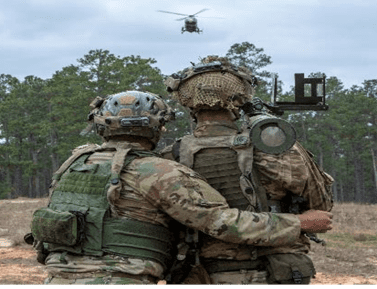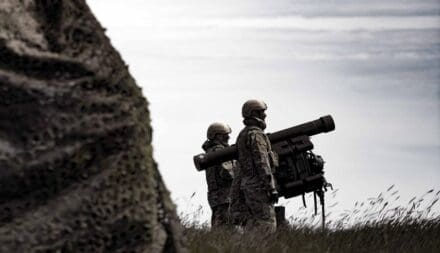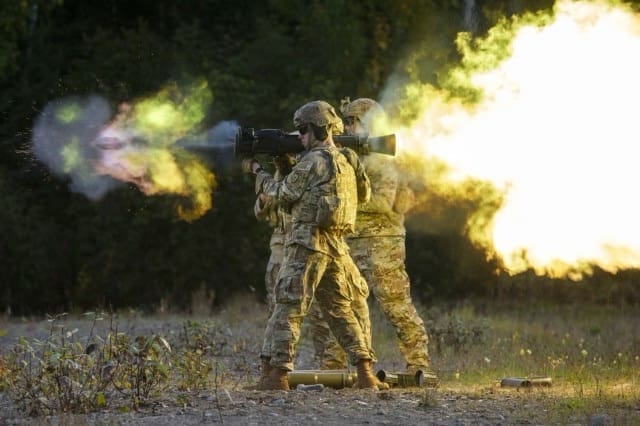
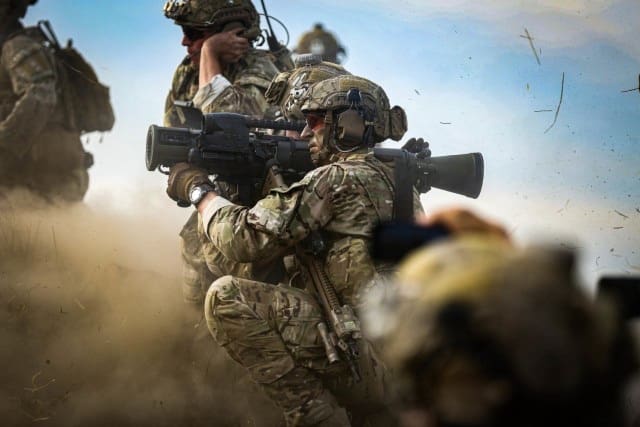
The Carl Gustaf Multi-Role Anti-Armor Anti-Personnel Weapon System (MAAWS) is a remarkable weapon system for light infantry forces. But this weapon is also one of the least understood systems across the Infantry.
The 84mm Recoilless Rifle goes by many nicknames: Carl G, the Gustaf, the Goose, MAAWS, the M3. Whatever you call it, it looks like a beast, and one glance tells you that it packs a punch. Yet the uninitiated mistake the Carl G as little more than a reloadable AT4 so it still gets driven like an old station wagon when it has the performance, versatility, and power of a race car.
The new M3A1 MAAWS with the integrated fire control system (FCS) is so capable, it’s almost cheating… but only if our gunners — and our leaders — understand all that it is capable of and how to employ it. The Carl G deserves to be more than a show pony that sits in the arms room, neglected.
The M3A1 Carl Gustaf is the most powerful weapon system in a rifle platoon. As the Army searches for ways to increase the lethality of the infantry brigade combat team (IBCT), one of the solutions is already sitting quietly in our arms rooms, waiting to get the attention it deserves.
A Natural Recipe for Neglect
There are two compounding reasons why the Carl G gets overlooked and has yet to truly infuse itself into the light infantry ethos. The first is a general lack of familiarity or exposure to the weapon among maneuver leaders. Few saw the original M3 in action in Iraq or Afghanistan due to its limited fielding (mostly across special operations forces [SOF]), and even less have seen the new M3A1 perform with the integrated digital optic, which completely changes the consistency and accuracy of the weapon by an exponential factor.
The second is a gross lack of available training ammunition (sub-caliber 7.62mm training rounds or full caliber training practice [TP] rounds) to build the needed appreciation for the weapon. What can we expect in terms of proficiency or confidence in our weapons when we give our gunners the minimum required rounds yearly to train with? The answer: a day familiarization that, at best, helps teams hit a static target at 300 meters during the day, which is what we can expect from an AT4. The M3A1, however, can hit targets beyond 1,000 meters day or night. The FCS can immediately calculate the speed of a moving target and show the gunner where to aim to hit that target while moving. And, if given high explosive (HE) 441 rounds to train with, our gunners can learn how to select airburst so the rounds explode over troops in the open at up to 2,000 meters behind defilade.
The Carl G will be one of the most impactful weapons for American light infantry forces in the next major war… but only if we can learn how to employ it! The goal of this article is to help leaders gain a true appreciation for the power and versatility of this weapon system. It explains some of the critical capabilities that the new M3A1 provides when paired with its optic, the Fire Control System 13-Rate Estimator (FCS13-RE). Lastly, this article shares recommendations for how to update the marksmanship training progression for the M3A1 MAAWS to build both individual gunner proficiency and leader familiarity with what the system offers our infantry platoons and squads fighting across rugged and restrictive terrain.
To see a marked improvement, we just need to expand our understanding of what it offers and provide our gun teams with significantly more training ammunition to build proficiency for both day and night against static and moving targets at distance. As this article will explain, however, the ammunition change is not a big ask. In the end, there might not be a better return on investment for the Army than making long-overdue updates to the M3A1 training ammunition allocation.
Advancing the Original M3 to the New M3A1 with Digital Fire Control System
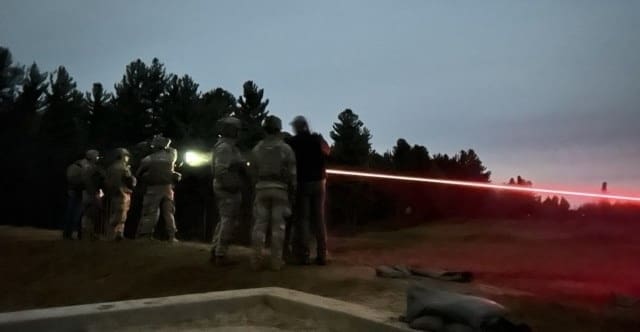
SOF has had the greatest appreciation for the Carl G since the 75th Ranger Regiment first acquired the M3 in 1989. The recoilless rifle made regular appearances over the last three decades at platoon live fires where gunners took turns trying to knock out bunkers at plus-or-minus 400 meters at night with TP rounds. When the M3 team hit the bunker, it would be spectacular — one shot and the bunker was neutralized, probably collapsed. And that was just from the “concrete” practice round. It was easy to imagine what a real HE round would do.
Those were the highlight reel moments, however. For every bunker hit, there were repeated misses, especially when the targets were small or further out. Rounds would often quietly sail over the horizon, leaving the assaulters doubting whether their gunners would manage that shot in a two-way firefight.
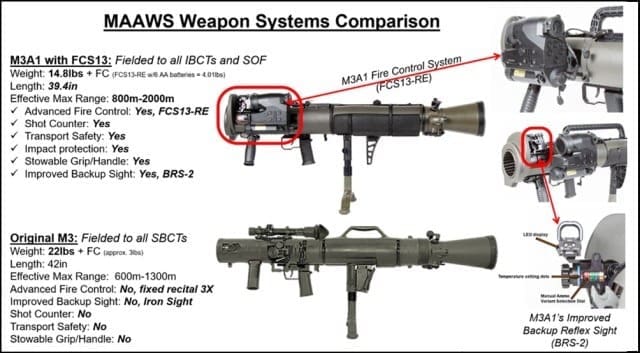
Rangers and IBCTs just finished the full fielding of the new M3A1 and the integrated digital FCS (FCS13-RE) in October 2024. The days of repeated missed shots quietly sailing over the horizon or impacting ineffectively just shy of the target are over. The new M3A1 paired with the FCS is the difference between a flip phone and a smart phone. Technically, they both text, take pictures, and make calls, but there’s no comparison to the functionality, speed, and qualitative difference between the two. If you are old enough to remember T9 texting, then you’ll understand the comparison here of how much faster and effective it is to acquire and engage targets with the M3A1 and FCS than with the original M3 and manual sights.
Why the FCS13-RE Changes the Game for the Carl G
There are a host of challenges to hitting a target with a recoilless rifle. Each munition type has its own ballistics, and they fly differently based on the type (from TP or TP with tracer [TPT] to smoke, HE dual-purpose [HEDP], and HE anti-tank [HEAT]). They also fly differently based on the altitude, the ambient air temperature, as well as the temperature of the round’s propellant (where/how the round is stored before firing). Point of aim on iron sights will not be point of impact. Original M3 gunners had to learn their holds at different distances for each type of round, and only experience with each round taught gunners their holds. And all of it would be an estimation at best. Mounting a Storm Laser Range Finder could help M3 teams factor the distance to set in 50-meter increments on their manual cam wheel dials with luminescent rings, but that was only one factor. Adjusting points of aim for the altitude as well as the air and powder temperature could also become a guessing game best left alone when firing the original M3.
The new M3A1 does more than shave seven pounds and three inches in length from the original M3. The M3A1 with FCS13 is a full-fledged computer that will make an old Goose gunner sick with envy. It’s a true fire control system that accounts for all the confounding factors that used to cause gunners to miss those critical shots. Even the improved backup reflex sight (BRS) on the M3A1 is an improvement from the original M3 fire control knobs.
The FCS13-RE is capable of both day and night operations. The red dot is compatible with our individual night vision systems so there’s no need to change optics or viewing devices from day to night operations. Gunners can tell the computer the altitude, outside temperature, and temperature the ammunition is stored at, and the computer immediately factors all those variables into the point of aim for the gunner.
The FCS13-RE is a modular ballistic computer capable of holding more than 50 ballistic solutions for different MAAWS munition types. Gunners can select up to five quick access types prior to going on mission for rapid selection during an engagement. The key for training is to identify the FCS13-RE’s menu selection for the sub-caliber rounds (listed as “SCA” for sub-cal adapter or “7.62” in the FCS13 menu depending on the software version) to select the right ballistics for TP and TPT rounds (they are distinct). In the event any new munitions are not present in a unit’s version of the FCS, a quick software update can be uploaded to the computer.
The FCS13-RE’s built-in laser range finder (LRF) calculates points of aim for both static and moving targets. A single press of the LRF measures the point of aim on a static target. When gunners press the LRF for more than two seconds, the fire control will calculate a moving target solution utilizing an on-board gyro and multiple pulses of the laser. The optic then provides both a target lead point as well as the hold for the gunner based on the target’s calculated speed and distance along with the ballistic performance of the selected munition type. The gunner then just matches their red dot to the optic’s aimpoint and fires. It’s a remarkable feature but one that can only be mastered through repetitions and practice under a host of scenarios involving various firing positions, speeds, distances, and visibility conditions.
The Versatility of the MAAWS
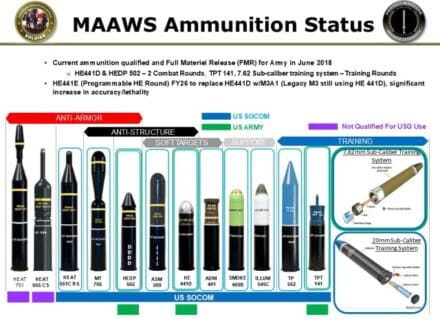
The MAAWS is so much more than an anti-tank weapon. The menu of munition types allows rifle platoons to employ the Carl G for a variety of functions; however, it is often characterized as a light and medium anti-tank system because of the limited munition types the U.S. Army keeps in its inventory. The U.S. Army currently fields the High Explosive Dual Purpose 552 cartridge which can defeat light armor and personnel. It can be employed for either impact or delay mode. The U.S. Army also fields the High Explosive 441D cartridge which has a timer on the front of the cartridge for airburst above targets in defilade. The Army fields two training munitions: the 7.62 Sub-Caliber Adapter 553 system and the full caliber Target Practice Tracer 141 training cartridge.
There are a breadth of munitions variants already in production that other partner nations (and U.S. Special Operations Command) maintain. A High Explosive Anti-Tank 551C Reduced Sensitivity cartridge with tandem warhead can destroy main battle tanks equipped with Explosive Reactive Armor (ERA). An Anti-structure Munition 509 (ASM) can destroy bunkers and small buildings with a thermobaric warhead. A Multi-Target 756 cartridge can defeat targets behind concrete walls with a tandem warhead. Smoke rounds can provide thick, high-concentrated obscuration on demand for assaulters moving across exposed objectives more than 1,000 meters away.
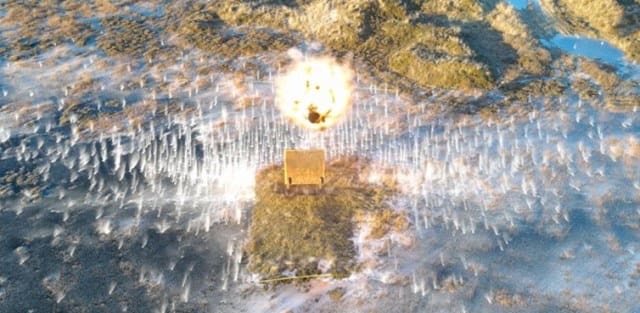
The airburst option using HE rounds is one of the MAAWS’ critical capabilities; however, few gunners or leaders have the opportunity to gain familiarity with employing this effect. None of the training munitions can replicate the airburst option, only point detonation. The only way to become proficient with this feature is to provide MAAWS teams with HE rounds to train with. The proposed Standards in Training Commission (STRAC) allocations in this article recommend two HE rounds per year for gunners to train with.
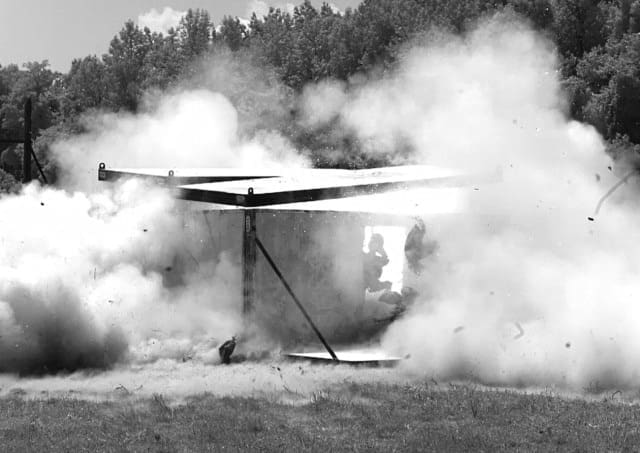
Unlike the M3, the M3A1 also has a built-in fire control unit that can connect the FCS13-RE with the rounds loaded in the tube, allowing gunners to employ advanced munitions like the improved HE 441E on airburst mode. The older HE 441D model requires assistant gunners (AGs) to manually set the nose cone of the round to explode at the selected distance and also discharges steel balls on either point detonation or airburst (as opted by the AG) up to 1,200 meters away. The new “E” variant maximizes muzzle velocity to extend its range of a greater payload of metal spheres that improves the spread pattern upon impact or airburst.
Units with the original M3 should only receive HE 441D rounds since the original M3 launchers do not have a fire control unit to add digital instructions to the loaded munition. As the U.S. Army acquires the new HE 441E round, IBCTs should receive a minimal amount of these rounds to train with — to appreciate the effects of the munition, employ it under both day and night conditions, and see how the FCS13-RE adds the airburst option for the 441E round only once the tube detects that variant in the launcher. Gunners cannot even practice selecting the airburst option in the menu controls until the M3A1’s fire control unit reads the round in the tube. So dry training or TP rounds do not allow gunners to familiarize themselves with the steps to employ the HE 441E on airburst mode.
Necessary STRAC Modifications
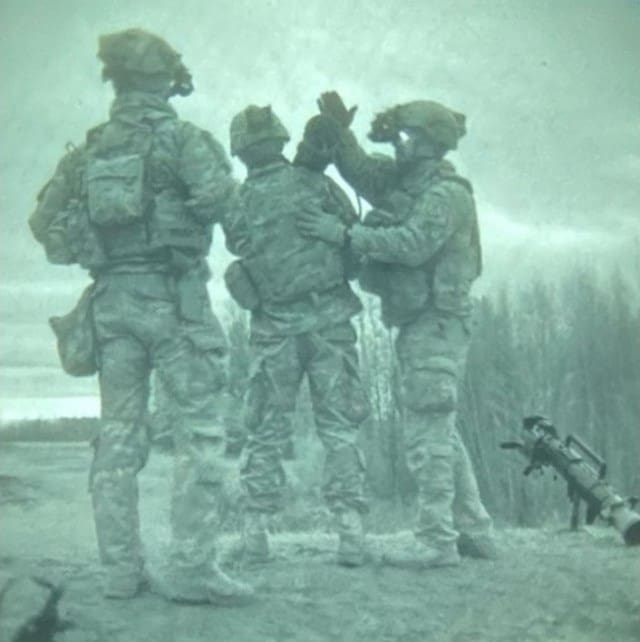
The U.S. Army’s training strategy and qualification approach for the M3A1 does not build sufficient proficiency and experience with the MAAWS. Likewise, the STRAC needs critical, but highly cost efficient, changes to support a proper training progression that lets M3A1 teams fire both day and night at different distances against static and targets.
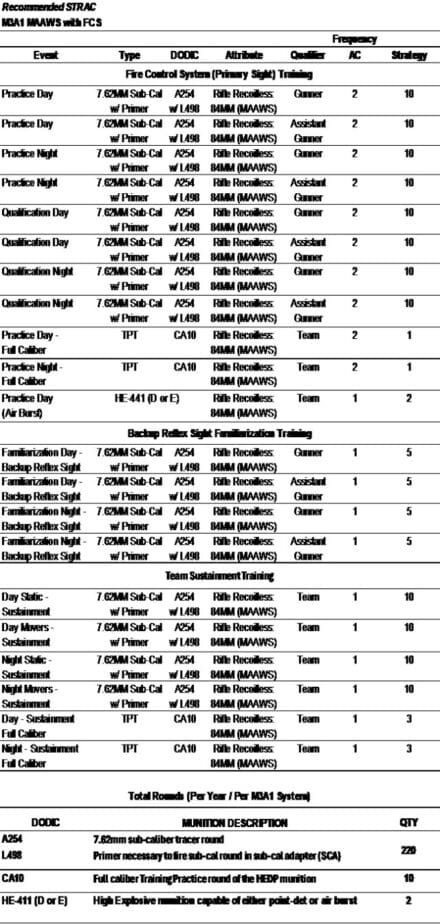
The most important training round to build proficiency is the 7.62mm SCA. The SCA is designed to fire a three-part munition system including a unique (low-grain) 7.62mm tracer round, a primer, and a backblast simulator. The backblast simulator is not recommended for use because it doesn’t accurately represent the major backblast effect of the recoilless rifle but does foul the system. The SCA does not require the backblast simulator so units only use the 7.62mm tracer round and primer when training. Eliminating the backblast simulator saves money to purchase the two essential components of the SCA: the tracer round and primer.
The current STRAC allocates several sub-caliber rounds and a TPT round per M3/M3A1 team for “qualification.” This is a misleading characterization of weapon proficiency. The training strategy borrows from the training strategy of the AT4 using 9mm sub-caliber tracers. But the MAAWS is a crew-served weapon system that has both primary and backup sights. The current STRAC for the MAAWS is equivalent to giving a M240 machine-gun team a 150-round belt of ammunition a year to qualify and train with during live-fire exercises (LFXs). MAAWS teams need to practice and then qualify in four different firing positions (standing, kneeling, sitting, and prone) at various distances (200-700 meters for training rounds), under both day and night conditions. Currently, there are no allocations for night qualification or practice iterations. There are also no designated rounds for AGs to qualify as alternate gunners. If they are to shoot the system, they need to take from the gunner’s sparse allocation. There are also no rounds allocated for the BRS that requires several manual inputs.
A minimum number of rounds to train a gunner and AG (as the alternate gunner) to engage the variety of target scenarios at extending distances in different firing positions would be 10 engagements in a firing table, first through a practice iteration followed by a qualification iteration.
Example firing scenarios:
Position: Standing, Kneeling, Sitting, Prone
Distance: 200m, 300m, 400m, 600m, 700m
Target: Bunker, Tank, Truck, Window
Static: Bunker, Armored Personnel Carrier (APC), Tank, Window
Moving: APC, Tank
Conditions: Day and Night
These practice and qualification firing tables need to be repeated at night by both gunners and AGs. Training with sub-caliber rounds alone would not give teams sufficient familiarity with the sensation of firing a full caliber round or experience with the employment of airburst HE rounds. Therefore, the training strategy needs to include a minimal number of TPT and HE rounds to give teams familiarity with the actual effects of the MAAWS.
The FCS13-RE is the primary sight of the M3A1, but crews also need to be familiar with the BRS. A minimum of five additional sub-caliber rounds would allow for this under day and night conditions.
Light infantry units will also want to include sustainment training for their MAAWS teams throughout a training cycle. This can include either dedicated M3A1 ranges or incorporating the weapon system in collective training events such as support by fire, platoon, and company LFXs. These training events should include both static and moving targets in day and night conditions and consist of mostly sub-caliber training rounds as well as limited opportunities to fire full caliber munitions. The full caliber ensures all members of a maneuver element have experienced the need to avoid backblast areas while firing the weapon and builds confidence in the rifle platoon’s organic firepower.
Exposure to Overpressure and “BOPing Out”
Leaders and MAAWS teams need to understand the issue of overpressure exposure when firing full caliber rounds. Referred to as blast overpressure (BOP), there is a limit of rounds that gunners, AGs, and anyone within 100 meters of the MAAWS can be exposed to each day. Designated allowable number of rounds (ANOR) per day varies by munition type and firing position, but these limitations apply to anyone in proximity of the weapon (not just gunners but assistant gunners and safeties too). When team members or supervisors (e.g., lane safety) reach their limit, they “BOP out” and cannot train until their time requirements pass. The risk of concussion and permanent cognitive damage is high if personnel become overexposed to the overpressure from firing these recoilless rounds. It is up to leaders to track and strictly enforce overpressure exposure.
There are minimal overpressure risks when firing the 7.62mm sub-caliber rounds. This makes the value of increasing the availability of these munitions even greater. Not only are they 1 percent of the cost of a full caliber munition, but the low risk to overpressure also enables teams to get repeated repetitions at firing in different distances and positions against a variety of static and moving target scenarios.
The Value of Virtual Training
Virtual training presents a powerful way to build MAAWS proficiency, similar to the variety of weapons found in indoor Engagement Skills Trainer (EST) facilities available on most installations. Although almost every other weapon is available to Soldiers in our virtual trainers (including M240, AT4, and Javelin), the U.S. Army has not yet chosen to purchase any M3 or M3A1 virtual trainers.
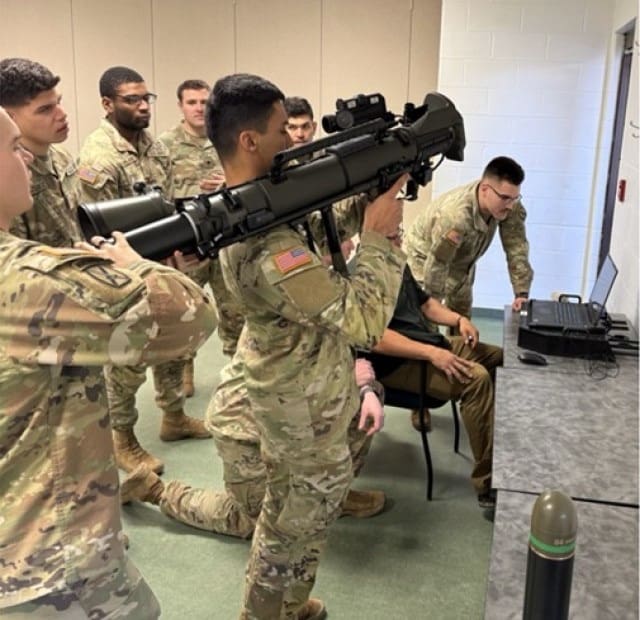
Each indoor MAAWS virtual training system costs approximately $170,000, but these systems offer value in several ways. They allow Soldiers unlimited repetitions at firing the system, eliminating any exposure to overpressure. If the U.S. Army acquired M3A1 virtual trainers that included the FCS13-RE, teams could experiment with all munition types, including HE 441E as well as specialty munition variants not currently available for conventional Soldiers to train with. Virtual training systems should include anti-structure, illumination, smoke, and a variety of anti-armor munitions. Ideally, every major IBCT installation with an EST would add at least one M3A1 virtual trainer. At a minimum, the U.S. Army’s Heavy Weapons Leader Course at Fort Benning, GA, should have a M3A1 virtual trainer to help build its students’ proficiency on the weapon.
Routinely Upgrading M3A1s and FCS13s
Units need to recognize that both the FCS13-RE optic and the M3A1 launcher readily receive software upgrades. This includes adding munition types to the FCS13-RE’s ammunition menu and giving the right software upgrades on the launcher’s fire control unit to send data from the optic to those advanced munitions loaded inside the tube. The new maintenance plan includes training to teach 91F armorers how to make software updates at the unit level.
System Proficiency to Ensure Accuracy
There are a few essential skills that leaders must emphasize before MAAWS teams begin firing. The first is recognizing the importance of following proper boresight techniques, and the second is ensuring gunners understand how to operate the FCS13’s controls.
There is no need to zero the M3A1 prior to firing, but the weapon must be boresighted every time it is taken out to be fired. Boresighting requires both the gunner and AG to work as a team, so both must be proficient at the proper steps. The process is not difficult, but it can’t be shortchanged. It includes inserting the included metal boresight discs in the front and back of the launcher and having the gunner and AG aim both the optic and tube at a specific object 300 meters away from the FCS.
In addition to building diligent proficiency at boresighting, MAAWS gunners must also understand all of the FCS13-RE features and needed inputs. This includes knowing how to update the powder temperature (PTEMP), the altitude, and the ambient temperature (ATEMP) prior to going on mission (or firing at the range). The most important of these three factors is the PTEMP since cold powder burns slower. ATEMP is second only to PTEMP and becomes critical for airburst distance accuracy when firing HE rounds. Once the gunner inputs these measurements prior to going on mission or training, the computer will do all of the math during an engagement.
Gunners and AGs also need to be sure they confirm the precise ammunition type and select the corresponding munition inside the FCS ammunition menu. The abbreviated names are not all self-explanatory so matching the right menu option and munition is essential. The computer does all of the complex ballistic calculations, but gunners are very much in the loop on getting the optic to present the right aimpoint.
As long as MAAWS teams do a proper boresight, confirm the environmental factors, and know simply how to select the appropriate munition prior to firing, the FCS13-RE will do everything for the gunner… except control trigger squeeze. The basic fundamentals of marksmanship will always apply, and that is why updating the STRAC still matters.
Conclusion
The M3A1 is in every IBCT rifle company’s arms room right now, itching to get the attention it deserves. This modernized 84mm recoilless rifle, paired with its new integrated fire control system, defeats armor, illuminates, obscures, and neutralizes threats behind defilade. It provides effects on demand without needing to clear airspace for the close combat force. This article aims to help tactical leaders understand how to employ the system and help the Infantry make overdue revisions to the M3 training strategy and ammunition allocation.
The recommended STRAC adjustments proposed in this article will allow MAAWS teams to build the necessary proficiency to routinely destroy a variety of targets at distance, at night, against static and moving threats. As leaders become more familiar with the features of the system, as well as the necessary crew proficiency in operating the system, we will come to learn how essential the MAAWS is to light infantry lethality.
At the time this article was written, LTC D. Max Ferguson commanded 2nd Battalion, 14th Infantry Regiment, 2nd Brigade Combat Team, 10th Mountain Division. He is a career Infantry officer with six deployments to Iraq, Afghanistan, and West Africa with conventional and special operations units. He recently earned a PhD in public policy through the Army as an Advanced Strategic Planning and Policy Program Goodpaster Scholar.
This article appears in the Summer 2025 issue of Infantry. Read more articles from the professional bulletin of the U.S. Army Infantry at www.benning.army.mil/Infantry/Magazine or www.lineofdeparture.army.mil/Journals/Infantry.
As with all Infantry articles, the views herein are those of the authors and not necessarily those of the Department of Defense or any element of it.