TYR Tactical

BFG Monday: Lightweight Load-Carriage for the Warfighter

March 23rd, 2026

Warfighter equipment is always in a constant state of evolution, where the difference between adequate and exceptional can be measured in ounces. For over two decades, Blue Force Gear has not just kept pace with that standard, they have set it. Ever since the early BFG days, making gear as lightweight as possible has always been their design philosophy. BFG is truly meticulous about it; they will go out of their way to design and re-design a product, simply to reduce weight by a few ounces (sometimes even grams).

The question is why? Why is this so important?

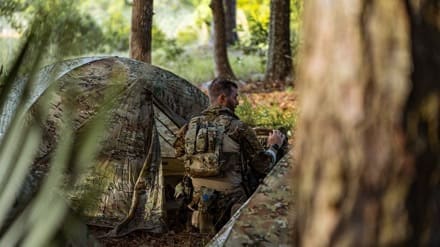
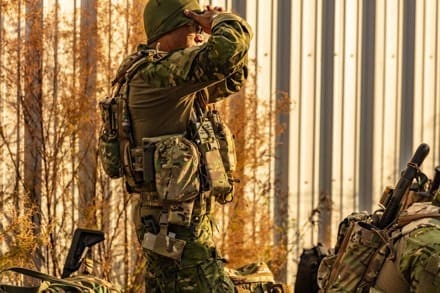
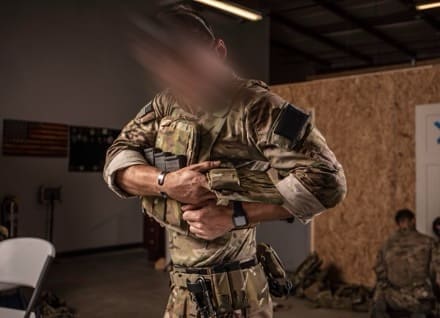
The modern warfighter carries a tremendous amount… heavy armored plates, ammo, comms gear, trauma kits, water… and the weight compounds quickly. Every pound added to a Soldier or Marine’s kit is a pound of performance, endurance, and survivability subtracted from the mission. A Pub Med study showed that “each kilogram added to the foot increases energy expenditure 7% to 10%; each kilogram added to the thigh increases energy expenditure 4%.”1

These warriors will often retire after years of service with broken knees, hips, and backs from the effect of that extra weight. Another Pub Med study stated that injuries can span from “musculoskeletal injuries (e.g., joint/ligamentous injuries and stress fractures) to neurological injuries (e.g., paresthesias).”2 Many gear manufacturers noticed this issue, but none made it their mission to reduce weight with the same passion and dedication as Blue Force Gear. 

Their design philosophy acknowledges the old military axiom: ounces equal pounds, and pounds equal pain. It sounds simple, but acting on it requires rejecting the assumption that heavier automatically means more durable. BFG proved that wrong. By combining superior materials, precision manufacturing, and relentless user feedback driven design, BFG became known as the industry leader to systematically engineer weight out of every component of a warfighter’s load carriage system. They did this without sacrificing a single standard of strength or durability but rather, increasing performance and making gear last longer.

That obsession produced results no one had ever seen. Now, Blue Force Gear’s product line is the world’s lightest and is trusted by the most elite professionals. A few of their revolutionary technologies include Ten-Speed, a military-grade elastic pouch that offers a truly multi-use carrying capability; Helium Whisper, the lightest and strongest MOLLE pouch attachment system in the world; and MOLLEminus, the ground-breaking concept of removing fabric to create rows of MOLLE (i.e., webless MOLLE).

These innovations are only part of what sets BFG apart as the leaders in the lightweight load carriage pursuit. Reducing weight for the warfighter while also enhancing their effectiveness and survivability is and always has been the goal. Ounces equal pounds, and pounds equal pain.

Stay tuned for next week’s article where we take a deeper look at the Ten-Speed technology.

References:

1Joseph J Knapik, Katy L Reynolds, Everett Harman; 2004 Jan;Soldier load carriage: historical, physiological, biomechanical, and medical aspects; pubmed.ncbi.nlm.nih.gov/14964502

2Robin Orr, Rodney Pope, Thiago Jambo Alves Lopes, Dieter Leyk, Sam Blacker, Beatriz Sanz Bustillo-Aguirre, Joseph J Knapik; April 11, 2021; Soldier Load Carriage, Injuries, Rehabilitation and Physical Conditioning: An International Approach; pubmed.ncbi.nlm.nih.gov/33920426

260th Special Purpose Brigade Activated to Strengthen Security in the Nation’s Capital

March 23rd, 2026

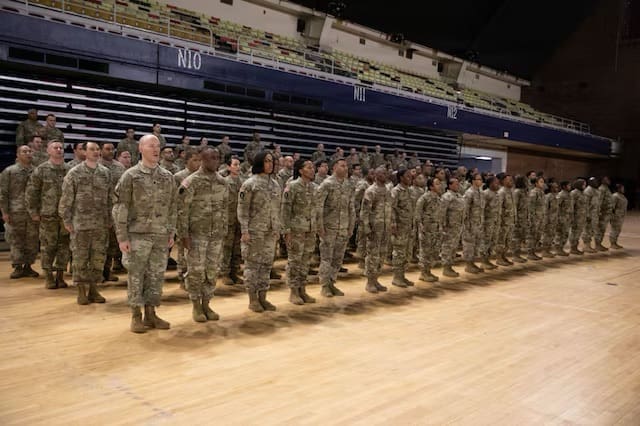
The District of Columbia National Guard activated the 260th Special Purpose Brigade at the D.C. Armory, March 7. It is the only brigade in the Army specifically designed to coordinate military support to civil authorities and protect critical infrastructure in the nation’s capital.

The brigade was created in response to Executive Order 14339 and a subsequent directive from the secretary of war. These called for the immediate establishment, training and equipping of a dedicated National Guard unit. The goal is to support public safety operations and strengthen coordination between military forces and civilian security partners in the district.

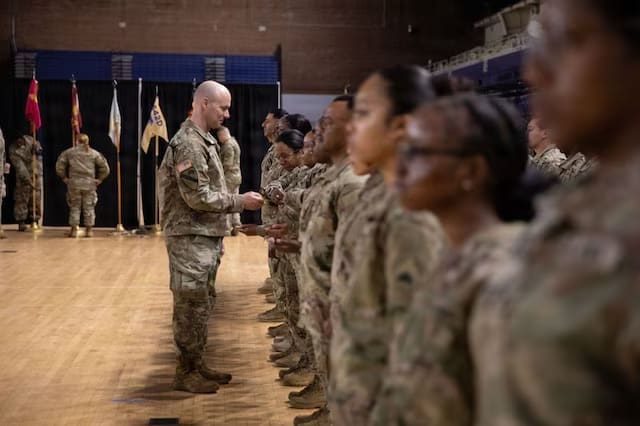
Army Brig. Gen. Craig Maceri, land component commander for the D.C. National Guard, presided over the activation ceremony. Soldiers stood in formation as the brigade’s colors were uncased — a military tradition that signals a unit’s formal activation and readiness for duty.

“The activation of the 260th Special Purpose Brigade represents the deliberate execution of national guidance,” Maceri said. “This unit provides the critical command and control structure that enables us to execute a broad spectrum of scalable operations while effectively integrating with our federal and district partners.”

The brigade will coordinate military support to civil authorities and enabling National Guard forces to rapidly integrate with federal and local agencies responsible for safeguarding the capital.

Washington presents a unique operational environment, including the constitutional institutions of the federal government, foreign embassies and national monuments, as well as millions of visitors each year. Protecting that environment requires close coordination between military forces and civilian agencies during major national events, security operations and emergencies.

Among the brigade’s key partners is the U.S. Marshals Service, which regularly works alongside the D.C. National Guard during security operations in the capital.

“Partnerships like this are essential in Washington,” U.S. Marshal Jurgen Soekhoe said. “The 260th Special Purpose Brigade brings a level of coordination and readiness that allows federal law enforcement and the National Guard to operate as a unified team when security demands it.”

Army Col. Lawrence Doane, commander of the 260th Special Purpose Brigade, said the brigade structure ensures continuous coordination with partner agencies. It also allows the brigade to expand rapidly when missions require additional forces.

“This brigade gives us an operational foundation for unity of effort,” Doane said. “It ensures continuity of planning and coordination so that when the situation changes, we can respond quickly and with clarity.”

The brigade also reflects the unique federal role of the D.C. National Guard, which reports directly to the president, not a state or territory governor. This structure places the organization at the center of national-level security planning for the capital.

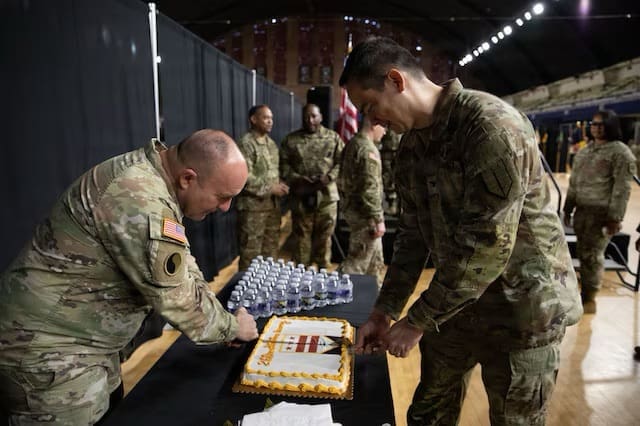
The unit’s new patch connects the brigade’s modern mission with its historic lineage. The design features three red stars and two red bars drawn from the District of Columbia flag, itself derived from the coat of arms of George Washington’s family.

The brigade carries forward the heritage of the 260th Military Police Command, a D.C. National Guard headquarters brigade that, for decades, coordinated military police operations supporting civil authorities and emergency response across the district, until its inactivation in 2011. Its lineage reflects a long-standing mission of integrating National Guard forces with federal and local partners to protect critical institutions and maintain security in the nation’s capital.

At the patch’s center is an upright, unsheathed sword representing the brigade’s role in providing security for all who live, work and visit the nation’s capital.

“This new patch reflects something bigger,” Doane said. “It represents our commitment to protecting every person who sets foot in the nation’s capital.”

With the uncasing of its colors, the 260th Special Purpose Brigade begins its mission as a dedicated force. It will support public safety, infrastructure protection and coordination between civilian and military agencies in Washington.

By Army CPT Kristy Singletary,?Joint Task Force D.C.

52nd Collaborative EW Symposium Welcomes UK for First Trilateral Event

March 22nd, 2026

NAVAL AIR WARFARE CENTER WEAPONS DIVISION, POINT MUGU, Calif.
Welcome to the Invisible War

Invisible wars demand visible action. In this arena, coalition electronic warfare, interoperability and spectrum superiority will decide victories in future near-peer conflicts.

Whoever owns the electromagnetic spectrum owns the battlefield.

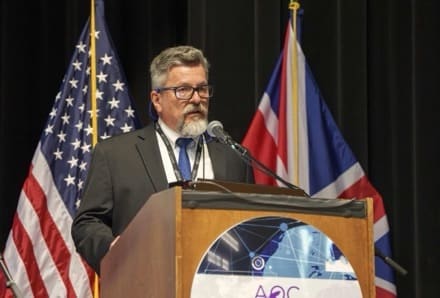
That’s why nearly 500 electronic warfare leaders from the United States, Australia and — for the first time — the United Kingdom gathered at Naval Base Ventura County, Point Mugu, March 11-13 for the 52nd annual Collaborative Electronic Warfare Symposium.

The Naval Air Warfare Center Weapons Division and the Association of Old Crows jointly host the annual symposium under a co-sponsorship agreement. The event focuses on collaboration and innovation in EW, uniting government and industry partners worldwide.

Policies and Platforms Risk EW Static

One of the biggest challenges in coalition EW is getting different nations and services to operate seamlessly in the EMS. Without standardized doctrines, aligned classification standards and compatible technological platforms, coalition operations risk becoming disjointed.

Bottom line: Coalition forces shouldn’t encounter more static from their own policies than from their adversaries.

Coalition EW Steps Up for Near-Peer Showdown

This year’s theme, “Coalition EW in Near-Peer Conflict,” explored interoperability across coalition EW operations, from ground and airstrike to naval combat, in a classified setting. Symposium co-chairs David Wood and Thomas Bluhm, NAWCWD’s lead event planners, guided discussions on enhancing coalition readiness for near-peer conflicts.

This year’s symposium brought together everyone from four one-star military officers and civilian specialists to young professionals in the Engineer and Scientist Development Program.

“Effective coalition EW requires alignment at every level, from senior leadership down to junior warfighters and support personnel,” Bluhm said.

One Team’s Mission to Unite Three Nations

Two years of policy hurdles. Classification roadblocks. Endless coordination challenges.

Dave Mohler, NAWCWD’s Airborne Electronic Attack International Programs lead, and his team overcame them all with one clear mission: bring the United Kingdom into the EW conversation alongside the United States and Australia.

“Our International Programs team is made up of highly specialized and dedicated professionals,” Mohler explained. “It wouldn’t have been possible without my international policy analysts, security specialists, and foreign contact officers”

Mohler coordinated with senior Navy and Department of Defense officials to expand the previously bilateral U.S.-Australia symposium, held since 2015, to include the UK.

Bringing the UK into the fold was critical, as AUKUS enables deeper coalition collaboration.

Established in 2021, AUKUS initially focused on nuclear-powered submarines. Its second pillar prioritized collaborative defense capabilities, including EW — creating the opportunity Mohler needed.

“This was not a simple or easy task,” Bluhm said. “Mr. Mohler and his team worked through many denials and hurdles to secure approvals for this first-ever tri-national Collaborative EW Symposium.”

Mohler emphasized why this expanded partnership matters.

“More than ever, we must acknowledge that the wars of tomorrow will not be deterred, nor fought, alone,” Mohler stressed. “This is the first step toward understanding how we operate together and identifying areas where we can cooperatively develop solutions for the warfighter.”

Thanks to Mohler’s efforts, the three nations now have a clear framework for deeper cooperation, making AUKUS a blueprint for dominating the EMS.

Why Point Mugu Still Leads the EW Fight

For the first trilateral event focused on dominating the invisible fight, you go where history has proven itself — a quiet naval base along California’s coast: Point Mugu.

In April 1951, Cmdr. Clifton Evans Jr. established the Countermeasure-Interference Division, creating the Navy’s first dedicated EW capability — a visionary move that was decades ahead of its time. More than 70 years later, pioneering foresight keeps Point Mugu at the forefront of EW, laying the groundwork critical to coalition EW in the age of near-peer threats.

“In the 74 years since, spectrum warfare technologies have grown exponentially,” Bluhm said. “Denying adversaries the use of their radars, communications and navigation signals while ensuring our coalition allies maintain resilient and effective spectrum operations is best done with our trusted allies.”

With Point Mugu’s legacy established, the focus shifts to next-generation technologies allies are leveraging to close EW capability gaps.

How AUKUS Allies Are Closing the EW Gap

The symposium showcased next-generation EW technologies from government and industry partners across the three AUKUS nations. Highlights included advanced directed energy weapons, such as high-power microwave systems, and compact, low-cost SWaP jammers delivering high performance. Attendees also explored radar alternatives and innovative command-and-control systems for EMS operations.

On day two, gray skies and periodic rain greeted attendees at the Station Theater for the symposium’s strategic panel.

Moderated by Bluhm, the panel featured U.K. Royal Air Force Air Commodore Blythe Crawford, commandant of the Air and Space Warfare Centre; Australian Air Commodore Peter Robinson, commander of Air Combat Group; and NAWCWD’s director of research and development, Harlan Kooima.

“The U.K. delegation is delighted to be attending the Collaborative EW symposium at Point Mugu alongside our U.S., Australian and industry partners,” Crawford remarked. With a smile, he noted that the weather reminded him of his hometown in Lincolnshire, England.

He went on to highlight the strategic importance of the trilateral partnership.

“If we are to fight together, then we need to leverage each other’s technologies, methodologies and processes for spectrum management,” Crawford explained. “We all have discrete expertise in EW. Collaborative approaches are essential if we are to prevail as partners in any future fight.”

Each nation brings powerful EW platforms to the table: the U.S. Navy EA-18G Growler, with its precision jamming; the Royal Australian Air Force E-7 Wedgetail, an airborne early warning system with vast range; and the U.K. Royal Air Force Eurofighter Typhoon, armed with the advanced Praetorian Defensive Aids Sub-System.

Even the best tools fail if they’re not speaking the same language. Disparate systems and upgrade cycles complicate joint tactics, letting adversaries exploit gaps with advanced jamming and spectrum denial.

The U.S.-Australia Next-Generation Jammer, deployed in 2024 with significant Australian investment, provides a proven model for coalition EW synergy and interoperability, demonstrating how allies can eliminate vulnerabilities in the spectrum fight.

AUKUS Shifts from Blueprint to Battlefield

Tight coordination is critical in the congested and contested EMS. Without it, coalition forces risk accidental interference — a self-inflicted jam session.

Robinson sees the symposium as AUKUS in action, turning high-level strategy into concrete, battlefield-ready capabilities.

“AUKUS calls for the three countries to work together to share an understanding of the tools, techniques and technology to enable our forces to operate in contested and degraded EW environments,” Robinson explained.

He noted they’ve moved beyond philosophical debates toward aligning policy, doctrine and joint operational planning—a critical step as threats rapidly evolve.

And the coalition isn’t wasting any time. One example is already moving from concept to reality.

“In 2025, under AUKUS, we’ll conduct a tri-nation EW experiment focused on hypersonic threats and adversarial AI-driven spectrum denial,” Kooima said. “We’ll test new countermeasures and share the playbook.”

Together, the three nations will practice defending against advanced missiles and AI-powered signal jamming designed to disrupt communication and radar systems.

But Kooima believes the coalition needs something even more targeted to tackle the Indo-Pacific’s unique EW threats.

“I’d push for AUKUS-specific wargames — tabletop and live-fly — that pit us against AI-driven EW threats in Indo-Pacific conditions,” Kooima recommended. “These venues build muscle memory and trust we’ll need in a real fight.”

What a $25 Balloon Taught Us About War

Sometimes, war isn’t won by how much you spend. It’s won by how much it costs your adversary.

Crawford highlighted a powerful lesson from Ukraine: A simple $25 balloon drifting into Russian airspace baited missiles worth enough to buy a garage full of high-end Ferraris — proving how low-cost ingenuity can deflate multimillion-dollar air defense systems.

“While we initially perceived Russia as having an advantage, Ukraine showed us the spectrum is wide open for innovation,” Crawford noted.

He also emphasized another issue revealed by the Ukraine conflict: Modern warfare rapidly exhausts weapon supplies, and the coalition’s industrial base isn’t yet equipped to swiftly replenish expensive weapons. Disposable, inexpensive systems can bridge this critical gap.

The Spectrum Isn’t a Side Mission — It’s The Mission

As the symposium concluded, one theme emerged: Victory in EW demands advanced jammers with pulse-by-pulse agility, near-instant waveform adaptation and coalition teams operating in concert like an elite orchestra.

“This symposium proved one thing: All three nations face the same challenges with respect to future threats and our exploitation of the EMS,” Crawford said.

Robinson went even deeper, pointing to history. Shared values may build alliances, but winning in the EMS demands clear strategy, tight coordination and constant adaptation.

“Australia is blessed to hold the deep relationships we have with the United States and the United Kingdom. Each of our nations has a history of fighting for the values we share. We will fight together again,” Robinson said. “A key part of our success or failure in future conflicts will come down to our ability to win the battle in the EMS.”

For Mohler, this symposium capped years of effort uniting the three nations under AUKUS. And it’s only the beginning.

“Going forward, this event will continue to serve as a platform for the AUKUS partners to gather and drive successful outcomes for the coalition in the years to come,” Mohler concluded.

Kooima envisions a future where AUKUS partners share real-time intelligence, standardize tactical training and rapidly innovate next-generation technologies like quantum computing, artificial intelligence and advanced EW.

“It’s about trust, tech and tempo,” Kooima said. “Get those right, and we’ll outmatch any near-peer coalition.”

Yes, AUKUS is an agreement. But it’s also the strategic frequency coalition forces must tune into to dominate the spectrum fight.

Via NAVAIR

US Army Places $52+ Million Order for Skydio X10D, the Largest Single-Vendor Tactical sUAS Order in Army History

March 22nd, 2026

Skydio, the largest U.S. drone manufacturer and world leader in flying robots, today announced an order exceeding $52 million for over 2,500 X10D drones from the U.S. Army. The order is the largest small unmanned aircraft system (sUAS) procurement from a single manufacturer in the Army’s history and moved from bid to award in less than 72 hours.

This order reflects the decisive role small autonomous systems now play in modern conflict and the Army’s commitment to putting those capabilities in soldiers’ hands. It also shows that the United States can deliver world-class drone capability at the scale and speed required by today’s operational environment.

Mark Valentine, Global Head of National Security Strategy

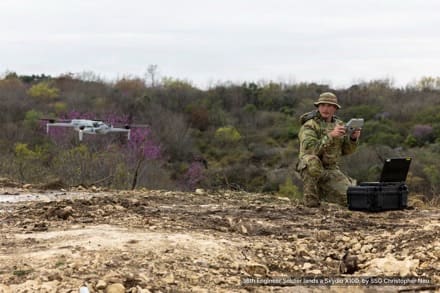
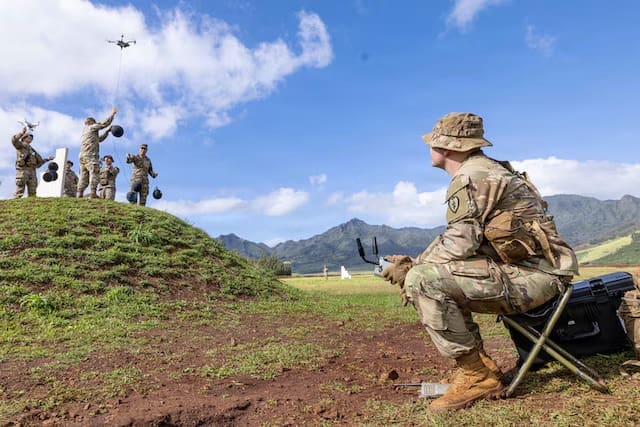
The Skydio X10D system delivers world-leading intelligence, reconnaissance, and surveillance (ISR) capability at the platoon level, with technologies tested under the most severe conditions, including those found on the modern battlefield. Designed for survivability and resiliency in contested environments, it is capable of flying autonomously, without GPS, using onboard navigation cameras to map terrain in real time and maintain flight in contested environments. Its multiband radio provides seamless connectivity by optimizing frequency use in high-interference areas. With high-resolution visual and radiometric thermal cameras, X10D gives operators persistent situational awareness in day and night conditions from a position of cover.

Skydio is trusted by every branch of the U.S. military and by 29 allied nations. The Army selected Skydio for the SRR Program of Record in both 2022 and 2025, making it the only manufacturer to span both tranches. This order, placed through Atlantic Diving Supply (ADS), reflects sustained operational confidence as the Army rapidly scales autonomous reconnaissance capabilities beyond the constraints of traditional acquisition timelines.

Every X10D is manufactured at Skydio’s facility in Hayward, California, where production workers assemble and test each unit across 550 individual checkpoints before delivery. The Hayward facility has scaled output to support orders of this size while maintaining the reliability standards the most demanding customers require.

Kentucky Vietnam Veterans Memorial receives no-cost lighting upgrade courtesy of local business

March 22nd, 2026

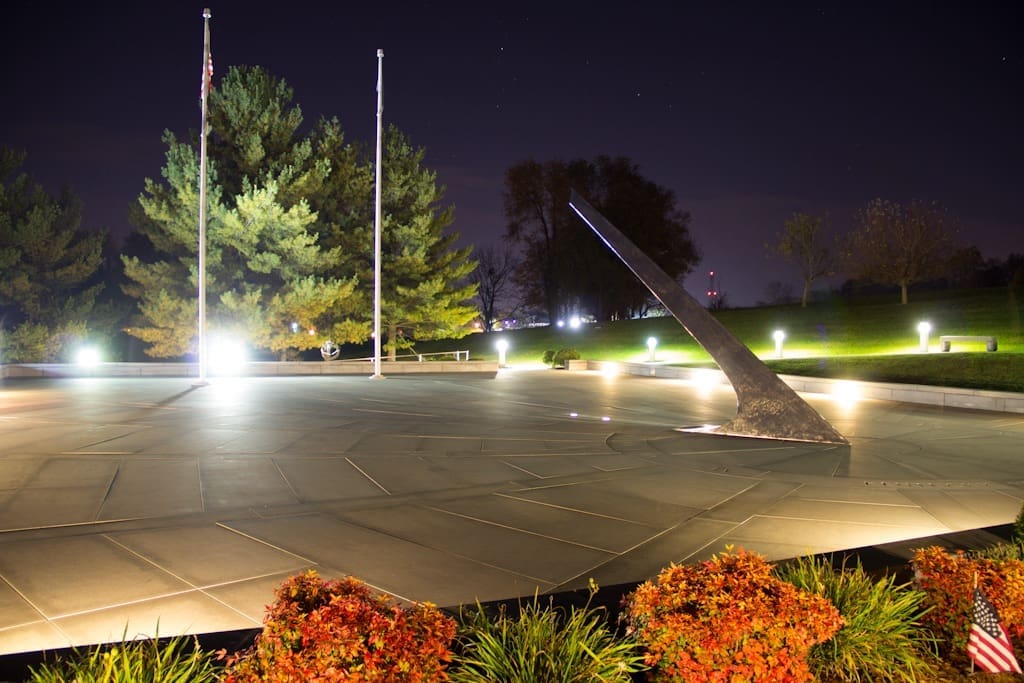
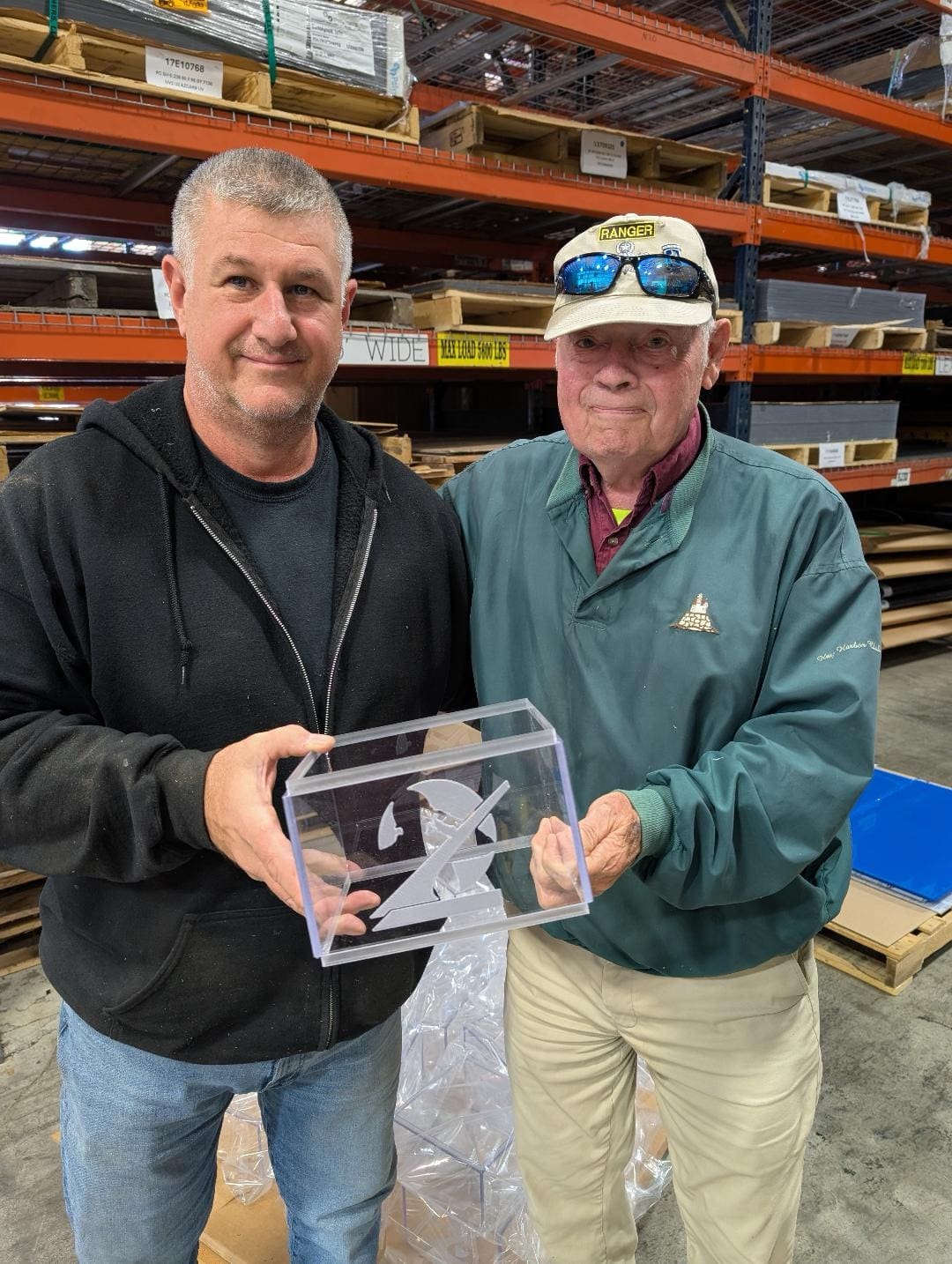
FRANKFORT, Ky – The Kentucky Vietnam Veterans Memorial (KVVM) in Frankfort recently received a significant upgrade courtesy of local business Polymershapes. The Winchester business designed, fabricated and installed brand-new lenses for the bollards at the Memorial at no cost. 

For the past 37 years, the Memorial has been illuminated by a ring of bollards, each topped with a light to honor the 1,110 Kentuckians whose names are etched in granite on the plaza. Over time, many of those lights had grown dim, and several lenses needed replacement. Though electrician Mark Wilson has worked tirelessly to repair them through the years, locating the proper replacement lenses became increasingly difficult.

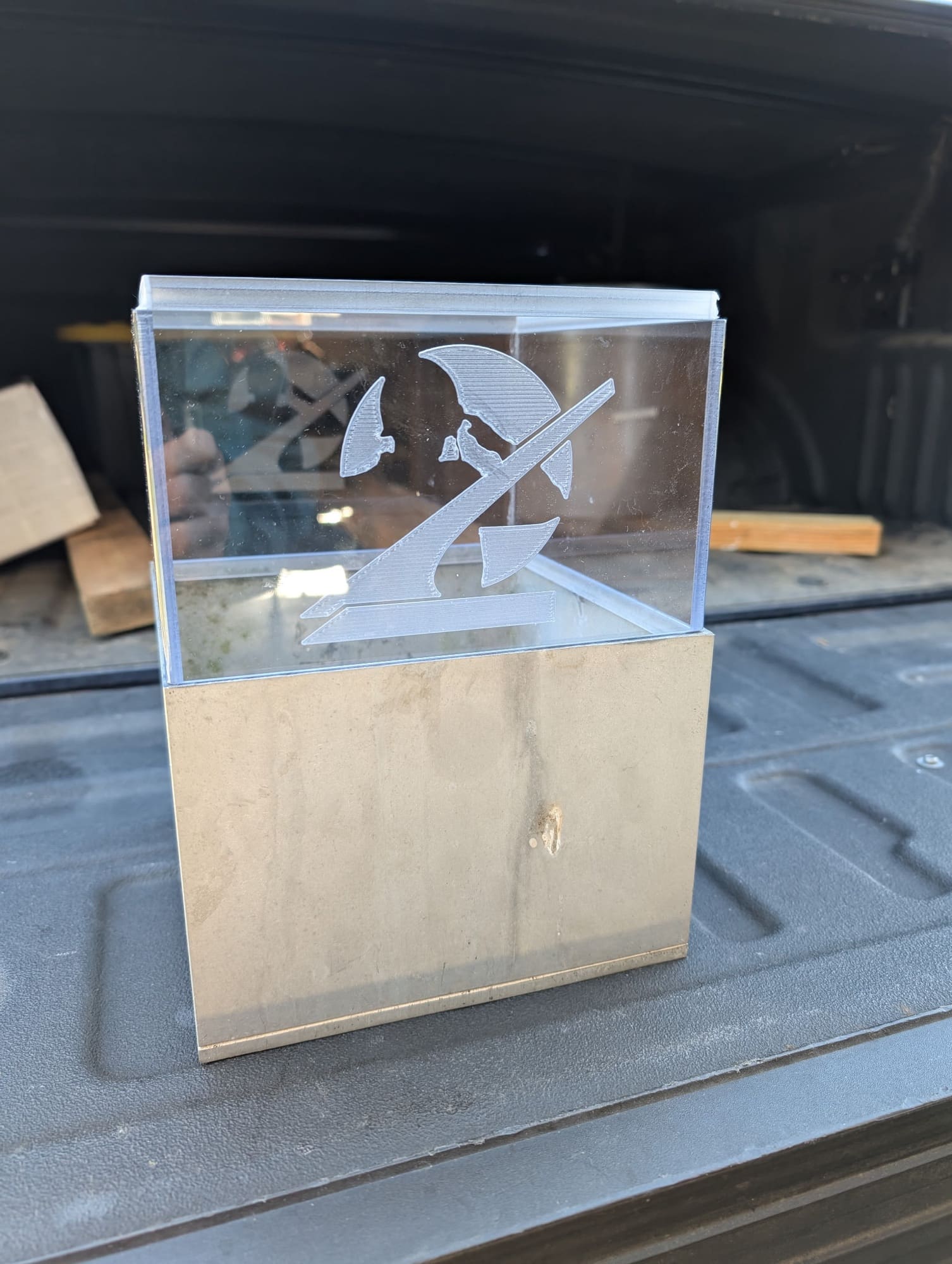
The team at Polymershapes, made up of several veterans, volunteered to not only replace the lenses, but they also engraved the KVVM logo on one side of each lens, reinforcing the powerful image of a soldier respectfully saluting all who served in Vietnam. Each lens was precision-crafted from a single sheet of polycarbonate using a CAD cutter, heat-folded on three corners with one mitered corner that was heat-bonded rather than glued. This high-quality process ensures long-lasting durability and clarity for years to come.

“These generous efforts will help preserve and enhance the Memorial’s beauty and purpose for years to come,” said Jerry Cecil, member of the KVVM Board of Directors.  “We extend our sincere gratitude to the entire Polymershapes team for their craftsmanship, dedication and generosity.”

These upgrades come just in time for National Vietnam War Veterans Day on Sunday, March 29, an annual observance honoring the 2.7 million U.S. service members who served in Vietnam and the families who supported them. In recognition of the day, KVVM will host an observance event on Sunday, March 29 at 1 p.m. The event is organized by the VFW Post 4075 Auxiliary. To learn more, contact Edna Taylor at 502-320-8255.

A POW/MIA recognition will also be held in conjunction with the observance, hosted by Charging Forward for America. To learn more, contact Kelly Shehan at 859-619-8158.

The Kentucky Vietnam Veterans Memorial is located at 365 Vernon Cooper Lane in Frankfort, and is open seven days a week with no reservation required. Learn more by visiting kyvietnammemorial.net.

Joint Interagency Task Force Spearheads Contract, Unifies Drone Defenses

March 22nd, 2026

To counter the rapidly evolving threat from hostile unmanned aircraft systems, Joint Interagency Task Force 401 has championed a groundbreaking enterprise-level agreement to provide a cutting-edge command-and-control solution through a strategic action.

Awarded by Army Contracting Command-Aberdeen Proving Ground in Maryland, the initiative directly addresses the critical interoperability challenge that has hampered joint and interagency counter-unmanned aircraft system operations.

By establishing a common technological backbone, this agreement paves the way for an integrated, multilayered defense network that will allow warfighters and federal agents to seamlessly share data, coordinate responses and neutralize threats faster and more effectively.

“This is a decisive move against a pervasive and growing threat; we are breaking down the hurdles that have limited our effectiveness in the [counter]-UAS fight,” said Army Col. Tony Lindh, task force deputy director of acquisitions. “This agreement provides common air domain awareness through a proven [command and control] platform — Lattice — allowing us to build a cohesive, agile and formidable defensive ecosystem. For the first time, we have a clear path to true interoperability across the [War] Department and our interagency partners.”

The agreement signals a fundamental shift in the government’s approach to acquiring critical software-defined capabilities. Rather than managing dozens of disparate contracts, this single enterprise vehicle allows for rapid procurement and deployment of counter-UAS technology where it is needed most, ensuring the U.S. maintains a decisive advantage.

By centralizing procurement under one $20 billion vehicle, the government will gain a unified tracking point for all related acquisitions, reduce duplicative purchases, minimize dormant procurements and achieve greater pricing transparency and cost savings.

“Based on our testing and evaluation, it became clear that a common command and control system is needed to effectively counter adversary drones. These results were confirmed during my visit to Ukraine, when I saw firsthand how drones have changed the modern battlefield,” said Army Brig. Gen. Matt Ross, task force director. “It ensures that our operators, agents and allies have immediate access to the best-in-class tools needed to defeat the UAS threat. We are cutting through red tape and delivering top-tier technology to our warfighters at the speed of relevance.”

By Army LTC Adam Scher, Joint Interagency Task Force 401

What Makes Kitanica Different?

March 21st, 2026

kitanica.com

Frontline Ukrainian Drone Commanders to Brief Washington on the World’s First Drone War

March 21st, 2026

WASHINGTON, D.C. — March 2026 — The Peace Through Strength Institute will host a high-level Ground Truth Symposium on March 25, 2026, 11 am to 3 pm, at the U.S. Capitol Visitor Center, Congressional Auditorium, bringing frontline Ukrainian battlefield commanders to Washington to brief policymakers, defense leaders, and journalists on the rapidly evolving realities of drone warfare.

You are invited to attend a news conference in a separate room at the Capitol Visitor Center following the symposium at 3:30 pm where speakers will be available to answer journalist’s questions.

As the U.S. confronts waves of Iranian Shahed drones in the Middle East, American officials are warning that traditional air defenses may not be able to intercept them all. Recent briefings to Congress have acknowledged that these low-cost drones can overwhelm expensive interceptor systems and strain U.S. missile stockpiles.

Symposium participants will include commanders from elite Ukrainian drone and unmanned systems units such as the 12th Special Forces Brigade and the 414th UAV Brigade “Magyar’s Birds.” (Find a detailed list below.)

Also presenting will be analysts, manufacturers, and defense technology experts involved in the rapid development of counter-drone strategies. 

Congressman Don Bacon will open the symposium.

But this is believed to be the first time active Ukrainian drone commanders have traveled to Washington to brief policymakers and journalists directly. They represent the first generation of leaders operating daily in what analysts describe as the world’s first drone-dominated battlefield.

Ukraine’s experience offers critical lessons for the United States and its allies – lessons the United States and our allies need now in the Iranian conflict.

The Ukrainian commanders appearing at the symposium have developed innovative countermeasures, including layered defense networks, electronic warfare, and drone-on-drone interception systems that are already reshaping modern military doctrine.

Event Details

Event: Ground Truth Symposium

Host: Peace Through Strength Institute, Bill Cole, President

Date: March 25, 2026; 11 am to 3 pm

Location: Capitol Visitor Center, Congressional Auditorium, Washington, D.C.

News Availability: Immediately following the Symposium, at 3:30 pm, presenters and moderators will be available in a separate room at the Capitol Visitor Center to answer questions from the media.

Audience:

Members of Congress, congressional staff, national security policymakers, defense experts, and journalists.

Featured Speakers Include battle-front commanders, personnel, and industry experts:

The 12th Special Forces Brigade

The Lazar Group

429th UAV Brigade “Achilles” 

414th UAV Brigade “Magyar’s Birds” 

59th UAV Brigade “Steppe Predators” 

93rd Brigade 

107th Separate Air Wing (F16 Pilot) 

Military experts in electronic warfare and unmanned systems

Defense technology investors and analysts involved in Ukraine’s drone ecosystem