
0735 – terrorists Atta and al-Omari board American Airlines Flight 11, along with the rest of the Flight 11 hijackers.
0759 – American Airlines Flight 11 departs towards Los Angeles International Airport.


0735 – terrorists Atta and al-Omari board American Airlines Flight 11, along with the rest of the Flight 11 hijackers.
0759 – American Airlines Flight 11 departs towards Los Angeles International Airport.

0600 – terrorists Mohammed Atta and Abdulaziz al-Omari traveled to Logan International Airport from Portland International Jetport in Portland, Maine.
0652 – fellow terrorist Marwan al-Shehhi called Atta at Logan to confirm the plans of the attack.
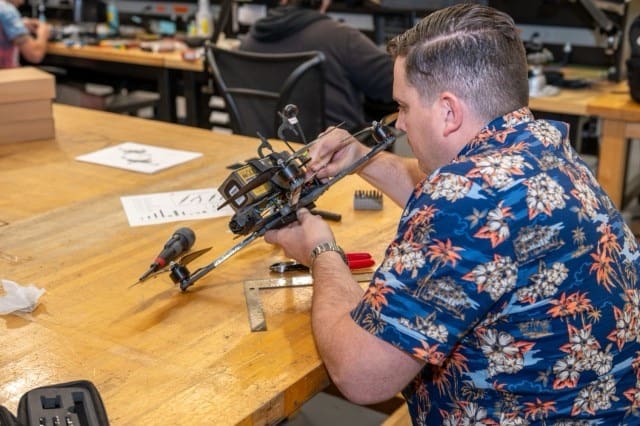
TOBYHANNA, Pa. — Tobyhanna Army Depot is playing a pivotal role in the Department of Defense’s quest for battlefield superiority.
The organization successfully completed its first delivery of first-person view small uncrewed aircraft systems, commonly referred to as sUAS, on Aug. 28, marking a significant milestone in advancing its mission to enhance readiness for America’s warfighters.
The Army and DOD’s transformation initiatives seek to facilitate a leaner and more agile Army through development of modernized UAS/sUAS capabilities, as highlighted in the memo titled “Unleashing U.S. Military Drone Dominance.” In it, U.S. Secretary of Defense Pete Hegseth described drones as “the biggest battlefield innovation in a generation.”
Led by the Army Materiel Command, this collaborative effort leverages the unique capabilities of multiple Army organizations, including the U.S. Army Tank-Automotive & Armaments Command. Rock Island Arsenal’s Joint Manufacturing and Technology Center provides 3D-printed airframes, while Tobyhanna Army Depot provides essential logistics and electronics expertise to complete the integration of sUAS systems.
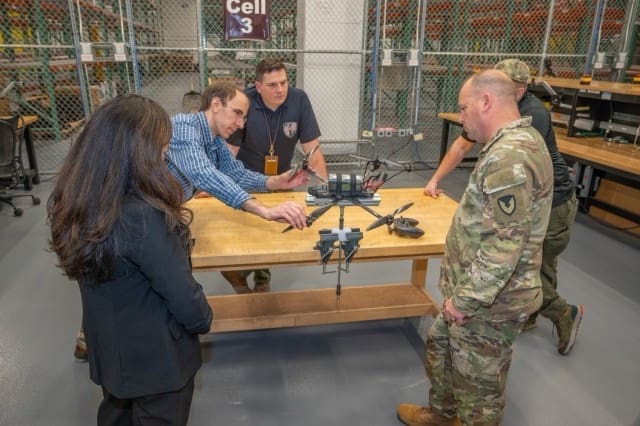
Those leading the initiative describe it as a thrilling and transformative period for Team Tobyhanna.
“We are excited to seize the opportunity to integrate and ship cutting-edge drones to units across the United States. This effort stands to transform the landscape and future of the organic industrial base, positioning Tobyhanna at the forefront of innovation and readiness for our nation’s defense,” said Steven Wiltz, a logistics management specialist supporting the emerging mission.
Depot Commander Col. Benjamin L. Kilgore agreed, noting the importance of the accomplishment.
“This new mission is an opportunity for Tobyhanna Army Depot to support the Army’s readiness needs of today, evolve our capabilities, and align with the future of the force,” he said.
Tobyhanna has a robust history of support for DOD UAS systems. The organization has supported the MQ-9 Reaper since the 2010s through public-private partnerships with L3 Harris and General Atomics. The experience gained supporting those workloads have created a strong foundation for this new effort, according to sUAS Project Manager Christopher Volch.
“TYAD’s longstanding support for UAS has underscored our critical role in modern warfare. From TYAD’s sustainment efforts for the United States Air Force’s MQ-9 Reaper, the depot has learned just how essential and in demand these systems are to the battlefield. The same holds true for sUAS, as seen in the Russia-Ukraine conflict, these systems are the eyes and ears at the tactical edge. That’s why TYAD has committed substantial resources to the sUAS project, with progress reflected in both its defined objectives and completed milestones,” said Volch.
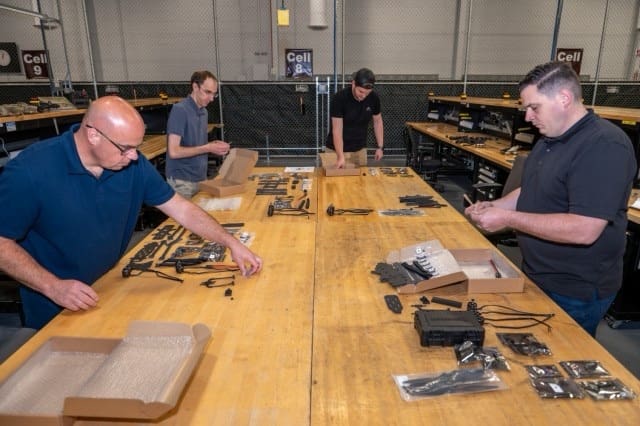
Kilgore emphasized that the initial delivery is just the first step in Tobyhanna’s sUAS journey.
“In the coming years, we will establish a robust capability to produce sUAS motors and circuit card assemblies to support emerging warfighter needs for the multi-domain battlefield.”
Tobyhanna Army Depot is designated as the Center of Industrial and Technical Excellence for Command, Control, Communications, Computers, Intelligence, Surveillance and Reconnaissance, electronics, avionics and missile guidance and control. TYAD provides cradle-to-grave lifecycle support through depot-level repair, systems integration, software and cyber engineering, and field support. A key enabler of operational readiness for Joint and Allied Forces globally, TYAD leverages new and emerging technologies to further expand the Department of Defense’s organic capabilities for microelectronics, secure communications infrastructure, unmanned aerial systems, Joint All-Domain Command and Control, Integrated Air and Missile Defense (IAMD), and the Army’s Next Generation Combat Systems. TYAD’s ability to rapidly surge production, deploy field support teams, and scale for contingency or theater-level operations makes it a vital contributor to strategic readiness and operational reach.
By Danielle E. Weinschenk, Public Affairs Officer, with additional reporting by Nicolo Manzo.

Tampa, FL. (September 10, 2025) – D&M Holding Company, Inc. (D&M), the global leader in delivering complete solutions for ammunition, primer, and propellant manufacturing facilities, is pleased to announce its attendance at TADTE (Taipei Aerospace and Defense Technology Exhibition) in Taiwan, September 18-20, 2025. This biennial event gathers leading domestic and international enterprises, government agencies, and academic institutions to showcase the latest R&D achievements and comprehensive solutions. To learn more about D&M’s propellant manufacturing capabilities and other turnkey offerings, visit Stand J0921 in the USA Partnership Pavilion to meet with the D&M team.

D&M and the Ukrainian Defense Industry Joint Stock Company (JSC) recently announced a partnership to produce specialty chemicals in the United States to address the critical shortage of propellant used in the production of ammunition for the Ukrainian defense forces. Prior to this project, D&M built a multi-million-dollar ammunition facility in Ukraine for the Ukraine Defense Industry and has several other projects in the works there, including a primer facility.
“The need for reliable supplies of powder and ammunition is soaring globally as a matter of national security for nations throughout the world,” said Dan Powers, President and CEO, D&M Holding Company. “At D&M, we are working nonstop to support the US, NATO countries, and other friendly foreign governments. We are the only company in the industry that offers solutions for all ammunition components including ammunition factories, primer factories, and propellant factories, and this is one of many advantages we bring to the table.”
In addition to building its own gunpowder plant at its White River Energetics campus in Arkansas, D&M will build turnkey propellant factories for clients to manufacture single base and double base powder for everything from small-caliber ammunition to artillery.
D&M’s goal is to continually innovate, helping clients operate more efficiently and grow.
Companies and countries that have never been in the propellant, ammunition, or primer business before can rely on D&M’s team to handle all aspects of the project from site planning and floor planning to equipment manufacture and installation, in addition to the transfer of knowledge. D&M offers intensive training to its clients and 24/7 support.
“If we can’t fix a problem over the phone, we are on a plane to travel to our customers to assist,” said James Jones, Executive Vice President, D&M Holding Company, Inc. “And as we innovate, we offer our clients affordable upgrades down the road without them having to buy new machines. This is an important aspect of supporting their growth.”
D&M has built ammunition factories and delivered equipment in the United States, South America, and Ukraine with more in the works globally, including plans to build plants in Canada to produce nitrocellulose and propellant. D&M is also currently building a single base powder plant for a Southeastern European country with other projects in process.
D&M and its White River Energetics business support domestic and international clients in the defense and sporting markets. For more information, visit D&M Holding Company and White River Energetics. To schedule a meeting during the show, email sales@dmholding.com.
5.11, the global innovator of purpose-built apparel, footwear, and gear, has introduced a new colorway of its renowned Stache Sneaker, in collaboration with The Firearm Blog’s James Reeves. The new shade, Iron Grey, has a dark grey canvas exterior, while the interior pops with tropical vibes and a rebellious edge — a red backdrop featuring hibiscus blooms colliding with skull graphics. The look is finished with a clean, off-white rubber outsole for contrast, making it equally at home on the street or on the move.
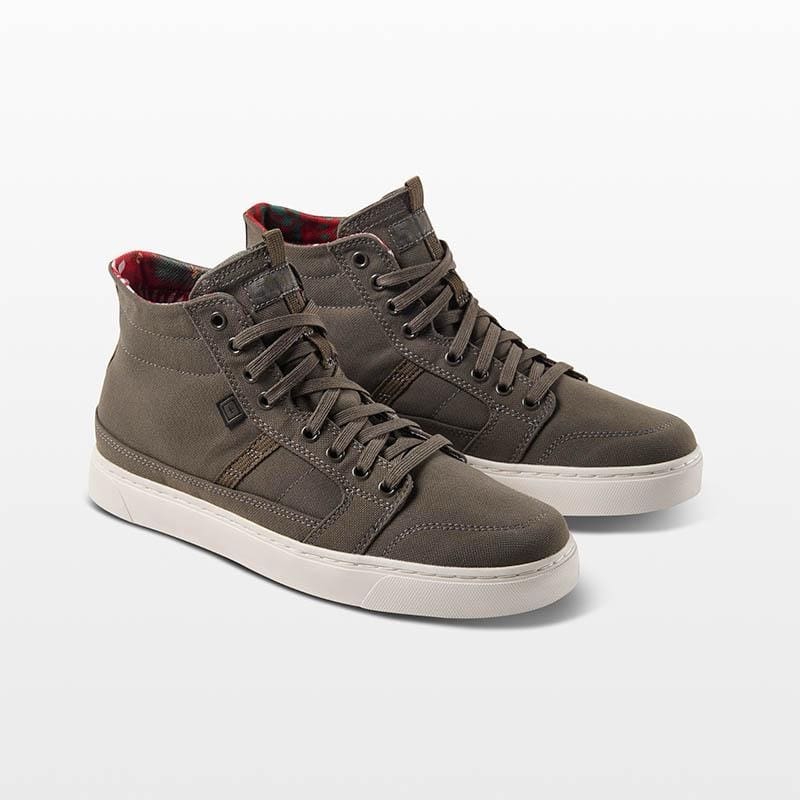
The new iteration still boasts all the same trademark features, including a Vibram® bottom that grips like a beast,?a compatible?deconstructed upper?for reduced weight and supreme comfort, and the signature ‘stash’ pocket on the shoe’s tongue perfect for stowing spare valuables. Whether you’re navigating a day at work, urban jungles, or blazing your own trail, the Stache™ Sneaker is your go-anywhere, do-anything footwear companion.

“For me, the real test was whether The Stache could handle real life — from long days on your feet to being machine-washed and crammed into the bottom of a duffel bag before a trip. That’s the kind of reliability I wanted, and I’m proud that this shoe delivers without compromise,” said Reeves.

PRODUCT DETAILS:
MSRP: $95
Also offered in black and ranger green
Sizes available range from 7 to 13
Deconstructed styling
Retro-camo interior lining and outsole area stitch
Ortholite ® insole
Flexible and breathable 1200D nylon upper
The Stache is now available online at www.511tactical.com and in select 5.11 retail stores nationwide.
LONDON – GM Defense, which formed Team LionStrike with BAE Systems and NP Aerospace to compete for the UK’s Light Mobility Vehicle Programme, is launching its new General Support Utility Platform (GSUP) at DSEI in London, to equip the armed forces with the most advanced technology.

The new General Support Utility Platform is a rugged, high-performance, multi-mission vehicle designed for rapid configuration and deployment across a range of operational scenarios – delivering mobility, payload, capacity and flexibility. It is equipped with STORM Vanguard’s modular Rapid Adapt and Deploy System (RADS) – a game-changing modular system offering – and features GVA comms integration with Ultra PCS.
The vehicle is backed by Team LionStrike, a new collaboration focused on offering the UK MoD a mobility solution to rapidly modernize its ground vehicle fleet. The team is working together in pursuit of the UK Ministry of Defence’s Light Mobility Vehicle (LMV) programme and will also address broader opportunities across NATO and allied nations. Team LionStrike will also deliver economic growth as part of the Land Industrial Strategy, and significant export growth potential.
Team LionStrike is building a sustainable supply chain and delivery ecosystem in the UK. The team will be supported by GM’s leading industry partners, NP Aerospace and BAE Systems and is also anchored by GM’s worldwide parts distribution system.
“Our objective with Team LionStrike is to support the UK Ministry of Defence’s goal of rapidly modernizing its ground vehicle fleet, providing soldiers the best tools to perform their mission,” said Steve duMont, President of GM Defense. “Vehicles like our General Support Utility Platform and our flagship Infantry Squad Vehicle are designed to deliver major advancements in operational capability and performance, along with unmatched safety and reliability.”
The new General Support Utility Platform is a high-performance, customizable multi-mission vehicle built on GM’s advanced technologies.
Key features include:
• GVW of 3500kg
• Payload of up to 1339kg
• Multi-variant solution
• Live 2,000 vehicle per month production line
• LHD and RHD options
Learn more about Team LionStrike and GM Defense’s strategic initiatives by visiting GM News.
KOMENDA, SLOVENIA (09.09.2025)
UF PRO, part of Mehler Systems and a leading provider in the tactical clothing industry, participated in this year’sNational Tactical Officers Association (NTOA) LawEnforcement Operations Conference & Trade Show. Theevent was held from 24 to 25 August 2025 at the GaylordNational Harbor in Washington, DC, and is recognised as one of the most important gatherings for law enforcement andtactical decision-makers in North America.

At booth 729, UF PRO presented its range of tactical clothingsystems developed for law enforcement personnel operatingin demanding environments. The exhibition focused on lightweight, durable combat uniforms and outerwearengineered for high mobility, moisture management, andresilience.

Selected garments were available for direct inspection andtry-on, enabling attendees to examine material quality andfunctional features in detail.
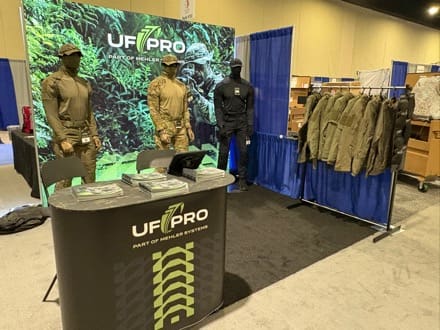
The NTOA Conference also facilitated valuable dialogue withlaw enforcement professionals from across North America. Through this engagement, UF PRO strengthened itspresence in the U.S. market and further demonstrated itscommitment to serving law enforcement communities.
For further information about the products presented, pleasevisit: ufpro.com/int
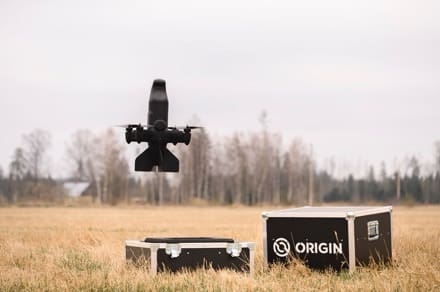
RIGA, Latvia (May 6, 2025) – Defence tech startup Origin Robotics has launched BLAZE, an autonomous counter-unmanned aerial system (C-UAS) interceptor designed to neutralize fast-moving aerial threats with precision and speed. As drones become an increasingly dominant force on the modern battlefield, BLAZE offers a cost-effective solution to counter them, filling the gap between traditional gun-based air defence and high-cost missile interceptors. The interceptor is aimed to strengthen the defence capabilities of European countries amid rising threats and geopolitical uncertainty.
Drones have reshaped modern warfare, dictating battlefield strategies and shifting the balance of power. Their widespread use, particularly in Ukraine, has demonstrated both their effectiveness and the high cost of countering them. In January 2025 alone, Russia launched over 2,500 drones into Ukrainian territory – an average of 80 drones per day. This escalation underscores the urgent need for advanced yet cost-efficient air defence solutions.
Agris Kipurs, CEO and co-founder of Origin Robotics, said, “In asymmetric warfare, drones are relatively inexpensive and widely deployed to overwhelm air defenses and strike targets both at the frontline and deep behind it, making it challenging and costly to counter. We designed BLAZE specifically to address this threat—a fast, intelligent, and cost-effective addition to existing air defense systems. We remain committed to delivering cost-efficient and adaptable solutions to support Europe and NATO allies in addressing existing and future security challenges.”

BLAZE is a man-portable, rapidly deployable interceptor designed to defeat fast-moving aerial threats, including loitering munitions and hostile UAVs. The system combines radar-based detection with AI-powered computer vision, delivering autonomous target acquisition and operator-approved interception. Equipped with a high-explosive (HE) fragmentation warhead, it ensures precise and effective threat elimination, even in contested environments.
The system autonomously detects, acquires, and locks onto targets using a combination of radar tracking and AI-powered computer vision. Upon operator confirmation, the system executes a precisely calculated attack—either destroying the target on direct impact or engaging it with an airburst fragmentation detonation. BLAZE delivers high mobility, scalability, and cost-efficiency for modern armed forces.
As an operator-supervised autonomous system, it ensures the operator retains final-stage control, including the ability to issue a wave-off command that directs the BLAZE to either return safely or self-destruct. This capability allows immediate deployment even in scenarios with uncertain target identification, significantly reducing the risks of friendly fire and minimizing collateral damage.
The interceptor is designed for quick deployment and high-intensity operations. The first drone can be launched in under five minutes, with subsequent launches taking less than a minute. Compact and portable, BLAZE’s transport case doubles as a launch station and charging dock. Its tool-less setup ensures it is flight-ready in under ten minutes.
Following the battlefield-proven success of its flagship drone system, BEAK, currently deployed by the Ukrainian and Latvian Armed Forces, Origin Robotics continues to develop scalable, next-generation technologies for modern warfare. Thanks to BEAK’s rapid deployment and proven capabilities, Origin has quickly earned recognition for its technology and built trust in its autonomous aerial systems—reflected in an R&D contract from the Latvian Ministry of Defence and a grant from the European Defence Fund.