FirstSpear

Enduro 4 Smartwatch from Garmin Redefines Ultraperformance with Extreme Battery Life and Advanced Training Features

October 13th, 2026

Comprehensive power modes, enhanced stamina metrics, a ComfortFit Fabric Band and Garmin Epic help endurance athletes and multiday adventurers train, race and explore even farther

OLATHE, Kan./Oct. 6, 2026/ – Garmin (NYSE: GRMN) today announced Enduro™ 4, its longest-lasting GPS smartwatch with solar charging, which includes dynamic features and capabilities to take endurance enthusiasts farther on their next expedition. Utilizing an energy-efficient 1.4” MIP display in combination with a solar lens, Enduro 4 has up to 320 hours of battery life in activity mode1 or up to 90 days of battery life in smartwatch mode2. It also leverages innovative updates like grade-adjusted pace-based workout targets, grade-adjusted rolling pace, stamina zones, stamina curve and Garmin Epic multiday activity logging.

“As interest and participation in ultra-endurance activities continue to grow, Enduro 4 is designed for athletes and adventurers who want gear they can trust to perform through every mile, every climb and every challenge. Intuitive features like comprehensive power modes make the most of the long-lasting battery life, while grade-adjusted metrics add a new dimension to preparing for hilly or mountainous terrain.”

—Susan Lyman, Garmin Vice President of Consumer Sales and Marketing

Grade-adjusted features, stamina metrics and more

In addition to 100+ activity profiles, Enduro 4 introduces new capabilities to the Enduro line, optimized for trail runners, multiday hikers and backpackers, and endurance athletes.

Comprehensive power modes provide preset options to optimize battery life and performance based on the needs of the user. Configurations include Max Accuracy, which offers full-feature tracking for shorter efforts, and Max Battery, ideal for extended activity recording (up to 320 hours with solar charging).

Grade-adjusted pace-based workout targets help athletes maintain the right effort range on hilly terrain, while grade-adjusted rolling pace provides a real-time view of pace over varying terrain.

Stamina zones show athletes how their stamina impacts an activity, and stamina curve helps users understand how their endurance changes over time based on fitness and training history.

With 50% more RAM than Enduro 3 and a more powerful, updated map engine, navigation is easier than ever with 30% faster panning and a smoother, more intuitive map interface for built-in routable maps. Perspective view provides more detail, both close-up and further away, allowing users to better anticipate what comes next.

Garmin Epic allows athletes to combine multiple activities into one cohesive story in Garmin Connect™. Activities can be grouped together over days, weeks or months to create an “Epic”, which enables users to add photos and share with family and friends, as well as see health and performance data aggregated during that period.

Enhanced rowing tools provide additional training insights like VO2 max and power curve for indoor rowing activities, while expanded rucking features let users adjust pack weight during an activity and set target metrics like calories burned.

Premium design for maximum versatility

Enduro 4 weighs in at an incredible 66 grams, making it one of the lightest ultraperformance smartwatches on the market. With a 51mm case, Power Sapphire™ scratch-resistant lens, titanium bezel and lightweight fiber-reinforced polymer case, it is built for the demands of the longest races and most taxing adventures, remaining remarkably light on the wrist. An integrated LED flashlight includes both white and red-light options, while a 10 ATM water resistance rating enables confident use in challenging environments.

New to Enduro 4, the ComfortFit Fabric Band combines exceptional comfort, durability and moisture-wicking performance with QuickFit™ functionality, making adjustments and swapping bands even simpler. 64 GB of memory gives users more room for onboard maps, music and data, making it easier to stay prepared for extended adventures away from home.

Available now, Enduro 4 has a suggested retail price of $899.99. Learn more at Garmin.com.

Engineered on the inside for life on the outside, Garmin products have revolutionized life for adventurers, athletes,?off-road explorers, road warriors and outdoor enthusiasts?everywhere. Committed to developing?products?that enhance experiences, enrich lives and help provide peace of mind, Garmin believes every day is an opportunity to innovate and a chance to beat yesterday.

1 Assumes continuous use for entire period in 50,000 lux conditions and typical use with activity mode (extended battery) selected
2 Assumes all-day wear with 3 hours per day outside in 50,000 lux conditions
Florida National Guard Advances Battlefield Capabilities During Drone Crucible

October 13th, 2026

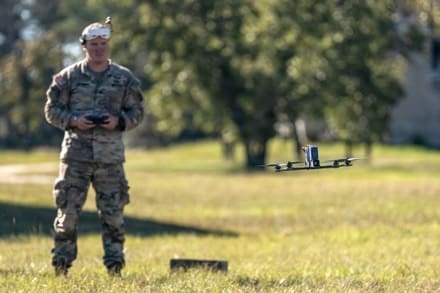
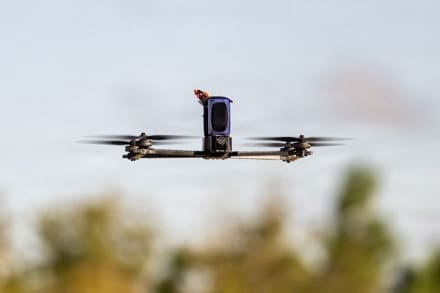
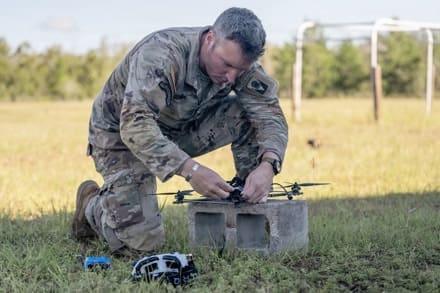
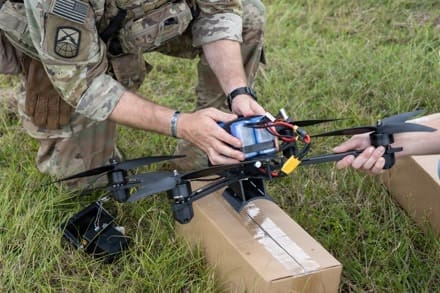
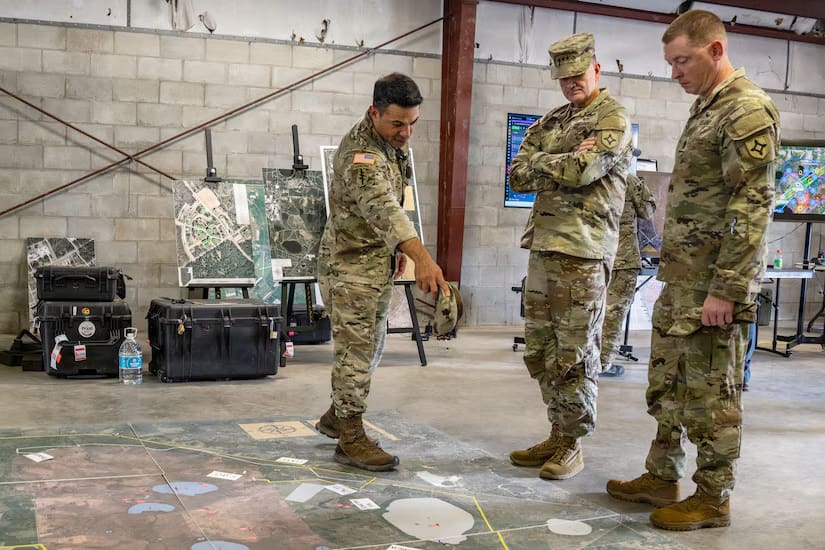
The future of military operations increasingly depends on the ability to see, understand and act faster with greater precision. During Exercise Drone Crucible 26.3 at Camp Blanding Joint Training Center, Florida, Sept. 26-Oct. 2, the Florida National Guard put that principle into practice by integrating unmanned aircraft systems, communications technology and situational awareness integration capabilities to give commanders a more complete picture of the battlefield.

The U.S. National Drone Association hosted the event alongside the Florida National Guard and in concert with the War Department. Participants included personnel assigned to the 3rd Battalion, 20th Special Forces Group; the 53rd Infantry Brigade Combat Team, Florida National Guard; Navy SEAL Teams 10 and 7; the 2nd Marine Division; and U.S. Marine Forces Special Operations Command. 

The exercise tested unmanned systems and operational information sharing among military units and mission partners. Industry partners provided a secure platform that connected tactical users and enabled data sharing, supporting the Florida National Guard’s integration with the National Guard Bureau and U.S. Northern Command’s Homeland Tactical Assault Kit architecture.

The Florida National Guard’s Situational Awareness Integration Team supported the 3rd Battalion, 20th Special Forces Group, during the exercise by integrating assault kit data and available video feeds into a common operating picture for the joint operations center. The kit allowed personnel in the field to share locations, threats and mission information, contributing to a more comprehensive operating picture.

During Drone Crucible 26.3, the Florida National Guard worked with Northcom and Joint Task Force National Capital Region to share kit data, unmanned aircraft telemetry and full-motion video. The effort connected the field activity with higher-level commands and demonstrated the potential to improve shared situational awareness.

The effort was designed to reduce the time between detection and decision-making during tactical lanes by bringing information from multiple systems and sources together in a way that supported commanders and operational teams.

“This exercise is giving us an opportunity to demonstrate how technology, innovation and strong partnerships can enhance the way we operate,” said Army Maj. Gen. Robert Carruthers, Florida Army National Guard commander. “By integrating unmanned systems and our latest situational awareness and mission command software together, we are eliminating stovepipe systems, reducing multiple devices and air-gapping of information while providing commanders with a clearer, fused operational picture that enables faster, better-informed decisions.”

The integration team provisioned about 82 assault kits and personal devices to the Florida National Guard server. At the same time, the operations center used eight video feeds to maintain situational awareness across the exercise.

During that time, the guard successfully shared assault kit position location information, operational overlays and full-motion video from unmanned systems with Northcom. The feeds included data from both unmanned surface vessels and unmanned aircraft systems.

“What we are building here has great value well beyond this exercise. Our goal is to develop a scalable capability that strengthens interoperability, speeds our kill chain, increases our situational awareness, and improves our ability to fight and win on a rapidly evolving battlefield,” Carruthers said.

The integration allowed Northcom in Colorado Springs, Colorado, and JTF-NCR in the Washington area to remotely view information generated during the exercise. The team ultimately demonstrated the capability at the combatant command level.

The team also supported the integration of multiple other teams through a modernization cell, while subject matter experts specializing in unmanned systems and tactical assault kits provided technical expertise and rapid user support. That structure brought together personnel from the National Guard and industry partners, creating an environment where service members could rapidly collaborate, troubleshoot and refine the technology while conducting the exercise.

“We’re taking emerging technologies and putting them to the test — validating the technology while also refining our standard operating procedures,” said a special operator assigned to the 3rd Battalion, 20th Special Forces Group. “It’s about bringing the networks, hardware and software together, making sure those systems can communicate and determining how they support both our domestic and federal missions. It also gives us an opportunity to connect and operate with other states, units and government agencies.”

For the Florida National Guard, the significance of Drone Crucible 26.3 extends farther than the technology being tested.

“Beyond this exercise, the Florida National Guard team sees an opportunity to integrate this capability more broadly with conventional forces and partner agencies,” said Army 1st Lt. Lisa Casares, Florida National Guard situational awareness integrator.

“Having dedicated subject matter experts for each system has been critical to maintaining the common operating picture and resolving issues quickly,” she said. “Continued support from these experts will help the Florida National Guard sustain this capability and build a situational awareness framework that can scale beyond a single exercise.”

As unmanned systems and other emerging technologies continue to shape military operations, the ability to integrate information rapidly and provide commanders with a common operating picture is becoming increasingly important to how forces train, coordinate and respond.

“This exercise demonstrated how integrated unmanned systems strengthen soldiers on the battlefield,” said Army Col. Todd Hopkins, Camp Blanding Joint Training Center commander. “They do not replace soldiers — they extend their reach, awareness, protection and precision to help them move, fight and win.”

By Air Force Capt Brittianie Funderburk, Florida National Guard Public Affairs

Sage Technologies Leads Industry in Digitization of Military Night Vision Goggles

October 12th, 2026

Company Addresses Market Challenges and Integration of AI Applications
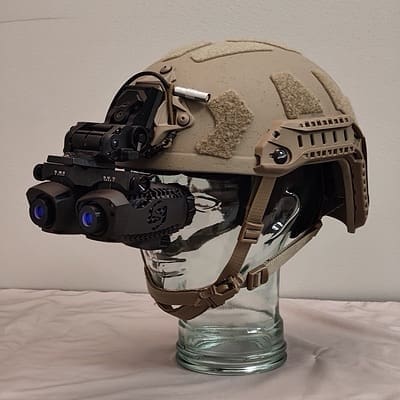
WASHINGTON, Oct. 12, 2026 — AUSA 2026 — Sage Technologies, an innovator in low-latency digital data processing and defense electronics, announced today the release of its DPVS military-grade digital night vision goggles. DPVS is designed to address the Department of War’s (DOW) current requirements around soldier-borne digital vision and soldier connectivity. Leveraging expertise gained from the IVAS program, the new product leads the industry in quality of low-light performance, matching current analog NVG systems in the market today. Unlike analog systems, Sage’s digital version allows for the benefits of advanced technology, including real-time command and control data sharing as well as the integration of AI.

Utilizing commercially available components and the Army’s MOSA strategy (Modular Open Systems Approach), Sage’s night vision technology is designed to deliver real-time situational awareness for military personnel, civil agencies, and first responders.

“Our mission at Sage Technologies has always been to solve complex, real-world problems on the front line leveraging the latest technologies available,” said Steve Cantrell, CEO and President of Sage Technologies. “By fusing advanced digital sensors with real-time data processing, this system provides operators with situational awareness in the modern connected battlefield.”

Building on Sage’s legacy as a trusted supplier to the DOW for over 30 years, the DPVS goggles integrate low-light sensors and real-time computing to ensure 24/7 operational capability where traditional analog night vision systems fall short.

Key features of the new digital night vision platform include:

  • Advanced Sensor Integration: Offers the best low-light visible (LLVis) sensor on the market for high-resolution optical imaging in degraded visual environments.
  • Ability to integrate AI: Enables state-of-the-art image enhancement software onboard the platform.
  • Ultra-Low Latency Processing: Leverages Sage’s proprietary embedded processing to provide ultra-fast digital data processing, eliminating display lag for high-tempo operations.
  • Tactical Network Compatibility: Integrates seamlessly with tactical Android systems (such as ATAK) to display real-world situational awareness data directly to the operator’s display.
  • Helmet-Mounted Design: Engineered specifically for dynamic tactical environments, with a fit for all common helmets.

For more information about Sage Technologies leading advanced digital solutions visit www.gosage.com.

American Rheinmetall Showcases Transformational, Modernized Technologies for the US Army’s Future Fight at AUSA 2026

October 12th, 2026

The AUSA Annual Meeting & Exposition takes place in Washington, DC from 12-14 October, with this year’s motto set as “America’s Army: The Foundation of the Joint Force”. The American Rheinmetall family of companies along with key partners from Rheinmetall’s global enterprise will be on-site (booth #2825) showcasing some of their most recent activities, achievements, and innovative solutions aimed at providing the U.S. Army with the critical, next-generation technologies it needs and deserves.

With a domestic footprint spanning Arkansas, Maine, Michigan, Ohio, Texas, and Virginia, and a workforce of over 1,500 U.S. employees, American Rheinmetall is making substantial contributions to Army modernization while also supporting the revitalization of the U.S. defense industrial base. The company is accelerating the delivery of transformational capabilities designed to ensure overmatch, Soldier lethality, and readiness for the future fight.

“We are delivering the technologies that enable U.S. forces to dominate future battlefields through unmatched lethality, survivability, and agility,” said Matt Warnick, CEO at American Rheinmetall. “AUSA 2026 is a critical venue for engaging with the Army and defense community to demonstrate how our solutions deliver mission needs at the speed of relevance.”

Featured Technologies at AUSA 2026 – Booth #2825

American Rheinmetall will highlight an integrated suite of capabilities that support ground combat operations, tactical mobility, air defense, vehicle autonomy, long-range precision fires, and Soldier lethality:

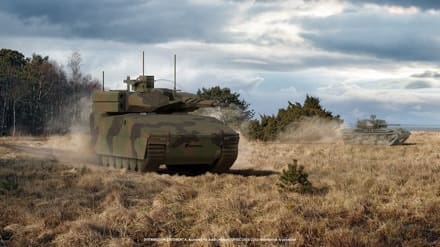
Lynx XM30 Combat Vehicle – A Transformational Capability for the Air?Ground Littoral Fight (Visuals only)


Learn more about the Lynx XM30—our leap?ahead solution for the Army’s XM30 Combat Vehicle program. Designed for dominance in future conflict, the Lynx XM30 delivers unmatched connectivity, lethality, survivability, and a fully open, modular architecture built for rapid tech insertion and future mission growth. American Rheinmetall is currently delivering prototype vehicles to the Army for test and evaluation.

Listen in on two XM30 thought leadership panels at booth #2825 during AUSA:
•    Team Lynx: The Right Team Delivers — Monday 10/12, 1400–1445
•    Designed for the Soldier, Not the Spec Sheet — Tuesday 10/13, 1100–1130

HX Truck (CAML Solution): Proven. Autonomous. Ready.

The Army needs a highly mobile, air?transportable launcher that can operate autonomously or with a crew, and American Rheinmetall’s HX Truck delivers that capability today. With more than 20,000 vehicles already fielded globally and autonomy deployed on 24 chassis types in 19 countries, the system is proven, including a successful CAML mission demonstration at Redstone Arsenal in June 2026. The HX platform offers safe autonomous operation, convoy and waypoint navigation, teleoperation, autonomous load/unload, and open interfaces with full government?owned architecture.

Boxer with Skyranger 30: Agile, Layered Mobile Air Defense

Built on the survivable, mission?flexible Boxer platform, the Skyranger 30mm system provides lethal, short?range air defense optimized for maneuver forces. With a blended effector suite and autonomous engagement capabilities, it delivers scalable C?UAS and SHORAD performance that supports Integrated Air and Missile Defense modernization across all environments. Also on display will be a Remote Weapon Station with effectors that deliver highly mobile, lethal, and precise autonomous air?defense performance against today’s evolving aerial threats.

A Full Spectrum of Unmanned Ground Vehicles and Robotics for Modern Maneuver Forces
•    Ox: A modular, autonomy?ready platform built on 20 years of Rheinmetall UGV experience. The Ox enhances squad and platoon operations with quiet mobility, robust payload options, and mission?flexible performance from CASEVAC and resupply to EW and counter?UAS. Currently competing in the Army’s GOAT program.
•    MUSKOX: A next?generation medium UGV pairing a hybrid electric chassis with advanced autonomy and AI?driven controls. MUSKOX delivers scalable logistics, sustainment, and combat support capabilities and has been down?selected for the Army’s Project Sustainment Program.
•    Mission Master SP: Down?selected for the Army’s Last Tactical Mile program, the Mission Master Silent Partner offers full autonomy, high payload capacity, optional amphibious capability, and compatibility with major air?transport platforms. MMSP supports missions ranging from CASEVAC to resupply while advancing U.S.?based production.
•    Wild Goose: A fully fielded; rugged Infantry Modular Robotic System designed for dismounted forces. The Wild Goose provides adaptable mobility with a 330?lb payload capacity and terrain?dependent range up to 25 km, enabling rapid configuration for diverse mission needs.

Advanced Medium and Large Caliber Munitions & Lethality Solutions – Built for the Future Fight

Globally, Rheinmetall continues to lead in next-gen medium and large-caliber munitions design, development, and production with solutions that provide battlefield dominance across all domains. On display will be Rheinmetall’s proven, advanced 155mm Extended Range propellants and rocket assisted V-LAP rounds, advanced airburst munitions, and the Highly-Advanced Multi-Mission Rifle, a new and revolutionary automatic, magazine-loaded, shoulder-fired 40mm grenade launcher that brings scalable overmatch to the squad level.


Multiple Rocket Launch Rocket System (MLRS) Cab: American Rheinmetall is a Proven Tier 1 Partner in Advanced Defense Components
American Rheinmetall delivers critical, high-precision components, structures, and assemblies that power many of the nation’s leading defense systems from combat vehicles like the MLRS to advanced missile platforms and other essential defense articles. As a trusted Tier 1 supplier, the company’s U.S. manufacturing expertise provides the quality, reliability, and performance customers depend on for mission success.

American Rheinmetall welcomes visitors to AUSA booth #2825 to experience the Group’s offerings fitted for the Army’s future fighting force.

www.rheinmetall-us.com 

Veteran Wellness Podcast: An Interview With Eric Graves

October 12th, 2026

If you’ve been wanted to know about my background or what it’s like to speak with me, the latest episode of the Veteran Wellness Podcast is a great opportunity.

I’d also like to encourage you to listen to the other episodes. My friend Erik Lawrence has lined up some amazing Veterans to talk about their service, life lessons and their health journeys.


Mountain Horse Solutions Receives Second G-TEAD Order for FD-1 Interceptor Under Army Other Transaction Agreement

October 12th, 2026

Army’s Global Tactical Edge Acquisition Directorate turns soldier feedback into fielded upgrades in weeks, not program cycles

SARASOTA, Fla. – (Oct. 12, 2026) – Mountain Horse Solutions, a Global Ordnance company focused on mission-critical support, unmanned systems and integrated defense solutions, is delivering additional FD-1 interceptors to the U.S. Army under a second contract awarded by the U.S. Army’s Global Tactical Edge Acquisition Directorate (G-TEAD). The award, issued under an Other Transaction Agreement (OTA), follows an initial G-TEAD OTA awarded this spring. This marks two awards and a fielded capability within a single year, reflecting G-TEAD’s emphasis on accelerating new systems to soldiers.

“G-TEAD changed what is possible, allowing us to combine soldier feedback with our ability to rapidly improve and deliver capability,” said Bill Allen, president of Mountain Horse Solutions. “Soldiers assessed the FD-1 and told us what needed improvement. We turned those updates around within weeks, and G-TEAD provided a way to buy the revised version without waiting on a requirements cycle. That sequence did not exist three years ago.”

The FD-1 is a compact, dual-use interceptor designed to defeat Group 1–3+ Unmanned Aircraft Systems (UAS) as well as ground targets. It can be emplaced and airborne in under two minutes, is employed by a single operator rather than a crew and is designed to integrate behind an existing detection and tracking layer as the defeat capability, or to operate as a standalone system. The operator maintains positive control throughout the engagement, and a human authorizes every engagement.

The system was developed to address a cost problem that has strained conventional air defense: inexpensive, expendable drones fielded in volume against interceptors that cost far more than the threats they defeat. The FD-1 is intended to close that gap while remaining simple enough for one soldier to set up and employ in the field.

G-TEAD, the Army’s acquisition hub for the tactical edge and a core component of the Army Pathway for Innovation and Technology (PIT), was established to close the gap between how quickly threats evolve and how quickly the Army can field a response. It brings acquisition expertise and authorities closer to Army Service Component Commands while connecting them with research, development, test and evaluation resources.

Through Accelerated Capability Events (ACE), soldiers can assess operationally ready equipment and software, provide feedback and help shape systems before broader fielding. The process is designed to accelerate validated technologies toward acquisition and operational use.

Supporting the process, the 409th Contracting Support Brigade provides contracting expertise and execution for G-TEAD efforts, helping move validated capabilities into acquisition actions on accelerated timelines. The brigade played a key role in the FD-1 award, providing the contracting support needed to maintain momentum from evaluation and refinement into procurement.

The FD-1 has been evaluated by G-TEAD, the 52nd Air Defense Artillery and the Army Test and Evaluation Command (ATEC), with Mountain Horse Solutions incorporating feedback throughout development. Following the initial operational assessment, the company delivered a series of user-driven upgrades within five weeks, a cycle it repeated after each subsequent assessment.

“The value of these assessments is that they are extremely insightful,” said Richard Budniewski, director of UAS/C-UAS Programs at Mountain Horse Solutions. “Soldiers find things a test range never will. G-TEAD built the pathway that turns their feedback into fielded improvements within weeks instead of program cycles and then gave the Army a way to order it. That is the part industry has been waiting on.”


The system took first prize in the U.S. Army xTech Counter Strike competition in November 2025, and its technical review by ATEC is complete.

G-TEAD’s Accelerated Capability Events are designed to move technologies from event conception to capability transition within 180 days. The FD-1 effort has tracked within that timeline from operational assessment through this award.

Mountain Horse Solutions is currently producing the FD-1 and has capacity to scale to meet additional demand, including orders placed by allied and partner nations.

System quantities and contract value are not disclosed.

GM Defense Accelerates Growth and Global Mission-Ready Capability at AUSA

October 12th, 2026

Rapid technology transfer, 22-day manufacturing turnarounds and strategic global partnerships propel GM Defense’s record expansion
WASHINGTON, D.C. — October 12, 2026 — Today at the Association of the United States Army (AUSA) Annual Meeting and Exposition, GM Defense LLC, a subsidiary of General Motors, showcased the rapid acceleration of its global business model. Guided by a “customer-first, technology-transferred” approach, the company is bridging the gap between commercial innovation and tactical military deployment at unprecedented speeds.

“The modern defense landscape demands advanced capability, rapid fielding and sustainable scale,” said Steve duMont, president of GM Defense. “We do not begin with a blank sheet of paper. By transferring GM’s world-class engineering, supply chain and manufacturing scale directly to the service member, we are transforming customer needs into mission-ready capability faster than ever before.”

Business updates and growth pillars

Infantry Squad Vehicle expansion

The U.S. Army’s planned requirement has grown from an initial order of approximately 649 vehicles to nearly 12,000 units. Responding directly to feedback, GM Defense closely collaborated with the customer to identify a clear operational gap, then self-funded development of the Infantry Squad Vehicle Utility (ISV-U) prototype. By delivering seven early prototypes for unit-level military assessments at no cost to the Army, GM Defense successfully engineered a highly versatile five-soldier variant that is now expected to field across 39 active-duty and National Guard mobile brigades.

22-day turnaround with Lockheed Martin

Illustrating a revolutionary boost to the defense industrial base, GM Defense delivered its first batch of mission-critical PAC-3 Missile Segment Enhancement (MSE) housing components to Lockheed Martin just 22 days after signing the contract. The contract was signed on August 6, and the components were delivered August 28. This milestone demonstrates that GM’s advanced casting and precision-fabrication capabilities can immediately scale critical air and missile defense systems.

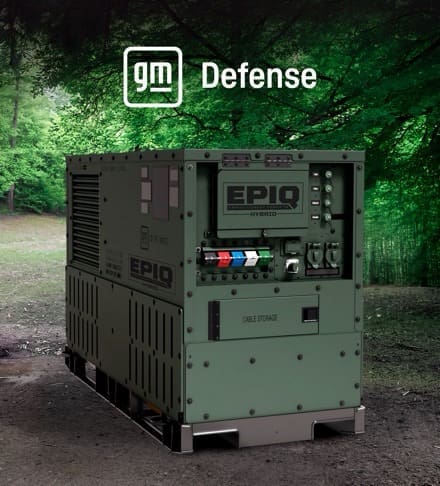
Next-generation autonomous and hybrid platformsGM Defense unveiled its Unmanned Ground Vehicle (UGV) concept, built on a rugged Chevrolet Silverado 3500HD dual-rear-wheel skateboard architecture to support silent logistics and casualty evacuation, with functional trials targeted for 2027. The company also showcased the EPIQ Hybrid prototype, a customer-inspired 60-kilowatt/100-kilowatt-hour expeditionary energy storage system paired with an onboard generator to lower thermal and noise signatures in austere environments.

Deepening allied commitments

Furthering its strategic expansion, GM Defence UK is advancing its Light Mobility Vehicle program proposal. Partnering through Team LionStrike with NP Aerospace and BAE Systems, the consortium delivers low-risk, high-quality, commercially based solutions at the speed and scale required by allied forces. With proven vehicles, global scale and an operating model built around rapid technology transfer, GM Defense is demonstrating that commercial manufacturing disciplines can successfully solve the military’s most complex and immediate challenges.

For more information, visit gmdefensellc.com.

SIG SAUER to Showcase American-Made Defense Products at AUSA

October 12th, 2026

Leading small arms manufacturer to highlight combat-proven firearms, remote-control weapon stations, drones, and counter-UAS
NEWINGTON, N.H. (October 12, 2026) – SIG SAUER, an industry-leading manufacturer of cutting-edge firearms, electro-optics, ammunition, and advanced concepts, will showcase its next-gen military small arms at the Association of the United States Army (AUSA) trade show in Washington, D.C., October 12 – 1

“We always look forward to AUSA. It’s an opportunity to showcase our made-in-America technology developed in partnership with the United States Army, ranging from next-gen carbines and machine guns to ammunition,” said Robby Johnson, EVP and CMO, SIG SAUER. “We ramped up production of the SIG XM8 to successfully meet the Army’s schedule, and it’s set to begin fielding in December to support the Close Combat Force. We will have the XM8 and additional SIG products on display.

SIG SAUER Unmanned Capabilities & Training
In addition to premier firearms, SIG SAUER offers the most advanced small arms unmanned systems, including drones, counter-UAS, and remote-controlled weapon stations (RCWS) to support modern combat. Along with the product capabilities, SIG SAUER provides world-class training for customers and partners. The SIG unmanned training instructors’ experience extends across aerospace engineering, flight testing, readiness, and all operational environments to support first-time users to the most experienced technicians.  

“We’ve invested in a full offering of unmanned capabilities,” said Ryan Scott, Director of Advanced Concepts, SIG SAUER, who served 22 years in the Army, including over a decade with unmanned systems. “We’re doubling our square footage and workforce at our North Carolina facility with a multi-million-dollar expansion across R&D, engineering, manufacturing, and training. This investment continues our support for the U.S. Armed Forces and allies, which now also includes our battlefield-ready counter-UAS.”

The all-new SIG SAUER XRAY9-CUAS, a mounted electro-optic, uses advanced technologies to quickly target and engage drones using a proprietary laser rangefinder.  

SIG SAUER AUSA Location and Product Display
The SIG SAUER AUSA exhibit is located at booth #8015 Hall E at the Walter E. Washington Convention Center. A media kit with images, video, and additional information is available here. Included below is a selection of SIG SAUER products that will be on hand at AUSA: 

SIG SAUER M250: The U.S. Army’s Next Generation light machine gun, the M250 represents a major leap in squad-level firepower. It replaces legacy systems with a belt-fed, gas-operated, and reduced-recoil design that fires a powerful 6.8×51 mm hybrid cartridge to give infantry units greater range and lethality against advanced body armor. With a SIG optic and suppressor, the M250 is a complete weapon solution.  

SIG SAUER MMG: A belt-fed, lightweight, man-portable medium machine gun chambered .338NM, 6.8 hybrid, and 7.62 NATO hybrid. The SIG MMG provides heavy machine gun range in a highly controllable and maneuverable MMG package and, when paired with a SIG optic and suppressor, is a complete weapon solution.

SIG SAUER XM8: The U.S. Army’s next-generation carbine, the XM8 was developed with soldier feedback and SIG innovation, delivering enhanced lethality, greater range, and new features (e.g., full ambi safety and bolt release, heat shield, suppressor) when compared to the M4 it replaced. Against the SIG M7, it is 12 percent lighter.  

SIG SAUER Hybrid Ammunition: Engineered to meet the requirements of the U.S. Army’s Next Generation Squad Weapon program, SIG Hybrid ammo delivers revolutionary pressures that significantly increase velocity, range, and lethality.

SIG SAUER RCWS: An advanced lightweight system, the SIG RCWS bolsters operator safety and situational awareness by enabling point-and-shoot remote machine gun operation.  

SIG SAUER Advanced Concepts: Designed to dominate the future of unmanned capabilities, SIG drone technologies are built to meet the evolving demands of defense and security missions. The product lineup includes the fixed-wing SCYTHE aircraft, the SABER quad-copter, and the M-HORNET 22 LR payload attachment.

A select lineup of advanced SIG SAUER electro-optics and suppressors will also be on hand, including the XRAY9-CUAS.