SIG SAUER - Never Settle

US Army Evaluating Mini Tactical 5-R System from Gantz-Mountain Inc

December 1st, 2020

As part of the ongoing Army Expeditionary Warrior Experiment 2021, they are experimenting with the Mini Tactical 5-R from Gantz-Mountain, Inc.

It is a smart surveillance system using ground sensors with artificial intelligence. This super micro-computer and artificial intelligence algorithms are packaged within one of five ruggedized camera systems with low light/night, thermal, and acoustic sensors.

The Experimentation Force (EXFOR), 1-29 IN, will conduct missions using the fixed or long range capabilities of the MT-5-R for AEWE’s Force-on-Force experimentation missions on Fort Benning, GA February through March 2021.

The Mini Tactical SOF Intelligence System is available for agency and unit orders through ADS Inc.

The Navy’s New Fitness Test Is Here – What You Need To Know

December 1st, 2020

From MC1 Mark D. Faram, Chief of Naval Personnel Public Affairs

The Navy will hold a single, six-month physical fitness assessment cycle during calendar year 2021, allowing the service to resume fitness testing while limiting Sailor exposure to COVID-19. That cycle will also see the Navy rollout the forearm plank, which as a replacement the curl-up, and the 2000-meter row as a new optional cardio event.

The Navy will hold a single, six-month physical fitness assessment cycle during calendar year 2021, allowing the service to resume fitness testing while limiting Sailor exposure to COVID-19.

The cycle was announced in NAVADMIN 304/20, released Nov. 18. The message also detailed rollout plans for the forearm plank, which will replace the curl-up, and the 2000-meter row as a new optional cardio event.

“Shifting the PFA cycle to March allows Navy to execute the PFA after the primary influenza season, leveraging outdoor venues as the weather warms,” Vice Adm. John B Nowell, Jr., the chief of naval personnel, wrote in the message.

The shift also “acknowledges the fact that while vaccines and therapeutics are expected to be available, their timing and impact are unknown.”

July’s NAVADMIN 193/20 announced the spring 2021 restart of the normally semi-annual Navy Physical Fitness Assessments, after two cycles were canceled due to COVID-19. Out of an abundance of caution, the Navy decided to proceed with the single cycle option for 2021 as the COVID crisis shows no signs of abating yet.

The Navy will resume two testing cycles once conditions permit. The Department of Defense has long mandated all services conduct annual fitness testing.

However, COVID-19 mitigation measures in place since the spring allow services to waive the requirement as a force protection measure.  The message notes that permission will carry over to allow Echelon II Commanders to waive the 2021 cycle if COVID 19 prevents its safe execution.


Where conditions permit, the message said, all Sailors must participate in the single 2020 cycle, meaning exemptions for scoring excellent or above from the previous cycle will not apply.


Going forward, however, those who score excellent or outstanding on the 2021 PFA will be exempt from participation in the first PFA cycle of 2022.

The message also details how the new plank and 2000-meter row optional cardio events will fit into the physical testing process as well as how they’re expected to be accomplished and graded. It’s the first major change to the assessment since the Navy introduced fitness assessments in the early 1980s.

Sailors have long complained about the curl-up. As Navy researchers studied the exercise, they found it was not a true test of abdominal strength. Also, it did not prepare Sailors to better accomplish shipboard tasks. In fact, curl-ups have been linked to an increased risk of creating or aggravating lower back injuries.

The forearm plank, however, is a functional movement required in 85 percent of regular shipboard tasks, including pushing, pulling, lifting and carrying.

The forearm plank uses isometric contraction to activate key abdominal and trunk muscles, mimicking the main function of the abdominal musculature – to act as stabilizers to resist the spine from moving while strengthening the lower back.

Training for the forearm plank strengthens the body’s core, improves posture, and reduces the risk of lower back injuries throughout a Sailor’s career.

Because there is overlap in the muscle groups used for the push-up and the forearm plank, the decision was made to conduct the push-up event first, followed by the plank and cardio portions.

This sequence was used in the initial tests. Researchers found it allows for maximum performance on the push-ups while limiting residual fatigue during the forearm plank.

The cardio portion’s new addition will be a 2000-meter row on the “Concept-2 Rower.” The other options remain as the 12-min stationary cycle, 500-yd/450-m swim, and 1.5-mile run. 

A non-weight bearing, low impact exercise, rowing reduces stress on the legs, while providing a great full-body cardio workout as it works 80 percent of the body’s muscles. 

A big benefit of the Concept-2 Rower is that it’s space saving and thus able to be easily used on any naval vessel as well as at shore installations.

A detailed description of how each of the new events will be conducted can be found in NAVADMIN 304/20.  As previously announced, the Navy will give Sailors a one-cycle grace period for the forearm-plank. Though the event will be conducted during the 2021 Cycle, it won’t officially count until 2022.

Initial performance standards for scoring the forearm plank and 2000-meter row were developed by the Naval Health Research Center (NHRC) and are available to both individuals and command fitness leaders on the Navy Physical Readiness Program website at www.public.navy.mil/bupers-npc/support/21st_Century_Sailor/physical.

Disruptive Technology Levels the Battleground for US Space Force

November 30th, 2020

Catalyst Accelerator’s (Catalyst), Cyber for Space Applications, launched eight small businesses into the reaches of the U.S. Space Force, with its sixth accelerator Demo Day on November 19, 2020. Powered by Air Force Research Laboratory, Space Vehicles Directorate and sponsored by Booz Allen Hamilton, the cohort of small businesses concluded its 12-week accelerator, gaining traction into moving technology from commercial application to the military warfighter.

Cyber applications have long been the mainstay in the Department of Defense, but with the creation of the U.S. Space Force, a rigorous hunt for disruptive cyber technology has begun. No longer is the warfighter confined to air, land, sea and cyber. Space is now a contested domain, with near-peer adversaries with comparable capabilities, unsettling operations in both the public and private sectors. U.S. data exfiltration by malicious actors is staggering. In 2019 it was estimated that 6.5 million documents per day were stolen by U.S. adversaries, according to keynote speaker Brigadier General D. Jason Cothern, Vice Commander of Space and Missile Systems Center.

The U.S. Space Force is tasked with protecting America’s interests in space, deterring aggressive acts and sustaining operations in this far-off region. With this in mind, Catalyst’s Cyber for Space Accelerator invited small businesses to apply to become a cohort company and demonstrate how their technology might “secure the next generation of space operations and increase resiliency.” “We had a team of 19 people that helped us choose the best companies for this cohort and judging from the response of subject matter experts from Industry and the Department of Defense over the course of the Accelerator, our selection was excellent. I look forward to these companies gaining the traction they need to get their technologies into the hands of the United States warfighters, making the cyber-physical systems they rely on more relevant and secure in the 21st Century fighting domain!” says KiMar Gartman, Program Director of Catalyst Accelerator.

With the support of LinQuest, the platform sponsor, the twelve-week all-virtual accelerator helped cohort companies mature their messaging, understand the government space and pivot their technology to meet the needs of the warfighter. The cohort received guidance from industry and government Sherpas and subject matter experts like Pikes Peak Small Business Development Center; spoke to operational warfighters to determine their needs; were instructed on the acquisition process; and began building relationships with key personnel interested in their technology. Gentry Lane, CEO and Founder of ANOVA Intelligence explained her experience with Catalyst’s accelerator, “I’ve been through other accelerators but Catalyst was different.

They absolutely delivered on their promise to connect us [cohort companies] with people in the U.S. Space Force that make decisions about purchasing and using our technology.”

Demo Day, sponsored by Lockheed Martin, was the Accelerator’s culminating event in which government and industry scouts learned about the cohort’s dual-use technologies that will disrupt space cyber and place the U.S. in an even better position to dominate space. Cohort companies rose to the challenge and presented technologies that will improve warfighter capability today and well into the future. The cohort company pitches can be viewed at catalystaccelerator.space/cacsa

Sneak Peek – Ninja Cold Weather Booties from TYR Tactical

November 30th, 2020

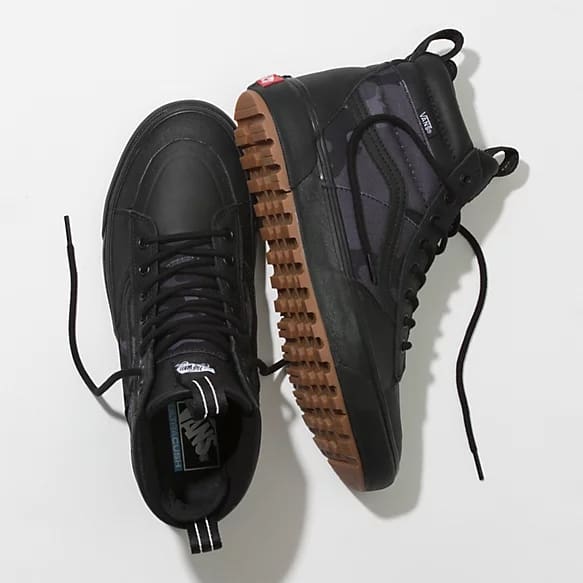
Over the weekend, TYR Tactical founder Jason Beck gave us a glimpse of the upcoming Ninja Cold Weather Booties.

PDW Invictus-IBL

November 30th, 2020

Integral Bolster Lock Folding Knife with a Handle Machined from a Solid Block of Titanium

Prometheus Design Werx releases their newest iteration of the Invictus folding knife design featuring a unique handle machined from a solid block of titanium billet. This form of folding knife handle construction required the brand several years and as many machining centers to finally develop, produce, and deliver the highest quality of make in this folding knife. Other high-level details include a Böhler M390 alloy blade, ceramic pivot bearings, G10 scales perfectly matched to the titanium handle, LBS insert, dive watch grade luminous inlays in the dual thumbstuds, and precision machined details throughout this knife. The Invictus-IBL is a purpose driven edged tool painstakingly made with state-of-the-art multi-axis CNC machines and the highest level of precision refinements found only in the best production tools.

The Invictus-IBL by Prometheus Design Werx will be first available with OD Green G10 scales as pictured with other handle options to follow. Due to the complex, time consuming process, and high production costs required to create this version of this folding knife, there are no plans by the company to produce more after this initial run.

The Design and R&D Team at PDW states:

“It literally took over 6 years and as many technical manufacturing centers to get our Invictus-IBL to place where it was a replicable and producible reality. Ultimately it was a labor of love and really almost an obsession to get to the finish line and bring them to market. It was one of the very first design projects we worked on at PDW. For years, machine shop after machine shop tried, and unfortunately failed. We refused to give up and got on after it, year after year until we finally collated the right manufacturing network with the knowhow and equal perseverance to see this project through with us. At the end of the day, this is an edged tool with a purpose driven design, but also a great exercise and trial in modern folding knife manufacturing. There is nothing ‘fancy’ about this folder, however, there are a great deal of labor intensive industrial refinements found only in the best tools and machines in the world. The Invictus-IBL isn’t for everyone, but it is for those who have a highest regard and appreciation for expertly made, detail oriented, functional metal objects and tools.”

The first delivery of the Invictus-IBL with OD Green G10 scales will be available for $449.00 on Monday, November 30th, 2020 at 11:00am Pacific via their website, prometheusdesignwerx.com.

SSD Swag 20% Off Tomorrow from O P Tactical

November 30th, 2020

Tomorrow, 1 December, all clearance and swag on OPT is 20% off, to include SSD comments sticker and shirts.

www.optactical.com

ECS Composites hires Special Projects Director and launches a new website

November 30th, 2020

Grants Pass, OR – Ashley Hernandez joins the team at ECS Composites™ as the new Special Projects Director. Additionally, ECS has drastically updated the website of their composites manufacturing facility in the Rogue Valley of Southern Oregon.

Ashley Hernandez joined ECS Composites as Director, Special Projects on 17 August 2020 after completing 20 years of honorable service in the United States Marine Corps as an Intelligence Specialist and Special Operations Capability Specialist. Ashley’s addition to the team will help ECS Composites seek new federal government contracting opportunities in emerging fields and increase ECS relationship with the end-user.

During Ashley’s early Marine Corps career, he was stationed at 3D Marine Aircraft Wing where he deployed in 2002 with as an Analyst supporting VMFA-121 in Manas, Kyrgyzstan during the early outbreak of Operation Enduring Freedom. Ashley was only home a few months after he again deployed, this time with MAG-11 to Kuwait in 2003 to support Operation Southern Watch, which transitioned to Operation Iraqi Freedom, during the invasion of Iraq. Upon return from Operation Iraqi Freedom, Ashley took over as the Intelligence Chief for VMFA-323 and deployed in 2005 upon the USS Carl Vinson where he again found himself supporting Operation Iraqi Freedom as the Carl Vinson’s Strike Chief.

Ashley returned home and was selected to serve as a combat advisor on a Military Transition Team. Ashley deployed in 2006 to Ramadi, Iraq, where he trained and led Iraqi soldiers from 1st Battalion, 1st Brigade, 7th Iraqi Infantry Division. Upon returning home from Iraq, Ashley was accepted in 2007 to become an Intelligence Instructor at the Navy and Marine Corps Intelligence Training Center where he instructed the MAGTF Intelligence Specialist Entry Level Course. After completing his tour at the Intelligence School, Ashley was accepted to serve at Marine Corps Forces Special Operations Command (MARSOC) in 2010 where he deployed to Afghanistan in 2011 as the Direct Support Team Chief for Marine Special Operations Company – Golf. After returning home from Afghanistan, Ashley helped lead and develop the creation of MARSOCs: Multi-Disciplined Intelligence Operator Course (MDIOC), serving as the Course Director and lead All-Source Instructor. Ashley would again deploy, this time serving as the J-2 Intelligence Chief for Joint Special Operations Task Force – Trans Sahel in 2014.

Following a return to MARSOC, Ashley was selected to serve as the Marine Raider Regiments Intelligence Chief. He was again selected to head MDIOC, serving as the Marine Raider Training Centers Intelligence Chief, overseeing the execution of MDIOC and the Marine Field Intelligence Course. Upon being selected to the rank of Master Sergeant, Ashley was selected to serve at the Pentagon in 2016, overseeing the 0231 Intelligence Specialist occupational field for Headquarters Marine Corps. In 2018 Ashley was assigned to the Marine Corps Intelligence Schools, serving as the Marine Detachments Operations Chief, completing his 20 years of service. Ashley holds a Bachelor of Science from Norwich University in Strategic Studies and Defense Analysis.

In addition to adding Hernandez to the team, ECS Composites has recently relaunched their web presence with a new website catered towards product education. The update pulls back the curtain on the manufacturing and engineering processes that ECS uses to develop their highly customized and ruggedized shipping cases, from full in-house fabrication, FEA analysis and massive production capabilities. Each product is carefully designed and engineered to survive the harshest environments, as well as meeting any unique requirements of the end user.

For questions about ECS Composites products, you can reach Ashley Hernandez at Ashley.Hernandez@ecscomposites.com, or by phone at 541-476-8871

Visit www.ecscomposites.com for more product details.

AttackPAK Viper EDC Belt

November 30th, 2020

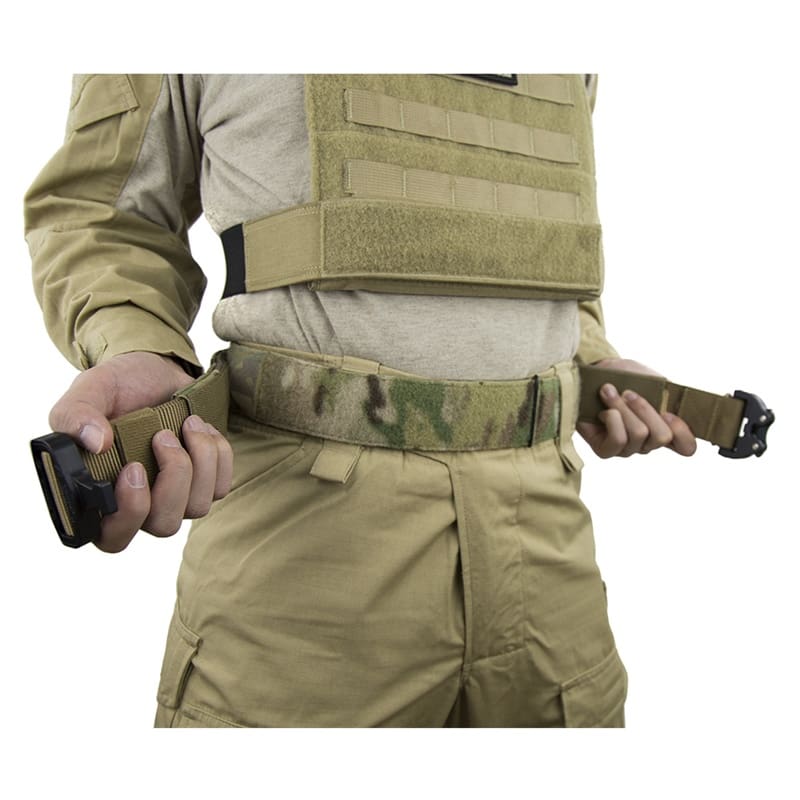
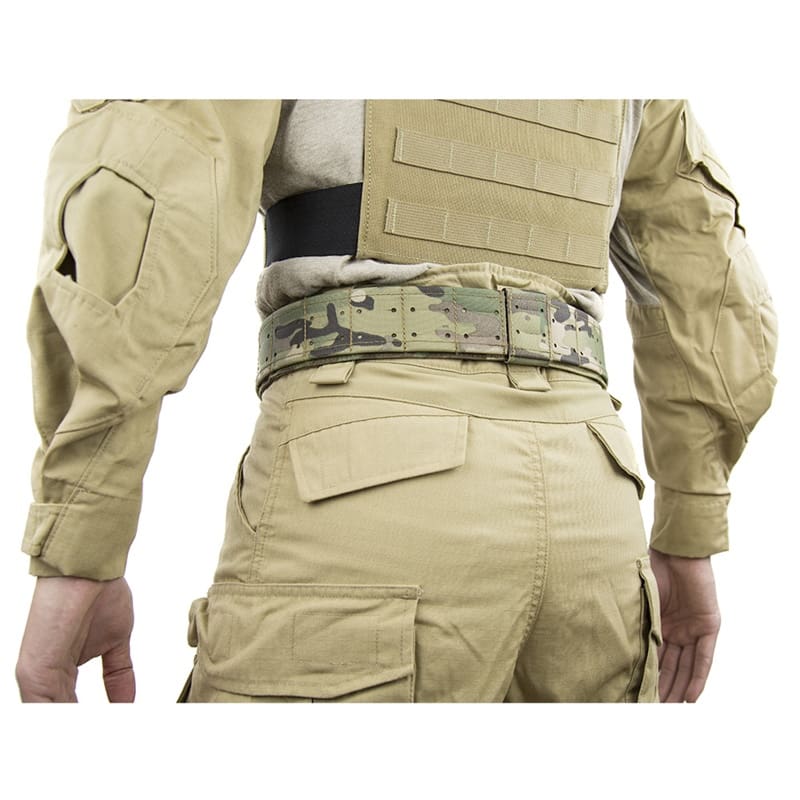
AttackPAK designs modular load bearing equipment that lets you build custom kit. They have reimagined and patented what 1st line gun belts can do: Optimum load distribution, light weight, ergonomic shape, stiff, durable, hydrophobic, and modular. The Reaper is a proprietary laminate of reinforced thermoplastic combined with multi layers of Cordura and hank material that is laser cut. The lite-weight version has a smooth exterior and comes in at 1/3 the weight of a comparable webbing gun belt, with all of the stiffness and strength that you need. Compatible with PALS, hook/loop, and slip-on/clamp on accessories for 1.75” belts.

The scalable modular platform is planned for quick use changes and smart investment. With 4 parts you can easily go from pants belt, inner and outer gun belt, or a grip belt over clothing. You can also add the AttackPAK Gravity Pocket and ExoSpine™ to integrate a pack, redistributing weight to your hips and legs, off your shoulders and spine.

The Viper EDC inner belt is a smart looking pants belt that can be ordered in many color combinations from mild to wild. The belt is built with rigid 1.5” scuba webbing base reinforced with 1” webbing. It is fitted with a 1” low profile AustriAlpin Cobra buckle for reliability and durability.

The Viper EDC belt can be ordered covert/reversible with 1.5” loop on the interior surface, or overt with 1” loop on the exterior. The interior of the Reaper has 1” hook to mate with the loop surface on the Viper EDC, making a 2-layer belt that interlocks with your pants belt.

The Delta Grip Pad can be added quickly to wear over clothing. It also has an ergonomic shape and can be attach to any standard hook lined gun belts. The interior is built with stretched rubberized diamond plate to secure the belt in place and prevent ripples or hot spots when wrapped around your waist. The pad is 3” tall, made with ¼” thick firm closed cell foam. When tested in conjunction with the Reaper Belt, the system only gains x% weight after 30 min submerged, making it truly hydrophobic.

For the guys that need lanyard retention, the Reaper belt can be ordered with 1” load rated AustriAlpin Cobra buckle and continuous 1” tubular webbing on the exterior surface. The weight of the belt is still 50% of a comparable webbing belt.

The Reaper has all of the features that you need in a gun belt, including rigidity.

AttackPAK, Denver Colorado, has been developing gun belts with pack integration for almost a decade. Their focus has been to eliminate redundant weight and improve ergonomics to reduce burden and better protect war fighters. Their products create a system that can be user customized, making cross over use for Police, 1st responders, shooting athletes, and outdoorsmen a natural.

For more information and to order a Reaper Gun Belt, visit AttackPAK.com.

Cyber Monday: receive your Reaper Gun Belt before Christmas. $99 introductory offer is a great incentive. Use “SSD” as a discount code at checkout. www.attackpak.com/collections/belts-and-frames/products/reaper-gun-belt