TYR Tactical

MATBOCK Monday – Medical Backdraft

June 15th, 2020

Good morning and Happy MATBOCK Monday,

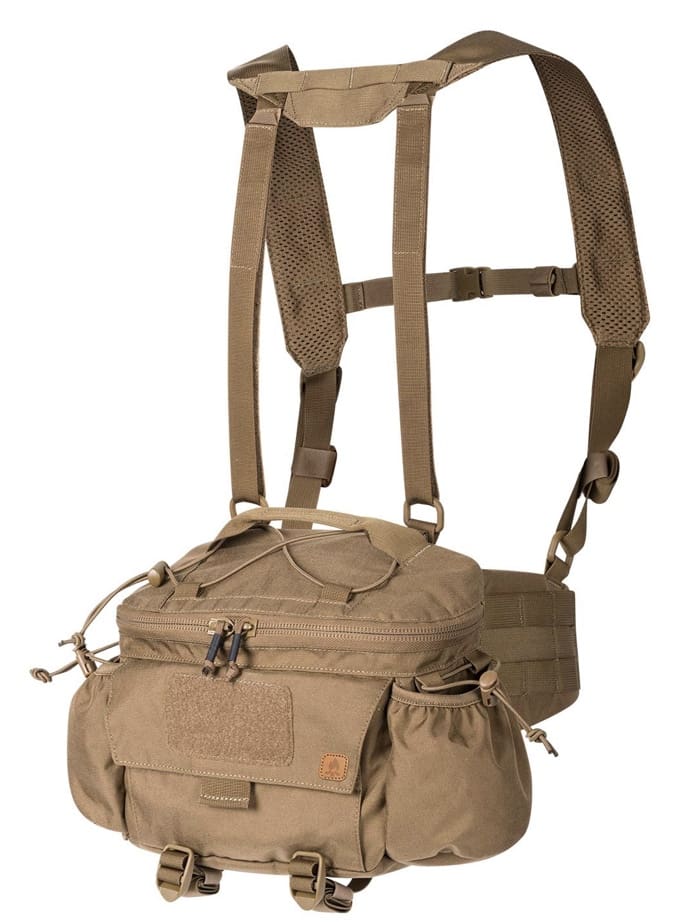
Developed in coordination with some of the leading medics and combat first responders, the MATBOCK Backdraft is for small teams with relatively quick access to higher levels of care. The unit mounts on the back of the plate carrier via MATBOCK Ghost Tabs and is split into 2 separate removable pouches that are held in place via Velcro. The unit was designed to split medical equipment between bleeding and airway and is run in this setup by different units.

The bottom of each pouch is attached to an adjustable lanyard that connects to the side panel of the plate carrier. When the operator requires the contents of one of the pouches, he or she simply pulls the lanyard, releasing that pouch.

Don’t forget to tune in on Monday at 4:30 PM EST as Jim and Casey conduct a live demonstration of the Medical Backdraft and answer all of your questions.

Operator Watch Band by Ventumgear

June 15th, 2020

Germany’s Ventumgear makes watch bands for the Apple Watch. Called the Operator Watch Band, they are made from nylon with a steel ring and Velcro closure and fit the Apple Watch 42/44mm.

Owner Max Shwegl tells us that he is considering expanding the watch bands to Garmin soon.

Available in a wide variety of colors and patterns from www.ventumgear.com/p/operator-watch-band.

In the US, visit ventumgear.us.

DRIFIRE FR Ultra-Lightweight Short Sleeve Tee

June 14th, 2020

It’s hot and humid outside. How about some new T-shirts? Made from an ultra-lightweight 4.5 oz knit, these t-shirts are not only comfortable but FR as well. It includes flatlock seams for no-rub comfort, permanent flame resistance, moisture management, and odor control and dries three times faster than cotton. I’ve had one of the Grey ones for awhile and it’s holding you well.

Offered in a wide variety of colors (Black, Coyote Brown, Desert Sand, PT Grey, Marine Olive Drab, Navy and Tan 499), sizes SM-3X.

www.drifire.com/base-layers/drifire-military-ultra-lightweight-short-sleeve-tee

SCUBAPRO Sunday – Heart Rate Monitor/ Body Temperature  

June 14th, 2020

Why monitor your heart rate when you are diving? Measuring your heart rate using a heart rate monitor (HRM) is an excellent way to gauge the effectiveness of your workload because as you strengthen your body through exercise, you also strengthen your heart. Today just about every watch has an HRM to analyze and evaluate everything you do. Whether you are in the military, public service, or a working diver, you should be at a certain level of fitness so you can do your job.

So why not use this technology in diving as well? With the help of a heart rate monitor, you can keep an eye on the heart rate underwater and make your dives safer. By monitoring your heart rate, you can assess your workload. Furthermore, by measuring your heart rate, you can specifically train to increase your endurance in advance, and also you can use it to measure your output so you know how fast you are swimming and help track the distance you are covering. With the SCUBAPRO HRM, you can monitor your body temperature also. It is also great for diving in the winter, during long-duration dives, or even open ocean swims in the winter.

Increased exertion, while diving in deep water, improves circulation, which, in turn, increases the nitrogen uptake. The heart rate can also be used to calculate decompression times even more accurately and make diving even safer. That’s why the SCUBAPRO computers don’t just show depth, no-stop times, and the decompression schedule but also continuously inform the underwater athlete about his or her heart rate, i.e., his or her stress, which in turn is factored in when calculating other dive parameters. Exclusive to SCUBAPRO dive computers, the heart rate monitor, jointly developed with Polar (the world leader in the field of heart rate monitors), measures your heartbeat and body temperature during the dive that can then be factored into the decompression calculation along with your workload. This can results in safer diving because each diver is unique, and each dive location and situation are different. The HRM is also ideal for freedivers, measuring heart rate, and sounding an alarm if the heart rate drops below the set level.

Factoring your heart rate into your decompression calculations makes diving safer and a lot more fun. A lightweight waterproof ECG (electrocardiogram) transmitter is built into an elastic belt that straps around the chest, directly against the skin. This belt wirelessly transmits your heart rate data to your SCUBAPRO personal dive computer. Data is displayed on the screen, plus it is factored into your decompression calculations to create a more personalized dive plan and improve the quality of your diving. 

Engineered by divers for divers, the SCUBAPRO Aladdin 2 (A2) watch performs advanced functions in the timeless style above and below the surface. Galileo 2 is everything you need for an extraordinary underwater experience.

The unique integrated Heart Rate Monitor senses your effort, incorporates it into the workload calculation, and adapts the decompression algorithm. The result is safer diving, because the diver’s physiology reports it, and because each dive location and situation is different. The HRM is also ideal for Apnea divers, measuring heart rate, and sounding an alarm if the heart rate drops below the set level.

SCUBAPRO’s line of “smart” personal dive computers, including the Galileo 2 (G2), Galileo Sol, Galileo Luna, M2, Mantis 1, the Mantis, the Meridian, and the new A2 Dive computer are all designed with Human Factor DivingTM. All enable you to better track your time underwater and improve your diving by continually calculating and adjusting to new data based on your personal biometrics.  

SCUBAPRO and Human Factor Diving bring the world of biometrics and wearable technology to diving. SCUBAPRO’s personal dive computers are indispensable tools for divers of all skill levels, providing personalized data not available on any other dive computer.

Happy Birthday US Army

June 14th, 2020

Jolly Green II, Apache Complete Joint Test Mission

June 14th, 2020

EGLIN AIR FORCE BASE, Fla. (AFNS) —

Those common, vibrating “thwip” helicopter sounds arrived well before they showed up, as 413th Flight Test Squadron personnel turned to look to the north at Eglin Air Force Base, May 19.

Seconds later, two helicopters appeared and the sounds and vibrations intensified. The Air Force’s newest combat search and rescue helicopter, the HH-60W Jolly Green II, led the way down the Duke Field runway. It was followed by the Army’s multi-role combat helicopter, the AH-64 Apache.


The two aircraft landed at Eglin AFB completing their first flight and combined test mission together.

The Apache, from Redstone Army Test Center, Alabama, flew in for system testing with the HH-60W.

“The unique configuration of the AH-64 Apache gave our team the opportunity to test capabilities of the HH-60W in ways normally not possible here,” said Christopher Martin, 413th FLTS HH-60W lead test engineer “Tests like these will ensure the Jolly Green II will be able to perform its critical combat search and rescue mission when fielded in the joint warfighting environment.”

The joint service test-effort marks another milestone in Jolly Green II’s development. This year, the new helicopter has completed extreme environment, communications and defense system testing just to name a few.

The 413th FLTS leads the HH-60W integrated test team along with members of Sikorsky Aircraft Corporation, 88th Test and Evaluation Squadron, Detachment 2, and Air Force Operational Test Center.

“We are very proud of the work our integrated test team accomplished in 2020 despite a myriad of operational restrictions due to COVID-19,” said Shawn Hammond, HH-60W test program manager. “The team’s success is due to a mission-focused mindset to ensure the crews flying the Jolly Green II into combat have the most reliable and capable helicopter for the job.”

By Samuel King Jr., Eglin Air Force Base Public Affairs

2020 Kuiu Catalog

June 13th, 2020

Check it out at www.kuiu.com/digital-catalog

SPARTANAT – PHOTO FILE: PHANTOMLEAF WASP II Z4 Field Test

June 13th, 2020

PHOTO FILE: PHANTOMLEAF WASP II Z4 im Feldtest

The ideal environment, the camouflage suit sits great and fully camouflaged, he storms the building.

Does it really work that way? With good patterns, yes, sure. But it’s not just a matter of patterns. Each camouflage only works well in the right background. And we wanted to figure out the limits of this one for you: PHANTOMLEAF WASP II Z4 is presented as an originally urban pattern. We wanted to know how it works where and what are ist limitations to give you ideas to use it wisely: Good camouflage products work best with a skilled operator.

The uniform is from Leo Leo Köhler and we presented it HERE in the SPARTANAT review. It is autumn, we are outdoors. And Z4 doesn’t come too bad even at this location.

Where the pattern reaches its limits, which is why we do not want to export it to spring, is green. The moss alone kicks it out.

Who likes to compare. We photographed the green Z3A from PHANTOMLEAF at a different time of the year in the same place and in the same position: we could hardly be found. HERE is the field test with the green WASP II Z3A from PAHANTOMLEAF.

This pattern by PHANTOMLEAF likes what is stone and has shades.

This wall was not built after Z4 was built. Nevertheless, the pattern fits in fine.

Broken stones, soil in between, all of these come very well in line with the strongly structured patterns in gray and brown tones.

Gravel substrates are also ideal for using PHANTOMLEAF Z4. The strong structure fits here too.

The stone wall in the tunnel underneath literally “soaks up” the pattern.

The topic is more difficult with smooth concrete.

But as soon as there are any structures – it is wet on the ground, plus broken lines – this pattern from PHANTOMLEAF is immediately at home again.

You don’t always have to be in the foreground. Tree branches from a bush, urban environment. Good camouflage.

Let’s go out into nature with the pattern. Stack of wood, all wildly mixed up and many colors. We could hide well with Z4.

The tree trunk is the example where Z4 surprised us the most. It fits in perfectly despite it originally being intended for urban use.

It even disappears …

… because it is now placed at the foot of the tree and matches the light gray wood structure.

Autumn forest, lots of brown tones …

where the background becomes “monocolor”, the pattern does not feel comfortable. Here it suddenly looks pale because the leaves are so lively.

Urban without cover looks fine, because PHANTOMLEAF fits in well here.

Even if it sometimes appears bright, it “adopts” the surroundings well.

Taking cover in a gray-brown environment, Z4 likes that.

Where there is fighting, a lot is broken, which gives more cover. Here is a disappeared old building as a test site for the PHANTOMLEAF field test.

Plaster, brick, earth – the camouflage pattern disappears.

That is the main area the pattern is intended for.

If the surface becomes too dark, the pattern is again noticeable. On the other side: In real combat situation the suit will be covered in dust and will be wet and will become more adopted tot he surroundings by this. Just to mention: To make a suit more dark to adopt in the field is much easier to lighten it up.

Old house wall: put on the camouflage suit, sit down, nobody will recognize you.

Then someone left his jacket hanging and ran away. Must be cold: Z4 and winter is a hot topic. Especially where there is no closed snow cover.

Now a search picture: Find Z4! A little tip: in the front left. That is very impressive for an “urban pattern”.

CONCLUSION: At first glance an extreme camouflage pattern, which turns out to be very versatile if you pay attention to the surroundings. In addition to the urban environment and autumn forest areas, the pattern also plays a great role in a landscape with some snow and rock.

More pictures of the various PHANTOMLEAF patterns in the field can be found on Instagram at PHANTOMLEAFOFFICIAL.

HERE we interviewed the creators of PHANTOMLEAF.

The field blouse and combat trousers in PHANTOMLEAF by Leo Köhler are available from RECON COMPANY. The command field blouse costs 89.95, the combat trousers 109.95. The matching cap is available at 14.95.

PHANTOMLEAF on the Internet: www.phantomleaf.de

LEO KÖHLER on the Internet: www.leokoehler.com

The small leaf is the PHANTOMLEAF logo.