The New iTWB

Max Talk 43: Gear Review: Crossfire DG3 Pack (Part 2)

November 4th, 2019

This is the forty-third installment of ‘Max Talk Monday’ which shares select episodes from a series of instructional videos. Max Velocity Tactical (MVT) has established a reputation on the leading edge of tactical live fire and force on force training. MVT is dedicated to developing and training tactical excellence at the individual and team level.

This is a gear review of the Crossfire DG-3 Pack. This is a gear review of the Crossfire DG3 Pack. This is part 2, with part 1 already posted on YouTube. The U.S. Crossfire website is now up: crossfirepacks.com

More of these instructional videos can be found by subscribing to the Max Velocity Tactical YouTube Channel.

Detailed explanations can be found in the MVT Tactical Manual: Small Unit Tactics.

Max is a tactical trainer and author, a lifelong professional soldier with extensive military experience. He served with British Special Operations Forces, both enlisted and as a commissioned officer; a graduate of the Royal Military Academy Sandhurst. Max served on numerous operational deployments, and also served as a recruit instructor. Max spent five years serving as a paramilitary contractor in both Iraq and Afghanistan; the latter two years working for the British Government in Helmand Province, Afghanistan.

Website: Max Velocity Tactical

YouTube: Max Velocity Tactical

Excellence in Tactical Training.

XGO Holding Veterans/Military Appreciation Photo Contest

November 4th, 2019

Here at XGO, our garments are inspired by all of the branches of the United States Military. This November we would like to say thank you and recognize all our vets as well as active military. In honor of Veteran’s Day we will be giving away a $500 (MSRP) shopping spree on our website (proxgo.com). Simply head over to the link, bit.ly/31WRiX6, like our Facebook page, upload your favorite military photo while serving and your email address.  You can also head enter via Instagram by simply adding a photo and hashtagging #XGOMilitaryPhotoContest to win. Winner must provide proof of service.

BE Meyers & Co MAWL-DA Receives NSN

November 4th, 2019

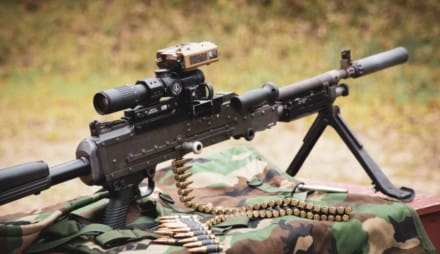
November 4, 2019 (Redmond, WA) – B.E. Meyers & Co., Inc. is proud to announce that the MAWL®-DA (Modular Advanced Weapon Laser – Direct Action) has been issued the NSN 5855 – 01- 682 – 4030. The MAWL®-DA is a high-power near infrared and visible green aiming and illumination laser for individual carbines, precision rifle platforms, and crew served weapons. Deployed with special operations forces and elite counter-terrorism units across the world, the MAWL®-DA equips the operator with unparalleled ergonomics, interface, and performance. For more information on the MAWL®-DA and procurement, visit www.bemeyers.com.

Right! Sergeant Major, Marching Up And Down The Square

November 4th, 2019

It never fails to entertain

SERGEANT MAJOR: Don’t stand there gawping like you’ve never seen the Hand of God before! Now, today, we’re going to do marching up and down the square! That is, unless any of you got anything better to do. Well?! Anyone got anything they’d rather be doing than marching up and down the square?! Yes?! Atkinson. What would you…rather be doing, Atkinson?

ATKINSON: Well, to be quite honest, Sarge, I’d… rather be at home with the wife and kids.

SERGEANT MAJOR: Would you, now?!

ATKINSON: Yes, Sarge.

SERGEANT MAJOR: Right! Off you go! Now, everybody else happy with my little plan… of marching up and down the square a bit?

COLES: Sarge!

SERGEANT MAJOR: Yes?!

COLES: I’ve got a book I’d quite like to read.

SERGEANT MAJOR: Right! You go read your book, then! Now! Everybody else… quite content to join in… with my little scheme of marching up and down the square?!

WYCLIF: Sarge?

SERGEANT MAJOR: Yes, Wyclif?! What is it?!

WYCLIF: Well, I’m, uh, learning the piano.

SERGEANT MAJOR: Learning the piano?!

WYCLIF: Yes, Sarge.

SERGEANT MAJOR: And I suppose you want to go and practice, eh? Marching up and down the square not good enough for you, eh?!

WYCLIF: Well,–

SERGEANT MAJOR: Right! Off you go!

WYCLIF: Oh.

SERGEANT MAJOR: Now! What about the rest of you? Rather be at the pictures, I suppose.

SQUAD: Yeah. Yeah. Yeah. Ooh, yeah. Yeah. Right. Yeah. Right.

SERGEANT MAJOR: All right! Off you go!

SQUAD: Oh. Ooh. Great. That’s great. What a day. I want to see the Merle Oberon picture. Eh hehheh.

SERGEANT MAJOR: Bloody army! I don’t know what it’s coming to. Right! Sergeant Major, marching up and down the square. Left, right, left. Left…

NARRATOR #1: Democracy and humanitarianism have always been trademarks of the British Army…

SERGEANT MAJOR: Rubbish!

NARRATOR #1: Shh! …And have stamped its triumph throughout history, in the furthest-flung corners of the Empire,…
[mayhem]
…but, no matter where or when there was fighting to be done,…
[patriotic music]
…it has always been the calm leadership of the Officer class that has made the British Army what it is.

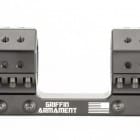
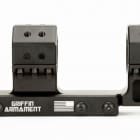
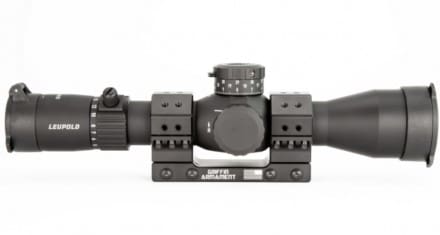
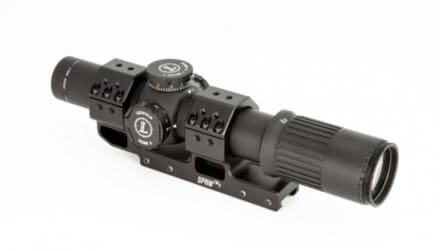
Griffin Armament Superior Precision Rifle Modular Mounts

November 3rd, 2019

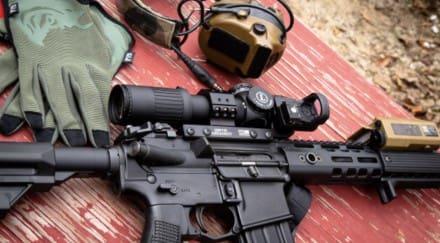
Next Generation, Sniper-Grade, Precision Rifle Optic Mounts

Griffin Armament is a firearm industry manufacturer founded by two Army Infantry sniper qualified combat veterans. Although they are best known for their high-performance signature reducing sound suppressors, founders Austin and Evan have recently leveraged their lifelong passion for precision rifle marksmanship and nearly a decade of notable research and development into a completely new product line, The Griffin Armament Superior Precision Rifle Modular Mounts.

Relatively featureless optics mounts have dominated the market space for nearly half a century. Contemporary mount design and technology dates back to the mid-1980s. This trend of industrywide complacency has officially ended with the announcement of this new product line from Griffin Armament.

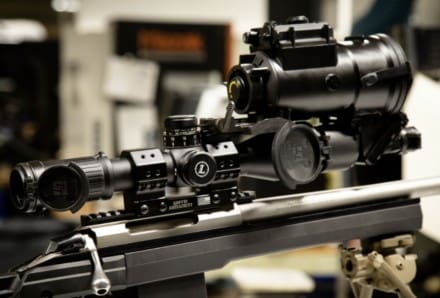
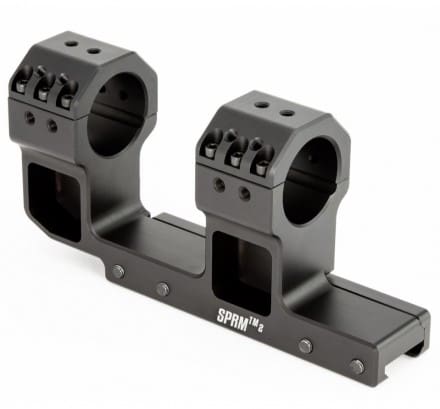
Griffin’s SPRM™ mounts feature a unique patent-pending design that splits the rings on two parallel but offset planes, allowing for the integration of Accessory Interface Suite (AIS™) products on 5 mounting surfaces. This system affords mounting opportunities on both left and right sides, 45-degree mounting surfaces on either side, as well as the top mounting surface to be used for accessory interfaces. Griffin SPRM™ mounts deliver unsurpassed flexibility and utility to the discriminating user. Left-handed or right-handed shooters are equally supported with the SPRM™ mounts and accessories.

At the time of this launch, The Superior Precision Rifle Modular Mounts are available in multiple heights in 30MM, 34MM, and 35MM ring sizes. Models are available in both standard vertical (0 MOA cant) and cantilever orientations (15 MOA cant) . They are designed to support as many optic and firearm combinations as possible. From rimfire trainers to heavy gas guns, there is a Griffin SPRM™ model optimized to fit your rifle setup.

A heavy emphasis on anatomically correct positioning of optics was placed on AIS™ products, leading to the development of the RAPID TRANSITION OPTICS plates. RTO™ plates position secondary non-magnified optics on optical centerline relationship with the stock comb for comfortable, rapid, targeting with a simple roll of the host firearm. These plates currently support the following optic models: Aimpoint ACRO, T1/T2, H1/H2, Comp M5, Sig Romeo, Vortex Spark, Trijicon RMR , SRO, Holosun HE507C HS407C, HS508C, Leupold Deltapoint, J Point, Optima, Dr Optic, Meopta, Insight microdot, Burris Fastfire, Vortex Venom, and Viper, CMORE STS, RTS, STS2, and Vortex razor. Picatinny RTO™ plates are also offered. Flat mount AIS™ products support a myriad of optics as well as Wilcox RAPTAR, Simrad, and Picatinny (STANAG 4694 “NATO Accessory Rail”).

SPRM™ mounts are manufactured in the USA at Griffin’s Wisconsin manufacturing facility. Mounts are machined on state-of-the-art multi-axis CNC equipment from 6061 T6 aluminum. Manufacturing in-house provides Griffin Armament with the ability to control quality at levels rarely delivered by contract manufacturers. The geometries of Griffin SPRM™ mounts are machined to part datums probed on each part. Prior to machining, costly manufacturing time is dedicated to each part with Renishaw probe strategies coupled with Renishaw RTS set tool magazines. This ensures critical geometries are machined to positional accuracies of +-.0002”rather than depending on human loading accuracy in a much looser relationship to workholding based datums typically found in traditional optic mount industry manufacturing processes. By bringing aerospace industry segmented production engineering concepts and inspection equipment to optics mount manufacturing, Griffin Armament has successfully enhanced the state of optical mount quality. This persistent dedication to quality ensures that the theoretical mount quality and the actual production mount quality are inseparably linked for uncompromised, superior precision.

Griffin Armament’s unwavering drive and commitment toward the transformation the optic mount market segment will continue to serve as the catalyst for future product development. The SPRM™ mount platform was born from a passion for the pursuit of excellence in product development. The next generation of precision optic mount technology has arrived, Griffin Armament Superior Precision Rifle Modular Mounts.

SPRM™ Features:
• AIS™ (Accessory Interface Suite) allowing the user to mount accessories on 5 sides of the mount body
• RTO™ (Rapid Transition Optic) accessory support – ability to mount Rapid Transition Optic plates to the system for a 40° offset to the primary optic, maintaining identical optical centerline height
• Ambidextrous support
• Individually probed during the manufacturing process for peerless dimensional consistency
• Stanag 4694 Compliant attachment, for precise return to zero
• Utility patent pending to support future technology development in the electro-optics industry

SPRM™ Specs:
• Unibody construction
• 6061 T6 aluminum
• Type 3 milspec hardcoat anodizing
• 12 (qty), 8-40 T15 fasteners for ring clamping
• 4 (qty), 10-32 fiber lock patched T15 fasteners for rail clamping

For more information regarding Superior Precision Rifle Modular Mounts, Accessory Interface Suite products, or any of Griffin’s badass kit offerings, visit their website at www.GriffinArmament.com

Saab and Raytheon Complete Successful Test Firings of Guided Carl-Gustaf Munition

November 3rd, 2019

Saab and U.S. defence company Raytheon have successfully completed a series of guided flight tests for the shoulder launched Guided Carl-Gustaf® Munition, featuring a semi-active laser guidance system. The tests were performed at the Mile High Range in Sierra Blanca, Texas, United States and at Saab Bofors Test Centre in Karlskoga, Sweden.

The test firings in Sweden that were performed during September 25-26, 2019 was in the presence of an international audience. Three munitions were fired in total; two against static targets and one against a moving target. A semi-active laser was used to guide the munitions to target impact. Other seeker technologies (e.g. imaging IR) were also demonstrated as optional solutions for the final product. The demonstration in Sweden further included dynamic warhead tests against various targets.

Saab’s Carl-Gustaf weapon system is used by the U.S. Armed Forces as well as the ground forces of more than 40 other countries. The guided munition will allow Armed Forces to accurately engage stationary or moving targets up to, and beyond 2,000 meters. The increased range, in combination with a Confined Space capability will offer troops greater tactical flexibility when selecting a firing position.

“The Guided Carl-Gustaf Munition is a next step in the evolution of the Carl-Gustaf system. It will be the most advanced Carl-Gustaf munition yet and will offer greater precision, minimise collateral damage and deliver outstanding performance with pin-point accuracy and multi-target capability,” says Görgen Johansson, Head of Saab business area Dynamics.

 “Raytheon and Saab have been working together to start development of a precision-guided munition that will penetrate multiple types of targets, such as light armor, bunkers and concrete structures, at extended ranges. This lightweight round will overmatch potential adversaries while decreasing collateral damage, making it an ideal weapon when fighting under restricted rules of engagement,” says Sam Deneke, Raytheon Land Warfare Systems vice president.

In 2017, Saab announced its partnership with Raytheon to develop new weapons for infantry forces. The Guided Carl-Gustaf munition will be designed to increase the capability of the combat proven, shoulder-launched, multi-role weapon system Carl-Gustaf.

Video from the demonstration in Karlskoga

www.saabgroup.com

SCUBAPRO Sunday – Kokoda Track Campaign WW2

November 3rd, 2019

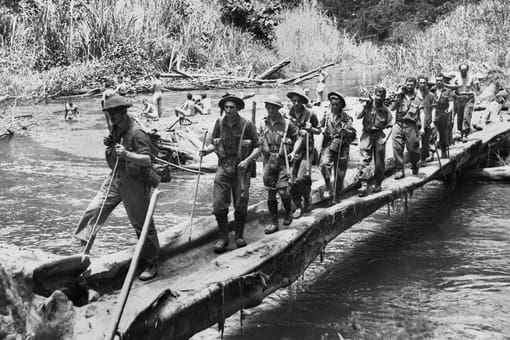
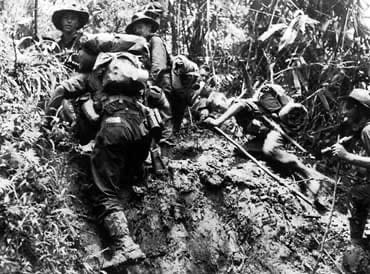
The 3rd of  November is Kokoda in Australia. The Kokoda campaign began with a full-scale attack on the Australian 39th Militia Battalion on 29 July 1942.  The battle lasted three months as the Australians were pushed back to their last line of defense on Imita Ridge. The Australians rallied at this point and forced the Japanese back across the track.  Kokoda was recaptured on 2nd November 1942, and the Australian flag was raised at a service the following day.

The Kokoda Track/Trail Campaign was fought between the Australians, the Americans, ,and the Japanese. It was primarily fought between the Aussies and the Japanese. The campaign consisted of a series of battles fought between July and November 1942 in what was then the Australian Papua New Guinea    

Kokoda was undoubtedly the most significant battle fought by Australians in the Second World War because it was fought so close to home. The Kokoda campaign saved Australia from possible invasion from the Japanese. Port Moresby held a robust tactical position and preventing the Japanese from reaching it was vital. The battle was fought over five months, and the odds were stacked heavily in favor of the Japanese, they outnumbered the Aussies 5-1, they had much better equipment, and a lot more of it, and at the time were considered the best jungle fighters in the world. The astounding feats performed by the Australian soldiers lead to the growth of Australia as a nation.
The Australian troops had to save Port Moresby from getting invaded from the Japanese because if so, the Japanese could have easily invaded Australia. The Australian forces fought exceptionally well in the harsh and unforgiving jungle of the Kokoda Track/ Trail. There were more than 600 Allies killed, and about 75% of the allied troops got sick, with diseases like malaria, dengue fever, and dysentery, to name a few. 

The Australians fought against all the odds and without the help of Great Britain. It was also fought mainly by Militia (reserve) troops or “chocolate soldiers” as the Australian Imperial Forces (AIF) called them because they were poorly trained, and it was said, “they would melt in the heat of battle.” At the start of the war, Australia sent its best troops the AIF to the middle east to help the brits. So, they stood up Militia Battalions to serve in Australia, to protect the homeland. Still, they used the loophole that Papua New Guinea was a territory, so they sent the 39th Militia there to help protect the island. This was one of the hardest fought battles in WW2 by anyone. I have attached a couple of links so you can read about this. As a lot of military units are getting back into the jungle, this is full of useful lessons learned and is an excellent piece of history. So raise a beer to the diggers and all the people that have gone before us.  


Wq6eGJV9Jsk

kokodacampaignww2.weebly.com


R2TD: A new tool for an ever-present threat

November 3rd, 2019

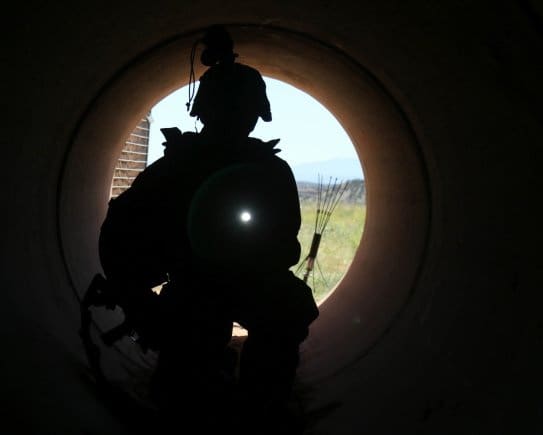
ABERDEEN PROVING GROUNDS, Md. — Seismic, acoustic and electromagnetic systems work to help Army find one of the oldest forms of field fortification: tunnels.
War is as old as human history. This means a lot of the reactive tactics and protective equipment must evolve in response to an attack becoming strong. As weapons became heavier and deadlier-swords went from bronze, to iron, to alloys of greater hardness and durability-the defense for them would evolve, protective clothing going from very thick fabrics, to leathers, to metals to the hard ceramics and Kevlar we know today.

Terrain use has evolved over time, too. As the stakes continue to rise and objectives evolve, merely taking hills, fields and transportation routes was always the start, but taking, holding and occupying towns and cities for longer periods of time will be key.

This means tunnels. Cities thousands of years old, such as Paris and its 200 miles of tunnels and catacombs, or modern American cities like New York, which has 665 miles of subway tunnels, will make tunnels a consideration of modern urban warfare. Newer cities may not have subways as an afterthought, but as a foundation of their planning. In India and China, for example, subway stations are the root of creating new cities as the population continues to grow.

Tunnels have been used to thwart invaders and penetrate fortifications since there were invaders and fortifications. For example, ancient Romans used tunnels-called qanats-to transport water to sustain their cities. Were any enemy able to find those tunnels, they could do incredible damage to the city of Rome.

Today, military thinkers like those at the Modern War Institute at West Point are considering underground warfare as a given, and they are considering the kind of equipment that would make underground warfighting most effective.

Project Manager Terrestrial Sensors, part of the Program Executive Office – Intelligence, Electronic Warfare & Sensors, has a key piece of tunnel warfare at the ready: Rapid Reaction Tunnel Detection equipment, or R2TD.

After all, to fight in tunnels, you have to find them first.

Dr. Steven Sloan, a research geophysicist with the U.S. Army Engineer Research and Development Center, has been working with his team on R2TD system for more than half a decade, which is less a piece of equipment than a suite of tools.

“What we’ve found over the years is that there’s no silver bullet that works in all geologies and all situations,” said Sloan. “So, we have multiple, different systems that each have their strengths in different things dependent on the setting that we’re working in, or what the target set is, then we can kind of mix and match to optimize detection.”

R2TD has seismic, acoustic and electromagnetic systems to detect different aspects of underground structures. Seismic to detect movement of dirt, for example. Acoustic to detect open space underneath the ground and electromagnetic to detect infrastructure like cables, wires, nails and even rails.

“The other two systems are actual in-ground permanently or semi-permanently installed, like an underground fence of sensors,” said Sloan. These other two systems are the border tunneling activity detection system-linear and the active seismic imaging system, which can counter adversaries using purpose-built tunnels or existing subsurface infrastructure, and assist in the survey of large areas for perimeter defense and the detection of existing tunnels and other subsurface anomalies, respectively.

“The thing with tunnels is they’re a low-tech counter to a high-tech adversary,” said Sloan. “So all it takes is his time and manpower to build one and there’s not a whole lot out there to stop them. It’s been around centuries and centuries for a lot of different conflicts.”

Sloan and his team know this, and thus they are often upgrading and tweaking the system.

“We’re upgrading the active seismic units that are in theater,” said Sloan. “We bring them back one at a time and we put in new hardware and new software that’s been developed over the last four or five years in there and then put them back over into their respective theaters of operations.”

“If someone was trying the tunnel under a facility to place explosives or something like that, you don’t want to be on the back end of that trying to figure out how it happened after it’s happened,” said Sloan. “It’s more of a preventative measure, or proactive rather than reactive. You won’t use this over every square inch of every facility that you would build. However, if you got some particularly vulnerable facilities in an area or something, some kind of secured facility that you really want to monitor, it’s another tool that you can use.”

By John Higgins, PEO IEW&S