If you follow the SolSys Instagram account, you know how much I love SciFi. While I prefer the book over the movie, who doesn’t enjoy “Starship Troopers”?
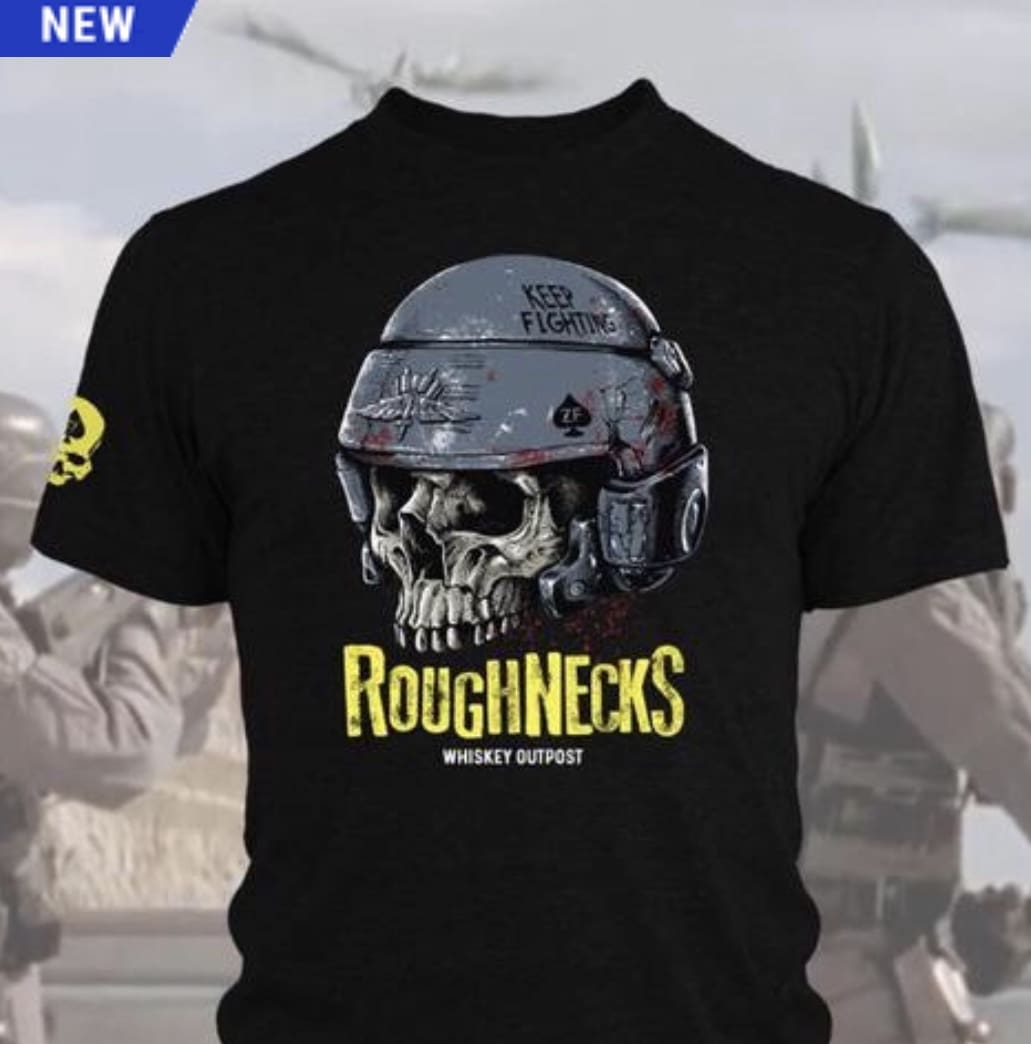
Fellow travelers may want to pick up this new “Rough Necks” T-shirt from Zulu Foxtrot.


If you follow the SolSys Instagram account, you know how much I love SciFi. While I prefer the book over the movie, who doesn’t enjoy “Starship Troopers”?
Fellow travelers may want to pick up this new “Rough Necks” T-shirt from Zulu Foxtrot.
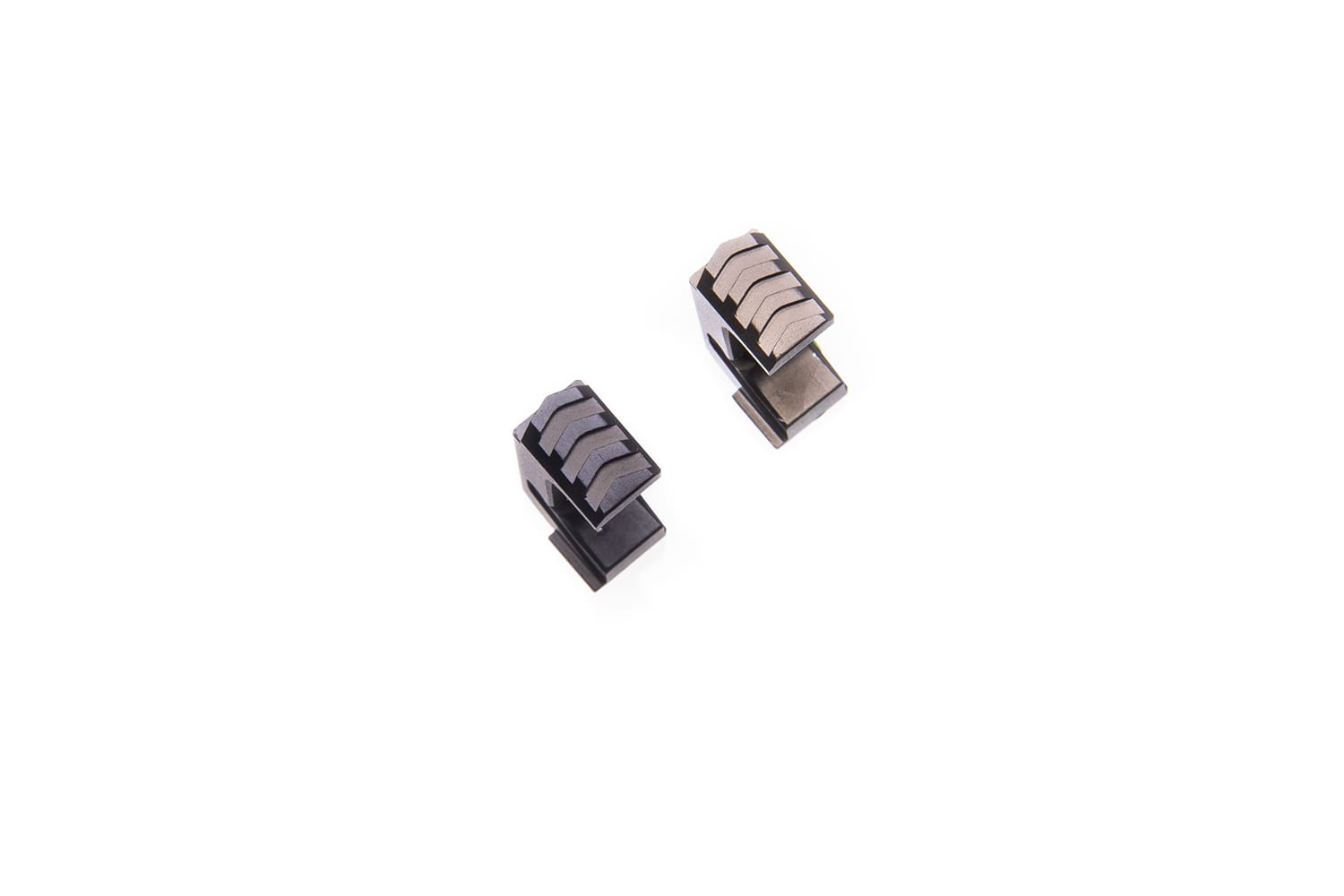
Tyrant Designs CNC’s new Extended Magazine Release is finally something you can put your finger on. Manufactured for Gen4 & Gen5 Glocks the EMR sports a very grippy yet comfortable chevron pattern. Because the TD CNC engineers are always about attention to detail, they added a slight pocket design on the backside of the Glock mag release just for aesthetics. Great for both right handed and left handed operators, the Tyrant Designs Glock Extended Magazine Release retains all factory functionality but with crisper, easier and quicker magazine exchanges.
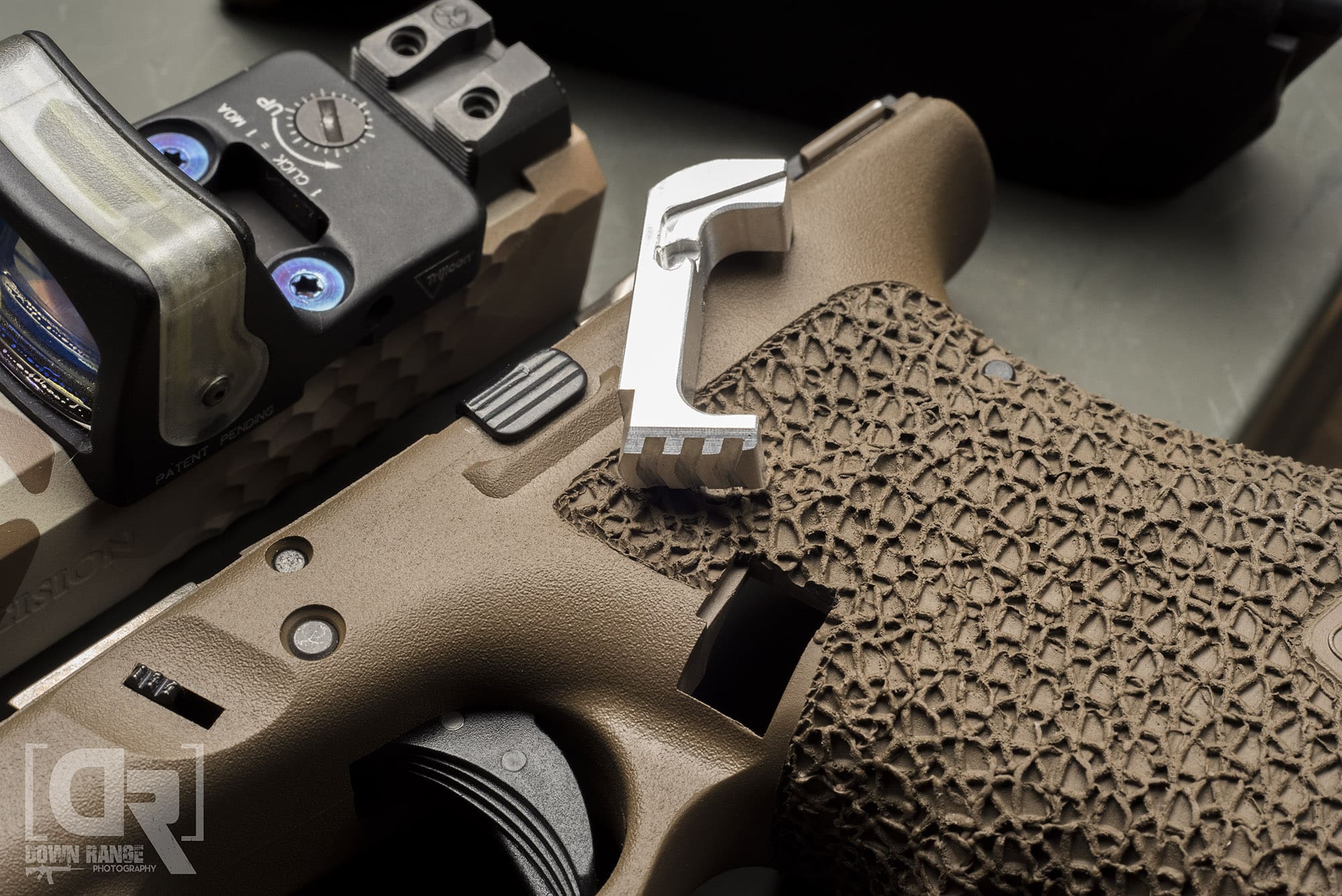
“We are very happy to announce the next step in our Glock components with our Extended Magazine Release for the Generation 4 & 5 Glock. We have gotten so much positive feedback from our awesome customers in regards to our Glock 43 EMRs. That feedback made us decide to continue with the known design language for our Gen4 & Gen5 components. As always we will continue to strive for innovation and are very thankful for our customers/fans.”
Shop the new Gen4 Gen5 Glock EMRs Now at WWW.TYRANTCNC.COM
Registration for the 2nd Annual Bravo-3 Training Conference and Vendor Show is Open
First Responder Conference to be held March 4-6, 2019 in Daytona Beach, Florida
Gettysburg, PA – August 1, 2018 – Registration is now open for the 2nd annual Bravo-3 Training Conference & Vendor Show. Bravo-3, owned and produced by Tripwire Operations Group, connects SWAT operators, K9 handlers, bomb squad (HDS/EOD) technicians, law enforcement, first responders and military personnel with the industry’s leading subject matter experts, innovative brands and newest products for three days of training and professional networking. The Bravo-3 conference runs March 4-6, 2019 in Daytona Beach, FL.
The Bravo-3 Training Conference and Vendor Show will consist of classroom training each day of the conference. The conference will kick-off with a keynote address delivered by former US Marine Corps Sniper, MARSOC Sniper Instructor, artist, and author Jason Delgado. Training will involve a wide range of subjects and speakers, including:
· Tactical Tracking with Jeff Schettler of Georgia K9 National Training Center
· Blast Injuries and Care Under Fire with medic Hugo “Doc” Canedo of Rockwell Tactical Group
· Introduction to Homemade Explosives (HME) with Ryan Morris of Tripwire Operations Group
· Proper Use of Qualified K9 Teams for SAR Operations with Dr. Margo Machen
· Asymmetric Threat Recognition & Counter Transnational Organized Crime with MCTFT
· Comprehensive IED Electronics with Jeff Jennings of Improvised Electronics
· Medical & Physiological Conditions Affecting Olfactory Acuity in EDDs with Dr. Lee Palmer
· Tactical Mindset Training with Jared Ross of Rockwell Tactical Group
· And Many More
For a full list of instructors and courses, visit the Bravo-3 Course Lineup.
“Bravo-3 is an opportunity for first responders to come together and gain access to the finest training from respected and experienced experts. Our goal is to help all first responders remain at the forefront of their specialties,” said Ryan J. Morris, owner, Tripwire Operations Group.
Joshua Mills, organizer of Bravo-3 and Tripwire explosives specialist, added, “Last year’s Bravo-3 Conference set a high standard that we’re out to surpass in 2019. The response has been incredible so far, with a long list of great vendors and speakers booked. We look forward to seeing everyone in Daytona this March.”
To learn more and register, visit the Bravo-3 registration page.
Follow Bravo-3 on Instagram @bravo3-actual and on Facebook @B3united for conference information and event news.
This time it’s me, in my hometown. I try to stop by Ballahack Outdoor about once a month to see what’s new.
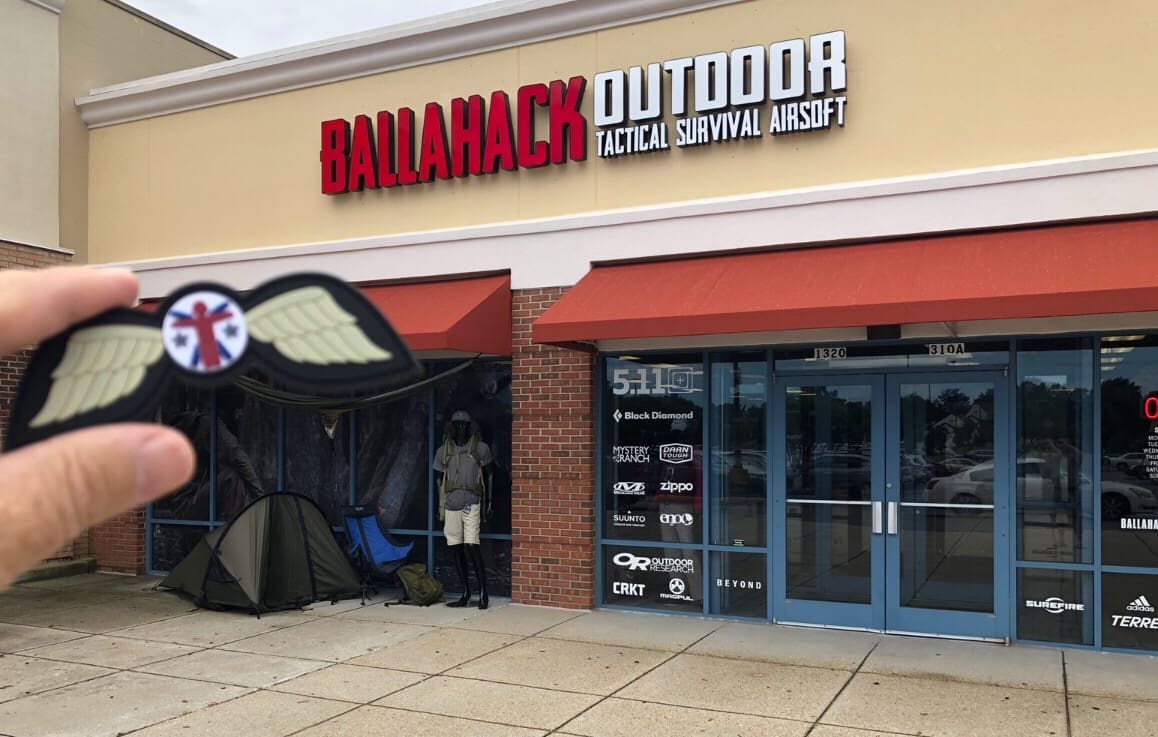
But I guess the real title of this post should be, “What would you do for a Klondike Bar?”
FUSION, by Unity Tactical, is a system of modular, multi-purpose components that provide end users unparalleled flexibility in mounting accessories to weapon platforms. It offers complete control in attachment of lights, lasers, sights, and other equipment to achieve complete integration, optimal placement, lightest weight, and most economy of space.
This FUSION configuration features the Micro Hub 2.0, Backup Iron Sight – Folding, and Lightwing – Right. As configured in the photos, it creates a perfect combination for a laser, light, and BUIS. The Micro Hub 2.0 is ambidextrous and can set the accessory mounting surface on either the right or left side of the host rail and can be placed in front or behind a laser. Placing it behind allows the laser to be put at the very front of the rail with no interference. The Back Up Iron Sight – Folding will completely clear laser apertures if placed in front of a laser module, but some users prefer to have the laser as far forward as possible to facilitate manual operation. The LightWing – Right will cantilever a weapon light forward if placed on the right side of the rifle. It will also accept a direct mount Surefire Scout or Millennium series light as well as Streamlight PRO-TAC Rails Mount lights. This configuration will push the light forward so it is in line with the laser. The LightWing will also raise the light above the bore, so it is not obstructed by barricades.
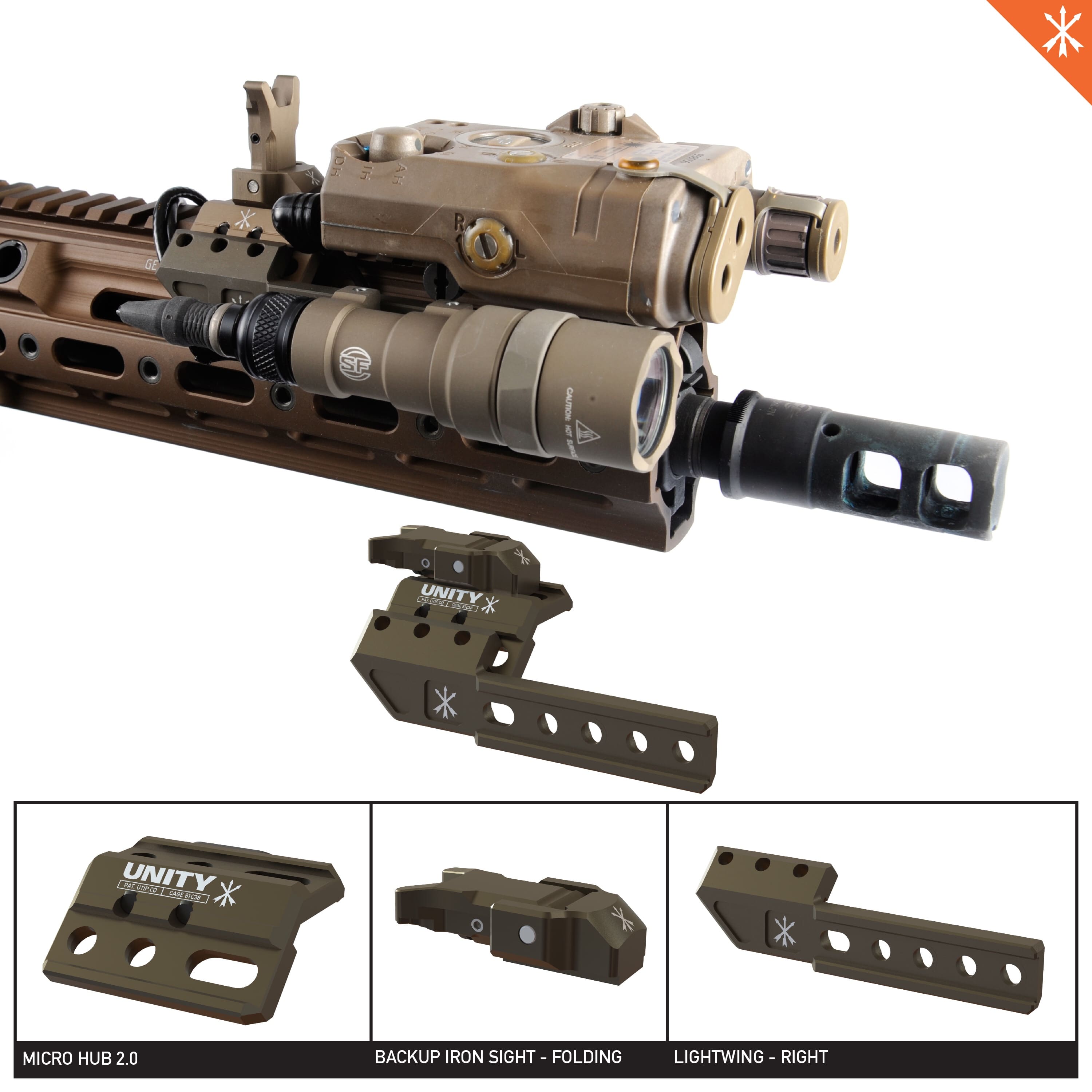
FUSION components are machined from 6061-T6 aluminum and MILSPEC Type 3 anodized. Designed and made in the US from US materials and good ole’ fashioned American innovation. FUSION is the original and best modular accessory mounting system. Make your gear work for you, not the other way around.
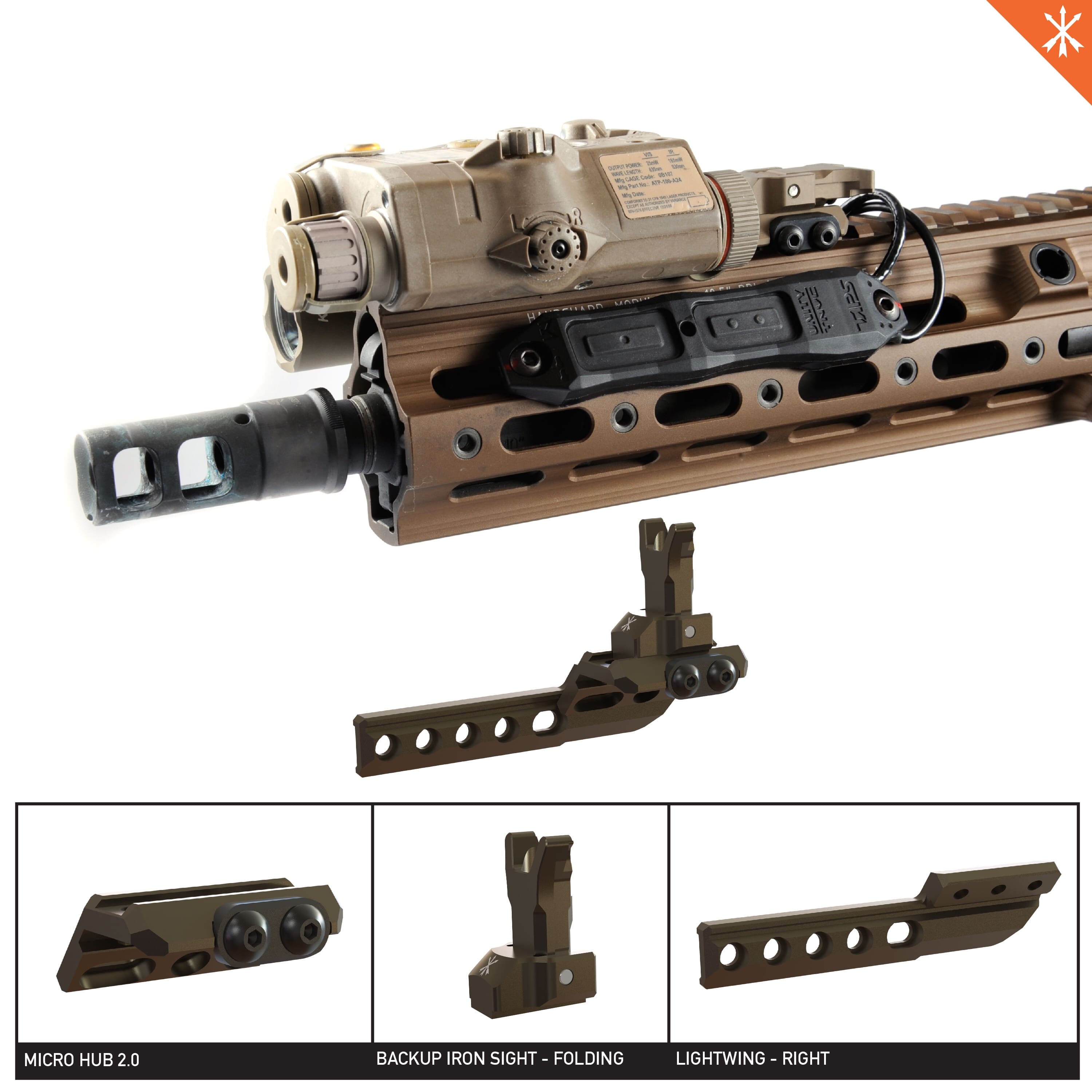
FUSION components are available from Unity Tactical and authorized dealers to build your perfect setup.
Who: Tomahawk Strategic Solutions
What: We are a company dedicated to providing training, advisory, and continuing education programs to better prepare organizations for evolving threats and emergency situations.
When: Tomahawk was founded in 2015 by Keith Walawender and Mike Biller, both retired operators from Naval Special Warfare Development Group (NSWDG). Currently, Tomahawk is 40+ strong with subject matter experts from the special operations, law enforcement, and private sectors.
Where: Tomahawk is headquartered in Nashville, TN with offices in Washington, D.C. and Columbus, OH.
Why: The team at Tomahawk provides world-class training to law enforcement, corporate America, and school systems to make our communities safer.
Bottom Line: Tactics are validated or discredited through opposition.
Our tactics have not been proven because of the amount of operations we have conducted—our tactics have been validated by the amount of operations we have conducted with hardened opposition.
Video: ideally, the video explains it all!
www.tomahawkstrategicsolutions.com
In this exclusive interview, we spoke with Kavan Cronin, a Color Designer for Arc’teryx LEAF, and the man behind the Wolf Urban Grey color.
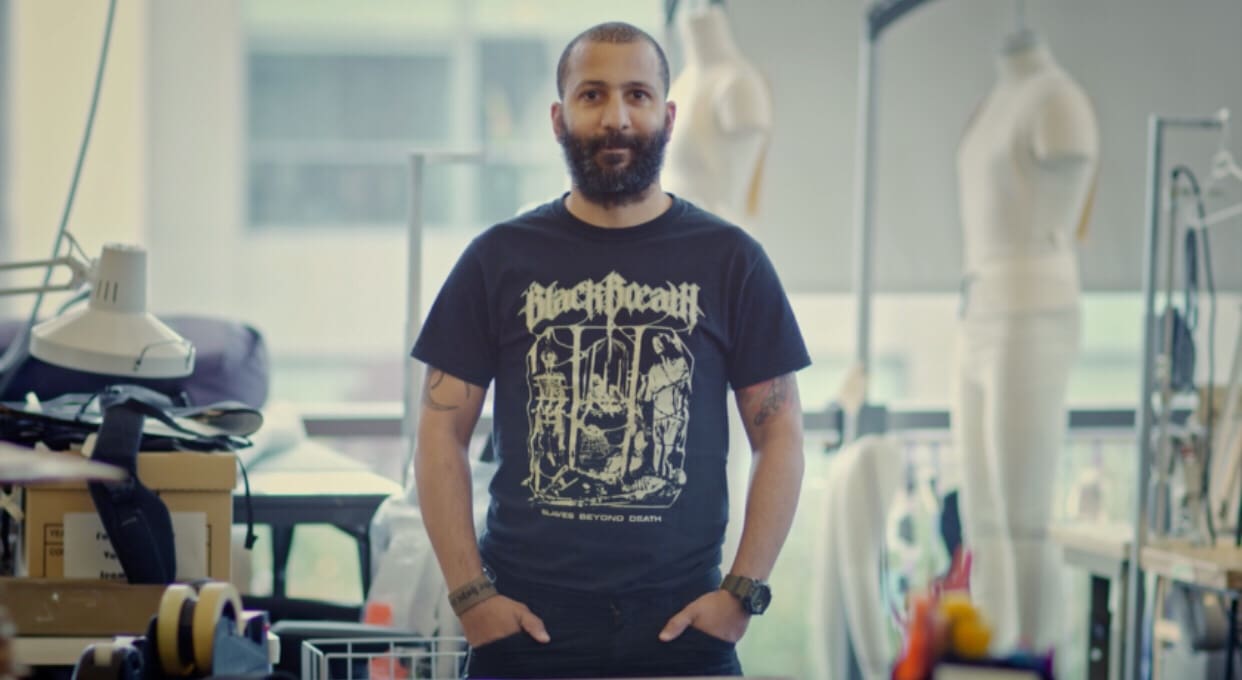
SSD: Who are you & what is your role at Arc’teryx?
KC: My name is Kavan, I am a Colour Designer at Arc’teryx and have been working in this department for 10 years.”
SSD: So you’ll have seen a lot of colours come and go in those years. Tell us why Arc’teryx has a specific Color Design Department, because this isn’t normal in the industry, correct?
KC: No it’s unusual. It’s a big point of difference for the brand. Our team is dedicated to colouring all of Arc’teryx products including LEAF, and we maintain a strong level of control right down to the minutest details.
Our team is split between colour designers, colour administration and quality control. The colour administrators interface with our material vendors, and control the sending and receiving of lab dips. They also maintain our extensive library of colour standards & lab dips, our sample yardage room, as well as many of the tools the colour designers use regularly.
Every uniquely coloured fabric passes through the hands of our colour quality control specialist. They are in charge of measuring all lab dips and sample yardage cuttings and maintenance of the measurement database. They helps to identifying trends in how colours are shifting from standards during the lab dipping process, and how different materials absorb dye. The designers work closely with them to make informed decisions.
As colour designers, we are behind the actual colouring of the products. We work closely with our product designers to capture their vision and intentions while we’re going through our colour palette development process, to ensure we are aligned with a strong story to convey. We also incorporate the expertise of our product line managers to make sure end use needs of each product are met, and that the message behind each collection is cohesive and impactful.
Our approach to inspiration, and how it is distilled and translated into a colour palette has continued to evolve over the years. Recently we’ve been looking at global trends and macro trends that we find inspiring or impactful, reviewing them as a group, and selecting the ones we feel are the strongest inspirational stories for each season. They can be rooted in anything from nature, technology to graffiti art!”
SSD: How does the department work with the LEAF line, not too many color differentials there!
KC: You be surprised. LEAF may seem on the surface to have a very obvious colour palate, but there is a story behind each of them! LEAF colour needs are very specific, they are typically defined by ongoing communication between the LEAF development team and our established network of end users and their requirements.
Wolf has an interesting background. The brief that I was originally given, touched on external studies stating that that a dark neutral grey was more likely to blend easily into its background under low light conditions than black. The idea was to use this knowledge to identify the ideal grey to be applied to a new uniform program for specialized LE teams. However, as these uniforms were not always going to be used in the dark, we didn’t want the uniforms to be too dark of a grey. They needed to blend into the urban environment under differing light conditions. Taking all of this into consideration, I spent some time doing personal exploration around the city (Vancouver) observing the various shades of grey as seen from roads, buildings, cement barriers, etc. As well as reviewing countless images from other major cities across the world. I was able to narrow down to 4 shades, which we reviewed as a group to zero in on the best option. This was the birth of (Urban) Wolf. Wolf then became widely adopted in the industry, it was an exciting colour evolution to be a part of. ”
SSD: Croc is another colour synonymous with the LEAF line – but what is the history behind this colour way?
KC: Crocodile was born of a time when camo patterns were the norm, but no one pattern would fit the global market. Multicam barely existed and there was much discussion around its use vs. the traditional US ARMY UCP. Not to mention, due to the fact that all camo patterns are licenced, and require third party printing, material cost was much higher than if a solid colour was used. Picking a solid colour for our LEAF apparel was the best option, the caveat being it had to be universally adaptable.
Crocodile was based off the Canadian military’s version of OD Green, which had just been phased out in favour of CADPAT. OD Green was a very adaptable colour, but was a little bit too green. The colour standard selected for Crocodile had a bit more brown in it, and it was better suited to woodland and mixed environments. Ranger Green did exist at the time, but was deemed too black.
There were discussions about changing to another colour over the years, but what colour..? The market was fragmented on what they wanted/needed, and Crocodile just kept getting the job done. Due to its adaptability, Crocodile grew and became the staple in the Arc’teryx LEAF line. Despite the introduction of Wolf, and then Ranger Green, Crocodile continues to be “the” colour synonymous with Arc’teryx LEAF.
SSD: Do you see any future color changes in the market?
KC: 2018 we introduced Harrier Grey in our new Cold Weather SVX Parka & Bibs. Intended for extreme cold weather use, people have asked us why we didn’t make them in white. Simple answer, white doesn’t stay white for long! Harrier Grey is a perfect gery to be under over whites, and allows our end users more versatility of environmental usage than just white would.
To learn more about Kavan and what he does, check out this profile video, part of Arc’teryx’s “Who We Are” video series.
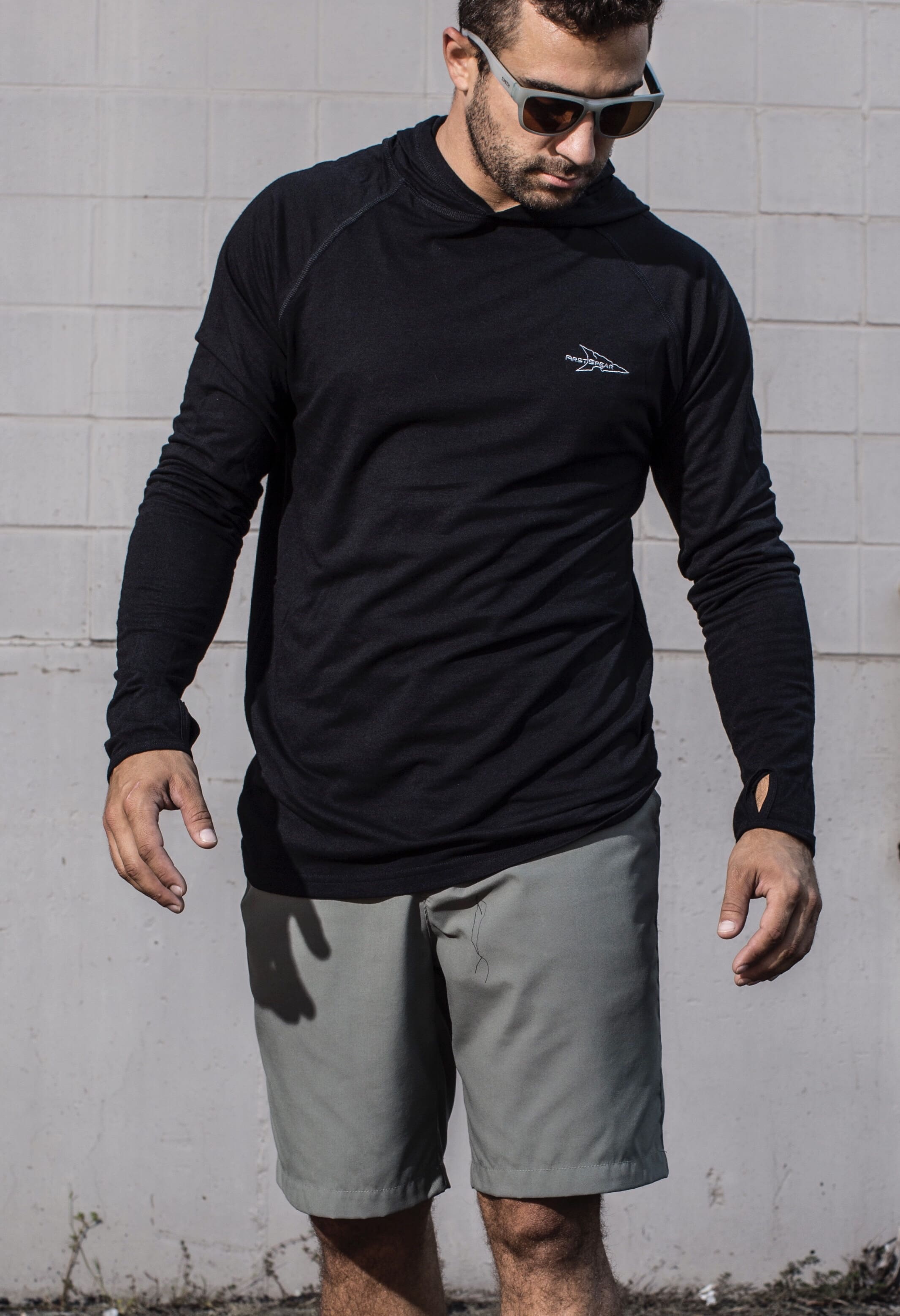
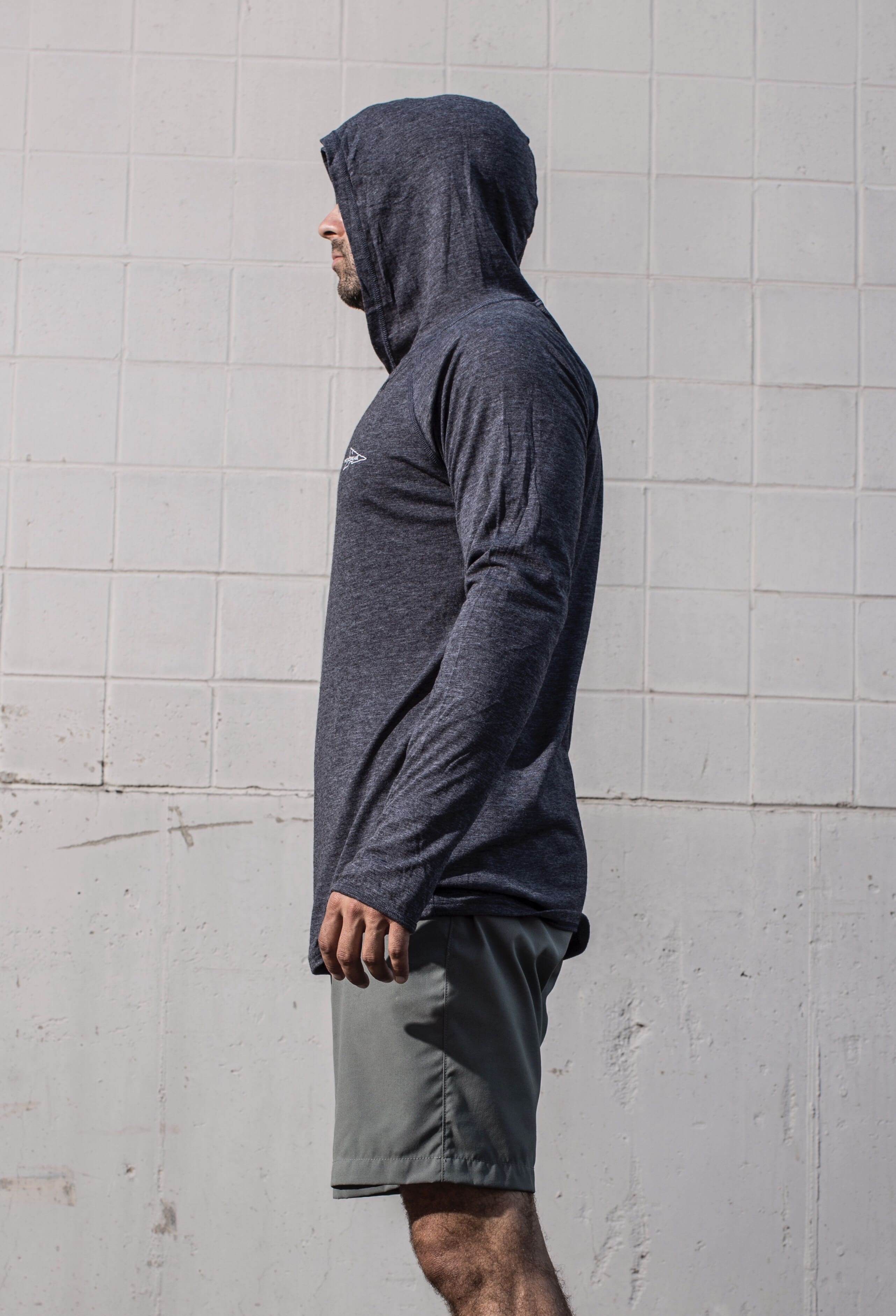
Meet the all new USA Merino Wool Hooded Field Shirt from FirstSpear.
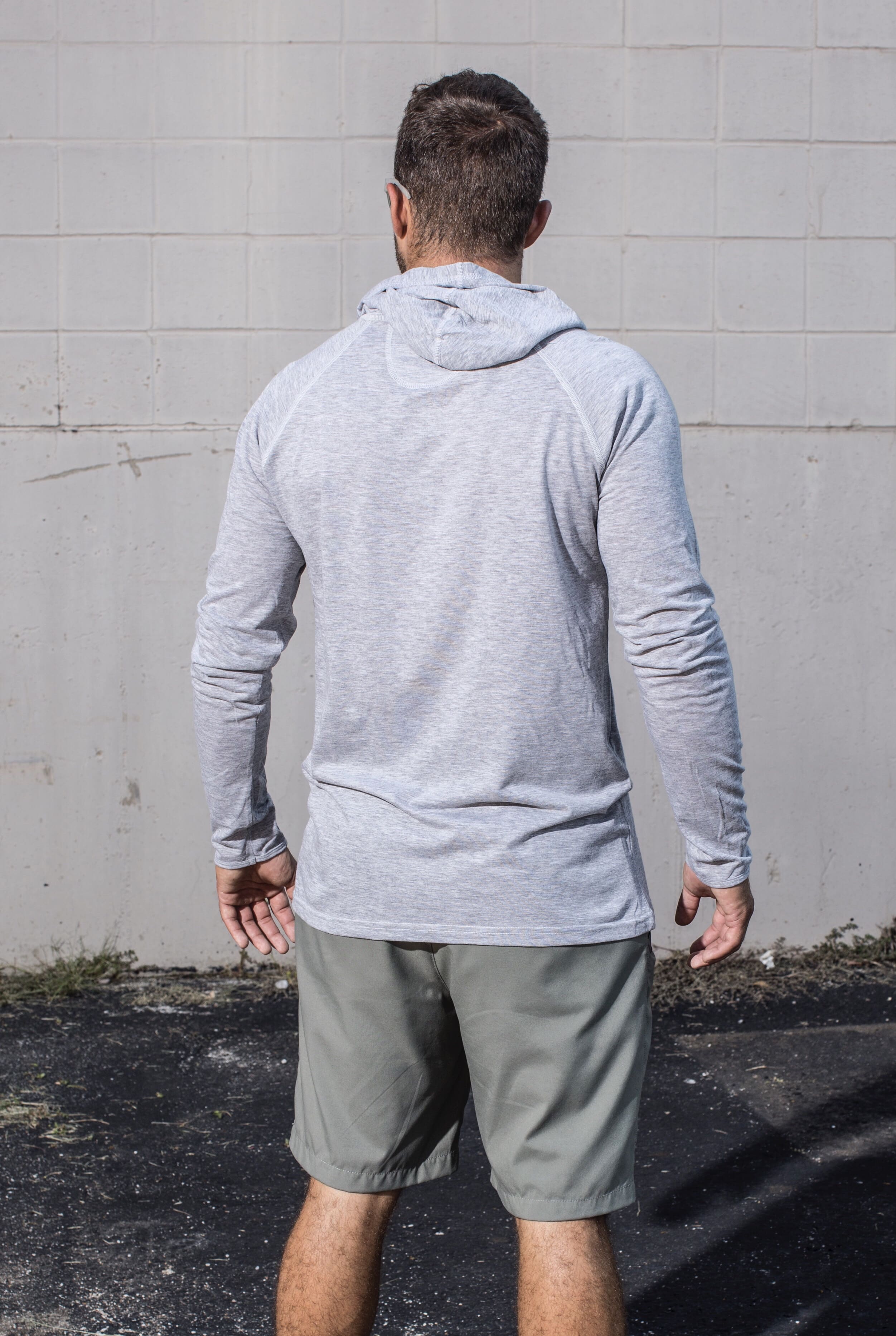
Built from ACM-BASE 100, FirstSpear’s lightest wool package. Featuring thumbholes and an oversized hood with absolutely no hardware making this an incredibly soft and comfortable base layer or stand-alone top with all the natural performance characteristics of Merino wool. Wear it year round to keep you cool and dry or retain warmth when it cools down.
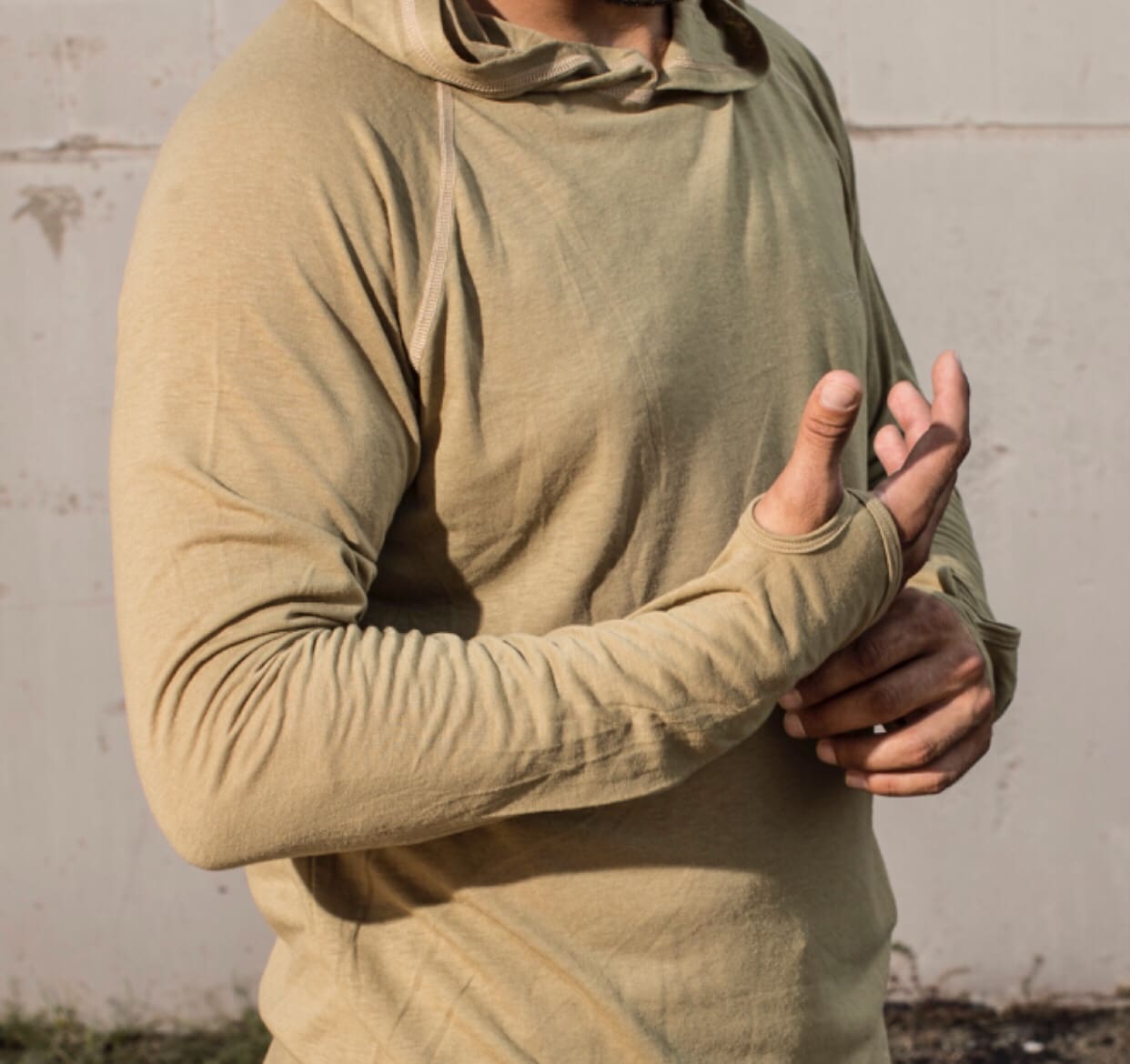
In stock and now shipping in black, commando, sand, heather grey, and charcoal. 100% made in the USA with USA materials.
www.first-spear.com/hooded-field-shirt













































































































