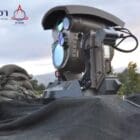
G24 Mount from Wilcox Ind

Tomahawk Performance HW / Combat Uniform – Now Available

April 21st, 2025

Nashville, APRIL 2025 – Tomahawk Performance advances hot weather military and law enforcement operational capabilities with the introduction of the HW / Combat Shirt and Pant – a full-featured lightweight hot weather combat uniform capable of handling high temperatures and high humidity in arid and tropical environments.

The HW / Combat Uniform features a streamlined design with an articulated American Athletic fit to enable full range of unrestricted movement.

Water-evacuating ports and laser perforation promote ventilation, contributing to temperature control and moisture management. 50/50 6.4oz NYCO Ripstop material of pant, shoulders and arms has mechanical stretch for comfort, while torso is Polartec® Power Dry® Lightweight 4.9oz Jersey–both materials FR-rated for safety.

Purposefully chosen features are seamlessly integrated to help stay on task without interference, including:

HW / Combat Pant

• Adjustable waist with webbing-reinforced button closure

• Laser perforation on lower back, groin, and behind knee for ventilation

• Ports for water evacuation

• Mesh-lined hand pockets, cargo and zippered accessory and back pockets promote ventilation

• 1” webbing and internal slot to secure breaching charge

• Adjustable ankle cuff with grip to seal out debris and insects

• Perforated knee pad with adjustable integrated mesh insert sleeve

HW / Combat Shirt

• Minimal stitching at friction points, no seams on shoulders where carrier straps rest

• Water evacuating ports in the pockets, inner elbow, and wrist

• Forward facing bicep pockets with zipper access and integrated stash pocket for essentials

• Integrated and removable elbow pads 1/3” thick

• Pockets are mesh lined to promote ventilation

• 4” x 4.5” X-stitched velcro for ID patches

• Tapered neck to help protect from sun, dust and debris

• Extended back to remain tucked while crawling, kneeling, bending, and sitting

Whether conducting long-range patrols in desert terrain, jungle reconnaissance, or urban operations in extreme heat, the uniform provides breathability and moisture-wicking properties to maintain comfort and prevent overheating. Designed to keep warfighters mission-ready and focused, it ensures performance doesn’t suffer in the most unforgiving climates.

The HW / Combat Shirt weighs in at 13 oz. (L) and the HW / Combat Pant at 24 oz. (L) including knee and elbow pads.

The HW / Combat Uniform is now available through the Tomahawk Performance website and via our dealer network.  

Tomahawk Performance designs technical apparel and gear to maximize mobility and enhance performance during the mission. For more information, or sales inquiries, please reach out to contact@tomahawkperformance.com.

US Army Seeks Attritable FPV Drones

April 21st, 2025

If you’ve hung around with me over the last year all I want to talk about is attritable drones and you’ve likely heard me say “The attritable drone is the 155 shell of the future” so many times you’d like to rip off my arm and beat me to death. But right now I’m so happy that I don’t think I’d feel it.

Fortunately, I’m not the only person who thinks this way. The Marines have set up a drone team to work on requirements and TTPs and now the Army is jumping on board with First Person View (FPV) attritable drones.

To be sure, the Army (and all of DoD) have procured a lot of unmanned aerial systems but they’ve been what I refer to as “enduring capabilities”. Expensive and exquisite, we can’t afford to lose the vast majority of these systems due to cost and lack of industrial base capacity.

Ukraine on the other hand goes through around 10,000 attritable drones per month, using them as much as munitions as anything. Surging up to 30,000 per month, they are manufactured in small buildings and basements, often near the front.

The vast majority are sent on one-way missions to conduct ISR or deliver end effects like EW and kinetic strike. They allow the small unit commander to have his own dedicated Air Force and it’s changing the way we will fight. I’ve heard some executives in the defense industry look at the lessons learned from drone use in Ukraine and retort with “that’s not how we do it in the US,” demanding that the military continue to buy expensive drones packed with capabilities that will likely be destroyed in their first use. Fortunately, Soldiers and their leaders are seeing the issue and understand that it doesn’t make sense to destroy and bunker with a $50,000 drone when it can be done with a $2000 model. They know that our foes are going to be able to continue to generate these systems even when our exquisite systems are used up in the first days of a large scale conflict. Small, FPV drones provide an asymmetric advantage to even the smallest and least sophisticated of foes.

My vision is a drone categorized as a munition in order to acknowledge its attritable status and to streamline acquisition which ordered in quantity and shoes up at the unit where it is configured using Modular Open Source Architecture (MOSA) components for the day’s operations. Some may be configured with cameras and sensors while others receive effectors such as EW packages and explosive warheads or weapon racks to drop small munitions such as grenades like a mini-bomber. Taking a note from what we’ve seen in Ukraine a flying Claymore may also be an option. Using simple onboard computers and software defined radios, software will be uploaded to provide various flight and command and control enhancements like pixel lock and home on jam capabilities as well as follow the leader control for swarms.

Now on to what the Army is looking at. The other day the Army’s Uncrewed Aircraft Systems Project Office issued a Sources Sought Notice to industry for Purpose Built Attritable Systems (PBAS) First Person View (FPV) Small Uncrewed Aircraft Systems (SUAS).

This Sources Sought is to assess commercially available and viable Purpose-Built Attritable Systems (PBAS) First Person View (FPV) Small Uncrewed Aircraft System (SUAS) candidates for a possible invitation for a follow-on demonstration in support of the United States Army Maneuver Elements. This sources sought may be used to fulfill future procurement requirements.

The Program Executive Office (PEO) Aviation, Project Manager (PM), UAS, seeks information on commercially available products that are production ready, reusable, unretrievable components (uncrewed aircraft platforms, payloads, and ancillary equipment) and cost-effective SUAS to be employed at the maneuver small unit level. FPV enabled SUAS provide the maneuver force a low cost solution with increased maneuverability, precise lethal payload delivery, and operator concealability. As such, the PBAS FPV, hereafter referred to as PBAS, designed with baseline mission characteristics that focus on rapid reconfigurability and modular payload capabilities that allow for mission changes across target acquisition tasks, with the added flexibility to execute kinetic operations as needed. The system’s mission characteristics include a field-level reconfigurable, modular payload capability to execute the primary mission of Reconnaissance Surveillance and Target Acquisition (RSTA), secondary mission of communications relay, and enhanced mission set of lethal payload delivery and electronic support.

What is most critical to this plan, and as far as I know still unavailable, is the Interface Control Document for these MOSA drones. It will tell industry what connectors to use and what power they will have available.

Additionally, we need a domestic supply chain for the components to create these drones. Right now, most batteries, circuitry, and motors are coming from within the Chinese sphere of influence. The alternative suppliers are foreign.

Interested parties should visit sam.gov and have until May 8, 2025, 4:00 PM CST to submit. I’m sure they mean CDT, but then notice says CST.

The image at the top was taken by SPC Israel Fernandez and depicts U.S. Army Sgt. Tucker Smith with the UAS Platoon, 1st Squadron, 91st Cavalry Regiment, 173rd Airborne Brigade prepares his Skydio X10D drone for its observation flight during “Project Shiv” at Grafenwoehr Training Area, Germany, Feb. 20, 2025. Project Shiv is an innovative exercise involving using first person view drones assembled at Balli Airfield in conjunction with development munitions created by the U.S. Army Combat Capabilities Development Command (DEVCOM) Armaments Center. This is the kind of innovation that is going to keep the Army relevant.

Maneuver Short Range Air Defense in Brigade Combat Team Operations

April 21st, 2025

Observations and Best Practices of The 6th Battalion, 56th Air Defense Artillery, National Training Center, Rotation 25-02

Download document here: No. 25-976, MSHORAD in BCT Operations [PDF – 565.1 KB]

Introduction: Defining the Role of Short Range Air Defense in the Brigade Combat Team (BCT)

Short Range Air Defense (SHORAD) is an inherently demanding mission set, requiring Air Defense commanders, leaders, and subject-matter experts to have a comprehensive understanding of air threats, and system capabilities, as well as an understanding of the ground fight for Air Defense units to meet their higher headquarters’ commander’s intent and end State.

The relationship between SHORAD units and the supported maneuver commander is a unique dynamic that requires detailed planning through the Military Decision-Making Process (MDMP) to ensure there is a shared understanding, vertically and horizontally, for incorporation of SHORAD into the scheme of maneuver.

Since 2022, three Maneuver SHORAD (M-SHORAD) Battalions have been established, with two organic to division-level organizations. It is during this initial window of establishing M-SHORAD that lessons learned, and best practices must be captured at the National Training Center, and codified as actionable doctrine for the Air Defense force at large.

This paper describes both best practices and recommendations for M-SHORAD batteries in support of the Brigade Combat Team (BCT) and division, specifically regarding the role of the Air Defense Coordinator (ADCOORD), employment of Stinger and Counter-small Unmanned Aircraft System (C-sUAS) systems, and engagement authority within the division. The ADA Branch must continually examine the role of SHORAD and mission command dynamics to set conditions for success in future SHORAD implementation. This paper references the yet-to-be-published FM 3-01, dated 04 November 2024, to provide appropriate context for the National Training Center rotation 25-02. Charlie Battery, 6th Battalion, 56th Air Defense Artillery Battalion (C/6-56 ADA BN) was the supporting M-SHORAD Battery during this rotation.

The Role of the Air Defense Coordinator

Battery commanders of M-SHORAD units often find that they, as the air defense coordinator (ADCOORD), have more detailed and contextual information at their level than at the Division Air Defense (DIVAD) headquarters when supporting the BCT. Enemy air avenue of approach, force protection capabilities, other Air Defense assets in the area of operation, local dynamics, and a host of other mission considerations are often better understood in real-time by the battery commander rather than their higher headquarters. In this relationship, immediate decision-making on detailed matters and specific actions is best executed at the lowest level, where the information and contextual understanding are timelier and more precise.

Throughout rotation 25-02, the C/6-56 ADA BN battery commander validated this concept through continual integration into the brigade plans and current operations (CUOPS) at the Main Command Post (MCP). It was critical that the battery commander had a holistic understanding of the brigade’s mission, and appropriately planned considerations for the battery to manage the execution of air defense operations. The most significant impacts the ADCOORD had were specific recommendations of task organization and command relationships (COMREL), synchronized efforts for the development of the unit airspace plan (UAP) to define Airspace Management requirements, and the early integration into MDMP and Intelligence Preparation of the Operational Environment (IPOE).

While C/6-56 ADA BN had a comprehensive task organization and COMREL going into the rotation, the nature of the fight required dynamic reorganization of the battery to optimize ADA assets in opposition to the air threats. Integrating the ADCOORD with the brigade S2, plans, and operations officer enabled the ADCOORD to inform the commander and adjust the task organization appropriately to ensure M-SHORAD coverage supported the identified unit or protected asset.

As the ADCOORD, the Battery Commander also influenced the specific type of command and support relationships within the brigade. This synchronization was achieved through the purposeful integration of the Battery Commander through the MDMP process, and the deliberate inclusion of ADA considerations in the brigade’s decision support matrix (DSM), enabling the tenets of Air Defense and Mission Command throughout the operation.

Of note, the most detrimental impact on the ADCOORD was the understaffed and undertrained Air Defense Airspace Management (ADAM) cell. Due to the naturally demanded requirements to provide real-time information to the MCP and CUOPS, there continued to be an increased expectation of situational awareness from the ADAM cell, especially considering the threat of unmanned aircraft systems (UAS) and deliberate integration of M-SHORAD.

To help the ADAM cell manage the fight, the C/6-56 commander provided Soldiers from the battery. However, this resulted in “mission creep,” with the battery effectively serving as the ADAM cell, specifically regarding battle drills, TOC updates, and COP management. It is critical to the functions of the MCP, and supporting M-SHORAD Battery to ensure the ADAM cell is manned, trained, and equipped to enable command post activities with marginal, if any, augmentation from the battery.

While the draft of FM 3-01 does outline a battery commander as the ADCOORD to a supported Brigade Commander, it does not clarify the relationship of multiple SHORAD Battery Commanders to a single brigade.

Non-Dedicated Stinger Teams

In 2017, the Headquarters Department of the Army published HQDA EXORD 182-17 Implementation of Increasing Short Range Air Defense (SHORAD) To Maneuver Forces Initiative. The United States Army Air Defense Artillery School immediately began training various non-air defense Soldiers and units as part of this directive. Since then, units have struggled maintaining training proficiency and standards for gunnery programs within the BCTs and divisions.

In the case of rotation 25-02, approximately 24-man portable air defense systems (MANPADS) were issued to the BCT. However, it quickly became apparent that the operators of those systems were not integrated into the scheme of air defense. This included surface-to-air missile (SAM) engagement reports, MANPADS distribution plan, or the DSM to reallocate air defense assets. It was also unclear whether the operators were trained and certified on the weapons system, as the brigade did not maintain any centralized gunnery program.

While this may not be the case with every BCT or division, all units are required to understand the training and certification of Stinger operators for the proper planning and projection of ADA combat power. If it is the intent of the United States Army to increase the air defense capabilities within the BCT to non-air defenders, it is imperative for elements at the division and below to establish and manage a gunnery program.

Training circular (TC) 3-01.18 outlines the gunnery standards for both air defenders and non-air defenders; however, the current publication tasks the organic Army Air and Missile Defense Command (AAMDC) or delegated ADA Brigade Commander to oversee the program and establish a brigade standardization officer to evaluate battalion teams, training plans and training schedules.

It may be necessary to include a 14P, AMD Crewmember, Master Gunnery position, and the necessary equipment to divisions to provide oversight for evaluations and gunnery standards in line with TC 3-01.18 across the formation. The current TC only refers to Avenger Master Gunners but may be interchangeable with M-SHORAD Master Gunners based on the overlap of base knowledge of the Stinger weapon system. The Master Gunner position could be assigned to the Division AMD sections to support all division MANPADS gunnery, for both Air Defense and non-Air Defense Stinger teams.

While the draft FM 3-01 does charge the ADCOORD with providing oversight of AMD training and certification, the current TC is incongruent with the DIVAD construct within a division, including divisions that must maintain currency without a DIVAD to provide oversight. Until the training circular can better capture the current structure and requirement of non-dedicated air defense, it will likely be at the discretion of the division or BCT commander to determine the unit’s training strategies, standards, and training schedules.

In units without a DIVAD, non-dedicated MANPADS gunnery is even more problematic. In those cases, divisions maintain zero ADA commanders, with the division AMD chief serving as the senior air defender in the division and the ADAM air defense officer as the senior air defender in the brigade. In these organizations, there is even less capability to provide the necessary oversight to manage a MANPADS gunnery program in accordance with the current TC. It may be essential for the next iteration of the TC to shift to a MOS agnostic approach, enabling any organization or unit to establish MANPADS programs or source mobile training teams as necessary.

Counter Small UAS Systems and Employment

Much like the previously discussed MANPADS concerns, divisions and brigades lack the training proficiency and certification requirements associated with C-sUAS systems. While two divisions have been issued Smart Shooter, Modi, Bal Chatri, and Drone Buster, it is also clear that these systems have been either relegated to use only by assigned air defenders or lack any oversight, specifically in organizations that do not have a DIVAD battalion.

In those cases where a DIVAD is assigned to a division, air defenders show excellent proficiency when employing C-sUAS systems. However, the availability of personnel to employ handheld systems is limited, as the supporting ADA battery typically operates on their primary weapon system, the M-SHORAD Stryker. In cases where the systems are issued to non-dedicated air defenders, they generally are improperly employed due to limited training with the system.

The number of commercial off-the-shelf (COTS) systems or other capabilities that are not programs of record is also increasingly challenging to manage. Systems previously seen at the National Training Center include, but are not limited to, MADS-K, BEAST+, Titan, SkyView, and Enforceair. Including these self-procured systems increases the training requirements and certification for each BCT. These systems are often challenging to manage from an emission control (EMCON) and spectrum management perspective.

As recommended with the MANPADS, it is a commander’s prerogative to ensure training and certifications are managed within a centralized standardization program. As of 17 September 2024, the Fires Center of Excellence, Directorate of Training & Doctrine released the Counter-small Unmanned Aircraft Systems Home Station Training Support Package & Administrative Guide. The UAS support package should serve as the base document for units for handheld and self-procured systems until the appropriate gunnery standards are established. However, based on the type of C-sUAS systems, it will likely not be a comprehensive training guide.

Short Range Air Defense Engagement Authorities

As M-SHORAD continues to integrate into maneuver elements, the ability to make timely and accurate engagements and manage airspace within a brigade or division becomes increasingly more complex. Key to this discussion is the level of control for SHORAD units, specifically the engagement authority.

Joint Publication (JP) 3-01, Countering Air and Missile Threats states that while the engagement authority originates at the joint force commander (JFC) and can be delegated to the area air defense commander (AADC), and that engagement authority can also be delegated to the individual fire unit based on the operational necessity and rules of engagement (ROE) for defensive counterair operations.[2]

This level of autonomy will be vital to ensure that SHORAD units supporting the maneuver commander can make timely engagements to protect the force. The current draft of FM 3-01 states ADA commanders in divisions and BCTs control engagements using the ROEs, with engagements typically decentralized to the fire unit. However, this will still require a certain level of synchronicity to ensure engagements occur in line with the area air defense plan (AADP). Additionally, it will be necessary to establish engagement boundaries that consider the coordinating altitude (CA) for other airspace users and clearance of fires, forcing integration between the DIVAD and echelons above the brigade and division.

During rotation 25-02, C/6-56 ADA BN, in conjunction with the NTC higher control cell (HICON), refined the engagement authority to ensure that they met training objectives and best replicated real-world application. This was primarily accomplished through the deliberate planning and coordination between the Battery ADCOORD and HICON in line with the scenario-generated air threat and constructive division guidance.

The published rules of engagement considered declared hostiles, hostile intent, hostile act, and autonomous engagements and were subsequently published in the division order. In turn, C/6-56 ADA BN codified the brigade’s engagement authority for hostile air threats: “Stout VCs have engagement authority (EA) of RW and group 1-2 UAS. All engagements must be reported to ADAM/BAE and Nighthawk 6 at BDE Main. EA for FW and group 3-5 UAS is with BDE AMD Cell, Nighthawk 6, or BDE Main. All located at BDE TOC.

What was not detailed in the C/6-56 ADA BN plan was the CA. CA is a determining factor for engagements within a joint environment. In addition to the CA, the battery, in conjunction with the ADAM cell and brigade aviation element (BAE), needs to ensure that the appropriate airspace coordinating measure (ACM) requests are submitted as part of the UAP to create shared understanding between airspace users.

Observations from rotation 25-02 suggest the use of a low-altitude missile engagement zone (LOMEZ) to better define where SHORAD units operate, specifically for those elements maneuvering with the supported unit. For those SHORAD elements in a fixed or static location (MCP, airfield, brigade support area, etc.), a short-range AD engagement zone (SHORADEZ) may be more appropriate. However, these recommendations may change based on employment and mission requirements.

Additional coordination is required for a SHORAD unit when divisional assets identify a threat aircraft operating in the division area of operations but do not have the authority to engage the threat under the rules of engagement or weapons control status. This procedure needs to provide specific guidance to include potential SHORAD engagements above the CA, as the DIVAD must coordinate with the division Joint Air Ground Integration Center (JAGIC) for engagement authority in these cases.

Annex A to ATP 3-91.1, The Joint Air Ground Integration Center, outlines this process in detail.[4] What potentially requires an update is the Call for Defensive Counterair with Established Track, with the understanding that JP 3-01 and the pending FM 3-01 delegate engagement authority to the ADA commanders in divisions and BCTs using published ROEs.

To reduce the time to engagement, the JAGIC should develop a decision authorities matrix, or appropriate Tactics, Techniques, and Procedures (TTPs) to ensure they are delegated appropriate authorities to execute their functions organic to the JAGIC to facilitate these engagements. It is important to remember that these authorities must be consistent with the airspace control plan and the area air defense plan defined by the JFC and Joint Force Air Component Commander.

Conclusions and Implications for Air Defense

Air Defense and Maneuver Culture. SHORAD’s current and future missions require air defenders to understand short-range air defense and integration with the supported commander. This relationship, nested within mission command, will help necessitate the development of doctrine, unit operating procedures, military decision-making, and operations.

Additionally, it is the responsibility of the Air Defense proponent and doctrine to ensure lessons learned and best practices are codified in a way that is communicated back to the force, resulting in tangible changes to Army DOTMLPF-P. This includes adjustments to the programs of instruction within professional military education for officers, warrant officers, and enlisted Soldiers as early as possible within the ADA school. Future curriculum must address joint service interoperability, large-scale combat operations, and the increasing role of air defense in the division fight. Air Defense may need to leverage maximum attendance to the Stryker Leaders Course and the Maneuver Captain’s Career Course to bridge the knowledge gap between M-SHORAD and the maneuver force.

Leader Development. The DIVAD requires mature, independently operating company-grade leaders skilled in communications, critical thinking, and the ability to conduct leader engagement while integrating at echelon. Positions, such as the ADCOORD and ADAM cell officer, are crucial touchpoints to synchronize efforts with the supported unit. It is equally important for maneuver commanders to be educated on the air defense capabilities organic to their unit. Air defense leaders are ultimately responsible for educating the supported commanders and facilitating effective mission command in complex air and missile defense environments.

Realistic Training. Conducting realistic training that appropriately replicates the complexities of a joint and dynamic environment benefits the DIVAD and the division. Demanding home station training and combat training center rotations must push the Soldiers and systems required for real-world application to ensure units can meet the stresses of combat against agile and proficient advisories. It is the charge of unit master gunners, commanders, and standardization teams to ensure units are challenged with the complexities of large-scale combat operations.

[1] ATP 6-0.5, Command Post Organization and Operations, Headquarters Department of the Army, Mar 2017.

[2] JP 3-01, Countering Air and Missile Threats, 13 Mar 2024

[3] JP 3-01, Countering Air and Missile Threats, 13 Mar 2024

[4] ATP 3-91.1, The Joint Air Ground Integration Center, April 2019

By MAJ Julian Rodriguez, Center for Army Lessons Learned

MAJ Julian Rodriguez currently serves as the Senior Air Defense Trainer at the National Training Center at Fort Irwin, CA. His previous assignments include 4-3 ADA BN as a Patriot Battery Platoon Leader and Battery Executive Officer; 82nd Division, Combat Aviation Brigade as the ADAM OIC; 1st Security Force Assistance Brigade as the brigade planner; White Sands Missile Range as the AMD Test Detachment Commander; and 30th ADA BDE as a Battalion Executive Officer and Brigade Operations Officer. MAJ Rodriguez’s civilian education includes a Bachelor’s degree in Political Science from the University of Texas at Arlington, and a Master’s degree in Leadership Studies from the University of Texas at El Paso.

The Bunker – Nonsubdued Sew-On Skill Badges

April 20th, 2025

The Bunker has created two nostalgic retro nin subdued cloth badges of the Combat Action Badge and the Air Assault Badge! Now, you can make up your uniform as it would have looked pre 1968 but with badges that didn’t exist back then. The last pic shows them mixed in with original non subdued badges as the Army wore them on fatigue uniforms pre-1968.

They made a limited tun of thes two badges so stop by The Bunker and get yours before they’re gone. If sales are good and they receive enough requests for other badges they’ll have them made as well.

What’s that? Why didn’t they do other badges? Well, first of all this is a test to see if there is any interest in this market idea. Second, they figured they would make those that are: a) widely earned and have a great audience for sales and b) badges that the owner can use on his own retro fashion wear so he could make up a shirt and wear it about.

The owner added a note: yeah, I know the Army reg stated you could only wear one foreign badge above the right pocket. However, I’m already wearing two badges that didn’t exist back then so why hold back!! Now, he just needs to find Greek and Irish non-subdued cloth jump wings!

linktr.ee/The_bunker_in_aberdeen

Happy Easter!

April 20th, 2025


Image via 3rd SFG(A)

MGCS Project Company GmbH (MPC) Established in Cologne

April 20th, 2025

Thursday, 17 April 2025 – The next step has now been taken in the Franco-German armaments project Main Ground Combat System (MGCS). On the basis of the approval by the German Federal Cartel Office, KNDS Deutschland, KNDS France, Rheinmetall Landsysteme and Thales legally incorporated the ‘MGCS Project Company GmbH (MPC)’ on 10 April 2025 in Cologne. Dipl. Ing. Dipl. Wirt. Ing. and Colonel (G.S. German Armed Forces Reserve) Stefan Gramolla was appointed managing director.
The founding of the company marks a further significant step in the MGCS project. After the upcoming negotiation of a contract with the Federal Office for Equipment, Information Technology and In-Service Support of the Bundeswehr (BAAINBw), which is acting on behalf of the two nations through a Franco-German Combined Project Team (CPT), this project company will be responsible for implementing the next phase of the MGCS programme as the industrial prime contractor. In particular, it will consolidate the concept and the main technological pillars of the system.
Launched at the initiative of the French and German governments, the MGCS project aims to replace the Leopard 2 and Leclerc main battle tanks with a multi-platform ground combat system by 2040.

About KNDS:
KNDS is the result of the association of Krauss-Maffei Wegmann (KMW) and Nexter, two of the leading European manufacturers of military land systems based in Germany and France.
KNDS forms a Group of more than 10,000 employees, with a 2024 turnover of 3.8 billion euro, an order backlog of around 23.5 billion euro and incoming orders of 11.2 billion euro. The range of its products includes main battle tanks, armored vehicles, artillery systems, weapons systems, ammunition, robotics, military bridges, customer services, battle management systems, training solutions, protection solutions and a wide range of equipment.
The formation of KNDS represents the beginning of consolidation in land defense systems industry in Europe. The strategic alliance between KMW (now KNDS Deutschland) and Nexter (now KNDS France) enhances both groups’ competitiveness and international positions, as well as their ability to meet the needs of their respective national army. In addition, it offers to its European and NATO customers the opportunity of increased standardization and interoperability for their defense equipment, with a dependable industrial base. 
KNDS headquarters are based in Amsterdam.

PRISM Launches Two New Products – Nebula & Low Visibility Package

April 19th, 2025

PR01X – NEBULA

Utilizing Cone Mills comfort stretch denim, this is the first black/natural denim ever to be offered by PRISM. Retailing for $88.88, pre-orders will start on 4/18 with a delivery of goods around 7/4. For a limited time and on this product only, you can buy 1 pair and get a 2nd pair for 33% off. Use code: 33ANDME – For any sizing questions, reach out to mark@prism.us

PRS01X – LOW VISIBILITY PACKAGE

PRS – is PRISM’s patent pending retention system that is integrated into their pants. The retention system allows for 350 degrees of concealment on body while also offering 360 degrees of full rotation & placement of any of their accessories. PRS was designed to be universal and work with their current accessory suite as well as other kit in your collection. This initial offering will come with the following goods at a $220 retail.

PR01X – ENCODE Jeans

PRS x Tracer Tactical – Pistol Mag Pouch x2

PRS x Tracer Tactical – AR Mag Pouch x1

PRS x Black Triangle – Donovan G10 w/ PRS Sheath

www.prism.us

250 Year Ago Americans Said, “No More!”

April 19th, 2025

250 years ago today, the American Revolution kicked off with the “shot heard around the world.” By the time the continental Congress had gotten its act together on July 4th, 1776, declaring independence, we had already been at war with England for well over a year. The army had not even been formed yet on the morning of April 19, a day we now call “Patriot’s Day.” Instead, we relied upon a militia, made up of hard, armed men who knew right from wrong and stood for the guiding American principle of liberty. They took a stand against oppression, vowing to accept it no more.

The town’s Minute Men where called to arms in the early morning of April 19, 1775 after being alerted by riders from Boston that British troops were on the march to seize arms and powder stored at a local magazine. The colonists were determined to protect their means of protection from tyranny. If you’ve ever wondered why the Second Amendment to the Constitution exists, this is the watershed moment.

The militia was under the command of Captain John Parker, who rallied them with these immortal words:

“Stand your ground. Don’t fire unless fired upon, but if they mean to have a war, let it begin here.”

Shots did ring out, although to this day no one knows who fired first. The subsequent Battle of Lexington and Concord marks the beginning of a path to a new nation, now known as the United States of America.

As the initial volleys of fire were exchanged near daybreak on Lexington Green, colonial volunteers fell back in the face of over 500 occupying British troops. But as the battle moved on to Concord, the tide turned, and the redcoats were routed as more and more colonists joined the fray.

The British troops retreated through Concord where they were reinforced. Despite eventually boasting a strength of 1700 men, they remained no match for the determined colonists who forced them to retreat to the safety of Charlestown in Boston. The militiamen grew in number along the way to a force of almost 4000 string, pursuing the British in an action which transformed into the Siege of Boston.

We won that battle and others, losing quite a few along the way, but with the signing of the Treaty of Paris on 3 September, 1783, we Americans would eventually be triumphant in a war that involved many of the world’s major powers and spanned the globe, to earn our full independence.

God bless those men and God bless this nation.

– Eric Graves

Founder
Soldier Systems Daily