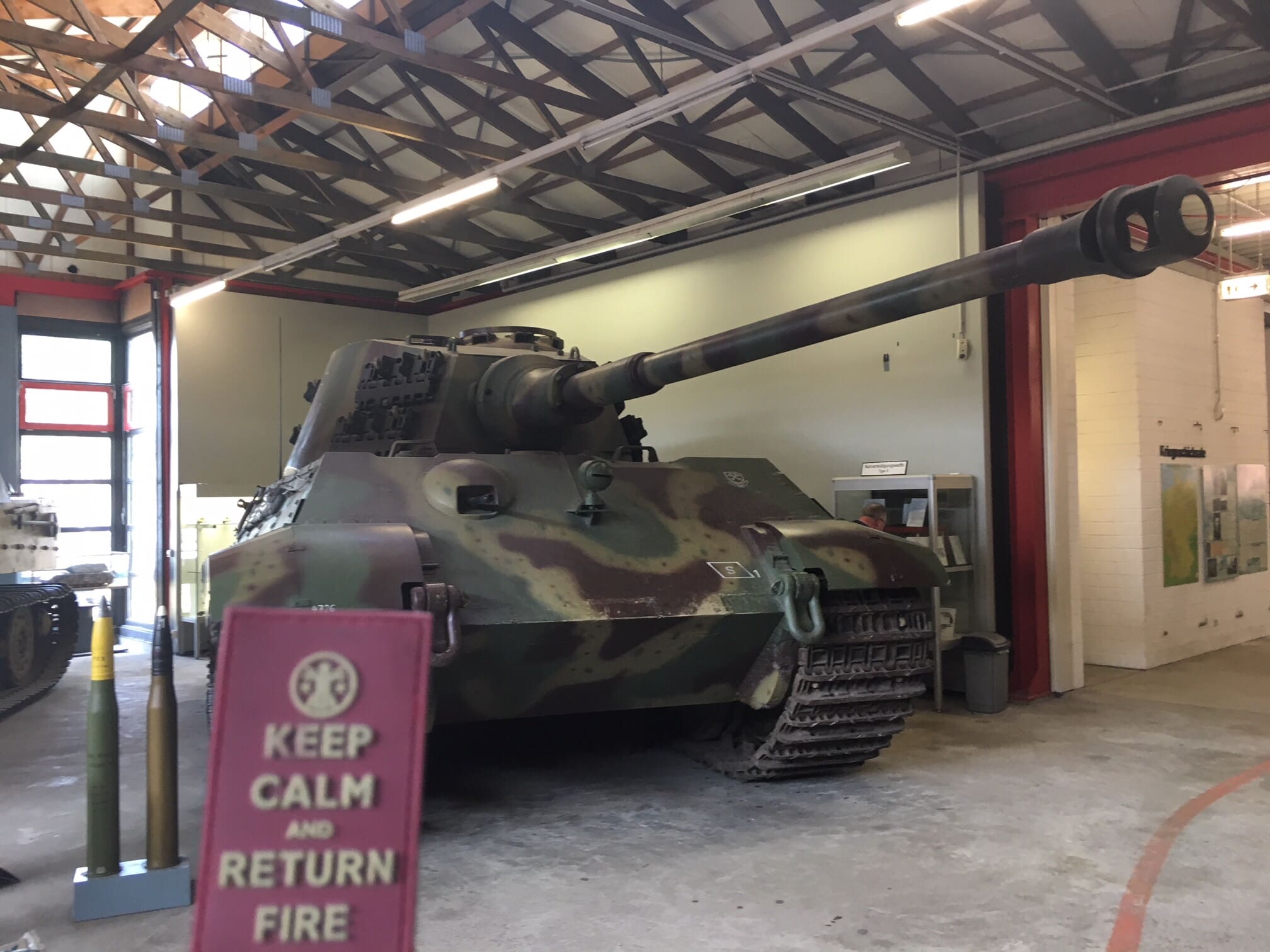
Visited the German Armour Museum today! Panzer Hurra!
JP Sends


Visited the German Armour Museum today! Panzer Hurra!
JP Sends
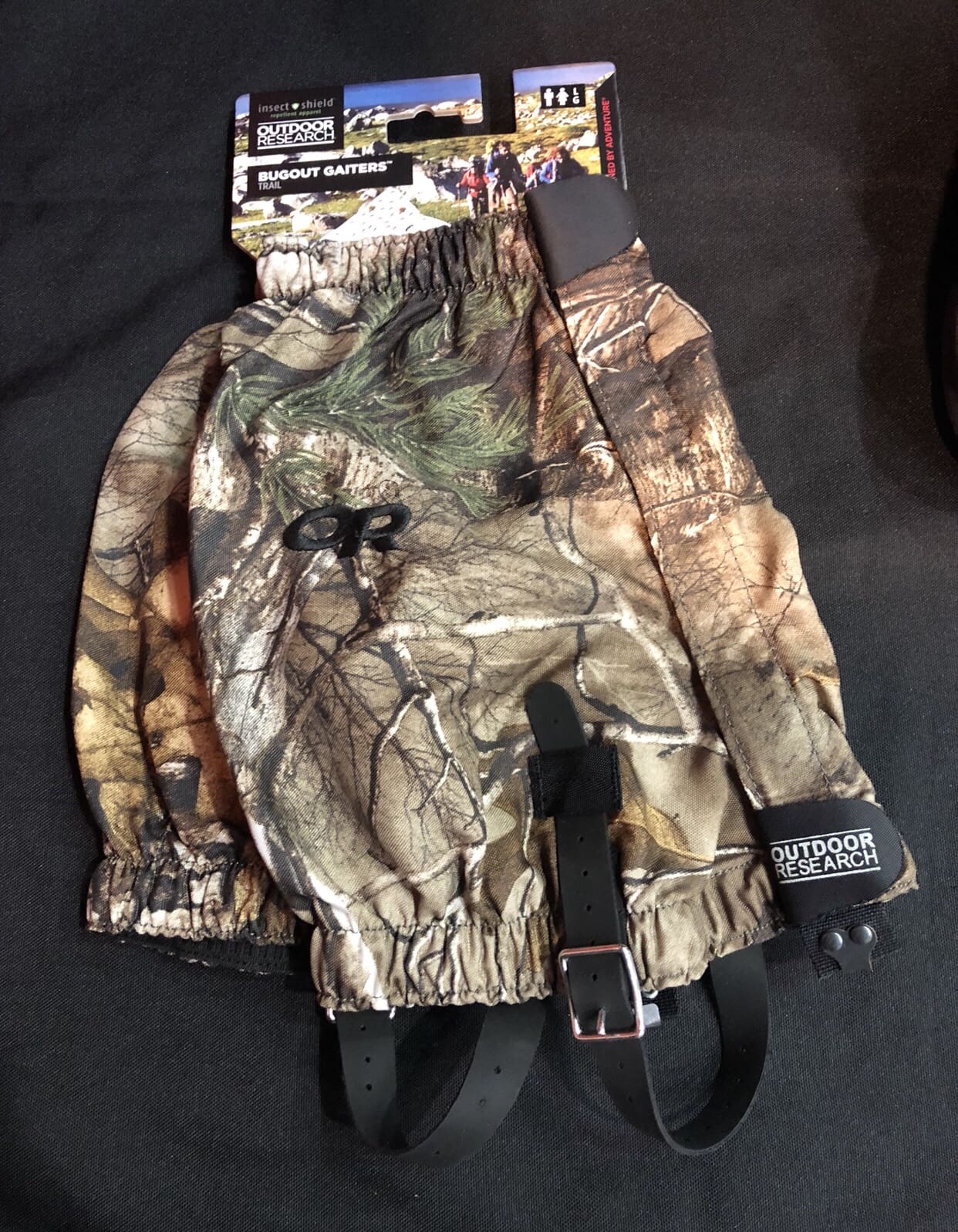
It was great to see Outdoor Research support this PNW-based show. While they showed their extensive military line, the BugOut Gaiters, made from 420D nylon, feature Realtree camouflage and InsectShield to prevent bites from mosquitos and ticks.
www.outdoorresearch.com/us/en/mens/mens-gaiters/bugout-gaiters-realtree
When I first saw TriggerShield at Triggrcon Range Day, I was understandably skeptical. It’s a hinged cover for the trigger to help avoid negligent discharges. Below, you see a prototype mounted to a Blue Gun.
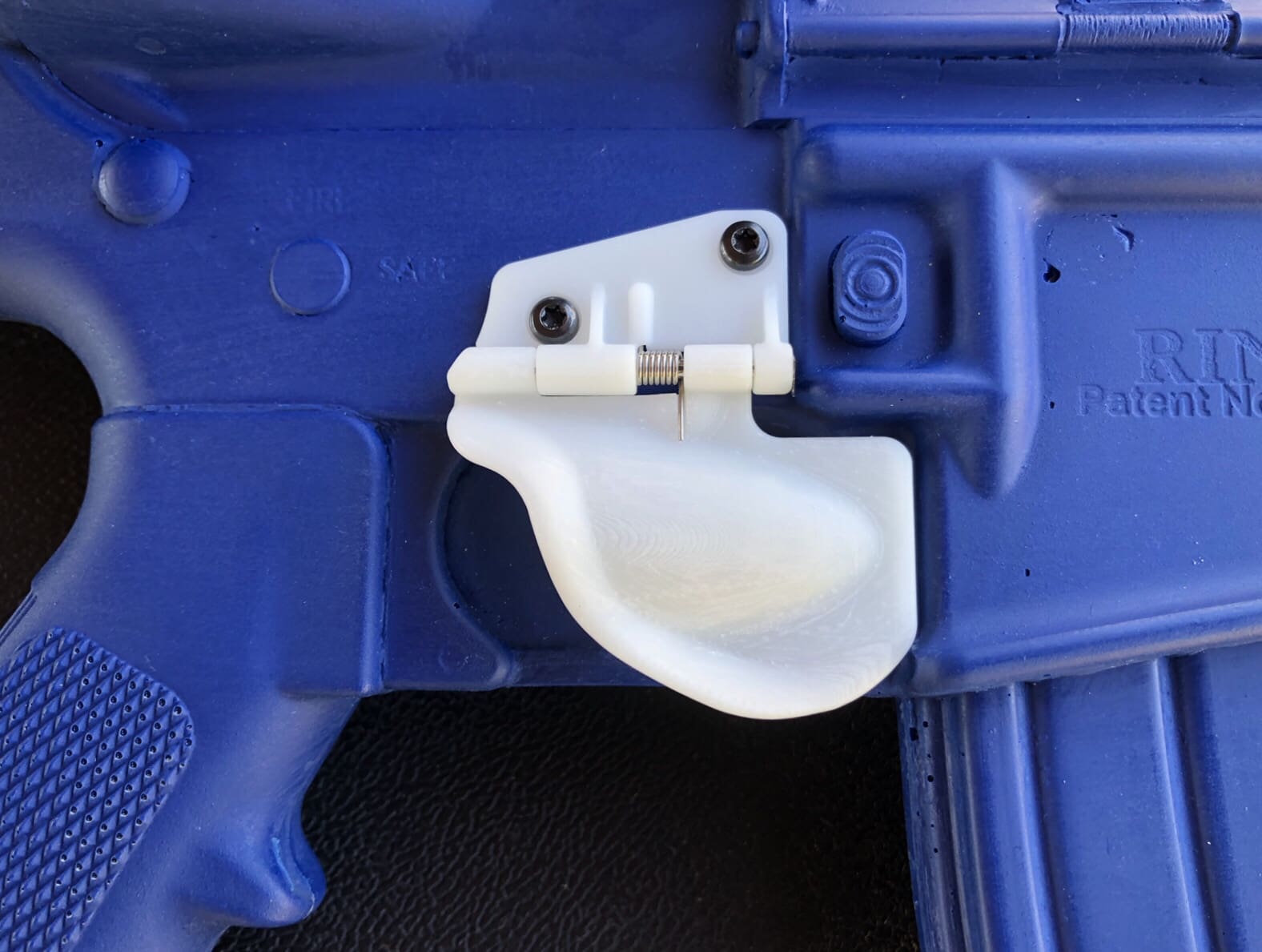
Initially, TriggerShield is available for the AR family and mounted to both left and right sides of the rifle. Its spring loaded design doesn’t rotate upward more than 90 degrees so as not to over stress the springs. Additionally, it’s mounted to the weapon via replacement trigger pins. In this photo of inventor Ryan Richetti, you can see how the TriggerShield swings out of the way.
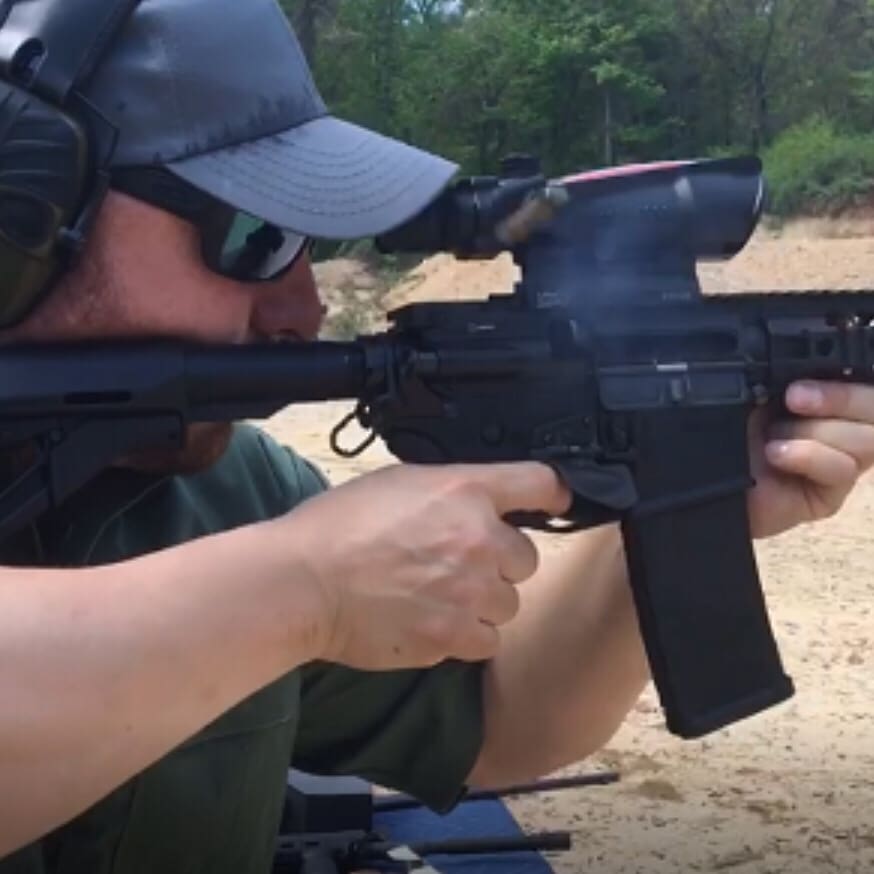
I fired a rifle with a TriggerShield mounted. I was surprised how easy it was to get to the trigger when I wanted.
While I am concerned that’s it’s a hardware solution to a software problem, I can see certain applications where it might be useful. I’m sure many in the Law Enforcement community would be against its use, but as it can be applied to a wide variety of firearms, it could be applied to weapons carried while in close proximity to bystanders. Additionally, some may want to use TriggerShield to avoid getting their trigger caught on equipment.
If anything, the device encourages debate.

Powered by the Sun, this Wristwatch-Style Computer takes Modern Diving to a New Level
The wristwatch-style Z1 is a good-looking timepiece for topside use. At the same time, it’s a ruggedly built dive computer. Its hybrid construction combines a polyacrylate case with a 316L stainless steel bezel (polyacrylate resin provides better heat-resisting properties than polycarbonate). This gives the Z1 a high-quality feel and appearance, yet enables it to excel in both durability and light weight.
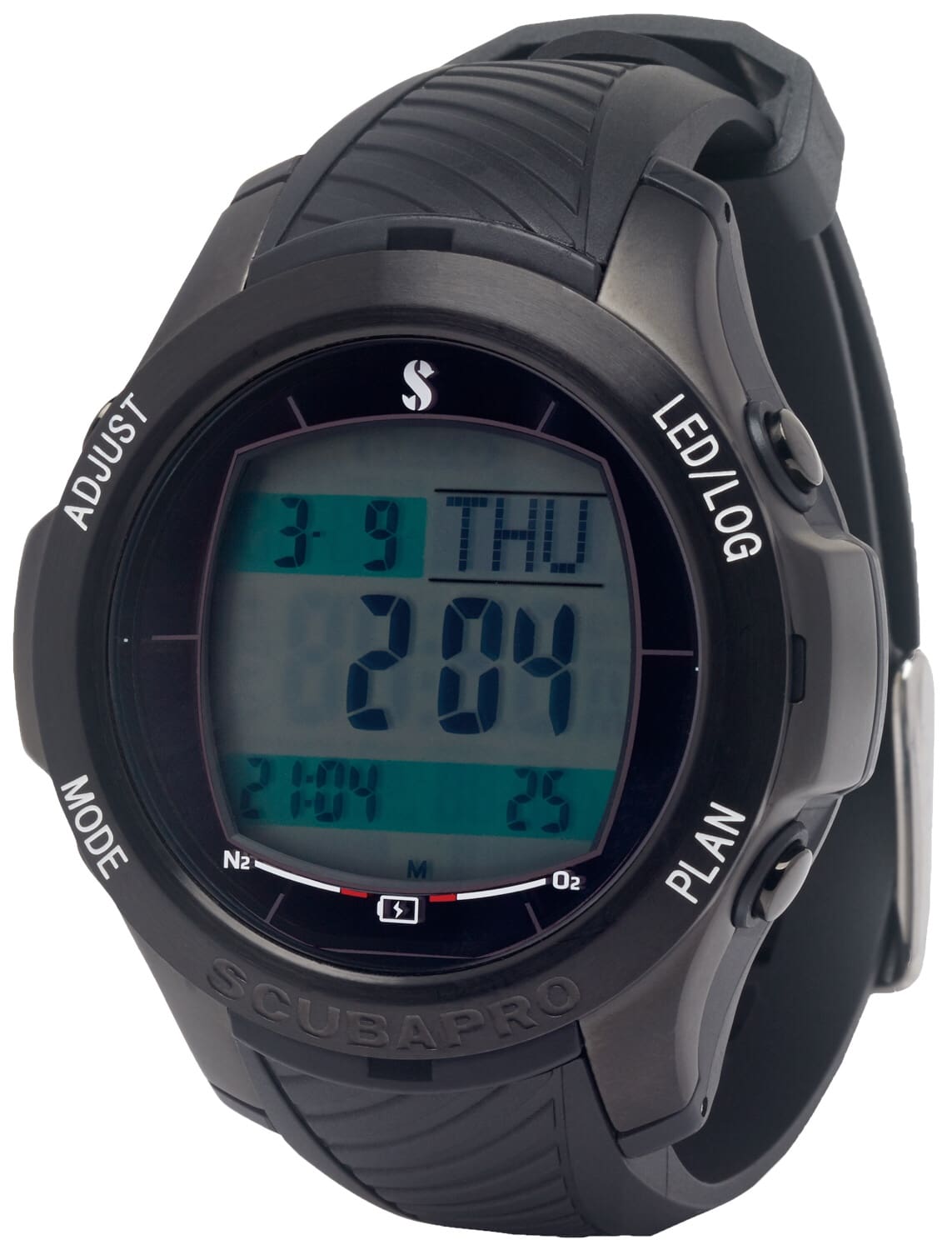
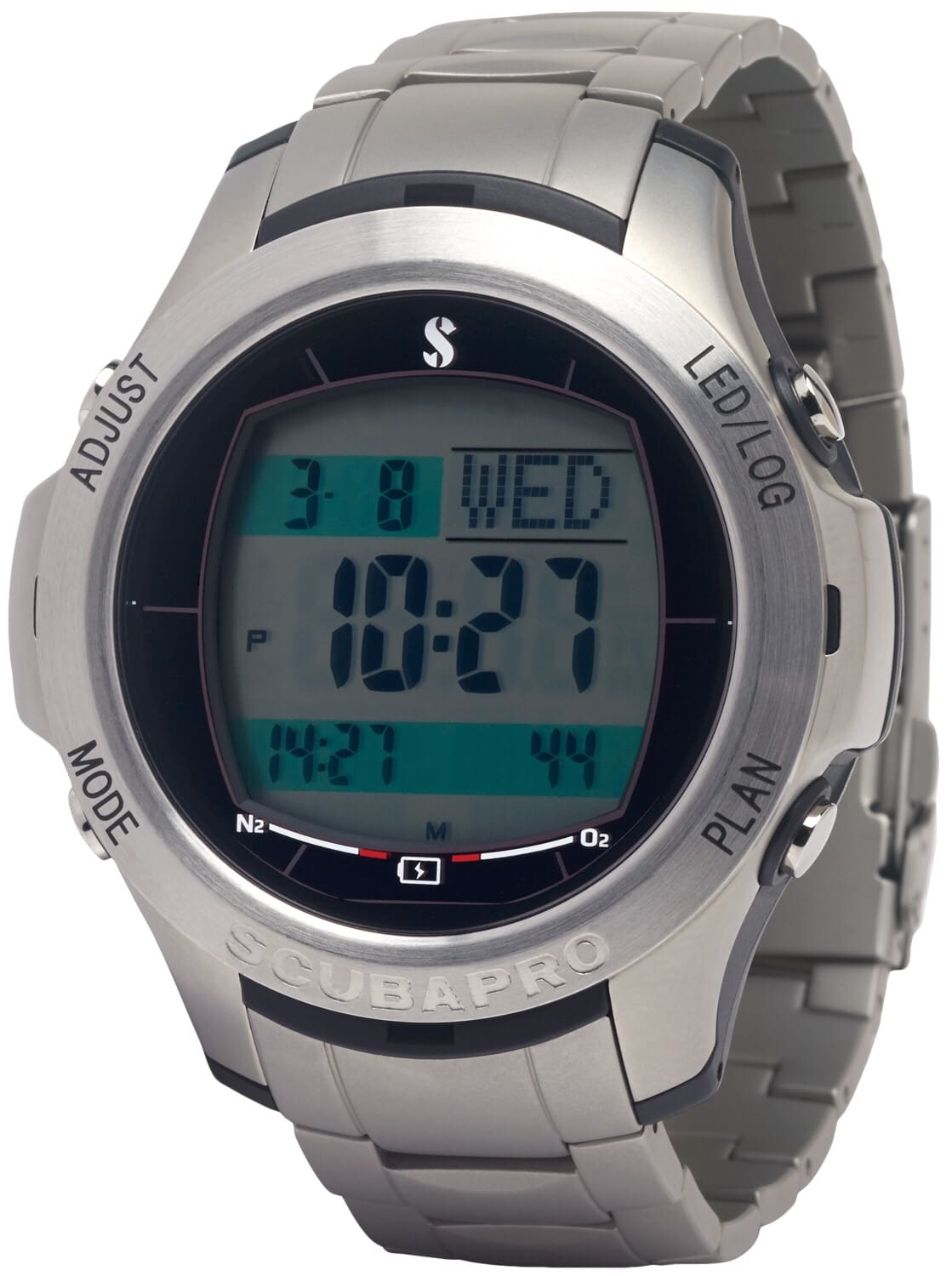
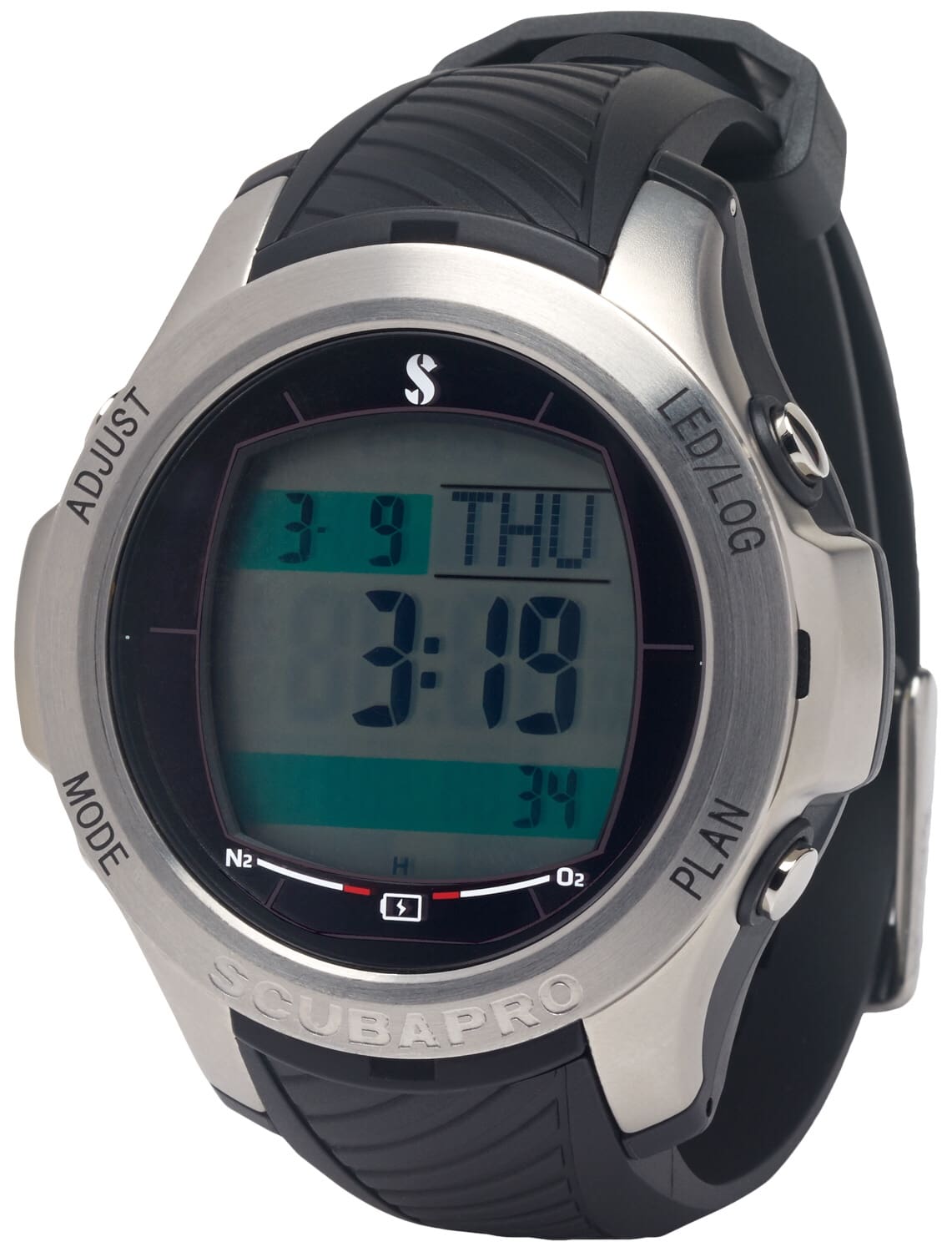
SOLAR POWERED DIVE COMPUTING
But where the Z1 really shines is in its sleek, technically advanced design.
A thoroughly elegant device, the Z1 is SCUBAPRO’s first solar powered
dive computer. Not only does this eliminate the need to dispose of discarded batteries, it also eliminates the need to find a power source when it’s time to recharge the battery, making it perfect for traveling divers. Part of our SCUBAPRO Cares line, the Z1 is another SCUBAPRO product that takes our oceans and our planet into consideration.
Basically, if the Z1 is exposed to light, its internal battery is charging; whether you’re outdoors in the sun, or indoors beneath fluorescent lighting. And because the Z1 is Bluetooth enabled you don’t have to worry about where you left your download cable; downloading, data analyzing and some adjusting of settings can be done wirelessly.
Simple to use, the Z1 provides four clearly labeled control buttons to take you through the menu system. All data is presented in easy-to-read alphanumerics backed by green screen highlights. The onboard digital compass lets you navigate the depths with confidence, and the innovative backlight function illuminates the screen beautifully. Its super bright white LED light is automatically activated simply by tilting your arm in the dark, using the Z1’s ambient light sensor.
The Z1 allows you to live your life in dive mode, without being leashed to a cord and power source. What’s more, the Z1 is compatible with all of the SCUBAPRO M2 and Chromis bands. A simple accessory change allows you to go from orange to yellow to red to blue to pink to purple to white. All bands match the rest of the SCUBAPRO line including the HYDROS PRO, Seawing Novas, Synergy masks and even our S620 Ti regulators. Express your personality – and your love for diving.
Z1 FEATURES & SPECS
• Solar charging system provides hassle-free battery charging.
• Internal battery can be charged by outdoor sunlight or indoor fluorescent light.
• Power saving function maximizes your dive time between charges.
• Battery can last for more than 8 years before needing replacing. (Maximum life span depends on use and
conditions.)
• Hybrid construction combines an attractive polyacrylate case and 316L stainless steel bezel for
lightweight durability.
• Buhlmann (ZHL-16C) algorithm offers Nitrox capability from 21% to 100% O2 for up to 4 Nitrox mixes. • Provides full time-keeping functions, including a stopwatch.
• Digital onboard electronic compass allows for easy navigation.
• A non-step altitude measurement configures the pressure reduction based on the current atmospheric
pressure rather than using an altitude ranking.
• Large, bold numbers in the center of the screen, plus eye-catching green highlights, ensure that all dive
data is always easy to read.
• Super bright backlight can be activated for 1.5 seconds or 3 seconds by simply tilting the arm (when the
Auto-Light function is set to ON).
• Audible and visual alarms keep you alert to your dive status.
• Depth and time interval alarms are diver-selectable prior to the dive.
• Logbook stores 30 dives and includes a dive history which can be analyzed with wireless technology. • Bluetooth 4.0 Low Energy connectivity lets you download dives to any iOS or Android device.
• Dive modes: Scuba, Freediving and Gauge.
• Maximum operating depth: 328ft/100m.
• Available in a variety of eye-pleasing casing and wrist band colors (see below).
• Will also accept M2 and Chromis colored wrist bands.
SUMMARY
Ultra-modern and eco-friendly, the Z1 dive computer is one of the many innovative, “green” products that demonstrate SCUBAPRO’s commitment to our planet. A stylish design, simple to use, and powered by the sun, wearing the Z1 at work and at play lets you celebrate your status as a modern diver, plus demonstrates that you are in tune with the latest technology and committed to an eco-friendly world.
The Department of Defense has announced that USOCOM selected SIG SAUER to provide SURG.
Sig Sauer Inc., Newington, New Hampshire, was awarded a $48,000,000 five-year, indefinite-delivery/indefinite-quantity, firm-fixed-price contract for the acquisition of the Suppressed Upper Receiver Group (SURG). The SURG weapon is an upgrade of the M4A1 lower receiver group in support of U.S. Special Operations Command (USSOCOM) Procurement Division. Fiscal 2018 procurement funds in the amount of $24,620 are being obligated at the time of award. The majority of the work will be performed in Newington, New Hampshire, and is expected to be completed by July 2023. This contract was awarded through full and open competition. USSOCOM headquarters, MacDill Air Force Base, Florida, is the contracting activity (H92430-18-D-0005).
SURG is a 5.56mm, integrally suppressed upper receiver. Despite assertions to the contrary on other websites, this is not a SIG Rattler kit.
However, there an entirely different program to offer a Personal Defense Weapon upper in .300. Earlier this year, SOCOM purchased a handful of SIG upper receiver systems to inform the requirement. Expect SOCOM to release a solicitation in FY19.
SURG asked industry to keep the handguard cool enough to handle even after firing the SOCOM suppressor torture test with M855A1. Several companies took up the challenge but experienced various issues.
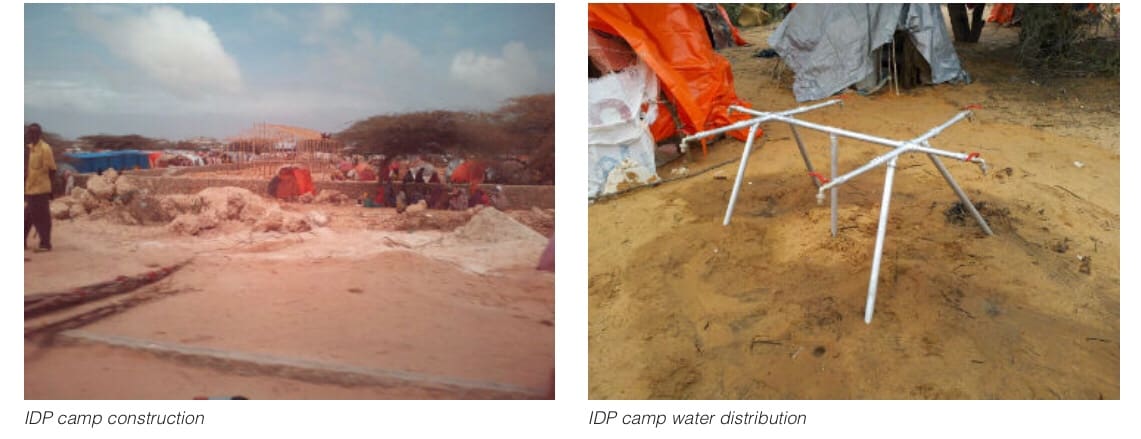
Mogadishu, Somalia, July 2011 – Somalia was in the midst of an ongoing civil war and a severe famine, brought about by a drought and a lack of governance. The famine ultimately kills over two hundred thousand civilians. The capital city, Mogadishu, was largely controlled by the UN-recognized Transitional Federal Government, supported by African Union troops. The Islamic extremist insurgent group, Al-Shabab controlled pockets of the city, and tribal in-fighting continued. While the city itself, the airport, and nearby port, were mostly controlled by the TFG, Al-Shabab, controlled the surrounding countryside. Fighting was ongoing, despite the humanitarian crisis killing thousands. We were tasked with evaluating if, and how, civilian aid organizations could respond to the humanitarian crisis and deliver desperately needed food, water, and medicine.

While this was not my first experience with overseas travel, conflicts, humanitarian work, and civ-mil partnerships, this was my first time totally unsupported in a place where the nearest decent hospital was the next country over, there was no infrastructure, such as phones or electricity, and we were completely surrounded by the enemy. There was no QRF, no support, no logistics, and no security beyond what the local TFG could provide. We needed to bring everything required to sustain ourselves and collect the information needed. I knew there wouldn’t be a Best Buy or even a tourist camera store in-country. And we had to keep it all under 20kg (UN flight weight restrictions), go through commercial security and customs in various airports, and be easily carried (didn’t expect luggage trolleys, turns out there weren’t any).
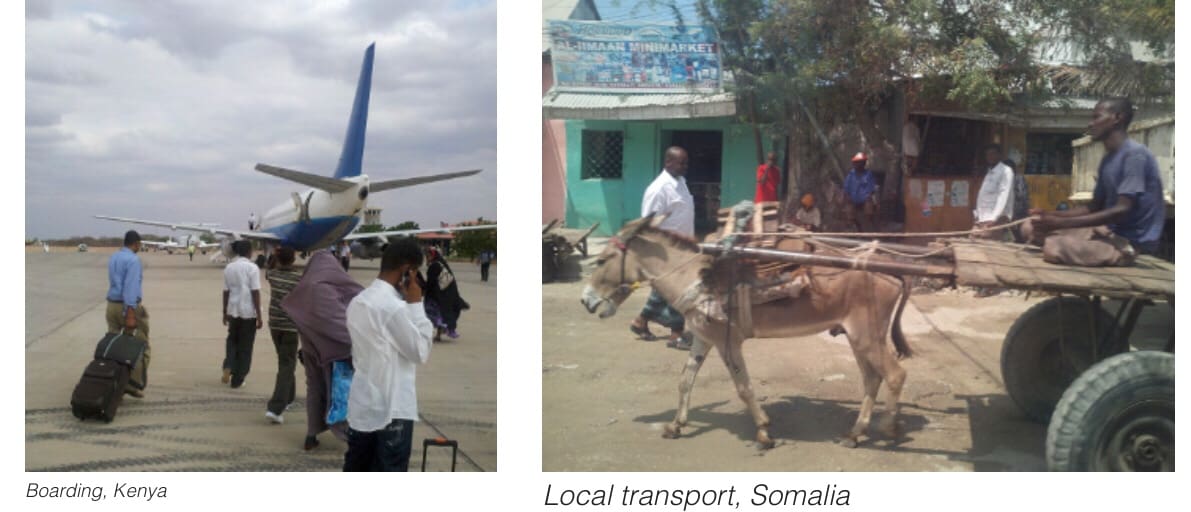
The plan was for a three week trip, basing out of Nairobi, Kenya while sorting transit in and out of Mogadishu, which was still sketchy. For some reason neither Orbitz nor Expedia had flights or good hotel recommendations for Mogadishu. We expected at least two weeks in Somalia. So pack two weeks of clothes, toiletries, food, water, coffee, power, comms, technical data collections gear, etc. 20kg. Cool. No problem. Right? The working model in my head was, sustainment gear stowed at the safe house and essential mission and “Oh Shit” gear carried with me in a backpack. Recharge batteries at night, do processing and uploading then, etc. What is it they say about plans of mice and men? Fortunately, I wasn’t wholly unprepared or completely wrong in my planning, but a lot of frustrating shortcomings were discovered. So now I’ll highlight the Lessons Learned that drove me to develop the Observer Kit:
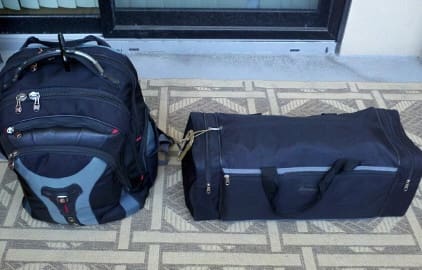
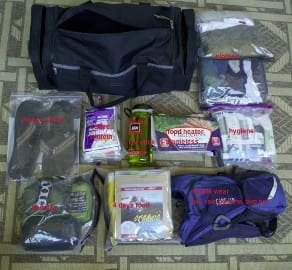
1) Power, Power, Power. Looking back, my “conservative” guess about worst-case availability of infrastructure turned out to be a bit optimistic. The nature of the physical threat, the security precautions demanded, as well as the ops tempo also threw my preparations a curve ball. Working overseas is not the same as camping or hiking. Solar is great. Particularly when there is little-to-no power infrastructure. But when you are working, you are on-the-go, constantly getting in and out of vehicles, and not always the same ones. The safe house we were staying in was great. They even occasionally ran a generator for a few hours a night to give us a little power. How many outlets do you think are going to be free and how soon till a surge breaker trips? Just imagine how many others are struggling with their power budget.
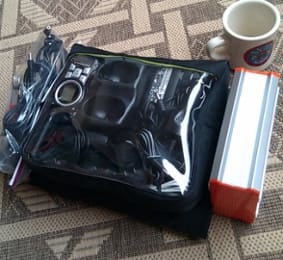
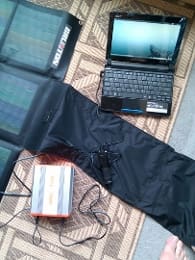
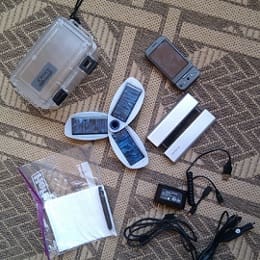
2) Backpacks suck. Being constantly on the move, in and out of vehicles, walking through crowded areas, and needing quick access to your gear make the backpack form factor far less than ideal. Again, working overseas is not the same as camping. In uniform you have a plate carrier or vest rig and probably a belt where constant use items can be grabbed quickly and easily. The camera, voice recorder, or GPS sitting in your backpack, does you no good in a vehicle or on the move. You have no visibility or control over the pack on your back in a crowded market or street. And few backpacks have things like pockets for satellite antennas that need constant view of the sky. Which brings me to my next point:
Communications are critical. Mogadishu is one of the more extreme environments but disasters, conflicts, or mass scale events can also make communications difficult. We had a single (!) satellite phone for emergency use and expected to have access to some other communications networks. We needed to connect with people who sometimes had no local phone or SIM card at all. Most carriers blocked international calls. Keeping track of the different carriers required to talk to different people and the multiple phones was another complication. And my wife was Not Happy with me going dark for long stretches. If the team got separated, who had the sat phone? Over the years there have been other Lessons Learned in this category but these got me started.
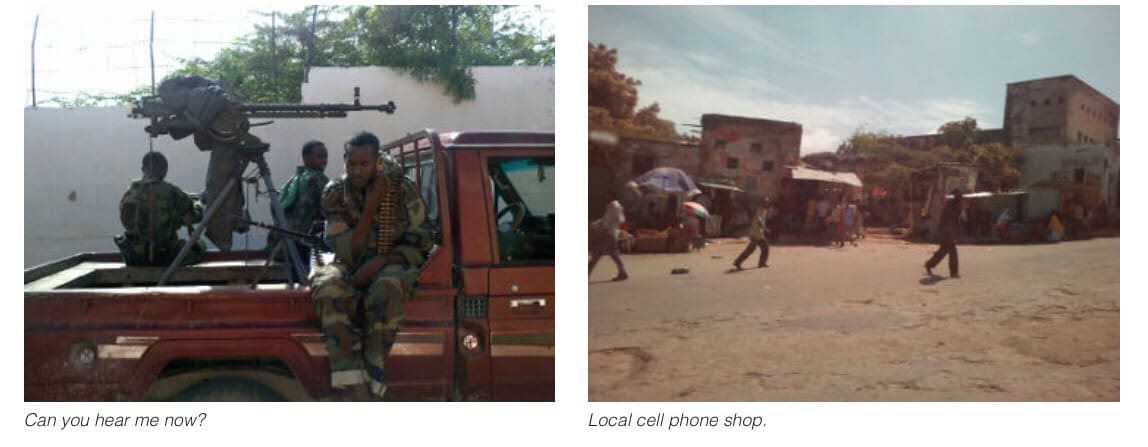
4) Semper Gumby. You’d be amazed at the Opportunities To Excel found in these environments. Being able to solve, hack, or improvise around problems that wouldn’t exist back home can have a dramatic impact on effectiveness. Things like copying and moving data that would normally be as simple as emailing someone a spreadsheet or photocopying some pages can be serious obstacles to operations. Fixing (or sometimes breaking) things in a pinch, is needed more often than you’d suspect. The Marine credo “Forever Flexible” or “Improvise, Adapt, Overcome” should be taken to heart.
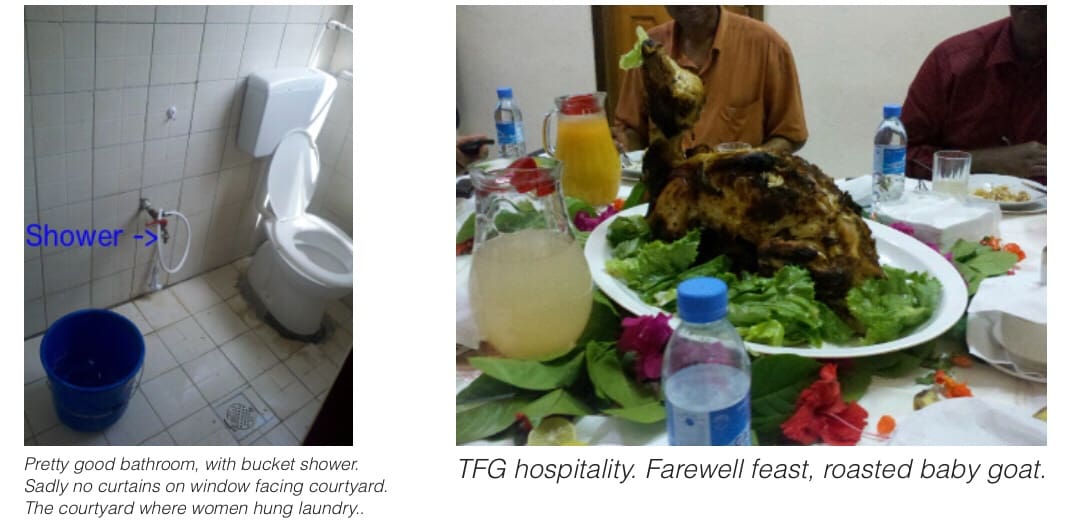
5) Hygiene helps. Hygiene and comfort are more difficult than you expect, but are worth tackling if you can keep it fast, light, and compact. Keeping you effective so that you can accomplish your goals is worth some effort. Time is often more scarce than running water, however.
Conclusion. At that time we were purely a consulting company with no interest in manufacturing or selling gear. The week I returned I started looking everywhere on the market for solutions and improvements. Nothing quite fit the requirements. So I reached out to a friend who runs Zulu Nylon Gear to make a custom sling bag for us and proceeded to hack, tweak, and customize the kit around this new wearable platform. Over the years it’s been refined and refactored countless times. Experiences in diverse climates like the Philippines and Iraq drove comfort tweaks. Constant heavy use and new offerings on the market improved capabilities and features. I’m proud of what’s been built and have had a lot of requests from other users in the field to purchase our kits. So now we are offering them to the general market. Everything we sell is gear that we rely on and use in the field ourselves. Take a look at our SSR Kits and our Observer System or ping us for other custom solutions.
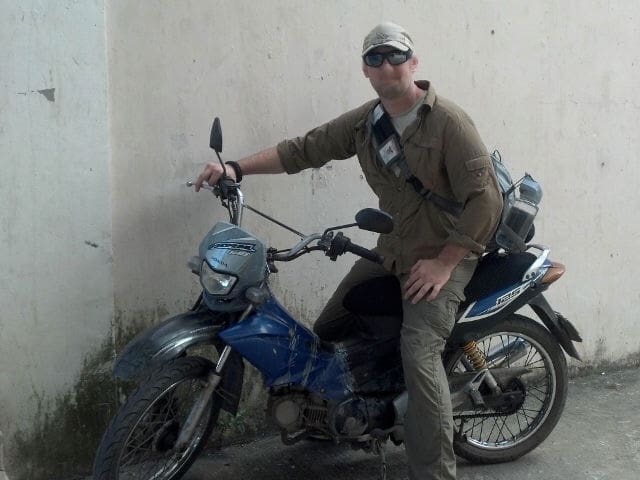
Observer Kit in the Philippines, doing wide area assessment after Typhoon Yolanda, NOV 2013
thirdblockgear.com
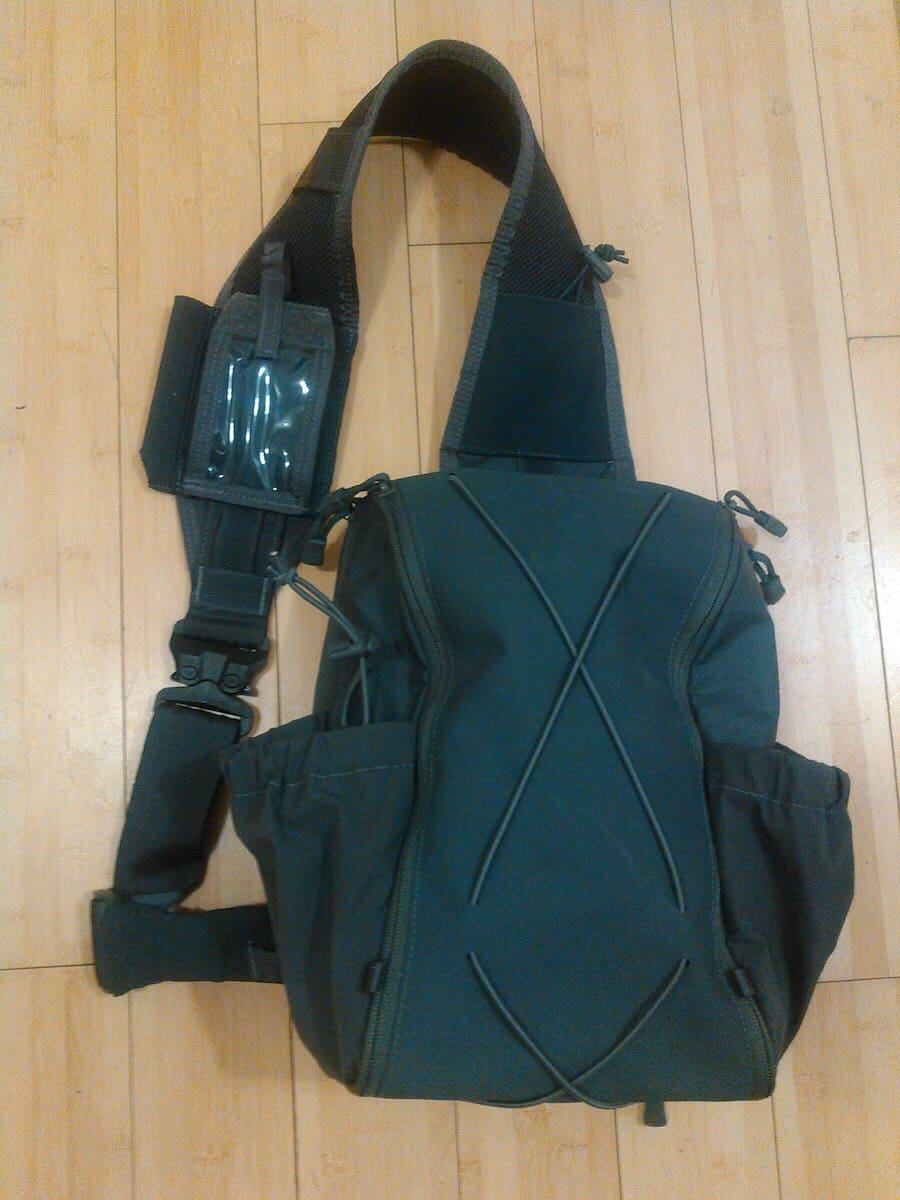
This is the final bag design.
As soon as I walked into Tenicor’s booth, I noticed that the Velo was different than other Appendix Carry, Inside the Waistband Holsters. Most are minimalist designs but this one had some extra bumps in places holsters don’t usually have bumps.
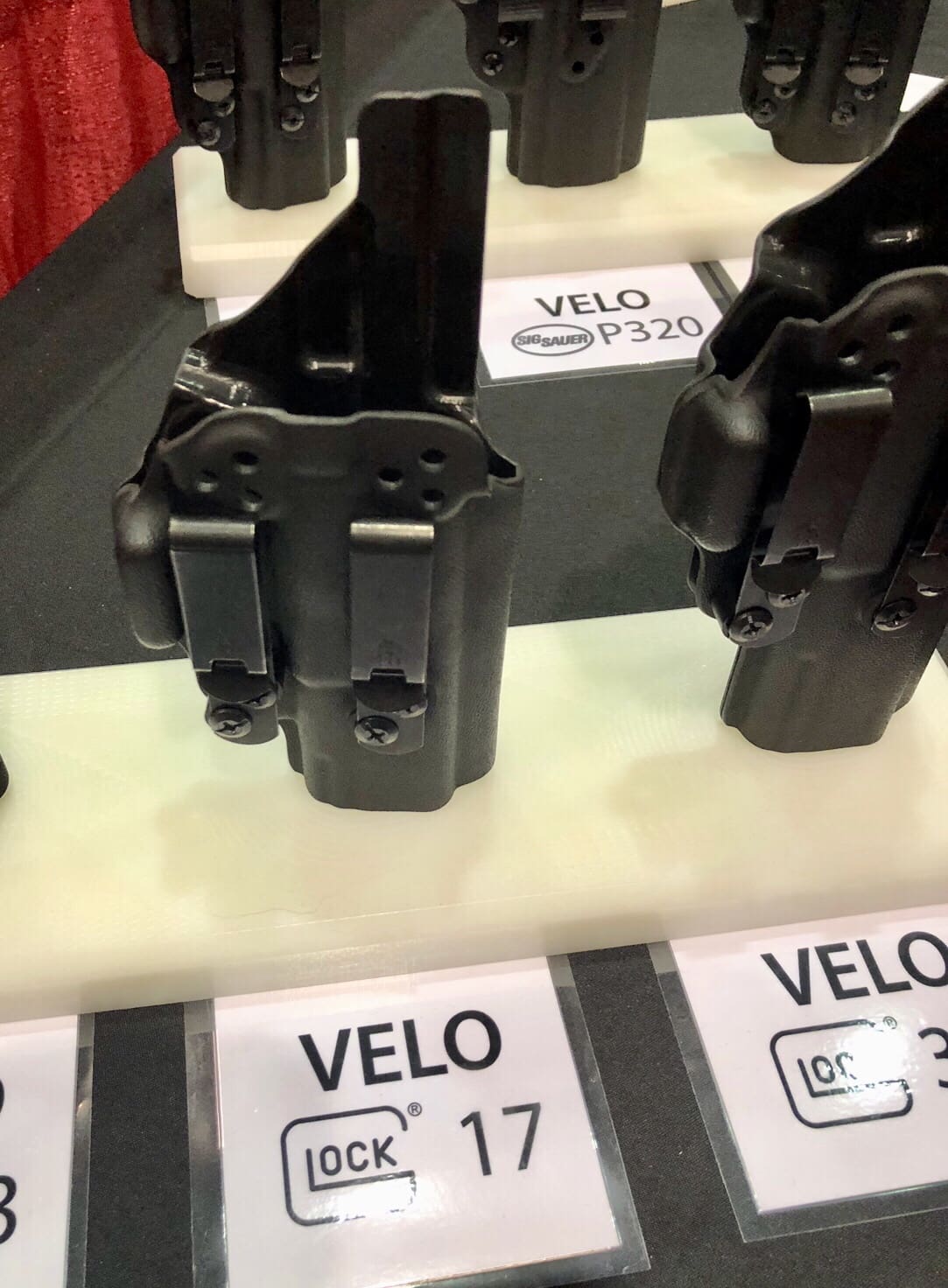
Turns out, Tenicor put some serious thought into this design. So much so, that they won a Golden Trigger award for innovation in firearm accessories.
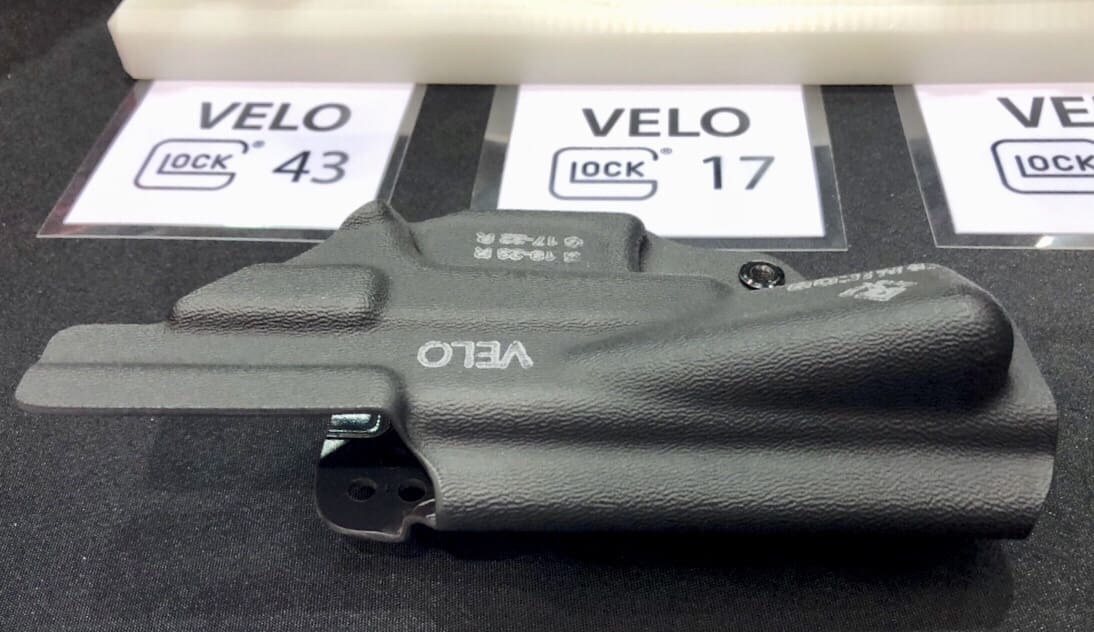
Those bumps I mentioned are actually a raised trigger bar at the front and multi-angled muzzle wedge at the rear which combine to rotate the grip up and into the body.
It works. Tap Rack Tactical’s Bill Blowers uses the holster exclusively. Here’s a photo of Tenicor founder Jeff Mau appendix carrying a full size Sig P320.
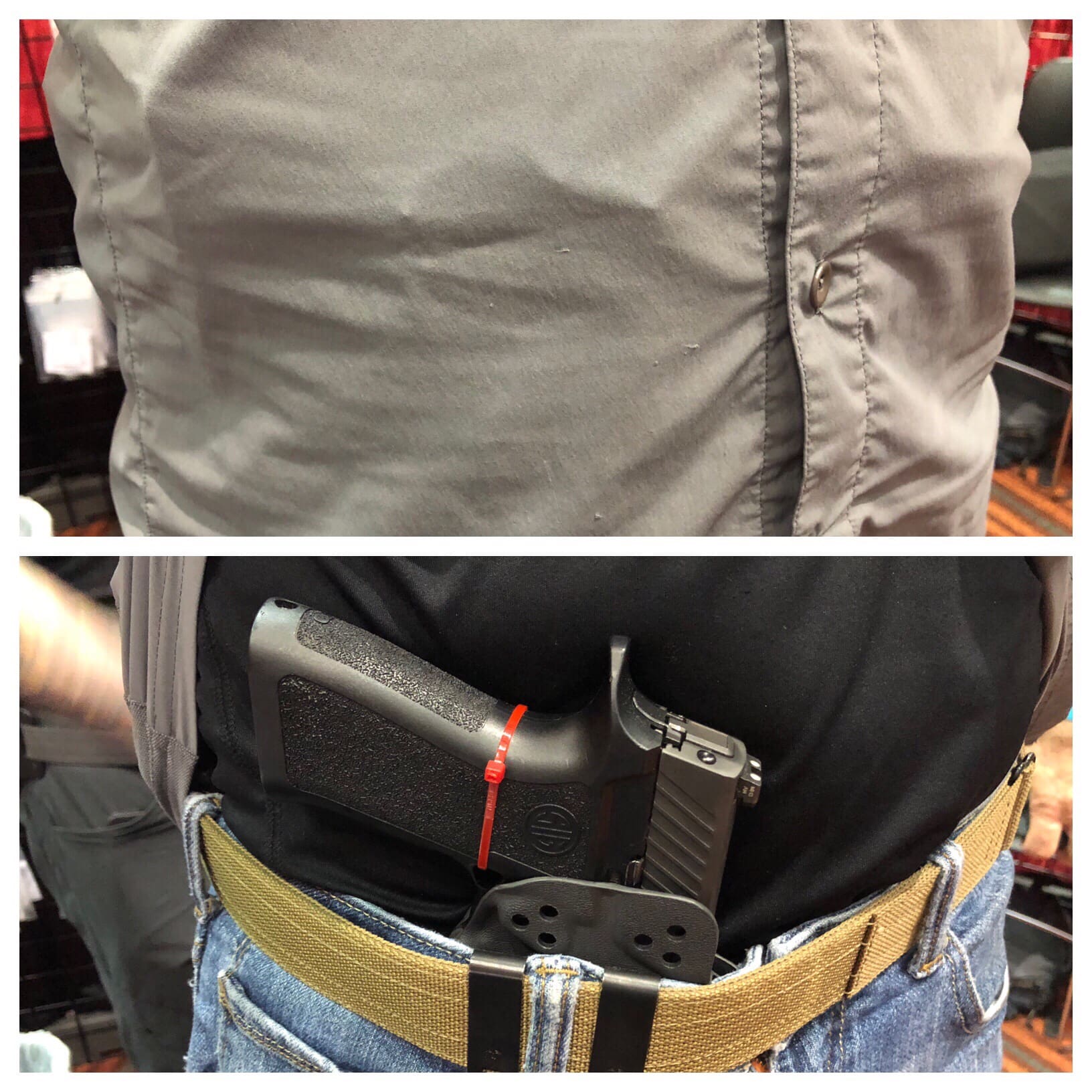
Granted, it prints a bit, buts also a full sized gun. Compacts disappears as they are rotated toward the curve of the abdomen.
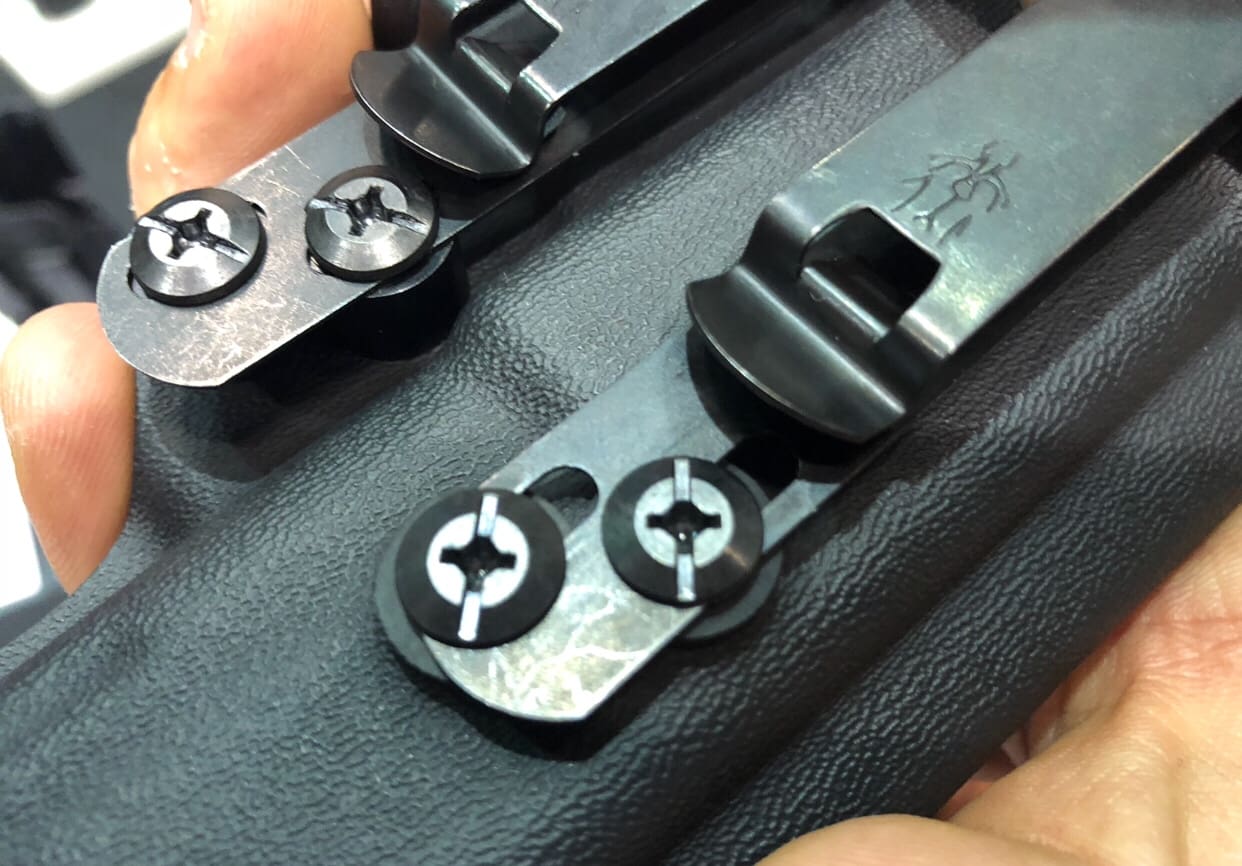
The Velo offers great adjustment options for the three types of attachments.
T1 CLIP | The Tenicor T1 belt clip by Discreet Carry Concepts leverages strength and durability with unique Tenicor designed slots. This intelligent design feature allows the clip to adjust vertically up to 0.45 inches providing subtle ride height adjustment. The dual screws provide stability, and the staggered height slots keep the overall length trim.
CLOSED SOFT LOOP | This is the most durable and concealable option. If you want the holster to stay in place in the most extreme circumstances, then this is the option for you. The closed loops are extremely low profile to reduce unnecessary bulges.
SNAP LOOP | A convenient full loop option, the snap loops allow the holster to be taken on and off without removing the belt.
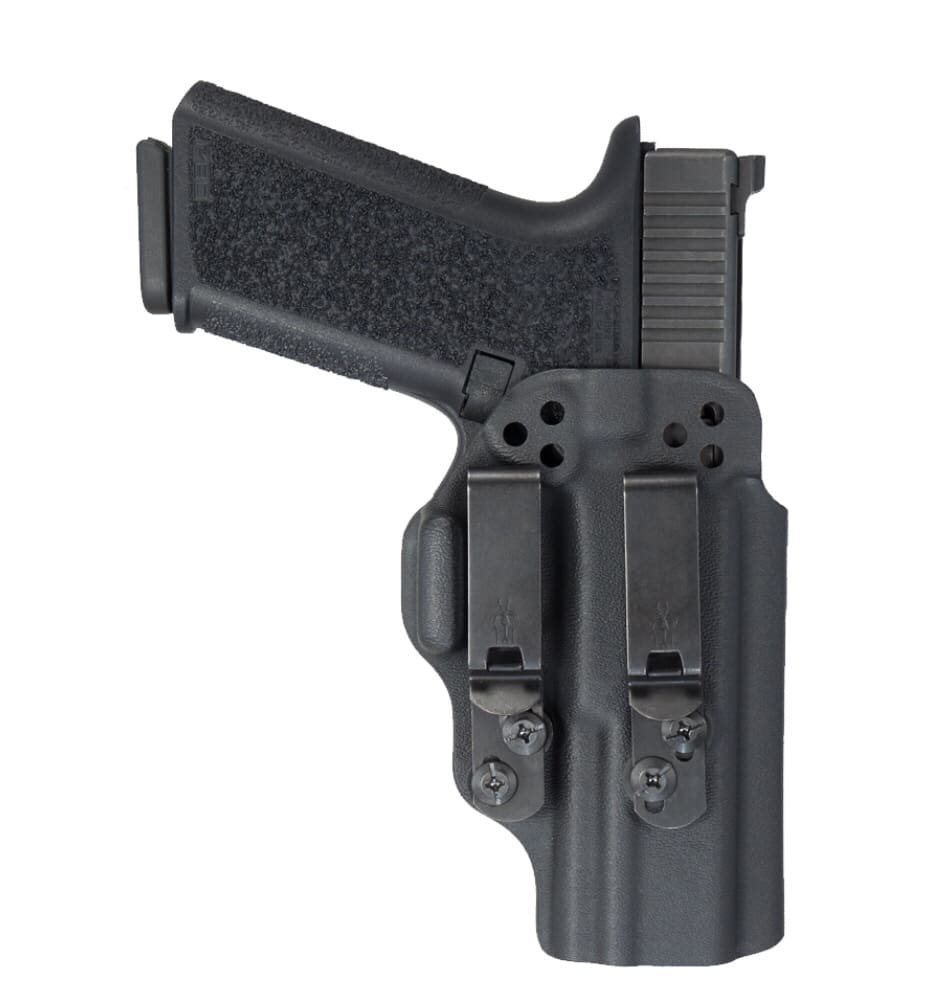
The Velo is available for an ever growing list of firearms, so check their site to see if they have your needs covered.
tenicor.com/products/velo-aiwb-holster
The Multiuse Arca RC2 Connector (MARC) QD Plate from Hog Saddle is really two Quick Detach Plates in one.
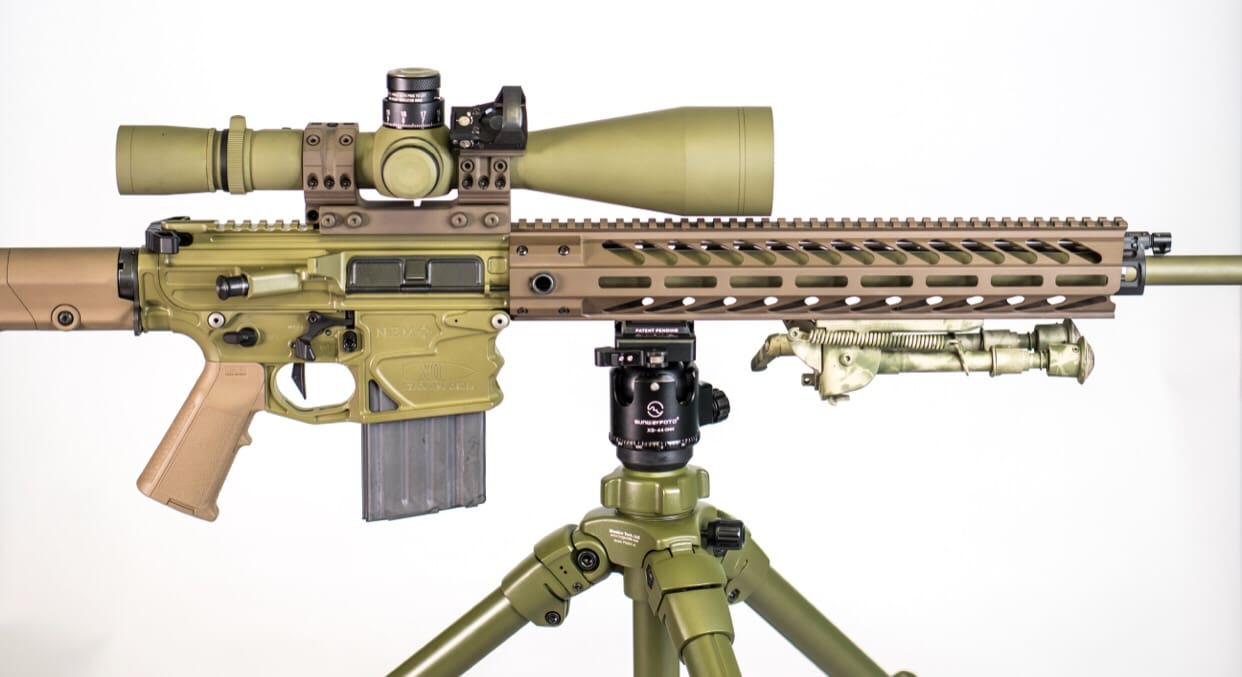
It was designed to mount to both (1.5”/38mm) Arca-Swiss tripod clamps and legacy Manfrotto tripod heads that use RC2/200PL attachment plates.
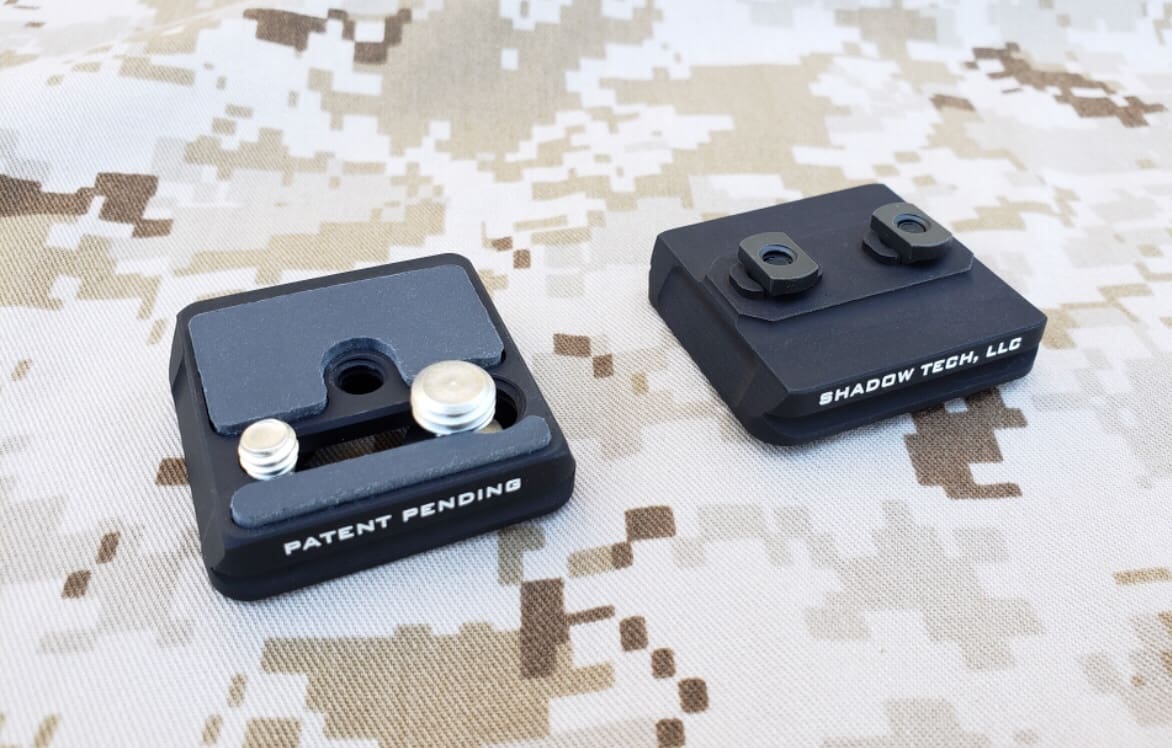
The ultralight, Patent Pending design prevents horizontal movement with Manfrotto tripod heads, and accommodates for Arca-Swiss plate retention slots and Feisol retention plungers.
Features:
• CNC machined aluminum construction
• Hard anodized
• Stainless steel mounting screws 1/4-20 & 3/8-16
• Removable recessed retention bolts
• Center bolt capable for cameras and spotting scopes
• Dual bolt capable for HOG Saddle or PIG Saddle attachment
• Made in USA













































































































