Celebrate 20 years of the TLR-1

101st Airborne Division Takes Flight with 3D Printed Drones

December 12th, 2025

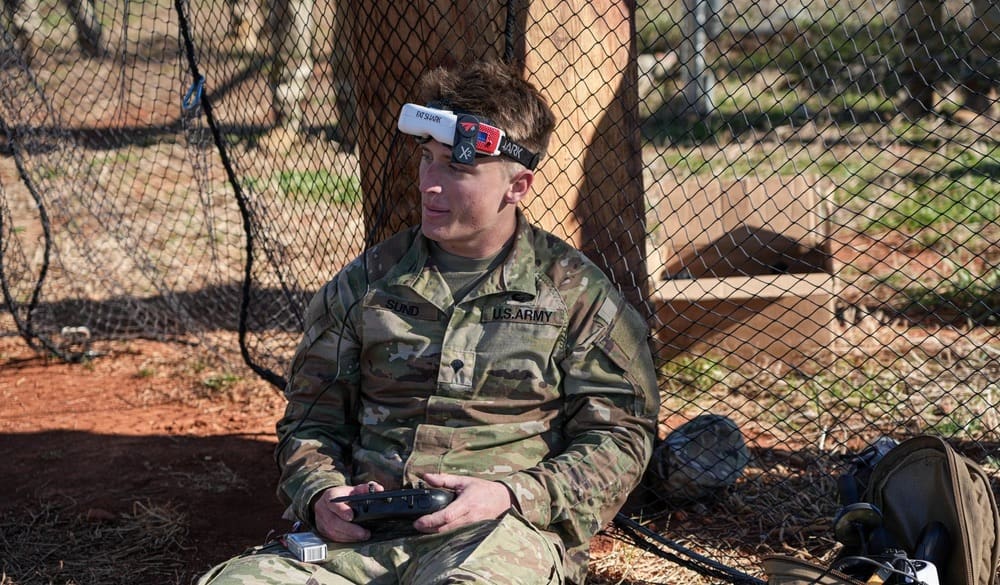
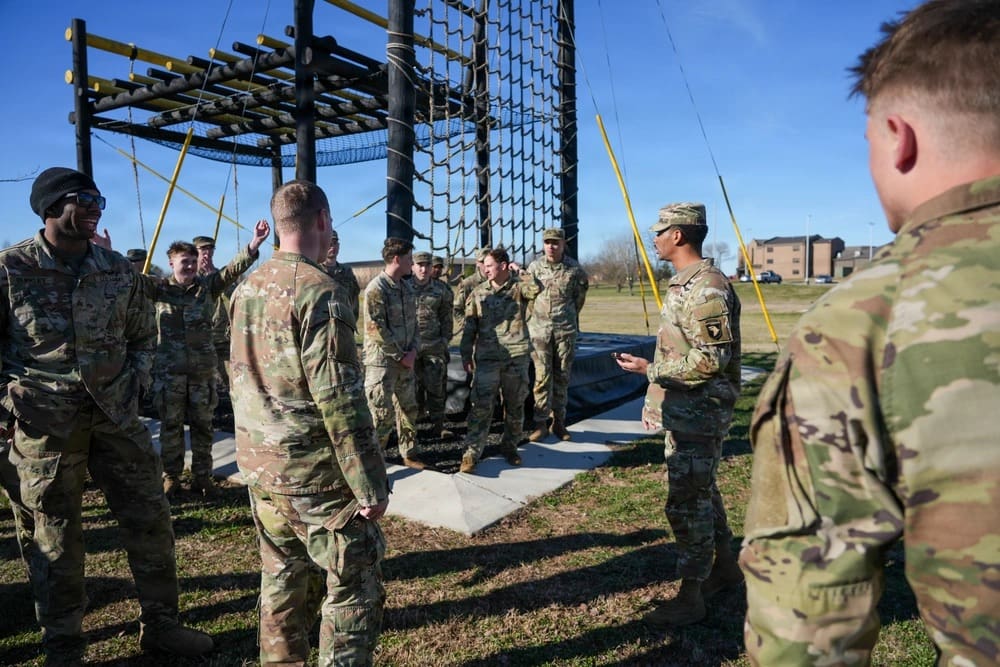
FORT CAMPBELL, Ky – Turning another page in the 101st Airborne Division (Air Assault) journey within the Army’s transformation and its emerging technologies, the Division now has plans underway to revolutionize military drone creation in preparation for their upcoming division training exercise – Operation Lethal Eagle.

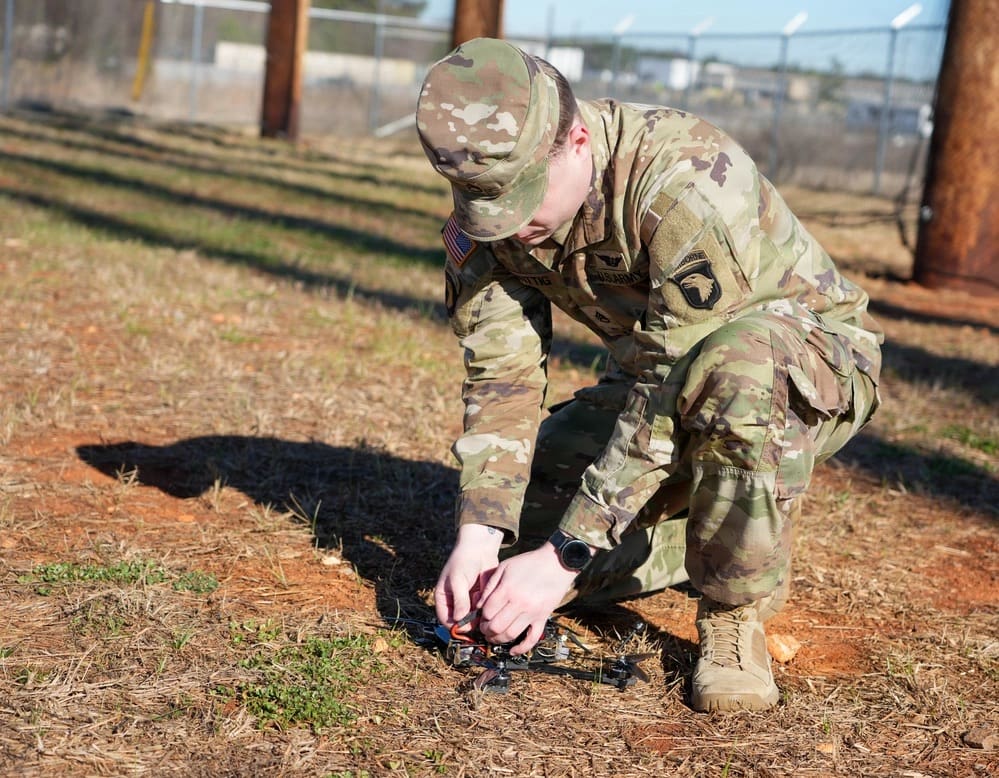
The Division began 3D manufacturing of small-unmanned aircraft systems (sUAS) at the EagleWerx Applied Tactical Innovation Center at Fort Campbell, Ky.

“This is bigger than simply printing parts. We are reshaping the sUAS enterprise at the tactical level,” said Col. (Promotable) Travis McIntosh, deputy commanding officer for support of the 101st ABN DIV. He said the project will impact the entire unit as it would affect “how we do small UAS in the division, from air worthiness to parts ordering, to fielding and training.”

The plan to build the systems at Fort Campbell came as a cooperative effort from the Division and 5th Special Forces Group (Airborne). Soldiers asked for sUAS that were more versatile, durable, and expendable than the standard previously fielded versions. For experimentation during the exercise, the Division and EagleWerx representatives are manufacturing 100 sUAS units and purchasing the ground control consoles, at a fraction of the cost of previously acquired sUAS’s.

Operation Lethal Eagle, a 21-day rigorous training exercise, is designed to prototype Army initiatives, train unit lethality, and build mastery of large-scale, long-range air assault (L2A2) capabilities throughout the Division.

Many on the project including Capt. Andrew Blomquist, the 2nd Mobile Brigade Combat Team innovation officer, are excited for the 3D printed drones to get into the hands of the end-users permanently.

“We have done multiple Soldier touch points, demos, and flight tests so luckily, we have already received great end user feedback”, said Blomquist. “One Soldier in particular that has experience with all of the previously fielded sUAS was surprised with its performance.”

The Division’s revolutionary experiment will continue in anticipation of its next major training event, in late spring at the Joint Readiness Training Center, at Fort Johnson, Louisiana.

To learn more about Eaglewerx Applied Tactical Innovation Center, visit home.army.mil/campbell/eaglewerx.

Story by Capt. Andrew Lightsey IV and Photos by Staff Sgt. Kaden Pitt 

101st Airborne Division (Air Assault)
Rheinmetall Awarded Contract for Trailblazer on the UK Multiple Launch Rocket System A2

December 11th, 2025

Rheinmetall UK have been awarded a contract by the NATO Support & Procurement Agency (NSPA) to provide Trailblazer Driver Vision and Local Situation Awareness System to the UK Ministry of Defence’s M270 A2 Multiple Launch Rocket System (MLRS) platform upgrade. The initial contract will see prototypes delivered in early 2026, with the main production starting later that year. The total contract value is in the mid-single-digit million euro range. The M270 A2 MLRS will be the 17th military platform to use the Trailblazer, which was developed and manufactured in the UK. There are currently seven user countries.  

The upgrade programme for the M270 A2 MLRS tasks Rheinmetall UK to design and deliver enhanced Vehicle Vision capability against specific platform requirements. 

As a mature, software-defined and SIL(safety integrity level) 2-certified system, Trailblazer is already installed in the Boxer Mechanised Infantry Vehicle, the Challenger 3 main battle tank and the Warrior infantry fighting vehicle. This offers advantages through the standardisation of the entire British combat vehicle fleet. 

This programme will see the UK’s M270 A2 MLRS issued with the most modern and capable vehicle vision technology designed to aid vehicle manoeuvre in complex environments 24/7 for both driver and commander.  The programme responsibility includes driver vision sensors, remote side and rear vision sensors, delivery of installation kits including hardened cabling, switches and protective covers. 

Trailblazer improves crew effectiveness by extending the vehicle field of view beyond the daylight spectrum. With enhanced day light, thermal and fusion vision, Trailblazer offers significant crew advantage in adverse weather, obscured and low-light conditions. Featuring very low-latency, the systems aid terrain navigation, obstacle avoidance, safe route selection and enhanced threat detection.  Compliance with SIL-2, (N)GVA and DEF STAN 00-82 video distribution means Trailblazer is safe to operate and easy to integrate.

GA-ASI’s Second Blue Magic Netherlands Doubles Impact

December 11th, 2025

SAN DIEGO – 10 December 2025 – On November 18, General Atomics Aeronautical Systems, Inc. (GA-ASI) and its Blue Magic Netherlands (BMNL) partners held their second “shark tank” style event in Eindhoven, the Netherlands. The event brought together emerging Dutch companies and attracted more than 350 attendees. BMNL provided Dutch businesses with an opportunity to present their capabilities for possible investment from GA-ASI, as well as other companies. The 16 companies that made pitches were selected from a pool of more than 70 companies that represented the best of the best of Dutch industry.

“Blue Magic uncovers new technologies within the Dutch ecosystem,” said Brad Lunn, GA-ASI Managing Director. “The quality of the innovation we’re seeing is improving rapidly. The growth of the event is a testament to the quality it brings forward.”

During the second BMNL event, held at Brainport Eindhoven — a center of the Dutch high-technology industry — GA-ASI and its partners heard firsthand from Dutch companies about the important capabilities they are developing. GA-ASI issued an open invitation to Dutch businesses in July for Netherlands-based businesses to apply for the opportunity to present their innovative technologies at BMNL. Key areas of focus for the presentations were Artificial Intelligence/Machine Learning, Autonomy, Advanced Materials and Manufacturing, Sensors, Space, and Counter-UAS.

GA-ASI was joined for the second BMNL event by the Netherlands Ministry of Economic Affairs, the Netherlands Ministry of Defence,Lockheed Martin, Brainport Development, Brabant Development Agency (BOM), and the Netherlands Industries for Defence & Security (NIDV).

GA-ASI expects to announce technology partnerships stemming from the second BMNL event and intends to continue holding this event on an annual basis in the Netherlands.

ZeroTech Optics Launches New 6-24×50 Vengeance Riflescopes Featuring R3 and R3 Illuminated Reticles

December 11th, 2025

Nashville, TN — Dec 10, 2025ZeroTech Optics, a leader in precision optics engineered for shooters and hunters who demand performance without compromise, proudly announces the release of its newest additions to the acclaimed Vengeance series — the Vengeance 6-24×50 SFP Riflescope with R3 Reticle and the Vengeance 6-24×50 SFP Riflescope with R3 Illuminated Reticle (IR).

Designed for those who live for the long shot, both models bring exceptional optical clarity, rugged dependability, and intuitive functionality to the modern marksman.

Precision Engineered for Long-Range Confidence

The Vengeance 6-24×50 R3 delivers dependable performance and crisp detail across its versatile magnification range. Featuring ZeroTech’s glass-etched R3 reticle, it offers clean MOA-based subtensions and fine hold points that allow shooters to make precise wind and elevation corrections without cluttering the field of view.

Built for clarity and control, the riflescope includes side parallax adjustment from 15 meters to infinity and fully multi-coated lenses that ensure bright, high-contrast visuals from dawn to dusk. Weighing in with a 1-inch aircraft-grade aluminum tube, it’s light enough for long treks yet strong enough to withstand recoil from today’s most capable cartridges.

Illuminated Precision When Light Fades

For shooters who demand performance after dark, the Vengeance 6-24×50 R3 Illuminated (IR) brings all the capability of the standard model — plus an illuminated reticlewith six brightness settings for maximum visibility when the light gets low.

From late-evening steel sessions to dawn ridge hunts, the glowing center dot ensures rapid target acquisition without losing precision. Each optic includes ¼ MOA turret adjustments, side parallax control, and a removable throw lever for fast magnification changes in the field.

Built for the Field, Priced for Every Shooter

Both versions of the 6-24×50 Vengeance share the same rugged DNA that defines the entire Vengeance line — tested in the harshest Australian and North American conditions to deliver absolute reliability and accuracy.

Each riflescope ships with:

• Removable magnification throw lever

• Stretch-fit lens covers

• Lens cleaning cloth

• Quick-start manual with QR code access to full instructions

Availability

The Vengeance 6-24×50 R3 and Vengeance 6-24×50 R3 Illuminated (IR) riflescopes are now available through authorized ZeroTech Optics dealers and at zerotechoptics.com.

For a closer look at the new Vengeance lineup and other optics, follow ZeroTech on Instagram, Facebook, and X (Twitter).

Reveal Technology Launches Defense Tech Testing Series “BattleLab” on VET Tv

December 11th, 2025

Special Operations Veterans Test Emerging Military Technology Under Live Combat Conditions
BOZEMAN, Mont., Dec. 9, 2025 — Reveal Technology Inc., a veteran-founded defense technology company, today announced the premiere of “BattleLab” on VET Tv, a series that brings together former Special Operators with emerging military technology to test what works under real-world conditions, addressing a widening gap in U.S. defense modernization.

The first-of-its-kind training environment puts cutting-edge defense systems through their paces in combat scenarios that mirror actual battlefield conditions. The series is hosted by Garrett Smith, CEO of Reveal Technology and Marine combat veteran, alongside co-hosts Phil Divinski and Jerad Watlington, both Army Special Operations veterans with more than 20 years of service and founders of Jeddoc.

“In the battles of tomorrow, the team that adapts first wins,” said Garrett Smith, CEO of veteran-founded defense company Reveal Technology. “The pace of technological change on the battlefield has never been faster, but the procurement process and the way units experiment with new tactics can’t keep up. If we’re not testing and adapting in training, we’ll pay for it later.”

BattleLab uses force-on-force, live-fire, and non-permissive environment simulations to pressure-test cutting-edge defense technology, including Reveal’s Farsight (geospatial intelligence) and Identifi (mobile biometrics) platforms. Each cycle is structured around a scoring rubric that gamifies performance, allowing every tactic, tool, and team to be measured consistently across scenarios.

“There’s no field manual for how we integrate a lot of these new technologies,” said Phil Divinski, CEO of Jeddoc. “BattleLab is where we figure that out by defining an operational objective, replicating the operational environment, and iterating. Mission success determines whether a tactic, technique, or technology is effective.”

BattleLab process is being fully documented to accelerate learning and increase transparency. Veteran-owned studio VET Tv is producing the documentation as a serialized program, giving viewers an unfiltered look at the scenarios, failures, and breakthroughs shaping the future of warfare.

The inaugural season features three combat scenarios:

Episode 1: Strong Point– Two teams battle for physical control of a vital village building, pitting an entrenched defensive force against an assaulting team starting from outside the village.

Episode 2: Contested Exfil – High stakes race where one team, starting from inside a building, attempts to reach their designated pick-up site before the opposing team, assaulting from outside the village, can eliminate them.

Episode 3: Organic Strike – One team must quickly camouflage and physically protect their communications link within a village against another team’s objective of finding and destroying it using drone strikes.

“VET Tv is proud to produce BattleLab,” said John Acevedo, CEO of VET Tv. “This isn’t just compelling television. What Reveal and Jeddoc are doing here is genuinely groundbreaking: bringing tactical training and defense technology integration into the 21st century. We’re honored to help tell this story with the authenticity and realism it deserves.”

BattleLab will premiere as a serialized program on VET Tv beginning December 9, 2025. New seasons will roll out quarterly, capturing every iteration of tactics, technology, and lessons learned as the BattleLab evolves.

For more information and episode access visit: www.veterantv.tv/battle-lab

Making PSYOP Great Again – Hegseth Reinstates Name, Dumps MISO

December 11th, 2025

Last week Secretary of War Pete Hegseth restored the use of Psychological Operations(PSYOP) to describe planned operations that convey selected information and indicators to foreign audiences in an effort to influence the emotions, motives, objective reasoning, and ultimately the behavior of foreign governments, organizations, groups, and individuals in a manner favorable toward DoW objectives.

This corrected policy decision in 2010 to replace the use of PSYOP which dates to the dawn of the Cold War with Military Information Support Operations (MlSO). The term MISO also caused a great deal of confusion within the military. PSYOP is pretty obvious, MISO not so much. Fortunately, the fog has been lifted.

The implementation memo goes on to say, “with fifteen years of additional perspective, it has become clear that the term PSYOP more closely align functions with branding, eliminates confusion, and directly supports my priorities to reestablish deterrence and revive the warrior ethos.

Dues to the vast amount of doctrinal and funding issues at play, full implementation across the department is not expected until the end of FY 2026.

Reptilia Announces the Launch of the AUS Mount for 36MM Magnified Optics

December 11th, 2025

HILLSBOROUGH, NC – December 11, 2025Reptilia, an industry leader in premium firearm accessories, is proud to announce the release of the AUS Mount, now engineered for 36mm diameter magnified optics. Purpose-built from the ground up, the AUS Mount expands Reptilia’s precision-focused product lineup with a rugged, streamlined solution for shooters who demand reliability in any environment.

Designed to interface seamlessly with any M1913 Picatinny rail, the AUS Mount features Reptilia’s anti-snag, spring-loaded nitrided steel clamp paired with a custom flush-fit bolt system. Users can tighten the bolt with either a 5/32” hex or a flat-blade driver, ensuring secure, low-profile mounting without unnecessary tool complications.

The AUS Mount is machined from a single piece of 7075-T6 aluminum billet and finished with a MIL-STD Type III, Class 2 hard-anodized coating, delivering exceptional durability while maintaining a lightweight, streamlined form factor. Its construction and finish meet the demands of both professional end users and dedicated civilian shooters.

In addition to the initial release, Reptilia will introduce several new accessories built specifically for the AUS platform in the coming months, expanding versatility and enhancing user configuration options across a variety of applications.

“As with every product we build, the AUS Mount reflects our commitment to precision, durability, and end-user feedback,” said The Reptilia Team. “We’re excited to bring this new option to the market and look forward to expanding the platform with a series of complementary accessories.”

The AUS Mount – like all Reptilia products – is 100% made in the USA and backed by the company’s full lifetime warranty against manufacturing defects. Additional heights and optic configurations will be released later this year.

The new AUS Mount for 36MM optics is available now through Reptilia and authorized dealers.

From Quadcopters to Micro-UAS: The Aircraft Used at DOW’s Drone School

December 11th, 2025

The increasing prevalence of drones on the modern battlefield means it’s crucial for our service members to be familiar with the various systems they might encounter, which is why at the Joint Counter-Small Unmanned Aircraft Systems University at Fort Sill, Oklahoma, students learn the ins and outs of about two dozen of these aircraft.  

The JCU is the War Department’s only joint training center aimed at countering the growing number of aerial threats U.S. troops face across the world. It teaches service members of every branch how to operate drone equipment, plan counter-small UAS strategies and train others to defend installations.

During the courses, students get to know 24 types of commercial off-the-shelf small UAS that they may see downrange, from “blue air” drones that are considered friendly to “red air” drones that are used by our adversaries.

The types of aircraft the JCU trains students on range from commercial quadcopters to tiny micro-UAS and custom-built foam drones that can mimic real threats. Here are the highlights of a few of them:

The Black Hornet

The Black Hornet is the smallest drone currently used by the JCU. Developed under Special Operations Command, this tiny, covert drone does close intelligence, surveillance and reconnaissance — it can even be used inside buildings for hostage rescues. It includes an enhanced thermal camera and is small enough for service members to carry on their utility belts.

R80D SkyRaider

Developed exclusively for DOW and other federal agencies, the R80D SkyRaider is a vertical takeoff and landing quadcopter that’s agile and can carry and deliver multiple payloads up to 7.7 pounds. It has one of the fastest, most powerful embedded artificial intelligence computing devices available for small UAS. It can also thrive in GPS- or communications-denied environments.

WingtraOne Gen II

The WingtraOne Gen II is one of the fastest mapping and surveillance small UAS on the planet. This fixed-wing drone has multiple cameras and a light detection and ranging — LiDAR — option, which can create precise 3D models of objects and environments. It can go about 36 mph and works well in high winds.

IF 1200

Weighing between 21 and 55 pounds, the IF 1200 electric hexacopter is the most aggressive small UAS the school has, and it’s mostly used for detection, said JCU Air Boss Jacob Cameron. The IF 1200 can adapt to any requirement set and can be used with LiDAR, radiation detection sensors, electro-optical/infrared sensors and delivery capabilities. It can travel up to 70 mph, carry up to 35 pounds and stay in the air for up to 45 minutes.


“That drone can do flips,” Cameron said. “You think it’d be slow and clunky, but that is probably the fastest hexacopter drone that we have, and it’s the most capable.”

Alta X:

The IF1200’s larger counterpart, the Alta X, is the school’s largest quadcopter, even though it’s significantly quieter than the JCU’s other drones. The all-electric Alta X is also mostly used for detection and can carry up to 40 pounds. It flies best when it’s got a heavy payload. The Alta X can fold down to half its size in 20 seconds and can accommodate many sensors and third-party payloads, such as EO/IR, mapping and LiDAR.


TSM-800:

Produced by the Army Threat Systems Management Office, this drone is designed for threat simulation and is capable of swarming up to 150 systems from a single ground control station. Each drone can carry a payload of 8 pounds. Three bomblets can be carried per drone. It is Wi-Fi compatible or can be used on a private LTE tower, Cameron said.

Super Decathlon:

The “Super D” is a larger aircraft that has a gas engine and can be used for autopilot and manual missions. It’s primarily used for detection and identification in the JCU’s operator’s course, as well as for loitering munition demonstrations for the planner’s course.

If an enemy tries to electronically jam it while it’s on autopilot, the Super D can still fly through that area without being affected, Cameron said. It’s completely autonomous, can carry large payloads over long distances, and can fly up to 70 miles. Cameron said it’s great for student practice because its size makes it easier to find on radar signatures.

Vesper:  

The small Vesper quadcopter provides intelligence, surveillance and reconnaissance. At 2.2 pounds, it’s light and easily portable. It has an EO/IR camera and can top out at 45 mph for about 50 minutes of flight time. It has low-light capabilities, extended endurance and stealth capabilities.

Opterra:

The lightweight Opterra has multiple camera mounting stations and is predominantly used as a target drone.

“The Opterra is outstanding for being shot at because it’s foam, and bullets will pass straight through it unless you hit specific small components on it, like the engine itself,” explained Army Maj. Dennis “Chip” Stanford, JCU’s executive officer. “It can be shot a lot.”

The JCU also teaches students on the CarbonCub, Skywalker X8, Vector-Scorpion, Osprey, IF 800 and the JTAC24, a JCU-designed and 3D printed target drone, as well as a few others.

By Katie Lange, Pentagon News