Salomon Forces Genesis MID GTX

Federal Signs Landmark Agreement with U.S. Army to Accelerate High-Performance Ammunition

May 31st, 2026

Federal Ammunition announced it has executed an agreement that allows the United States Army to utilize its patented Peak Alloy ammunition case technology for use in multiple cartridges and weapon systems. The new agreement specifies conditions necessary prior to granting Government Purpose Rights, such as the delivery of 40 million cases featuring technology.

Peak Alloy was first introduced in the commercial market in 2025 with the all new 7mm Backcountry. It is a high-strength, proprietary steel alloy casing that enables significantly higher chamber pressure — in excess of 80,000 PSI — than traditional brass for higher velocities in smaller, lighter, shorter-barreled rifles typically configured for suppressors. This case technology is also being evaluated by multiple allied European countries.

The agreement with the U.S. Army is inclusive of multiple chamberings including 50-cal and below.

“This is a historic agreement between the United States military and Federal Ammunition,” says Chairman and CEO Jason Vanderbrink. “As a 104-year-old American company, it further demonstrates our unwavering commitment to innovation. As the world’s most prominent manufacturer of small-caliber ammunition, I am particularly proud of the speed at which our team can develop a product with a purposeful application that improves the advanced systems our brave American warfighters use in the field of battle,” said Vanderbrink.

Federal Ammunition products are available at dealers nationwide and online. For more information on all Federal products and to sign up for notifications about new product availability, rebate promotions, and other brand news via email, visit www.federalpremium.com.

Bridging the Modernization Gap: How G-TEAD’s Accelerated Capability Events Deliver Innovation to the Tactical Edge

May 31st, 2026

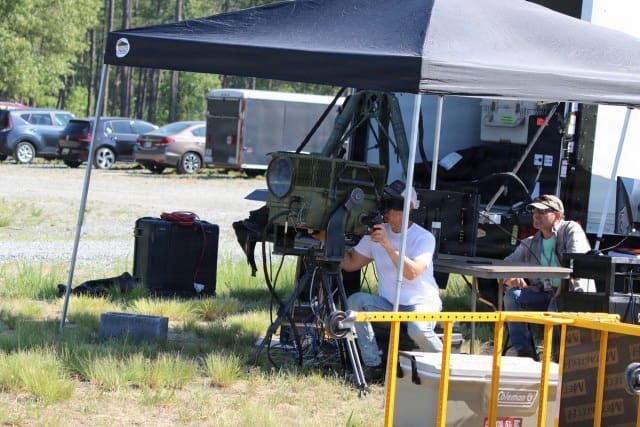
WASHINGTON— The U.S. Army’s traditional acquisition system was not built for the speed, complexity or unpredictability of modern conflict. Threats evolve faster than requirements can be validated, often stalling promising technologies before they ever reach operational units. The Global Tactical Edge Acquisition Directorate (G?TEAD) exists to solve this vulnerability by linking urgent operational demand with industry innovation to deliver viable, battle-ready technology directly to the tactical edge.

As a core component of the Army’s Pathway for Innovation and Technology (PIT), G-TEAD operationalizes strategic intent. While the PIT provides the enterprise framework to synchronize innovation, demonstration, and transition across the force, G-TEAD serves as the engine that transforms emerging concepts into fielded capabilities. The driving force behind this engine is the Accelerated Capability Event (ACE), a premier mechanism for rapidly identifying, validating and transitioning disruptive technology.

Targeting Theater?Specific Operational Needs

Each ACE is anchored to a direct demand signal from an Army Service Component Command (ASCC) Commanding General, ensuring efforts target urgent theater-specific requirements. With forward-deployed teams in U.S. Army Europe and Africa (USAREUR-AF) and U.S. Army Pacific (USARPAC), G-TEAD is uniquely positioned to inject mission-tailored solutions directly into contested environments.

Executed as a rigorous 180-day sprint, an ACE rapidly validates technology performance through soldier-led demonstration. The objective is clear: identify, validate and deploy mature, Technology Readiness Level (TRL) 7 or higher solutions capable of delivering immediate impact for the ASCC.

G-TEAD engages industry through premier defense pipelines, including the Army FUZE xTech Programand the Defense Innovation Unit (DIU). These programs serve as a strategic entry point for innovators, identifying high-potential commercial technologies for military use. By partnering with these organizations to launch targeted challenges for nontraditional innovators, G-TEAD builds a curated pool of solutions tailored to specific ASCC requirements. To facilitate participation in regional Soldier-led demonstration these challenges provide nondilutive cash prizes that offset industry costs and incentivize continued engagement.

Soldier-Led Validation at the Tactical Edge

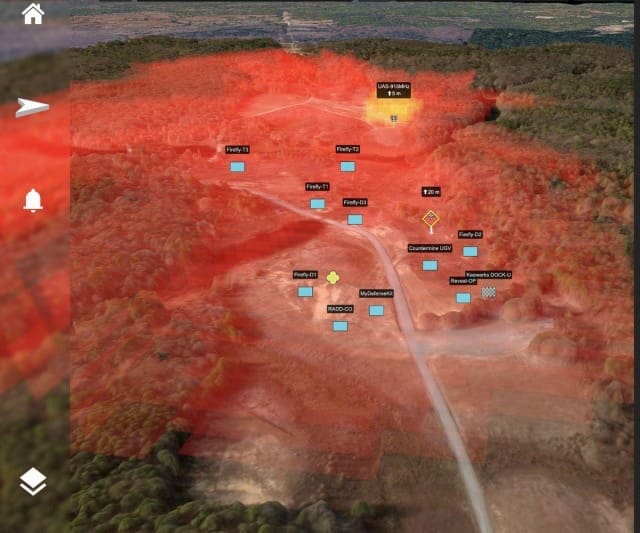
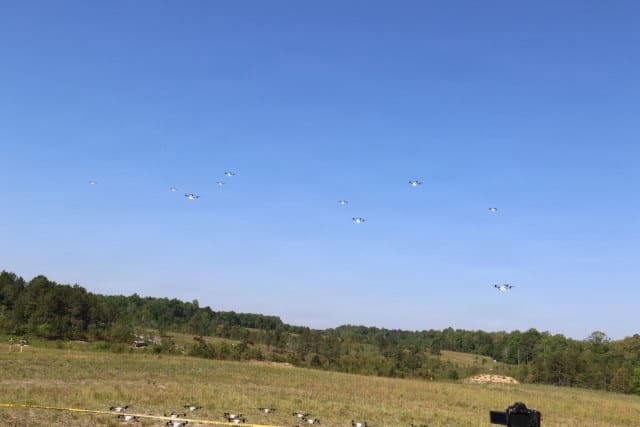
Following a rigorous down-selection process, companies enter a two-week demonstration event as part of the competition. This phase moves beyond polished pitches and controlled demonstrations; it subjects technology to operationally realistic environments. Soldiers actively stress-test the equipment and provide unfiltered, real-time feedback to vendors and evaluators. This Soldier-driven insight is the bedrock of the ACE model, guaranteeing that only solutions with proven operational relevance advance.

Technologies that pass this initial demonstration transition into an extended “leave-behind” period with operational units. This critical phase allows Soldiers to push the limits of the technology in daily operations, uncovering strengths, vulnerabilities, and integration hurdles impossible to replicate in a lab. For industry, it provides unprecedented access to authentic end-user validation. For the Army, it delivers the hard data required to justify prototype purchases and scale the capability.

A High-Velocity Pathway to Transition

The ultimate objective of an ACE is transition. Successful companies earn the opportunity for an Other Transaction Agreement (OTA) award.

This milestone signals the Army’s commitment to invest in the technology’s continued development, integration and evaluation. More importantly, an OTA bridges the gap to program offices, enabling them to assess, adopt and scale the capability across the broader Army.

For innovators aiming to cross the defense acquisition “valley of death,” ACEs offer a transparent, accelerated and operationally grounded pathway. Driven by real-world demand, shaped by the American Soldier and powered by G?TEAD, this model ensures that the Army remains the most lethal and technologically advanced force on the modern battlefield.

About G-TEAD

The Army Pathway for Innovation and Technology (PIT)’s Global Tactical Edge Acquisition Directorate (G-TEAD) is the force’s premier acquisition hub, designed to close the gap between evolving threats and the speed of delivering critical solutions. G-TEAD’s mission is to rapidly transform urgent commanders’ needs into combat-ready, interoperable systems, ensuring Soldiers sustain battlefield dominance in any environment.

Through synchronized efforts across the acquisition enterprise and close collaboration with allied partners, G-TEAD accelerates the delivery of minimum viable products (MVPs) to theater, bridging innovation with mission success. As the Army’s central hub for agile capability deployment, G-TEAD ensures Soldiers are equipped with the tools they need to win—wherever and whenever the fight arises.

About The Army Pathway for Innovation and Technology (PIT)

The Army Pathway for Innovation and Technology accelerates Army modernization through dual-use innovation, strategic partnerships, and mission-driven outcomes. As a critical enabler of Army acquisition reform, PIT injects capability faster by getting in the dirt with the Soldier, performing prototyping at the edge and delivering operational impact at the speed of relevance.

The PIT serves as a critical hub that integrates the efforts of three essential organizations within the Army innovation enterprise. Army FUZE, the Joint Innovation Outpost (JIOP), and the Global Tactical Edge Acquisition Directorate (G-TEAD) serve as the operational backbone of the PIT, underpinned by a unified vision to see, share, synchronize, and scale.

By Sarah Hepburn, Office of Army Pathway for Innovation and Technology (PIT)

Roni Introduces Their Newest, Most Compact Pistol-To-Carbine Conversion Kit, the Nano Roni

May 30th, 2026

Houston, TX – Roni Corporaton, the leading designer and manufacturer of the renown Micro-Roni, PDW-style pistol-to-carbine conversion kits and other firearms accessories, has introduced their newest, most compact pistol-to-carbine conversion kit, the Nano Roni. Like all other Roni conversion kits, owners can install their handgun into the Nano Roni chassis in a matter of seconds without tools, instantly transforming it into a pistol-braced PDW. This configuration increases the pointability, shootability and performance of the pistol.

The Nano Roni is at the center company’s ongoing product evolution and their recent strategic move to U.S. based manufacturing. This is Roni’s most compact and advanced conversion kit. Transforming a standard pistol into a compact, carbine-style platform improves control through greater points of contact, increases accuracy and engagement effectiveness at extended distances. It delivers a precise balance of compact size, reliability, and performance.

“We’re proud to introduce the Nano Roni as the ultimate compact solution for shooters who demand more from their pistol,” said Marc Hinawi. “It combines our proven design and engineering with American manufacturing to deliver unmatched versatility and performance in the smallest package yet.”

Initial compatibility includes Glock 17, 19, 22, and 23, 31,32 and 45.

Additional compatibility is coming soon, including Glock 43 and 48 platforms, as well as select models from SIG Sauer, Taurus, and Canik. This growing compatibility reflects Roni’s commitment to versatility and user-focused design.

The Nano Roni is a complete system. In addition to the chassis for the handgun, numerous accessories are available including magazine holders, light mounts, Picatinny rails, charging handles, optics mounts, slings and even a belt holster. Currently the Nano Roni and its associated accessories are available in black, OD Green and Flat Dark Earth. MSRP for the Nano Roni base conversion kit is $199.00.

For more information about Roni Corporation and their line of PDW-style pistol-to-carbine conversion kits and other firearms accessories, please visit www.micro-roni.com.

2026 Wilcox Industries Catalog

May 30th, 2026

You’re going to want to download this one.

wilcoxind.com/backend/wp-content/uploads/2020/12/Wilcox-Product-Catalog

New Line of Departure App Puts Lessons Learned, Tactical Insights in Soldiers’ Pockets

May 30th, 2026

FORT LEAVENWORTH, Kansas – Military Professionals now have instant access to all Army branch journals through the new Line of Departure app, which currently delivers more than 1,200 professional military articles directly to the field.

Army University Press launched the app on May 12, 2026, expanding the reach of their Line of Departure website that previously consolidated the Army’s branch journals into a single, searchable interface. The new mobile version enhances the user experience by letting readers receive article alerts, build custom bookshelves, and share content with others.

Maj. Nate Green, a Harding Fellow for Armor Magazine, noted that the app’s ease of use directly meets reader needs on the go. “I am a big fan of the mobile app and how it brings resources to readers. In less than three clicks, I can be reading an article from a professional bulletin,” Green said.

Putting professional discourse and leadership lessons learned directly in Soldiers’ hands supports the Army’s mandate to reinvigorate professional writing. Lt. Gen. Jim Isenhower, commanding general of the U.S. Army Combined Arms Command, emphasized the importance of effective writing earlier this year, calling it “a critical aspect of our Army profession.”

“Modernization is one of the key initiatives of the Line of Departure — to help all of the branch journals have a more modern capacity to provide lessons learned and share their content with Soldiers across the Army,” said Michael Serravo, director of Line of Departure.

The mobile app builds upon a highly successful web foundation. Since its launch in October 2024, the centralized Line of Departure platform has acted as a force multiplier and an “equalizer” for smaller journal teams with minimal staffing. Website usage has consistently grown, reaching more than 50,000 views and 19,000 new visitors in April 2026 alone.

By pushing this established platform to mobile devices, the Army is breaking down branch silos. Capt. Garett Pyle, Harding Fellow at the Army Sustainment Bulletin, noted that the centralized system provides an avenue to cross-communicate. “Now, I can easily view articles from other branches that I would otherwise never see. We are sharing insights and overall increasing Army lethality through this process,” Pyle said.

Sgt. 1st Class Marcel Blood, Harding Project deputy director and Ordnance noncommissioned officer, stressed the universal value of this information flow for the Total Force. “I can’t stress enough that there is something in the journals for everyone. Whether you’re on division staff and are trying to solve problems for the CG, or a Soldier learning to use a drone for the first time, there are articles published by your Soldiers, peers, and leaders that can help you,” he said.

Recognizing these benefits, Master Sgt. Travis Ragle, the co-editor in chief of the Special Warfare Journal, expects the mobile app to drive exponential growth in readership as awareness builds.

“The broader reach sparks discourse and coordination among branches, as well as assists in special operations recruitment through the amplified exposure Line of Departure provides,” Ragle said.

Readers can expect publication of approximately eight articles per branch journal each month.

Download the Line of Departure App on your mobile device’s app store.

About Army University Press and Line of Departure

Army University Press serves as the U.S. Army’s premier multimedia organization, functioning as the entry point for rigorous tactical analysis, doctrinal debate, and discussion on emerging topics vital to national defense.

Line of Departure, in collaboration with the Harding Project, is leading the Army’s effort to modernize branch journals and reinvigorate professional military writing as part of the service’s broader transformation initiative.

• Visit the AUP website to learn more about its educational portfolio.

• Visit Line of Departure to access all Army branch journals in one central location and find information on getting published.

(Note: This article references “Isenhower: Writing ‘Critical’ to Army Profession” which can be found here.)

By Jessica H. Brushwood

Romania Selects Quantum Systems for SAFE-Financed UAS Procurement

May 29th, 2026

The Romanian Ministry of National Defence has selected Quantum Systems for a new procurement of Vector reconnaissance systems under the European Union’s SAFE instrument. The contract represents the first SAFE-financed procurement project involving Quantum Systems and further strengthens the company’s role in supporting Europe’s defence readiness and industrial resilience efforts.

Bucharest / Gilching, 28 May 2026 – Quantum Systems has been selected by the Romanian Ministry of National Defence to supply additional Vector reconnaissance systems for surveillance missions under projects financed through the European Union’s SAFE (Security Action for Europe) instrument.

SAFE, adopted by the Council of the European Union in May 2025, was established to accelerate European defence readiness through large-scale investments in critical defence capabilities while strengthening the European defence technological and industrial base.

The newly signed contract expands the Romanian Armed Forces’ existing Vector fleet and further strengthens Quantum Systems’ presence in Romania. The systems will support tactical reconnaissance and surveillance missions and are complementary to ongoing industrial cooperation activities in the country.

“The systems contracted today are in addition to those already in service with the Romanian Armed Forces and complement the ongoing co-production project in Romania,” said Romania’s Acting Minister of Defence, Radu Miru??.

Martin Karkour, Chief Revenue Officer at Quantum Systems, said: 

“SAFE represents an important step toward strengthening Europe’s defence readiness through scalable procurement and industrial cooperation. We are proud that Romania has selected Quantum Systems as part of one of the first SAFE-supported projects.

This project also demonstrates how rapidly deployable European systems can contribute to SAFE-supported capability development.”

The procurement further reflects Quantum Systems’ broader strategy of supporting European technological sovereignty through locally integrated, operationally proven unmanned systems and long-term industrial partnerships across the continent.

Quantum Systems’ Vector AI is a combat-proven eVTOL reconnaissance system with extensive operational use, including in Ukraine since 2022. Integrated into the AI-enabled MOSAIC UXS software suite, the silent electric VTOL fixed-wing platform delivers real-time ISR data and combines fixed-wing endurance with vertical take-off and landing flexibility. Built on a modular systems architecture with onboard AI capabilities, Vector AI enables reliable operation in complex environments while reducing operator workload. The system can also be reconfigured into a multicopter setup using the same core hardware, software, and user interface.

AV Expands Huntsville Facility to Accelerate Production of Next-Generation Freedom Eagle-1 Interceptor

May 29th, 2026

Facility expansion positions AV to scale production, accelerate fielding, and provide cost-effective defense against mass aerial threats

ARLINGTON, Va., May 26, 2026 – AeroVironment, Inc. (“AV”) (NASDAQ: AVAV), a global defense technology leader, today announced an additional government investment of $20.2 million in AV’s Huntsville, Alabama facility to increase quantities of Low-Rate Initial Production (LRIP) and accelerate future Full-Rate Production (FRP) of the Next-Generation Counter-Unmanned Aircraft System Missile (NGCM), known as Freedom Eagle-1 (FE-1). 

The expanded site will serve as the system-level integration, manufacturing, and production hub for FE-1, enabling rapid scale-up of interceptor production and accelerated delivery timelines to meet urgent U.S. Army and Combatant Command operational needs.  

The 24,000-square-foot expansion and associated job growth in Huntsville reflect AV’s continued investment in meeting evolving national security demands for subsonic missiles while strengthening cost-effective production capacity, driving innovation, and supporting on-time delivery. 

“Growing our presence in Huntsville places AV more firmly at the center of the Army’s air and missile defense ecosystem, enabling tighter integration, faster iteration, and more efficient production at scale,” said Wahid Nawabi, Chairman, President and Chief Executive Officer at AV. “That proximity is critical as we begin production of Freedom Eagle-1, a system designed to deliver a scalable, cost-effective response to increasingly complex and high-volume aerial threats.” 

The investment builds on AV’s recent selection and $95.9 million contract award under the U.S. Army’s NGCM and Long-Range Kinetic Interceptor (LRKI) programs, executed through the U.S. Army Combat Capabilities Development Command Aviation & Missile Center (CCDC AvMC) and the Aviation & Missile Technology Consortium (AMTC), and marks the next phase in transitioning Freedom Eagle-1 from development to scaled production and operational fielding. 

In March, AV announced a $97 million contract to design and integrate prototype test environments for next-generation missile defense sensor testing at Redstone Arsenal — a Huntsville-based federal center that is home to more than 70 organizations, including NASA, the FBI, Missile Defense Agency, Army Program Acquisition Executive Fires, and the future U.S. Space Command headquarters. 

“This expansion is a critical step in scaling production of Freedom Eagle-1 and accelerating its delivery to the field,” said Jimmy Jenkins, Executive Vice President of AV’s Precision Strike and Defense Systems Group. “By increasing manufacturing capacity, strengthening integration, and enabling production at volume, we’re delivering a cost-effective interceptor designed to counter increasingly complex and high-volume aerial threats.” 

Freedom Eagle-1 is designed to address these challenges with a combination of performance and affordability. The system is a low-cost, high-performance interceptor capable of neutralizing Groups 2 and 3 UAS while maintaining residual capability against Group 1 UAS, fixed-wing, and rotary-wing aircraft, with increased lethality, extended range, and rapid launch capabilities. 

The system has achieved several key development milestones, including a successful live-fire demonstration of its dual-thrust solid rocket motor, controlled test vehicle launches, and warhead testing, demonstrating technical maturity and reduced risk as the program transitions toward field deployment. 

“As the nation’s defense and security demands increase, it is crucial that we meet capability needs, and there is no better place for AV’s expansion as Alabama continues to lead in defense manufacturing and innovation,” said Congressman Robert Aderholt (AL-04). 

The expansion in Huntsville also reflects AV’s broader strategy to scale domestic manufacturing capacity, following a recent announcement of a $30 million expansion of its Albuquerque, New Mexico campus, a move that is expected to generate more than $670 million in economic impact over the next decade, create more than 450 high-wage jobs, and boost production of mission-critical defense and space technologies. 

Rampart Range Day 26 – Ravelin Jacket from Mustang Survival

May 29th, 2026

Mustang Survival is introducing a new Waterproof Breathable Jacket intended for LE duty.

It features two large chest pockets, two internal pockets, a stowable hood, and full length underarm two-way zippers which allow you to expose your holster.

Based on concerns that water might still penetrate the waterproof Aquaguard zipper, the flap behind the zipper features a gutter to prevent any water getting in.

Mustang Survival products are available for agency and unit purchase in Canada from Rampart.